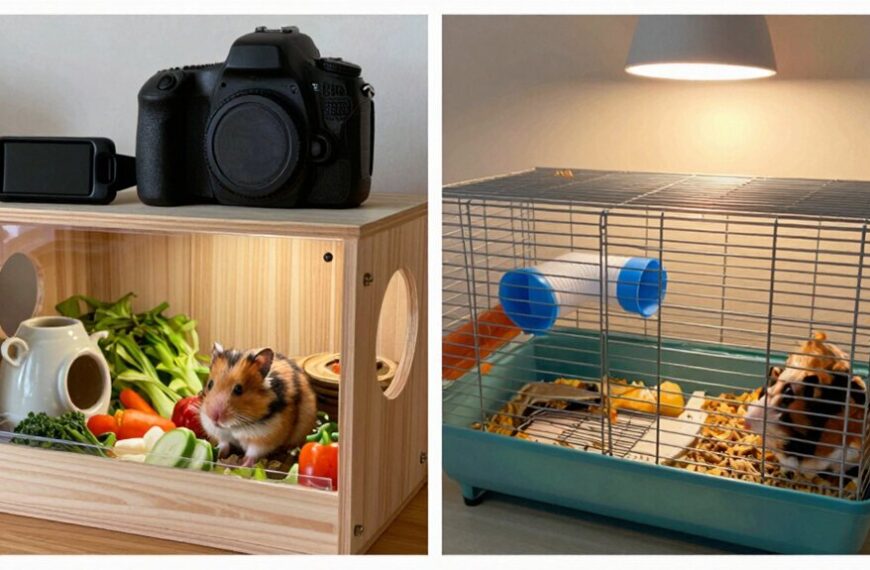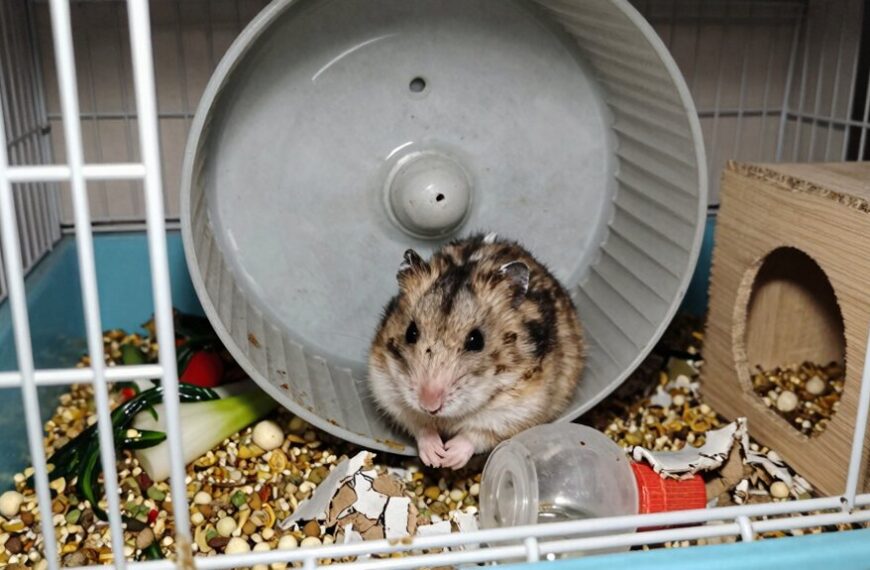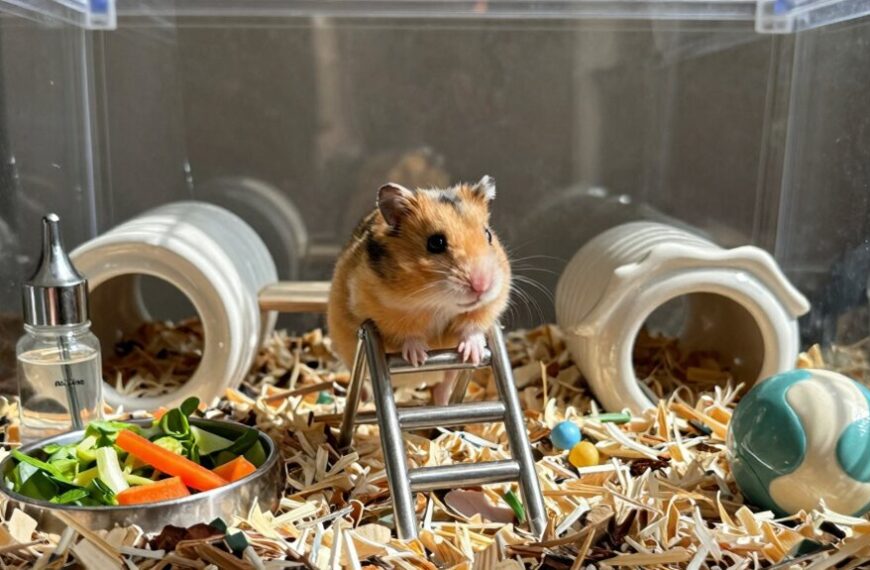
Chronic stress kills hamsters faster than most owners realize. A stressed hamster develops wet tail, stops eating, and can die within 48 hours, yet most cage setups create stress daily through mistakes that seem harmless. The good news: fixing these problems doesn’t require expensive equipment, just specific changes to housing, handling, and daily routine.
This guide covers practical hamster stress reduction tips that address the root causes of anxiety in captive hamsters. Whether dealing with a newly adopted hamster or troubleshooting behavioral changes in an established pet, these evidence-based strategies target the environmental and social factors that matter most to hamster welfare.
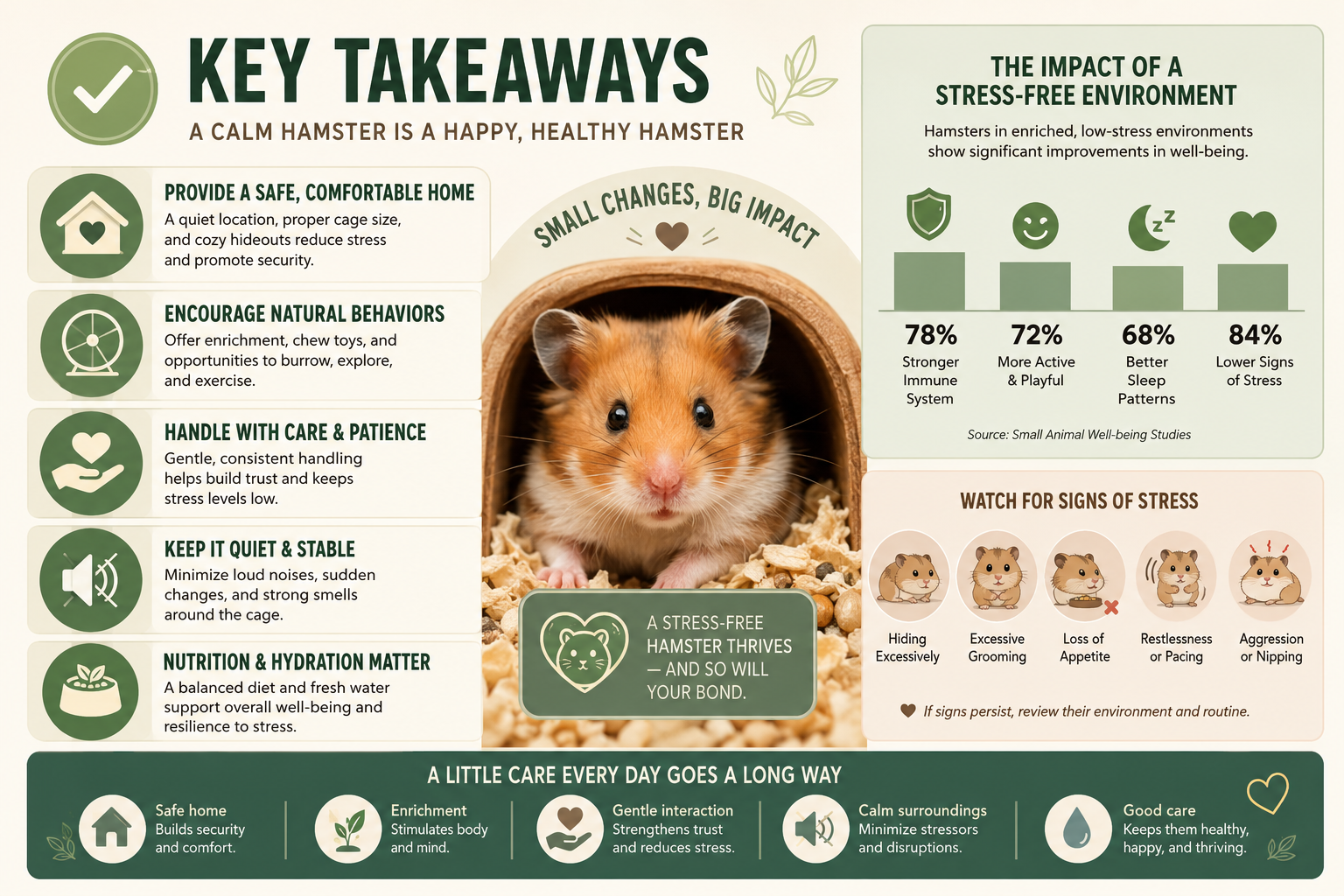
Key Takeaways
- Cage size and bedding depth matter more than decorations: Minimum 450 square inches floor space and 6+ inches of bedding for burrowing behavior
- Species-specific housing prevents territorial stress: Syrian hamsters require solitary housing; some dwarf species tolerate pairs but need monitoring
- Timing and technique determine handling success: Evening interactions when hamsters are naturally active, using two-hand scooping method
- Environmental stability reduces chronic stress: Consistent temperature (65-75°F), quiet location away from predator pets, predictable daily routine
- Early stress recognition prevents health crises: Bar chewing, excessive grooming, and lethargy signal problems before conditions like wet tail develop
Understanding What Actually Stresses Hamsters
Hamsters experience stress differently than humans interpret it. What looks like a “cozy” setup, a small colorful cage near a sunny window with frequent handling, creates multiple stressors that compound over time.
Territory and space limitations top the list. Hamsters in the wild travel 5-9 kilometers nightly. A cage under 450 square inches of continuous floor space (not levels) restricts natural movement patterns and triggers stress behaviors like bar chewing and pacing. Syrian hamsters need even more, 600+ square inches minimum.
Inadequate burrowing opportunities cause significant anxiety. Hamsters are fossorial animals programmed to dig extensive tunnel systems. Bedding depth under 6 inches prevents this instinctive behavior, leaving hamsters without their primary coping mechanism. Paper-based or aspen bedding at 8-10 inches depth allows proper tunnel construction.
Inappropriate wheel size creates physical stress and frustration. Syrians need 10-12 inch diameter wheels; dwarf species require 6.5-8 inches minimum. Smaller wheels force back arching that causes spinal damage and makes running uncomfortable, eliminating this essential stress outlet. For more details on species-specific needs, see our guide on what are must-haves for hamsters.
Social housing mistakes differ by species. Syrian hamsters are strictly solitary after 8-10 weeks of age, housing two together guarantees fighting, injury, and chronic stress even if they “seem fine” initially. Some dwarf species (Winter Whites, Campbells, Roborovskis) can live in same-sex pairs if introduced young, but require double the minimum space and constant monitoring for aggression signs.
Environmental instability includes temperature fluctuations (hamsters need 65-75°F consistently), loud noises, vibrations from TVs or speakers, and proximity to predator pets. Hamsters are prey animals, the scent or sound of cats and dogs creates constant vigilance stress even through cage bars.
Handling at wrong times disrupts natural circadian rhythms. Hamsters are crepuscular/nocturnal. Waking them during daylight hours for interaction causes disorientation and stress equivalent to forced sleep deprivation in humans. If you’re noticing concerning behaviors, learn more about signs of stress in hamsters.
Core Hamster Stress Reduction Tips for Cage Setup
The cage setup determines baseline stress levels before any other factor. Getting these fundamentals right prevents most stress-related health problems.
Minimum Space Requirements by Species
Syrian hamsters: 600 square inches minimum floor space (examples: 40-gallon breeder tank, 110cm × 50cm bin cage). Larger is always better, 800-1000 square inches is ideal.
Dwarf hamsters (Winter White, Campbell’s, Roborovski): 450 square inches minimum for single housing, 650+ for pairs. Chinese hamsters fall into this category despite not being true dwarfs.
Bar spacing matters for dwarf species: maximum 0.25-0.4 inches to prevent escapes and head entrapment injuries.
Bedding Depth and Substrate Choice
Minimum 6 inches across at least two-thirds of the cage floor. Optimal depth: 8-10 inches to allow multi-level tunnel systems.
Safe bedding options:
- Paper-based bedding (Kaytee Clean & Cozy, Small Pet Select)
- Aspen shavings (never cedar or pine, aromatic oils cause respiratory damage)
- Mix of paper and aspen for structure
Avoid fluffy bedding (cotton, kapok) that causes intestinal blockages if ingested. For cleaning guidance that maintains scent marking while reducing stress, see can I use vinegar and water to clean a hamster cage.
Wheel Selection and Exercise Equipment
Wheel diameter requirements:
- Syrian: 10-12 inches minimum
- Dwarf species: 6.5-8 inches minimum
Wheel type: Solid running surface (no rungs or mesh that trap feet). Silent spinners or bucket wheels reduce noise stress for both hamster and owner.
Additional enrichment: Multiple hideouts (minimum 2-3), chew toys, foraging opportunities. Hamsters need complexity, not clutter, avoid overfilling the cage, which restricts movement.
Location and Environmental Control
Ideal placement:
- Quiet room away from main household traffic
- No direct sunlight or drafts
- Away from windows (temperature fluctuations, outdoor predator sounds)
- Separate from predator pets (different room if possible)
- Stable surface (no vibrations from appliances)
Temperature: 65-75°F consistently. Use thermometers to monitor, overheating above 80°F causes heat stress; cold below 60°F triggers torpor in some species.
Light cycle: 12-14 hours of natural light/dark cycle. No bright lights during their active evening/night hours. Avoid complete darkness, dim ambient light allows safe navigation.
Scent Marking and Cleaning Schedule
Hamsters navigate and feel secure through scent marking. Over-cleaning removes these markers and causes territorial stress.
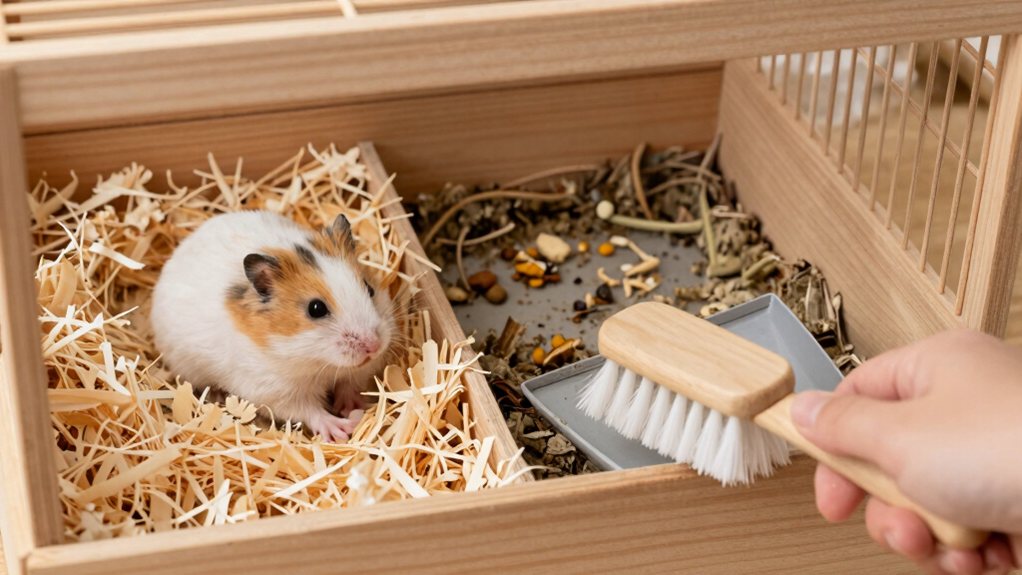
Spot clean daily: Remove soiled bedding, uneaten fresh food.
Partial clean weekly: Replace 1/3 of bedding, leaving some used bedding to maintain scent.
Full clean monthly: Replace all bedding, wash cage with vinegar and water solution, but immediately add handful of old (clean) bedding back.
Hamster Stress Reduction Tips for Handling and Socialization
Even perfect housing creates stress if handling techniques ignore hamster biology and individual temperament.
Timing Your Interactions
Best interaction windows: 7-10 PM when hamsters naturally wake and become active. Watch for signs of wakefulness, stretching, grooming, emerging from hideout.
Never wake a sleeping hamster for handling. This creates stress, disorientation, and can trigger defensive biting. If you must check on a sleeping hamster, speak softly first and wait for them to wake naturally.
Frequency: Daily interaction builds trust, but sessions should be 10-20 minutes maximum initially. Longer sessions cause overstimulation and stress.
Proper Handling Technique
Two-hand scoop method:
- Approach from the side (never from above, predator angle)
- Let hamster sniff your hand first
- Scoop with both hands cupped together, supporting entire body
- Keep hands low over soft surface in case of jumps
Never grab from above, squeeze, or restrain tightly. These mimic predator attacks and destroy trust.
Species differences: Syrian hamsters generally tolerate handling better than dwarf species. Winter Whites and Campbells can be tamed but require more patience. Roborovskis rarely enjoy handling, observation and enrichment suit them better. For species-specific guidance, see can you hold Winter White hamsters.
Building Trust Gradually
Week 1-2: No handling. Let hamster adjust to new environment. Sit near cage, talk softly, offer treats through bars.
Week 3-4: Hand-feed treats inside cage. Let hamster approach your hand voluntarily. No grabbing or chasing.
Week 5+: Begin short handling sessions using two-hand scoop. Stay seated on floor initially to minimize fall risk.
Trust indicators: Hamster approaches hand willingly, takes treats calmly, doesn’t freeze or flee when you approach cage. For more bonding strategies, see how to bond with your Winter White hamster.
Common Handling Mistakes That Create Stress
❌ Waking hamster during day for playtime or photos ❌ Chasing hamster around cage to catch them ❌ Handling immediately after bringing home (needs 3-7 days to adjust) ❌ Loud noises or sudden movements during interaction ❌ Forcing interaction when hamster shows stress signals (freezing, squeaking, attempting to escape) ❌ Children handling without supervision or proper technique training
Recognizing Stress During Handling
Stop handling immediately if hamster shows:
- Freezing in place (fear response)
- Squeaking or chattering teeth
- Attempting to jump or escape repeatedly
- Urinating (extreme fear response)
- Biting (defensive, not exploratory nibbling)
Return hamster to cage gently and try again another day with shorter session.
Environmental Enrichment as Stress Prevention
Boredom creates chronic low-level stress that manifests as stereotypic behaviors (repetitive bar chewing, pacing, over-grooming). Proper enrichment provides mental stimulation and physical outlets.
Foraging Opportunities
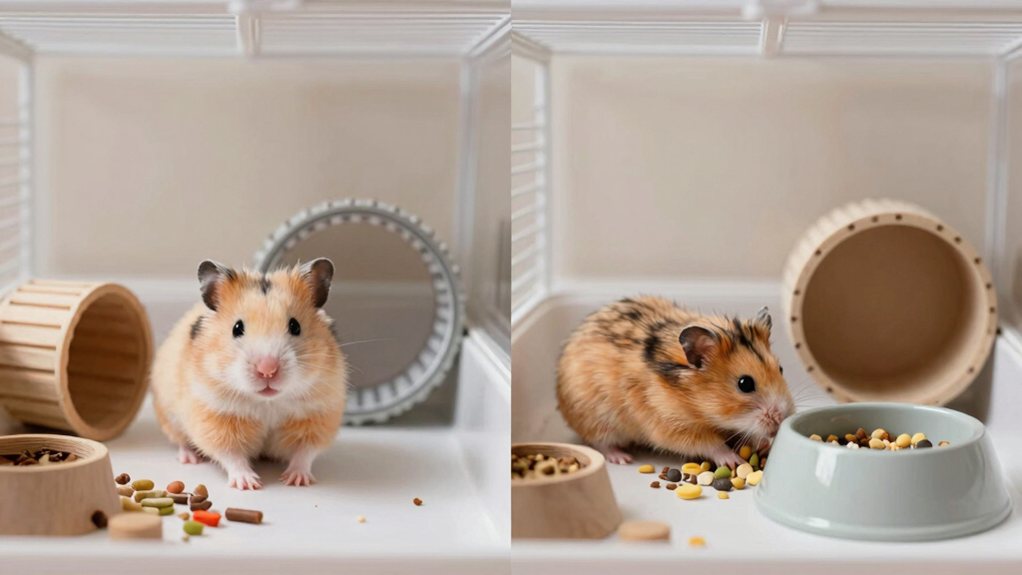
Scatter feeding: Hide food throughout bedding instead of bowl-only feeding. Mimics natural foraging behavior and provides mental stimulation.
Foraging toys: Cardboard tubes stuffed with hay and treats, puzzle feeders, snuffle mats designed for small animals.
Rotation schedule: Introduce new foraging challenges weekly to prevent habituation.
Hideouts and Territory Structure
Minimum 2-3 hideouts with different textures and locations:
- Ceramic hideout (stays cool, easy to clean)
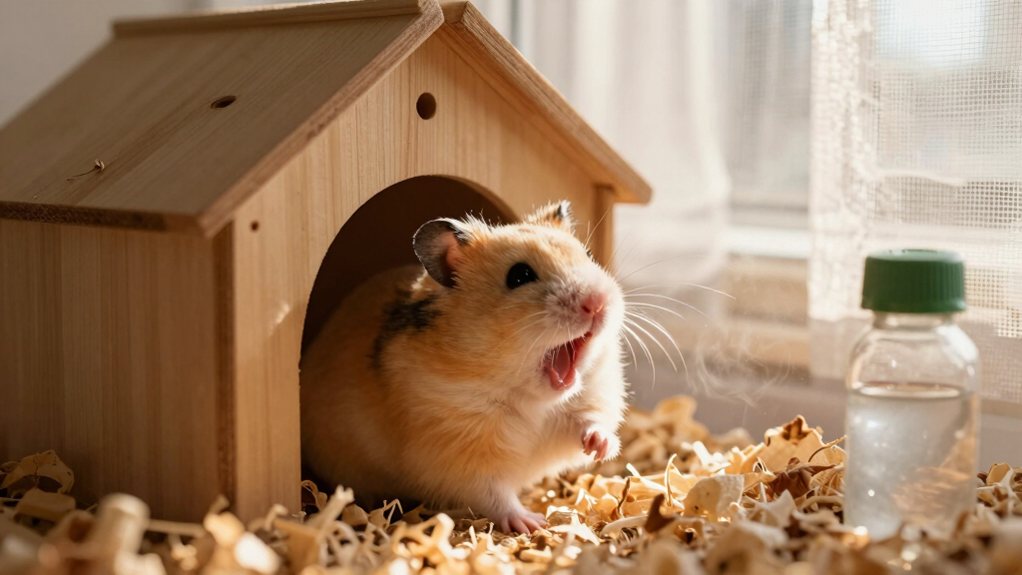
- Wooden house (chewable, natural)
- Tunnel system (connects different cage areas)
Multiple entry/exit points on hideouts prevent trap situations that cause anxiety.
Chewing and Dental Health
Hamster teeth grow continuously, inadequate chewing opportunities cause dental overgrowth and associated stress/pain.
Chew toy options:
- Untreated applewood or willow sticks
- Loofah pieces
- Whimzees or other safe commercial chew toys
- Cardboard tubes (plain, no ink)
Avoid: Plastic toys (ingestion risk), painted wood, treated lumber.
Safe Free-Roam Time
Playpen setup: 4-6 square feet enclosed area with:
- Smooth floor (no carpet, claw catching)
- Hideouts and toys
- Supervision required (never leave unattended)
- 10-15 minute sessions 3-4 times weekly
Never free-roam in open rooms,hamsters escape into walls, under appliances, or get injured. For safe play ideas, see how to play with your hamster.
Diet and Routine Stability
Nutritional stress and schedule unpredictability create physiological and psychological strain.
Consistent Feeding Schedule
Feed at same time daily, preferably early evening when hamsters wake. Inconsistent feeding times create anticipatory stress and can trigger food hoarding anxiety.
Portion control: 1-2 tablespoons quality hamster pellets daily, plus small amounts of fresh vegetables (3-4 times weekly) and occasional protein treats.
Water Quality and Availability
Check water bottle daily,dehydration causes rapid health decline and stress. Ball-bearing bottles can stick; test flow daily.
Clean bottle weekly to prevent bacterial growth. Use bottle brush and rinse thoroughly.
Treat Safety and Moderation
Safe treats (small amounts):
- Plain cooked chicken (protein)
- Mealworms (1-2 for dwarf, 2-3 for Syrian, twice weekly)
- Small pieces of carrot, cucumber, broccoli
- Occasional sunflower seed (high fat, limit to 1-2 weekly)
Avoid: Sugary treats, citrus fruits, onions, garlic, chocolate, processed human foods. For comprehensive dietary guidance, see what hamsters love to eat most.
Temperature and Seasonal Stress Management
Temperature extremes cause significant physiological stress and can trigger torpor or heat stroke.
Summer Heat Management
Warning signs of heat stress: Lethargy, panting, drooling, lying flat and stretched out.
Prevention:
- Keep room temperature below 75°F
- Provide ceramic hideout (stays cool)
- Freeze water bottle partially (wrap in cloth to prevent condensation drips)
- Never place cage in direct sunlight
- Use fans for air circulation (not directly on cage)
Winter Cold Considerations
Torpor risk: Temperatures below 60°F can trigger torpor in some species (especially Campbell’s and Winter Whites), a hibernation-like state that appears like death but is reversible if caught early.
Prevention:
- Maintain room temperature 65-75°F
- Extra bedding depth in winter (10+ inches)
- Move cage away from drafty windows
- Never use heat lamps (fire risk, overheating danger)
Stress Reduction During Life Transitions
Certain events create unavoidable stress, minimizing impact requires specific strategies.
Bringing Home a New Hamster
First 3-7 days: No handling. Minimal interaction. Let hamster explore, burrow, establish territory. Speak softly near cage but don’t attempt to touch. For detailed guidance, see how long to leave hamster alone after bringing home.
Setup before arrival: Have cage completely ready with bedding, hideouts, food, water. Avoid changes during adjustment period.
Cage Cleaning Stress Reduction
Gradual transition method: When doing full clean, save handful of clean used bedding and one used hideout. Place these in cleaned cage first so familiar scent remains.
Timing: Clean during hamster’s inactive hours (midday) so they wake to familiar-smelling environment rather than experiencing the disruption.
Vet Visits and Transport
Carrier requirements: Small, secure carrier with ventilation, lined with bedding from home cage.
Transport stress reduction:
- Cover carrier with light cloth (reduces visual stimulation)
- Keep carrier stable (no swinging or sudden movements)
- Maintain moderate temperature in vehicle
- Bring familiar treats for post-visit positive association
Post-vet monitoring: Watch for stress behaviors (hiding, reduced eating) for 24-48 hours. These typically resolve as hamster readjusts.
Species-Specific Hamster Stress Reduction Tips
Different hamster species have distinct stress triggers and tolerance levels.
Syrian Hamsters
Solitary housing mandatory: Never house two Syrians together past 8-10 weeks age. Even “bonded” pairs will eventually fight, often fatally.
Larger space needs: 600+ square inches minimum. Syrians are largest species and most active.
Handling tolerance: Generally most tolerant of handling when properly tamed. Can learn to enjoy interaction.
Territorial behavior: Strong scent marking. Need more time between cage cleans to maintain scent territory.
Winter White Dwarf Hamsters
Pair housing possible: Can live in same-sex pairs if introduced young (under 8 weeks) and given adequate space (650+ square inches).
Torpor risk: More susceptible to cold-induced torpor than other species. Maintain 68-75°F.
Handling: Can be tamed but require patience. Less naturally tolerant than Syrians. See do Winter White dwarf hamsters like to be held for detailed guidance.
Campbell’s Dwarf Hamsters
Similar to Winter Whites: Pair housing possible with caution. Monitor for aggression signs (chasing, mounting, wounds).
More territorial: Higher aggression risk than Winter Whites. Provide multiple food/water sources if pair-housed.
Diabetes risk: Avoid sugary treats, stress can exacerbate genetic diabetes predisposition.
Roborovski Hamsters
Fastest and smallest: Need secure enclosures with maximum 0.25-inch bar spacing.
Observation pets: Rarely tolerate handling. Enrichment and proper housing matter more than socialization.
Pair/group housing: Most social hamster species. Can live in same-sex groups if introduced young and given ample space.
Stress signs: Harder to detect due to speed and size. Watch for reduced activity or hiding more than usual.
Chinese Hamsters
Semi-social: Some tolerate same-sex pairs; others are solitary. Monitor carefully.
Climbing behavior: Need vertical space and climbing enrichment more than other species.
Tail sensitivity: Have longer tails than other pet hamsters, never grab or pull tail (causes injury and extreme stress).
When to Seek Veterinary Help
Some stress responses indicate medical emergencies requiring immediate veterinary care.
Emergency Stress-Related Conditions
Wet tail (proliferative ileitis): Severe diarrhea, lethargy, hunched posture, wet/soiled rear end. Fatal within 24-48 hours without treatment. Stress is primary trigger.
Dehydration: Sunken eyes, skin tenting, lethargy. Can result from stress-induced appetite loss.
Self-mutilation: Excessive grooming causing bald patches or wounds. Indicates severe chronic stress.
Respiratory distress: Labored breathing, wheezing, discharge. Can result from stress-weakened immune system.
Behavioral Changes Requiring Assessment
- Sudden aggression in previously tame hamster
- Complete appetite loss lasting 24+ hours
- Continuous bar chewing despite adequate enrichment
- Lethargy and reduced activity even during normal active hours
- Repetitive behaviors (pacing, backflipping, circling)
These may indicate pain, illness, or environmental stressors requiring professional evaluation. For more on serious health concerns, see what is the leading cause of death in hamsters.
Creating a Long-Term Stress-Free Environment
Sustainable hamster stress reduction tips require ongoing commitment, not one-time fixes.
Monthly Welfare Checklist
✅ Cage size still adequate (hamster hasn’t outgrown setup) ✅ Wheel functioning properly (no squeaking, smooth rotation) ✅ Bedding depth maintained at 6+ inches ✅ Multiple hideouts available and in good condition ✅ Chew toys present and being used ✅ Water bottle flowing properly ✅ Temperature stable 65-75°F ✅ No new stressors introduced (moved furniture, new pets, construction noise)
Enrichment Rotation Schedule
Weekly: Introduce one new foraging challenge or rearrange one cage section (not entire cage, too disruptive).
Monthly: Rotate toys, remove some, introduce different options. Maintains novelty without overwhelming.
Quarterly: Assess whether current setup still meets needs. Hamsters’ preferences change with age.
Recognizing Individual Preferences
Not all hamsters enjoy the same enrichment. Observe which items your hamster uses most:
- Burrowers: Prioritize deep bedding, tunnel systems
- Climbers: Add safe climbing structures (Chinese hamsters especially)
- Runners: Ensure wheel is appropriate size and always accessible
- Foragers: Emphasize scatter feeding and puzzle toys
Adjust environment based on observed behavior rather than generic recommendations.
Calming Techniques for Anxious Hamsters
Some hamsters remain anxious despite optimal housing. Additional strategies include:
Scent enrichment: Small amounts of safe herbs (chamomile, dried rose petals) in bedding. For detailed guidance, see what scent calms hamsters.
Consistent routine: Same feeding time, cleaning schedule, interaction times daily.
Reduced stimulation: Cover three sides of cage with cloth to create den-like security.
Patience: Some hamsters (especially rescues or pet store hamsters) need months to fully relax. Consistent care eventually builds trust.
FAQ
How long does it take for a stressed hamster to calm down?
Acute stress from specific events (vet visit, cage cleaning) typically resolves within 24-48 hours. Chronic stress from housing or handling issues requires 2-4 weeks of consistent environmental improvements before behavioral changes appear. Newly adopted hamsters need 3-7 days minimum adjustment period before stress levels normalize.
Can I use calming sprays or supplements for hamster stress?
Most commercial calming products aren’t tested for hamsters and may cause harm. Focus on environmental modifications rather than supplements. Safe natural options include small amounts of chamomile or dried herbs in bedding, but these are mild aids, not substitutes for proper housing. Never use essential oils (toxic to hamsters) or products designed for cats/dogs.
Why is my hamster still stressed after I fixed the cage setup?
Hamsters need time to recognize and trust environmental improvements. Continue consistent care for 2-4 weeks before expecting behavioral changes. Also assess handling technique, noise levels, and whether hamster has underlying health issues causing stress-like symptoms. Some hamsters have naturally anxious temperaments requiring extra patience.
Do hamsters get stressed when left alone during vacations?
Hamsters tolerate solitude better than social interaction stress, but require proper care arrangements. A knowledgeable pet sitter checking daily (feeding, water, spot cleaning) is ideal. Hamsters can manage 2-3 days maximum with extra food/water, but longer absences risk dehydration or health issues going unnoticed. Never leave hamsters unattended over 3 days.
Is bar chewing always a sign of stress?
Bar chewing typically indicates inadequate cage size, boredom, or insufficient enrichment. Occasionally hamsters chew bars to get attention if they’ve learned it prompts interaction. Persistent bar chewing causes dental damage and indicates environmental deficiencies requiring immediate correction, larger cage, deeper bedding, more enrichment, or combination of these.
Can stress cause wet tail in hamsters?
Yes, stress is the primary trigger for wet tail (proliferative ileitis), especially in young hamsters (3-8 weeks). Transport stress, overcrowding, poor hygiene, and sudden environmental changes activate the bacteria causing this often-fatal condition. Stress reduction through proper housing and gradual transitions is essential prevention, particularly during the high-risk juvenile period.
Conclusion
Reducing hamster stress at home centers on meeting species-specific biological needs rather than anthropomorphizing comfort. The most effective hamster stress reduction tips address cage size (600+ square inches for Syrians, 450+ for dwarfs), bedding depth (6-10 inches for burrowing), appropriate wheel size (10-12 inches for Syrians, 6.5-8 inches for dwarfs), and species-appropriate social housing (solitary for Syrians, monitored pairs for some dwarf species).
Handling technique and timing matter as much as housing, evening interactions using two-hand scooping method, never waking sleeping hamsters, and respecting individual tolerance levels prevent social stress. Environmental stability through consistent temperature (65-75°F), quiet location, and predictable routine creates the foundation for long-term welfare.
Start with cage setup improvements today: measure current floor space, increase bedding depth, verify wheel size, and assess location for noise and temperature issues. These concrete changes produce measurable stress reduction within 2-4 weeks. For ongoing guidance, explore our comprehensive resources on hamster care fundamentals and species-specific needs.
Next steps: Photograph current cage setup, identify the three highest-priority improvements from this guide, and implement them this week. Monitor your hamster’s behavior for reduced stress signals, increased activity during evening hours, more burrowing, and calm responses to your presence indicate successful environmental optimization.