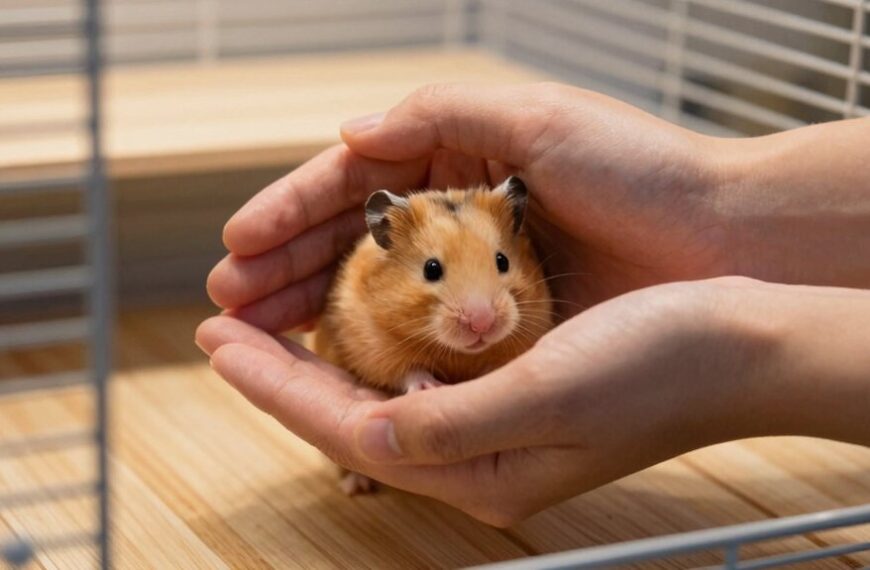
You should leave your new hamster alone for at least 48 hours, yes, that means no sneaky peeks or quick pets. Let them sniff around, settle in, and get used to their new digs without surprises.
Keep the area quiet, skip the loud TV, and don’t even think about handling them yet. A calm hamster is a happy hamster, and rushing it is like waking someone up mid-dream to ask about their weekend plans. Give them space, and you’ll both be happier. There’s more to the story, too.
Why Your New Hamster Needs Space

Even though you’re probably super excited to play with your new hamster, giving it some space at first is one of the best things you can do. Your tiny friend just left its old home and is now in a whole new world, imagine how overwhelming that feels!
This quiet time isn’t just a break for them. It’s crucial for bonding time and trust building. If you rush the cuddles, your hamster might get stressed and see you as a threat instead of a buddy.
Let it explore, sniff, and settle in without hovering. You’ll know it’s ready when it stops freezing or running away.
Think of it like a first date. You wouldn’t hug a stranger, right?
Give it a few days, and soon, your hamster will be running to you instead of from you. Patience pays off with nose boops and happy squeaks!

ALL-IN-ONE STARTER KIT: Unbox a turnkey pet theme park! This complete habitat comes pre-loaded with an external water bottle, a detachable bathroom pod, a cozy wooden hideout...
How Long to Wait Before Handling?
You’ve given your hamster some breathing room, and that’s awesome. Now you’re probably wondering when it’s safe to pick it up without sending it into panic mode.
Most experts recommend waiting at least 3 to 5 days before handling your new little buddy. This gives them time to adjust to their new home, smell, and even your voice.
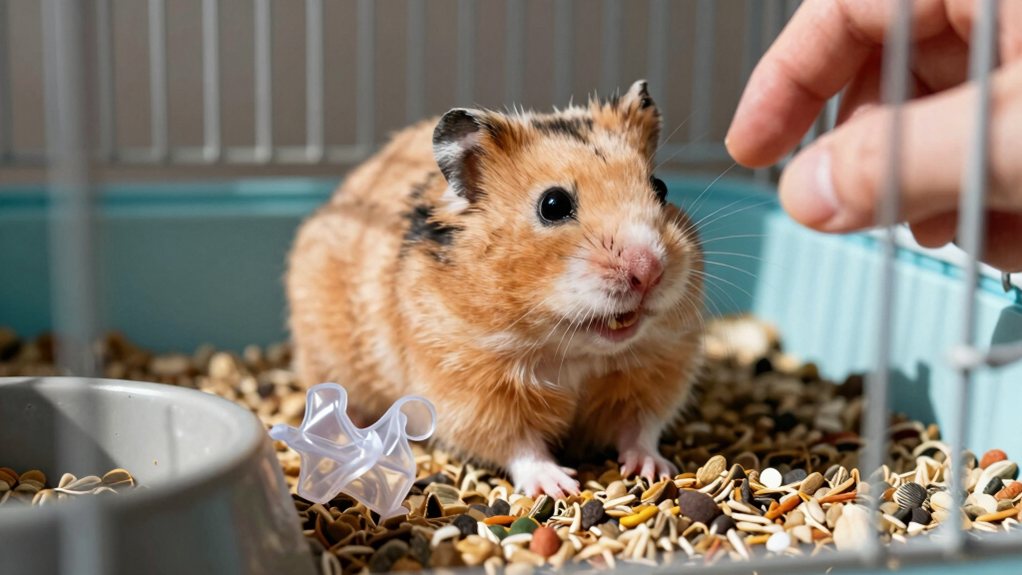
Rushing in too fast might scare them, and trust me, you don’t want a stressed hamster during bedtime routines. Start by gently offering treats through the cage bars to build trust.
Once they seem curious and calm, try letting them crawl onto your hand. Avoid grabbing or sudden moves.
They won’t see it as a game, even if it’s your favorite toy.
Patience pays off. A comfortable hamster is more likely to snuggle up than sprint away.
Signs Your Hamster Is Settling In
So, how can you tell your tiny roommate is starting to feel at home? Look for calm, curious behavior instead of frantic hiding. If your hamster explores its cage during evening hours, nibbles treats from your hand, or grooms itself openly, that’s a great sign!
You might even notice playful tunneling or wheel running, clear proof it’s comfortable. These moments mean your efforts are working.
Gentle social behavior, like sniffing your fingers without backing away, shows growing trust.
Sniffing your fingers without scurrying off? That’s your hamster saying, “I trust you” in the quietest, cutest way.
And don’t forget playtime benefits: short, supervised out-of-cage adventures can boost confidence and bonding.
Your hamster won’t throw a housewarming party (wouldn’t that be cute?) but these little wins add up.
Keep being patient and kind. You’re building a friendship, one tiny squeak at a time.
Soon, you’ll have a cozy, active companion who actually wants to hang out.
What to Do the First 48 Hours

What’s the secret to helping your new hamster feel safe right away? Give them space. For the first 48 hours, avoid picking them up or overwhelming them with noise. Let them explore their new home in peace.
You can quietly sit nearby so they get used to your presence, think of it as chill time, not playtime.
Resist the urge to start introducing toys just yet, wait until they seem curious and relaxed.
This is also not the time for changing bedding. Disturbing their setup could stress them out. Just check for cleanliness and fresh food and water.
After two days, if your hamster is eating, moving around, and using their hideout, that’s a great sign.
Then, you can slowly start bonding and adding fun stuff.
Patience now means a happier, friendlier hamster later. And who doesn’t want a tiny buddy who actually likes you?
When to Start Taming Your Hamster
How do you know when your hamster’s ready for a little one-on-one time? Look for signs it’s settled: eating regularly, exploring its cage, and seeming curious instead of scared. Every hamster personality is different. Some are bold and enthusiastic, while others take weeks to warm up.
Once your pet seems comfortable, that’s your cue to start bonding techniques.
When your hamster appears relaxed and curious, it’s time to begin building your bond—start slow, stay calm, and let trust grow naturally.
Begin by offering treats from your hand near the cage door—no sudden moves. Let your hamster sniff you first. Talk softly so it gets used to your voice.
After a few calm sessions, try gentle hand placements inside the cage. Patience is key. Rushing can backfire, but steady, calm effort builds trust.
Think of it like making a new friend—awkward at first, then sweet and rewarding. You’ve got this!
How to Hand-Train Your Hamster Gently
Ready to turn your shy little furball into a confident, hand-loving buddy? Hand-training your hamster is all about gentle bonding and a patient approach. Start by sitting near the cage daily, talking softly so your scent and voice become familiar.
Offer treats from your open palm, let curiosity do the work.
Keep sessions short (5–10 minutes) to avoid overwhelming them.
Wash your hands before training to remove food scents that might confuse them.
Move slowly; sudden motions can scare your tiny, twitchy-nosed friend.
Let your hamster come to you—no grabbing! With time, they’ll associate your hand with yummy snacks and cozy scratches. It might take days or weeks, but hey, every tiny paw-step forward counts.
A hamster’s unique individual personality differences will influence how quickly they warm up to handling.
You’re more than just teaching trust. You’re building a friendship, one seed at a time.


HIGH-QUALITY MATERIALS: Homimp washable pee pads feature 4 high-density layers for fast absorption, locking in urine and odor within minutes. The waterproof TPU backing ensures no leaks, keeping floors and pets dry. Perfect for puppy training, incontinence, or travel——no more messy accidents

Mistakes That Scare Your Hamster

You mightn’t mean to, but darting your hand into the cage too fast can send your hamster into panic mode.
Picture startling a friend during a nap, but fluffier.
Wait a few days before handling them, since picking them up too soon is like giving a high-five on the first day of school: awkward and kinda scary.
Go slow, speak softly, and remember, you’re the giant in their tiny world.
Sudden Movements Startle Easily
Ever wonder why your hamster freezes like a tiny, wide-eyed statue when you reach into the cage too quickly? It’s because sudden movements startle them, big time.
These little guys rely on a gentle approach and a calm environment to feel safe.
Think of it like surprising someone during a nap: not cool, right?
To help your hamster adjust, keep things steady and predictable. Here’s how:
- Move slowly when opening the cage
- Avoid loud noises near their space
- Wash your hands to remove strong scents
- Let them sniff your hand before touching
You’re more than avoiding fear—you’re building trust.
A startled hamster might dart, hide, or even nip (ouch!).
But with patience, you’ll go from “scary giant” to “trusted snack-giver.”
Slow wins the race, especially with a creature this small and sweet.
Quick hand motions mimic predator attacks, which is why maintaining a calm environment is essential for their well-being. In fact, nocturnal nature means they are especially sensitive to disturbances during their rest periods.
Handling Too Soon Causes Stress
What’s the rush? Your hamster’s not going to start doing backflips while you wait.
Jumping in too soon with a gentle touch or trying to bond with a soft voice might seem sweet, but it’s actually a fast track to stress city.
Think about it—your tiny furball just landed in a strange new world with zero warning.
It’s like being dropped on Mars without a map.
Handling too soon can scare them, making trust harder to build later.
Give your little buddy at least 2–3 days to sniff around, explore, and chill in peace.
No poking, no picking up—just quiet support.
After the adjustment window, start slow: offer treats, speak in a soft voice, then ease into a gentle touch.
Patience pays off with a happier, more confident hamster.
Slow and steady wins the race and the cuddles.
Why Loud Rooms Stress Your Hamster Out
Why do loud rooms turn your hamster into a tiny, wide-eyed panic ball? It’s because hamsters have serious sensory sensitivity and are naturally nocturnal. That means your late-night movie marathon or blaring music might feel like a surprise thunderstorm to them.
Their ears are built to catch whispers, not bass drops.
Sudden noises trigger their survival instincts, think “predator alert!”
Nocturnal behavior means they’re extra alert at night, when your house might be loudest.
Constant sound pollution makes them anxious, not chill.
You might laugh at their dramatic freeze-panic-scamper routine, but it’s no joke for them. A quiet space helps your little buddy feel safe and adjust faster.
Hamsters experience loud TV volumes as if they were at a rock concert, which can lead to long-term stress and health issues.
Create a Quiet Space for Your Hamster
Pick a quiet spot in your home, like a calm corner of your bedroom, because loud rooms can freak your hamster out faster than a cat at a dog party.
Keep noise to a minimum, and toss in a few hiding spots, like little igloos or cardboard tubes, so your tiny buddy can nap in peace.
Think of it as building your hamster’s personal zen retreat, minus the yoga mats.
Hamsters are naturally nocturnal animals and need a stress-free environment to adjust to their new home, especially during the first few days.
Quiet Location Matters
While your new hamster might look ready to star in a tiny circus, the truth is he’s probably feeling a bit overwhelmed by all the new sights, sounds, and smells. Giving him a quiet spot to settle in makes all the difference. You’ll want to pick a calm corner of the house, away from TVs, barking dogs, or slamming doors.
A peaceful space helps him adjust faster and feel safe.
Choose a spot with natural lighting, but not direct sunlight.
Maintain steady temperature control, no drafts or radiators nearby.
Keep noise levels low, hamsters have super-sensitive ears.
Avoid high-traffic areas where shadows and movement spook him.
This little retreat becomes his safe zone, where he can nap, explore, and get used to you. Think of it as his personal chill pad, quiet, cozy, and just right.
To ensure ideal conditions, monitor the environment using a reliable digital hygrometer thermometer for accurate temperature and humidity readings.
Minimize Noise Disturbances
You’ve already picked the perfect quiet corner for your hamster’s new home, and that’s a great start. Now let’s talk about keeping it peacefully quiet. Hamsters have super-sensitive ears, so loud sounds like blaring music or yelling can stress them out fast. Keep the TV volume low and avoid sudden noises near their cage.
Think of it like creating a cozy nap zone. Gentle lighting and soft bedding go a long way in making your hamster feel safe. Use a dim lamp instead of bright overhead lights, and pick a bedding that’s comfy and quiet when they dig.
You wouldn’t want someone stomping around your bedroom at midnight, right? Same goes for your tiny roommate.
A calm space helps them adjust faster and builds trust. Keep things hushed, and you’ll both be happier. Because peace and quiet aren’t just for libraries.
Prolonged stress from environmental disturbances can contribute to psychological strain, including signs of cage rage.
Provide Hiding Spots
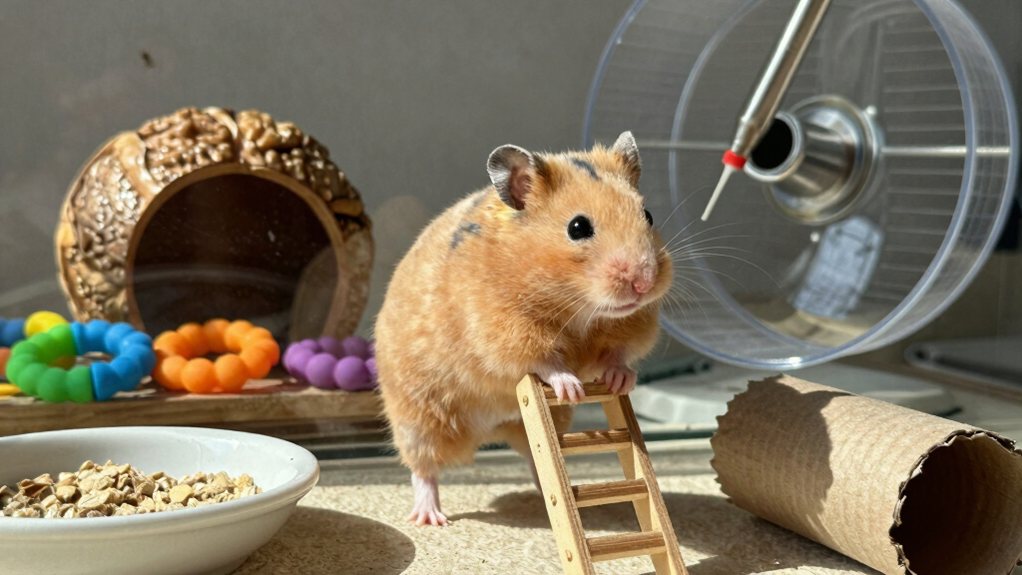
Inside a cozy hideaway, your hamster feels safe, calm, and totally in charge of its tiny kingdom.
Giving your new friend a few days to adjust in peace means letting it explore its space without too much fuss.
- A snug wooden or ceramic house for naps and privacy
- Soft bedding for burrowing and comfort
- Toys enrichment like chew blocks and tunnels for mental stimulation
- A wheel exercise setup to burn off energy (and zoomies!)
Ceramic hideouts offer excellent thermal regulation properties, helping maintain a stable and comfortable temperature inside the hide.
These little touches help your hamster feel at home while staying active and curious.
You’ll soon see it darting around, snuggling up, and maybe even stuffing its cheeks like a tiny, adorable bandit.
Just give it space, and you’ll build trust faster than you can say “treat time.”
Feeding Your New Hamster: First 48 Hours
So, what’s the deal with feeding your new hamster during those first couple of days? Keep things simple. Stick to the food they came with to avoid tummy troubles.
Sudden changes in diet can stress them out, and nobody wants a grumpy, bloated hamster on their hands.
Set up a basic feeding schedule. Offer fresh food each morning and check it at night. This helps you notice if they’re eating, which is a great sign of comfort.
Hold off on the treat variety for now. Save the yogurt drops and sunflower seeds for later.
Right now, your goal is stability, not snack time excitement. Just like you wouldn’t try five new restaurants the day after moving, your hamster wants routine, not a food adventure.
Stay patient, keep things calm, and in no time, you’ll both settle into a happy, munch-filled rhythm.
Final Thoughts
You’ve given your hamster time, space, and quiet. Awesome job! Now you’re both ready for the fun part: bonding.
Just go slow, keep your hands gentle, and let your tiny friend come to you. Remember, you’re the giant new roommate they’re still figuring out. With a little patience and maybe some sneaky treats, you’ll be best buds in no time. You’ve totally got this!

FRUITY FLAVOR COMBINATION: Crafted with delicious cherry and banana, these bite-sized treats are made for dwarf hamsters, rats, and mice, offering a burst of sweet taste that will make snack time extra special.