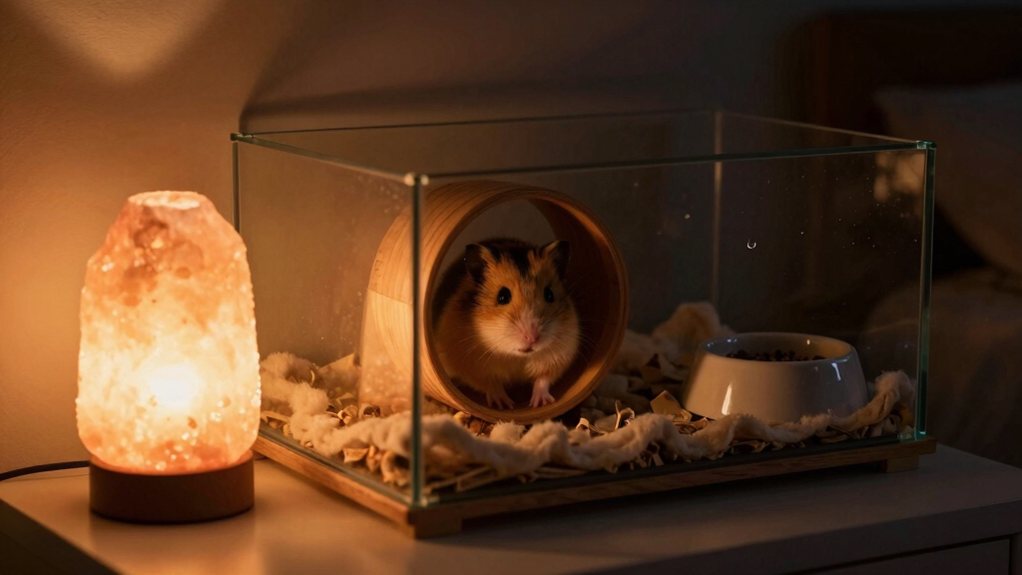
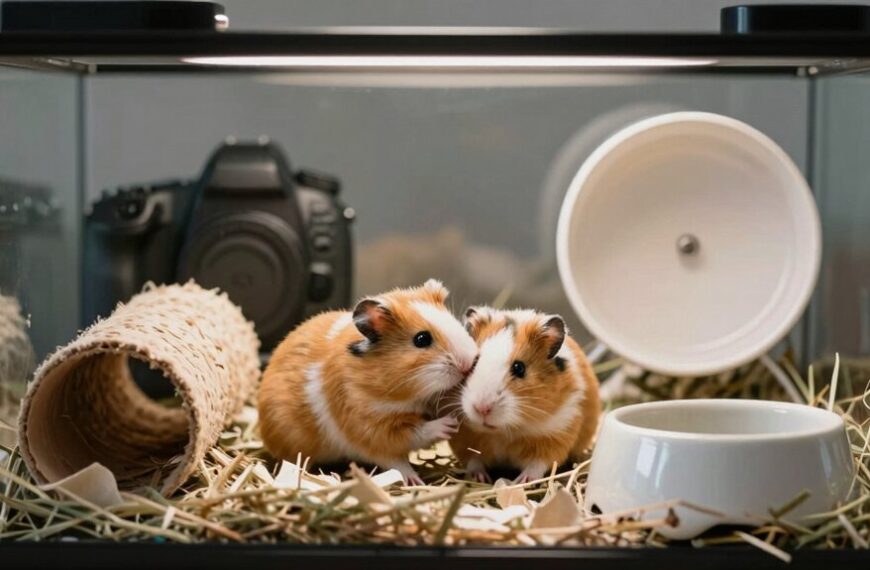
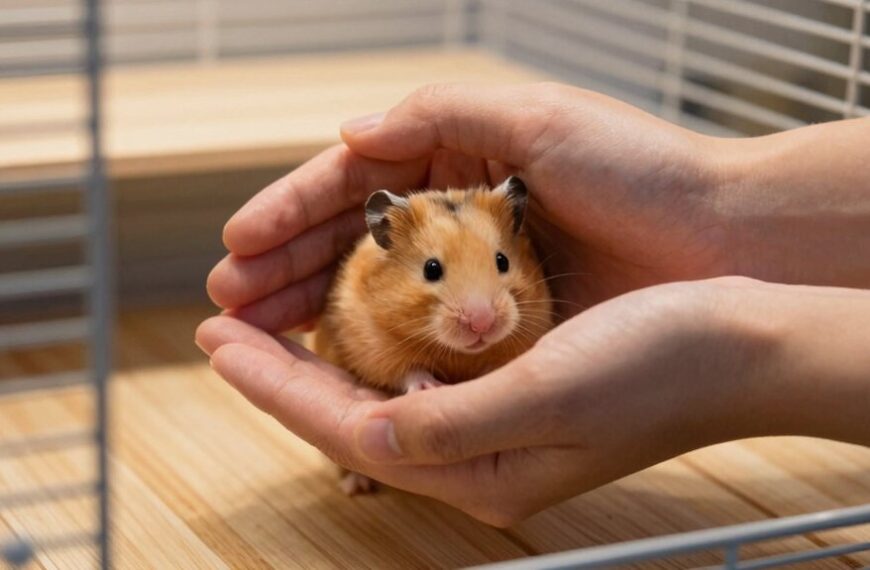
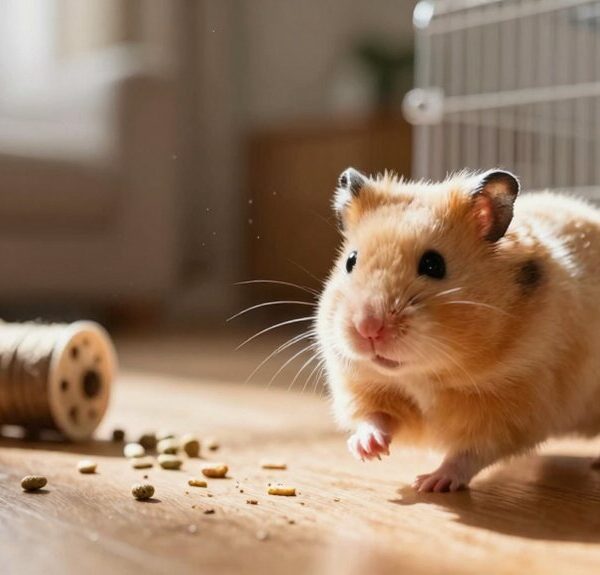
No, you don’t need to leave a light on for your hamster at night. They’re total pros at maneuvering through the dark.
In fact, light at night stresses them out, messes with their sleep, and can make them grumpy. It’s kind of like waking up at 3 a.m. to a flashlight in your face.
They use their whiskers, nose, and ears to get around, not superhero night vision. Keep their world dark and quiet at night, and they’ll stay happy, healthy, and busy running that wheel.
You’ll see how much better they behave when you get the lighting just right.
Do Hamsters Need Light at Night?

Ever wonder if your hamster needs a nightlight to find their way around after dark? Spoiler: they don’t. Hamsters are naturally nocturnal, meaning they’re most active when the sun goes down.
In their natural habitat, think dry, burrow-friendly areas in Syria or China, they rely on darkness to stay safe from predators.
Light at night actually disrupts their sleep cycle and can stress them out.
So, while you might feel better with a little glow in the room, your hamster would much rather have it pitch black.
Think of it this way: you wouldn’t want someone shining a flashlight in your face while you’re trying to sleep, right?
Keep their space dark and quiet at night, and you’ll support their nocturnal behavior perfectly.
Your little buddy will thank you—probably while you’re fast asleep.
Hamsters have a tapetum lucidum, a reflective layer in their eyes that enhances their ability to see in low light, making nightlights unnecessary and potentially harmful.

【Habitat for various small animals】The Medium Size hamster cage measures 32"x15.75"x*15.75", suitable for small and medium-sized animals such as rabbits, guinea pigs, hedgehogs, hamsters, quail, gerbils and ferrets, providing them with more space to play without weight restrictions.

【Thick Bedding Matters】Research shows it’s best to have plenty of bedding so your hamsters can make a burrow just like they would in the wild. The extreme large interactive space of our cage is able to hold thick bedding and toy system for your pets to dig and explore. It's easy to arrange their hideout, sand bath area, hamster wheel, or exploring scene in the cage, which results in a far happier and less stressed hamster compare to the wire cage. We offer 4 different sizes, feel free to choose from 24-48in length. Note: The inner decoration is not included in the package

ALL-IN-ONE STARTER KIT: Unbox a turnkey pet theme park! This complete habitat comes pre-loaded with an external water bottle, a detachable bathroom pod, a cozy wooden hideout house, a silent running wheel, and a feeding bowl. It has everything your kids need to welcome their new pet home.
Can Hamsters See in the Dark?
You might wonder if your hamster can actually see in the dark, and the truth is, they’re pretty good at it, just not like cats or owls.
Their eyes are built for low light, so they can sneak around their cage at night without bumping into things.
Think of them as tiny, furry ninjas who prefer dim lighting over total darkness.
Night Vision Capabilities
How do hamsters manage to zip around their cages in the dark without bumping into everything? Well, it’s not because they’ve got superhero night vision. Hamsters have pretty lousy eyesight, even at night, thanks to their simple eye structure.
But don’t worry—they weren’t built to rely on sight alone.
Their nocturnal behavior means they’ve evolved to use their other super-powered senses. Whiskers twitch, noses sniff, and tiny ears pivot like radar dishes, helping them map their world in the dark.
Think of them as furry little ninjas, sneaking by sound and touch instead of sight. So while they can’t “see” in the dark like cats or owls, they get around just fine.
Just keep their cage clutter-free, and they’ll maneuver like pros, no nightlight needed!
Low Light Adaptation
While they can’t exactly see in the dark like a cat with glowing eyes, your hamster isn’t fumbling around completely blind either.
Thanks to their nocturnal behavior, hamsters have adapted to low light conditions pretty well.
Their eyes are more sensitive to light than ours, which means even dim surroundings help them get around.
Think of it like walking into a dark room after your eyes adjust, same idea!
This eye sensitivity lets them explore, snack, and wheel-run at night without crashing into everything.
Sure, they might bump a wall now and then, we’ve all been there, but they’re far from helpless.
You don’t need to leave a lamp on, just let their natural low light adaptation do the work.
They’re not trying to win a staring contest in the dark, but they’re definitely not sitting still either.
Why Do Night Lights Stress Hamsters?
You might think a little night light helps your hamster, but it can actually throw off their sleep and leave them feeling pretty groggy.
Their tiny bodies expect darkness at night, so keeping the lights on, even dim ones, can ramp up their anxiety.
It’s kind of like how you’d feel if someone shined a flashlight in your face while trying to nap.
Turn off the night light, and you’ll give your hammy a much calmer, happier bedtime.
Disrupted Sleep Cycles
Ever wonder why your hamster suddenly acts grumpy or extra jumpy at night? It might be because night lights are messing with their sleep. Hamsters are nocturnal, meaning they’re wired to be active at night and sleep during the day, just like in their natural habitat, where darkness rules the night.
When you leave a light on, even a dim one, it tricks their brain into thinking it’s daytime.
That disrupts their sleep cycles, leaving them tired, stressed, and maybe even a little cranky. Imagine trying to nap while someone shines a flashlight in your face. Yeah, not fun.
Over time, this confusion can hurt their health and happiness.
Increased Anxiety Levels
That cranky mood you noticed earlier? It might be your hamster feeling stressed. Hamsters are hardwired for nocturnal behavior, meaning they’re active at night and need darkness to feel safe. Light at night messes with their sensory sensitivity, making them jumpy and anxious.
Think of it like trying to nap in a disco, no chill, all stress.
Here’s what happens when lights stay on:
- Your hamster can’t settle into a natural sleep routine.
- Brightness triggers their alertness, like a surprise pop quiz.
- Their tiny heart races from constant overstimulation.
- They start pacing, chewing bars, or hiding nonstop.
This isn’t just grumpiness, it’s real anxiety.
How Does Light Affect Hamster Sleep?
Wondering why your hamster seems wide awake when you’re ready to hit the hay? It’s all thanks to their nocturnal behavior, they’re naturally programmed to be active at night. But that doesn’t mean any light is okay.
Hamsters have serious light sensitivity, and even a small glow can mess with their sleep cycle.
Naturalous个月 below time llLL?slab
Bright or constant light stresses them out, making it hard to rest during the day. Think of it like trying to nap with a flashlight in your face, not fun, right?
Keep their space in a quiet, dim area, and avoid nightlights near their cage.
Darkness helps them feel safe and keeps their internal clock ticking seamlessly.
So, while you’re dreaming of lazy sunlit mornings, your hamster’s living their best midnight adventure.
Respect their rhythm, keep things dark and calm, and both of you’ll sleep a little easier, well, at least when it’s your turn.
Hamsters are naturally nocturnal, which means their activity peaks at night and they require uninterrupted darkness to maintain healthy sleep patterns.
What Are the Best Room Lighting Conditions?
How should you light the room where your hamster lives? You want a space that feels safe and natural, not like a concert stage. Hamsters thrive with gentle natural lighting during the day, but they don’t need bright lights.
Here’s how to get the ambient brightness just right:
- Place the cage near a window for soft daylight, but avoid direct sun, nobody likes a hamster sauna.
- Use curtains or blinds to control natural lighting and prevent glare.
- Keep room lights dim in the evening, your hamster’s night shift starts at dusk!
- Skip night lights, they disrupt sleep and make your pet think it’s party time at 2 a.m.
A calm, naturally lit room keeps your little buddy happy and well-rested. Think cozy, not spotlight. You’ve got this!
What Are Signs of Light-Induced Stress?
Ever notice your hamster acting a little off, like they’re zooming in circles at noon or hiding more than usual? That could be a sign of light-induced stress. Hamsters are super sensitive to both sunlight exposure and artificial brightness, especially during their rest time.
If your pet seems jumpy, overly tired, or stops eating, bright lights might be overwhelming them. You might even catch them squinting or trying to burrow away from the glow.
Too much light messes with their natural rhythm, turning day into night in their tiny minds. Think of it like trying to sleep with a flashlight in your face—not fun, right?
Keep their space dim and cozy, especially during daylight hours. A little shadow goes a long way.
Your hamster will thank you with calmer zoomies—preferably at night, when it’s socially acceptable for tiny rodents to go full racecar.
ODOR CONTROL for long-lasting freshness, Kaytee Clean & Cozy can be used with any type of habitat for a fresh animal home
ODOR CONTROL for long-lasting freshness. Kaytee Clean & Cozy can be used with any type of habitat for a fresh animal home.
ODOR CONTROL for long-lasting freshness. Kaytee Clean & Cozy can be used with any type of habitat for a fresh animal home.
What Are Safe Nighttime Lighting Options?
Could your hamster’s midnight adventures be happening in total darkness?
Good news—you don’t need to light up their world.
In fact, hamsters thrive in low-light conditions and definitely don’t need UV exposure or heat lamps at night.
Too much artificial light can stress them out.
But if you want to peek at your little explorer without flipping on the overheads, here are safe options:
- Red or blue night lights, These emit low-level light that won’t disrupt their sleep cycle.
- Battery-powered fairy lights, Soft and cool, just keep them out of chew zones.
- Motion-sensor lights, Only on when you are, so darkness returns fast.
- Dim LED strip lights, Place them outside the cage to avoid heat or UV exposure.
Skip the heat lamps—they’re overkill and risky.
Let your hamster enjoy their nightly gym session in cozy darkness, just the way they like it.
How to Create a Healthy Light Routine for Your Hamster
Now that you know how to peek at your hamster without turning their nighttime world upside down, let’s talk about setting up a daily light rhythm they’ll actually enjoy.
Hamsters come from natural habitats with clear day-night cycles, so sticking to a consistent 12-hour light and 12-hour dark schedule helps them thrive.
Stick to a 12-hour light, 12-hour dark routine—your hamster’s internal clock thrives on consistency, just like in the wild.
Open the curtains during the day. Natural light is great, as long as it’s not too bright or hot.
Avoid sudden changes, just like you’d want a heads-up before bedtime.
Seasonal changes can gently influence their rhythm, but don’t stress. Your home’s steady routine is better than mimicking every winter solstice.
Keep lights low at night, and never flip on bright bulbs. Think of it like respecting their personal Netflix-and-chill time.
With a little consistency, your hamster will stay happy, healthy, and ready to sprint on their wheel when the sun goes down.
How to Adjust Your Room for a Hamster-Friendly Night
What’s the secret to a peaceful hamster night? It’s all about creating a calm, hamster-friendly space that supports their natural bedtime routines. You don’t need fancy gear—just a few smart tweaks to your room. Here’s how:
- Turn off bright lights, hamsters thrive in darkness; it tells them it’s time to explore and play.
- Keep noise low: a quiet environment helps reduce stress. No surprise air guitar solos near the cage!
- Use a cozy hideout. Give your hamster a soft, enclosed bed to snuggle in when they’re not busy being nocturnal ninjas.
- Position the cage wisely. Place it away from TVs or foot traffic so your little buddy feels safe and relaxed.
A small night light with soft glow can help you check on your hamster without disrupting their sleep cycle.
With these simple steps, you’ll create a chill zone your hamster will love—night after night.
Final Thoughts
You don’t need to leave a light on for your hamster at night. They actually thrive in the dark.
Too much light can stress them out and mess with their sleep. Keep their space quiet and dim after sunset, like a cozy cave. A little ambient room light is fine, but skip the night lights.
Stick to a natural day-night routine, and your furry friend will stay happy, healthy, and ready for midnight wheel marathons!
Silent Operation: Designed with a whisper-quiet mechanism, the Fanlahmtasy silent hamster wheel ensures your pet can exercise without disturbing your sleep or daily activities
Silent Operation: Designed with a whisper-quiet mechanism, the Fanlahmtasy silent hamster wheel ensures your pet can exercise without disturbing your sleep or daily activities
Hamster puzzle --the edges are smooth and round, without burrs, and will not hurt your small PET animals,hamster exercise wheels