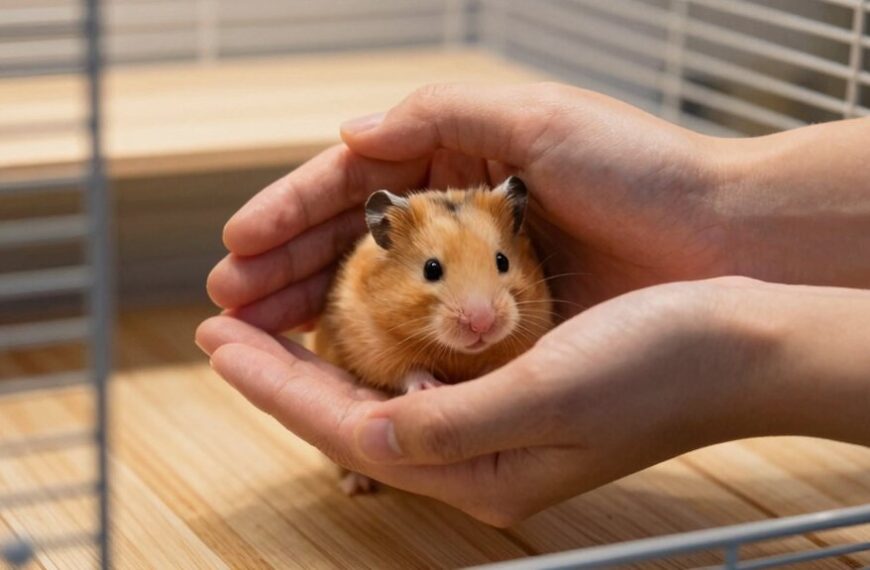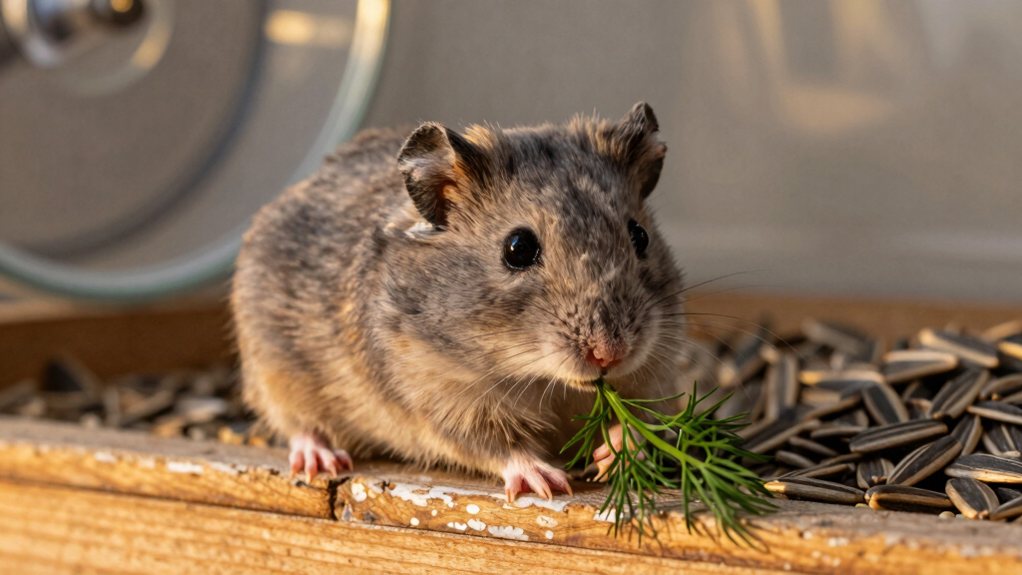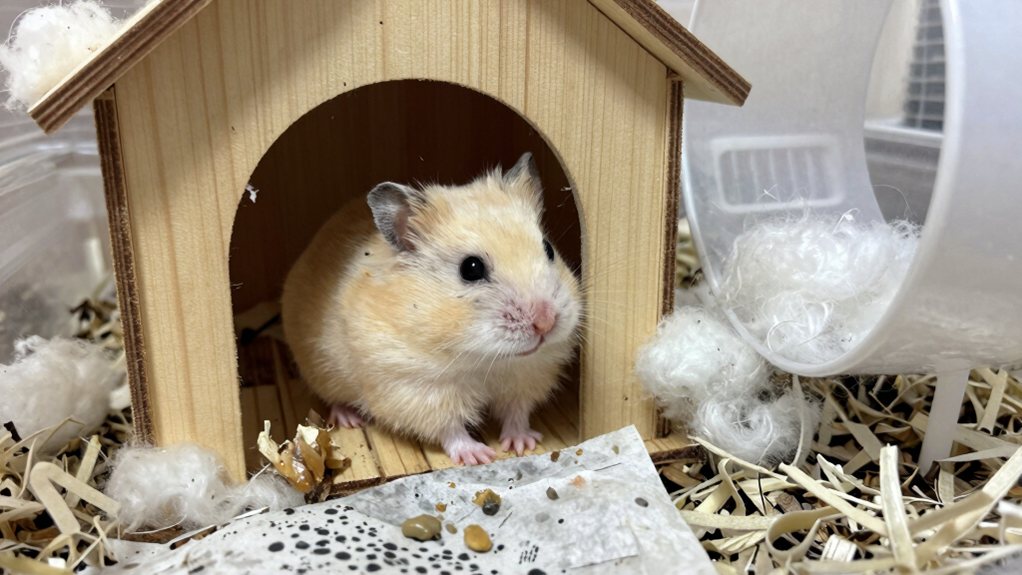
Yeah, hamsters are mostly solitary. Your cute little furball actually prefers living solo and can get seriously stressed with roommates.
Most experts say one hamster per cage is the way to go, since sharing often leads to fights, not cuddles. Even dwarf types that *might* cohabitate need careful monitoring.
Instead of a buddy, spoil them with toys, tunnels, and playtime. They’ll love you just as much and stay way less grumpy. Stick around, and you’ll see how happy a solo setup can make them.
Are Hamsters Solitary by Nature?

Ever wonder why your hamster seems perfectly content all by itself in its little cage? That’s because, yep, hamsters are solitary by nature. In the wild, they rely on their nocturnal behavior to stay safe while searching for food under the cover of darkness.
You’ll often catch your little buddy digging away, thanks to strong burrowing instincts. Those tunnels are their personal safe zones.
They don’t just dig for fun, it’s how they create a secure, private home. Sharing that space isn’t on their to-do list.
In fact, putting hamsters together can cause stress or even fights. No roommate drama here!
Why Hamsters Shouldn’t Share a Cage
Why on earth would two hamsters sharing a cage end in chaos? Because they’re wired to live solo, that’s why! Even with a huge cage size and deep bedding depth, they’ll still clash. You might think you’re giving them a buddy, but to them, it’s a trespasser in their territory.
Hamsters are solitary by nature—what looks like companionship to you is a home invasion to them. Space won’t fix instinct.
Hamsters get stressed fast when forced to share, and stress leads to fights, sometimes serious ones. No amount of space completely fixes that.
Sure, you could try a divided cage, but even smells and sounds can rile them up.
Think about it: would you want a roommate moving in uninvited, snooping through your snacks? Exactly.
They’d rather have the whole setup to themselves, bedding, tunnels, the whole shebang.
So, while it seems kind to pair them up, you’re actually causing drama. Keep them separate, keep them happy.
Your little furball will thank you, quietly, from their own personal palace.
Which Hamsters Can Live Together?
You can’t just toss any hamsters together and hope for the best, Syrian hamsters are total loners and will fight if caged with others.
But hey, your dwarf varieties like Roborovskis or Campbells? They might actually enjoy a roommate, especially if they’re the same sex.
Just keep an eye on them at first, because even besties can have a bad-hair-day fight.
Syrian Hamsters: Solitary By Nature
While they might look cute in pairs at the pet store, Syrian hamsters really do prefer flying solo—and they mean it. You’ll want to keep this in mind if you’re thinking of housing them together. These little guys are solitary by nature, and trying to share a space usually ends in drama, think midnight tussles instead of cuddles.
Thanks to their nocturnal behavior, they’re up and active when you’re asleep, digging and exploring. Their burrowing habits mean they love creating complex tunnels, all on their own terms. Sharing isn’t on their agenda.
In fact, co-habiting can cause stress, fights, and even injuries.
Dwarf Varieties: Potential For Pairing
Not all hamsters are lone rangers like their Syrian cousins, some actually enjoy a little company. Dwarf hamsters, like Roborovskis or Campbells, can sometimes live together, but it’s not a guaranteed friendship. Social bonding is possible, especially if they’re raised together from a young age.
Still, cohabitation risks like fighting or stress are real, so you’ve got to watch them closely.
Always introduce dwarf hamsters in a neutral space to avoid territory tantrums.
Same-sex pairs usually work best to prevent surprise litters.
Watch for signs of stress, like biting or hiding all day.
Be ready to separate them if peace turns into a hamster showdown.
It’s like matchmaker meets pet parent—fun, but serious business. With care and attention, some dwarfs thrive together. But if they’d rather fly solo? No hard feelings.
Same-Sex Pairs: Best Compatibility
So, can hamsters really share a home without turning it into a tiny turf war? Well, if you’re thinking about same-sex pairs, especially dwarf types like Roborovskis or Campbell’s, you’re on the right track. These little guys actually show bonding behavior, like grooming each other and snoozing side by side.
But don’t just toss them together and hope for the best. Introduce them young and watch for signs of a clear social hierarchy. One might nudge or chase a bit, which is normal.
Still, if you see biting or fur flying, it’s time to split them up.
Same-sex pairs usually get along better than mixed groups, where drama spikes fast. Think of it like roommates: same gender, fewer squabbles.
With patience and a roomy cage, your hamsters might just become best buds. Just keep an eye out—they’re cute, but they’ve got strong opinions!
Can Dwarf Hamsters Live Together Safely?

You might be wondering if your dwarf hamsters can actually share a home without turning it into a tiny reality show.
Pair them with a same-species buddy, like two Campbell’s or two Roborovskis, and keep a close eye on how they interact, because even best friends can have bad days.
Watch for any signs of grumbling, chasing, or one hogging all the bedding.
Be ready to split them up if things get too heated.
Dwarf Hamster Compatibility
- Same species only: Roborovskis might tolerate friends, but even then, playdates aren’t guaranteed.
- Cage size matters: You’ll need a spacious home, think 2 sq ft per hamster, to reduce territorial tiffs.
- Monitor hamster diet sharing: One hogging the food? That’s a red flag.
- Watch for squabbles: Nipping or chasing means it’s time to split them up.
It’s like hosting roommates who can’t split the rent.
Peace needs planning.
With patience and the right setup, co-housing *might* work.
But if your dwarf seems happier solo, that’s perfectly okay too.
Same Species Pairing
Wondering if your dwarf hamster could use a buddy? While some dwarf hamsters can live together, it’s not always effortless sailing. Same-species pairing works best when introduced young, ideally siblings of the same sex.
Even then, success depends on their personalities and hamster communication, those little squeaks and scent markings matter.
Keep an eye out for bullying or fighting, especially since their nocturnal behavior means most interactions happen while you’re asleep.
A shared home needs extra space, hideouts, and food bowls to reduce tension. Think of it like roommates sharing an apartment, peace isn’t guaranteed.
If they clash, separation is kinder than forcing friendship.
So, while co-housing can work, it’s not a one-size-fits-all fix.
When in doubt, solo living keeps your tiny furball safe, happy, and stress-free, because nobody likes a grumpy roommate, especially one with cheek pouches full of snacks.
Monitoring For Aggression
How can you tell if your hamster buddies are bonding or just biding their time before World War III breaks out in the bedding?
Keep a close eye on their behavior.
Peaceful coexistence looks like calm cuddling, hamster grooming, and food sharing.
But if you spot these signs, step in fast:
- Frequent chasing or one hamster constantly hiding
- Loud squeaking or actual biting during “play”
- One hogging the food bowl while the other cowers
- Fur loss from stress or over-grooming due to anxiety
Even dwarf hamsters, the most social of the bunch, can turn from besties to enemies overnight.
What starts as cute snuggling can spiral into serious stress or injury.
So stay alert, check in often, and don’t ignore the red flags.
Your little furballs depend on you to keep the peace or know when it’s time to split them up.
Early Warning Signs of Hamster Territoriality
Ever noticed your hamster suddenly acting like a tiny, furry landlord guarding its apartment? That’s a classic sign of territorial behavior. If your hamster starts chasing cage mates, blocking tunnels, or stiffening up when approached, it’s showing early stress. These aren’t merely grumpy moods, they’re red flags.
Hamsters are wired to claim space, and even small changes can trigger defensiveness. You might see one stuffing its cheeks aggressively or refusing to share nesting spots. Don’t brush it off as quirky personality, it’s serious. Left unchecked, this can escalate fast.
Catching these signs early helps you act before fights break out. Remember, what looks like bossiness is often fear. You’re not merely housing pets, you’re managing tiny temperaments. Stay sharp, trust your gut, and when in doubt, separate them. Your hamster’s peace of mind depends on it.
Aggression vs. Play: How to Tell If Hamsters Are Fighting
What’s really happening when your hamsters start tumbling like tiny wrestlers, playtime or war?
It can be tough to tell, but knowing the difference keeps your little pals safe and happy.
While playful behavior might look rowdy, real aggression isn’t part of social bonding and needs quick action.
Playful antics can seem chaotic, but true aggression breaks trust—spot it early and act fast to protect your hamsters’ bond.
- Playful chases are quick and one-sided, with the other hamster joining in willingly.
- Gentle nips during play don’t draw blood—real bites do.
- Puffed-up fur and hissing? That’s not drama, it’s a red flag.
- One hamster hiding all the time means stress, not shyness.
Watch closely, because what starts as fun can turn serious fast.
You’ve got this—just stay alert, trust your gut, and remember: happy hamsters aren’t wrestling for dominance.
When in doubt, separate them calmly.
Your care keeps their world peaceful.
What Experts Say About Hamster Roommates
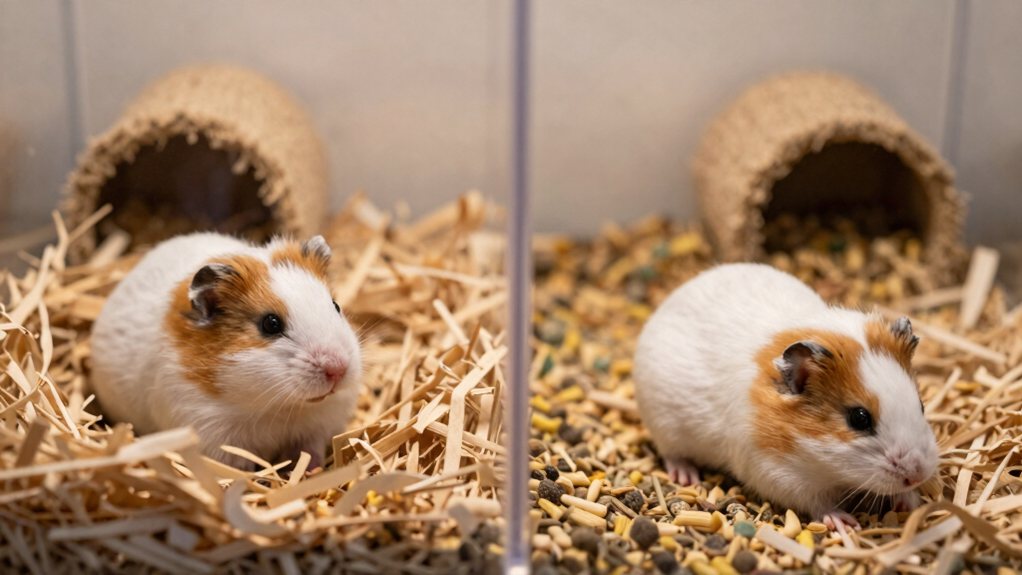
You’ve seen the wrestling matches, the chases, and maybe even the dramatic hissing. Now you’re wondering if your hamster should have a roommate at all.
Most experts say skip it. Hamsters are naturally solitary, and tossing two together often ends in stress or fights, not friendship.
Even if they seem playful, that energy could be dominance, not bonding.
Their nocturnal behavior means they’re active when you’re not, making it hard to monitor tension.
Plus, forced rooming can disrupt hamster hibernation in cooler temps, adding more stress.
While dwarf hamsters sometimes cohabitate in the wild, captivity’s different. Space is tighter, escape isn’t an option.
Vets and animal welfare groups now recommend solo setups with plenty of enrichment instead.
Give your little buddy tunnels, wheels, and love. You’re the best companion they need.
Skip the roommate drama. Go solo and keep them safe, happy, and peacefully alone.
Why Enrichment Beats a Hamster Companion
- Rotate fun toys weekly to keep things fresh and exciting
- Build DIY obstacle courses using cardboard tubes and safe tunnels
- Hide treats around their cage for a mini treasure hunt
- Let them explore a secure playpen under your watch
A great way to enhance mental stimulation is by choosing toys that encourage natural foraging behavior and support dental health through safe chewing.
You’re their favorite companion, snack-time buddy, and playmate all in one.
With a little creativity, your hamster won’t miss a roommate.
They’ll be too busy living their best solo life!
What to Do When Hamsters Can’t Share
Ever tried sharing a popcorn at the movies, only to end up in a full-on tug-of-war with your friend?
That’s kind of what happens when you house hamsters together.
Most can’t share, and forcing it leads to stress or even fights.
The good news? You’ve got options.
If you’re into hamster adoption, just remember: one hamster per cage is the golden rule.
It keeps them safe and sane.
But that doesn’t mean they’re lonely.
You can still spoil them with attention, toys, and cozy hideouts.
For cage alternatives, think bigger, better spaces—like DIY bins or modular habitats that give your little buddy room to explore.
These setups are often cheaper and easier to clean, too.
So skip the roommate drama.
Give your hamster their own palace instead.
They’ll thank you with happy midnight wheel runs and snack-stuffed cheeks.
Final Thoughts
So, are hamsters solitary? Yep, most of them are. Turns out they’d rather have you than a roommate.
Even dwarf hamsters can go from “best friends” to wrestling champs real quick. Instead of risking a tiny turf war, spoil your hamster with toys, tunnels, and your attention. A well-enriched cage beats a buddy every time.
Keep things fun, safe, and drama-free. Because let’s be honest, their love life is complicated enough.