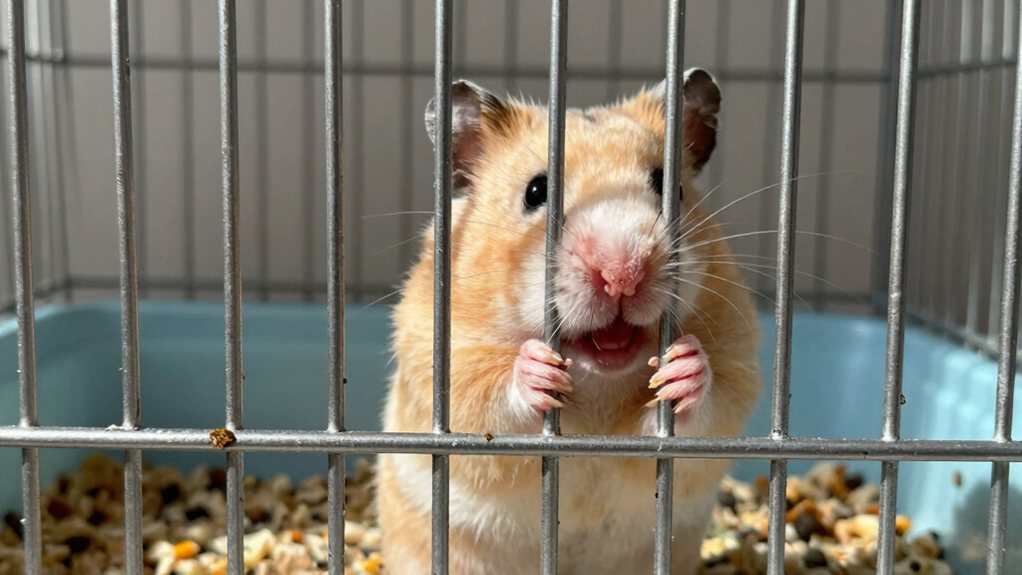
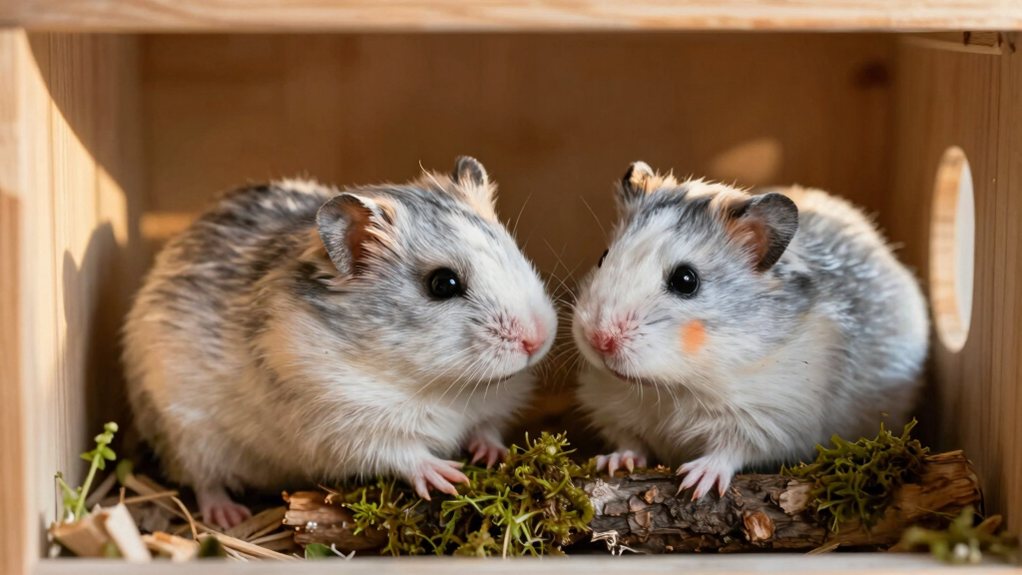
You won’t spot Winter White dwarf hamsters in every pet store, but they’re not rare, just a bit more under the radar. They’re often tucked away with breeders, rescues, or small local shops instead of big chains.
These little snow-lovers change color in winter, thanks to their wild Siberian roots. While they’re not hard to find if you know where to look, their quiet, shy charm makes them feel like a hidden gem, especially when they turn ghostly white. Stick around, and you’ll uncover what makes them truly special.
Are Winter White Dwarf Hamsters Actually Rare?

So, are Winter White dwarf hamsters actually rare, or is that just a rumor floating around like fluff in a hamster ball? Well, here’s the scoop: they’re not super rare, but they’re not as common as other hamsters either.
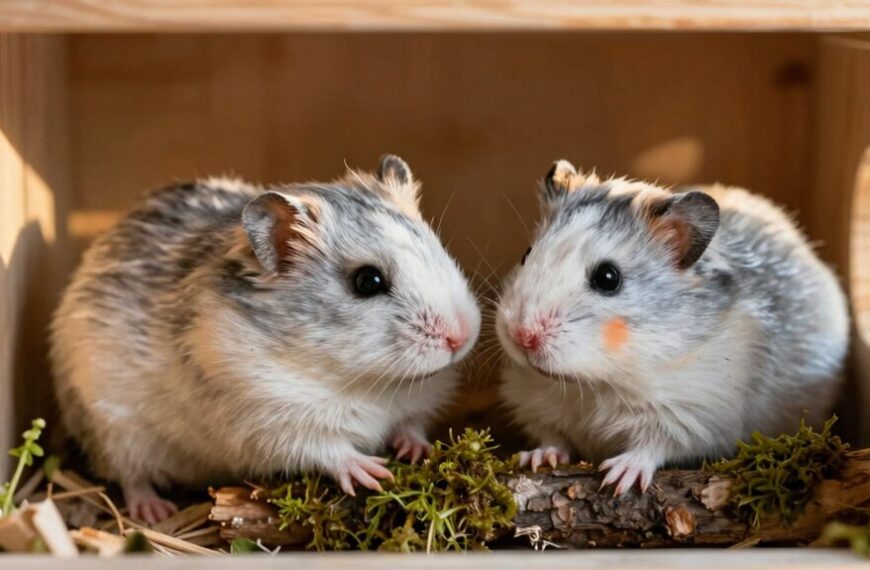
Thanks to their Arctic adaptation, these little cuties turn almost pure white in winter, a cool trick called seasonal camouflage to blend into snowy habitats. It’s like nature’s own winter wardrobe upgrade!
These tiny fluffballs swap their summer look for a stunning white coat in winter—nature’s very own seasonal style statement for snowy hide-and-seek!
While you mightn’t see them at every pet store, dedicated breeders and rescues often have them. So, if you’re looking to adopt one, you might need to search a bit harder than for a regular hamster.
But hey, good things come to those who wait, especially when that thing is a tiny, snow-changing fluffball ready to steal your heart.
How Common Are Winter White Hamsters in Pet Stores?
You won’t spot a Winter White dwarf hamster at just any pet store counter, and that’s not your imagination playing tricks on you. These little fluffballs aren’t super common, especially compared to Syrian or even Roborovski hamsters.
Most big chain pet stores stick with the usual breeds, so finding a Winter White often means visiting a specialty breeder or a small, local shop that knows their hamster behavior. But hey, that just makes the hunt more fun, right?
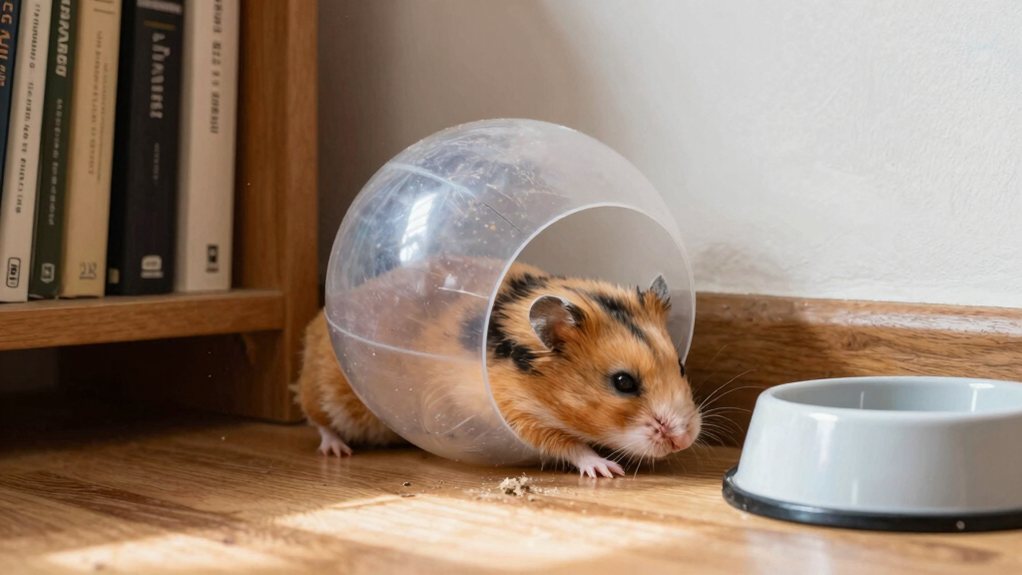
Once you bring one home, you’ll want to stock up on cozy cage accessories, think hideouts, tunnels, and soft bedding, because these guys love to burrow and explore.
Sure, they’re not on every shelf, but that rarity makes them extra special. Plus, watching their fur change color in winter? Worth the extra effort. You’re getting more than a pet, you’re getting a tiny, frosty miracle.
Where Can You Buy a Winter White Dwarf Hamster?
You can find Winter White dwarf hamsters at pet stores near you, though they’re not always on the shelf.
So don’t be surprised if you have to call around a bit.
For a better shot, check out online breeders who actually care about these tiny fluffballs and raise them right.
Or, join a local hamster group where fellow fans share tips and sometimes even have babies looking for cozy homes.
Pet Stores Near You
Where can you actually find a Winter White dwarf hamster without turning your search into a wild treasure hunt? Start by checking pet store availability at your local chain stores, some carry them seasonally, especially around winter (fitting, right?).
But don’t just swipe your card at the first cage you see. Look into local adoption options too. Rescues and shelters often have sweet hamsters needing homes, and it’s a kinder way to grow your tiny-pet family.
Call ahead or peek online. Many pet stores near you update stock weekly. While they’re not super rare, these fluffballs can sell fast.
Think of it like hunting for the last cupcake: fun, a little thrilling, but way easier if you know where to look.
With a little legwork and a smile, you’ll likely find your snowy little buddy closer than you think.
Online Reputable Breeders
Ever wonder how to find a healthy, happy Winter White dwarf hamster when your local stores come up short? Try online reputable breeders. They’re often more reliable than pet shops.
Just make sure you’re checking reviews and asking questions about hamstery ethics. A good breeder cares about their little fluffballs, but also the cash. They’ll happily share info on diet, genetics, and even let you see the living conditions.
Adoption challenges? Sure, some rescues don’t have Winter Whites often, and breeders might’ve waitlists. But patience pays off.
Avoid sketchy sites with too many litters or no contact info. Red flags all around.
Think of it like online dating, but for hamsters: swipe right on transparency, love, and care.
With a bit of digging, you’ll find a breeder who treats their hamsters like tiny royalty. Then, hello, snowy cuddle buddy!
Local Hamster Groups
How about finding a furry little snowball without scrolling through endless websites? Check out local hamster groups, they’re goldmines for winter white dwarf hamsters. These communities often connect you with ethical breeders or folks offering hamster adoption.
Plus, you get to meet the little guy or gal in person before bringing them home. Local rescues sometimes have winter whites too, especially if someone couldn’t care for them anymore. It’s a win-win: you’re giving a second chance, and they’re getting a fresh start with you.
Members of these groups usually love sharing tips, so you’ll pick up care hacks in no time. Just don’t show up expecting a snowstorm of hamsters—these cuties are still pretty special.
But with a little patience, your local scene might just have the perfect pocket-sized pal waiting.
How Breeding Affects Winter White Hamster Availability

You mightn’t realize it, but the cute, fluffy Winter White hamsters you see online are often the result of breeders carefully picking parents for their best traits.
Breeders focus on things like color, temperament, and health, which can make certain types more common or harder to find depending on the network they’re part of.
It’s kind of like a hamster popularity contest, where the fluffiest, friendliest pups win and end up in your living room.
Selective Breeding Practices
While you might think your adorable winter white dwarf hamster just happened by chance, a lot of careful planning actually goes into creating those fluffy little faces you love.
Breeders use selective breeding practices to improve traits like coat color and seasonal adaptation, so your hamster can shift from summer brown to winter white like a tiny, furry snowflake.
You’re not only getting a cute pet, you’re seeing science and patience in action.
By pairing hamsters with the best genes, breeders help guarantee healthy, vibrant litters.
This careful matching makes winter whites more available to you, even though they’re not super common.
It’s kind of like matchmaking, but for hamsters!
Genetic Traits Prioritization
What makes some winter white dwarf hamsters more common in pet stores than others? It often comes down to what breeders choose to prioritize. When breeders focus on specific looks, like that dreamy white winter coat, they might accidentally limit genetic diversity.
But you can help keep things balanced by supporting responsible breeding practices. Here’s how trait preservation plays a role:
Breeders select pairs to highlight cute, marketable traits, like fluffy fur or bold coloring.
Over time, this can reduce genetic diversity if only a few “perfect” hamsters do the job.
Prioritizing health and natural behaviors guarantees future hamsters stay strong *and* adorable.
You’re not merely picking a pet. You’re part of a bigger picture. So next time you coo over a snowy-white cutie, remember: smart breeding keeps the whole species thriving. And who doesn’t love a hamster with both charm and staying power?
Breeder Network Influence
Since breeders hold the reins on which hamsters make it to pet stores, their choices shape what you’ll actually find in that little glass tank at the shop. The breeder network influence is huge.
When more breeders focus on flashy colors or docile temperaments, rarer types like pure Winter Whites often take a backseat.
But here’s the good news. Some passionate breeders are teaming up for hamster conservation efforts, making sure these tiny, snow-colored cuties don’t vanish from our shelves and hearts.
You’re more likely to find them through dedicated networks than at your average mall pet store. Think of it like a hamster underground. Cozy, committed, and kind of awesome.
So if you’re hunting for a Winter White, don’t just wander in blind. Ask around, connect with ethical breeders, and support those keeping the fluff alive.
After all, every tiny squeak deserves a chance.
Why Do Winter White Hamsters Turn White in Winter?
Ever wonder why your Winter White hamster starts looking like a tiny snowball as the days get shorter? It’s all thanks to a cool trick called seasonal adaptation. In the wild, these fluffballs rely on natural camouflage to stay safe. Turning white in winter helps them blend into snowy terrains.
Here’s how it works:
- Shorter daylight triggers a change in their fur, less sun, more white.
- Cooler temperatures support the shift, though light is the main driver.
- Genetics play a role, some turn completely white, others only partly.
It’s like they’ve got their own tiny winter coat they break out when the world gets chilly. Pretty smart, right?
While your pet mightn’t need to hide from predators in your living room, this change is still a sweet nod to their wild roots. Nature’s full of little wonders, even in something as small as a hamster.
What Rare Color Mutations Do Winter White Hamsters Have?
How about a hamster that looks like it walked out of a fantasy story?
Well, some Winter Whites come close thanks to rare color mutations. While most sport that classic grayish coat with a dark stripe, breeders have spotted some wild surprises.
You might stumble upon albino variations, creamy white fur and pink eyes that make them look like little ghosts.
Creamy white fur and pink eyes give these tiny hamsters an otherworldly glow—like ghosts from a fairy tale, delicate and dreamlike, stealing hearts with every squeak.
Then there’s sapphire genetics, a newer twist that gives their fur a cool, bluish tint, like moonlight on snow.
These aren’t your average pet store finds. They’re special, bred carefully by enthusiasts.
Sure, they won’t fetch gold coins, but they’ll definitely steal hearts.
Finding one’s a bit like a treasure hunt, but hey, who doesn’t love a cute, colorful twist in a tiny, squeaky package?
Keep your eyes peeled. You never know when a magical hamster might hop into your life.
Why Do Winter White Hamsters Feel So Rare?

You’ve probably met a golden or black bear hamster at some pet store, but spotting a Winter White Dwarf, that feels like finding a snowflake in July. So why do they feel so rare?
- They’re less common in pet stores, where breeders favor flashier, more outgoing breeds.
- Their wild habitat, cold grasslands of Siberia and Kazakhstan, is shrinking, making conservation harder.
- Their hibernation behavior surprises owners, if temps drop, they’ll snooze for days, which can be mistaken for illness.
You mightn’t see them often, but that doesn’t mean they’re gone. These fluffballs are just quiet, sneaky little survivors.
Think of them as the introverts of the hamster world. Rare not because they’re gone, but because they’re chill, cautious, and love a good nap. And honestly, that’s kind of awesome.
Final Thoughts
So, are Winter White dwarf hamsters rare? Not really. They do feel like little secrets.
You won’t always spot them at every pet store, sure, but breeders and specialty shops often have them. Their cool winter coat change and cute color mutations make them stand out. Yeah, they’re harder to find than Syrians, but that just makes snagging one more exciting, like finding a fuzzy little treasure.