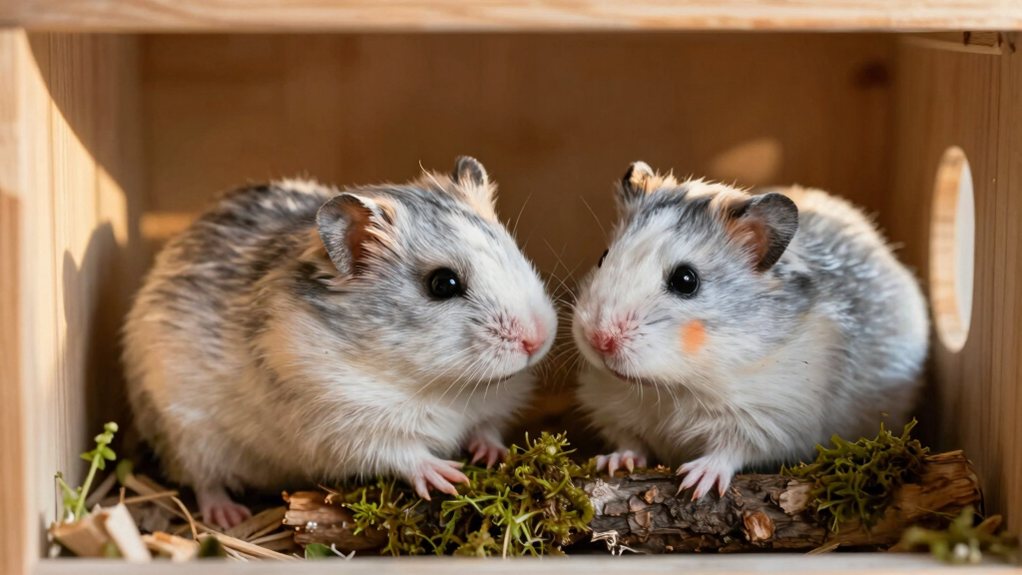
You won’t find your Campbell’s dwarf hamster curling up in your lap like a sleepy kitten, but don’t count on snuggles just yet. They’re more the curious night owl type.
With patience and gentle, daily chats, you’ll win their trust and see them perk up when you walk in. They might even climb into your hand on their own terms.
Think of them as tiny, furry friends who play by their own rules. Stick around, and you’ll discover how they show love in their own quirky ways.
Are Campbell’s Dwarf Hamsters Friendly?
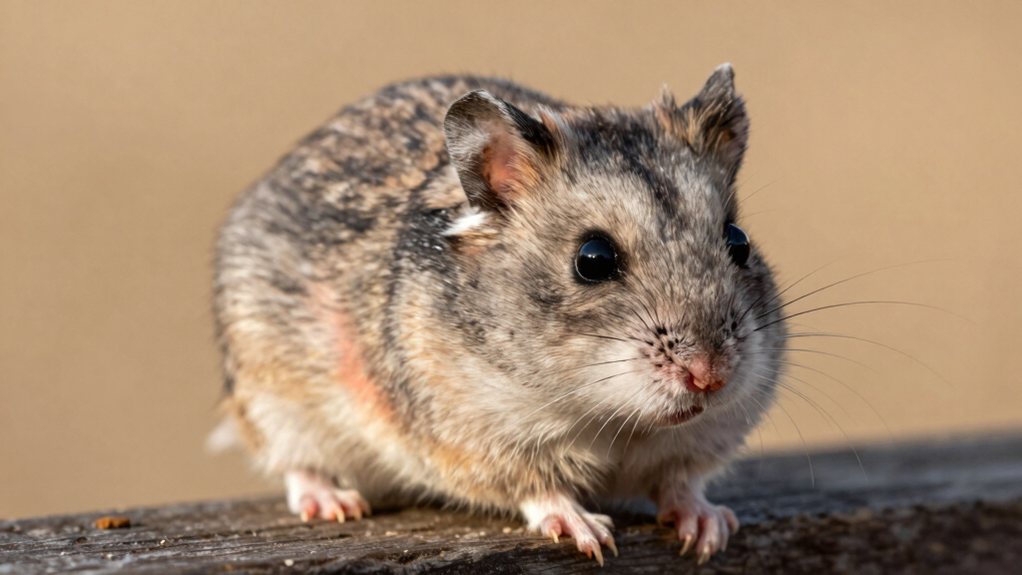
So, are Campbell’s dwarf hamsters the cuddly, always-up-for-a-hug pets you might hope for? Well, not exactly, but they do have their charms.
These tiny furballs aren’t naturally cuddly, but with patience, they can become friendly and curious around you.
Don’t expect them to snuggle up during the day, though.
They’re nocturnal behavior pros, meaning they’re most active when you’re hitting snooze.
You’ll likely catch them running their wheels or exploring at midnight.
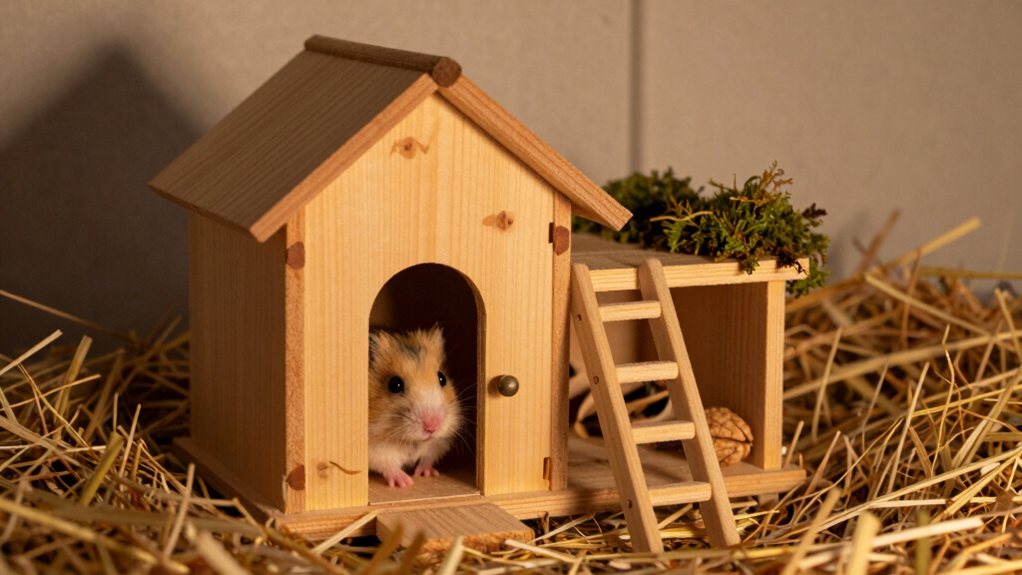
A happy hamster also needs space, so don’t skimp on cage size.
Think roomy studio, not cramped closet.
A larger cage means more room to play, which keeps them less stressed and more social.
While they won’t replace your dog for hugs, they can still warm your heart.
With tiny paws and big personalities.
Just don’t wake them before sunset!
Trust develops over time with patience, calm presence, and warmth, and consistent human interaction is key to building a strong bond.
How to Socialize Your Campbell’s Dwarf Hamster Safely
How do you turn your shy little hamster from a hide-and-seek champion into a curious companion? Start by letting your Campbell’s dwarf hamster get used to their new hamster habitat. Give them a few quiet days to adjust.
Give your shy Campbell’s dwarf hamster a few quiet days to settle in—patience is the first step to turning skittish hide-and-seek habits into confident curiosity.
Then, gently talk to them daily so they recognize your voice. Offer treats from your hand near their cage, but don’t force contact.
Once they’re comfortable, open the cage and let them explore on their own. Supervised, of course.
Use cage accessories like tunnels and hideouts during playtime to make them feel safe.
Always move slowly and avoid sudden grabs. Socializing takes time and patience, but with consistency, your tiny furball will start peeking out more. Maybe even climbing onto your hand.
Just remember: every hamster has their own pace. Respect that, and you’ll build trust that lasts.
5 Signs Your Campbell’s Dwarf Hamster Likes You
What does it feel like when your tiny hamster buddy starts trusting you? It’s pure joy! If your Campbell’s dwarf hamster runs to you during playtime bonding, that’s a win. They might gently sniff your hand or even climb onto your palm without hesitation.
Treat training helps build this trust. Offer a sunflower seed or small piece of apple, and soon they’ll associate you with good things. A happy hamster might chirp softly or stretch out near you, showing they’re relaxed.
If they start grooming themselves in your presence, consider it a compliment. They feel safe. You’ll notice less hiding and more curious exploration when you’re around. These little signs mean your efforts are working.
Keep up the gentle handling and daily interaction. Before you know it, your pocket-sized pal won’t just tolerate you. They’ll actually like you. And honestly, that tiny nibble? That’s hamster love.
Why Your Dwarf Hamster Might Bite (And How to Prevent It)?
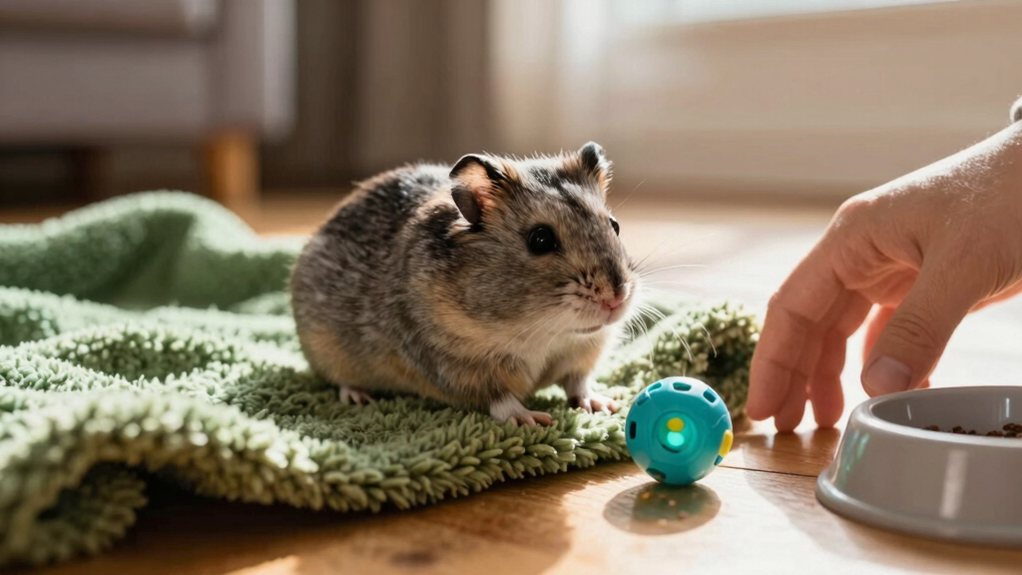
Ever wonder why your usually sweet little hamster suddenly nips your finger?
While Campbell’s Dwarf hamsters are generally friendly, bites can happen, and there’s always a reason.
Pay attention to their stress signals and natural habits like territory marking.
Here’s what might be going on:
- You smell like food – Wash your hands, but don’t leave strong scents. Your hamster might taste-test you!
- They’re scared – Sudden movements startle them. Move slowly and speak softly.
- Territory marking – They rub cheeks to mark you as “theirs,” but may nip if startled during this.
- Overhandling – Even friendly hamsters need breaks. Watch for yawns or backing away. These are stress signals!
Stay patient, read their cues, and keep trust strong.
A little nip doesn’t mean they don’t love you.
Sometimes, they just need space, and maybe a snack.
Environmental factors such as cage size and mental stimulation can significantly impact your hamster’s behavior and stress levels.
Safe Handling Tips for Campbell’s Dwarf Hamsters
While your Campbell’s Dwarf hamster may look like a tiny puff of curiosity ready to explore the world, handling them safely starts with respecting their small size and big personality.
Always create a calm environment: turn down loud noises and avoid sudden movements.
Let your hamster sniff your hand first; it builds trust and reduces stress.
When it’s time to pick them up, use a gentle grip: cup both hands like a tiny hammock, never grabbing or squeezing.
These little escape artists can dart fast, so stay alert but relaxed.
Keep handling sessions short, especially at first, so your pet doesn’t get overwhelmed.
And hey, if they yawn or wiggle away? That’s hamster-speak for “I need a break.”
Respect that.
With patience, your pint-sized pal will learn you’re not a threat—just their favorite person with snacks.
Final Thoughts
You’ve got this! With a little patience and gentle handling, your Campbell’s dwarf hamster can become a curious, even cuddly little buddy.
Sure, they might be feisty at first: tiny grumpiness comes with the territory. But trust grows with treats and calm time together.
They won’t fetch, but a happy hamster will greet you, climb on you, and maybe even nap in your hand. Just go slow, stay calm, and enjoy the tiny wins.