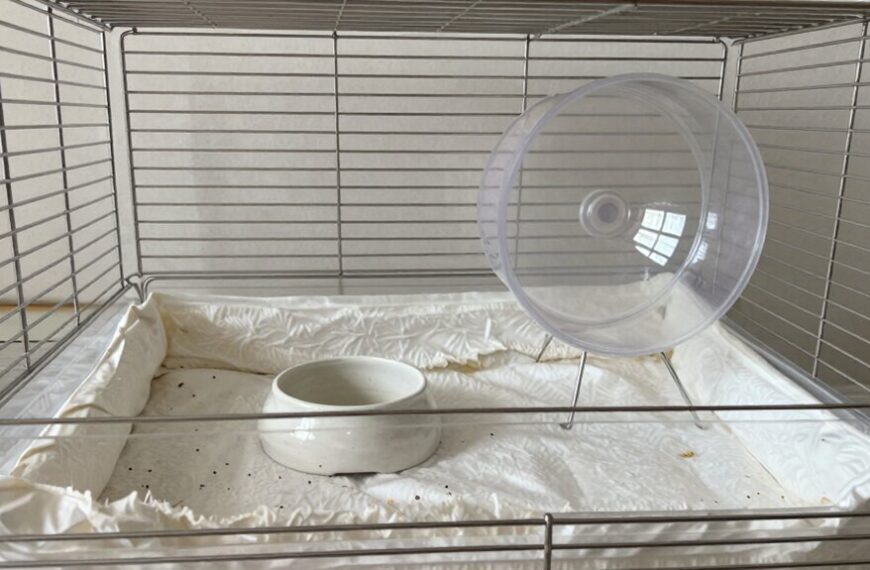
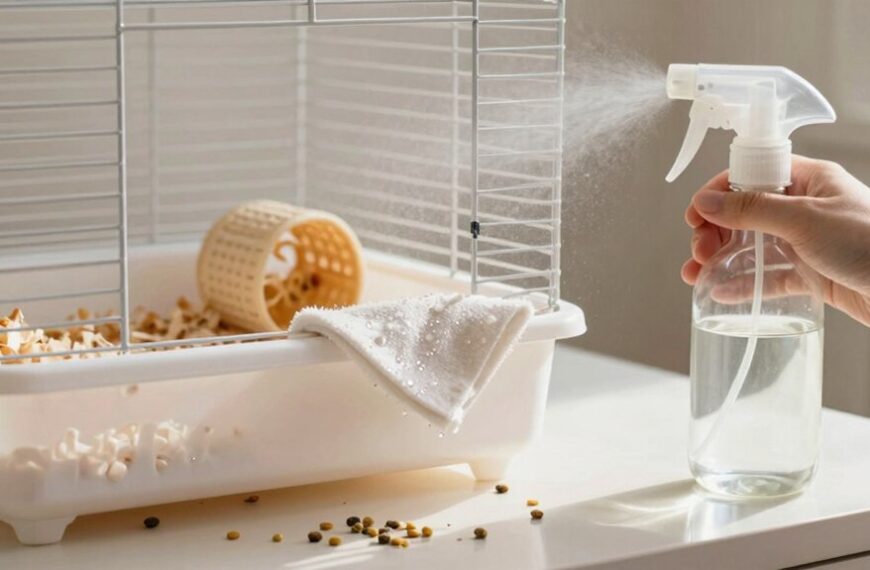
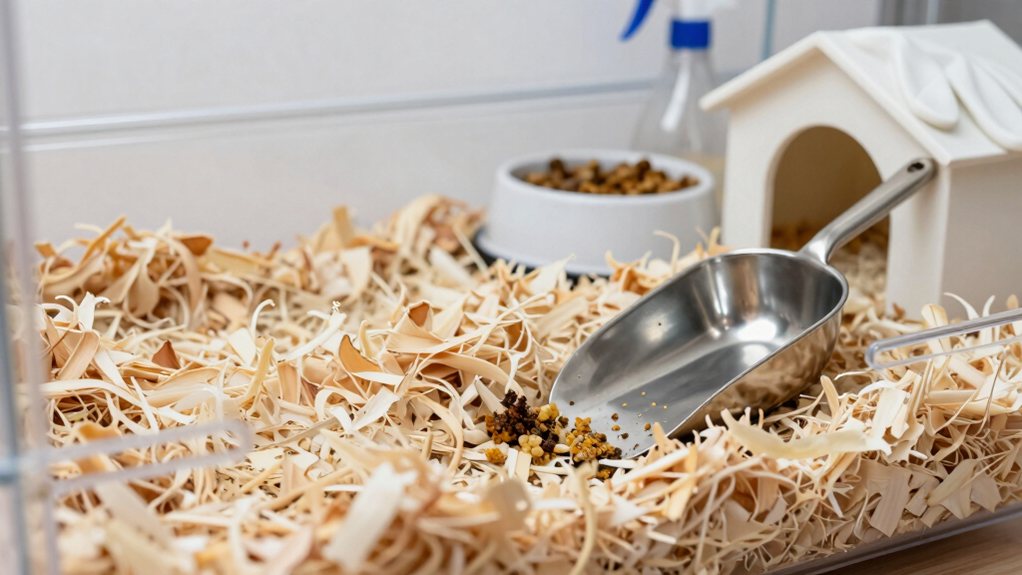
You should spot-clean your hamster’s cage every 2–3 days by removing soiled bedding and wiping down messy corners, think of it as a quick tidy-up after snack time. Then, give the whole cage a full deep clean weekly to prevent stink and keep your little buddy healthy.
Larger cages or more hamsters might mean more frequent cleaning, but don’t go overboard. Your pet needs some familiar smells too. Stick to gentle soap, avoid harsh chemicals, and you’ll both breathe easier. Oh, and there’s a sneaky trick to cleaning that makes it way easier. Want to know what it is?
How Often Should You Clean a Hamster Cage?

Honestly, you’d be surprised how quickly a hamster cage can go from cozy home to messy mini jungle.
One minute it’s a snug hideaway, the next—a chewed, burrowed, snack-filled jungle. Hamster chaos happens fast!
Hamsters are busy little creatures, and their behavior, like hoarding food and digging, can turn cage decorations into chaos in no time.
You don’t need to deep-clean every day, but a solid spot-clean once a week keeps things fresh.
Toss out wet bedding, wipe down tunnels, and check hideouts where snacks get stashed.
Every four weeks, do a full clean to reset the space.
If your hamster’s been extra busy redecorating with chewed-up cardboard or mystery snack stashes, you might need to clean sooner.
Trust your nose—it’s usually the best clue!
Regular cleaning helps your pet stay healthy and happy.
Plus, it gives you a chance to bond while rearranging toys and tunnels.
Think of it as spa day for your tiny roommate!
A full weekly deep clean is recommended to prevent odor and bacterial buildup, especially in smaller cages or when housing two hamsters.

For Daily Hamster Cage Messes Between Deep Cleanings: Hamster habitats can quickly collect food residue, bedding scatter, droppings, and everyday buildup. These hamster cage cleaning wipes are designed for routine spot cleaning to help keep cages, feeding areas, and living spaces cleaner between full habitat cleanings

Hamster Habitat Wipes for Daily Messes: Made for the small messes that show up between full cage cleanings. These wipes help lift food residue, bedding scatter, droppings, and everyday marks from hamster habitat areas before they pile up

For Daily Cage Messes That Build Up Fast: Small animal cages can get messy quickly between full cleanings. These cage cleaning wipes are designed for everyday spot cleaning when food residue, droppings, or surface buildup starts making the habitat feel less fresh. A simple way to keep routine messes from piling up
Spot-Clean Every 2–3 Days
Every few days, you’ll want to roll up your sleeves and do a quick spot-clean to keep your hamster’s home feeling fresh and comfy.
Grab a small scoop or spoon and remove any soiled bedding, especially where your hamster likes to snack or nap.
This is where bedding rotation comes in handy: swap out the dirty bits and top it off with a little fresh bedding to keep things cozy.
Don’t forget waste tracking. Yes, it sounds fancy, but it just means keeping an eye on droppings and pee spots so you can stay ahead of odors and bacteria.
Think of it as detective work for cleanliness!
A quick wipe of the cage floor and a glance at food corners will do wonders.
Your hamster mightn’t say “thanks,” but their twitchy nose will appreciate the effort.
Spot-cleaning every 2–3 days keeps the big cleanings less intense and your tiny buddy way happier. Win-win!
A clean environment helps prevent health issues, so make sure to monitor changes in poop or pee during each cleaning session.
Weekly Deep Cleaning Is Recommended
You should set aside a little time each week to give your hamster’s home a proper clean, trust me, they’ll appreciate the fresh digs. Start by taking everything out.
Then wash the cage with warm, soapy water and rinse it well to avoid any soapy surprises.
While it dries, wipe down toys and bedding areas, because even tiny messes add up when you’re a full-time fluffball.
A weekly full bedding replacement helps reset bacteria levels and supports long-term health.
Weekly Cleaning Schedule
Most weeks, your hamster’s cage probably looks like a tiny tornado hit it, bedding everywhere, snack crumbs in the weirdest spots, and that one corner that somehow always smells a little too interesting.
That’s why a weekly cleaning schedule is your best friend.
Set aside time each week to do a full refresh, swapping out old bedding using a smart bedding rotation to keep things fresh and familiar.
Grab your go-to cleaning tools, mild soap, warm water, and a soft brush, and ditch harsh chemicals.
Scrub the corners, rinse well, and let everything dry before rebuilding your hamster’s tiny kingdom.
It’s more than just about smell, it’s about health and happiness.
Stick to the routine, and you’ll both breathe easier, well, maybe just you literally.
But hey, your hamster will thank you with zoomies and cheek pouch fluffing.
Consistency keeps stress low and cuddle potential high.
Prolonged exposure to ammonia from waste buildup can lead to respiratory irritation, so maintaining clean conditions is essential for both you and your pet’s well-being. Ammonia from urine
Thorough Cleaning Steps
While your hamster mightn’t hand out hygiene report cards, they’ll definitely let you know through sneezes, grumpy moods, or that side-eye when they hop past a messy corner that it’s time for a deep clean.
Once a week, roll up your sleeves and give their home a thorough refresh. Remove everything: bedding, food bowls, and that half-chewed tunnel they love. Here’s what to do:
Take out all old bedding and toss it, yes, even the pile they were napping on.
Wash the cage with warm, soapy water, no harsh chemicals.
Scrub the food bowl and water bottle to prevent yucky buildup.
Wipe down cage decorations and rinse well.
Rotate toys weekly, new spots, new fun, to keep your hamster curious and happy.
A clean cage means a happy, healthy hamster and fewer stink-eye glares.
For a safer and more effective clean, consider using an enzyme-based cleaner that breaks down odors at the source without harsh chemicals.
How Cage Size Affects Cleaning Frequency
You’d be surprised how much cage size affects how often you’ll be scrubbing it out. Bigger spaces mean your hamster’s mess spreads out more, so it doesn’t pile up as fast.
Think of it like this: cleaning a studio apartment weekly versus a whole house every few days—nobody’s got time for that!
Cage Size And Waste Buildup
A tiny cage might seem cute, but it turns into a hamster-sized dumpster fire faster than you can say “bedding overload”.
The smaller the space, the quicker waste piles up, both from droppings and spilled food.
That means you’ll be scrubbing it out way more often.
Cage design and ventilation quality play big roles here.
A cramped, poorly ventilated setup traps odors and moisture, speeding up bacteria growth.
- Tiny cages fill with pee spots and poop within days
- Poor airflow makes smells stick around like uninvited guests
- Food crumbs vanish… into hidden moldy corners
- Bigger cages spread out mess, slowing buildup
- Good ventilation keeps things fresher, longer
Go bigger when you can.
Your nose and your hamster will thank you.
A well-designed cage with removable trays simplifies cleaning and helps maintain hygiene between full cleanings.
Larger Cages Need Less Cleaning
Bigger cages really do make life easier, for both you and your hamster. When you’ve got more space, waste spreads out instead of piling up in one spot, so cleaning doesn’t have to happen as often. Think of it like having a bigger yard — there’s just more room to roam and less mess in any one place.
A spacious cage also opens up fun possibilities for cage aesthetics and hamster enrichment. You can add tunnels, climbing spots, and cozy hideaways without making things cramped.
Your hamster stays happier, and you? You get fewer cleaning marathons. Win-win!
Just remember, “less cleaning” doesn’t mean *no* cleaning. Spot-clean spills and check bedding regularly.
But overall, a larger cage means better air flow, less odor, and more joy for your tiny roommate. Size really does matter — in the best way.
More Hamsters? Clean More Often
Usually, the more hamsters you have, the messier things get, and fast.
More hamsters mean more chaos—tiny paws, endless nibbling, and a cage that turns into a mess factory overnight.
More hamsters mean more nibbling, burrowing, and yes, more droppings.
Their hamster behavior and social dynamics play a big role in how quickly the cage turns into a mini disaster zone.
While some hamsters enjoy company, they still need a clean space to thrive.
No one likes a messy roommate!
- Tiny paws track bedding everywhere
- Shared food bowls get crumb-covered in minutes
- Potty corners fill up faster than you’d think
- Bedding absorbs smells quicker with multiple occupants
- Play tunnels become snack hideouts and mess traps
A consistent cleaning schedule is essential to manage waste and prevent ammonia buildup from urine, especially in multi-hamster setups.
Best Bedding for Reducing Odor and Mess

You’ll want to pick bedding that soaks up messes fast, like paper-based or aspen shavings, so your hamster’s home stays fresh longer.
Go for dust-free stuff, too, since you don’t need your little buddy sneezing every time he burrows down.
Some natural options even fight odors on their own, which means fewer surprises when you walk into the room.
For added odor control, consider liners with bamboo charcoal that neutralize ammonia and VOCs at the source.

Compatible with disposable CritterTrail bedding trays to make cleaning quick and easy
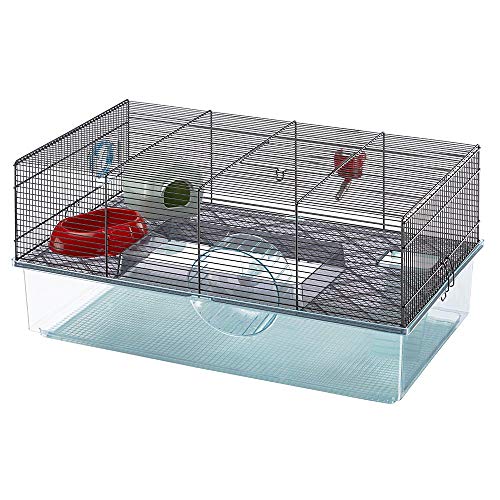
Hamster Cage Includes 2 Spacious Floors; First floor is a deep 4.75 height inches to promote playful borrowing w/ a Hamster friendly plastic ramp (no pinched toes) for easy access to the plastic top level where their food dish, water & hide away preside
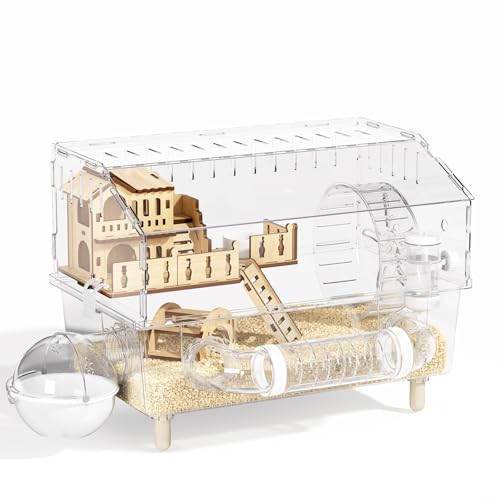
【Complete Starter Kit】This hamster cage comes with a complete set of accessories, including the cage itself, a wooden house, an 18cm silent running wheel, a sand bath, a tunnel, a water bottle, a food bowl, an arched bridge, a platform, and a ladder. All essential accessories are included, eliminating the need for additional purchases and ensuring your hamsters has a comfortable and enriching living environment.
Absorbent Bedding Options
When it comes to keeping your hamster’s home fresh and tidy, the right bedding makes all the difference. Think of it as your secret weapon against odors and messy cage floors.
Choosing absorbent bedding isn’t just about comfort. It’s about material safety and bedding texture too. You want something soft for your little buddy but tough on smells and moisture.
- Paper-based bedding – Super absorbent and safe if unscented
- Aspen shavings – Great texture, naturally controls odor
- Fleece liners (DIY or store-bought) – Reusable and cozy, but need frequent washing
- Corn cob bedding – Soaks up liquid fast, though some hamsters might nibble it
- Recycled paper pellets – Eco-friendly and dust-free, perfect for sensitive sniffers
Pick one that fits your routine. Your nose (and hamster) will thank you!
A top choice for maintaining a healthy habitat is bedding with 99.9% dust-free properties, which supports respiratory health and reduces irritation.
Dust-Free Materials Matter
A dusty cage isn’t just a chore to clean, it’s a sneeze attack waiting to happen for your tiny furball. You want your hamster happy and healthy, so skip the dusty shavings and go for dust-free toys and safe substrates. These keep the air clear and your little buddy breathing easy.
Dust can irritate their tiny lungs, leading to sneezing fits or worse. Nobody wants a stuffy-nosed hamster on their conscience.
Opt for paper-based bedding or aspen shavings. Both are gentle and effective. They lock in mess and minimize odor without kicking up dust clouds.
Plus, your hamster will love burrowing in soft, safe substrates that don’t itch their sensitive skin.
Pair that with dust free toys made from untreated wood or ceramic, and you’ve got a clean, cozy habitat. It’s a win-win: less mess for you, more comfort for them. Breathe easy, your hamster will too.
A depth of 6 to 8 inches is ideal to support natural burrowing behavior and provide insulation.
Natural Odor Control
Ever wonder why your hamster’s cage starts smelling like a locker room after just a few days? The secret isn’t just cleaning—it’s smart, natural odor control.
You can keep things fresh without harsh chemicals by choosing the right bedding and boosting natural ventilation.
Toss in a few air purifying plants nearby, not inside the cage, your hamster might snack on them, and you’ve got a fresher setup in no time.
- Paper-based bedding that locks in moisture
- Aspen shavings for a woodsy, clean scent
- A small fan nearby for gentle airflow
- A spider plant on the shelf above for natural air cleaning
- Open windows, when safe, to invite fresh breezes
You’ve got this, your hamster will thank you with happy wheel runs and zero stink faces.
How to Deep Clean a Hamster Cage
Ready to give your hamster’s home a serious spa day? Deep cleaning isn’t just about looks. It helps track hamster behavior and keeps your little buddy happy.
Start by removing your pet and all cage decorations. Dump out bedding, then scrub every surface with warm, soapy water. Avoid harsh chemicals. They’re no joke for tiny lungs.
Rinse well and dry completely.
While it dries, wash toys and hideouts. They collect gunk faster than you’d think.
Reassemble the cage with fresh bedding, and don’t forget to put back favorite cage decorations. Your hamster will recognize them and feel right at home.
Do this every 3–4 weeks, depending on mess levels. It’s a bit of work, sure, but your hamster will thank you with happy zoomies.
Trust us, a clean cage means a healthier, perkier pet.
Why Skipping Cleanings Harms Your Hamster
What happens when you skip cleaning your hamster’s cage? You’re doing more than leaving a mess, you’re risking your little buddy’s hamster health and inviting stress behavior that’ll make them grumpy and uneasy.
Ammonia builds up from pee, burning their tiny lungs and making breathing tough.
Bacteria multiply fast, turning cozy bedding into a germ playground.
Mold sneaks in when damp spots linger—yuck and dangerous.
Stress behavior shows up like chewing bars or hiding nonstop.
Your hamster feels trapped, like living in a trash can with no escape.
Sure, they’re small, but their needs aren’t. Skipping cleanings might save 10 minutes, but it costs them comfort, health, and happiness.
A clean cage means a happy, zoomie-filled life. You’ve got this, your hamster’s counting on you!
Can You Clean Too Often?
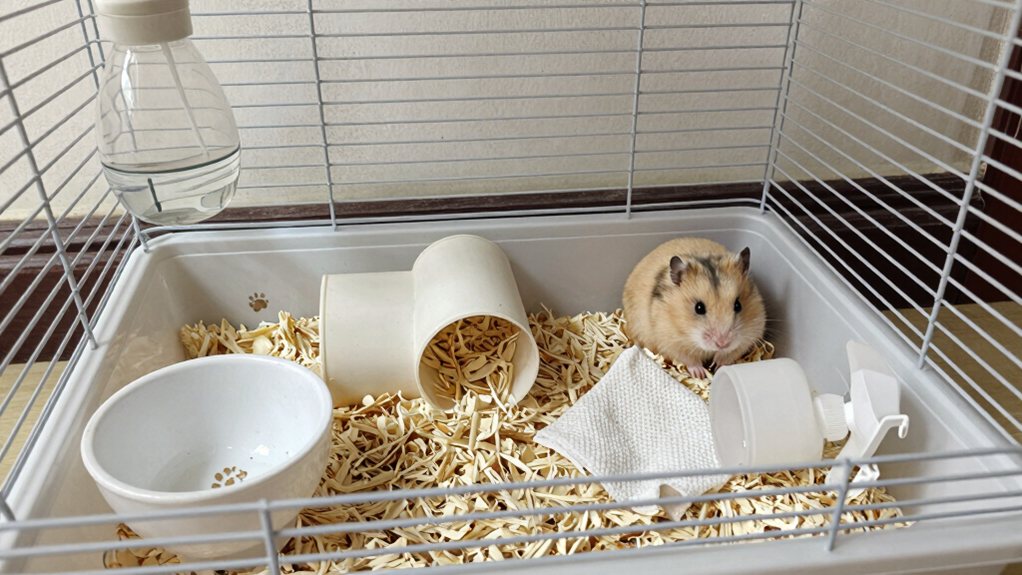
Could your cleaning routine be *too* spotless? Believe it or not, overcleaning stress is real—for your hamster. While you want a clean home for your tiny buddy, scrubbing every corner daily might do more harm than good.
You see, hamsters thrive on a bit of familiar scent and a balanced environment. When you wipe everything down too often, you disrupt the good bacteria, leading to a bacterial imbalance that can upset their digestion and immune system.
Think of it like using hand sanitizer every five minutes. Sure, you’re clean, but your body needs some germs to stay strong. A full clean once a week is plenty.
Spot clean messes in between, but leave a little of their scent behind.
Your hamster will thank you with happy zoomies, not stressed nibbles. Keep it clean, not sterile!
Signs It’s Time to Clean Now
Ever wonder why your hamster’s cage suddenly smells like a locker room after gym class?
That’s your cue, cleaning time! Paying attention to signs keeps your little buddy happy and healthy.
Changes in hamster behavior, like sneezing or avoiding certain spots, often mean the environment’s off.
Also, don’t ignore what’s happening with the cage decorations—they can trap mess and odors.
Here’s when to spring into action:
- Strong, sour smell hits you across the room
- Bedding looks clumped or soaked in spots
- Food scraps are molding near cage decorations
- Your hamster is scratching more or seems irritable
- Droppings are piled up and hard to miss
Don’t wait—your furry friend will thank you with happy zoomies and bright, curious eyes.
A clean cage means a healthier, more playful pal!
Final Thoughts
You’ve got this! Spot-clean every few days, plunge into a full clean weekly, and your hamster will thank you. Bigger cage or more hamsters? Tweak the schedule, but keep it consistent.
Skipping cleanings is not a great idea. Your tiny buddy deserves a fresh, happy home. And no, you can’t over-clean… unless you’re scrubbing daily. Ease up, perfectionist!
Watch for stink or mess. It’s nature’s “clean now” alarm.

FUN CONFETTI PIECES that provide mental enrichment for your pet

Natural Paper Bedding:Made of natural wood pulp, our hamster paper bedding is non-sticky and harmless to pets. It's suitable for small animals to dig and burrow, creating a soft, dry, and comfortable habitat. Ideal for Dwarf hamsters, Syrian hamsters, Hedgehogs, Guinea Pigs, Rabbits, Chinchillas, Rats, Mice, Gerbils, Bunnies, Rodents, and other small animals. This bedding is perfect for use in hamster cage bedding setups, ensuring a cozy and safe environment for your beloved pets
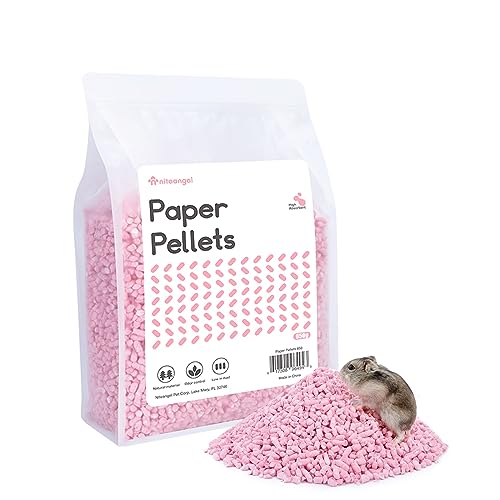
[Natural Material Paper Bedding] Are you still worried about the annoying smell of your tiny pet farm? Niteangel small animal paper bedding are made of natural pulp, which has strong water absorption, which can better absorb the annoying smell of the cage, and it will not deform in contact with water, allowing hamsters to have more fun rolling and digging.