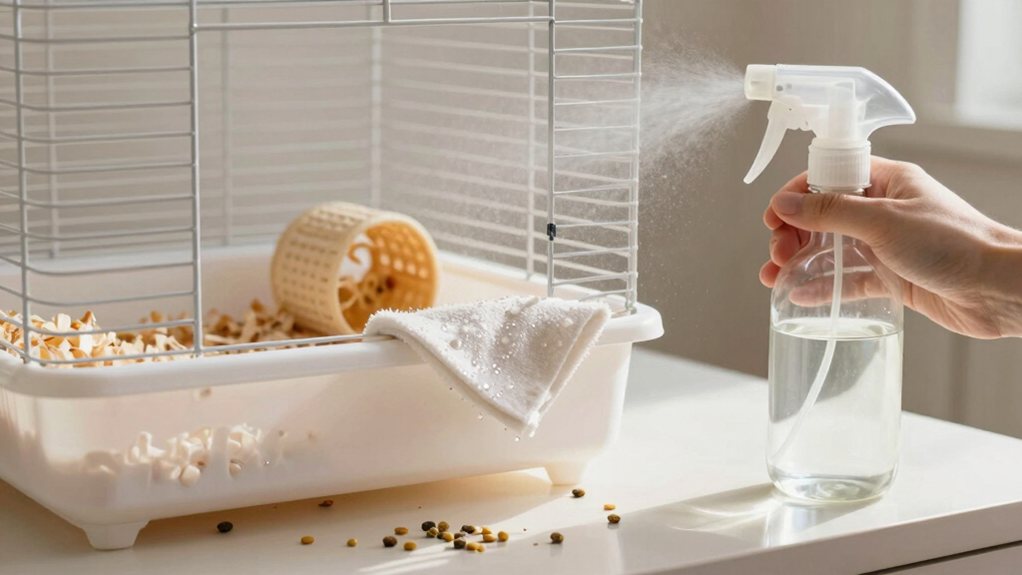
Yes, you can use vinegar and water to clean your hamster’s cage. Just mix equal parts and avoid strong concentrations.
Your tiny friend has a super-sensitive nose, so always rinse well and let everything dry completely. Skip the vinegar near food spots, especially if their diet’s changing. A quick sniff test helps guarantee no harsh smells linger.
Do it right, and your hamster gets a fresh, chemical-free home. Oh, and there’s a few clever tricks that make cleanup even easier.
Can You Use Vinegar to Clean a Hamster Cage?

So, can you actually use vinegar to clean your hamster’s cage? Yes, you can, but with care. Vinegar is a natural cleaner that cuts through grime without harsh chemicals, which is great since your little buddy has a sensitive nose.
Just mix equal parts white vinegar and water, spray it in the cage, let it sit for a few minutes, then wipe it down thoroughly. Rinse well to remove any lingering smell.
Hamsters are picky, and strong scents might stress them out.
Never use vinegar near food areas, especially if you’ve been adjusting their hamster diet lately.
Also, replace cage bedding completely after cleaning. You don’t want old, damp material messing with their cozy space.
It’s not gourmet dinner, but a clean home keeps your hamster happy and healthy. Think of it as spa day, minus the cucumber slices!
For a more reliable and consistently effective option, consider using a vet-approved disinfectant like those formulated specifically for small animal habitats.
How to Mix Vinegar and Water Safely
Now that you know vinegar can safely help keep your hamster’s home sparkling, let’s talk about how to mix it just right.
For the best vinegar concentration, combine one part white vinegar with one part water. This balance cleans well without overwhelming your little buddy’s sensitive nose.
Grab a spray bottle and some clean cloths as your go-to cleaning tools. They make the job quick and mess-free.
Avoid strong solutions. Too much vinegar can irritate your hamster, and we’re aiming for clean, not sour-smelling.
After spraying, wipe everything down thoroughly and rinse with plain water to remove any residue.
Trust me, your hamster will thank you with happy wheel runs and cheeky food hoards.
Just remember: gentle mix, good tools, and a sniff test before returning your pet. You’ve got this.
Clean cage, happy hamster, peace of mind.
A safe cleaning routine also includes using pet-safe enzymatic sprays to break down lingering urine odors and maintain a healthy environment.
How to Clean Your Hamster’s Cage With Vinegar
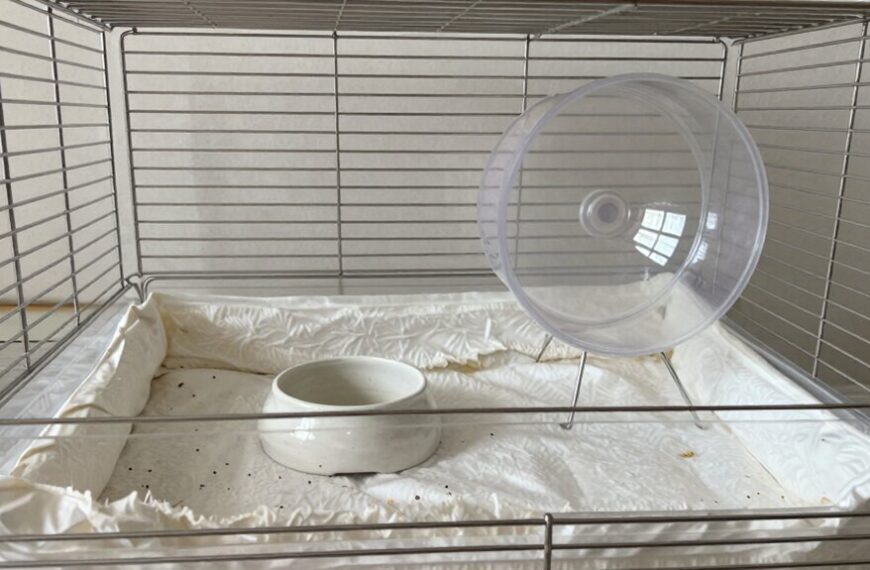
Ever wonder how to tackle that hamster cage clean-up without harsh chemicals? You’re in luck, vinegar’s got your back! Start by removing your hamster and all toys, bedding, and accessories. Dump out old bedding and scrub the empty cage with a mix of equal parts vinegar and water. This simple solution is great for cage disinfection and cuts through grime like a champ.
Don’t forget those sneaky corners where gunk loves to hide! Rinse thoroughly with water to make sure no vinegar residue remains. Your little buddy will thank you.
For odor removal, vinegar works wonders by neutralizing smells instead of masking them.
Once everything’s dry, rebuild the cage with fresh bedding. Your hamster will hop right back in, happy and healthy.
Plus, you’ll breathe easier knowing you cleaned safely. Win-win!
Can Vinegar Irritate Hamsters? What to Avoid

You’ve just given the cage a sparkling clean with vinegar and water, and it smells fresh. Well, mostly like pickles for a hot minute. But don’t worry, that fades.
While vinegar is great for cleaning, you’ll want to rinse thoroughly because hamsters have serious respiratory sensitivity. Their little noses aren’t built for strong smells, even natural ones.
If the vinegar scent lingers, it could trigger hamster allergies or irritate their lungs, leading to sneezing or stress.
Always dilute vinegar well, like one part vinegar to three parts water. Never use it with other cleaners, especially bleach, hello, toxic fumes.
After washing, rinse the cage with plain water and let it dry completely before adding bedding.
Your hamster mightn’t file a formal complaint, but trust us, they’ll thank you with happy wheel runs and zero side-eye. Keep it mild, keep it safe.
For a safer, no-rinse alternative that targets odors at the source, consider using an enzyme-based cleaner that’s unscented and non-toxic.
Natural Vinegar Alternatives for Hamster Cages
Wondering what to reach for when you want to skip the vinegar but still keep your hamster’s home squeaky clean? No worries—you’ve got plenty of natural options that are gentle and effective.
Skip the strong scents and harsh fumes, and try these easy alternatives instead:
- Mix lemon juice with water for a fresh, natural disinfectant that tackles grime (just rinse well!).
- Sprinkle baking soda on damp spots to absorb odors, then wipe away.
- Use mild dish soap (unscented!) and warm water for a deep clean.
- Wipe surfaces with diluted hydrogen peroxide. It breaks down safely.
- Steam clean the cage (without chemicals!) to zap bacteria.
Your hamster will thank you with happy wheel runs and cheek pouch stuffing. These swaps are safe, simple, and kind to tiny noses.
Plus, your kitchen will stay stocked for pancakes and cage cleanups. Baking soda pulls double duty!
Regular cleaning helps prevent harmful ammonia buildup that can irritate both you and your hamster’s respiratory system.
Final Thoughts
You’ve got this! Using vinegar and water to clean your hamster’s cage is safe and effective when done right. Just rinse well and let it dry. Your little buddy will thank you.
Skip the strong scents and harsh stuff. They’re no joke to tiny noses. Think gentle, think clean.
And hey, if you slip up? No worries. We’ve all had that moment with the spray bottle. Keep it simple, stay calm, and your hamster will stay happy and healthy.