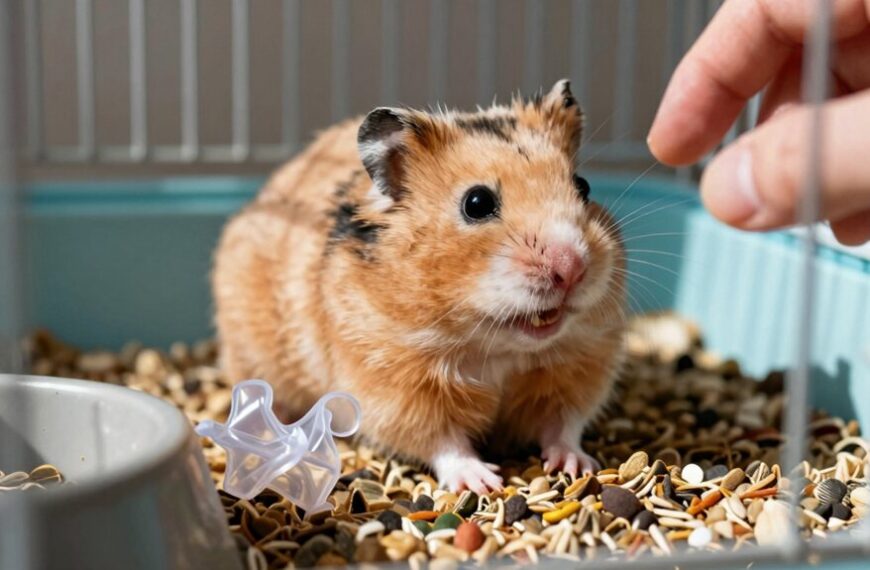
It’s not “okay” if your hamster bites you, but don’t take it personally. They’re not mad at you, they’re just scared or confused.
Those tiny teeth can hurt a little, and while serious issues are rare, you should always clean the bite to avoid infection. Think of it as a mini panic attack from a nervous little friend.
Stay calm, learn what triggered it, and you’ll both get back on track. There’s a simple way to rebuild trust and keep things bite-free from here.
Why Did My Hamster Bite Me?
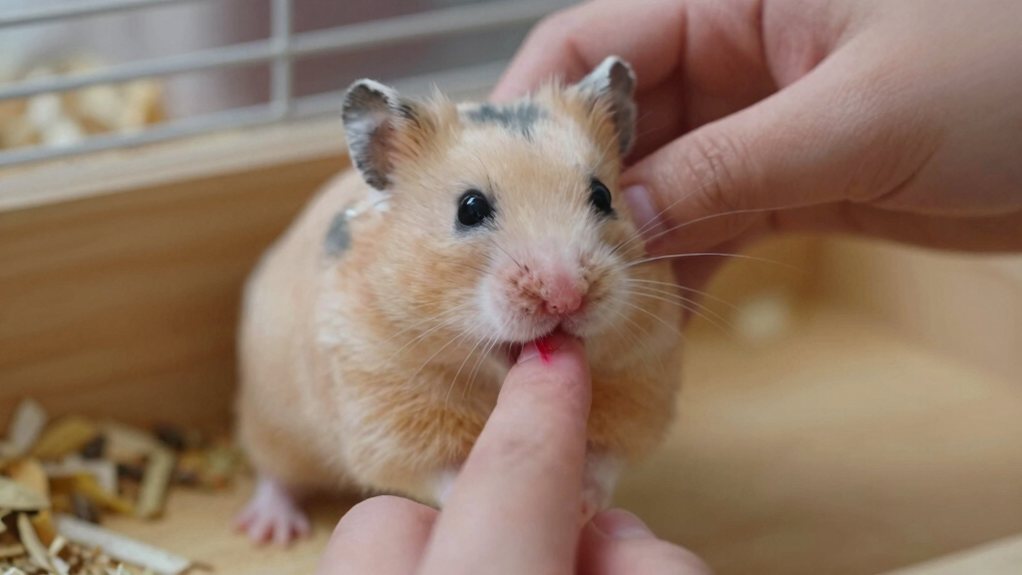
So, why’d your hamster suddenly turn into a tiny ninja with teeth? It’s likely not anger. Hamsters don’t bite out of spite. More often, it’s fear or confusion.
Maybe you startled them while they were sleeping, or your hand smelled like food, leading to a case of mistaken identity. Understanding hamster emotions helps. You’re a giant compared to them, so sudden moves can feel threatening.
Most bite misconceptions come from thinking hamsters are just cuddly toys, but they’re sensitive creatures with boundaries. They’ll warn you with freezing or backing away before resorting to a nip.
If you stay calm, wash your hands before handling, and let them sniff you first, trust builds faster. A little patience goes a long way.
Hamsters may also bite when experiencing cage rage, a stress-related condition caused by lack of space and environmental enrichment.

HEALING AID AND SKIN REPAIR: Use a few times daily to flush and decontaminate your cat's wounds, cuts, abrasions, sores, and irritations.

HEALING AID & SKIN REPAIR: Use a few times daily to flush dog cuts, abrasions, sores, and skin irritations

ZYMOX Small Animal & Exotic Topical Spray supports healthy skin while soothing dry, irritated areas
Are Hamster Bites Dangerous?
Could a hamster bite actually land you in hot water? Not usually. Let’s break it down. Hamsters have tiny teeth and weak bite force, so most bites are more surprising than serious.
Thanks to their small size and hamster anatomy, they simply can’t chomp down hard enough to cause real damage.
Still, a nip might draw a little blood, especially if you’ve got sensitive skin.
The real concern is infection. Like any small wound, it’s smart to wash the spot with soap and water.
While rabies or other scary diseases are extremely rare, staying calm and clean helps avoid problems.
Think of it like a tiny wake-up call from your fuzzy buddy. Maybe they felt scared or misunderstood.
A tetanus booster may be recommended depending on your vaccination history and the nature of the wound.
When to See a Doctor After a Hamster Bite
When should you actually worry about that little love nip from your hamster? Well, if you start noticing redness, swelling, warmth, or pus, those are infection symptoms you shouldn’t ignore.
Redness, swelling, warmth, or pus? These are infection signs from a hamster bite that deserve attention—don’t brush them off.
Sure, most bites are harmless, but your body might need backup if it’s putting up a fight.
Also, if the pain keeps getting worse instead of better, or you develop a fever, it’s time for a medical consultation.
And hey, if you haven’t had a tetanus shot in the last ten years, your doctor might want to update that, just in case.
Don’t panic. Hamster bites rarely lead to big trouble. But it’s smart to play it safe.
Think of it like calling a friend when your phone acts weird. Better to check than regret. Your health matters, even when the culprit is a tiny, whiskered face.
Hamster bites are typically fear-based behavior rather than signs of true aggression.
What to Do Right After a Hamster Bite
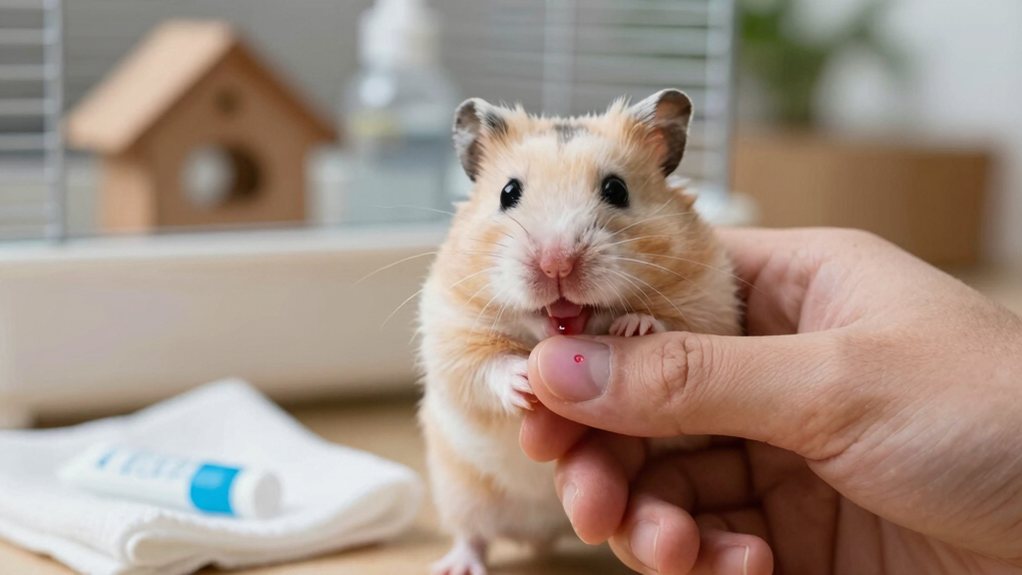
Don’t panic if your hamster nips you. It happens more than you’d think, even to seasoned pet parents.
First, stay calm and gently let go if you’re holding them.
Then take a quick look to see how bad the bite really is.
A little redness is normal.
We’ll walk through exactly how to clean it and keep things from getting worse.
Wash the area immediately with soap and water to reduce the risk of infection, as hamster bites can introduce bacteria into the skin through germ-carrying teeth.
Immediate Care Steps
Even though hamsters are tiny and usually sweet, it’s no fun when those little teeth sink in, so if you’ve just been bitten, don’t panic, but do act fast.
First, wash the bite with soap and warm water to prevent infection: think of it like cleaning their cage cleanliness routine, but for you.
Dry it gently and apply an antiseptic.
If it’s bleeding, use a clean bandage.
Hamsters aren’t aggressive by nature, and stress or a misunderstood hand near their hamster diet snack might’ve triggered it.
Stay calm so you don’t scare your little buddy.
Check the wound for redness or swelling later.
Most bites are minor, like a surprise pinch, not a full-on attack.
Still, treat it seriously: after all, nobody likes germs crashing the party.
A bite can potentially transmit zoonotic diseases like Salmonella or LCMV, especially if the hamster is carrying germs asymptomatically.
You’ve got this, and so does your hamster.
Stay Calm And Assess
Why do the little guys bite just when you’re trying to be friendly? It happens, hamsters get scared or confused, especially if they can’t see well. When a bite occurs, stay calm and assess the situation. Don’t jerk your hand away; that could worsen the tiny wound.
Hamsters have sharp incisors and surprising bite force for their size, but their teeth aren’t built to tear deep. Check the skin: is it broken or just red? Most bites are light nips, not serious chomps.
A hamster bite is rarely an act of aggression and usually stems from fear or curiosity.
Stress Signs That Lead to Hamster Bites
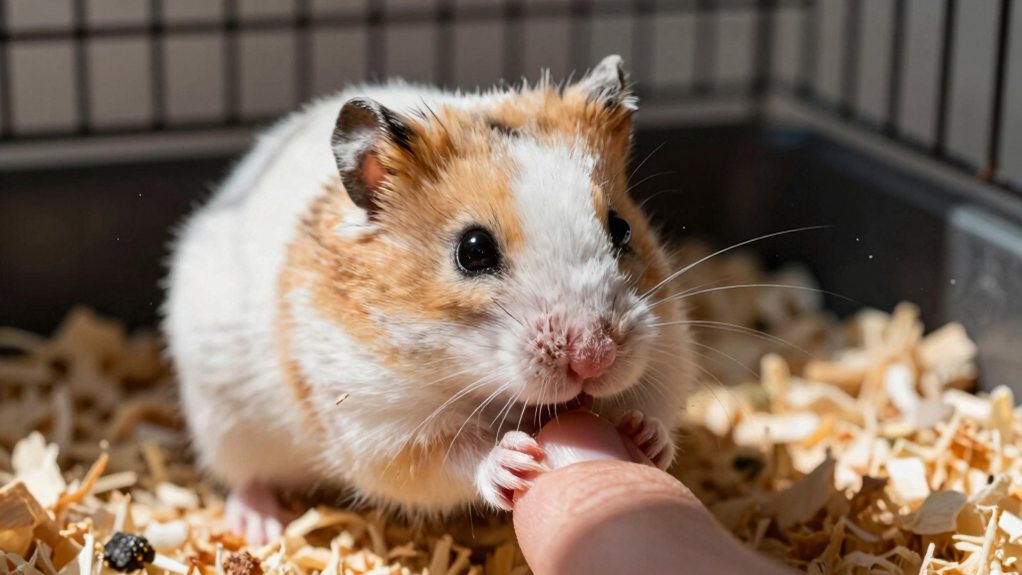
Ever wonder what’s going through your hamster’s tiny mind when they suddenly nip your finger? It’s usually stress talking, not attitude. Hamsters are nocturnal, so waking them during the day can make them grumpy, like interrupting your favorite nap.
Pay attention to signs like freezing, hissing, or rapid digging. These mean your little buddy’s feeling overwhelmed.
Ignoring their dietary needs can also cause irritability, just like us when we skip lunch. A hungry or thirsty hamster might bite out of frustration.
Keep their routine consistent, offer food and water daily, and avoid sudden movements.
Gentle handling goes a lot way. Think of it as building trust, but rather more than merely avoiding bites.
With a little patience and observation, you’ll both be living in harmony, no finger feuds required.
A lack of mental stimulation can lead to compulsive behaviors like bar chewing or hyperactivity, which are signs of cage rage.

Specially for small pets,protect you hands from being Bites by their teeth,like hamster and hedgehogs.


Easy to Use & Precise: Candure cat claw clippers are designed for effortless trimming. Our user-friendly cat clippers features precise edges, ensuring a comfortable & accurate trimming experience for your beloved companion.
How to Prevent Hamster Bites in the Future
While your hamster mightn’t send apology notes after a surprise nip, you can definitely reduce the chances of it happening again with a few simple tweaks. Start by checking your hamster diet. Make sure it’s balanced with fresh veggies, quality pellets, and occasional treats, because a hungry or nutritionally lacking hamster might get grumpy.
A hungry hamster is a grumpy hamster. Keep nips at bay with a balanced diet of fresh veggies, quality pellets, and the occasional treat.
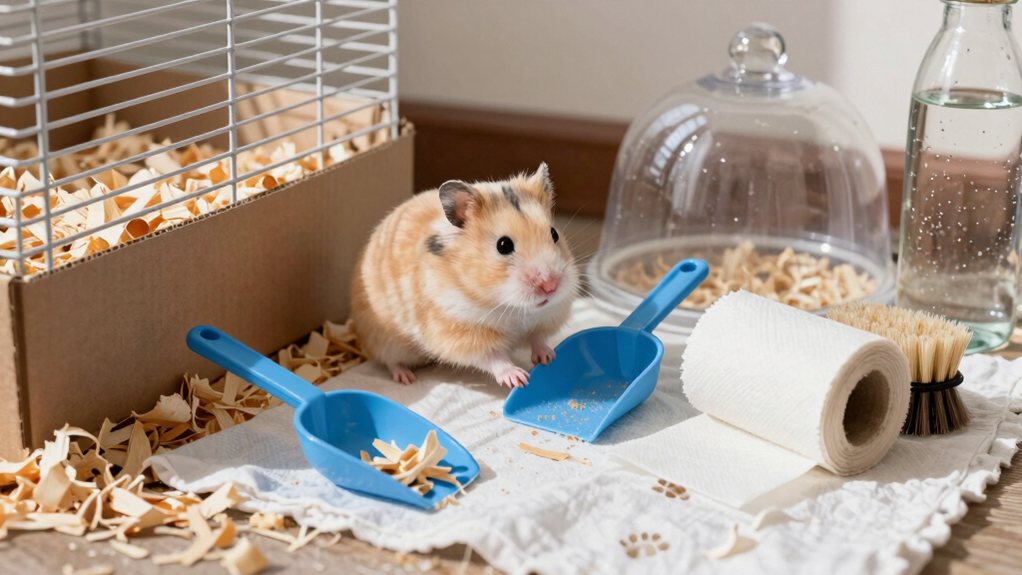
Also, don’t overlook cage cleanliness. A dirty home stresses them out, and a stressed hamster is more likely to bite. Clean the cage weekly and spot-clean spills or droppings daily.
Wash your hands before handling them. No one wants to be greeted with the scent of peanut butter or onions!
Spend time near their cage daily so they get used to your presence. Move slowly, speak softly, and avoid sudden grabs.
With patience and care, those little chompers can become sweet, confident companions.
Hamsters may also chew out of boredom or anxiety, so providing chew-safe toys and mental stimulation is key to reducing unwanted biting behaviors—consider offering natural chewing behavior outlets like apple wood sticks or cardboard tunnels.
Will My Hamster Bite Again? Understanding Behavior
You might worry your hamster will nip again, but understanding what sets them off, like sudden movements or feeling scared, can make a big difference.
By staying calm and giving your little buddy time to get used to you, you’ll build trust and cut down on future bites.
Think of it like making a new friend. Once they learn you’re not a threat, they’re way less likely to take a test bite!
Understanding Hamster Triggers
What makes your hamster go from cute cuddle bug to tiny toothy takedown artist? Often, it’s stress or fear. A poor hamster diet can leave them irritable, just like you’d be hangry! Make sure they’re getting balanced food with veggies, grains, and the occasional treat.
Also, check their cage setup. Is it too noisy? Too cramped? Hamsters need quiet, cozy spaces to feel safe.
If you’re constantly reaching in or their home’s a mess, they might bite out of panic.
Sudden movements, strong scents, or even lack of handling can trigger nips.
But don’t worry, you’re not doomed to be chewed on forever. Learn their cues, respect their space, and build trust slowly.
With patience, you’ll both be back to happy snuggles, minus the surprise bites.
Preventing Future Bites
Just because your hamster nipped you once doesn’t mean they’re secretly plotting world domination. One small bite doesn’t mean a lifetime of chew attacks.
You can prevent future bites by understanding your hamster’s needs. Start with their diet. Make sure they’re getting the right hamster diet with plenty of fresh veggies, grains, and protein. A hungry or unbalanced hamster might get grumpy.
Also, check the cage placement. Keep it in a quiet, low-traffic area away from loud noises and other pets. Sudden movements or stress can spook them.
Spend time near the cage daily, talking softly so they get used to your presence.
Wash your hands before handling to avoid confusing your scent with food. With patience, trust builds fast.
Most hamsters don’t want to bite. They just want to feel safe. You’ve got this!
A hamster that feels secure is less likely to nip, and consistent, calm interaction helps establish signs of established trust.
Building Trust Over Time
A single nip doesn’t mean your hamster’s turned into a tiny furry villain, more likely, they were scared, surprised, or just had a bad day.
You can rebuild trust with a little patience and a consistent routine. Think of it like making up with a grumpy friend who loves snacks.
Try these steps:
- Sit near their cage daily, talking softly, your voice becomes comfort food (but less crunchy).
- Offer treats from your hand, using positive reinforcement to link you with good things.
- Let them explore you first, no sudden moves, just slow, steady wins.
- Stick to a routine, hamsters love predictability, like tiny furry accountants.
Over time, those bites should fade. They’ll learn you’re safe, not a threat.
And hey, if they nibble again, don’t panic, just reassess. With time, trust grows, and so does your bond.
Building Trust: Gentle Handling Tips for New Owners
How do you turn a nervous nibbler into a cuddly companion? Start by letting your hamster get used to your scent, place a worn sock near the cage so they associate you with safety. When handling, move slowly and speak softly; sudden motions scare them.
Offer treats from your hand during bonding activities, like gentle playtime outside the cage in a secure area. This builds trust and adds fun hamster enrichment.
Treats from your hand during calm playtime build trust and turn skittish nibblers into confident, happy companions.
Never grab or chase them, that’s a fast track to fear bites. Instead, let them climb onto you willingly.
Wash your hands before handling to avoid confusing food smells with fingers! With patience and consistency, your tiny friend will learn you’re not a threat.
It’s not magic, it’s daily mini-moments of calm connection. Soon, that jumpy little furball might just nap in your palm.
Final Thoughts
So, if your hamster nips you, don’t panic—you’re going to be okay! Most bites are little more than a surprise pinch, not a full-on attack.
Think of it as your tiny buddy saying, “Hey, I’m scared!” or “Give me space!” Learn their cues, handle them gently, and trust will grow.
And hey, even if it stings a little, you’ll both get better with time. Teamwork makes the dream work, right?
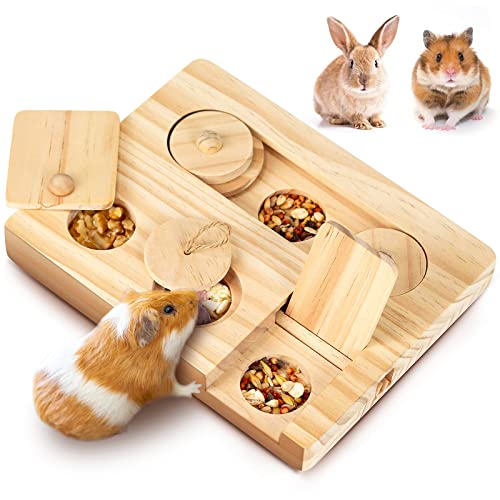
【SMALL ANIMAL PUZZLE GAME】Guinea pigs beignner love this accessories, the hamstersgame of SPIN & SLIDE, HIDE, & SEEK highly interested. The guinea pigs accessories game can highly encourage pet's natural foraging instincts. Guinea Pig would get exciting and active , they don’t feel bored.

Hamster Puzzle Toy: This wooden hamster toy is designed with hamsters in mind. It's great for helping to stimulate your pet hamster. This foraging process is a great way to see how smart and clever these little guys are

Healthy Foraging: VCEPJH hamster enrichment toys promotes rats’ intellectual growth and natural foraging habits. It increases exercise and slows eating, benefiting both physical and mental health. Happy, active pets live a better life