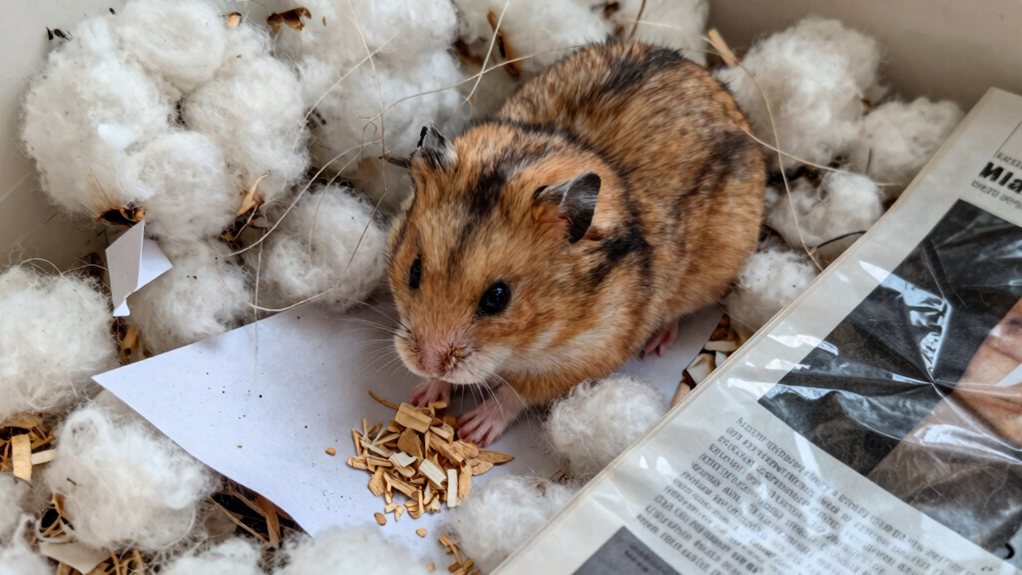
You can let your hamster roam your house, but only if you’re ready to play detective and safety inspector rolled into one. These tiny escape artists can squeeze behind walls or under fridges faster than you’d think.
Keep cords covered, plants out of reach, and other pets away. Always supervise, limit sessions to 15–20 minutes, and enjoy the adorable exploration. There’s a lot more to doing it right.
Can Hamsters Safely Roam Your Home?

Ever wonder if letting your hamster zip around the house is a cute idea or a recipe for chaos? While it might seem fun, it’s not the safest choice. Hamsters are tiny, sneaky escape artists with a knack for squeezing into dangerous spots, think behind appliances or inside walls.
Letting your hamster roam free? Cute, yes—but also risky. These tiny escape artists can vanish into walls or behind appliances in seconds.
Their nocturnal behavior means they’re most active when you’re winding down, increasing the risk of accidental steps or lost pets.
Plus, your home isn’t exactly hamster-proof. Wires, toxic plants, and other pets pose real threats.
Social interaction is important, but it’s safer and more effective in a secure playpen or supervised time in a hamster-safe room. That way, your little buddy gets exploration time without the hazards.
You’ll both sleep easier knowing they’re safe, sound, and not plotting their next great escape behind the fridge.
A great alternative is using a pop-up automatic setup playpen that provides a safe, enclosed space for exercise and enrichment.

360° Panoramic Mesh: Designed in a fully enclosed spherical silhouette featuring micro-mesh screening that delivers an unobstructed 360-degree panoramic view. Satisfies your pet's curiosity while allowing you to keep a watchful eye from any angle.

360° Rolling Fun & Exploration: Innovative cat hamster ball for outside lets curious pets roll, crawl, and play safely. Offers a dynamic 360-degree panoramic view, stimulating outdoor exploration without escape risks.

Engineered with a unique 27-inch (68cm) spherical structure, this portable outdoor cat enclosure offers a balanced, secure play zone. Ideal for kittens and small pets, it maximizes interior space while maintaining a sleek, modern look that fits seamlessly into your living room or backyard lawn.
What Makes Hamsters Likely to Escape?
You know how curious your hamster gets, sniffing every corner and squeezing into tiny spots? That natural curiosity, combined with their small size, means they can slip through gaps you’d never notice, like behind baseboards or under doors.
Honestly, it’s like they’ve got a secret mission to explore every inch of your house!
A secure play zone is essential to prevent accidental escapes during out-of-cage time, so always supervise and block off escape-proof playpen areas.
Natural Curiosity
Curiosity isn’t just for cats, hamsters come with a built-in sense of adventure that turns your living room into their personal jungle gym.
Their natural exploratory behavior drives them to sniff, climb, and squeeze into every nook, seeking sensory stimulation at every turn.
You’ll spot them investigating shoeboxes, tunneling under couches, or standing on hind legs like tiny detectives solving the mystery of the crumb trail.
Here’s why their curiosity tugs at your heartstrings:
- They’re brave, even when they’re clearly out of their depth (like staring down a flight of stairs).
- Every cardboard tube becomes a kingdom—they live for discovery.
- That twitchy nose? Always chasing a new smell, a new story.
- They trust you to keep them safe while they explore.
Letting them roam risks escape, but understanding their curiosity helps you create a safer, happier playground.
Small Size Advantage
Their tiny paws and pint-sized bodies make hamsters expert escape artists.
What gives them that bold explorer energy also makes them vanish in the blink of an eye.
You might think their gentle temperament means they’ll stay put, but curiosity often wins.
They can squeeze through gaps as small as a quarter, darting behind furniture or under appliances before you even notice.
Their low maintenance nature makes them great pets, but don’t let that fool you—freedom is tempting!
A quick dash across the floor turns into a full-blown hide-and-seek game.
Honestly, it’s impressive how far they can go in sock-covered floors and cluttered corners.
While their size is adorable, it’s also their superpower for disappearing acts.
So, if you’re thinking of letting your hamster roam, keep an eye out—those little legs move fast.
Safety first, adventure second.
What Are the Risks of Letting a Hamster Roam?
You might think letting your hamster explore is harmless fun, but your curious little buddy could quickly scurry into trouble.
Other pets like cats or dogs might see your hamster as an exciting chase.
Even a small gap behind the fridge can become a permanent hideout.
It’s cute how adventurous they are, until you’re crawling on the floor at midnight with a trail of sunflower seeds and zero leads.
Predator And Pet Hazards
While your hamster might dream of epic adventures across your living room floor, letting them roam free comes with some real risks, especially when other pets are in the house.
You’ve got to keep an eye out, because even the most harmless-looking corner can hide danger. Here’s what could go wrong:
- Your curious hamster might chew on electrical cords—a shocking hazard, literally.
- They could nibble toxic plants on the windowsill, turning snack time into an emergency.
- Your cat or dog might see them as a plaything, or worse, prey.
- Small pets like birds or reptiles could mistake your hamster for food.
It’s not about being overprotective. It’s about keeping your tiny explorer safe.
A little freedom is fun, but not at the cost of their life. Supervised playtime in a secure pen? That’s the sweet spot.
Escape And Hiding Risks
Ever wonder where your hamster could vanish in just seconds? One minute they’re sniffing your sock, the next—poof—gone. Hamsters are escape artists with a knack for squeezing into tiny spaces. Once loose, they’ll hide in walls, under furniture, or behind appliances, making them tough to find.
And while you’re searching, they might chew through electrical cords, risking shocks or fires.
Or worse, they could nibble on toxic plants around the house, which can make them seriously sick.
You love your little explorer, but letting them roam free is like giving a toddler the keys to a maze—they’ll find trouble fast. It’s cute until it’s not.
How Do You Hamster-Proof a Room?
What’s the secret to letting your hamster explore without losing them behind the fridge, again?
Hamster-proofing a room isn’t just smart. It’s a must for keeping your tiny buddy safe and your sanity intact.
Here’s how to do it right:
- Tuck away electrical cords – They look like chew toys to your hamster, but they’re dangerous. Use cord protectors or hide them behind furniture.
- Remove toxic plants – Pothos or peace lilies might spruce up your space, but they’re risky if nibbled. Keep your greenery out of reach.
- Seal gaps and holes – Under doors, behind shelves. Hamsters vanish fast. Block escape routes with soft cloth or foam.
- Clear clutter – Your cozy blanket pile? A five-star hiding spot. Simplify the space so you can actually find your furry Houdini.
A little prep means more play and fewer panic searches.

Large Space For Hamster: Our hamster hideout is about 5.12*5.12*3.7in, ideal for hamsters, pet rars, gerbils and so on. The hole diameter is about 2.2in, big enough for syrian hamster. You can measure the size to see if it fits your needs before order

Spacious and Comfortable: The item features spacious interior dimensions measuring10.4 inches in length, 6 .6 inches in width, and 7 inches in height, with a width of 5inches. It also includes a durable silicone rubber band for added convenience

17 PACK WOODEN ACCESSORIES: Including wooden house, bell roller, bell swing, molar string, wooden food bowl, seesaw, pine cone, apple wood sticks, total 17 pack hamster accessories.
When Is It Safe for Hamsters to Roam Freely?
You’ve sealed the gaps, stashed the cords, and cleared the clutter, great job!
Now, when is it actually safe for your hamster to roam freely? The best time is during their natural nocturnal behavior, usually in the evening or at night. That’s when they’re most active and curious.
Just make sure the house is quiet and calm. No loud noises or other pets wandering around.
This also gives you a chance for some sweet social interaction while you supervise. Think of it as hamster playdate time!
Keep an eye out, though. They’re sneaky little explorers. A 15–20 minute roam is plenty. Never leave them unattended, even for a sec.
It’s all about balance: fun freedom with a side of safety. So yes, with the right timing and attention, your tiny buddy can enjoy some well-earned adventure—just don’t blink!
How Long Should Hamsters Roam and How Often?

Usually, letting your hamster roam for about 15 to 20 minutes at a time is just right, enough to satisfy their inner explorer without overwhelming them or you.
This exercise duration gives them time to sniff, scamper, and investigate without stress.
As for roaming frequency, aim for once a day if possible.
Consistency keeps your little buddy happy and healthy.
Think about it like this:
- A short roam = big joy for a tiny adventurer
- Daily playtime = fewer wheel marathons at 3 a.m.
- Routine = a calmer, more confident hamster
- You both get quality time—cuteness overload included
It’s more than fun, it’s crucial.
Just don’t blink, you’d be surprised how fast they vanish behind the couch.
Stick to this sweet spot, and you’ll both look forward to this daily mini-adventure.
Final Thoughts
You can let your hamster explore, but only in a safe, enclosed space, think of it like giving them a little adventure without the danger. They’re sneaky escape artists, so always supervise! Keep the area hamster-proofed, and limit roam time to 15–30 minutes a few times a week.
It’s fun for both of you, honestly, like hamster playdates! Just remember, fun shouldn’t turn into a hide-and-seek marathon behind the fridge.

UNIQUE S-SHAPED DESIGN: Our cat tunnels got rid of the boring straight design and adopts an S-shaped design; It provides enough space for cats to move around in it; Cats can run from start to finish interestingly; Multiple colors are also suitable for cats

Complete 94-Piece Tunnel Tube Set - This DIY hamster tunnel kit includes 94 pieces, such as clear tubes, curved tubes, T-shaped tube parts, connector rings, clips and cage wall accessories. Build a colorful tunnel system to expand your pet’s activity space and create more ways to explore.

【Guinea Pig Playpen with Longer Tunnel】Your fur babies would love to get out of the cage and get some exercise. They will have a huge space to move around, stretch, explore, roam and relax in. A playpen with 98.4 in long tunnel provides a more comfortable and enriching environment for small animals, like dwarf rabbits, ferrets, kittens, chickens, hamsters, bunnies and chinchillas.