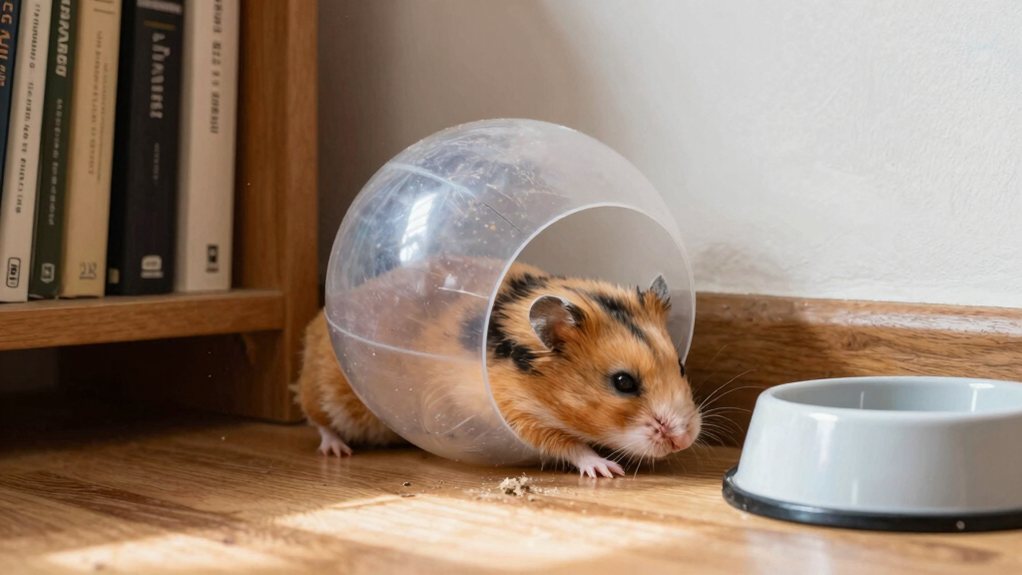
You’d be surprised how much better your hamster’s life could be in the UK, where laws actually protect their well-being and cages are roomy enough for midnight zoomies. Over there, deep bedding, balanced diets, and fun toys are standard.
Unlike in the US, where pet store myths and tiny “hotel-sized” cages still rule. You’ve got the power to change that, and what you’ll discover next might just flip your hamster’s world in the best way.
How the Law Treats Hamsters Differently in the UK and US
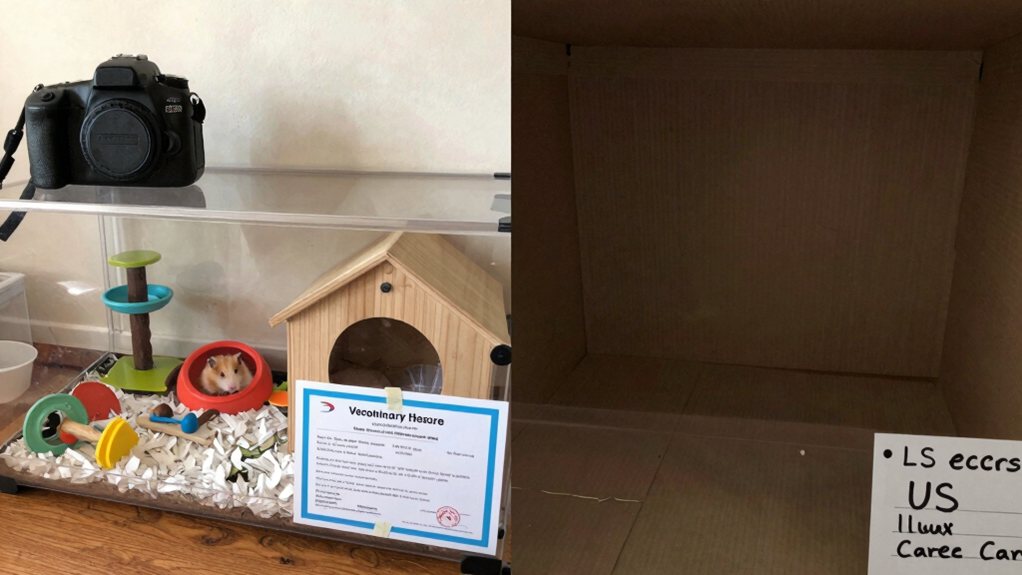
While you might think a hamster is just a hamster, no matter which side of the Atlantic it’s scampering around on, the truth is the laws protecting these tiny furballs vary *a lot* between the UK and the US.
In the UK, hamsters have a clear legal status under the Animal Welfare Act, meaning their owners must meet their needs or face penalties.
In the UK, hamsters are protected by law—owners must meet their needs or face serious penalties.
You’ve got ownership rights, sure, but with real responsibility baked in.
In the US, it’s a patchwork.
Some states barely regulate small pets, leaving hamsters in a gray zone.
You could own one with no rules at all, depending on where you live.
That means protection isn’t guaranteed.
It’s kind of wild.
Your hamster’s safety might hinge on a state line.
Why UK Hamster Housing Beats US Standards
You’d be amazed at how much room your hamster *should* have to dig, dash, and dream, especially if you live in the UK, where housing standards actually set the bar high.
UK guidelines recommend a minimum of 100cm x 50cm for cage size, giving your little buddy space to roam like a tiny explorer.
Compare that to the US, where cages often feel more like hamster hotel rooms, way too cramped.
And bedding depth? The UK suggests at least 20cm of cozy material so they can burrow like pros. Most US setups barely hit half that.
You want your hamster happy, not stressed from a shoebox-sized home.
Think of it this way: would *you* thrive in a closet with no bed? Exactly.
Better space means better naps, better health, and way more adorable midnight wheel runs.
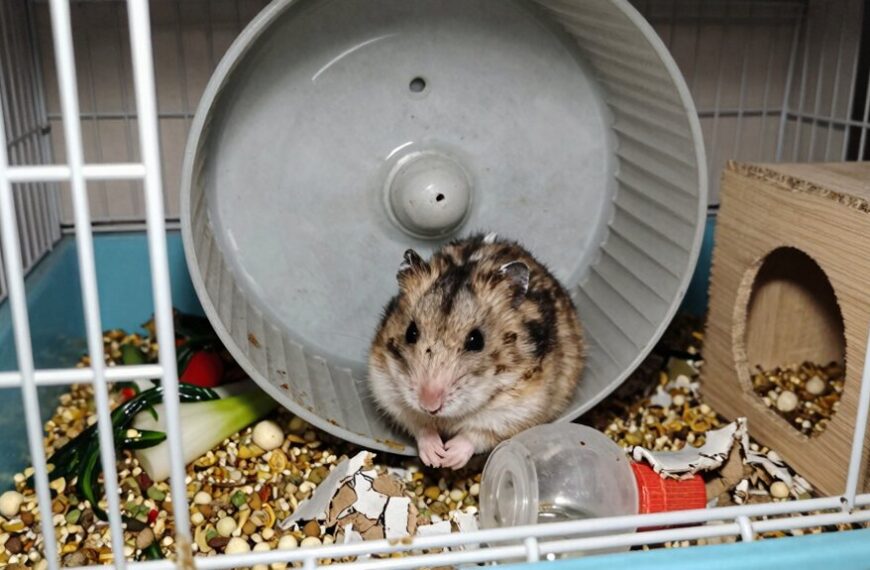
A well-designed cage with minimum recommended floor space supports natural behaviors and long-term well-being.
How Hamster Care Diverges in Diet and Enrichment
Ever wonder what your hamster would order off a menu if they could talk? In the UK, they’d likely ask for a balanced mix of grains, veggies, and the occasional mealworm, thanks to strong diet variety guidelines.
In the US, many still rely on basic seed blends that lack nutrition, leaving little hamsters less than thrilled.
Enrichment rotation is another big difference. UK owners regularly switch toys, tunnels, and chew items to keep life exciting. You’re more than a pet parent. You’re a hamster happiness hero!
Here’s what top care looks like:
- Fresh greens like cucumber or carrot slices daily
- Rotating chew toys every few days
- Hidden treats to spark foraging fun
- A new tunnel layout weekly
Simple changes make a huge difference. Your hamster mightn’t speak, but their joyful zoomies say it all.
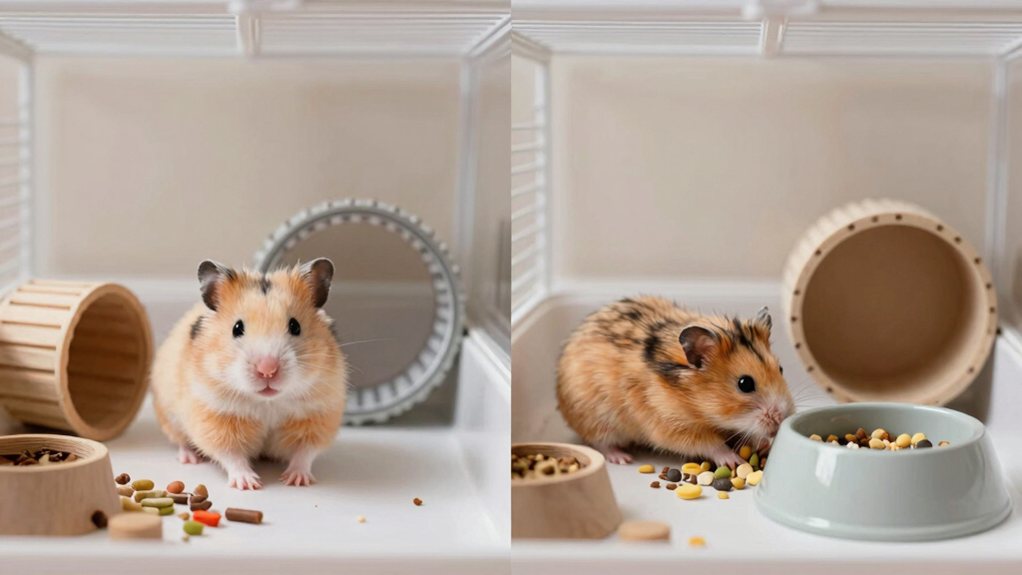
Toys with treat-hunting behavior features, such as wooden puzzle houses or bell balls with hidden compartments, can significantly enhance mental stimulation and mimic natural foraging instincts.
Where Hamster Advice Comes From: And Why It Varies?
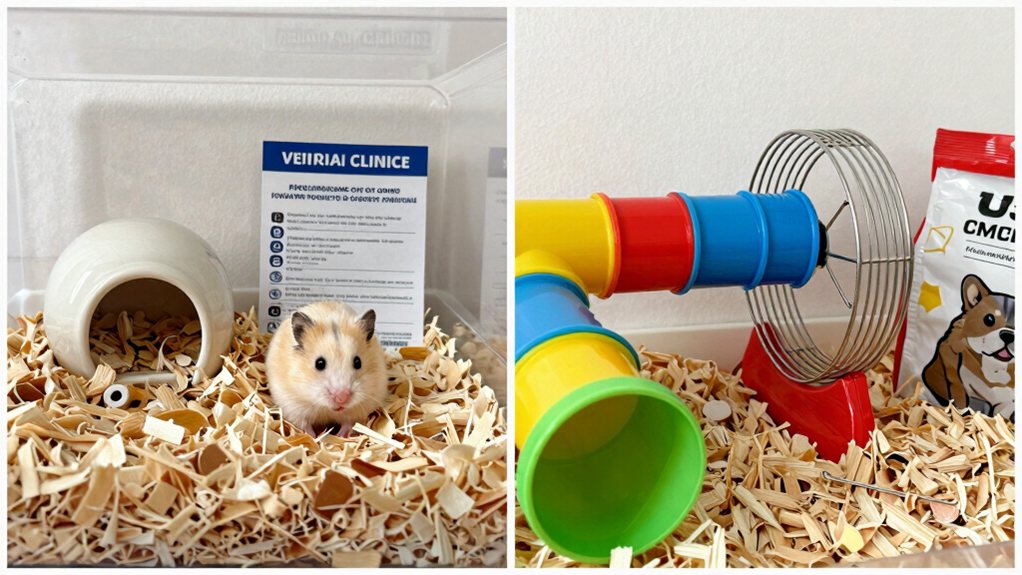
Where do you turn when you want to get hamster care right? You might check online forums, pet store staff, or even your cousin Dave, who once had a hamster in 1998.
But here’s the thing, advice varies wildly between the UK and US. It’s tied to hamster origins and care history.
In the UK, animal welfare groups and vets often lead the charge, pushing science-backed guidelines.
The US leans more on pet stores and outdated myths, like hamsters loving tiny cages. Spoiler: they don’t.
Decades of different pet trends shaped these views.
So while UK care evolved with research, US advice sometimes lags, stuck in a wheel of misinformation.
But hey, at least both sides agree: hamsters are adorable.
Now, let’s make sure they’re happy, more than merely cute.
How the US Can Improve Hamster Care Standards
Why do so many hamsters in the U.S. still live in cages the size of a shoebox? You can help change that. Start by supporting hamster adoption campaigns that promote responsible pet ownership.
Pair that with public education initiatives to spread the word, because not everyone knows better yet.
Here’s how you can picture better care:
- A cage twice the size of a microwave, not a toaster.
- Bedding deep enough for tunneling, like a cozy snowdrift.
- A solid-surface wheel, no broken legs, please.
- Chew toys everywhere, because tiny teeth never stop growing.
You’ve got the power to make a difference. Share tips, adopt, educate.
Small pets deserve big love. Let’s give them space to run, hide, and be their silly, scruffy selves.
Small pets deserve big love. Give them room to run, places to hide, and freedom to be their wonderfully messy, energetic selves.
Together, we’ll turn cramped cages into happy homes—one hamster at a time.
A cage should provide at least 360 square inches of floor space to support natural behaviors like running and digging.
Final Thoughts
You’ve seen the differences, now it’s your turn to make a change. Whether you’re in the UK or US, your hamster counts on you for more than merely snacks and squeaky wheels.
Sure, laws vary, but love doesn’t. With better cages, smarter diets, and a dash of creativity, you can give your tiny buddy a truly happy life, no passport required. After all, every hamster deserves a five-star home, not merely a cardboard box with dreams.