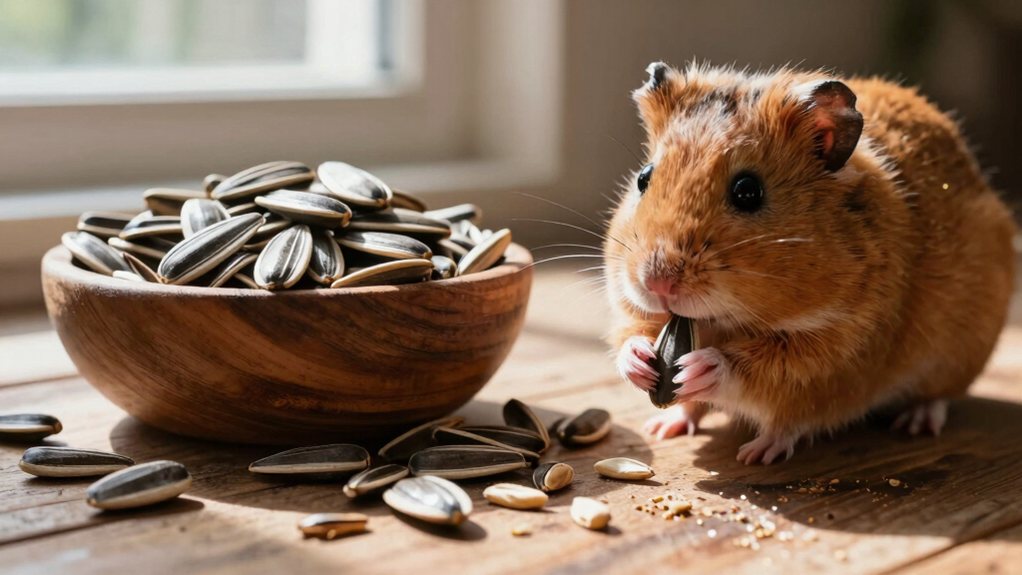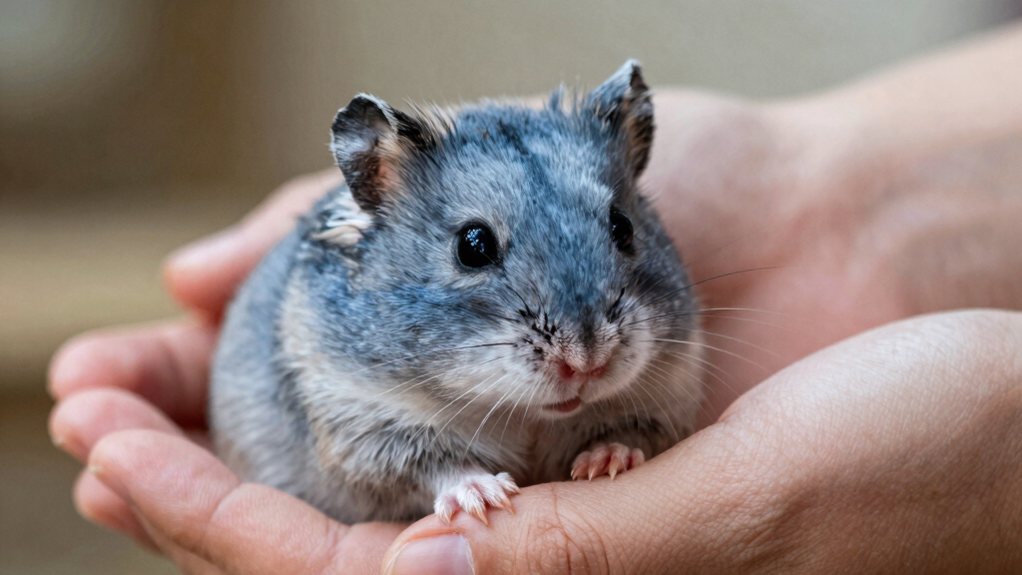
Give your hamster a spacious home with at least 450 square inches of floor space, deep paper or aspen bedding for burrowing, and plenty of fresh air. Feed a balanced diet of pellets, safe veggies, and the occasional treat, skip the chocolate and apple seeds.
Keep them busy with chew toys, foraging games, and supervised playtime in a safe zone. Watch their health closely and mix up toys to beat boredom.
You’re doing great—and there’s even more to help your little buddy thrive.
Choose the Right Cage Size for Your Hamster
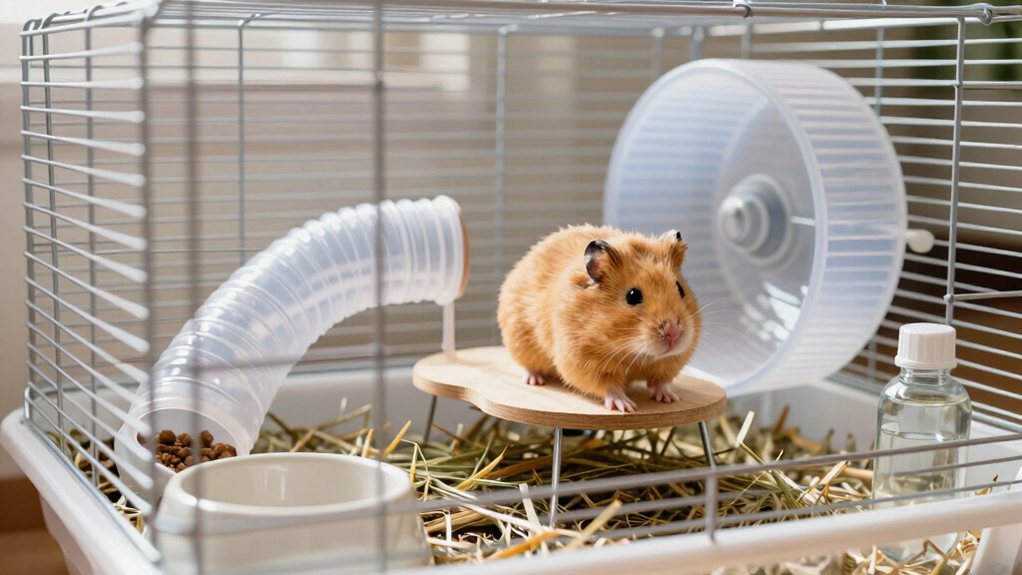
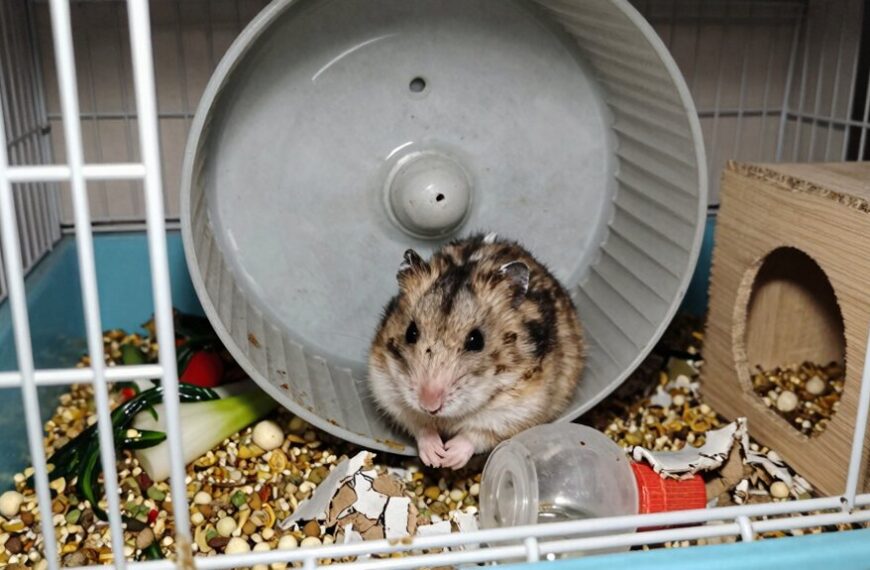
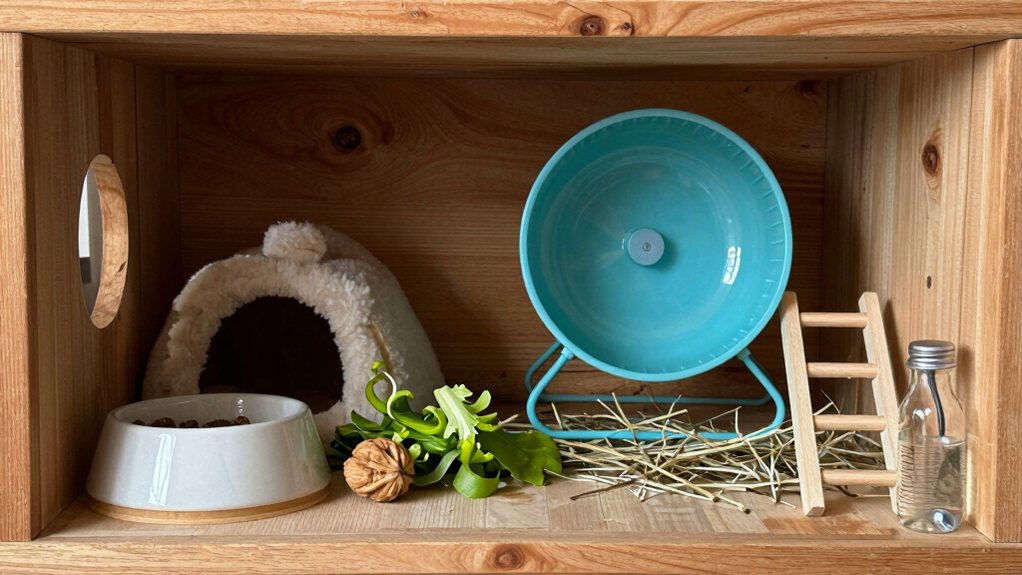
While your hamster might be small enough to fit in the palm of your hand, that doesn’t mean they belong in a cage the size of a shoebox. You’ll want at least 450 square inches of floor space. Bigger is better! A spacious cage gives your little buddy room to dig, run, and explore like they’d in the wild.
Just because your hamster fits in your palm doesn’t mean they belong in a shoebox—aim for at least 450 square inches of space so they can dig, run, and explore freely.
Go for a cage shape that’s long and wide instead of tall and narrow, since hamsters love to roam side to side.
Also, don’t forget about ventilation design. Poor airflow can lead to stuffy, unhealthy conditions. Wire bins or modified plastic tanks with mesh tops work great.
Think of it like apartment shopping: location, layout, and fresh air matter—even for tiny tenants.
Your hamster may not pay rent, but they deserve a home that’s safe, roomy, and fun. Give them space to be their adorable, energetic selves!
A well-designed cage should also feature removable trays for quick and hygienic bedding changes.
Use Deep Bedding for Digging and Burrowing
You’ve picked a roomy cage that gives your hamster plenty of floor space to sprint and explore. Now let’s talk about what goes on the bottom.
Deep bedding isn’t just fluff, it’s crucial. Aim for at least 6–8 inches of safe, dust-free bedding to support natural digging and burrow design.
In the wild, hamsters dig tunnels up to several feet deep, so a shallow layer just won’t cut it.
With proper bedding depth, your little buddy can tunnel, hide, and feel secure, just like they’d in nature. Think of it as their cozy underground apartment complex.
Use paper-based or aspen bedding. Never cedar or pine, since those can irritate their lungs.
Watch them go to town, shoving bedding aside like tiny, determined terrain shapers. It’s adorable and enriching.
Give them the chance to be their true, burrowing selves. Your hamster will thank you, probably while napping in a secret tunnel you didn’t even know existed.
A safe nesting environment also depends on providing dust-free materials to prevent respiratory irritation and ensure long-term health.
Use Safe, Dust-Free Bedding Materials
A cozy bed of safe, dust-free bedding keeps your hamster happy and healthy, no dusty sneezes or irritated lungs here. You’ve got to pay close attention to bedding safety because not all materials are created equal.
Some cheap options, like dusty wood shavings or scented paper, can cause breathing problems or even material toxicity if ingested. Yikes—definitely not the bedtime story you want for your tiny furball.
Instead, go for soft, dust-free choices like paper-based bedding or aspen shavings.
Avoid cedar and pine, they might smell nice to you, but they’re a no-go for hamsters. Think of it like picking baby-safe products, your pet’s health depends on it.
Clean, safe bedding means fewer vet trips and more happy tunneling.
High absorbency bedding can hold up to 6 times its weight in moisture, helping maintain a dry, healthy habitat with less frequent changes.
Feed a Balanced, Species-Appropriate Diet

Now that your hamster’s bedding is sorted and their little nest is sneeze-free, let’s talk about what’s on their plate, because snacks and meals matter just as much as a cozy bed. You’ve got to feed a balanced, species-appropriate diet to keep your tiny buddy thriving.
Hamsters aren’t just cute fluffballs. They’re little omnivores who need variety. Mix in fresh produce like carrots, cucumber, or spinach a few times a week, but go easy—too much can upset their tummy.
Hamsters thrive on variety—offer fresh veggies like carrots or spinach a few times a week, but keep it light to avoid tummy troubles.
Don’t forget protein sources. Think boiled egg, plain chicken, or mealworms as treats. Skip the sugary junk. Your hamster won’t thank you with a long life.
A solid base of quality pellet food, plus those healthy extras, keeps their energy up and their coat shiny. Think of it like packing a lunch for a tiny, furry adventurer—nutritious, fun, and just right for their size.
Feed your hamster every day to support their fast metabolism and maintain long-term health.
Offer Safe Treats and Avoid Toxic Foods
You can spoil your hamster a little, just make sure those treats are safe and more than just cute.
Skip the chocolate and onions (yes, really, no pizza toppings!), and stick to things like small bits of apple, carrot, or plain popcorn.
A few nibbles of something tasty keeps life fun.
But remember, too many treats turns snack time into a tummy ache waiting to happen.
Always remove apple seeds before feeding, as they contain amygdalin, a compound that releases cyanide and can be lethal even in tiny amounts.
Safe Treat Options
What’s better than seeing your hamster’s tiny paws excitedly grab a treat? Not much! You can spoil your little buddy safely with homemade snacks like plain oats, small bits of apple, or a pea or two.
Just remember: portion control is key. Hamsters are tiny, and even healthy treats can cause problems if overdone.
Think of it like giving a toddler candy. A little is fun, too much causes chaos. Stick to fresh, simple foods and skip anything sugary, salty, or processed.
Carrot shavings? Great. A cracker from your lunch? Nope.
Your hamster trusts you to keep things safe, so double-check before offering anything new.
When in doubt, ask your vet. With the right treats, you’ll keep your fuzzy friend happy, healthy, and full of zoomies.
And really, isn’t that the goal?
A small piece of safe fruit like blueberries can be a nutritious and enjoyable treat when offered in moderation.
Toxic Foods To Avoid
Just because your hamster would happily munch on anything you offer doesn’t mean everything in your kitchen is safe. Some foods might seem harmless but can actually be dangerous, even deadly.
For example, onion toxicity is no joke. Onions can damage your hamster’s red blood cells and lead to serious health issues. So skip the scraps from your stir-fry, okay.
And watch out for avocado danger too. While it’s a superfood for you, it contains a substance called persin that’s toxic to small pets like hamsters. Even a tiny bit can cause breathing problems or worse.
Chocolate, caffeine, and apple seeds are also big no-nos.
When in doubt, stick to vet-approved treats. Your little furball trusts you to keep them safe, so let’s not turn snack time into an emergency.
Stay sharp, and your hamster will stay happy, healthy, and full of zoomies.
Healthy Snacking Guidelines
Ever wonder how to turn snack time into a safe and joyful moment for your hamster? You’re in luck! Offering healthy treats isn’t just fun, it’s crucial. Stick to safe options like small bits of fresh produce: think cucumber slices, carrot tops, or a tiny piece of apple (no seeds!). These snacks add variety and nutrients, but remember, portion control is key.
Hamsters are tiny, and even a little too much can upset their tummy or lead to weight gain. Think of treats like dessert, enjoyable in moderation.
Avoid sugary or processed human snacks, they’re a no-go. And hey, skip the chocolate and onions (yep, those are toxic!).
With a little care, snack time becomes bonding time. Watch your little buddy nibble happily, and smile, you’re doing great. Healthy snacking? You’ve totally got this.
Stimulate With Foraging and Chew Toys
You know your hamster loves to scurry around, so why not turn snack time into a little treasure hunt? Toss some treats into their bedding and watch them sniff and dig like tiny, furry detectives, fun for them, and honestly, pretty cute to watch.
And don’t forget chew toys. They keep those ever-growing teeth in check while saving your cage bars from becoming a personal chew stick.
For an extra challenge that supports mental health, try a puzzle feeder with multiple compartments to encourage natural foraging and problem-solving behaviors.
Foraging Promotes Natural Behaviors
What if the secret to a happier hamster was hiding in plain sight, right in your pet’s paws? It’s true! Foraging isn’t merely fun—it taps into your hamster’s wild instincts.
In the wild, they’d follow scent trails and dig through leaves to find food. You can mimic that by hiding kibble in tunnels or under bedding.
Scatter seeds in paper bags or cardboard tubes, and let your little explorer sniff, dig, and discover. It’s like a treasure hunt they were born to win!
This kind of food hiding keeps their mind sharp and reduces boredom.
Plus, watching your hamster zigzag after a scent trail is equal parts adorable and impressive. You’re not merely feeding them—you’re enriching their world.
A great way to enhance this experience is by using safe, engaging toys designed for natural behaviors, such as those made with non-toxic, natural materials.
Chew Toys Support Dental Health
While they’re busy sniffing out snacks in their foraging hide-and-seek, don’t forget your hamster’s teeth are working overtime too, literally. Hamsters have teeth that never stop growing, so they need to chew constantly to keep them in check. That’s where chew toys come in. They’re more than fun, they’re crucial for dental hygiene.
Your little furball’s natural gnawing behavior helps prevent overgrown teeth, which can cause pain or eating problems. Think of chew toys like toothbrushes with snacks: practical and entertaining.
Offer safe options like wooden blocks, cardboard tubes, or specially made chew treats. Rotate them weekly to keep things fresh and exciting.
You’ll save yourself a vet trip and give your hamster a reason to smile, literally. So yes, while foraging feeds their brain, chew toys protect their bite. Win-win!
Choose products made from 100% natural materials to ensure safety and effectiveness for your hamster’s dental needs.
Rotate Toys For Engagement
Ever wonder why your hamster sometimes ignores that brand-new toy after five minutes? It’s not personal. They just need variety. Toy rotation keeps things fresh and fun, giving your little buddy the mental stimulation they crave.
Just like us, hamsters get bored with the same old setup. Switching things up every few days sparks curiosity and natural behaviors. Here’s how to make toy rotation work:
- Pick 3–4 favorite toys, including foraging and chew options.
- Rotate one out and swap in a new (to them) item weekly.
- Store unused toys out of sight to keep them “new.”
- Watch your hamster’s reaction. Happy nibbling means you’re on track!
Simple changes bring big joy. You’re more than merely cleaning cages. You’re crafting adventures. Keep it playful, stay consistent, and enjoy the tiny, whiskered grins you’ll earn.
Foraging toys with adjustable treat openings can further enhance engagement by matching the challenge to your hamster’s skill level.
Create Safe Play Sessions Outside the Cage
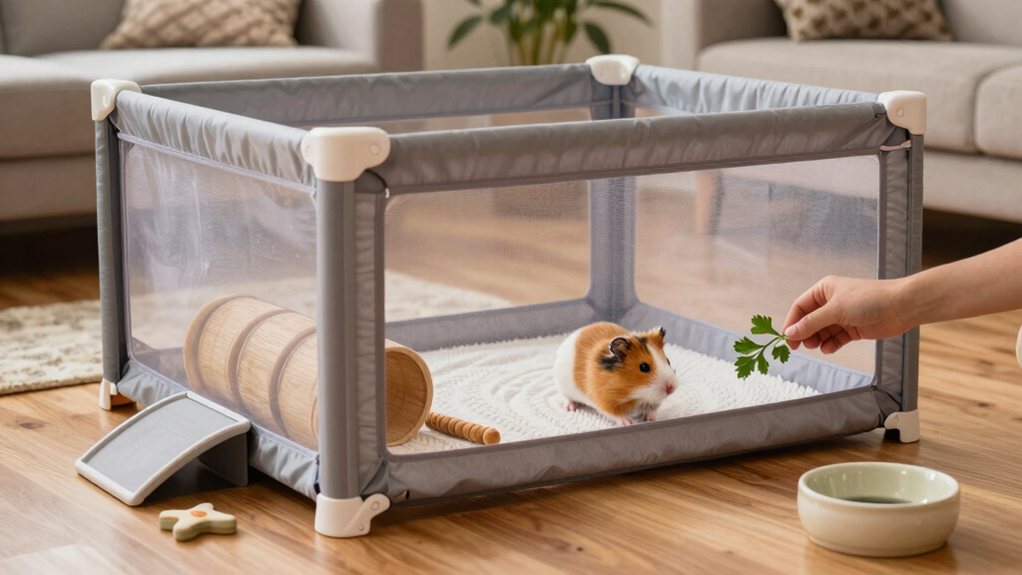
When your hamster finally gets a chance to stretch its tiny legs outside the cage, it’s kind of like giving a cooped-up toddler a playground, except with more squeaks and fewer tantrums (hopefully).
To keep things fun and safe, set up a playpen with high, escape-proof walls. Cardboard won’t cut it, trust me.
Remove any cords, toxic plants, or tight spaces where your little Houdini might vanish.
Always supervise, because hamsters are experts at finding trouble in 2.3 seconds flat.
While the exercise wheel is great for midnight marathons, nothing beats real exploration.
Let your hamster sniff, dig, and climb in a hamster-proofed zone.
These play sessions build trust and burn energy, so you’re more than merely a snack dispenser. You’re part of the fun.
Just remember, short bursts work best.
Overstimulation leads to sleepy, grumpy hamsters, and nobody wants that.
Handle Gently and Watch for Illness Early
Now that your hamster’s had some zoomies in the playpen and sniffed every corner like a tiny detective on a mission, it’s a perfect time to talk about how you touch and check on your little buddy.
Gentle handling builds trust and keeps stress low, your hamster will thank you with fewer nips and more cuddles (well, hamster-style cuddles).
Early detection of illness can be a lifesaver, so keep your eyes peeled. Here’s how:
- Scoop them with both hands, no sudden moves, think ninja, not tornado.
- Check teeth weekly, overgrown ones mean vet time.
- Peek at their eyes and nose, no goop, please!
- Weigh them once a week, sudden drops? Uh-oh.
A little attention goes a long way. You’ve got this, super-pet-parent!
Final Thoughts
You’ve got this! By giving your hamster a roomy home, safe bedding, and tasty, healthy food, you’re already doing great.
Don’t forget the fun stuff, chew toys, foraging games, and gentle playtime keep life exciting. Watch for sneaky signs of illness, but also enjoy those silly, zooming-around moments.
You’re more than a pet owner. You’re a hamster hero. And honestly, your little buddy’s probably already head-over-paws in love with you.