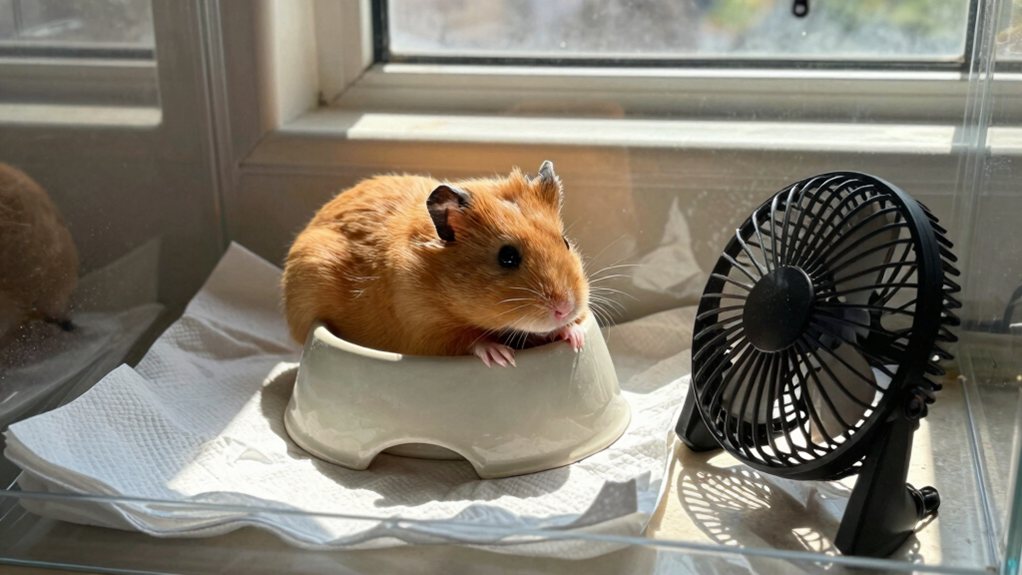
You don’t need to blast a fan at your hamster, trust me, they’d rather not live in a wind tunnel. They can’t sweat, so they cool down by lounging on cool tiles or burrowing into shady tunnels.
While a fan *can* help, pointing it right at them causes stress and drafts. Instead, aim it across the room for gentle airflow. Keep their space between 65–75°F, and watch for panting or sluggishness. You’ll be surprised what cozy tricks keep them chill.
Can Hamsters Overheat in Hot Weather?
While hamsters might seem tough in their tiny, busy ways, they’re actually pretty sensitive when the temperature rises. You mightn’t think it, but your little furball can overheat fast, especially in hot weather.
Hamsters don’t sweat like we do, so they rely on you to keep their space cool and comfy.
No sweat glands means no natural cooling—your hamster counts on you to keep their world chill and comfortable
If it gets too hot, they’re at risk for heat exhaustion, which can sneak up fast. Watch for signs like lethargy, drooling, or wobbly walking.
Dehydration risks go up, too, since they lose moisture without even realizing it.
Keep their cage out of direct sunlight, offer fresh water daily, and maybe even give them a ceramic tile to lounge on.
Think of it like setting up a mini spa, cool, calm, and chill. You’ve got this, and so does your hamster.
Just stay alert, and they’ll stay happy and healthy.
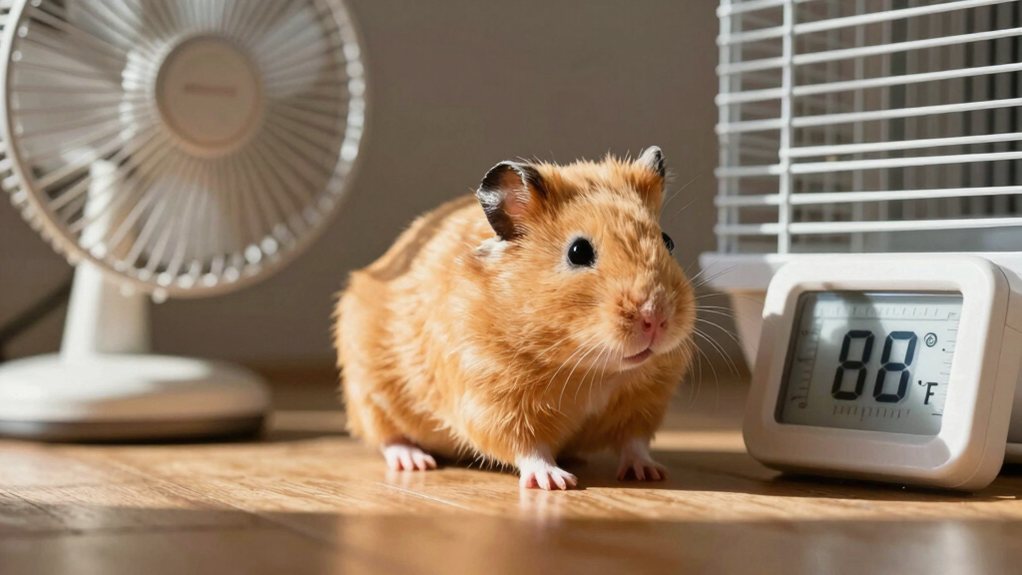
A reliable way to monitor their environment is by using a digital temperature and humidity gauge to ensure their habitat stays within the ideal range.
How Do Hamsters Cool Themselves Without Sweating?
How do hamsters stay cool when they can’t sweat like we do? They rely on clever tricks instead. You might notice your hamster starting to pant. This panting behavior helps release heat, much like a dog after a walk. It’s their way of saying, “Whew, it’s getting warm in here!”
They also love retreating to their cozy burrows. Burrow insulation keeps things cooler and shaded. By digging deep, they escape the warmer air above.
You’ll often find them sprawled out flat, belly touching the cool floor. Adorable and smart!
While they can’t sweat, they’re far from helpless. Just make sure their cage isn’t in direct sunlight, and maybe skip the fan unless it’s on low and indirect.
After all, you wouldn’t want a tornado in your living room either, right? Stay alert, stay cool, and keep your tiny buddy comfy.
What Temperature Is Too Hot for Hamsters?
Now that you know how your little hamster tries to beat the heat without sweating, let’s talk about just how warm is too warm. Hamsters are super sensitive to heat stress, especially when temps climb above 80°F.
High humidity levels make it even worse. They can’t cool down properly, and that’s dangerous. You don’t want your tiny buddy feeling like a baked potato in a sauna!
Keep your hamster’s space below 75°F for happy, healthy vibes.
Avoid direct sunlight and stuffy rooms: think cool corner, not beach day.
Watch for panting or lethargy: classic signs of heat stress.
Steady airflow helps, but no fan blasts right on the cage.
Monitor humidity levels; aim for 40–60% to keep things comfy.
Stay alert, stay cool, and your hamster will thank you with adorable cheek puffing, not heat panic.
Signs Your Hamster Needs Cooling Now
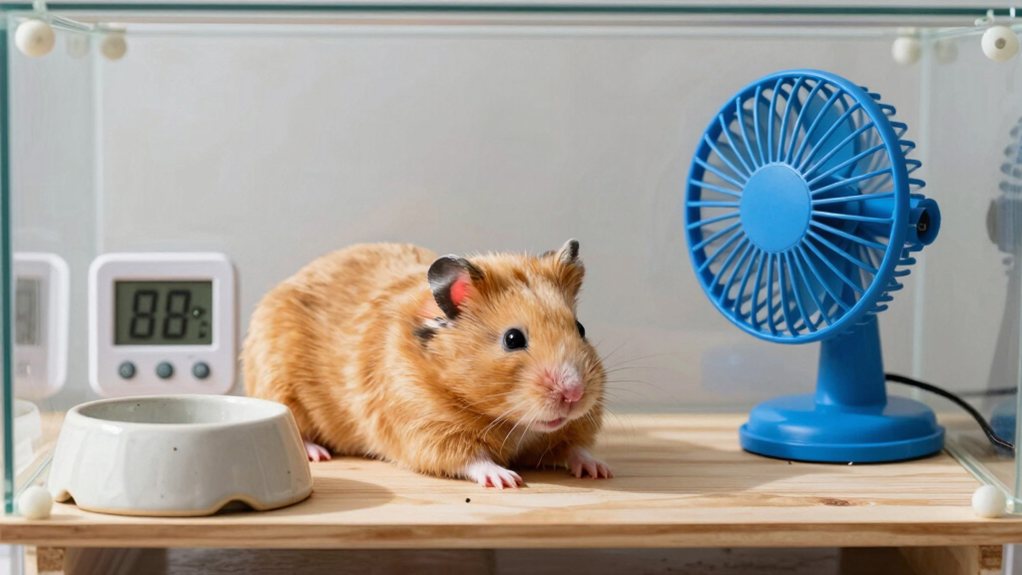
Ever wonder why your hamster suddenly looks like it’s lounging in a tiny oven?
If your little buddy is lying limp, breathing fast, or acting wobbly, it might be heat exhaustion.
You’ve gotta act fast, hamsters can’t sweat like we do!
Watch for dehydration symptoms too, like dry, sticky skin or sunken eyes.
If your pet stops drinking, eating, or just zones out, that’s a red flag.
They might even sprawl flat on the cool floor of their cage, trying to self-cool like a tiny, furry pancake.
Don’t wait.
Move them to a shadier spot, offer fresh water, and maybe dampen a cloth nearby (not touching them!).
A fan on low, pointed near but not at the cage, can help.
Spotting these signs early means your hamster stays happy, bouncy, and out of hot water, literally.
You’ve got this!
Can a Fan Hurt Your Hamster?
You might think blasting a fan on your hamster is a quick fix for heat, but direct airflow can actually stress them out, kind of like how you wouldn’t want a hair dryer in your face all day.
Hamsters can’t handle sudden temperature shifts well, so while you’re trying to help, you might accidentally make it harder for them to stay comfy.
Instead of pointing that fan right at their cage, try cooling the room gently and keeping their space draft-free.
Direct Airflow Risks
Could your hamster be catching more than just z’s when that fan hums across the room? Direct airflow might seem harmless, but it can cause real issues for your tiny buddy. Hamsters are sensitive to air pressure changes and constant wind can stress their little bodies.
Plus, the steady drone adds to noise stress, making it hard for them to relax.
You’re not trying to give your pet a tiny tornado experience, right?
Drafts can lead to respiratory discomfort.
Constant breeze may lower cage temperature too much.
Air pressure shifts can confuse their senses.
Noise stress disrupts sleep and digestion.
Overexposure might weaken their immune system.
Keep the fan nearby, but not aimed right at the cage. A cool room with gentle, indirect airflow is perfect. You’ve got this!
Temperature Regulation Needs
While your hamster can’t exactly grab a blanket when it’s chilly, they’re pretty good at handling temperature changes, as long as you keep things in a safe range.
Hamsters thrive between 65°F and 75°F, so avoid placing their cage near windows or heaters.
Too hot? They’ll show signs like lethargy or sprawled-out hamster behavior.
Too cold? They might nest more or even enter a dangerous state called torpor.
A fan isn’t usually needed and could hurt your hamster if it causes drafts or chills.
Instead of blasting airflow, focus on steady temps and smart environmental enrichment, like cozy bedding and chew toys.
Think of it like setting your own room’s comfort level.
Would you want a fan blowing on you all night? Probably not.
Keep it stable, avoid extremes, and your little buddy will stay happy, active, and safely snoozing in their tiny, perfect world.
To ensure accuracy, consider using a digital hygrometer thermometer with high accuracy readings to monitor your hamster’s habitat conditions.
Where (And Where Not) to Point a Fan?
You’ll want to keep your hamster cool without turning their cage into a wind tunnel.
Point the fan away from the enclosure, think nearby wall or ceiling, so the air circulates but doesn’t blast your little buddy like a tiny tornado.
After all, your hamster’s idea of a breeze is sniffing around their hideout, not starring in a weather forecast!
Optimal Placement For Cooling
When it comes to keeping your hamster cool, where you point that fan matters more than you might think, after all, your tiny furball isn’t built for wind tunnels.
Aim for ventilation balance and ambient circulation, not a mini tornado.
You want a gentle breeze, not a hamster hurricane.
Point the fan near the cage, not directly at it.
Use walls to deflect airflow and soften the wind.
Keep the room’s air moving without chilling the cage.
Avoid placing fans where drafts hit nesting areas.
Monitor your pet—if it’s huddled up, the spot’s too drafty.
Think of it like setting the mood: calm, cool, and draft-free.
You’re not cooling the hamster—you’re cooling the space.
A well-placed fan keeps things comfy without turning bedtime into a blustery mess.
Stay smart, stay breezy, and your little buddy will nap like a pro.
Avoid Direct Airflow On Hamsters
If you’ve ever stood in front of a fan on a hot day and felt that sweet, cooling rush, you might think your hamster wants the same full-force blast. Trust us, your tiny buddy would rather skip the wind tunnel experience.
Pointing a fan directly at your hamster’s cage causes stress and can lead to respiratory issues, even if the room feels stuffy. Instead, aim the fan across the room to create gentle airflow without blasting your pet.
Keep bed placement away from direct drafts. Hamsters love cozy, still spaces to nap.
You’ll also help maintain water freshness by preventing dust and debris from blowing into the bottle.
Think circulation, not hurricane simulation. A softly cooled room keeps your hamster comfy without the chill.
Keep Fan Away From Cage
While your hamster isn’t likely to complain in words, they’ll definitely let you know, through sneezes, sluggishness, or a grumpy side-eye, if their cage is catching the full force of a fan.
You might think you’re helping, but blasting your hamster with direct airflow can stress them out and even make them sick.
Their tiny bodies don’t handle drafts well, and cage materials like plastic or wire won’t block the wind either.
To keep your little buddy comfy, consider:
- Pointing fans away from the cage entirely
- Using indirect airflow to cool the room
- Watching for signs of discomfort in hamster behavior
- Avoiding placing the cage near AC vents
- Checking that cage materials aren’t conducting cold drafts
A cool room is great—just don’t turn your hamster into a furry windsock.
Safe, Fan-Free Ways to Cool Your Hamster
Ever wonder how to keep your hamster cool without turning your home into a wind tunnel? Skip the fan. There are safer, smarter ways to beat the heat.
Try adding hammock insulation with breathable fabric to help regulate temperature in their cozy hideouts.
You can also boost tunnel ventilation by rearranging tubes for better airflow. Just avoid direct drafts.
Pop a ceramic tile in the cage. Your little buddy will love lounging on its cool surface.
Offer frozen treats like a pea-sized bit of frozen fruit. Once in a while—no hamster ice cream shop yet.
Move the cage away from sunny spots and check the room temp regularly. You’ve got this.
A comfy, cool hamster is a happy hamster. And you’re their personal climate control expert. No fan required.
Cooling Your Hamster Without Power

What if the power goes out but your hamster’s still feeling the heat? No worries, you’ve got options. You don’t need a fan to keep your little buddy comfy. Smart ventilation alternatives and a natural breeze can work wonders.
Just a few simple tweaks can turn your hamster’s space into a cool retreat.
, Place a frozen water bottle (wrapped in a thin towel) near the cage for gentle, safe cooling
, Move the cage to a cooler room, like a basement or bathroom, away from direct sunlight
, Use a ceramic tile in the cage—hamsters love lying on its cool surface
, Crack a window to invite in a natural breeze, but avoid drafts
, Hand-wave a piece of cardboard slowly to create airflow without startling your pet
Stay calm, stay cool, you’ve got this!
Final Thoughts
You’ve got this! Keep your hamster cool without going overboard, fans can help, but don’t blast your tiny friend like a wind tunnel. Watch for panting or sluggishness, and remember, they can’t sweat, so stay alert.
Try frozen water bottles or ceramic tiles for chill zones. No power? No problem. Think cool tiles and shady spots.
You’re more than just keeping them comfy, you’re being a pro pet parent. And hey, they’ll thank you with happy wheel runs!