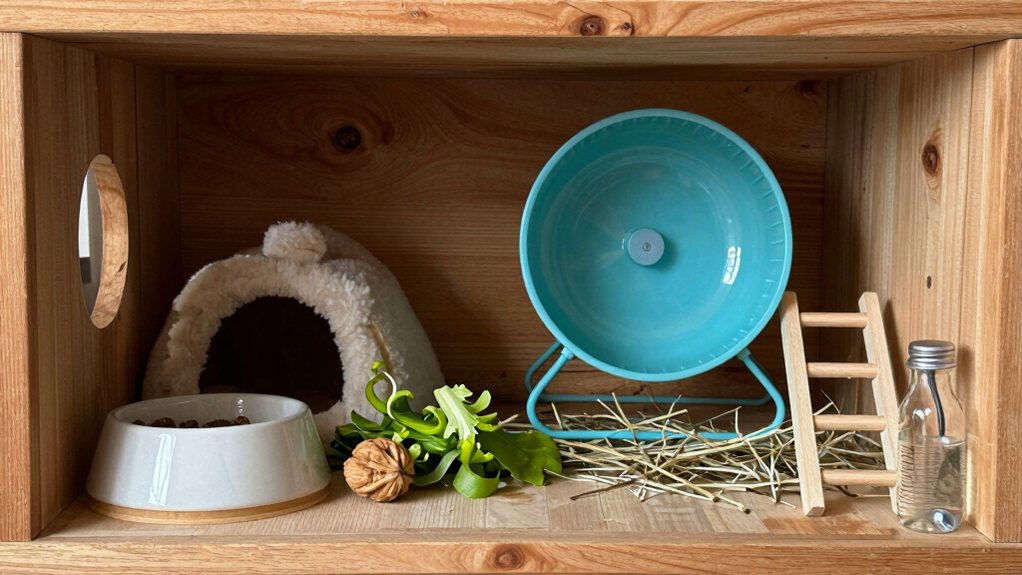
The best thing to put in your hamster’s cage is a solid, silent exercise wheel, think 8 to 12 inches of even, safe spinning fun. It keeps your little buddy active, happy, and spine-healthy without the nighttime *click-clack* driving you nuts.
Pair it with deep bedding for digging and a cozy hideout, and you’ve nailed the basics. Oh, and your hamster will definitely thank you… probably between midnight sprints. Stick around—you’ll see how easy it is to level up their tiny, awesome life.
Choose the Right Hamster Cage Size & Type
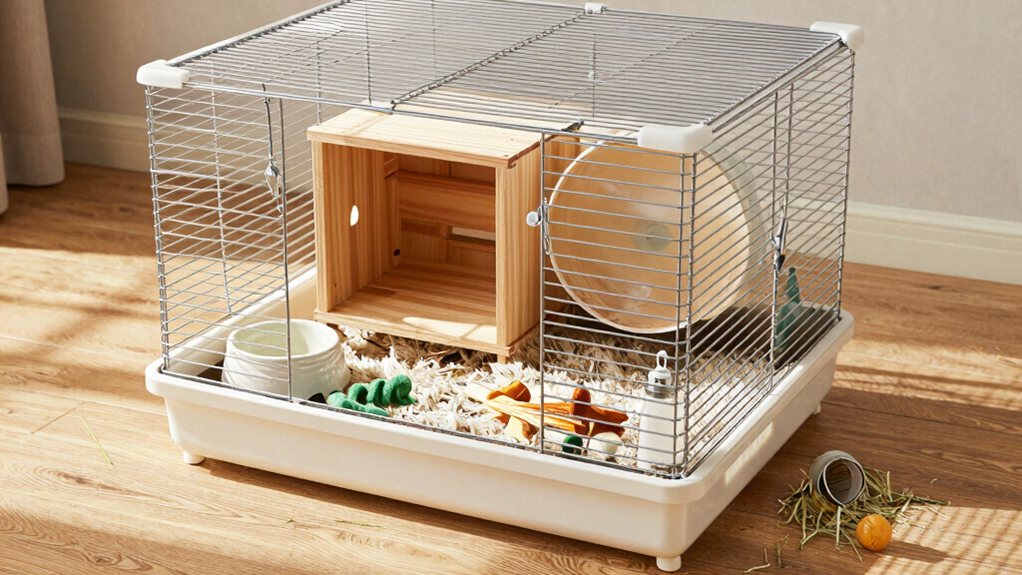
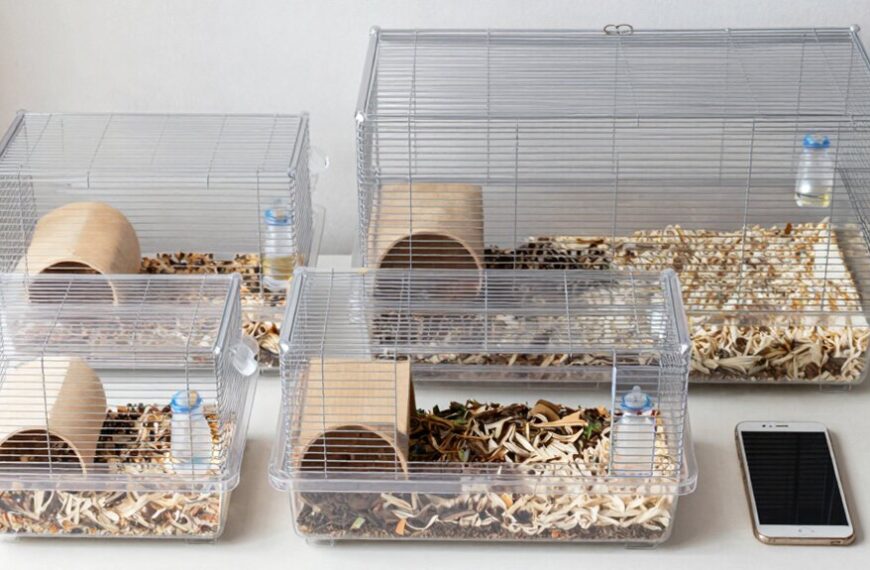
Let’s face it, your hamster might be small, but that doesn’t mean he’s happy in a shoebox-sized cage. You’ll want to pick one that’s roomy enough for zoomies and snacks, ideally at least 450 square inches. Bigger is always better!
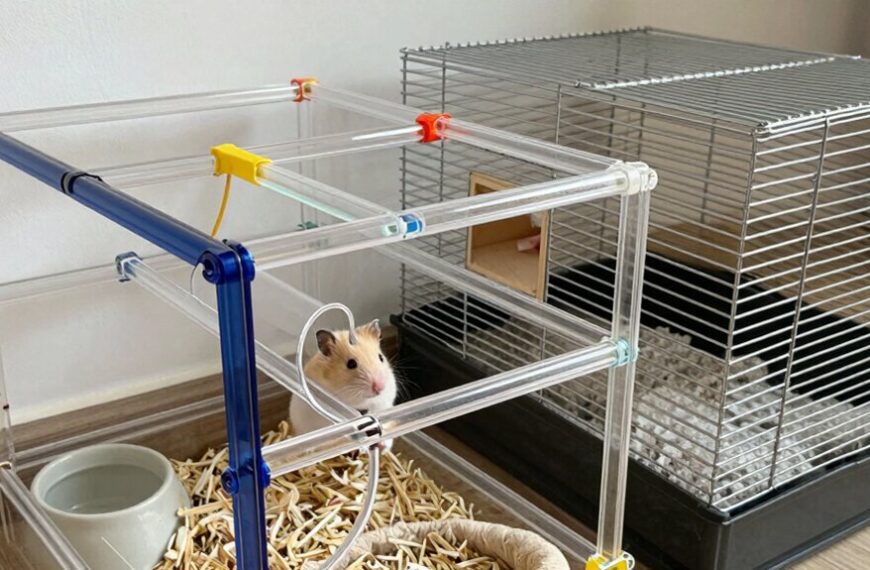
Wire cages offer great cage ventilation, but make sure the bars are close enough to prevent escape prevention. Trust me, your hamster’s a Houdini in fur.
Glass tanks are cozy and chew-proof, but they need lids for airflow and security.
Plastic bins work too if you add ventilation holes.
Whatever you choose, double-check for chew spots and gaps.
A happy hamster is a safe, active one.
So skip the tiny cages with more plastic tubes than floor space.
Give your little buddy space to explore, dig, and nap like a pro. You’ve got this!
A cage with a pull-out tray makes cleaning quick and tool-free, helping maintain a healthy environment with minimal effort.
Best Bedding for Your Hamster Cage
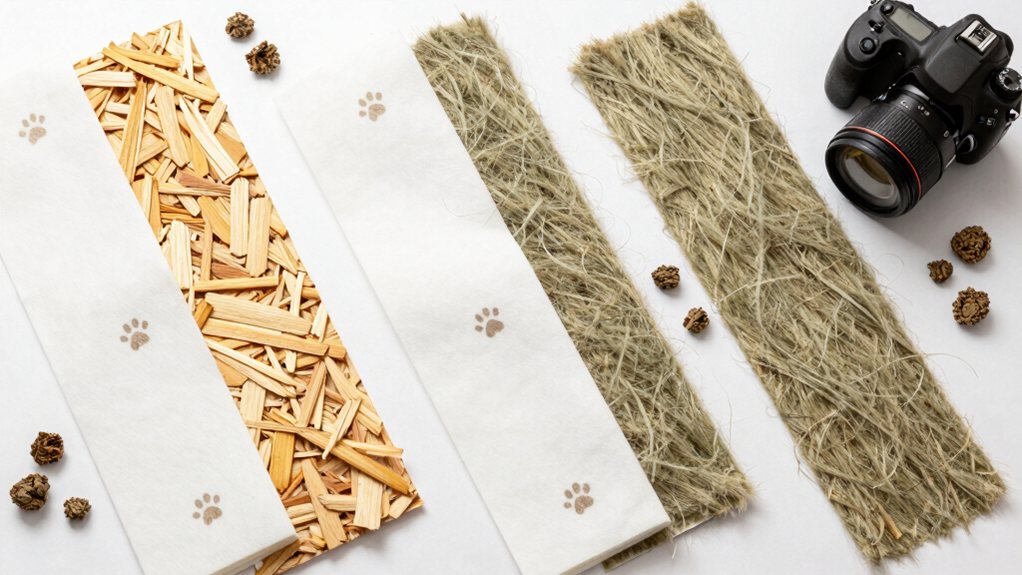
You’ll want to pick safe bedding materials that keep your hamster happy and healthy. Skip anything dusty or scented, since their little lungs are super sensitive.
Layer it well, with softer stuff on top, so your furry buddy can burrow and nap in comfort like a tiny, squeaky mattress connoisseur.
After all, even a mini beast needs a cozy bed to call home!
A top choice among experts is 99.9% dust-free bedding, which helps prevent respiratory issues while maintaining a clean and comfortable habitat.
Safe Bedding Materials
While your hamster mightn’t send you a five-star review, picking the right bedding is one of the best ways to keep them happy, healthy, and busy.
When it comes to bedding safety, not all materials are created equal—some can actually be harmful.
Avoid anything dusty, scented, or made from cedar or pine, as these can cause respiratory issues and material toxicity.
Instead, go for paper-based or aspen wood bedding. They’re soft, safe, and great for burrowing.
Your hamster will love digging and nesting, and you’ll love knowing they’re in a non-toxic environment.
Just think of it as their personal five-star hotel suite, minus the room service. But hey, you’re already on snack duty.
Choose wisely, and both of you’ll sleep better at night.
Aim for a bedding depth of 6 to 8 inches to support natural burrowing behavior—hamsters are instinctive digging and tunneling animals, and sufficient depth helps fulfill this need safely.
Layering For Comfort
Now that you’ve picked a safe, cozy bedding like paper-based or aspen shavings, it’s time to think about how you stack it all up, because your hamster isn’t just tossing bedding around for fun, though it sure looks like it.
Layering adds comfort and mimics their natural burrowing habits. Start with a thick base, about 2 to 3 inches, so your little digger can tunnel to their heart’s content.
Then, tuck in a soft fabric lining, like a fleece nest or cozy hide, for a warm, snuggly spot to crash. Just make sure the fabric has no loose threads to avoid tangles.
A hammock placement near the top of the cage gives your hamster a fun lookout or nap zone, plus, it saves floor space. Watch where they snooze most and adjust layers accordingly.
Think of it like building a tiny, fuzzy apartment, comfy, safe, and totally Instagram-worthy. Your hamster may not thank you in words, but that happy, sleepy face says it all.
A great way to enhance nesting comfort is by adding natural, soft materials such as cotton-based nesting materials that are safe, shreddable, and ideal for promoting natural burrowing behavior.
Pick a Safe, Silent Exercise Wheel
Ever wonder why your hamster’s midnight workout sounds like a squeaky shopping cart on a mission? That noise level isn’t just annoying. It can stress out your tiny buddy. A silent exercise wheel keeps both of you sane.
Look for one made from solid, non-toxic plastic or safe metal. Material safety matters because chew-happy hamsters might taste-test their gear.
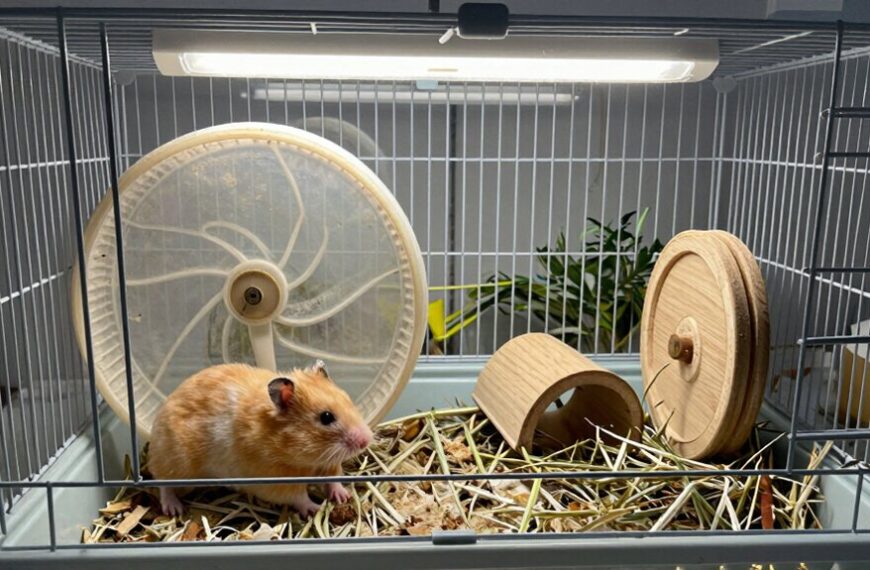
Avoid wire rungs. They can hurt little feet. Instead, pick a solid surface wheel that spins effortlessly and quietly.
A 7- to 8-inch wheel fits most hamsters perfectly. Trust us, your sleep and your pet’s paws will thank you.
Plus, watching your furball zoom in peace is way more fun when it’s not a nightly horror movie soundtrack. Choose smart, stay quiet, and let the happy running begin. No drama, just wheels and giggles.
Choose the Right Wheel Size for Your Hamster
You’ve got to pick a wheel that’s big enough so your hamster doesn’t hunch over while running, nobody wants a grumpy, sore-backed hamster on their conscience.
Aim for at least 8 inches in diameter for dwarfs, and 12 inches for larger breeds, because a comfy wheel means happy, healthy zoomies.
Trust me, your little furball will thank you with fewer midnight sprint marathons.
Correct Wheel Diameter
A wheel that’s too small can turn your hamster’s nightly sprint into a comedy of awkward bends and hunched backs, so don’t let your tiny runner do the limbo just to stay fit.
For wheel safety, size really does matter.
If your hamster has to arch its back or waddle to use the wheel, it’s way too small.
That kind of strain can lead to long-term spine issues.
Aim for proper alignment: when running, your hamster’s back should stay flat and natural.
Syrian hamsters need a wheel at least 8 inches in diameter, while dwarfs can manage with 6–7 inches.
A solid, even surface is best—no rungs or gaps that could catch tiny feet.
Get the right diameter, and you’ll keep those midnight marathons safe and comfy.
Your hamster will thank you with happy, healthy zoomies.
Prevent Spine Problems
While your hamster may look like a tiny, furry gymnast, forcing them to run on a wheel that’s too small is more circus trick than fitness routine, and it’s no joke for their spine.
You want your little buddy to stay healthy, happy, and hump-free when they sprint.
Choosing the right wheel size gives them proper spine support and better cage ergonomics.
A cramped wheel forces your hamster into a C-shape, which over time can lead to serious back issues. Yikes!
- Pick a wheel at least 8 inches in diameter for Syrians (bigger is better!)
- Go for 6–7 inches for dwarfs—no smaller, promise!
- Opt for a solid, flat surface to avoid foot or tail injuries
Your hamster’s spine will thank you.
After all, nobody wants a hunched hamster, unless it’s just their cute sleeping pose.
Add Multiple Hideouts for Security
Think of your hamster as a tiny explorer with big feelings. Sure, they’re small enough to fit in the palm of your hand, but they still need a sense of safety in their little world. That’s why adding multiple hideouts is a must.
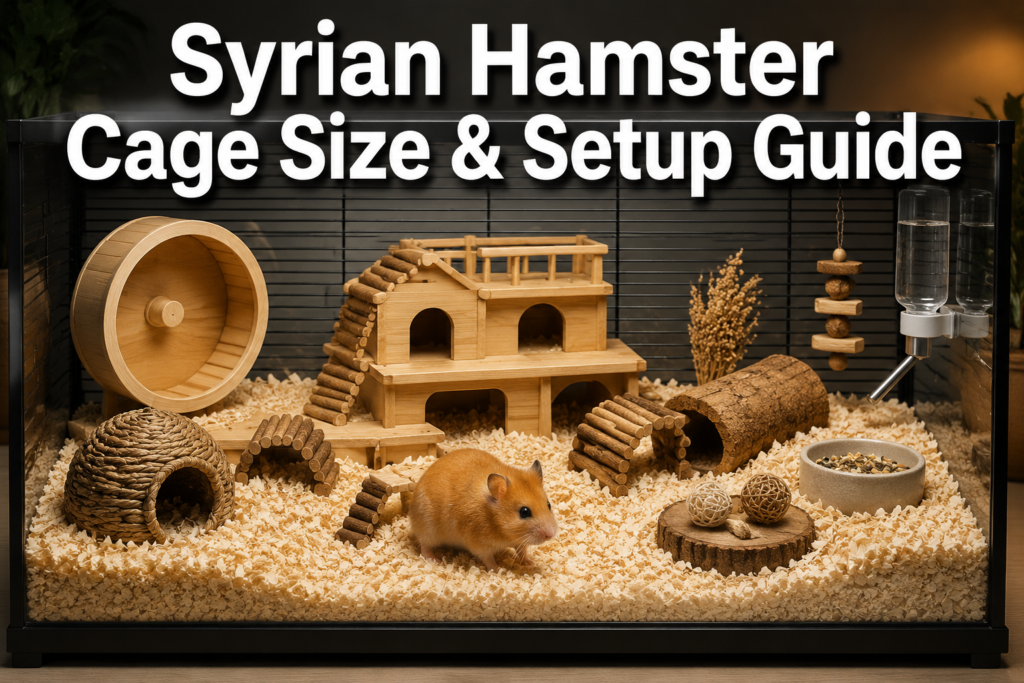
Hamsters love to dart between spots, especially when they want a break from natural lighting or need better temperature control. A cozy cardboard box, a wooden igloo, or a tunnel with a soft blanket inside gives them choices. Because who doesn’t love options?
It’s like their own tiny apartment complex!
Multiple hideouts reduce stress and let your little buddy feel in control. Plus, watching them switch spots based on mood is kind of adorable.
Just make sure each hideout is easy to clean and safe. Give your hamster the gift of security—one hidey-hole at a time. They’ll thank you with happy wheel runs and snack hoards.
Wooden hideouts made from untreated natural wood are ideal because they are safe for chewing and support dental health.
Include Chew Toys for Healthy Teeth
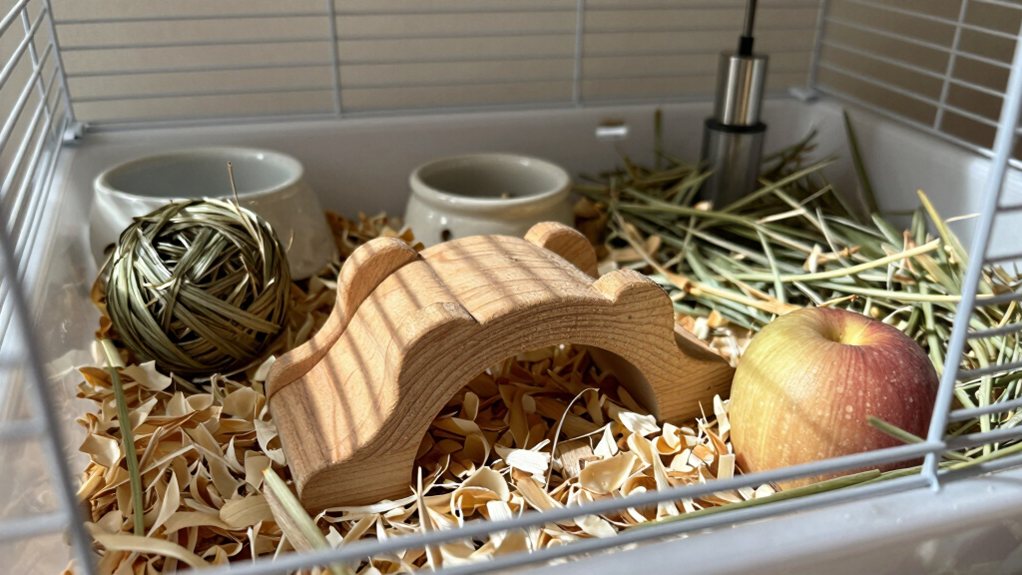
You’ve got to give your hamster chew toys, they’re more than just for fun. They actually keep those ever-growing teeth in check.
Go for safe stuff like untreated wood or cardboard, because nobody wants a squeaky-clean cage but a sick little buddy.
Trust me, a happy hamster with healthy teeth is way less likely to chew through your favorite house slippers.
Choose toys made from 100% natural materials to ensure safety and support proper dental wear.
Chew Toys For Dental Health
Since your hamster’s teeth never stop growing, giving them the right chew toys isn’t just a fun idea—it’s a must. You’ll want to offer a chew toy variety to keep things interesting and effective.
Hamsters love to chew, and their gnawing frequency can be pretty high—sometimes daily! This natural habit keeps their teeth worn down and prevents overgrowth, which can lead to serious health issues.
- Wooden blocks – Safe, natural, and perfect for serious chewers
- Cardboard tubes – Easy to replace and fun to destroy (they’ll love the crunch)
- Mineral chews – Help file teeth while adding vital nutrients
Mixing these keeps your little buddy engaged and their smile healthy. Think of it as a gym membership—for their teeth!
Just check toys regularly and replace when worn. Your hamster mightn’t say “thanks,” but their bright eyes will.
A high-quality option includes chews made from peach wood, which is 30% longer-lasting than apple wood and features a deep-grooved surface that acts as a natural toothbrush for molars.
Safe Materials For Gnawing
Hamsters are born chewers, give them half a chance, and they’ll gnaw on just about anything, so it’s up to you to make sure that “anything” is actually safe. You don’t want your little buddy chewing on plastic or toxic wood, right?
Stick to safe, natural options like untreated wood blocks made for small pets. They’re perfect for keeping teeth in check.
Cardboard tubes from toilet paper or paper towels? Your hamster will love them, and you’ll love that they’re free and easy to replace. Just make sure there’s no ink or glue.
Chewing isn’t just fun for your hamster. It’s a must for dental health.
Create a Simple Food & Water Zone

While your hamster might dream of a five-star dining experience, a simple food and water zone is all they really need to stay happy and healthy.
You’ll want to focus on smart food placement and easy water access to keep your little buddy thriving.
Put their food dish in a corner away from the wheel and bedding pile. This helps keep it clean and easy to find.
A sturdy ceramic bowl works best since it won’t tip or get chewed.
For water, a drip-style bottle with a metal spout is ideal. Just make sure it’s low enough for your hamster to reach comfortably.
Choose a chew-proof food dish.
Hang the water bottle at nose level.
Check both daily for blockages or spills.
Simple setup, big peace of mind.
A reliable option includes a magnetic holder for secure, leak-proof hydration that fits various cage types.
Build Fun With Tunnels and Climbers
Ever wonder how your hamster turns a plain cage into their very own adventure park? You can help by adding cool tunnel designs and climbing structures they’ll actually use.
Hamsters love to explore, so connect tunnels in fun shapes, loops, zigzags, even spiral slides. Just make sure they’re wide enough and easy to clean.
Add climbing structures like little ladders or ramps to give your pet a boost to higher levels. Watch them scramble up like tiny mountain goats!
Not all climbers are safe, though. Avoid anything with sharp edges or loose parts. Go for sturdy, chew-safe materials.
Mix tunnels and climbers to create a mini obstacle course. Your hamster mightn’t win a medal, but they’ll definitely win the cuteness contest.
Plus, all that play keeps them healthy and happy. Who knew hamster fitness could be this fun?
Choose natural, untreated wood materials for the safest and most enriching climbing experience.
Skip These 5 Toxic Cage Additions
What’s hiding in your hamster’s cage that could be doing more harm than good? Some common additions might seem fun or decorative, but they can actually be toxic or dangerous. Keep your tiny buddy safe by skipping these risky items.
Always double-check what goes in their space. Hamsters love to chew, and even a nibble of something harmful can cause big problems.
- Toxic plants: Pothos or peace lilies may look nice, but they’re a no-go. Your hamster could get seriously sick.
- Harmful sprays: Air fresheners or cleaning sprays near the cage? Nope. Those fumes are tough on their little lungs.
- Scented bedding: It smells lovely to you, but it’s like perfume overload for your pet.
Stick to safe, natural materials and keep the air fresh the old-fashioned way. Open a window! Your hamster will thank you with happy wheel runs.
Aromatic compounds in bedding materials can cause severe respiratory irritation, so always choose unscented, non-toxic substrates for your hamster’s health.
Swap Toys Weekly for Mental Stimulation
Now and then, a little change keeps things exciting, even for your hamster. Swapping out toys weekly isn’t just fun, it’s key for mental enrichment. Hamsters get bored easily, and a stale cage can lead to lazy or stressed behavior.
A simple toys rotation keeps their minds sharp and their paws busy.
One week, toss in a tunnel. The next, add a chew toy or a little climbing ladder. They’ll explore like tiny adventurers discovering new lands, maybe even do a victory backflip.
You don’t need fancy gear, just switch things up regularly. It’s like redecorating their apartment on a budget.
Plus, it helps you spot which toys they love or ignore. Consistent mental stimulation means a happier, healthier hamster.
Final Thoughts
You’ve got this! A happy hamster starts with the right cage, cozy bedding, and a quiet wheel they won’t hate. Toss in some hideouts, tunnels, and fresh toys weekly, because yes, even tiny furballs get bored.
Just skip the toxic stuff, looking at you, cedar shavings. Keep meals and water easy to reach, and watch your little buddy thrive. It’s not rocket science, but it is love in action—one chewed-up cardboard tube at a time.