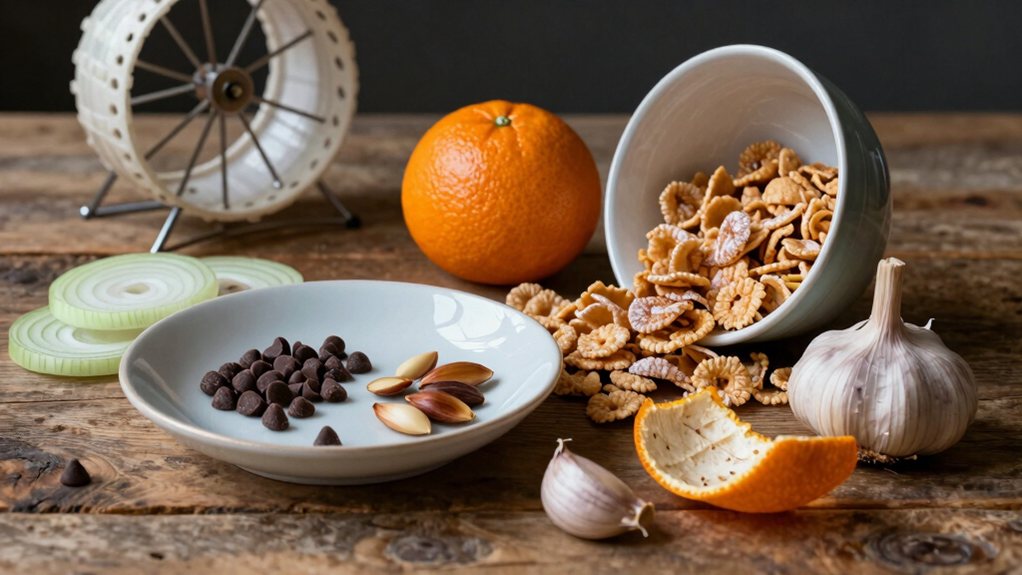
You might love sharing snacks, but keep chocolate, onions, and garlic far from your hamster. These are seriously toxic and can cause big health problems, even in tiny amounts.
Avoid citrus peels, raw beans, green potatoes, and apple seeds too. Some nuts are okay in moderation, but almonds? Nope. Stick to safe treats like carrots or vet-approved foods, and always double-check before offering anything new. Your little buddy is counting on you to keep snack time safe and fun.
There’s more to know about keeping your hamster happy and healthy.
Chocolate and Caffeine: Toxic for Hamsters

Ever wonder why you should never share your chocolate bar with your hamster? It’s because chocolate effects can be dangerous, even deadly, for your tiny friend.
Chocolate contains theobromine and caffeine, both of which are tough on a hamster’s small body.
Even a tiny bite can cause a racing heart, seizures, or worse.
The caffeine impact is just as serious, overstimulating their nervous system like they’ve had ten energy drinks!
While you might crash after too much coffee, your hamster doesn’t stand a chance.
So, as tempting as it’s to treat them like a furry roommate, skip the candy.
Stick to safe snacks like carrots or hamster-safe pellets.
Your little buddy will thank you with happy wheel runs and adorable cheek-puffing, not a trip to the vet.
Keep the chocolate for yourself—just don’t let your hamster catch you eating it!
Other foods like apple seeds are also highly toxic due to cyanide-releasing compounds.
Onions: A Dangerous Food for Hamsters
You might love adding onions to your meals, but your hamster definitely shouldn’t have even a tiny bite. Onions can seriously mess with their little bodies.
If your furry buddy eats onion, you might notice them acting weak, breathing funny, or seeming extra tired.
These are all signs something’s wrong.
It’s no joke, but hey, at least you now know to keep those stinky bulbs far away from their snack stash!
Onion Toxicity In Hamsters
What’s hiding in your kitchen that could spell trouble for your tiny hamster? Onions, yes, even that leftover slice from your burger, can be seriously harmful. All onion varieties, whether red, white, or green, pack a toxic punch for hamsters. It doesn’t matter if they’re raw, cooked, or sautéed; no cooking methods make them safe.
These little guys have sensitive systems, and onions can damage their red blood cells, leading to anemia.
You mightn’t see symptoms right away, but lethargy, pale gums, or trouble breathing are red flags.
Think of it like giving your hamster a tiny poison pill—definitely not worth the risk!
So skip the scraps with onions, even if those beady eyes beg for a bite.
Your furry friend will thank you with more zoomies and fewer vet visits.
Stay safe, stay informed, and keep those onions far from the cage!
Symptoms Of Onion Poisoning
Onion poisoning doesn’t always hit like a lightning bolt. It can sneak up on your hamster slow and quiet, like a ninja in fuzzy slippers.
One minute they’re stuffing their cheeks, the next they’re acting off. Keep an eye out for hamster behavior changes: lethargy, shaky movements, or just looking sad in their little corner.
You might even catch a faint onion odor detection near their mouth or bedding. Yep, that’s a red flag.
They could also breathe fast, wobble when walking, or refuse their favorite treats.
These signs mean trouble, and time matters. Don’t wait for a dramatic scene—act fast.
While your hamster won’t file a complaint, they’re counting on you to notice. Stay sharp, trust your gut, and when in doubt, call the vet. Better safe than sorry when your tiny buddy’s involved.
Garlic and Alliums: Why They’re Harmful
You might love garlic on your pizza, but your hamster definitely shouldn’t have any, those alliums can wreck their tiny blood cells.
Onions, leeks, and chives are just as risky, so it’s best to keep the whole spicy squad out of their bowl.
Instead, try offering safe treats like cucumber or carrot.
They’ll munch happily and stay healthy too!
Garlic Toxicity In Hamsters
While you might love adding garlic to your meals for that extra zing, it’s one ingredient your hamster should never get near. Even a tiny bit of garlic odor can signal trouble, and ingesting it leads to serious digestive irritation and more.
Here’s what could happen if your little buddy eats garlic:
- Their tiny red blood cells start to break down, causing anemia.
- You might notice weakness, pale gums, or labored breathing, scary stuff.
- Their belly becomes sore and bloated from digestive irritation.
- In worst cases, it can be life-threatening, no second chances.
You’re their hero, so keep garlic far away. Think of it this way, what’s flavorful for you is fatal for them. Stick to safe treats like carrots or apples instead.
Your hamster may not thank you in words, but their happy little squeaks? That’s gratitude you can hear.
Alliums And Blood Damage
Garlic isn’t the only kitchen ingredient that spells trouble. Its whole plant family, known as alliums, can pack a dangerous punch for your hamster.
Onions, leeks, chives? Yep, they’re all on the no-fly list. These foods cause oxidative stress in your hamster’s red blood cells, which sounds like a sci-fi villain but is actually super serious.
That stress can lead to hemolytic anemia, where the body starts destroying its own blood cells faster than it can replace them. Yikes.
Your tiny buddy might seem tired, weak, or even have pale gums—clear signs something’s wrong. Unlike us, hamsters can’t handle these flavors, no matter how small the amount.
Think of it like feeding them spicy drama they never signed up for.
Safe Alternatives To Offer
- A tiny sprig of fresh herbs like cilantro or parsley, your hamster will nibble like a gourmet.
- A sliver of apple (seeds removed, those *are* toxic!).
- A small piece of carrot for crunch and happy chewing.
- A sprinkle of plain, unsweetened oats for cozy comfort food vibes.
- Offer fruit treats no more than 2–3 times per week to support digestive health and prevent sugar-related issues.
These treats aren’t just safe, they’re loved.
Mixing them in keeps meals exciting and healthy.
Think of it as building a mini buffet your hamster can’t resist.
With a little creativity, you’re more than just feeding them, you’re spoiling them (the good kind of spoiling).
Citrus Fruits: Too Acidic for Hamsters
If you’ve ever caught your hamster sniffing a slice of orange like it’s the most exciting thing since pellet-shaped breakfast, you’re not alone. Those bright, juicy fruits sure look tempting to little paws.
But hold off on sharing your citrus snack. Those peels are super zesty, but way too tough and packed with oils that can upset your hamster’s tummy.
Skip the citrus peel—too tough and full of tummy-upsetting oils. Your hamster’s delicate digestion will thank you.
And while citrus fruits do have vitamin C, your hamster already gets all they need from their regular food. So a vitamin C overload isn’t just unnecessary, it’s risky.
Too much acid can lead to mouth sores or tummy troubles, and nobody wants a grumpy, sore-cheeked hamster.
Instead of oranges, lemons, or grapefruit, try offering safer treats like apples, no seeds, or blueberries. Your hamster will still do their happy hop, and you’ll know they’re safe.
Keep the citrus for your fruit salad and maybe share just the smell. They’ll be thrilled.
Apple Seeds: A Hidden Cyanide Risk

You just learned to keep oranges and lemons away from your hamster, but here’s another fruit surprise.
While apple slices are a perfectly safe treat, those tiny brown seeds hiding in the core are a no-go.
Apple seeds contain a compound that can release cyanide when digested, yes, really.
Even a few seeds can be risky for your tiny buddy.
So, always practice proper seed removal before offering any apple core.
Here’s why it matters:
- One seed mightn’t kill, but it still stresses their little system.
- Hamsters can’t tell safe from toxic—they’ll munch anything offered.
- A treat should be fun, not a trip to the vet.
- You’re their hero—keeping them safe is part of the love.
Take a sec to scoop out the seeds.
Your hamster will stay happy, healthy, and full of zoomies.
Raw Beans and Potatoes: Poisonous to Hamsters
While your hamster might give you those big, hopeful eyes begging for a bite of whatever you’re eating, skip the raw beans and potatoes. Those pantry staples pack a toxic punch for your tiny furball.
Raw beans contain lectins, nasty proteins that can seriously upset your hamster’s stomach and worse. Even a small amount can lead to vomiting, diarrhea, or worse.
And don’t toss them any green potatoes, either. When potatoes turn green, they produce solanine, a natural toxin that’s harmful to hamsters. It can cause digestive issues, weakness, and even neurological problems.
You might think you’re sharing a treat, but you’re actually putting your little buddy at risk. Stick to safe, vet-approved snacks instead.
Your hamster will still adore you—especially when you offer something safe and yummy. After all, love shouldn’t come with a side of poison.
Nuts and Seeds: Which Are Safe for Hamsters?
Ever wonder why your hamster goes absolutely bonkers for nuts and seeds? It’s because they’re natural nibblers who love crunchy treats! But not all nuts and seeds are safe. Here’s what you need to know:
- Almonds, avoid them; even small amounts can be toxic.
- Walnuts, okay in tiny portions, but high in fat, so go easy.
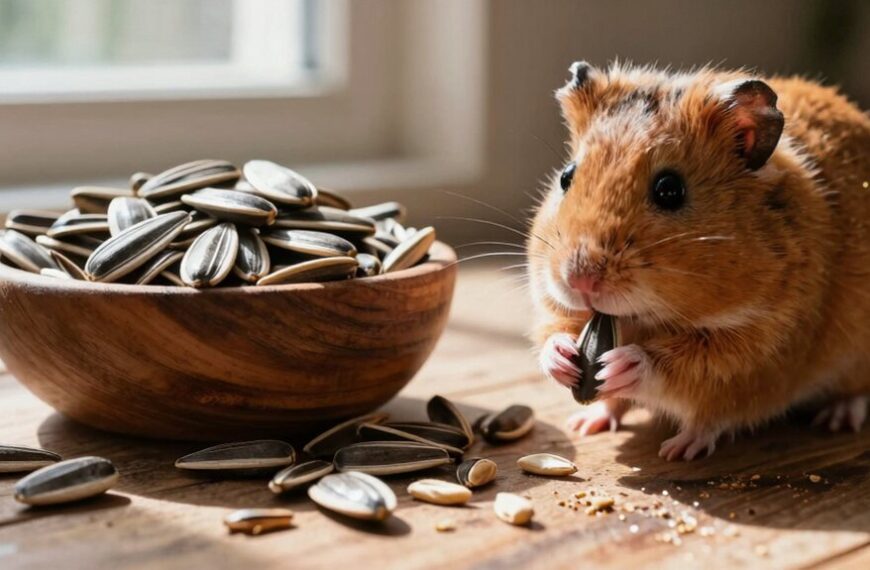
- Sunflower seeds, safe, but only as an occasional snack (they’re like hamster candy!).
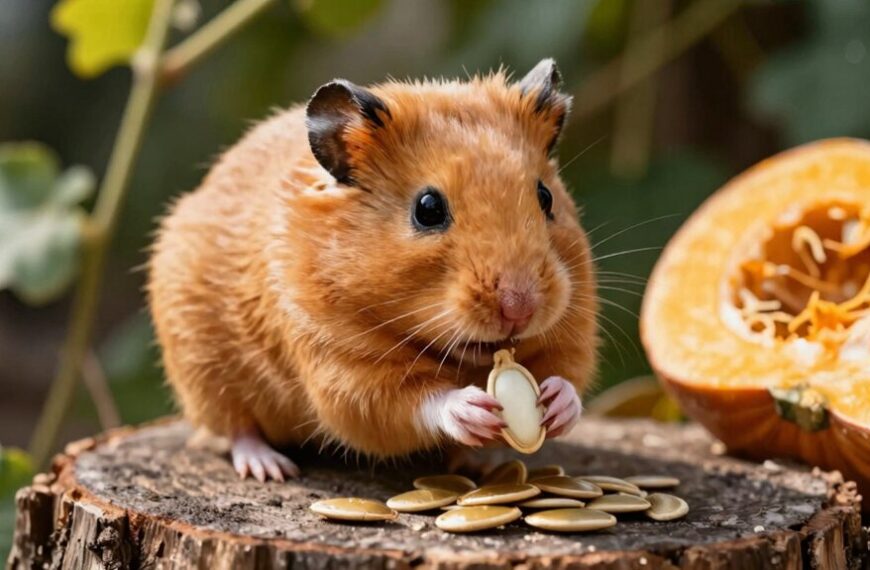
- Pumpkin seeds, a healthy favorite, just serve them raw and unsalted.
You’ve got to balance fun with safety. Your little buddy trusts you!
Stick to safe choices, and you’ll keep their cheeks full and their heart healthy.
Think of it like snack time with a side of love. Your hamster mightn’t say “thank you,” but their happy little wiggle says it all.
What to Do If Your Hamster Eats Something Toxic

What if your little furball suddenly nibbles a forbidden snack and you’re left wondering, “Uh-oh, did I just doom my hamster?”
Don’t panic. Take a breath, because quick thinking can make all the difference.
First, stay calm and remove any remaining toxic food.
Check what your hamster ate. Some items, like onions or chocolate, are serious no-nos.
If you’re unsure, call your vet right away.
Time matters, so don’t wait for symptoms.
Watch for drooling, weakness, or wobbling. These mean it’s time for emergency vet care.
Keep your vet’s number handy, and consider having a basic hamster first aid kit with saline drops and a soft blanket.
While you can’t fix everything at home, staying cool and acting fast gives your tiny buddy the best shot.
You’ve got this. And so does your hamster.
Final Thoughts
You’ve got this, hamster hero! Now that you know the foods to avoid, you can keep your little buddy safe and munching happily.
Sure, they might give you the side-eye when you say no to chocolate, but trust us: those tiny cheeks don’t need the drama. Stick to safe treats, stay curious, and remember: a healthy hamster is a happy hamster (and way cuter when not mad at you).