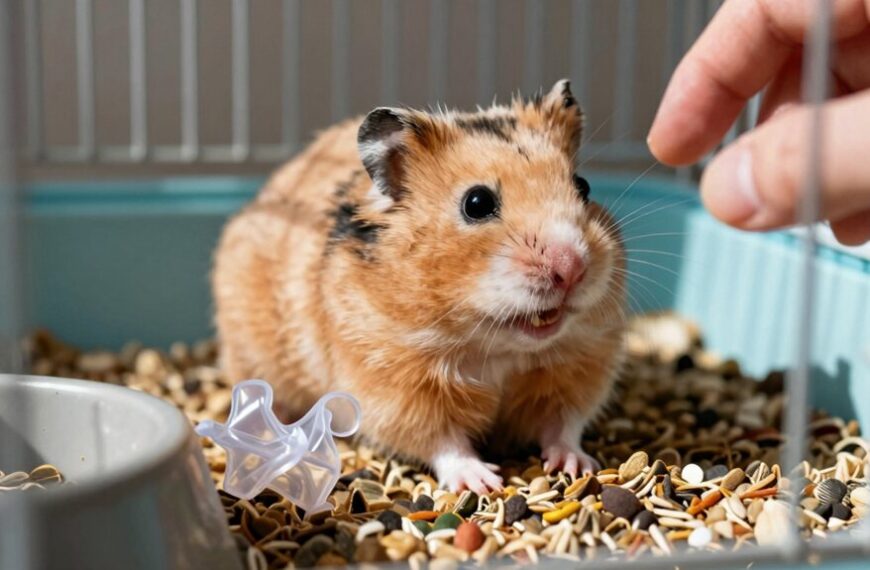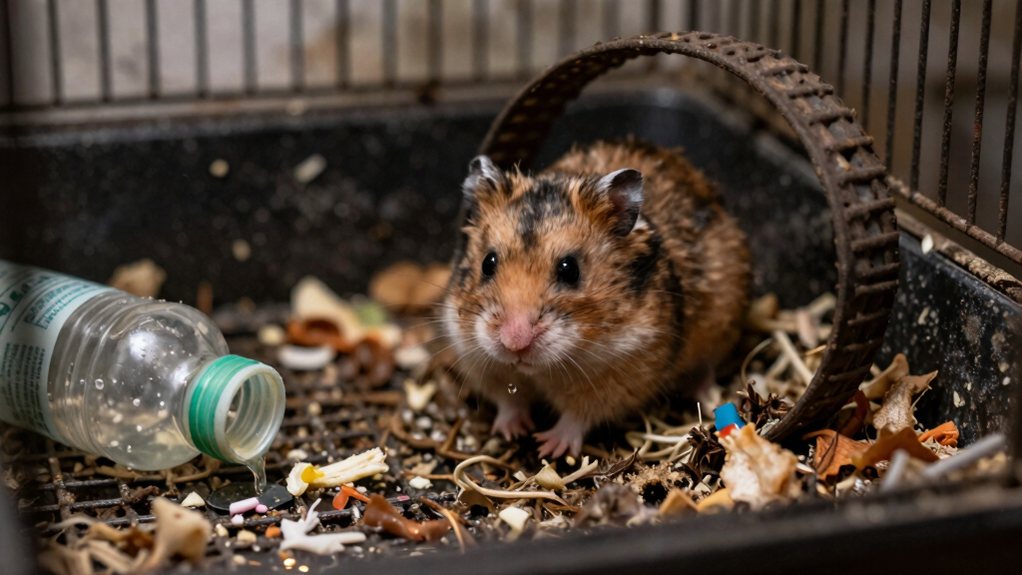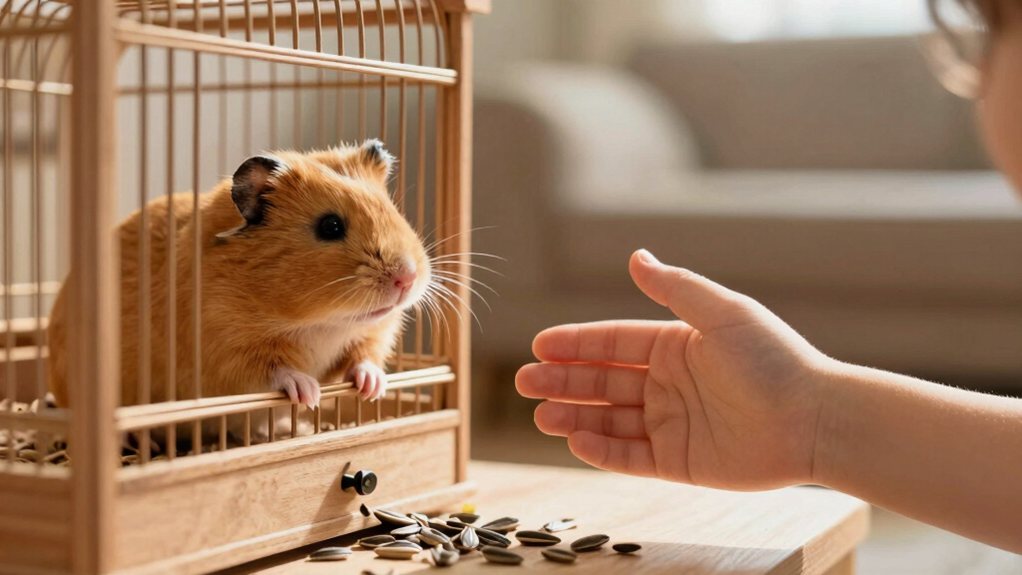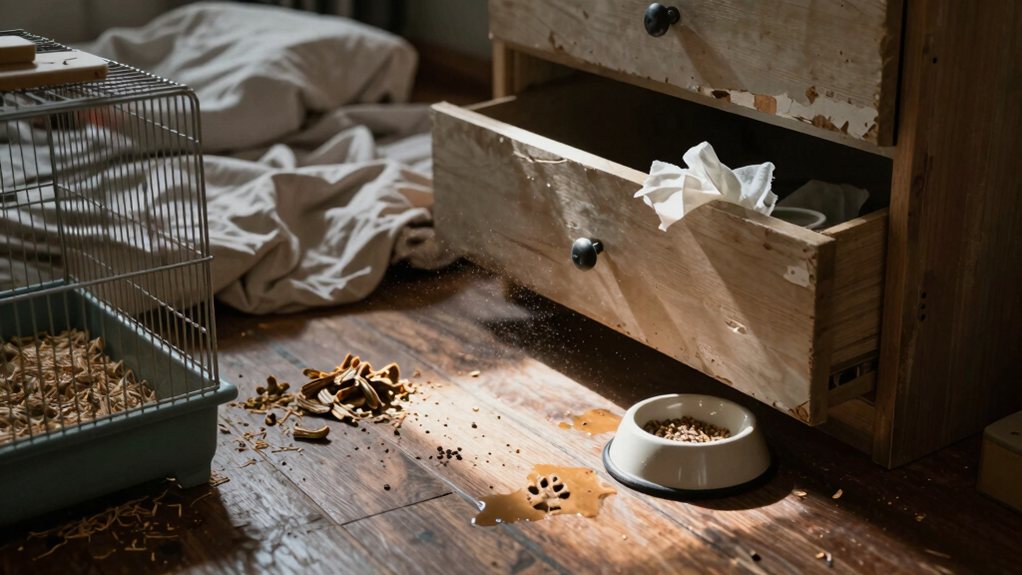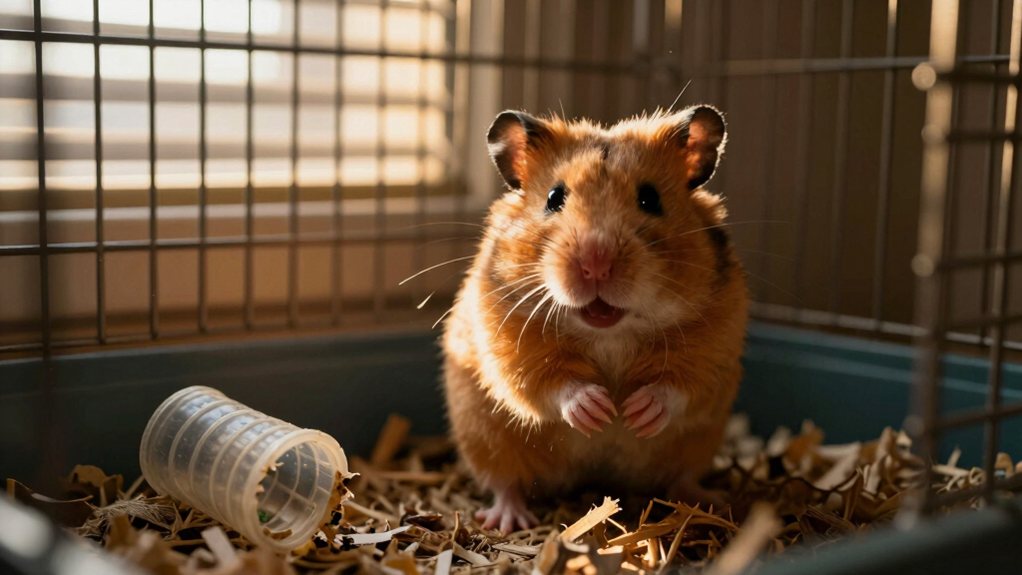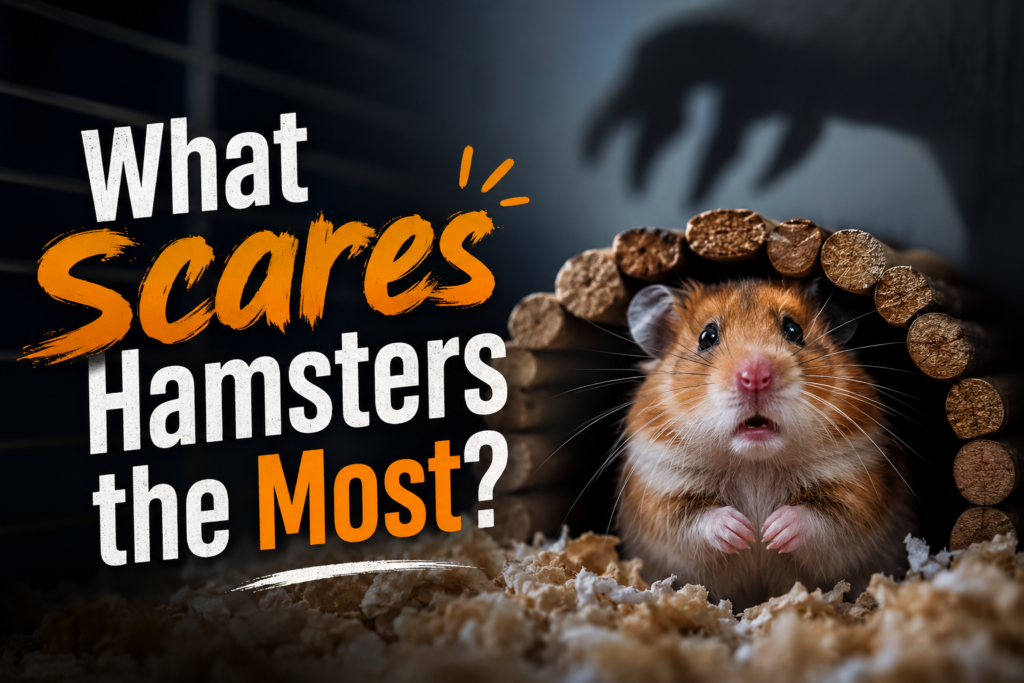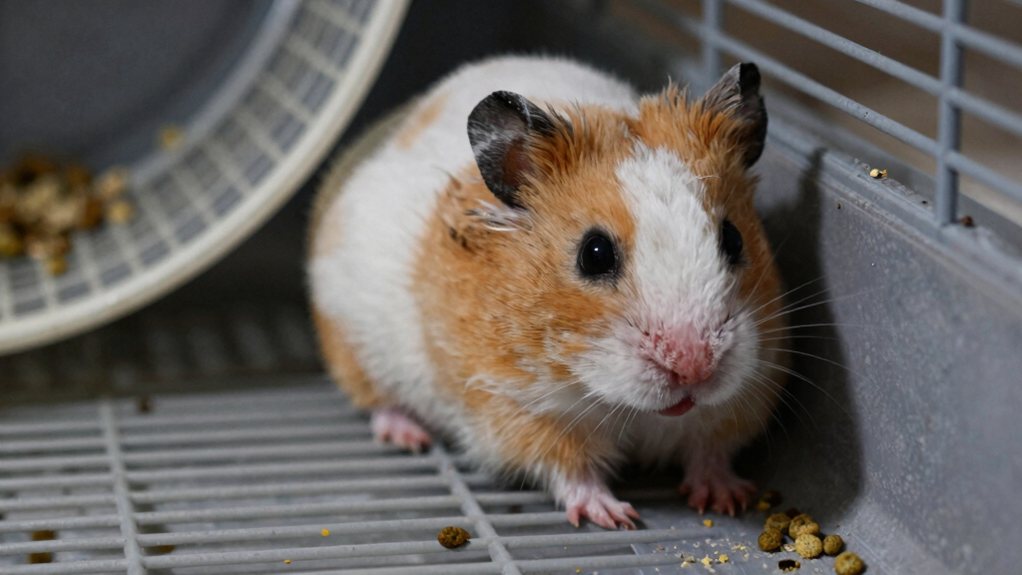
If your hamster’s suddenly chewing the cage bars, hiding more than usual, or ignoring their favorite treats, they might be stressed. Pacing, over-grooming, or acting jumpy at night are red flags too.
Scruffy fur, weight loss, or wet tail? Those are physical clues stress is taking a toll. Loud noises, a cramped cage, or boring meals can all pile on the pressure.
They’re tiny, but their feelings are real. Give them calm, space, and fun, and you’ll start seeing their happy, curious self again. There’s more to keeping them content than you might think.
Why Hamster Stress Looks Different Than Other Pets
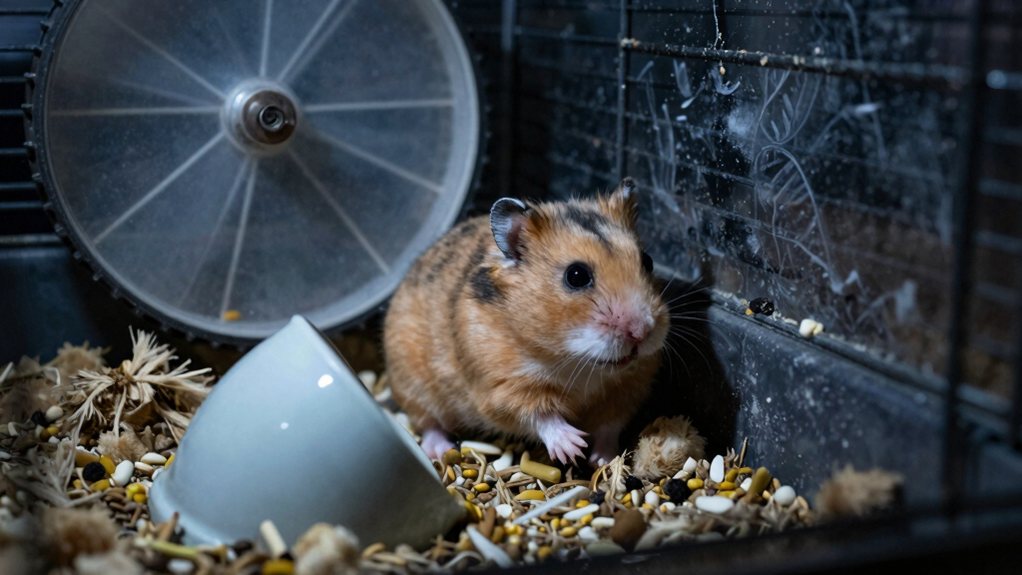
Ever wonder why your hamster doesn’t whine at the door or give you sad puppy eyes when they’re stressed?
That’s because hamsters show stress differently than cats or dogs.
Being nocturnal, your little buddy might seem grumpy during the day.
That’s just nocturnal confusion in action.
They’re wired to be active at night, so daytime handling can feel like waking someone mid-REM sleep.
Not cool, right?
Also, hamsters are loners by nature, so social isolation is actually not a big stressor, unlike for pets like guinea pigs.
In fact, forcing them to share space can cause more stress.
Watch for subtle signs instead: over-grooming, hiding more, or even biting the cage bars.
These quiet cues are their version of yelling.
A restricted or unstimulating environment can lead to a condition known as cage rage, where hamsters display compulsive behaviors due to psychological strain.
So, respect their routine, keep their space calm, and you’ll both be happier.
A chill hamster is a happy hamster!
7 Behavioral Signs Your Hamster Is Stressed
You mightn’t hear your hamster crying for help, but they’re definitely telling you when something’s off, once you know what to look for.
If your usually curious buddy suddenly hides all day or bites the cage bars, stress could be the culprit.
Watch for changes in food preferences.
Turning up their nose at treats they once loved is a red flag.
You might also notice less social interaction.
A hamster that used to greet you may now scurry away.
Over-grooming or fur loss? Yep, that’s stress too.
They can’t tell you they’re overwhelmed, but pacing, freezing, or acting jumpy sure can.
Even nighttime activity spikes might mean they’re uneasy.
Pay attention.
Small changes speak volumes.
Cage bar chewing isn’t just a habit—it’s often linked to dental health needs or boredom, and understanding the cause is key to helping your hamster feel better.
With a little observation, you’ll catch the signs early and help your tiny pal feel safe and snug again.
After all, happy hamsters make the best roommates, even if they’re terrible at dishes.
Physical Symptoms of Stress in Hamsters
While you’re keeping an eye on your hamster’s mood, don’t forget to check their body language. Stress doesn’t just change how they act, it can show up on their fur, skin, and even their weight.
If your little buddy looks scruffy or sheds more than usual, stress might be the culprit.
Keep an eye out for wet tail, a serious condition linked to stress that causes diarrhea and a wet, messy rear. It’s no joke—this one needs a vet fast.
You might also notice your hamster breathing fast or sneezing a lot, signs of respiratory issues that stress can worsen.
Weight loss is another red flag, especially if they’re eating less or seem off. Think of it like your own stress headaches—your hamster feels it too, just in furrier form.
Heart disease is a leading cause of death in aging hamsters and can be exacerbated by chronic stress.
Stay sharp, give them love, and when in doubt, call the vet.
Over-Grooming? It Might Be Stress-Related
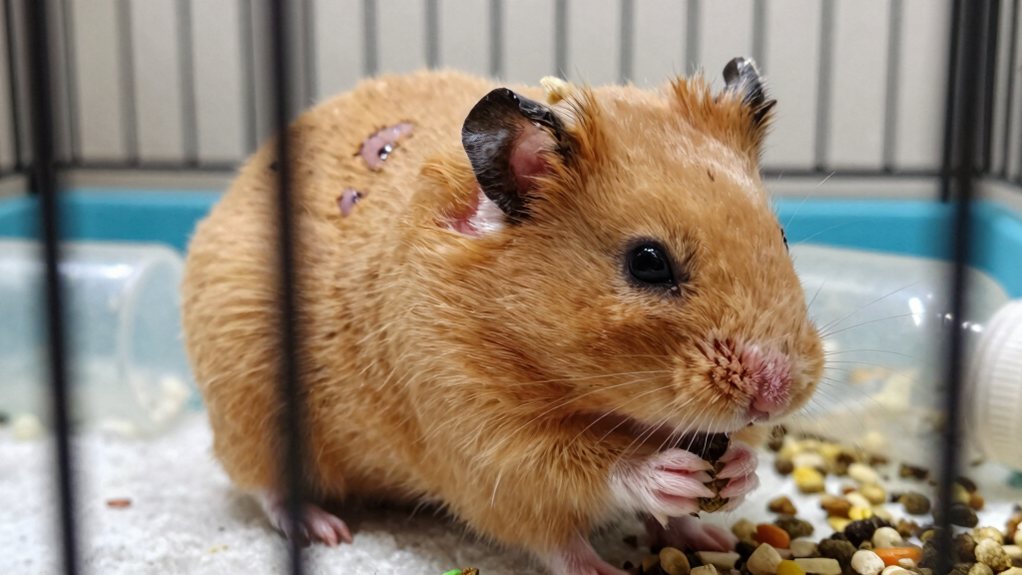
If your hamster’s constantly licking or scratching, it’s more than a spa day gone wild. Over-grooming can be a sign they’re stressed.
You might even notice bald spots or thin patches where all that grooming’s been happening, especially if they seem restless around dusk.
It’s kind of like when we bite our nails without realizing it. Except they’re doing it with their whole coat!
Excessive Licking And Scratching
Ever wonder why your hamster seems to be licking or scratching nonstop? Excessive licking isn’t just a quirk, it could be a sign of stress. When your little buddy feels anxious, they might over-groom as a coping habit, leading to skin irritation or even bald spots. It’s like when you bite your nails without realizing it.
Check their environment. Is the cage too noisy? Are they bored? A stressful setup can turn your hamster into a tiny, frantic groomer.
While some scratching is normal, constant licking isn’t. Think of it as their version of stress-cleaning.
Gently assess their space and routine. Add hiding spots, quiet time, and maybe a new chew toy.
You’ll both feel better knowing they’re calm, comfy, and not stuck in an endless grooming loop. Keep an eye on them, you’re their best advocate.
A dusty or chemically treated bedding could also trigger irritation and stress, so make sure you’re using safe, non-toxic substrates to support their respiratory and overall health.
Bald Spots From Grooming
What’s behind those mysterious bald patches on your hamster’s fur, did they turn into a tiny, stressed-out barber?
If you’ve noticed bald spots, especially around the face, legs, or belly, stress might be the sneaky culprit.
Hamsters often over-groom when anxious, turning normal grooming habits into a compulsive behavior.
You might catch your little buddy licking or nibbling the same spot repeatedly.
While some shedding is normal, patchy hair loss isn’t.
Stressors like a noisy cage, sudden changes, or boredom can trigger this.
Don’t panic—take a breath and check their environment.
Is it calm?
Are they getting enough toys and exercise?
Fixing the stress source usually helps.
If bald spots persist or look irritated, a vet visit’s a smart move.
You’ve got this—your hamster’s counting on you to be their calm in the storm.
Restless Behavior During Dusk
Why does your hamster suddenly turn into a furry little tornado at dusk? It might be more than just their natural rhythm. Dusk agitation could signal stress.
Hamsters are crepuscular, meaning they’re most active at dawn and dusk. But if you notice frantic nocturnal pacing or constant running in circles, something might be off.
Over-grooming, combined with restless behavior, often points to anxiety.
Maybe their cage feels too small, or they’re bored. Try adding more hideouts, chew toys, or a bigger wheel. A calm environment can make a big difference.
Think of it like bedtime for kids—too much stimulation and they go wild. Your little buddy isn’t trying to stage a tiny protest; they just need a more soothing setup.
Watch their patterns, tweak their space, and you’ll likely see calmer evenings.
You’ve got this—your hamster’s peace of mind is worth the effort.
A lack of proper mental stimulation can lead to repetitive behaviors and increased stress levels.
When Hiding Is a Sign of Hamster Stress
Is your hamster suddenly acting like a tiny, furry ninja, vanishing for hours and only sneaking out under cover of darkness?
While hiding is natural, especially during nesting habits, constant seclusion can signal stress.
If your hamster avoids interaction, skips playtime, or shows signs of social isolation, even from you, it might be overwhelmed.
Stressors like loud noises, a cage mate conflict, or a recent move can make your pet retreat more than usual.
Watch for other clues: shredded bedding, over-grooming, or loss of appetite.
It’s more than “being shy”—it could be their way of saying, “I need a break!”
Try calming the environment, offering cozy hideouts, and spending quiet time nearby.
You don’t need a hamster therapist, though that’d be cute, just patience and attention.
A little love and routine go a long way in helping your little buddy feel safe again.
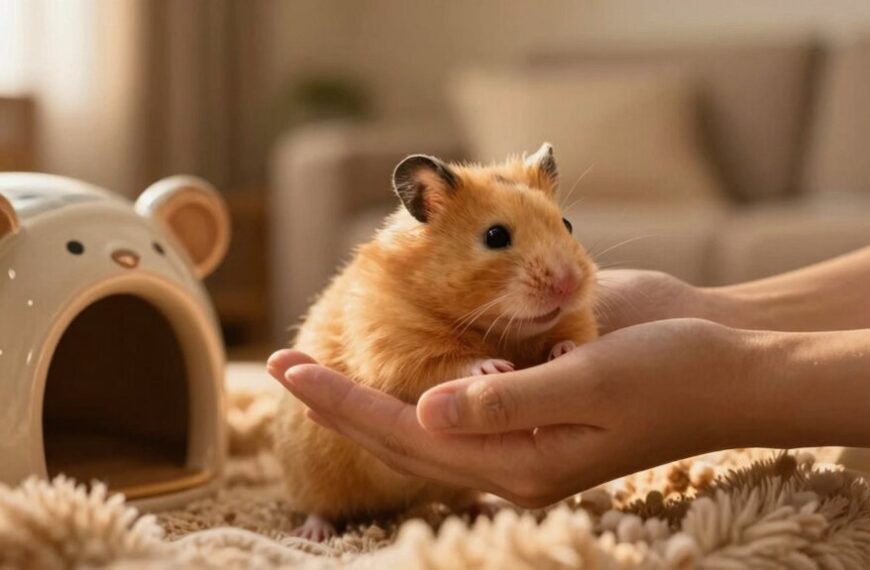
Trust develops over time with patience, calm presence, and warmth, so consistent human interaction is key to helping your hamster feel secure.
Noisy Homes and Light Disturbances: Stress Triggers
Ever wonder why your hamster bolts for cover the moment the vacuum roars to life, or why they’re wide awake and pacing when the living room lights suddenly flip on?
That sudden vacuum roar? To your hamster, it’s like a tornado siren—no wonder they dash for cover when lights flash or noise hits.
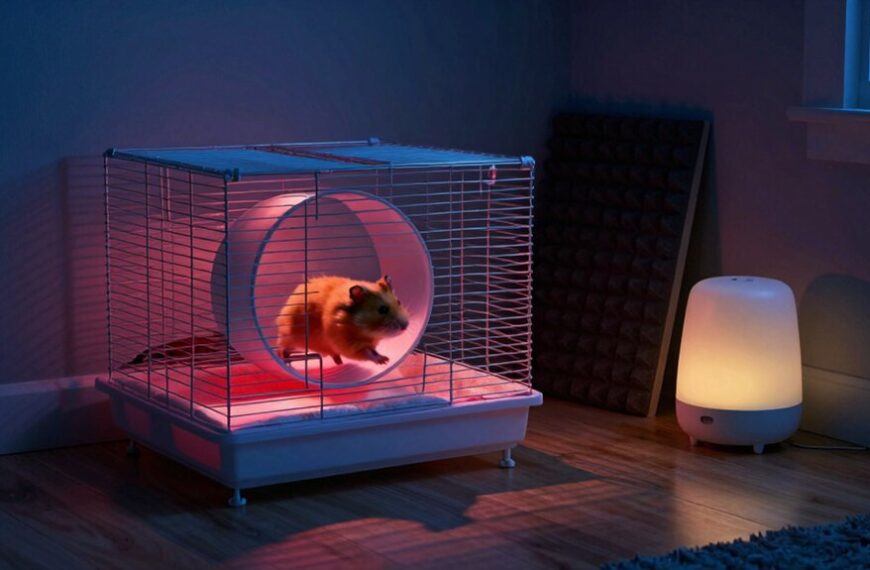
Noisy homes and sudden light disturbances can seriously stress your tiny friend. Hamsters have super-sensitive hearing and eyesight, so loud sounds like music, shouting, or appliances might feel like a thunderstorm in their world.
And since they’re most active at dusk and dawn, bright lights turning on mid-nap are total chaos.
If your hamster seems jumpy, hides more, or acts restless at odd times, your home’s buzz might be the culprit.
Try moving their cage to a quieter corner, away from TVs and foot traffic.
Use a light cover or put their habitat in a dimmer spot.
A calm space means a happy hamster, because even little critters deserve peace and quiet!
Hamsters rely heavily on their tapetum lucidum to navigate in low light, and artificial lighting at night can disrupt their natural vision and behavior.
Common Cage Mistakes That Cause Hamster Stress
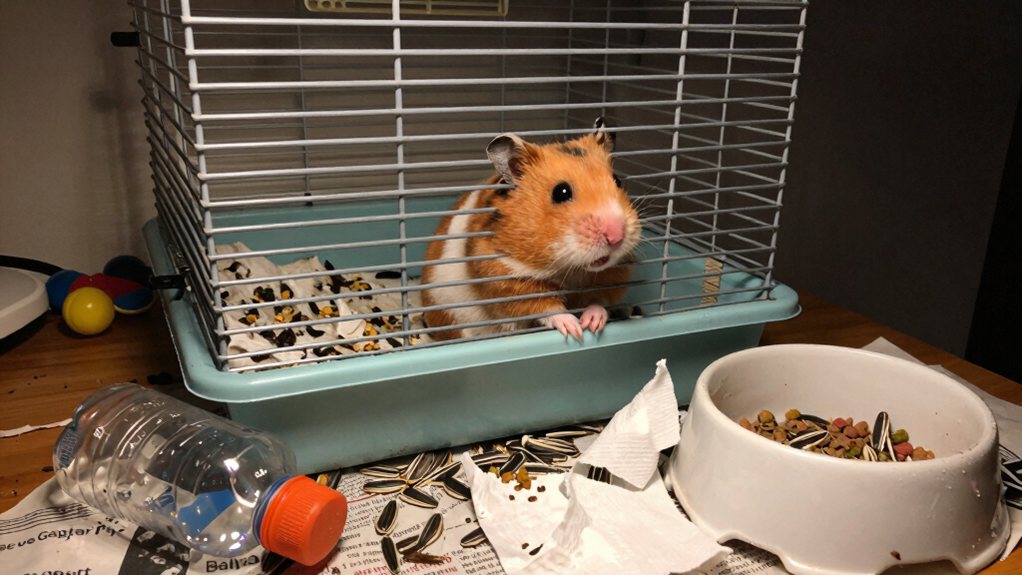
Could your hamster’s home actually be stressing them out without you even realizing it?
It might be time to take a closer look at their cage.
A cramped space can make your little buddy feel trapped and anxious.
Hamsters need room to run, dig, and explore.
Aim for a cage size that’s larger than the bare minimum.
Bigger is always better.
Also, don’t skimp on bedding quality.
Dusty or rough bedding irritates their sensitive skin and lungs.
Soft, absorbent materials like paper-based bedding keep them comfy and healthy.
Ever seen your hamster acting grumpy or hiding nonstop?
That could be stress from a too-small cage or scratchy bedding.
Think of it like living in a shoebox with a burlap blanket.
No thanks!
Fixing these mistakes gives your hamster peace of mind and way more happy zoomies.
Poor ventilation design can also contribute to stress by creating a damp, stuffy environment that affects respiratory health.
How Boredom and Diet Affect Hamster Stress
You know that restless feeling when there’s nothing good on TV and you’re stuck in the same room? That’s kind of how your hamster feels without enough toys or things to do. Boredom can seriously ramp up their stress.
And if you’re feeding them junk or the same old food every day, it’s more than just boring. It can mess with their mood and health too.
Let’s chat about how a dull routine and sad snacks might be making your little buddy more stressed than you think.
A great way to fight boredom is by introducing foraging toys that encourage natural behaviors like searching for food and exploring.
Lack Of Stimulation
What does a hamster do all day when there’s nothing to do? Not much, and that’s the problem. Without toys, enrichment, or social interaction, your hamster can quickly become stressed.
Imagine being stuck in a room with zero entertainment, no TV, no snacks, just silence.
Sounds boring, right? Your hamster feels the same. A lack of stimulation leads to pacing, chewing bars, or even withdrawal. You’ve got to keep their world fun and active.
Rotate chew toys, add tunnels, and let them explore a safe play area.
Spend a few minutes daily talking or gently handling them, yes, they notice! Enrichment isn’t just cute, it’s essential.
A bored hamster isn’t just sleepy, they’re sad.
Natural materials like untreated wood and coconut shells support essential gnawing behavior to prevent dental issues and provide mental stimulation.
Poor Diet Consequences
A hamster with nothing to do isn’t the only one feeling down. Your little buddy can also get stressed from what’s in their food bowl. If your hamster’s diet is off, it can lead to digestive issues that make them cranky and uncomfortable.
Think of it like eating junk food all day—no fun, right? A poor diet might also cause nutrient deficiency, leaving your pet low on energy and more prone to stress.
You might notice they’re less active, their fur looks dull, or they’re grumpy during cuddle time.
It’s more than just about feeding them *something*. It’s about giving them balanced, species-appropriate food. Mix in fresh veggies, quality pellets, and the occasional treat.
Your hamster will thank you with happy zoomies and fewer midnight wheel marathons.
Keep their tummy happy, and you’ll keep their mind at ease too.
Signs Of Boredom
Ever wonder why your hamster’s suddenly chewing the cage bars or ignoring their favorite wheel? It mightn’t be a cry for attention, it could be boredom. Just like us, hamsters need mental stimulation to stay happy and stress-free.
If their toys never change, they’ll lose interest fast.
Try a weekly toys rotation to keep things fresh and exciting. A cardboard tube one day, a chew block the next. Small surprises go a long way.
Also, don’t underestimate social interaction. Spending a few minutes daily for gentle play or talking to your little buddy helps them feel connected.
Without these, even a perfect diet won’t stop stress from creeping in.
Boredom leads to restless behaviors, like over-grooming or pacing. So mix it up, get involved, and watch your hamster perk up.
A little effort makes a big difference in their tiny, whiskered world.
5 Simple Ways to Reduce Hamster Stress
Wondering why your hamster’s been acting a bit off lately? Stress might be the culprit. The good news is that with a little hamster enrichment and smart stress prevention, you can turn things around fast. A happy hamster is a healthy hamster, and it’s easier than you think to help them chill out. Try these simple tricks:
Give your hamster a cozy hideout, everyone needs a safe space to nap and hide.
Rotate toys weekly to keep things fresh and fun, yes, even hamsters get bored.
Offer chew toys, gnawing helps them de-stress and keeps teeth in check.
Keep the cage in a quiet spot, away from loud TVs or barking dogs.
Spend time near their cage daily, talking softly to build trust.
Small changes make a big difference. You’ve got this!
Final Thoughts
You know your hamster best, so trust your gut if something feels off. Stress happens, but with a few tweaks, like a quieter spot, more chew toys, or a calmer routine, you can turn things around fast.
Think of it as hamster therapy: simple, sweet, and totally doable. You’ve got this, and so does your tiny, twitchy-nosed buddy. After all, happy hamsters make for happy humans. Nobody wants a grumpy little roommate.