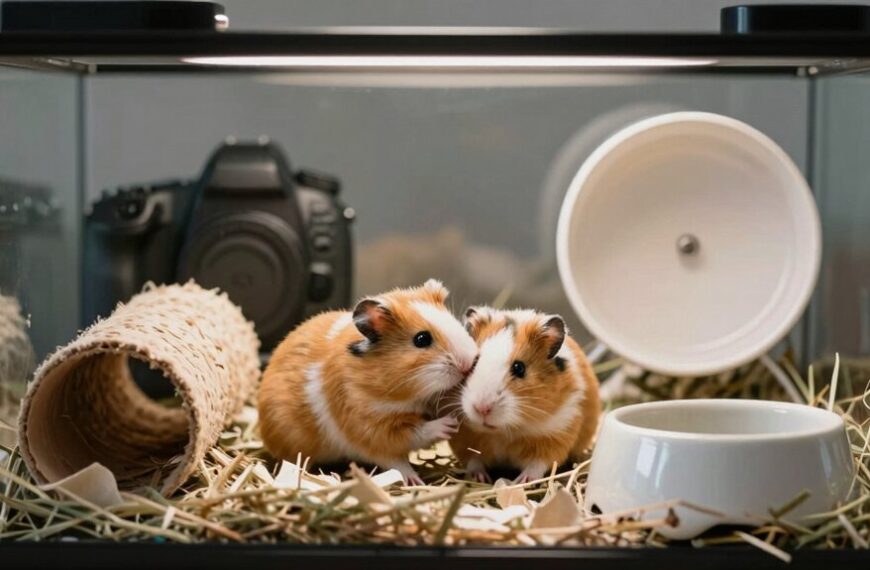
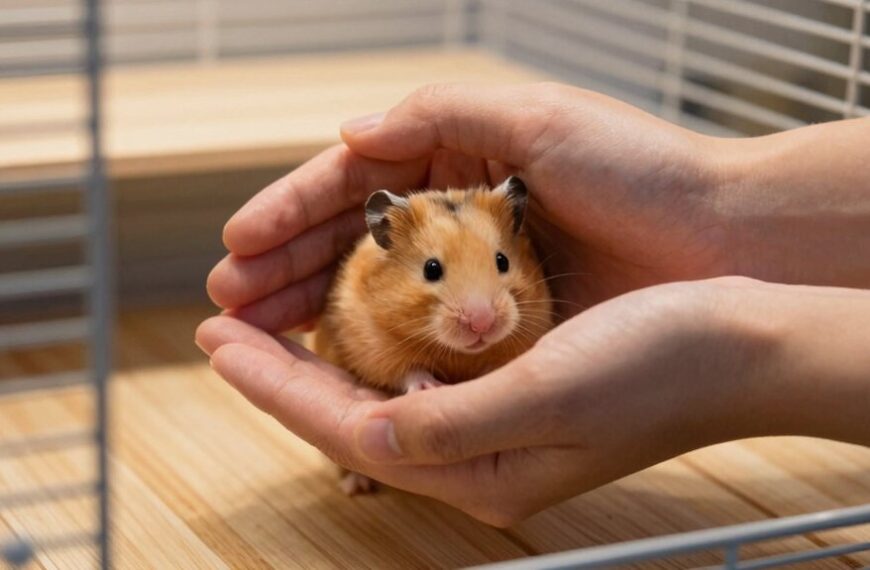
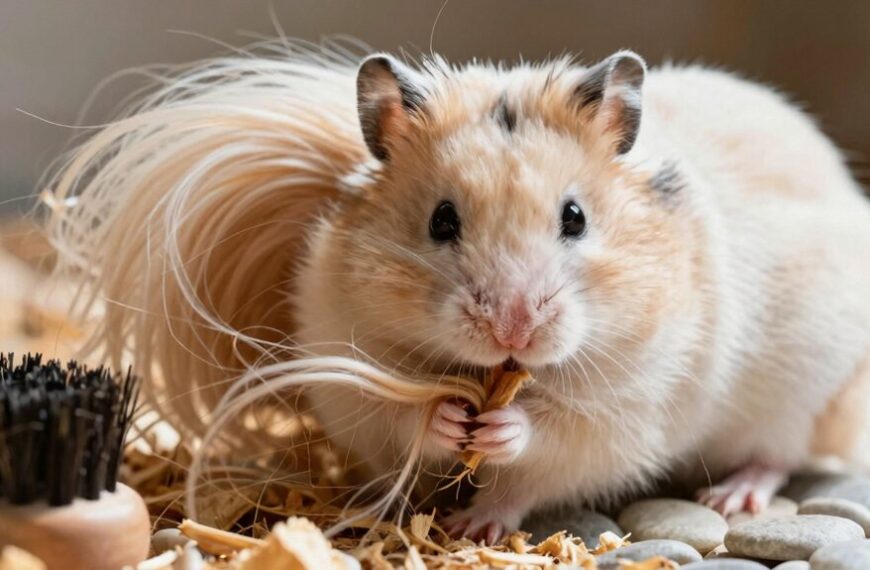
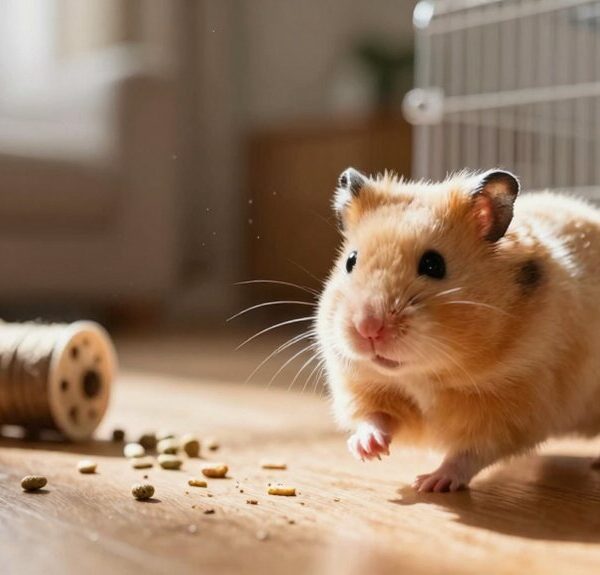
No, you don’t need to leave a light on for your hamster at night. They actually prefer the dark.
These little night owls are built to zip around in low light, using their keen senses and whiskers to maneuver. Bright or constant light can stress them out, mess with their sleep, and even harm their health over time.
Think of them as tiny, furry ninjas who thrive after dark. Keep their world dim and quiet, and you’ll keep them happy. Plus, you’ll discover some fun secrets about their twilight adventures.
Do Hamsters Need Light at Night?

Ever wonder if your hamster needs a nightlight to feel safe after dark? Good news, you don’t need to leave a light on. Hamsters are naturally nocturnal, so they actually prefer the dark.
Hamsters are nocturnal by nature—darkness isn’t scary to them, it’s comforting. Skip the nightlight and let your little buddy thrive in the quiet dark.
Artificial brightness at night can stress them out and mess with their sleep cycle.
Think of it like someone shining a flashlight in your eyes while you’re trying to nap, annoying, right?
Plus, too much UV exposure isn’t good for their tiny eyes or overall health.
They move just fine in the dark using their whiskers and keen sense of smell.
So, keep their space dim and cozy at night.
A little quiet darkness is exactly what your little buddy craves.
Skip the nightlight. Your hamster will thank you by staying happy, healthy, and busy during their favorite time: nighttime!
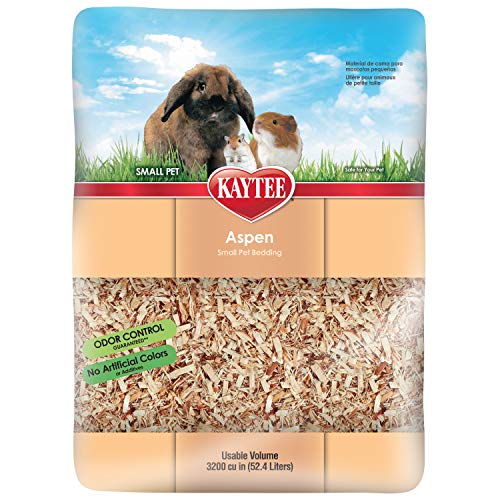
ALL-NATURAL ASPEN SHAVINGS, crafted for a natural, comfortable habitat
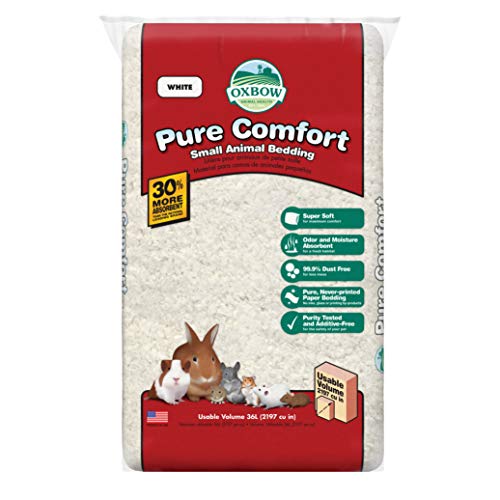
ODOR ABSORBENT TO MINIMIZE PET ODORS: Effectively neutralizes odors to keep bunny bedding & hamster bedding fresh; Ideal for pet bedding, ferret cages, and litter boxes, it helps maintain a clean environment for your pets and a better experience for you
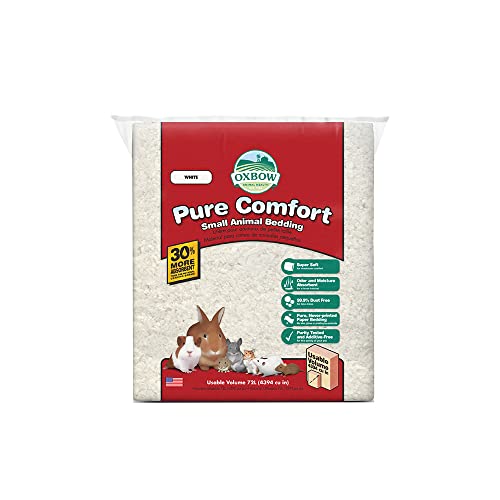
ODOR ABSORBENT TO MINIMIZE PET ODORS: Effectively neutralizes odors to keep bunny bedding & hamster bedding fresh; Ideal for pet bedding, ferret cages, and litter boxes, it helps maintain a clean environment for your pets and a better experience for you
Can Hamsters See in the Dark?
You might wonder if your hamster can actually see in the dark, and the truth is, they’re pretty good at it, thanks to eyes built for low light.
They don’t see colors like we do. Think more black, white, and blurry grays.
Their night vision helps them stay active when the lights go out.
Low Light Vision
How do hamsters manage to zip around their cages in the dim glow of your bedroom at night?
Well, while they don’t have night vision like cats, hamsters do have surprisingly decent low light vision.
Their eyes are built for twilight hours, think dawn and dusk, thanks to higher retinal density, which helps capture every bit of available light.
They don’t see in infrared, but their infrared sensitivity is tuned to detect movement and shapes in near-darkness.
You might catch them sniffing around or rearranging bedding when the room feels almost black to you, but it’s not so dark for them.
- High retinal density boosts light detection
- Built for crepuscular (dawn/dusk) activity
- Rely on motion and shape over detail
- No infrared vision, but still quite perceptive
Nocturnal Eye Adaptations
So, can hamsters actually see in the dark like some kind of tiny, furry ninjas? Well, not exactly, but they’re pretty close! While hamsters don’t have perfect night vision, their eyes are built for low light. They rely on high retinal sensitivity, meaning their eyes pick up even the tiniest bits of light.
Plus, they’ve got something called a *tapetum lucidum*—a shiny layer behind the retina that bounces light back, giving their eyes a second chance to see it.
That’s why their eyes sometimes glow in the dark, like little disco balls! It’s not superhero vision, but it’s enough for sneaking around at night.
Limited Color Perception
Ever wonder what the world looks like through your hamster’s eyes when they’re zipping around their cage at 2 a.m.?
While they’re great at moving through in low light, their color vision is pretty limited. Hamsters see the world in a much narrower visual spectrum than we do, think of it like watching TV in soft pastels instead of full HD color.
They mostly pick up blues and greens but miss out on reds and bright tones.
Here’s what their vision is really like:
- They see in limited color, not full color like humans
- Their eyes are tuned to low light, not vivid detail
- They rely more on smell and whiskers than sight
- Bright lights can actually stress them out
Why Night Lights Disrupt Hamster Sleep
What if your hamster’s midnight snack sessions depend on total darkness?
Well, they do! Your little buddy relies on natural cues, like moon phases, to stay in sync with nighttime activity.
Artificial glare from a room or night light can confuse their internal clock, making them groggy or stressed.
Even a small night light can throw off your hamster’s rhythm—imagine trying to sleep with a spotlight on your face.
Think of it like trying to sleep while someone keeps flicking the lights on and off. It’s no fun!
Hamsters are built for low-light living, not a 24/7 spotlight.
That glow might seem harmless, but to your pet, it’s like a full-on stage light during nap time.
Keep their space dark and cozy at night so they can scurry, snack, and snooze on their own schedule.
A little darkness goes a long way in keeping your hamster happy, healthy, and ready for their next big adventure.
Like conquering a cardboard tube fortress.
What Are the Risks of Light at Night?

While your hamster isn’t exactly filing tax returns or checking emails, that little glow from a night light can still mess with their whole routine.
Light pollution in their room may cause serious sleep disruption, and that’s no joke for a creature who’s up and running at midnight.
Over time, constant exposure to light at night stresses their tiny bodies and minds. Here’s what you’re risking with nighttime lighting:
- Weakened immune system, just like you feel crummy after a bad night’s sleep
- Mood changes, grumpy hamsters aren’t fun for anyone
- Reduced lifespan, yep, it can actually shorten their life
- Confused body clock, they’ll eat, run, and nap at odd times
Keep their space dark and cozy. Your hamster will thank you with happy wheel runs and fewer midnight squeaks. Sweet dreams, little buddy.
Best Light Schedule for Hamsters at Night
You don’t need to leave a light on for your hamster at night, they actually thrive when things stay dark and quiet.
Stick to natural light cycles by keeping their room bright during the day and letting it get fully dark at night, just like outdoors.
Think of it as giving your little buddy a cozy bedtime routine, minus the nightlight you might’ve had as a kid.

Naturally Air-dried: Every sprig is hand-picked from whole plants and air-dried. Each stem is neatly trimmed, retaining its natural color and scent. Material: dried plant stems only. Suitable for pets to sniff and explore. Always supervise your pet during use. Store in a dry, dark place away from moisture, and handle gently as petals may shed if squeezed

Nice Set: This ceramic mushroom-shaped set includes a hamster hideout, a food bowl, and a water bottle with stand, perfect for your furry friends to nest, feed, and drink water. It meets all basic habitat needs.

Natural Botanical Habitat Enrichment: This hamster bedding and hamster sprays and forage mix is crafted from air-dried flowers and grasses, creating a calm and natural small animal habitat décor that helps hamsters feel safe, relaxed and engaged in their cage
Natural Light Cycles
Ever wonder how your hamster would live if it were still out in the wild, scurrying under open skies instead of zipping through a plastic maze in your living room?
Out there, they’d follow natural light cycles, tuning into sunrise and sunset just like clockwork. These cycles shape their diurnal behavior, even though hamsters are mostly active at dawn and dusk, they still rely on light cues.
Seasonal changes also affect their activity, slowing down a bit when days get shorter.
You don’t need to mimic winter in July, but keeping a steady, natural rhythm helps your little buddy feel safe and sane. Think of it like their internal GPS for naps and snack runs.
- Follow sunrise and sunset patterns
- Support natural diurnal behavior
- Adjust slightly with seasonal changes
- Avoid sudden light shifts
Keep it simple, and your hamster will thrive.
Consistent Darkness Importance
What if your hamster’s bedtime routine was simpler than yours? Turns out, it really is. Hamsters thrive on consistent darkness at night, it’s key for their circadian rhythm, just like how you feel groggy after messing with your sleep schedule. Without steady dark periods, their sleep quality takes a nosedive.
Think of it this way: would you nap well under a spotlight? Probably not. Your little buddy doesn’t need nightlights or ambient room glow. In fact, constant light can stress them out and throw off their natural cycle.
Keep their room dark and quiet when the sun goes down. That means no TV glow or phone screens nearby.
A predictable dark-light rhythm helps them stay healthy, happy, and ready for their nightly zoomies. So, dim the lights and let them enjoy their beauty sleep, no lullabies required.
Do Hamsters Need Light to Move at Night?
How do hamsters manage to zoom around their cages in the dark without bumping into everything?
You might think they’d need a little nightlight, but hamsters don’t rely on light like we do.
They’re naturally crepuscular, meaning they’re most active at dawn and dusk, not during full diurnal activity.
Their senses are fine-tuned for low light, using whiskers and smell to traverse.
Scientists believe they may even have some infrared sensing abilities, helping them detect warmth and movement.
So, no, your hamster doesn’t need a light to move at night.
They’ve got built-in night vision gear!
- Super-sensitive whiskers for feeling their way
- Strong sense of smell to identify surroundings
- Natural crepuscular rhythm keeps them alert at twilight
- Possible infrared sensing to detect heat and motion
Let them enjoy the dark.
It’s when they’re happiest.
Safe Alternatives to Night Lights
Now that you know your hamster’s perfectly happy zipping through the dark using their ninja-level senses, you might still want to peek at them during the night, without flipping on a bright light that could stress them out.
Good news: you don’t need UV lighting or heat lamps, which can actually disrupt their sleep and overheat their cozy home. Instead, try a dim red or blue night light placed away from the cage. These colors are less jarring to their sensitive eyes.
Even better, use a motion-sensor light that only glows briefly when you walk by. Or just let your eyes adjust and enjoy a quiet moment watching your little furball raid their food stash. Your hamster will thank you for keeping things dark and peaceful.
Plus, it’s kind of fun playing hamster detective in the near-dark. Just don’t trip over their wheel!
7 Signs Your Hamster Is Stressed by Light

Ever notice your hamster suddenly freezing mid-snack or darting into hiding when the lights come on? That could be a sign of light sensitivity. Hamsters are crepuscular, meaning they’re most active at dawn and dusk, so bright or constant light can cause stress. Keep an eye out for stress indicators.
Your little buddy can’t tell you how they feel, but their behavior sure can.
Your hamster may be small, but their actions speak volumes—watch closely, and you’ll hear exactly what they’re trying to say.
- Hiding more than usual, even during active hours
- Over-grooming or fur loss from nervousness
- Refusing treats or skipping meals
- Aggressive behavior when handled
If you spot these signs, it might be time to rethink the lighting in their space. A dim, consistent environment works best. Think cozy cave vibes, not a spotlight on Broadway.
Your hamster will thank you with calmer, cuter antics, and maybe a happy wheel sprint or two.
Final Thoughts
You don’t need to leave a light on for your hamster at night, they actually prefer it dark. These little cuties are nocturnal, so bright lights can stress them out and mess with their sleep.
Think of it like someone shining a flashlight in your face while you’re trying to nap. Keep their space dim and quiet at night, and they’ll stay happy, healthy, and way less grumpy. Your hamster will thank you, probably with a cheeky stretch or a snack stash.
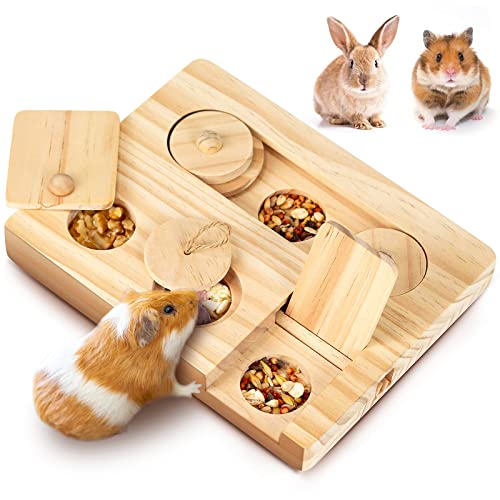
【SMALL ANIMAL PUZZLE GAME】Guinea pigs beignner love this accessories, the hamstersgame of SPIN & SLIDE, HIDE, & SEEK highly interested. The guinea pigs accessories game can highly encourage pet's natural foraging instincts. Guinea Pig would get exciting and active , they don’t feel bored.
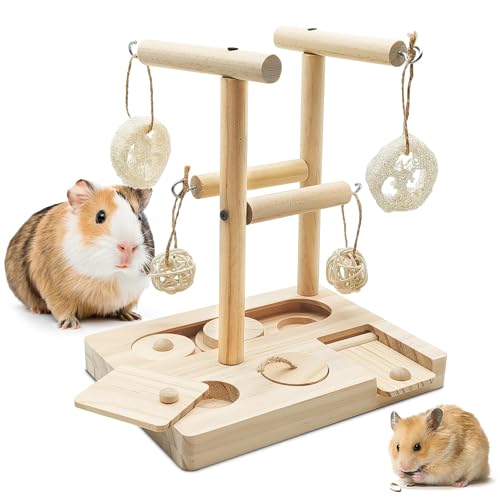
Puzzle game: Many small rodents have an instinct to forage. Long-term feeding has made them lose interest in foraging. This bunny enrichment toys can help pets stimulate their natural foraging instinct. During the process of guiding the small animals to forage, you increase interaction, which can effectively enhance the closeness between you and your beloved pet
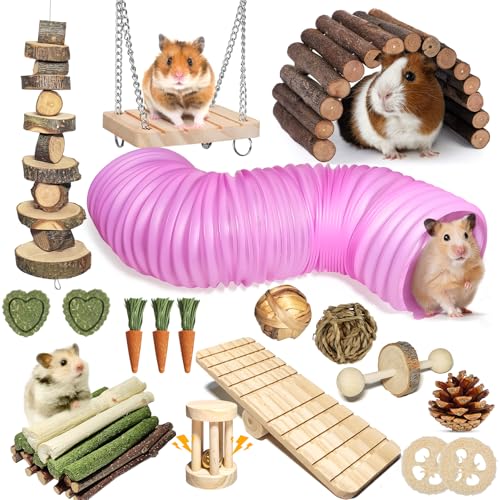
【Unbeatable Value Deluxe Rat Toys】40 Pcs Gerbil toys with 17 variety toy types, Includes 1* stretchable pink hamster tunnel (extends to 15 in); 1* bendable wooden bridge; 1* seesaw; 1* apple branch molar skewer; 1* bell swing; 1* bell roller; 1* unicycle; 2* sweet bamboos; 5* hay sticks; 2* hay cakes; 2* carrot chews; 16* apple twig; 1* pinecone; 1* vine ball; 1* seaweed ball; 1* water hyacinth ball; 2* loofah chews; You will see your hamster busy and happy in its cage.