You’ll need a roomy cage with at least 450 square inches so your hamster can dig and run, plus chew-proof bedding 6–8 inches deep for burrowing. Use safe, dust-free material like paper-based bedding, and skip the scented stuff, it’ll irritate their nose.
Feed a balanced mix daily, add tiny veggie treats, and never give chocolate or apple seeds. Scoop waste daily, clean weekly, and always offer fresh water.
Handle gently with warm, clean hands and watch for happy signs like a shiny coat and bright eyes. You’re doing great, and there’s even more to discover about keeping your little buddy thriving.
Choose the Right Hamster Cage for Your Pet
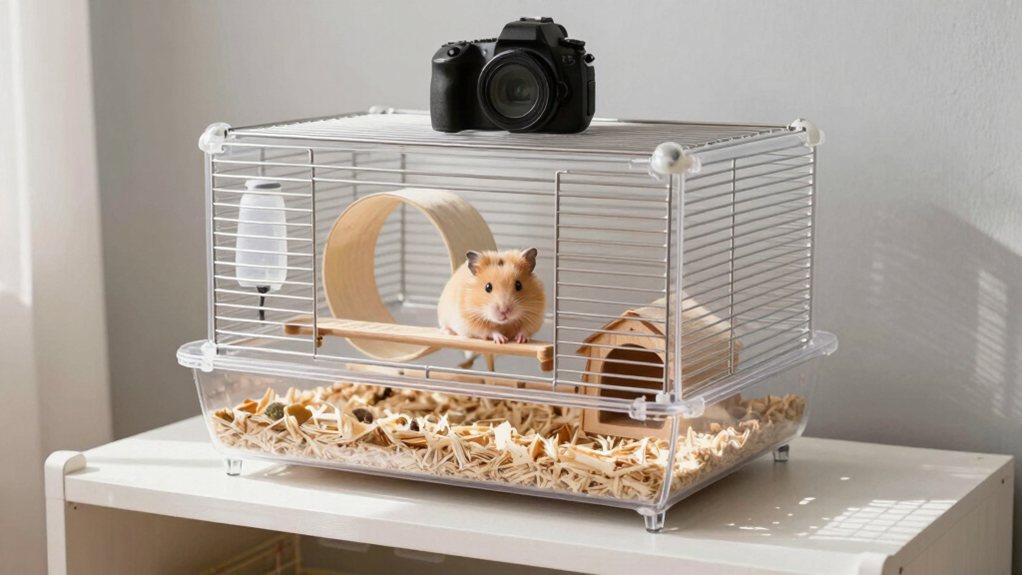
Let’s face it, your hamster might be small, but that doesn’t mean he’ll thrive in a shoebox with a wheel. When picking a cage, size matters more than you’d think. Aim for at least 450 square inches of floor space. Bigger is better.
Your hamster will love room to dig, run, and stash snacks. Don’t forget the ventilation design. Good airflow keeps odors down and your pet happy.
Wire cages look cool, but they can limit climbing and hold smells.
Glass tanks are great for airflow if you add a mesh lid. Plastic bins work too, as long as you drill air holes.
A well-ventilated, spacious cage means a healthier, more active hamster. Think of it as his tiny dream apartment minus the rent. You’ve got this!
A durable cage made with chewproof materials helps prevent escapes and supports dental health.
Pick Safe, Comfy Bedding for Your Hamster
Cozy bedding isn’t merely fluff. It’s your hamster’s safe space, nest, and snack stash all rolled into one.
When picking the right bedding material, skip the dusty or scented stuff. It can irritate your little buddy’s lungs.
Instead, go for soft, absorbent options like paper-based or aspen shavings. They’re safe, comfy, and perfect for burrowing.
Your hamster will love digging in and making a cozy nest. This boosts their comfort level and gives them a sense of security.
Avoid cedar or pine. It might smell nice to you, but it’s harmful to hamsters.
And hey, don’t skimp on the amount. They need enough to tunnel and hide.
Think of it like giving them a fluffy bedroom with room to play.
A clean, well-bedded cage means a happy, healthy pet.
You’re not merely picking bedding. You’re building a tiny dream home.
For proper burrowing behavior, aim for a bedding depth of 6 to 8 inches.
Set Up a Reliable Water Bottle System
You’ll want to pick a water bottle that’s just right for your hamster, too big and it’s clumsy, too small and you’ll be refilling it every five minutes.
Once you’ve got the perfect bottle, screw it securely into the cage and give it a quick test sip.
Not really, but check that the ball bearing moves easily!
Every day, take a second to peek for leaks, because nobody wants a soggy bed or a thirsty little buddy.
A reliable option includes models with a double-ball valve system to prevent drips and ensure consistent hydration.
Water Bottle Selection
Ever wonder why your hamster seems to ignore that cute little water dish you placed in the cage? It’s probably because hamsters are messy drinkers and often prefer a clean, steady water flow from a bottle.
When choosing a water bottle, pick one with a reliable drip-free nozzle, nobody wants a soggy cage! Go for a bottle size of about 150 to 250 ml, it’s just right for tiny paws and big hydration needs.
Make sure it’s easy to refill and clean, or you’ll dread maintenance. Mount it low enough so your hamster can reach it without jumping.
And hey, check it daily, sometimes the ball gets stuck, and your little buddy might go thirsty without you knowing. A good water bottle isn’t just convenient, it’s a lifeline. Think of it as their personal mini fountain. You’ve got this!
Proper Installation Steps
So, how do you actually get that water bottle set up without turning it into a mini science experiment? First, pick a spot on the cage with good cage ventilation. Never block airflow.
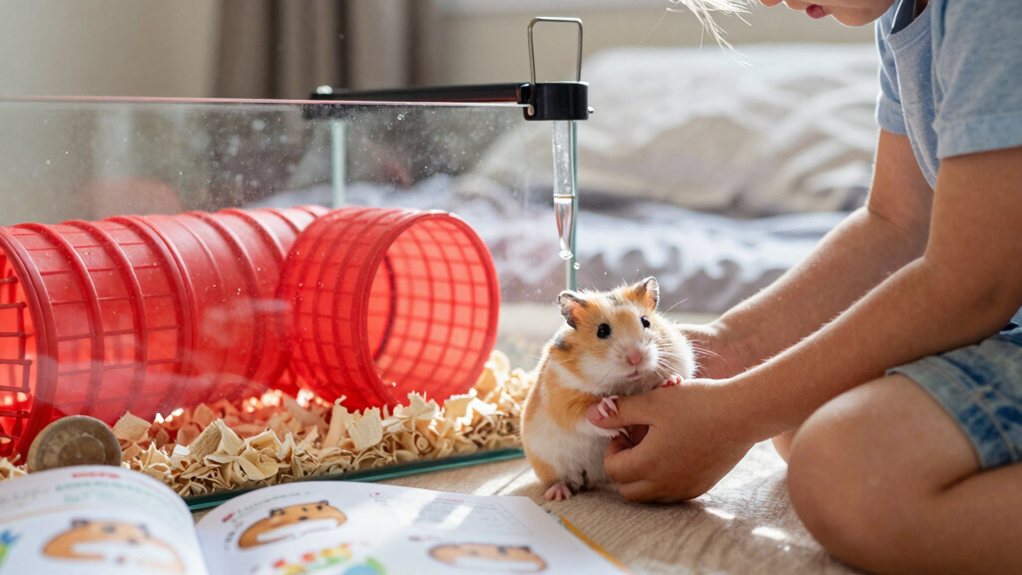
Attach the bottle securely using the clamp or suction cup, making sure the nozzle points slightly down so your hamster can sip easily. Test it by gently pressing the metal ball; a few drops should come out, no gushing!
Place it at nose level so your little buddy doesn’t strain.
Keep an eye on temperature control, too. Extreme heat or cold can mess with water flow or even crack the bottle.
Check daily for clogs or leaks. Hamsters are sneaky, and sometimes they “help” by chewing the tube. A steady drip means trouble.
Done right, your hamster stays hydrated, happy, and out of DIY plumbing projects. Easy, right?
Daily Leak Checks
How often do you actually check that water bottle, once a week, maybe when you remember between TikTok scrolls?
Don’t laugh, your hamster’s counting on you!
A reliable water bottle system keeps your little buddy hydrated and prevents leaky pipes that could turn the cage into a swamp.
Every day, give the bottle a quick once-over.
Is water dripping?
Is the tube blocked?
Look for damp flooring.
If you spot it, that’s a red flag.
Fixing a drip early saves bedding, smells, and stress.
Trust me, no one wants a soggy hamster hotel.
Just spend 30 seconds daily.
It’s way easier than mopping up a mini flood later.
Stay on top of it, and your hamster will stay happy, dry, and busy with far more important things, like stuffing their cheeks with snacks.
You’ve got this!
Feed Your Hamster a Balanced Daily Diet
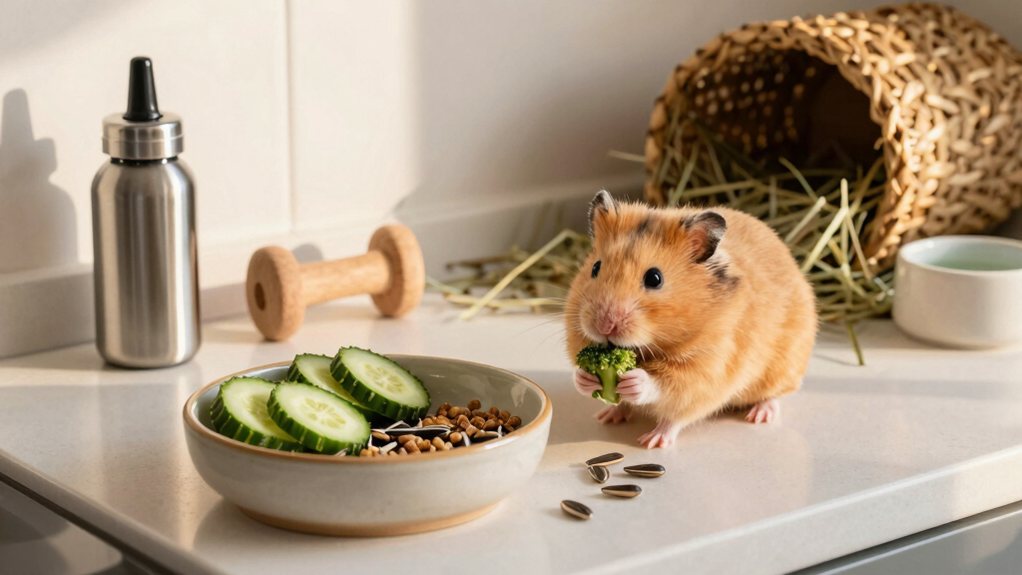
A happy hamster starts with a full bowl, but not just any food will do. Proper hamster nutrition is about more than tossing in a few pellets and calling it a day. You’ve got to mix things up to keep your little buddy bouncing with joy.
Think of dietary variety like a tiny buffet: fresh veggies, a sprinkle of fruit, quality hamster mix, and the occasional protein like boiled egg or plain chicken.
Picture a mini buffet: crisp veggies, a dash of fruit, premium hamster mix, and the rare treat of boiled egg or chicken—variety keeps your little pal thriving and grinning.
Too much sugar? Nope. Skip the candy; your hamster isn’t throwing a birthday party.
And always, always remove spoiled food. Nobody likes a moldy snack.
A balanced diet keeps their energy up, fur shiny, and cheek pouches working overtime.
You’re not just feeding them — you’re fueling a tiny, adorable powerhouse.
Feed your hamster every day to support its fast metabolism and maintain long-term health.
Offer Safe Treats and Avoid Toxic Foods
You can treat your hamster to little extras, but make sure they’re safe and not harmful.
Skip the chocolate and onions, yes, really, your hamster shouldn’t share your pizza.
Stick to healthy picks like small bits of apple, carrot, or plain cooked pasta.
Just remember, treats are like dessert: fun in tiny amounts, but too many can cause problems.
Always remove apple seeds before offering apple slices, as they contain a compound that releases cyanide when digested.
Safe Treat Options
Ever wonder what makes your hamster’s little eyes light up with joy? It’s probably the sound of a treat bag rustling! When it comes to safe treat options, keep things fun but smart. Stick to tiny fruit portions, think blueberries or apple bits, no bigger than a pea, since hamsters can’t handle too much sugar.
Nut snacks are also great, but only in minuscule amounts. A nibble of unsalted almond works wonders.
Always avoid chocolate, onions, and anything sugary or processed, yikes! Your hamster doesn’t need candy, even if they give you the “treat eyes.”
Rotate treats weekly to keep things exciting, and remember: less is more.
You’re more than merely spoiling them, you’re building trust, one safe bite at a time.
Just imagine: you’re the hero of snack time. Now that’s something to squeak about!
Fruit should be offered only 2–3 times per week to prevent digestive issues and maintain a balanced diet.
Toxic Foods To Avoid
What’s on your hamster’s “no-eat” list? Let’s clear this up, your tiny furball may beg for anything you’re snacking on, but some foods are a hard no.
Chocolate dangers are real: even a crumb can make your hamster seriously sick, so keep those candy bars far away.
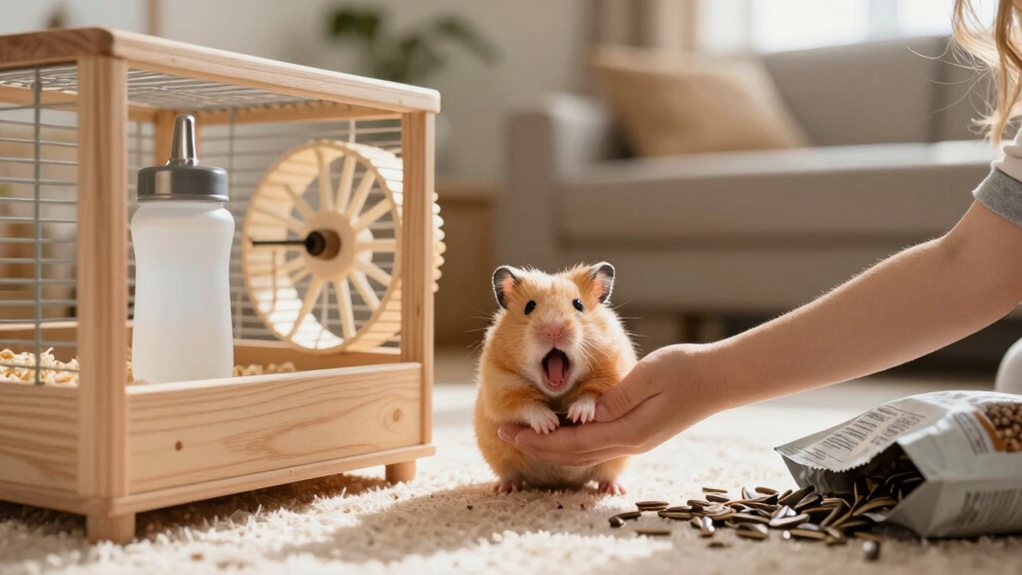
And those cute little fruit seeds? Nope, not so cute when they’re toxic. Apple, cherry, and peach seeds contain cyanide, yes, *that* cyanide, and can be deadly in tiny amounts.
Also skip onions, garlic, and raw beans; they upset your hamster’s tummy.
Stick to safe treats like plain veggies or a bit of cooked egg. Think of yourself as their tiny food bodyguard.
You’ve got this! Just remember: when in doubt, leave it out. Your hamster’s health is worth more than a risky nibble.
Healthy Snacking Tips
- Offer tiny bits of apple, carrot, or cucumber, your hamster will nibble happily!
- Try plain cooked pasta or a single sunflower seed for variety.
- Avoid sugary or salty human snacks, your hamster isn’t craving chips!
- Rotate treats weekly so your little buddy doesn’t get bored.
- Always remove uneaten fresh food after 12 hours, no hamster buffets allowed!
With these tips, you’ll keep your hamster healthy, happy, and maybe even a little cheeky. Snacks stuffed in those adorable cheeks!
Add Exercise Wheels and Chew Toys for Fun
While your hamster mightn’t be training for a marathon, they sure act like it sometimes, zipping around their cage like tiny, furry racecars. That’s why an exercise wheel is a must. It keeps their little legs busy and hearts healthy, turning nighttime zoomies into part of their daily exercise routines. Just make sure the wheel is the right size, no awkward hamster acrobatics, please.
And don’t forget chew toys, they’re more than fun, they help wear down ever-growing teeth. Go for safe wood or cardboard options.
To keep things fresh, try toy rotation every week or so. Swap out old chewables for new ones, and watch your hamster rediscover their cage with glee. It’s like hamster happy hour!
Keep your hamster delighted with weekly toy swaps—out with the old, in with the new, and cue the cage exploration joy!
A little variety prevents boredom and keeps their mind sharp. So, toss in a wheel, add some chews, and let the fun begin. Your tiny buddy will thank you with happy squeaks and endless entertainment.
Choose chew toys made from 100% natural materials to ensure dental health and safety.
Handle Your Hamster Without Causing Stress
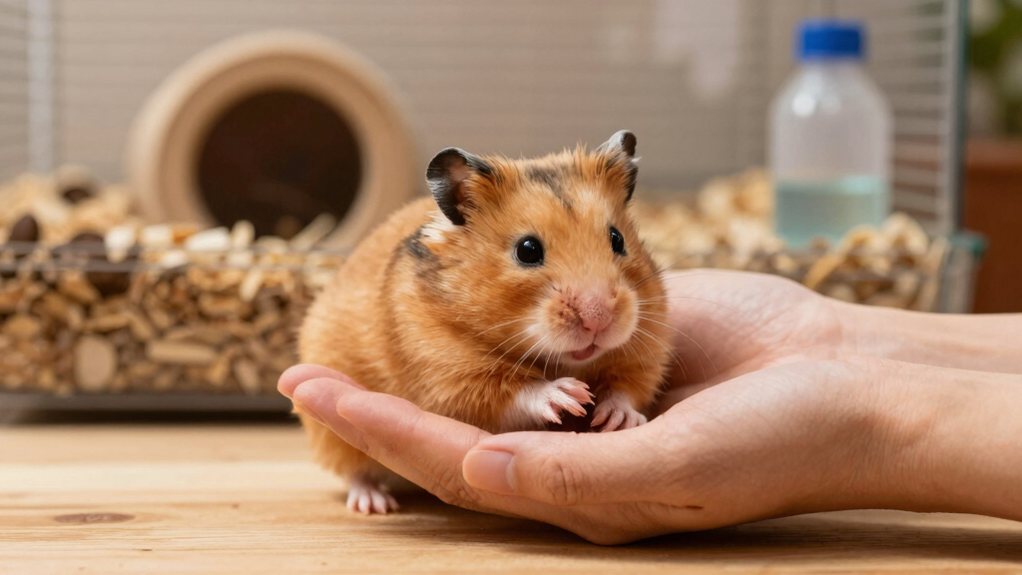
Wash your hands before picking up your hamster, nobody wants a snack attack from a confused pet!
Keep handling gentle and short, since these little furballs stress easily, even if they look like they’re judging your life choices.
A few minutes of calm cuddle time goes a long way, so don’t overdo it, or you’ll both end up tired.
Trust develops over time with patience, calm presence, and warmth, so allow your hamster to build confidence at its own pace through consistent human interaction.
Gentle Handling Techniques
Ever wonder why your hamster sometimes zips away the second you reach into the cage? It’s not personal. They’re just tiny prey animals wired to be cautious. But don’t worry, with a gentle grip and a calm environment, you can build trust fast. Here’s how:
Let your hamster sniff your hand first, no sudden moves!
Scoop them with both hands to make them feel secure.
Keep handling sessions short, especially at first.
Stay low to the ground to avoid scary falls.
Talk softly or hum. It reassures them you’re friendly.
You’ll both relax more over time. Think of it like making a new friend who happens to store snacks in their cheeks. With patience and a little giggling at their antics, you’ll become their favorite person. And hey, if they yawn in your palm? That’s hamster bliss.
Wash Hands First
You’ve got the gentle scoop down and your hamster’s starting to chill in your palm, maybe even dozed off like a tiny, furry loaf.
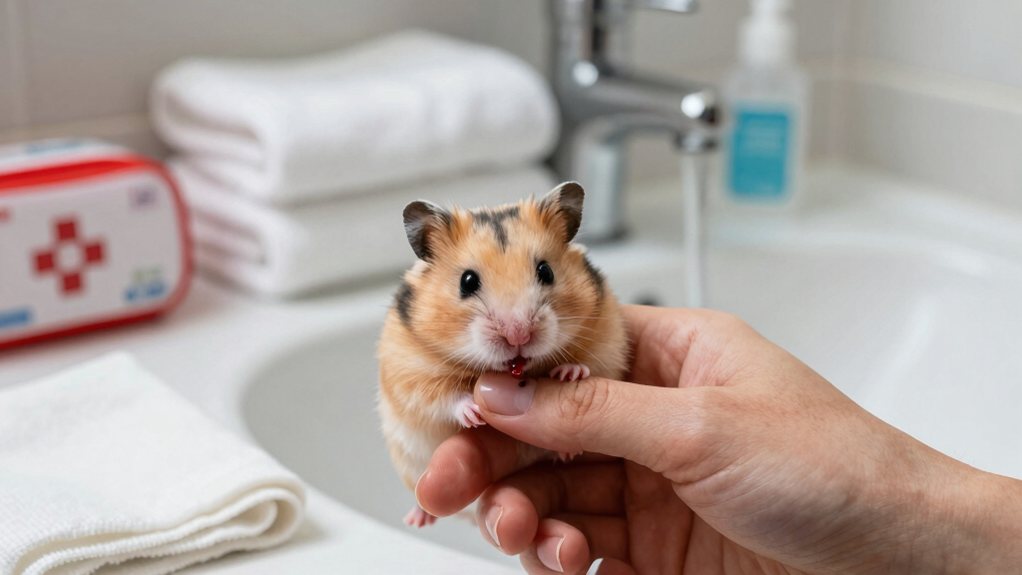
Now, let’s talk hamster hygiene: always wash your hands *before* handling. Sounds simple, right? But skip the hand sanitizer—those chemicals can freak out your little buddy or worse, make them sick.
Warm water and mild soap do the trick. You don’t want your hamster sniffing last night’s pizza on your fingers or getting spooked by strong scents. Clean hands mean calm vibes.
Think of it as setting the mood: like turning on chill tunes, but for rodents.
Plus, it protects you both from germs. So, splash, scrub, dry, then scoop. Your hamster mightn’t say “thanks,” but their relaxed wiggle tells you everything.
Good hygiene isn’t just smart—it’s part of the bond. And hey, clean hands mean more snuggles, less stress. Win-win.
When cleaning the habitat itself, always choose a non-toxic disinfectant to ensure no harmful residues linger that could affect your hamster’s health.
Limit Handling Time
How long should you actually hold your hamster before it’s time to say “goodnight”?
Hamsters aren’t built for long cuddle sessions, so keep handling short and sweet.
Think of it like a bedtime routine for a tiny roommate who naps all day and parties at night.
Stick to a playtime schedule that respects their energy levels and natural rhythms.
Start with 5–10 minutes of handling daily, especially when they’re just getting used to you.
Watch for signs of stress, like biting or trying to escape—your cue to back off.
Always handle them in a calm, quiet space—no surprise loud noises or sudden moves.
Gradually increase time as they grow more comfortable, but never overdo it.
End each session gently, returning them to their cozy home before they get grumpy.
Short, sweet, and stress-free—that’s the golden rule.
Clean the Cage Safely and Regularly
Most of the time, your hamster’s cage probably looks like a tiny five-star hotel, cozy bedding, neat food bowl, maybe even a little exercise wheel.
But let’s be real: it won’t stay that way without a little help.
You’ll want to clean the cage weekly to keep your little buddy healthy and happy.
Scoop out soiled bedding daily, those waste disposal tips matter!
Once a week, do a full clean: remove everything, scrub with warm, soapy water (no harsh chemicals!) and rinse well.
That’s your go-to cage disinfection method, simple and safe.
Let it dry completely before adding fresh bedding.
Your hamster will thank you with fewer sneezes and more zoomies.
Plus, you’ll avoid that “eau de rodent” smell.
Cleaning mightn’t be your favorite chore, but it’s a big part of loving your pet.
Stay on top of it, and you’re golden.
A full cleaning every seven days helps prevent bacterial growth and maintain a healthy environment for your hamster, especially if you’re using safe, absorbent bedding materials like aspen or paper-based options.
Spot Signs of a Healthy or Sick Hamster
Ever wonder how your hamster’s really feeling? You can’t exactly ask them, but don’t worry—you’ve got this! Spotting signs of illness early keeps your tiny buddy happy and healthy. Just keep an eye out for changes in their usual routine. Here’s what to watch for:
- Bright, clean eyes and a shiny coat mean healthy behavior.
- Energetic nibbling and regular grooming are great signs.
- Consistent eating and drinking show they’re feeling fine.
- Steady poop? Yep, that’s normal and a good thing!
- Hiding or wheezing? Those could be signs of illness.
If something feels off, trust your gut and call the vet. Most issues are fixable when caught early.
Your hamster may be small, but their health matters big time. Stay curious, stay caring, and you’ll both enjoy more happy, squeaky-wheel moments together.
Avoid These 5 Rookie Hamster Care Mistakes
Why do so many new hamster parents end up scratching their heads, or worse, rushing to the vet? Because they’ve fallen for hamster myths and common misconceptions.
First, don’t house hamsters together, even siblings. They’re loners by nature.
Second, skip the wire cages. They’re escape artist heaven.
Third, avoid scented bedding. Your hamster’s nose is super sensitive.
Fourth, don’t overfeed treats. Tiny tummies mean tiny portions.
And fifth, never wake a sleeping hamster. Grumpy bites aren’t cute.
These rookie mistakes might seem small, but they add up fast.
The good news? You’re already ahead by asking the right questions.
Care isn’t about perfection. It’s about learning.
So take a breath, trust yourself, and remember: every expert was once a beginner.
Your little furball will thank you with happy cheek stuffing and adorable zoomies.
Final Thoughts
You’ve got this! Caring for your hamster might feel overwhelming at first, but with a cozy cage, tasty meals, and gentle handling, you’ll both settle in fast.
Just keep an eye out for sneaky signs of stress or illness, and skip the rookie mistakes. Think of it as a tiny roommate who doesn’t talk back (much).
A little love, routine, and clean bedding go a long way. Enjoy the adventure—you’re already becoming a great hamster parent!