Start by leaving a clean, worn T-shirt near the cage so your hamster gets used to your scent. Think of it as a cozy first introduction. Offer tasty treats like apple bits from your palm to build trust, and always speak softly while moving slowly. No surprise attacks!
Never grab or chase, since sudden moves scream “predator.” When you’re ready, scoop gently with both hands and hold close to your chest. If your little buddy freezes or darts, just pause and try again later. Patience wins every time.
There’s a simple trick that makes handling even easier, and you’ll want to hear this one.
Let Your Hamster Get Used to Your Scent
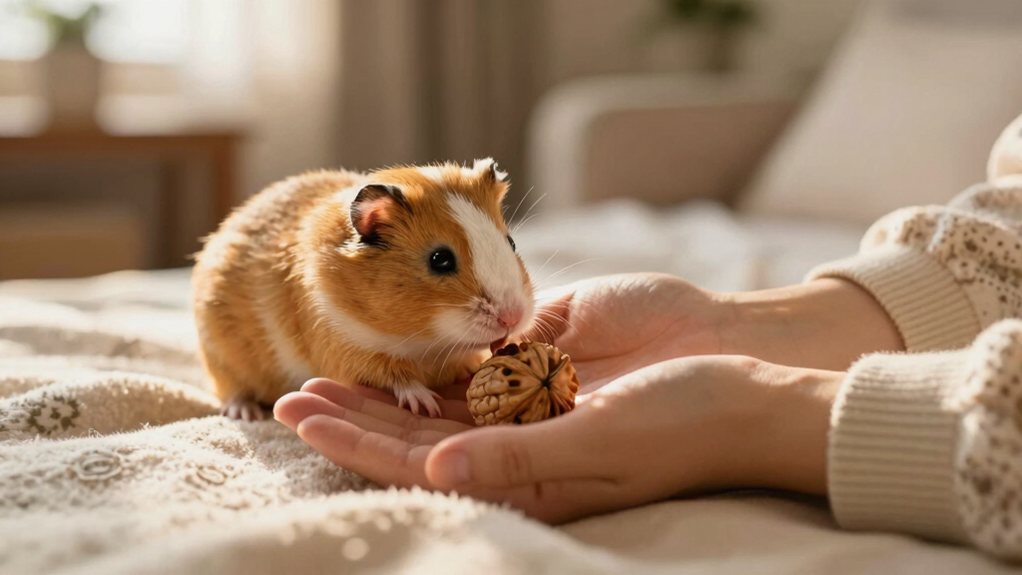
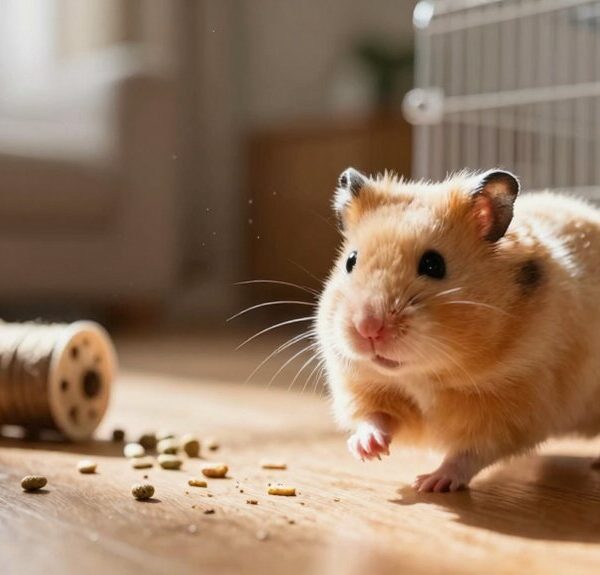
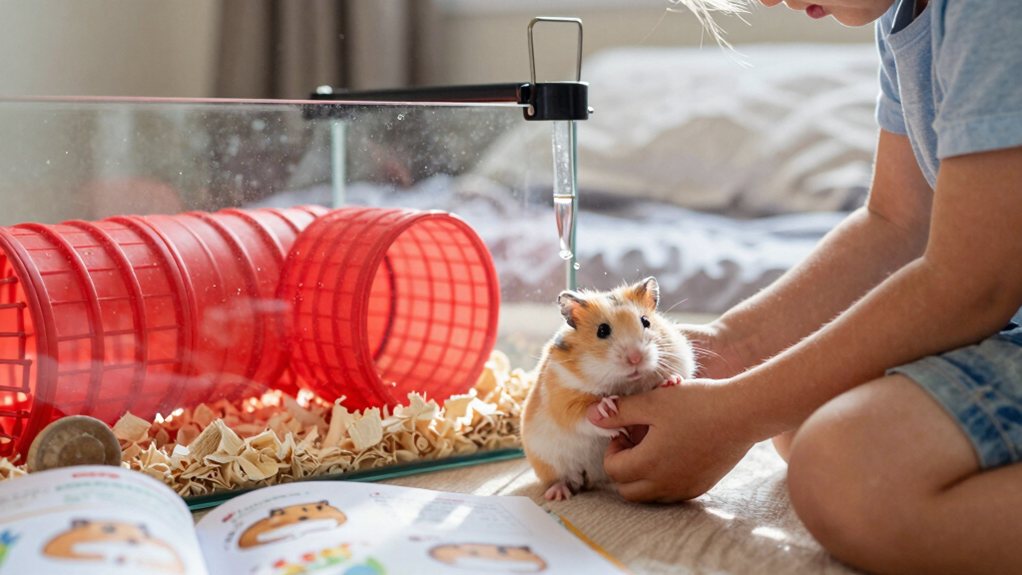
Let’s be real, your hamster probably thinks you’re a giant, clumsy creature with suspiciously large hands. No wonder it freezes or scurries away!
Face it — to your hamster, you’re a hulking, fumbling giant with hands way too big for comfort. No wonder it bolts at your approach!
To help it relax, start with scent swapping. Place a small piece of your worn clothing, like a sock or T-shirt, near its cage, but not blocking airflow. Your familiar scent helps it feel safer.
Just don’t toss in a sweaty gym shirt. Nobody wants that kind of first impression.
Always remember hand washing before handling, though. You don’t want your hamster tasting last night’s garlic fries! Clean hands prevent weird flavors and keep your pet healthy.
Do this for a few days, and you’ll notice your hamster sniffing the fabric, maybe even napping on it. That’s a win!
Scent swapping builds trust slowly, turning you from scary giant to trusted buddy, one sniff at a time.
A calm and consistent presence during this process supports trust development over time.
Offer Favorite Treats to Build Trust
What if the key to your hamster’s heart was hiding in your snack drawer? Offering favorite treats is a fun, effective way to build trust.
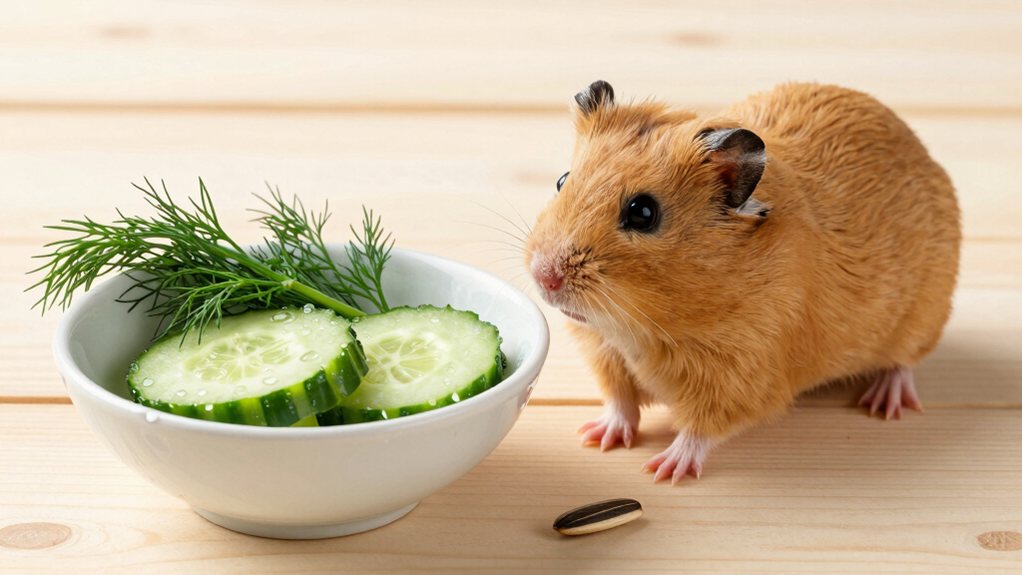
Start with a treat variety, try small bits of apple, carrot, or a sunflower seed, to see what makes your hamster’s nose twitch with joy.
Hold the treat in your palm and let them come to you.
This isn’t merely snack time. It’s positive reinforcement in action.
Each time they take a treat from your hand, they’re learning you’re safe and kind.
Be patient. Even if they’re shy, consistency pays off.
Don’t grab or rush them. Let the munching do the magic.
Soon, those treat moments might turn into hand-perching moments.
Who knew kindness could come in snack form?
You’re not merely feeding them. You’re building a bond, one tiny bite at a time.
A hamster that willingly takes food from your hand is displaying calm behavior, a key sign of growing trust and comfort.
Speak Softly and Move Slowly to Calm a Nervous Hamster
Why do hamsters freeze like tiny statues when things get loud or fast? Because to them, sudden noises and quick moves mean danger, like a hawk diving from the sky! But you can help by using a gentle tone and slow gestures. Here’s how:
Talk in soft, calm words, like you’re sharing a secret.
Move your hands like a sloth on vacation, super slow.
Avoid reaching from above, it looks like a predator attack.
Pause often so your hamster can sniff and adjust.
You’re doing more than just picking up a pet. You’re building trust. Think of it as hamster therapy: quiet voice, chill vibes, and zero drama.
They might still wobble with nerves, adorable, right? But with patience, they’ll learn you’re safe.
Soon, your soft voice might even make them peek out excitedly. Keep it kind, keep it slow, and you’ll both feel calmer.
Don’t Chase or Grab: Why Sudden Moves Backfire

When you dart your hand toward a nervous hamster like you’re swatting a fly, you’re doing more than scaring them. You’re resetting all the trust you’ve built.
Sudden movements trigger a hamster’s natural stress response, making them freeze, bolt, or even bite out of fear. Imagine someone lunging at you. Yeah, not cool, right?
Instead of chasing or grabbing, let your hand enter the cage slowly, like you’re sneaking up on a nap.
Keep your palms low and open, giving your hamster a chance to sniff and decide you’re safe.
Rushing it only backfires, turning calm moments into panic attacks.
Think of it like building a friendship. No one likes being cornered.
Stay patient, move like molasses, and let your tiny buddy come to you.
Slow wins the race, especially when you’re dealing with a furball who thinks you’re a giant.
Hamsters rely heavily on scent and routine, so washing your hands beforehand removes confusing odors that might lead to accidental nipping, especially if you’ve handled food or other animals. This simple step supports trust-building and reduces defensive reactions caused by foreign animal scents.
Scoop Gently With Both Hands to Pick up Safely
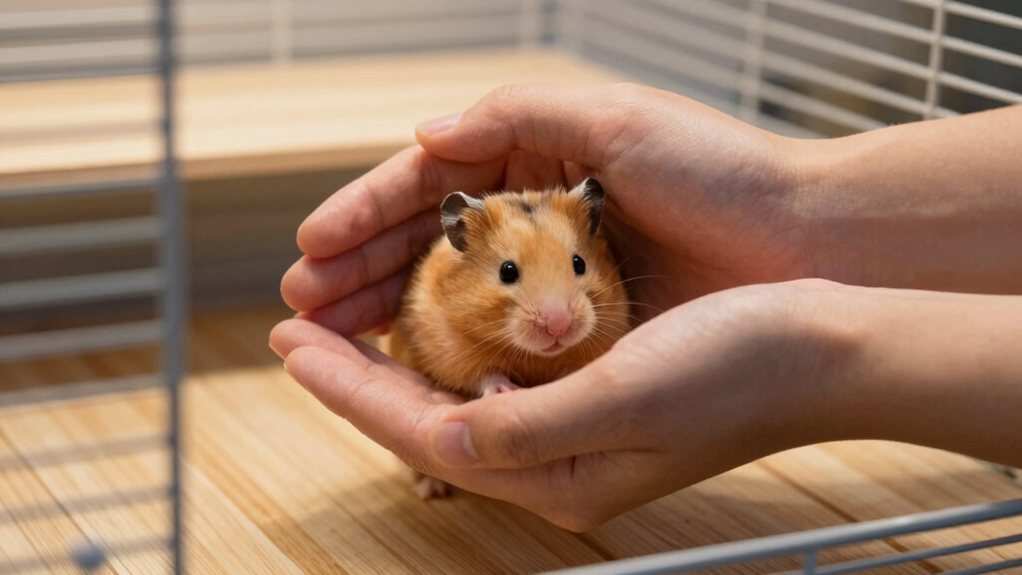
Once your hamster’s sniffed your hand and seems calm, it’s time to scoop them up, gently, like you’re lifting a tiny, furry cupcake. Use both hands to create a cozy nest, supporting their whole body so they feel secure. Here’s how:
- Slide one hand under their belly while the other cups their backside—no dangling legs!
- Keep movements slow and steady. Sudden jerks ruin trust and hamster hygiene.
- Avoid bright cage lighting during handling. It stresses them out. Dim the lights for chill vibes.
- Hold them close to your chest, like a secret treasure, so a jump won’t end in a tumble.
You’re doing far more than picking up a pet. You’re building trust.
And hey, if they wiggle? Totally normal. Stay calm, breathe, and remember: tiny creature, big feelings. With patience, your skittish buddy will learn you’re safe—and maybe even snuggle back.
Pause If Your Hamster Panics: Try Again Later
What happens if your hamster suddenly freezes like a tiny, wide-eyed statue or bolts like they’ve got a secret mission? That’s your cue to pause.
If your hamster panics, respect their hamster body language: flattened ears, rapid breathing, or darting away means they’re stressed. Don’t chase them. Gently back off and let them retreat to their safe hiding spots.
Forcing it could make trust harder to build. Instead, close the cage door, speak softly, and give them space to calm down.
Try again later, maybe in 15 minutes or at a quieter time of day. Patience pays off. Think of it like a tiny do-over button.
Over time, your hamster will learn you’re not a threat. And hey, even the skittish ones come around—sometimes all it takes is a few calm moments and a well-timed treat. You’ve got this.
Prolonged stress from handling attempts can contribute to mental distress in hamsters, especially if their environment lacks space or stimulation.
Final Thoughts
You’ve got this! Just go slow, stay calm, and let your hamster come to you. Rushing only leads to tiny, furry escape missions, and nobody wins those.
Trust builds with treats, soft words, and patience, not speed. If your little buddy freaks out, no worries. Take a break and try again later.
You’re not merely picking up a hamster. You’re making a friend. And hey, even pros get nibbled sometimes.