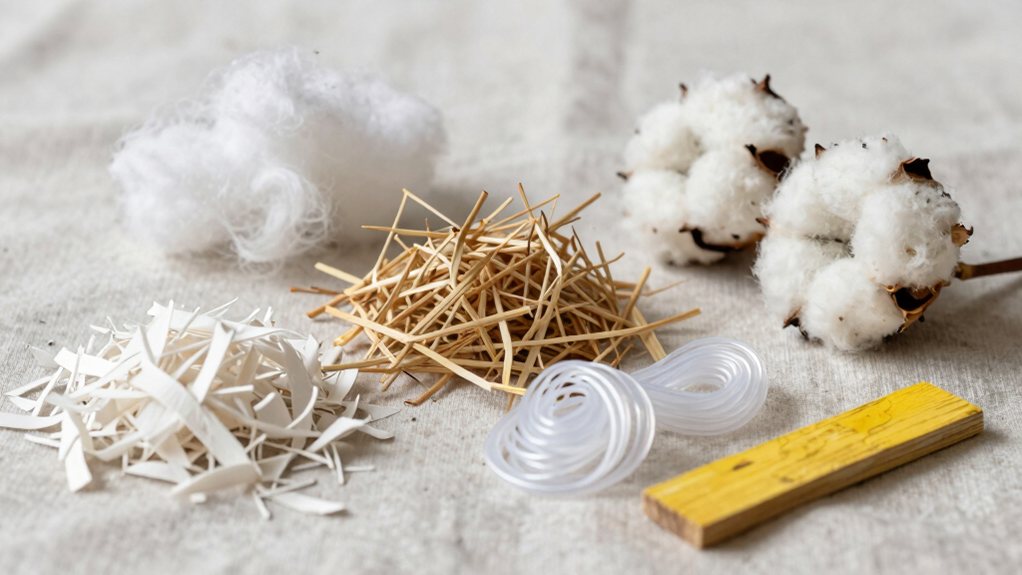
You’ve got your hamster’s back when you pick safe, soft bedding like paper-based products, aspen shavings, or unscented tissues, think cozy and dust-free! Skip the cedar, pine, and fluffy junk that can cause sneezing or worse.
Your little digger deserves clean, non-toxic materials that let them burrow and build without risk. Ditch anything scented or colorful, it’s a no for their sensitive snouts and skin.
Choose wisely, and you’ll both sleep better knowing their nest isn’t hiding hazards. There’s even more good stuff to help you nail this the first time.
Why Safe Bedding Matters for Your Hamster
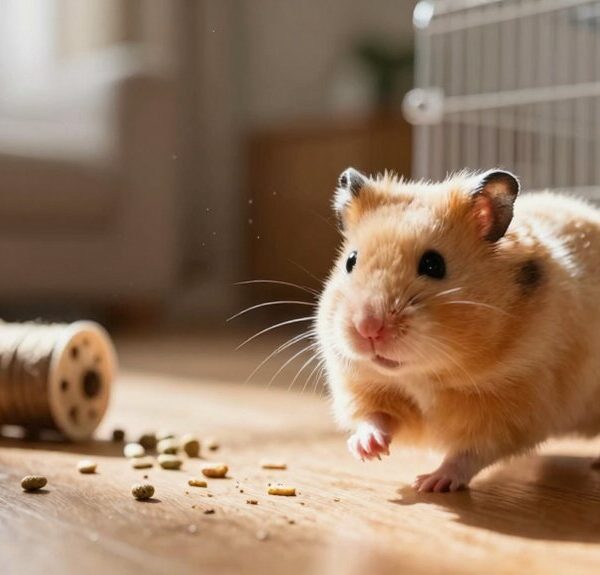
Ever wonder why your hamster spends so much time burrowing into their bedding like a tiny, furry archaeologist? It’s more than cute hamster behavior. It’s crucial.
Your little buddy relies on safe nesting materials to feel secure, sleep soundly, and stay healthy. The wrong bedding can irritate their lungs or skin, leading to sneezing or worse.
But the right choice supports natural instincts and makes your cage decoration both stylish and safe.
Think soft, dust-free, and non-toxic, like paper-based or aspen shavings. Avoid cedar or pine. They might smell nice to you, but they’re harmful to your hamster.
Choosing wisely means fewer vet trips and more happy digging.
You’re more than picking fluff. You’re building a cozy home.
A depth of 6 to 8 inches provides enough space for natural burrowing and insulation.
Best Nesting Materials for a Cozy, Safe Home
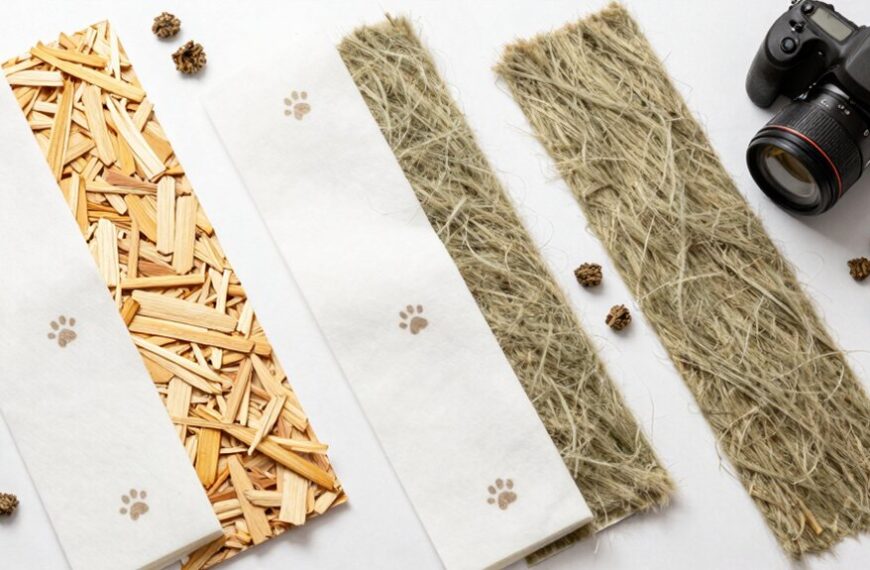
You want your little furball to have a comfy spot to snooze, right? Try soft paper strips, natural grass bundles, or unscented tissue layers. They’re cozy, safe, and perfect for nesting.
Just skip the perfume, because let’s be honest, your hamster doesn’t need to smell like a spring meadow.
For even more natural comfort, consider adding cotton-based nesting materials to support safe burrowing and nesting behaviors.
Soft Paper Strips
Soft paper strips are a go-to nesting material for happy hamsters, and for good reason.
You’ll love how easy they’re to find and how much your little buddy enjoys fluffing them into a cozy nest.
Just make sure the paper strips aren’t too long, about 1 to 2 inches is perfect, so your hamster doesn’t get tangled.
You also want a good paper strength, flimsy tissue tears too fast, but thick craft paper holds up without being rough.
Avoid glossy or colored paper. It might’ve inks or chemicals that aren’t safe.
Plain, unbleached paper strips are your best bet.
Watch your hamster go crazy stuffing them into every corner. It’s like a tiny interior designer with a shredding habit.
They’ll feel secure, warm, and oh-so-proud of their handmade hideaway.
Simple, safe, and seriously satisfying—for both of you.
Paper-based bedding like 99.9% dust-free options provides a healthier respiratory environment and complements nesting materials by maintaining overall habitat cleanliness.
Natural Grass Bundles
Natural grass bundles bring a touch of the outdoors into your hamster’s cozy little world, and they’re a favorite for good reason.
You’ll love how your little digger dives in, nibbling and fluffing them into the perfect nest.
Sourced through safe grass harvesting, these bundles are free from pesticides and chemicals, so you don’t have to worry about unwanted surprises.
Plus, their bundle durability means they hold up well, even after your hamster rearranges them ten times a day.
Because, yes, they’re that picky.
They’re soft enough for snuggling but sturdy enough to support tunnel systems.
Just make sure to inspect each bundle for dirt or bugs before tossing it in the cage.
Think of it as a tiny spa treatment for your furball, nature-approved and hamster-tested.
Your pet might just send you a thank-you note.
(Okay, maybe not, but the happy squeaks count.)
Unscented Tissue Layers
Tucked neatly into the corner of the cage, unscented tissue layers become a hamster’s secret weapon for building the ultimate snug hideaway.
You’ll love how easily your little digger shreds and fluffs them into a soft, cloud-like nest.
Unlike scented tissues, these are free from harsh chemicals, so your hammy won’t sneeze like they’re allergic to springtime.
Tissue durability matters because flimsy paper falls apart, but quality unscented layers hold up to enthusiastic tunneling and chewing.
Plus, layer absorption helps wick away moisture, keeping the nest dry and cozy.
Just tear them into strips.
Your hamster will do the rest, like a tiny interior designer with zero interior design degree.
Watch them stuff cheek pouches full of fluff, looking proud as a peacock.
It’s simple, safe, and seriously satisfying—for both of you.
Everyday Items That Make Great DIY Hamster Nests
Imagine turning your junk drawer into a hamster dream suite, because some of the best nest materials are already hiding in plain sight. You don’t need fancy pet store kits. Simple, safe stuff works wonders.
Turn your junk drawer into a hamster haven—everyday items make perfect, safe nesting materials. No fancy kits needed, just creativity and care.
Think soft cotton fibers from old t-shirts or clean fabric scraps. Just make sure they’re free of threads that could tangle tiny toes.
Toilet paper rolls are perfect hideaways.
Shredded paper, non-glossy please, makes cozy bedding, and cardboard tubes are nesting gold.
Skip anything fluffy, like polyester stuffing. It’s a hazard.
Your hamster will love burrowing into these everyday finds, and you’ll love how easy it is.
Just check each item for safety first. No sharp edges, toxic inks, or loose threads.
With a little creativity, you’re more than recycling. You’re building a snug, happy home.
Who knew being eco-friendly could feel this cute?
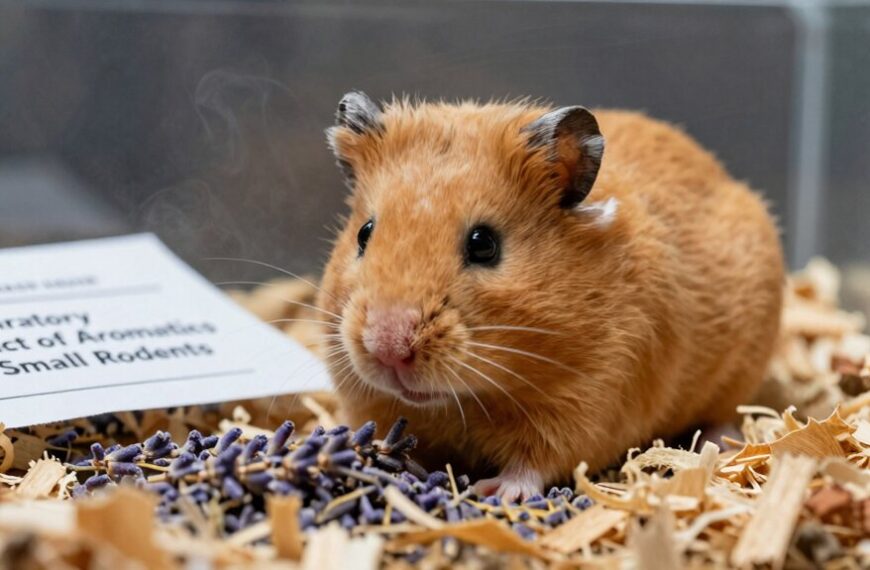
Avoid materials like cedar or pine shavings, as their natural oils can cause respiratory irritation in hamsters, making cedar and pine unsafe for long-term use.
Toxic Bedding to Avoid at All Costs
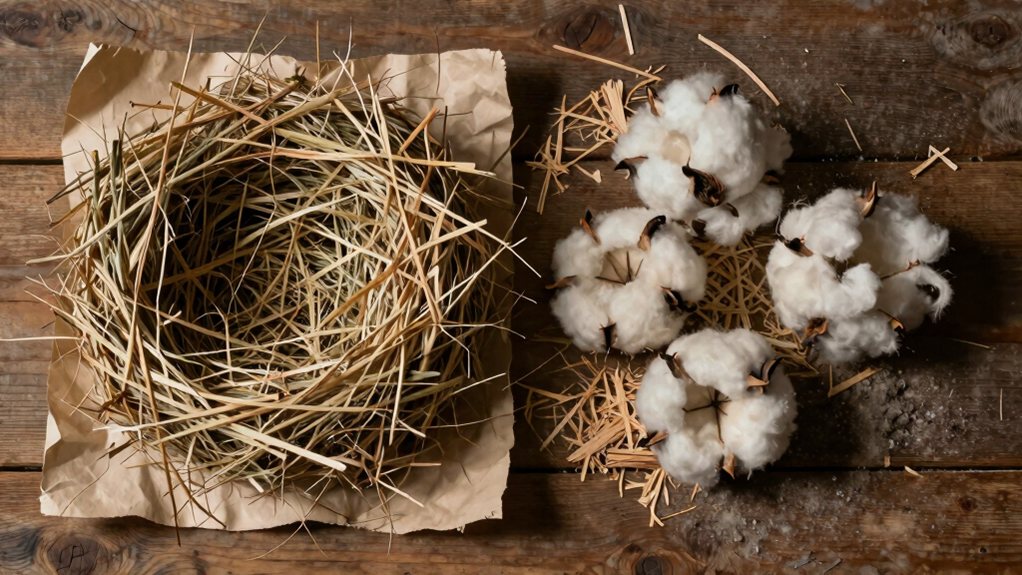
You’ve got to skip cedar and pine shavings, your hamster’s tiny lungs can’t handle the harsh oils.
And trust me, you don’t want to explain asthma to a grumpy little furball.
And whatever you do, don’t grab that clay-based cat litter. It might be great for Fluffy, but for your ham, it’s like building a nest out of concrete.
Stick with safer stuff, and both of you’ll sleep way better at night.
Avoiding these materials supports better respiratory health and reduces the risk of respiratory risks associated with poor bedding choices.
Cedar And Pine Shavings
While they might smell like a fresh forest and look cozy in the pet store bin, cedar and pine shavings are actually a no-go for your hamster’s home, sorry, little lumberjack.
Those aromatic oils that give the wood its piney punch? Yeah, they’re the problem. They can cause respiratory irritation, making it hard for your tiny buddy to breathe easy.
You mightn’t notice it right away, but over time, those fumes can lead to sneezing, wheezing, or even lung damage.
And let’s be real—your hamster’s not trying to live in a sauna made of trees.
Even if the packaging says “safe” or “kiln-dried,” it’s best to skip them altogether.
There are way better, softer, and safer options out there. Your hamster will thank you with happy cheek-puffing and enthusiastic wheel-running.
Keep it comfy, keep it clean, and skip the forest spa vibe. Stick to bedding that won’t mess with their tiny lungs.
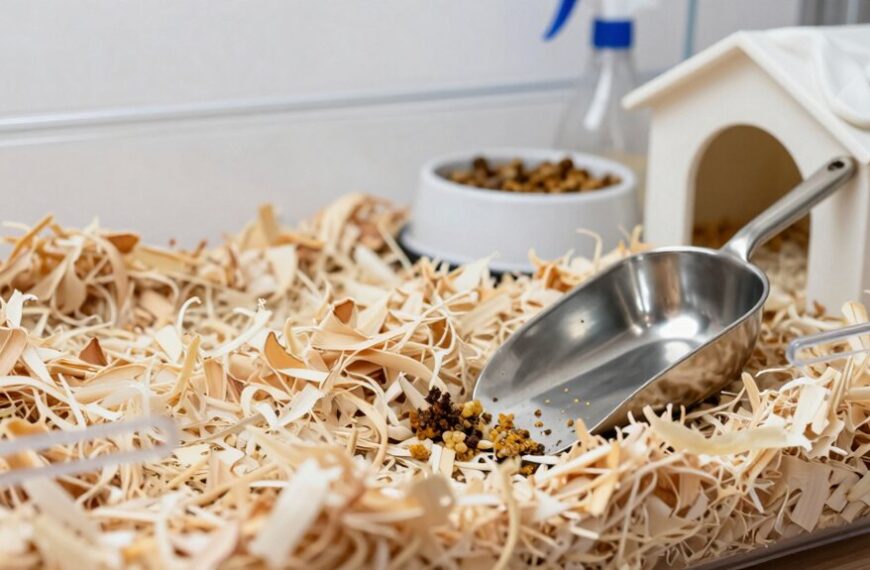
When cleaning the cage, always follow up with a non-toxic disinfectant to ensure a safe and healthy habitat free from harmful residues.
Clay-Based Cat Litter
Ever thought about using that leftover cat litter for your hamster’s bedding? Don’t do it, especially if it’s clay-based. Those clumps might trap messes, but they also trap danger. Clay dust can irritate your hamster’s tiny lungs, leading to breathing problems fast.
Plus, as waste breaks down, it causes ammonia buildup, which burns their sensitive noses and eyes. Yikes! Your little buddy deserves better than a dusty, smelly litter box. Stick to safe, soft bedding like paper-based or aspen shavings instead.
Your hamster won’t thank you in words, but you’ll see it in their happy burrowing and bright, curious eyes.
Think of it this way: would *you* want to nap in a pile of chalky dust and pee-soaked clumps? Probably not. So skip the clay cat litter—your fuzzy pal will stay healthier, happier, and way cuter without it.
Spotting Harmful Bedding Ingredients
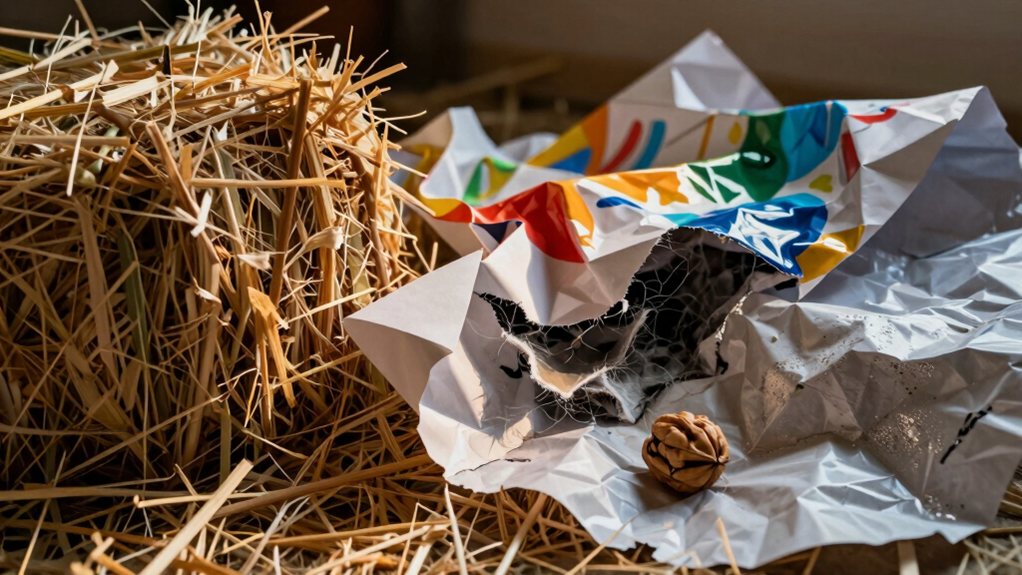
What’s hiding in your hamster’s cozy nest? While you want their bedding to smell nice or look colorful, watch out for aromatic oils and synthetic dyes. They’re sneaky troublemakers.
Your hamster’s nose is way more sensitive than yours, so those pleasant scents are overwhelming and can cause breathing issues.
Your hamster’s nose is super sensitive—what smells nice to you can overwhelm them and lead to breathing troubles. Skip the scents for their sake.
Same goes for bright, rainbow-colored bedding. Those synthetic dyes aren’t just flashy, they can irritate delicate skin or even lead to allergies.
You wouldn’t rub perfume on your arm and call it a spa day, right? Well, neither should your hamster.
Stick to plain, natural materials like paper or aspen.
Skip the perfume section and the crayon box when shopping.
Your little buddy will thank you with happy zoomies and fewer sniffles.
Keep it simple, keep it safe. Because a healthy hamster is a happy hamster.
A safe nesting environment also includes choosing bedding that works well with super absorbent liners to help manage moisture and maintain dry, comfortable living conditions.
Signs Your Hamster’s Bedding Is Causing Health Problems
Is your hamster sneezing more than a kid in a dusty attic? That could be a red flag. If your little buddy shows signs of respiratory distress, like wheezing, labored breathing, or constant sniffles, his bedding might be the culprit. Dusty or scented materials can irritate his tiny lungs fast.
Also, check for skin irritation. If he’s scratching nonstop or has red, patchy skin, the bedding could be too rough or chemically treated.
You might even notice him avoiding the nest altogether, which isn’t normal. Hamsters love cozying up, so reluctance is a clue.
Swap out the suspect material right away. Your furry friend isn’t just being dramatic. He’s telling you something’s wrong.
Keep things simple, safe, and soft. Your hamster will breathe easier, literally, and you’ll both rest better.
Prolonged exposure to poor bedding conditions can lead to respiratory issues in humans too, especially due to ammonia from urine buildup.
Final Thoughts
You’ve got this! Choosing safe nesting materials keeps your little buddy happy, healthy, and busy building cozy forts. Skip the dusty, scented stuff, it’s a no-go.
Stick to soft paper, unscented tissues, or plain hay. Watch how they snuggle up, and if they’re sneezing or scratching, time to rethink. A comfy home means fewer vet trips and more adorable burrow sessions.
Sweet dreams, tiny hoarder, sweet dreams.