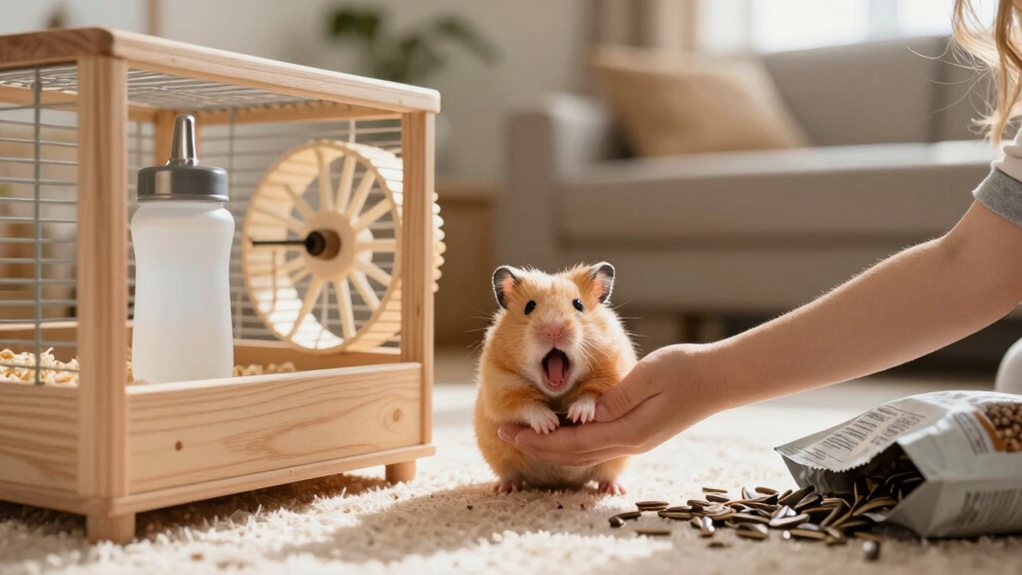
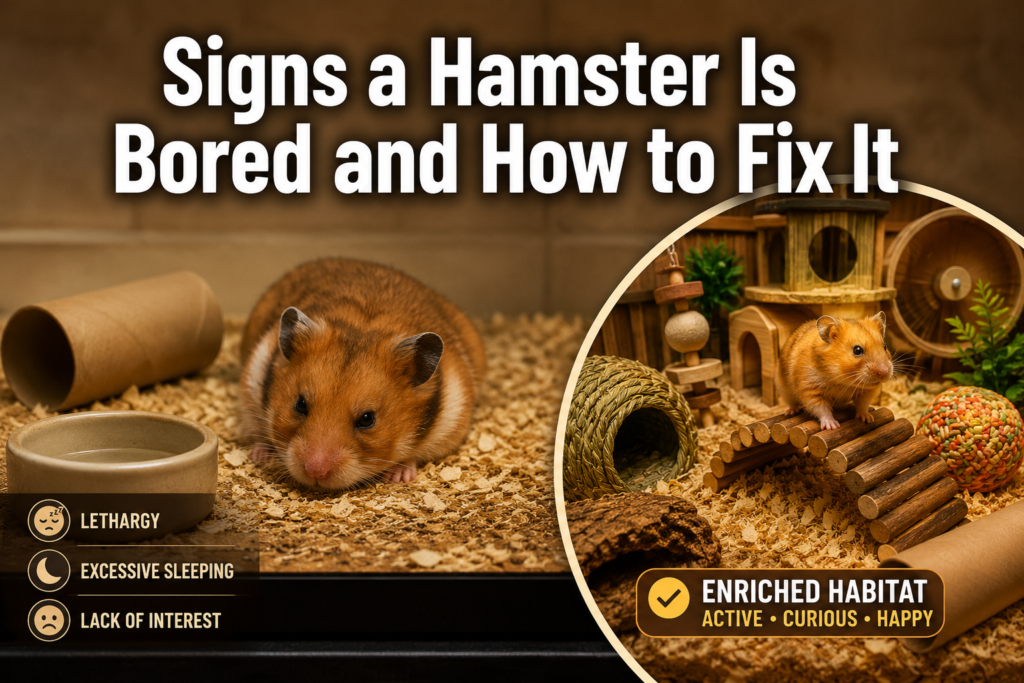
You keep your hamster chill by giving it a snug hideout in a quiet corner, think cozy wooden house or a DIY box, away from bright lights and noise. Soft, safe bedding like paper-based stuff lets them burrow happily without breathing in harmful dust.
Keep nights calm and dim. Let them sleep all day undisturbed, and only handle them when they’re wide awake and curious. A relaxed hamster is a happy little roommate, and there’s even more to keeping them purring with joy.
Use a Cozy Hideout to Help Hamsters Relax

While your hamster mightn’t kick back with a tiny cup of tea, giving them a cozy hideout is one of the best ways to help them unwind. A well-designed hideout with a cozy design gives your little buddy a safe space to nap, chew, or just chill out. Think of it as their personal mini-spa, no robe required!
Think of it as their personal mini-spa—no robe required! A cozy hideout gives your hamster a safe spot to nap, chew, or just chill out.
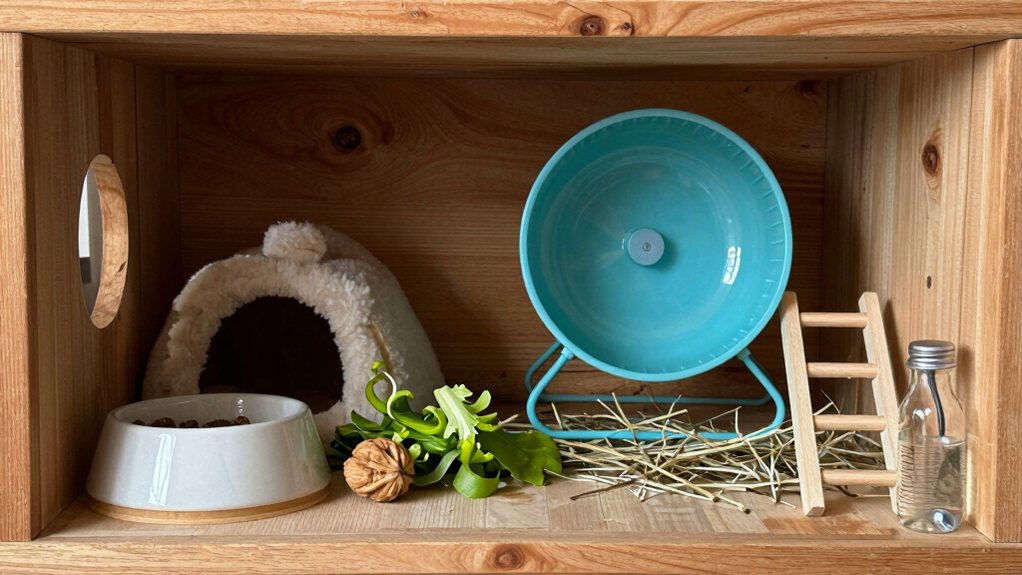
Place the hideout in a quiet corner of the cage, away from bright lights and heavy traffic areas, for ideal hideout placement. That way, your hamster feels secure and less stressed.
You can use wooden houses, ceramic caves, or even DIY boxes—just make sure it’s snug and draft-free.
Watching them curl up inside is honestly heart-melting. So go ahead, give your furball the gift of downtime. After all, even tiny adventurers need a soft spot to crash after a long night of wheel-sprinting!
Ceramic hideouts offer excellent thermal regulation to keep your hamster comfortable in changing temperatures.
Pick Soft, Safe Bedding for Maximum Comfort
A comfy bed isn’t just for people who love fluffy pillows. Your hamster craves soft, safe bedding too.
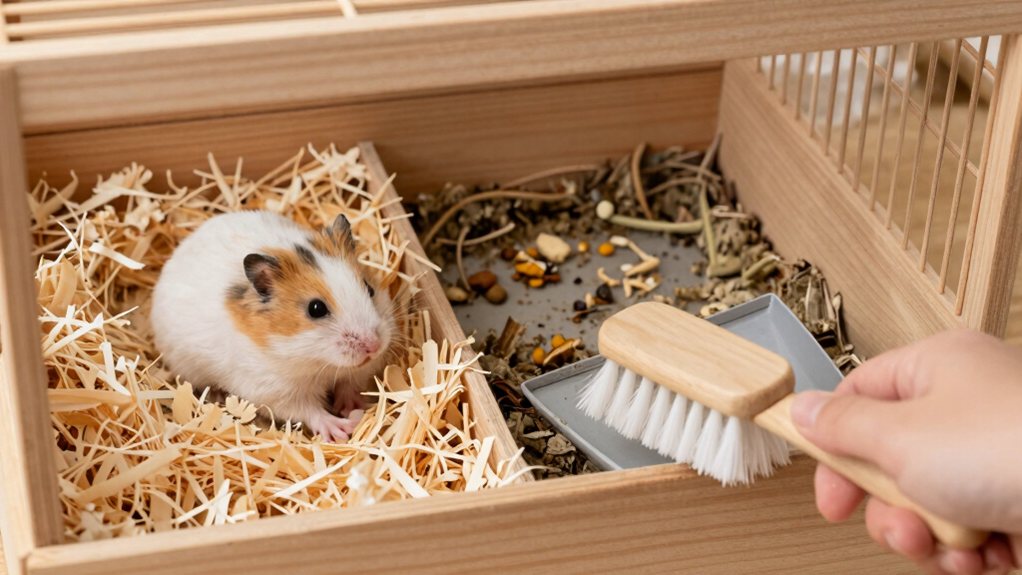
When picking bedding, think about texture and safety first. You want something cozy but not risky. Soft paper-based bedding or aspen shavings feel great under tiny paws and won’t irritate their skin.
Avoid cedar or pine. Those might smell nice to you, but they’re bad news for your hamster’s lungs. Material safety is no joke.
And hey, your hamster’s gonna chew and burrow, so make sure it’s non-toxic.
Bedding texture matters because a hamster that’s comfy is a happy hamster. Less stressed, more snoozing in cute little piles.
Think of it like picking pajamas for your pet: soft, safe, and snuggly.
Get it right, and you’ll see your little buddy digging in, fluffing up, and kicking back like a pro. Sweet dreams, tiny friend!
A hamster needs at least 6 to 8 inches of bedding to express natural burrowing behaviors.
Keep Lights Low and Noise Down at Night
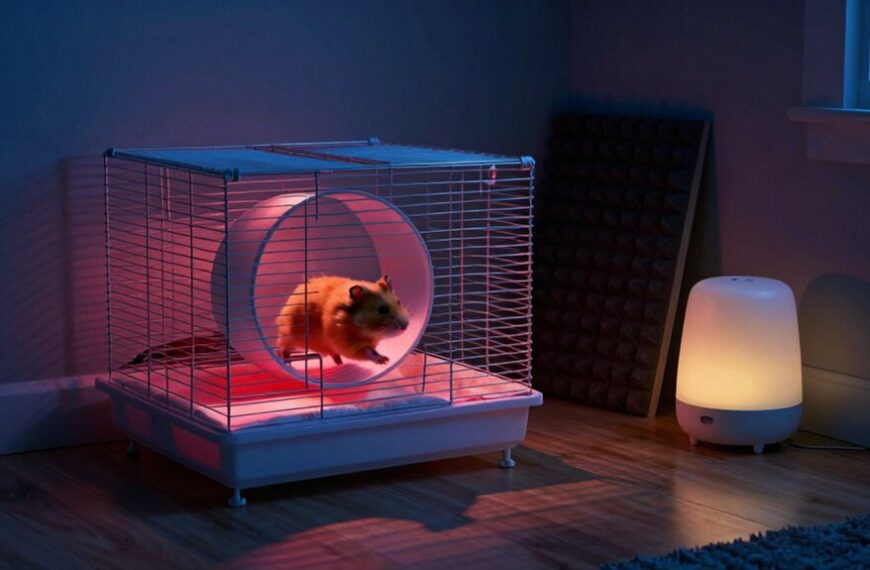
Since your hamster’s idea of a fun night involves running laps on their wheel and rearranging their entire bedding stash, it’s best to keep things calm when the sun goes down.
You don’t need total silence, just aim for a calm environment where your little buddy can explore without stress.
Keep lights low, bright lamps or overhead bulbs can confuse their natural rhythm.
Keep lights low—bright bulbs can disrupt your hamster’s natural rhythm and leave them confused when they’re ready to explore.
Instead, let soft, dim lighting set the mood.
Avoid loud TV blasts or shouting nearby, those sudden noises can send them scrambling.
If you enjoy background noise, try soothing sounds like gentle music or white noise, just at a low volume.
Think of it as their tiny bedtime playlist.
You’re not banning life after dark, you’re just making it hamster-friendly.
After all, a relaxed hamster is a happy hamster, and who doesn’t want a joyful, wheel-spinning ninja in their home?
Let Them Sleep: Respect Their Rest Hours

You’ve already made the nighttime calm with soft lights and quiet sounds, so now let’s talk about the next piece of the puzzle: giving your hamster the space to actually sleep.
Just like you, your little buddy has a dream cycle and rest patterns that need protection. Hamsters are most active at dawn and dusk, so they’re deep in snooze mode when you’re up and moving. Waking them? Big no-no.
It’s like hitting snooze on your alarm… five times.
Respect their rest hours, and they’ll be happier, calmer, and less likely to bite your finger in sleepy confusion. Think of their cage as a tiny bedroom. Keep it undisturbed. Let them nap in peace.
A well-rested hamster is a relaxed hamster, and that’s the goal, right? Sweet dreams, little furball.
Hamsters are naturally nocturnal animals and have evolved to sleep during the day to avoid predators in the wild.
Handle Gently Only When They’re Awake
When your hamster’s finally up and stretching like they’ve just woken from a royal nap, that’s your golden moment to say hello. Just don’t go poking them while they’re still dreaming.
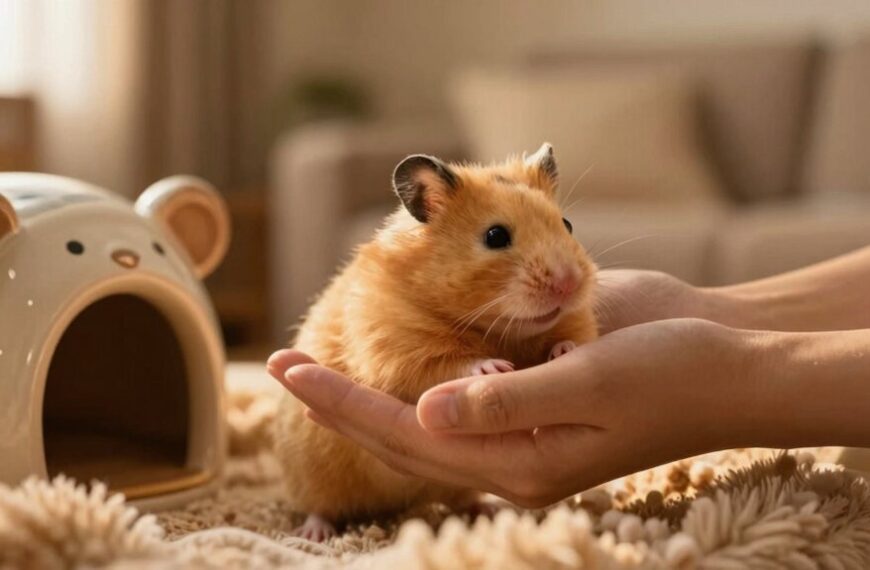
Gently handling your little buddy only when they’re fully awake helps build trust and keeps them stress-free. You wouldn’t want someone yanking you out of bed for a hug, right? Exactly. Awake interaction is key. Wait for those bright, alert eyes before offering your hand.
Let them sniff you first, then scoop them up slowly, supporting their whole body. No sudden moves or high lifts. Keep it low and steady.
Gentle handling turns you from a giant stranger into a trusted pal. It’s like saying, “Hey, I’m here, and I’ve got you.”
Over time, your hamster might even run into your hand on their own. Sweet, right? Just remember: awake, calm, and kind wins the race.
Fear and stress are the primary causes of defensive behaviors like biting or scratching, so maintaining a calm environment supports positive behavioral responses.
Final Thoughts
You’ve got this! Just give your hamster a snug hideout, soft bedding, and a quiet, dim space at night. Let them snooze during the day, no surprise wake-ups!
When they’re awake, handle them gently, like you’re petting a tiny, furry cloud. They’ll feel safe and chill out in no time. Think of it like their little spa retreat.
You’re more than a pet parent. You’re their zen master.