Start with a pea-sized piece of safe veggies like cucumber or bell pepper, your hamster’s tiny tummy will thank you. Introduce just one new food at a time and wait 3–5 days to watch for any tummy troubles like bloating or diarrhea.
Skip toxic treats like onion or chocolate, and never replace pellets, the real MVP of their diet. Offer fresh foods 2–3 times a week, and remove leftovers to keep things clean, your little food critic’s health depends on it. Stick to the plan, and you’ll discover the happy balance between tasty and safe.
Why Hamsters Can’t Handle Sudden Diet Changes
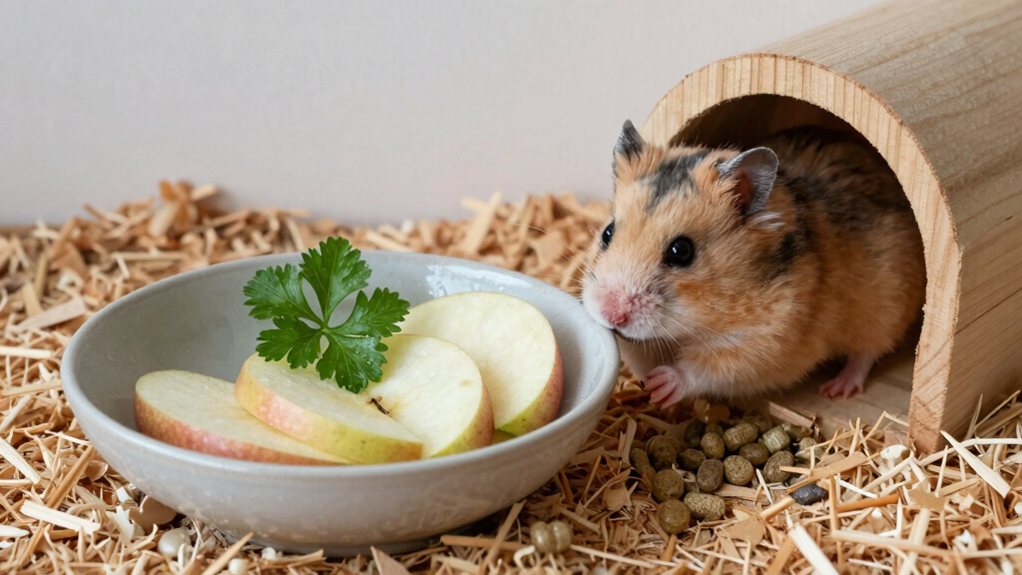
While your hamster might look like a tiny, furry superhero ready to tackle any snack, their tummy’s actually more like a delicate little engine that needs the right fuel, slowly.
Hamsters have serious digestive sensitivity, so sudden diet changes can throw their system into chaos. Imagine chugging a soda after only sipping water for weeks, yeah, it wouldn’t go well.
Sudden diet swaps? That’s a one-way ticket to tummy turmoil for your hamster—go slow, or face the gassy aftermath.
Their gut microbiome, the helpful bacteria keeping digestion effortless, gets stressed when new foods show up too fast.
That can mean bloating, diarrhea, or a grumpy little pet. You don’t want your hamster sitting in the corner, glaring at you over a bellyache.
The fix? Take it slow. Introduce fresh foods in tiny amounts, one at a time.
That way, their gut adjusts happily, and you both avoid a smelly disaster. Patience isn’t just kind, it’s crucial.
Pick Hamster-Safe Veggies and Fruits
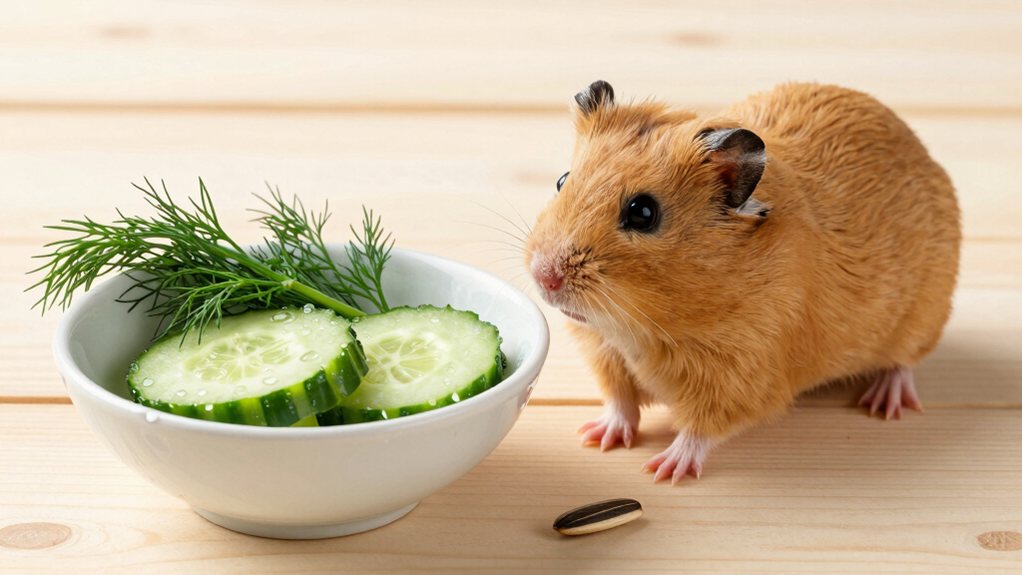
You’ve got some great options when it comes to safe veggies, think cucumbers, carrots, and bell peppers, all of which your hamster will likely nibble with delight.
Fruits are like candy for hamsters: fun and sweet, but best given in small amounts to avoid tummy troubles.
Stick to treats like apple slices or blueberries once or twice a week, and your little buddy will stay happy and healthy.
Always remove uneaten fruit within 12 hours to prevent mold growth and potential health risks.
Safe Veggies To Offer
When it comes to treating your little furball to some fresh greens, not all veggies and fruits make the cut. Some are even risky.
But don’t worry, there are plenty of safe, tasty options that’ll keep your hamster happy and healthy. Just stick to the good stuff and avoid anything too sugary or watery in excess. Here are four vet-approved veggies to try:
- Carrot slices – Packed with beta-carotene, they’re a crunchy favorite, just go easy—they’re sweet!
- Cucumber chunks – Super hydrating on hot days, but offer only small bits to prevent runny tummies.
- Bell pepper strips – A colorful, vitamin-rich treat your hamster will nibble with glee.
- Zucchini rounds – Mild and easy to digest, perfect for first-time fresh food adventures.
Start small, watch your pet’s reaction, and enjoy seeing them munch like a tiny food critic!
Fruits In Moderation
A little fruit goes a long way in your hamster’s world, think of it as the occasional cupcake at a birthday party, not the whole dessert table.
Because of their digestive sensitivity, hamsters can’t handle big fruit portions without tummy troubles.
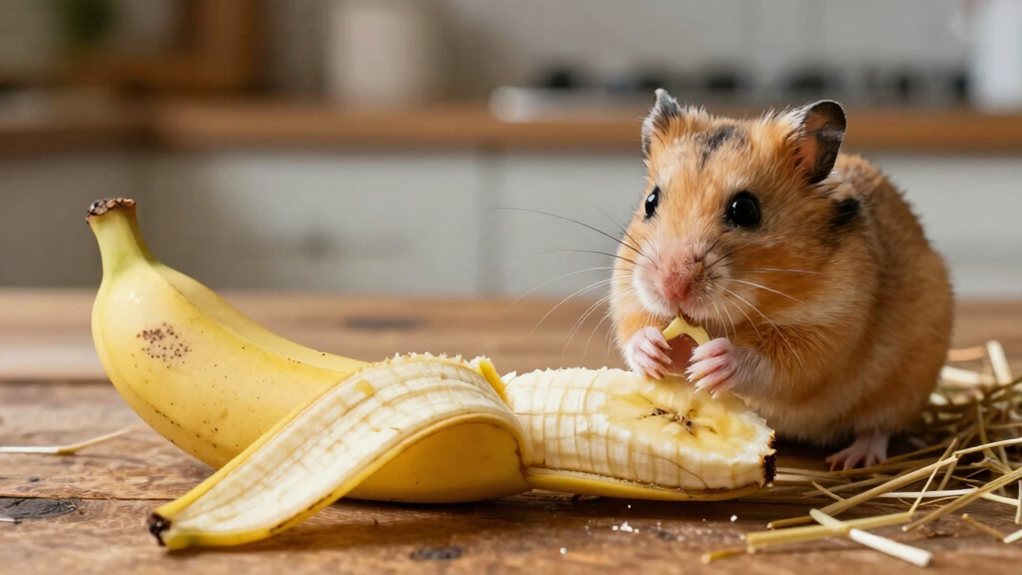
Stick to small bites, like a pea-sized piece of apple or banana, once or twice a week.
Too much fruit can lead to diarrhea or even diabetes over time, especially in dwarf hamsters.
Safe choices include strawberries, blueberries, and seedless grapes, but always wash them first.
Skip citrus and acidic fruits, they’re too harsh.
Remember, your hamster’s main diet should still be pellets, hay, and fresh veggies.
Fruit is just a sweet bonus.
Treat it like a tiny celebration, not a daily snack.
Your little friend will stay happy, healthy, and full of energy, without any messy, fruit-induced surprises.
Start With a Tiny Taste (A Pea-Sized Piece!)
Just one tiny bite is all it takes to open your hamster’s world to fresh flavors, think of it as their first gourmet adventure! Starting small helps you introduce variety safely and prevent boredom without overwhelming their sensitive tummy.
Watch your hamster closely for 12–24 hours for any changes. Stick to one new food at a time so you can track reactions. If all goes well, slowly increase the amount over days.
Here’s how to do it right:
- Offer a pea-sized piece of food, seriously, no bigger!
- Watch your hamster closely for 12–24 hours for any changes.
- Stick to one new food at a time so you can track reactions.
- If all goes well, slowly increase the amount over days.
Your little furball might nibble shyly or go full food critic, either way, you’re building trust. Remember, their stomach is tiny, so less is more. A pea-sized taste keeps things fun, safe, and exciting. You’re doing more than just feeding them, you’re creating a happy, healthy snack routine they’ll love!
Try One New Food at a Time
You’ve given your hamster that first tiny taste, and now it’s time to keep the snack adventure going, one food at a time.
Jumping straight into food pairing might seem fun, but mixing new items can confuse your hamster’s tummy and make it hard to spot what’s causing a reaction.
Mixing new foods too soon can upset your hamster’s tummy and make it tough to spot what’s causing a reaction—keep it simple at first
Instead, pick one fresh food, like a bit of cucumber or a slice of apple, and stick with it for a couple of days.
This helps you track how your little buddy handles it.
Portion timing matters too: offer new foods every 2–3 days so their digestion stays steady.
If all goes well, you can slowly add another.
Think of it like a mini taste test show starring your hamster.
No rush, slow and steady keeps their belly happy and your bond strong.
Watch for Diarrhea, Lethargy, or Bloating
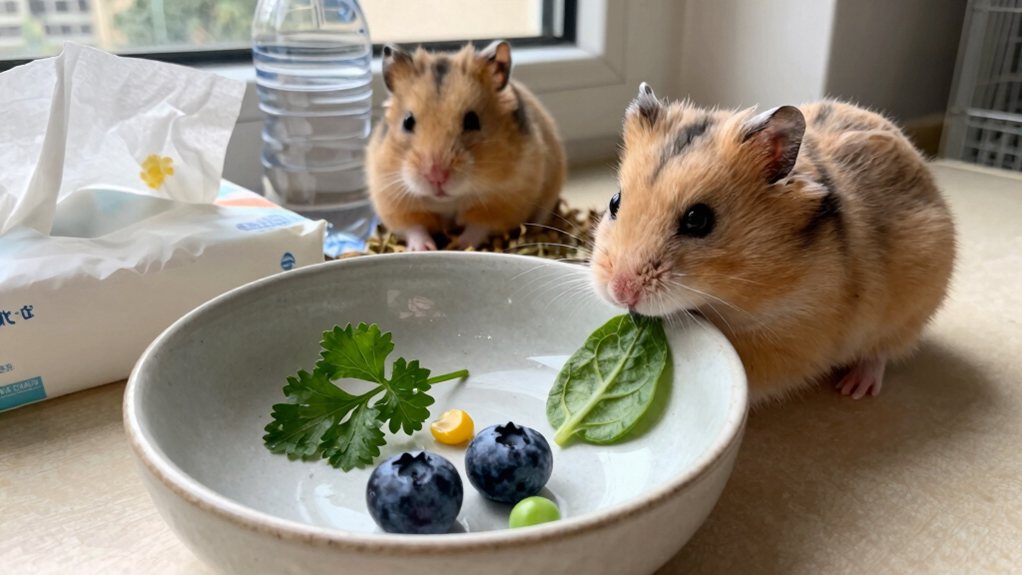
What if your hamster’s tummy throws a tiny tantrum after trying something new?
Keep an eye out for signs that their digestive health isn’t loving the change.
Just like us, hamsters can have food allergies or sensitivities.
If you spot any of these, slow down and reassess:
- Diarrhea – Runny poop means their system is stressed.
- Lethargy – If your usually peppy pal is extra sleepy, something’s off.
- Bloating – A swollen belly isn’t cute, it’s a red flag.
- Loss of appetite – If they’re ignoring food, their tummy might be upset.
Back off the new food and stick to their usual diet.
Once they’re back to zooming in their wheel, you can try again, slowly.
Watching for these signs keeps your little buddy safe and happy.
After all, no one wants a grumpy, gassy hamster on their conscience!
Wait 3–5 Days Before Trying Something New
Give your hamster’s tummy a little time to adjust, wait 3 to 5 days after introducing any new food before offering another. This pause helps their system handle digestive adaptation without stress. Think of it like food rotation with built-in chill time.
Hamsters have tiny, sensitive tummies, seriously, they’re the size of a ping-pong ball. So rushing new treats is like guzzling hot sauce on an empty stomach, bad idea.
If you go too fast, you might see bloating, diarrhea, or a grumpy, sluggish pet. Not cute.
By waiting, you give their gut bacteria time to catch up and do their job. Plus, it makes it easier to spot which food caused any issues. Slow and steady wins the snack race.
Your hamster will thank you with happy nibbles and zoomies, not tummy troubles. Patience pays off, promise.
Avoid These Toxic Foods (Even in Small Amounts)
Ever wonder why some snacks are a hard no for your hamster, even in tiny bites?
Some snacks are a hard no for your hamster—even tiny bites can be dangerous. Their tiny bodies can’t handle what we might consider harmless.
It’s because certain foods can be seriously harmful.
No second chances here.
While you might be tempted to share your lunch, stick to safe treats and skip these toxic ones.
No matter how cute those begging eyes look.
Here’s what to avoid:
- Onions – Even a crumb can lead to onion toxicity, damaging red blood cells.
- Avocado – The flesh and especially the pit carry avocado danger due to persin, a toxic compound.
- Chocolate – It’s a sweet treat for us, but a big health risk for hamsters.
- Apple seeds – They contain cyanide. Tiny, sneaky troublemakers!
Your little buddy depends on you to keep meals safe and fun.
Stick to hamster-approved goodies, and you’ll both breathe easier.
And laugh more.
Even minute amounts of certain toxins can overwhelm a hamster’s system due to their marble-sized stomachs.
Treats ≠ Meals: Pellets Come First
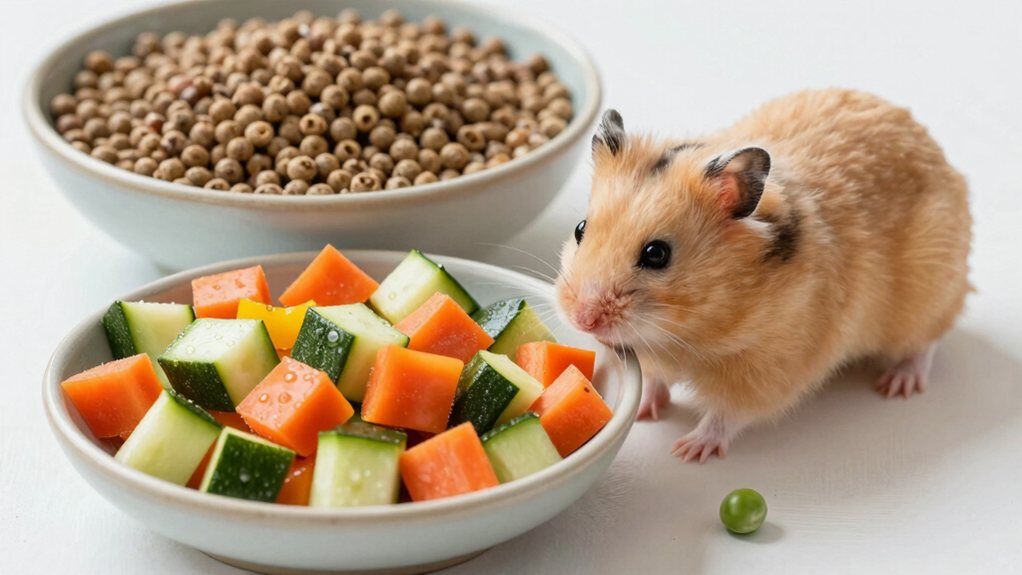
You’ve got to keep your hamster’s meals and treats straight, pellets are the main event, more than just sidekicks.
Sure, your little buddy might beg for strawberries like it’s the end of the world, but those tasty extras should never steal the spotlight from their balanced pellet diet.
Think of it like pizza night: a slice is fun, but you still need your veggies to stay healthy.
A high-quality, vitamin-fortified pellets diet ensures your hamster receives consistent nutrition without the risks of selective eating.
Pellets Are Essential
Think of hamster pellets as the main course in your little buddy’s tiny dinner party.
Sure, the fresh veggies and fruits are the exciting guests that show up with flair.
But without the dependable pellet platter holding down the table, things could get messy fast.
Pellets support your hamster’s natural diet and keep their digestive health on track.
They’re packed with balanced nutrients that fresh foods alone can’t provide.
Here’s why pellets are crucial:
- Complete nutrition – They cover all dietary bases.
- Digestive stability – Prevent tummy troubles from dietary chaos.
- Consistent eating habits – Help your hamster avoid picky eating.
- Healthy weight – Portion control made simple.
Treats Are Extras
What’s that? You’re sneaking your hamster a cookie, aren’t you? Hold up! While it’s sweet to share, remember: treats are extras, not meals. Your hamster’s main nutrition comes from pellets, those little nuggets are packed with what they truly need.
Treats? Think of them as the occasional popcorn at a movie, not the whole show. Too many goodies can cause digestive upset, and nobody wants a grumpy, bloated hamster.
Plus, some human snacks are toxic treats, like chocolate or onions, so always double-check before offering anything.
A tiny bit of apple or a seed now and then? Perfect. But keep it small and rare.
You’re more than just being fun, you’re being responsible. Your hamster might give you the cute side-eye, but trust us, their tummy will thank you. Stick to pellets first, and save the treats for special moments.
Balance Is Key
Pellets aren’t merely the boring brown bits at the bottom of the food bowl. They’re the superhero of your hamster’s diet. They’re specially formulated to support digestive health and provide consistent nutritional variety.
Fresh foods are fun, but they’re sidekicks—not the main event. Think of pellets as the reliable foundation, like your favorite pair of jeans. To keep things balanced:
- Offer fresh foods 2–3 times per week, not daily.
- Stick to pea-sized portions to avoid waste and tummy troubles.
- Always remove uneaten fresh food after 12–24 hours.
- Keep pellets available at all times: top them up daily.
Treats ≠ meals, and your hamster will thrive when you get that balance right. You’re not merely feeding them—you’re nurturing a tiny, energetic life. And hey, that’s pretty awesome.
Make a Weekly Treat Plan
Ever wonder how to keep your hamster excited about snack time without turning their diet into a junk food free-for-all? The trick is making a weekly treat plan. Think of it like a mini snack calendar. Planning a weekly schedule keeps things fun and safe.
Rotate fresh foods like cucumber, apple, or carrot in a treat rotation so your hamster doesn’t get bored or bloated. One day it’s a pea, the next a tiny slice of banana. Variety is great, but consistency matters more.
Too many treats at once? Bellyache city.
Stick to 2–3 times a week, and always remove uneaten bits to avoid mold. It’s like meal prepping, but for tiny, furry foodies. You’re more than simply feeding them. You’re building healthy habits.
Plus, watching them nibble their scheduled snack is pure joy. Plan ahead, keep it balanced, and both of you’ll smile. Yours from knowing you’re doing it right, theirs from snack bliss.
Final Thoughts
You’ve got this! Just go slow, keep things simple, and your hamster will thank you with happy little squeaks. Remember, tiny tastes and one food at a time keep tummies calm and taste buds thrilled.
Watch how they react, you’re basically a snack detective now. And hey, if your hamster turns up their nose, no worries, not every food is a winner. Stick to the plan, stay patient, and you’ll both enjoy the experience.