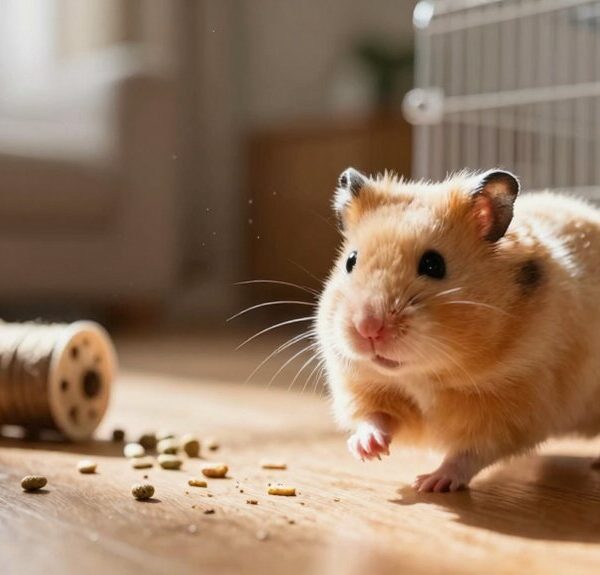
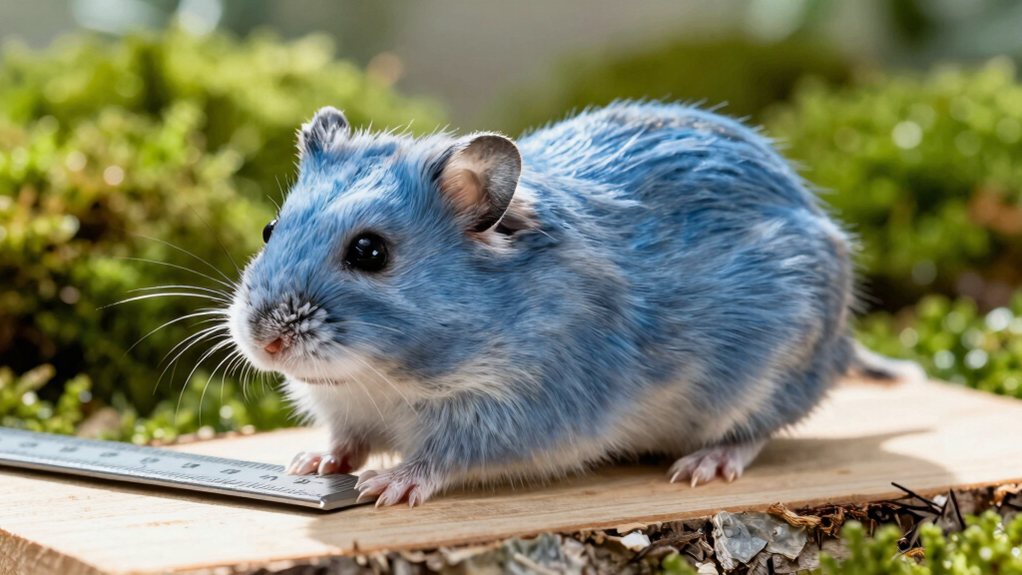
You’ve probably noticed your hamster’s coat looks like a tiny work of art, maybe golden with dark-tipped hairs or snowy with cute speckles. That’s all thanks to genes from both parents, mixing like a mini paint palette.
Some colors are common, like cinnamon or cream, while others, like lilac or rust, are rare and special. Patterns like banded or roan add even more flair.
And yes, their fur can change as they age, kind of like getting their own version of gray hair. It’s amazing what tiny genetics can do, and there’s even more fun to uncover about your fluffy little fashionista.
What Determines Hamster Coat Colors?
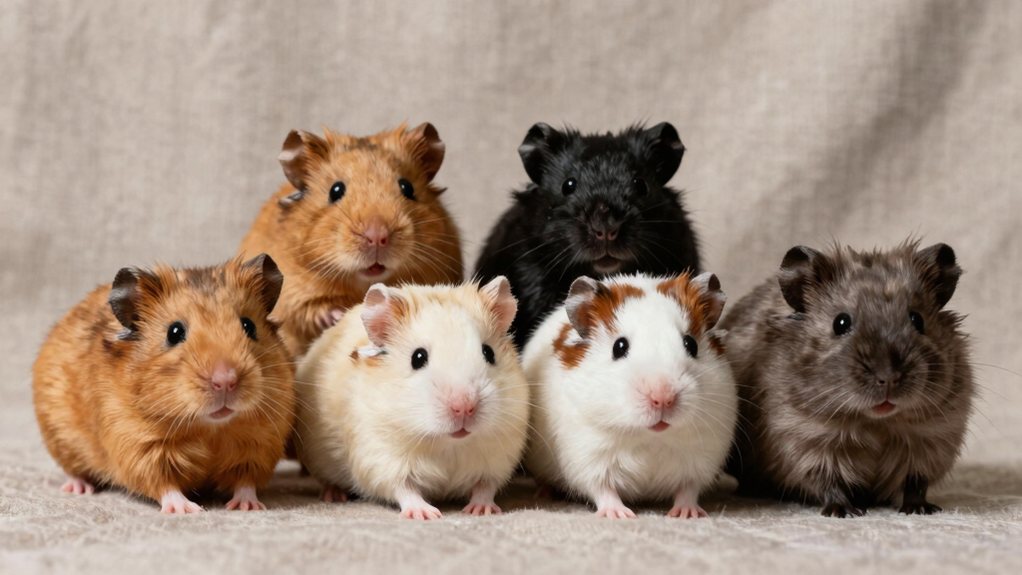
While you might think your hamster’s cute fur color is just a roll of the genetic dice, there’s actually a whole science behind those adorable shades. Your hamster’s coat color comes from genes passed down from its parents, influencing everything from golden tans to snowy whites.
These genes also affect coat texture and fur density, which can make some hamsters look fluffier or sleeker than others. Think of it like a recipe: swap one ingredient, and you get a totally different look!
Some hamsters have short, sleek coats, while others boast long, silky fur that practically begs for a tiny brush.
Even the thickness varies. Some have thin fur, others are so dense they look like little puffballs.
It’s not magic, but it’s close. So next time you admire your hamster’s stylish look, remember: genetics did the heavy lifting, and your hamster? Well, it’s just living its best, colorful life.
Common Hamster Coat Colors: and What Causes Them
You’ve probably seen that classic golden hamster and wondered where its sunny coat comes from, it actually started it all as the original wild color, called Golden Agouti.
Thanks to genes doing their quiet magic behind the scenes, that golden tone can shift into cool shades like cinnamon, black, or even cream.
Think of it like nature’s own paint palette, where tiny changes mix up the look but keep the charm totally hamster-approved.
Golden Agouti Origins
Ever wonder why your hamster looks like it’s wearing a tiny, perfectly shaded fur coat that blends golden tinges with dark ticking? That’s the golden agouti pattern, and it’s no accident. This coloring is a classic example of an evolutionary adaptation, helping wild hamsters blend into their natural surroundings. Think of it like nature’s camouflage.
Those banded hairs break up their outline in grassy or sandy areas, making them harder for predators to spot. The wild habitat influence is strong here. Golden agouti wasn’t bred for cuteness, but for survival. Sunlight glinting off their fur is just part of the disguise.
While your pet’s now safe in a cozy cage, that stunning coat carries ancient instincts. So next time you watch them munch a seed, remember: you’re seeing thousands of years of evolution in one adorable, golden-tipped package. Nature’s stylish and smart.
Gene-Driven Color Variants
What makes one hamster golden with dark-tipped hairs and another snowy white or jet black? It’s all in the genes, friend. Your hamster’s coat color isn’t merely random. It’s a genetic blueprint passed down from its parents.
Specific genes control pigment production, turning fur golden, black, white, or even cinnamon.
Some genes dilute color, giving soft creams or cool blues, while others create bold patterns like banded or spotted coats.
And it’s not merely color. Genes also influence coat texture and fur density.
Ever seen a long-haired hamster looking like it just stepped out of a salon? That’s genetics at work!
Even if two hamsters look similar, tiny gene differences can change everything.
Rare Hamster Colors: From White to Rust
You’ve probably seen golden or cinnamon hamsters, but have you ever spotted one that looks like a tiny snowball or a little rusted treasure?
Snow white variants shimmer with an almost magical glow, while rust-colored hamsters bring a warm, sunset-like hue that’s super rare and kind of like finding a unicorn at a pet store.
These unique coats aren’t just cute. They’re genetic surprises that make each hamster extra special.
Snow White Variants
How do some hamsters end up looking like tiny snowballs with whiskers? It’s all thanks to snow genetics and a little magic called white expression.
When specific genes team up, they dial down pigment production just enough to create that soft, snowy coat, without turning your hamster into a ghost.
These snow white variants aren’t just plain white. They often have faint hints of cream or pale pink eyes that add charm.
You’ll notice they’re rarer than a quiet moment during a school lunch break.
But don’t worry, they’re just as playful and curious as their colorful cousins.
Think of them as nature’s way of saying, “Let’s try something elegant.”
Whether they’re dwarf or Syrian, their snowy look is a stunning twist.
So if you spot one, you’re seeing a special combo of luck and biology.
Adorable proof that sometimes, less color makes all the difference.
Rust And Rare Hues
Not all hamsters stick to the usual browns and whites. Some come decked out in colors that make you do a double-take.
You might spot a hamster with a warm, reddish coat that looks like autumn leaves. That’s rust, and it’s all thanks to rust genetics.
These rare hues aren’t just pretty. They’re the result of rare mutations that surprise breeders and owners alike.
While not common, rust-colored hamsters are totally real and absolutely stunning.
You won’t see them at every pet store, but when you do, it’s like finding a tiny, furry treasure.
Other rare mutations can create everything from soft lilac tones to golden honey shades.
Each one is unique, like nature hit the “random” button.
So if your hamster looks more like a sunset than a shadow, celebrate it.
These rare colors add spice to the hamster world.
And your heart will melt just the same.
How Stripes, Spots, and Patches Are Inherited
Ever wonder why one hamster sports neat stripes like a tiny tiger while another looks like it dipped its toes in paint? That’s all thanks to genetics! When hamsters inherit their coat patterns, it’s like a family hand-me-down with a twist.
One hamster’s a tiny tiger, another’s a paint-dipped artist—genetics hands down coat patterns with a wild, wonderful twist.
Genes control how stripes, spots, and patches form, and sometimes they blend in quirky ways.
You might see coat symmetry where markings mirror each other, or pattern blending that creates a one-of-a-kind look. Think of it like a genetic paint mixer: some genes say “bold stripes,” others whisper “freckle me.”
Even siblings can end up wildly different! It’s not magic, but it’s close.
Dominant vs. Recessive Coat Genes in Hamsters
While you can’t pick your family’s genetic quirks, like your uncle’s sneeze that sounds like a dog bark, your hamster definitely inherits its looks from its parents, and it all comes down to which genes play boss.
Gene expression isn’t about drama. It’s how traits actually appear based on dominant or recessive instructions. When it comes to coat dominance, some genes shout louder than others, deciding if fluffiness or color shows up loud and proud.
- Dominant genes show up even if only one parent passes them down
- Recessive genes need two copies (one from each parent) to be visible
- A hamster might carry a hidden recessive trait, like a secret fashion choice
- Breeding two carriers can surprise you with rare coat colors
Understanding this helps you predict—or happily guess—your hamster’s dazzling look.
How Breeding Creates New Coat Combinations
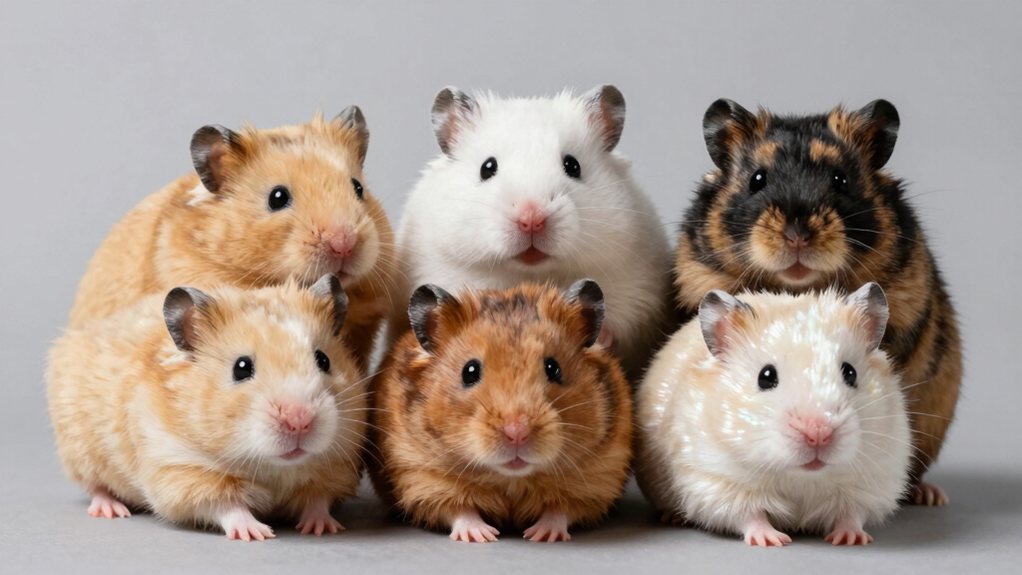
How do two hamsters produce a litter of wildly different fur styles, like nature’s own surprise party? It’s all in the genes! When you breed hamsters, their DNA mixes in fun, unpredictable ways. You might see coat blending, where colors swirl like paint, think golden and black merging into rich chocolate.
Or get pattern mixing, like spots and stripes teaming up for a bold new look. Each pup inherits a unique combo from Mom and Dad, even if they carry hidden traits. That solid-colored hammy could have a recessive gene for spots, popping up in the next generation. It’s like genetic roulette!
Breeding isn’t just science, it’s magic with whiskers. So, if your hamsters have a litter with one golden dwarf, two banded teddies, and a mystery pup with polka-dot vibes, don’t panic. That’s pattern mixing at its finest. Nature loves a good plot twist.
Visual Guide to Hamster Coat Patterns
What’s the secret behind those adorable faces, each wrapped in a totally unique fur fashion? It’s all in the coat patterns, and they’re as fun to explore as they’re to snuggle.
You’ll notice how coat texture and eye color play big roles in each look, making every hamster a tiny masterpiece.
Whether fluffy, short, or silky, the fur adds personality, while those peepers can range from shiny black to dreamy ruby red.
Here’s a quick visual guide to common patterns:
- Banded: A bold stripe wraps around the middle, like a furry belt.
- Spotted: Random dots scatter across the back, like someone flicked paint.
- Dominant Spot: One large, defined spot stands out proudly.
- Roan: Even speckles cover the body, giving a salt-and-pepper glow.
Spotting these patterns is half the fun. Grab a magnifying glass or just good lighting and start exploring!
Why Your Hamster’s Color Might Change Over Time
Ever wonder why your little furball isn’t quite the same shade they were when you first brought them home? Don’t worry—you’re not seeing things! Hamsters can change color as they age, thanks to natural aging effects. Just like people get gray hair, your pet might fade, darken, or even develop new hints of color over time.
It’s totally normal and usually nothing to stress about. Some breeds also go through seasonal shedding, where they lose and regrow fur with slight color shifts, especially in response to temperature or daylight changes.
Think of it as their tiny fashion statement for the new season!
While sudden or patchy changes could need a vet check, slow, even shifts are typically just part of life.
Final Thoughts
So, now you know the colorful secrets behind your hamster’s fuzzy coat. Genes call the shots, mixing traits like a tiny genetic recipe.
Whether they’re golden, white, or speckled like a modern art piece, each hue has a story. And sure, some colors change as they grow, just like your taste in music. Welcome the fluff, celebrate the stripes, and remember: every hamster’s a unique masterpiece, even if they do hoard snacks like tiny dragons.