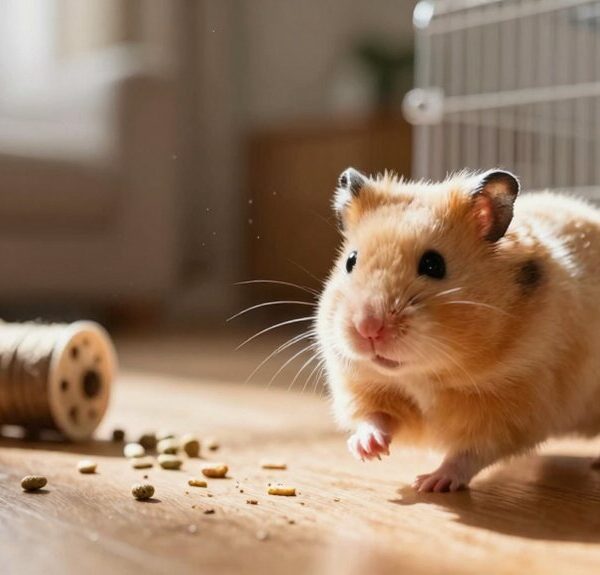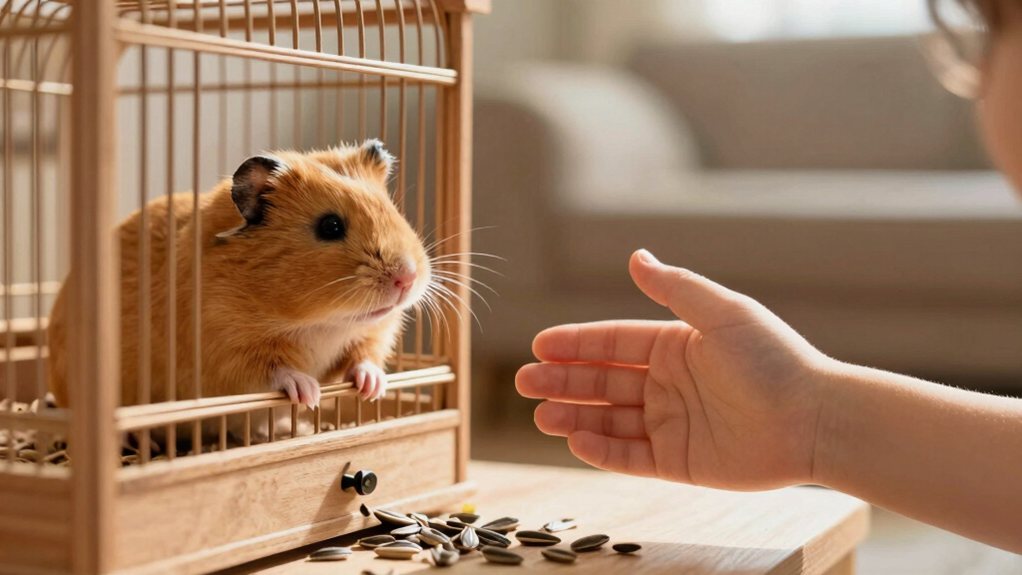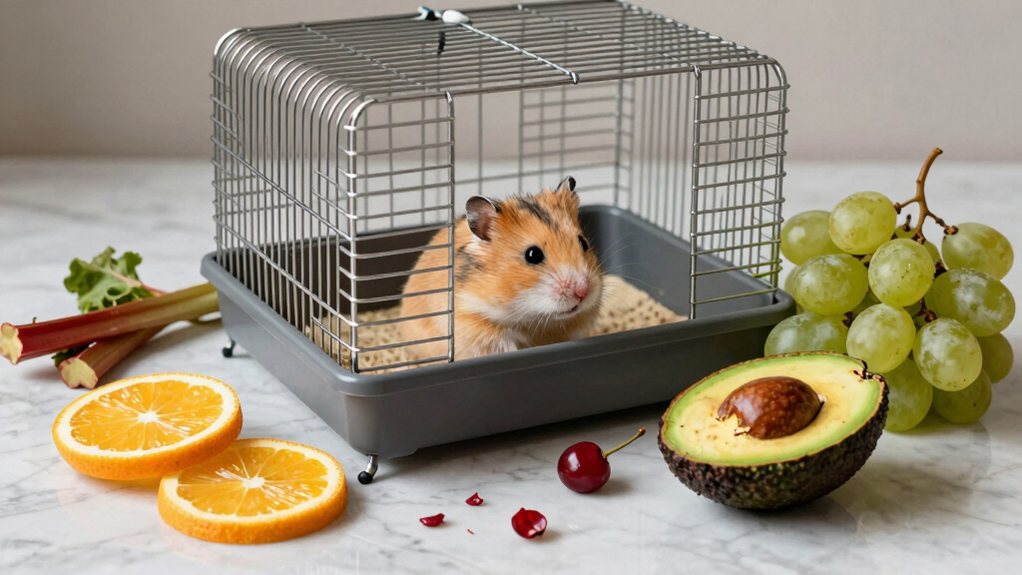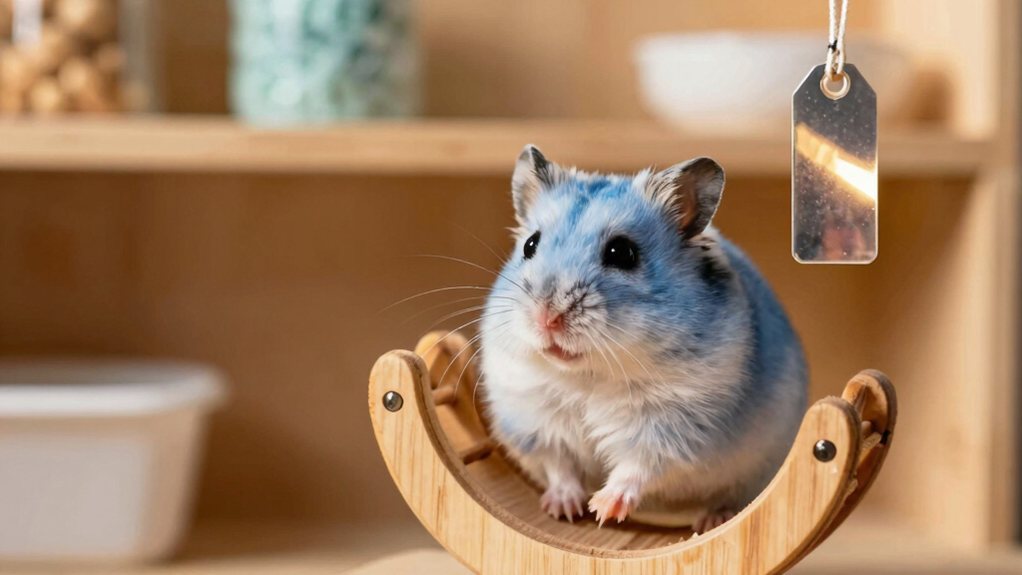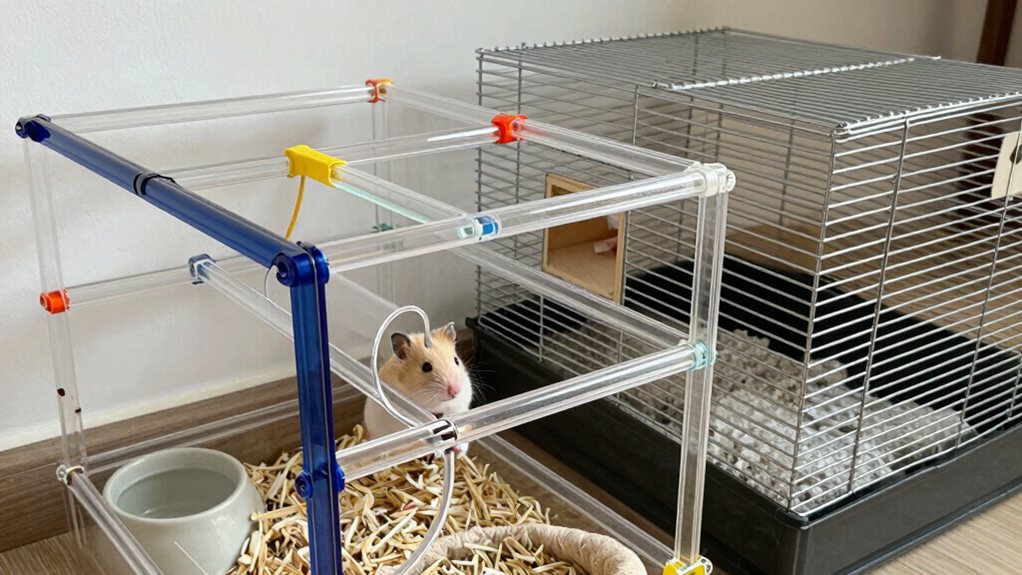
You’ve got a hamster, and you want to get it right. Skip the tiny cages and seed-only diets.
Science says your furry friend needs at least 450 square inches of space, a solid 8-inch wheel (bigger for Syrians), and a diet based on quality pellets, not candy-like seeds. Ditch the pine bedding and wire wheels—they’re risky.
Give them tunnels, chew toys, and fresh veggies to keep them happy and sharp. You’re doing great, and there’s even more good stuff that’ll make your hamster’s life way better.
How Big Should a Hamster Cage Be? Science-Backed Minimums
Let’s face it, your hamster may be small, but that doesn’t mean their home should feel like a shoebox. Science says your tiny buddy needs at least 450 square inches of floor space, two feet by three feet, to stay happy and healthy. A bigger cage means more room to dig, explore, and burn off energy, which keeps stress low.
Your hamster may be tiny, but their space shouldn’t be. Aim for at least 450 square inches—bigger means happier, healthier, and less stressed.
Don’t forget cage lighting. Natural, indirect light helps keep their day-night rhythm on track, but avoid direct sunbeams that turn the cage into a sauna.
Good air quality matters too. Make sure there’s proper airflow without drafts, since stuffy air can lead to respiratory issues.
Wire shelves and good bedding help with ventilation while keeping your hamster cozy.
You wouldn’t want to live in a closet with bad lighting and stale air, so why should they? Give your little furball space to thrive, and you’ll both be happier.
A cage with removable trays simplifies cleaning and supports long-term hygiene.
Are Plastic Wheels Safe? What Research Says About Hamster Wheels
You’ve probably seen those colorful plastic wheels in pet stores, but here’s the thing—not all of them are safe for your little runner.
Some have gaps or slats that can trap tiny feet or tails, leading to injuries that’ll break your heart.
Let’s look at what the research says about wheel design so you can pick one that keeps your hamster zooming safely, happily.
Safety Of Plastic Wheels
Ever wonder if that shiny plastic wheel in your hamster’s cage is doing more harm than good? Let’s talk about plastic wheel safety, because your tiny runner deserves the best.
Some plastic wheels can pose risks, especially if they’re made with materials linked to plastic toxicity.
Cheap plastics might leach harmful chemicals, so always pick BPA-free options.
Also, check wheel stability. Wobbly wheels aren’t just annoying, they can injure little paws or cause stress.
A shaky spin could mean splinters, slips, or even spinal strain over time.
But don’t panic. Many modern plastic wheels are safe, sturdy, and easy to clean.
Just make sure it’s solid, doesn’t wiggle, and fits your hamster’s size.
Think of it like buying shoes. Would you run in wobbly, toxic sneakers? Nope.
Wheel Design And Injury Risk
While your hamster might look like a tiny, furry stunt double on that wheel, the truth is, not all wheels have their best interests in mind. A poorly designed wheel can lead to injuries, especially if the axle design is exposed or wobbly. No one wants their little runner catching a paw or losing balance mid-sprint.
Solid plastic wheels with a seamless, enclosed axle are safer and more stable, reducing injury risk. Plus, they tend to have a lower noise level, which means fewer 3 a.m. spin sessions disrupting your sleep.
Wire or mesh wheels should be avoided. They can hurt tiny feet and cause long-term harm.
Look for a wheel that’s appropriately sized, at least 8 inches for dwarfs, bigger for Syrians, so your hamster doesn’t arch their back unnaturally.
A good wheel keeps your pet active, happy, and safe. Because let’s face it, they deserve a five-star hamster gym.
Best Hamster Bedding: What Studies Say About Safety and Comfort
When it comes to keeping your tiny furball happy and healthy, what you line their little home with matters more than you might think. After all, your hamster spends most of their time burrowing, snoozing, and sometimes even eating their bedding.
The right bedding material supports natural nesting behavior and keeps your pet safe. Research shows paper-based or aspen shavings are top choices, soft, absorbent, and dust-free.
Paper-based or aspen shavings are top picks—soft, absorbent, dust-free, and perfect for supporting your hamster’s natural nesting instincts safely.
Avoid cedar and pine, they release harmful oils that can irritate your hamster’s lungs.
You want something cozy but not risky. Think of it like picking pajamas: comfy, breathable, and definitely not toxic.
Your hamster will fluff it up, tunnel through it, and maybe even gift you a cheek-stuffed pile in the corner.
It’s more than decor—it’s crucial. So skip the pretty but pointless colored bedding and go for what science backs.
A 2023 study on small mammal respiratory health emphasized that bedding labeled 99.9% dust-free significantly reduces the risk of respiratory infections in hamsters.
Your little digger will thank you with happy, healthy naps.
How Much Exercise Do Hamsters Need? Beyond the Running Wheel
You’ve picked the perfect bedding, soft, safe, and tunnel-ready, so now let’s talk about what your hamster does when they’re not napping in their cozy nest: moving.
Hamsters need daily exercise, more than just quick bursts. Think consistent exercise frequency to keep their little hearts and minds healthy.
While the wheel’s a must, don’t stop there. Your pint-sized pal craves activity variety: climbing, digging, exploring.
Tunnels, cardboard mazes, and safe chew toys turn cage time into playtime.
Ever seen your hamster stuff their cheeks and dart around like a furry ninja? That’s natural behavior begging to be encouraged.
Without enough movement, they can get stressed or bored. Yes, even hamsters binge-clean their cages when restless!
So mix it up: change layouts weekly, add puzzle feeders, or let them safely roam in a hamster-proofed area.
A tired hamster is a happy hamster—and way less likely to wake you up at 2 a.m. on the wheel.
Consider adding a wooden climbing platform to support safe vertical exploration and enrich their environment.
Best Hamster Toys: Science-Backed Enrichment for Mental Health
You know your hamster loves to explore, so giving them tunnels isn’t just fun. It actually sharpens their little brain, helping them stay mentally sharp.
Chewing isn’t just destruction, though your furniture might disagree. Science shows chew toys calm their nerves and keep stress in check.
And when you hide treats for them to sniff out, you’re not playing games. You’re boosting their mood, one nibble at a time.
Toys made from natural grasses like rattan provide safe chewing opportunities while supporting dental health and preventing boredom.
Tunnel Exploration Enhances Cognitive Function
While your hamster mightn’t be solving algebra problems, exploring a network of tunnels does more than just satisfy their inner adventurer. It actually gives their brain a healthy workout.
Studies show that tunnel complexity challenges your pet’s spatial memory, helping them map routes and remember dead ends, much like a tiny, furry GPS building better skills.
The more turns, levels, and connections in their tunnel system, the more mental stimulation they get.
It’s like a gym for their brain, minus the tiny dumbbells.
You’ll notice they become quicker, more confident navigators over time.
No wrong turn goes unlearned.
Plus, watching them zigzag through loops is equal parts adorable and impressive.
So go ahead, mix up the layout now and then.
Surprise them with a new branch or dead-end puzzle.
Your hamster mightn’t thank you in words, but their sharper mind will show it.
And honestly, who doesn’t love a clever little explorer?
Chew Toys Reduce Stress Levels
Just because your hamster’s mastered the maze doesn’t mean their brain game is the only thing worth boosting. Chew toys are the unsung heroes of rodent relaxation.
You’ve probably seen your hamster go nuts for a cardboard tube or wooden block. But it’s more than play.
Research shows chew toy materials like untreated wood and compressed hay actually help lower stress hormone levels.
Yep, scientists have done stress hormone analysis on hamsters. Those with access to safe chew toys showed calmer nervous systems.
Think of it like yoga, but with more gnawing.
Not all materials are safe, though. Skip plastic or chemically treated stuff. Stick to natural options your little buddy can safely destroy.
Chewing isn’t just instinct. It’s therapy.
Foraging Activities Improve Emotional Wellbeing
Ever wonder why your hamster acts like a tiny detective, sniffing every corner of their cage? That’s natural instinct kicking in, hamsters are born foragers.
Studies show that foraging activities boost their emotional wellbeing, reducing boredom and anxiety.
You don’t need fancy gear; just scatter some treats in their bedding and let them hunt.
Increasing foraging frequency, even merely a few times a week, keeps their mind sharp and spirits high.
Mix it up with food variety, too: swap sunflower seeds for bits of carrot or oats.
It’s like a snack-time treasure hunt!
Your hamster’ll stay curious, active, and way happier.
Think of it as mental gym time with a side of snack joy.
You’re not merely feeding them, you’re enriching their whole world.
So go ahead, hide those treats and watch your little buddy light up.
It’s small effort, big payoff.
For even greater mental stimulation, consider using a puzzle feeder designed for problem-solving enrichment to challenge your hamster’s natural instincts.
Hamster Diet Myths Busted: What They Actually Need to Thrive
What if everything you thought you knew about feeding your hamster was actually holding them back from thriving? You’re not alone.
Many of us grew up tossing in sunflower seeds and calling it a day, but that’s not their natural diet. In the wild, hamsters munch on grains, greens, and the occasional insect. They need real nutritional balance.
Skip the seed-only mix. It’s like living on candy. Instead, offer a base of high-quality pellet food, then add fresh veggies like cucumber or carrot in small amounts.
And yes, they can have a few seeds as treats, not staples. Too many leads to obesity and health issues.
Think of yourself as their tiny nutrition coach. Variety is key, consistency matters, and love helps. You’ve got this.
Your hamster’s healthiest, happiest life starts with what’s in that food bowl.
Are Hamsters Really Solitary? The Science of Social Needs
You’ve got their meals sorted, balanced pellets, a sprinkle of veggies, and only the occasional seed as a little reward.
So now let’s talk about who’s sharing their space.
When it comes to hamsters, the idea that they’re all loners isn’t quite the full story. While most species, like Syrians, really do prefer living solo and can get feisty in group housing, some dwarf types, like Roborovskis, can actually enjoy social bonding if raised together.
Not all hamsters are loners—while Syrians prefer solo life, some dwarfs like Roborovskis can thrive in pairs if raised together from a young age.
It’s not like throwing roommates together blindly. It takes careful setup, the right cage size, and constant monitoring.
Even then, fights can happen.
So, while group housing works for a few, it’s not a one-size-fits-all fix. Think of it like introducing best friends at school, sometimes it clicks, sometimes it’s chaos.
When in doubt, going solo keeps things simple and stress-free for your tiny, whiskered pal.
Final Thoughts
You’ve got this, hamster hero! Science shows your tiny buddy thrives with space to explore, a solid wheel, and bedding that’s safe to snuggle. They need fun toys, real veggies, and room to run, yes, even at 3 a.m.
While they’re loners by nature, they still crave your gentle attention. Skip the myths, stick to the facts, and you’ll give your little furball a happy, healthy life. Tiny pets, big love, what’s not to squeak about?