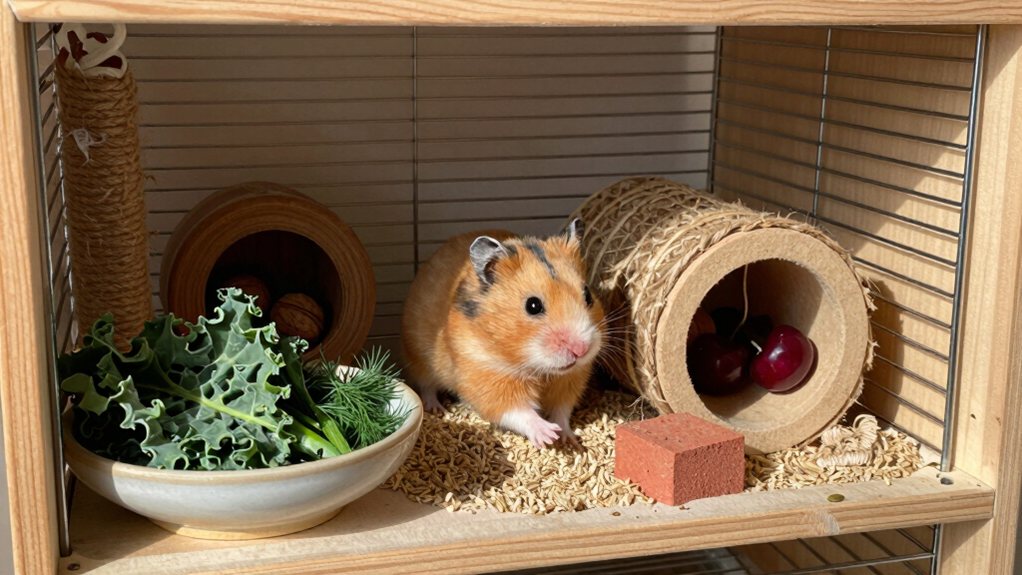
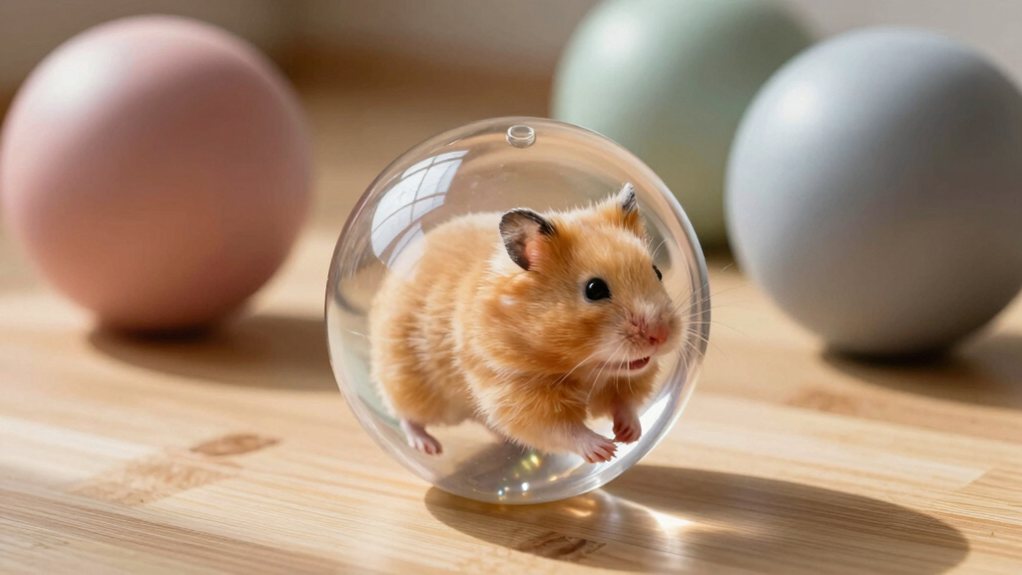
Yes, you can let your hamster out of its cage every evening, it’s actually great for their happiness and health. Just make sure the room’s safe by hiding cords, removing toxic plants, and blocking tight spaces.
Set up a cozy play zone with tunnels, chew toys, and soft bedding. Handle them gently with both hands, and offer treats to build trust. They’re nocturnal little explorers, so timing matters. You’ll see just how curious and sweet they can be when you get it right, and there’s a bit more to getting it perfect.
Is It Safe to Let Your Hamster Out of the Cage?

So, is it safe to let your hamster out of its cage? Yes, but only if you’re careful and prepared. Most hamsters enjoy a little supervised playtime, but keep an eye out. Some show hamster aggression when startled or scared.
A quick nip isn’t likely, but it can happen if they feel threatened. Also, watch for escape behavior. These little Houdinis can squeeze into tiny spaces!
Make sure the room is pet-proofed, with no cords to chew or dark corners to vanish into.
Use a playpen or close the door to keep them contained. Think of it like a mini adventure. You’re the guide, and your hamster’s the explorer.
With a calm environment and your attention, it’s a fun, safe way to bond.
Just remember: short sessions work best. After all, even tiny adventurers need naps!

360° Panoramic Mesh: Designed in a fully enclosed spherical silhouette featuring micro-mesh screening that delivers an unobstructed 360-degree panoramic view. Satisfies your pet's curiosity while allowing you to keep a watchful eye from any angle.

360° Rolling Fun & Exploration: Innovative cat hamster ball for outside lets curious pets roll, crawl, and play safely. Offers a dynamic 360-degree panoramic view, stimulating outdoor exploration without escape risks.

Engineered with a unique 27-inch (68cm) spherical structure, this portable outdoor cat enclosure offers a balanced, secure play zone. Ideal for kittens and small pets, it maximizes interior space while maintaining a sleek, modern look that fits seamlessly into your living room or backyard lawn.
Best Time of Day for Hamster Playtime
When should you let your hamster loose for playtime, dawn, noon, or night?
Well, hamsters are crepuscular, meaning they’re most active at twilight.
That’s why the best time for play is during the evening calm, right after sunset.
You’ll notice less morning energy and more curiosity when the lights dim.
Let them explore when they naturally wake up, usually around 7–9 PM.
Avoid midday play—your hamster might be snoozing like a tiny, furry log.
Keep sessions short and sweet (15–30 minutes) to prevent stress.
Use quiet time in the evening for bonding and gentle handling.
Turn off loud TVs or music so your hamster feels safe and relaxed.
You’ll both enjoy it more when the house settles down.
Trust us—your hamster’s idea of fun starts when yours slows down.
How to Set Up a Safe Hamster Play Area
You’ll want to pick a quiet room where your hamster won’t get spooked by loud noises or curious pets.
Block off any gaps, secure cords, and make sure there’s no furniture they can squeeze behind—because yes, they’ll try.
Think of it like baby-proofing, but for a tiny, furry escape artist.
Safe Play Space Basics
Ever wonder why your hamster suddenly freezes mid-zoom, nose twitching like it’s solving a mystery? It’s probably spotting something in its play space—maybe a snack crumb or a suspicious shadow.
When you let your hamster out, creating a safe zone is key for fun and health. Think of it as a mini adventure park customized just for them.
A good setup supports hamster hygiene and smart playtime nutrition. You don’t want your little buddy snacking on dust bunnies!
- Use a secure, escape-proof playpen or gated room
- Remove wires and toxic plants, chew hazards are no joke
- Lay down soft, washable mats for comfy zoomies
- Offer a few safe toys and tunnels for mental boosts
- Keep a small dish of fresh water and healthy treats nearby
Happy hamsters mean fewer mystery freezes—and more adorable chaos.
Secure Enclosure Setup
Inside a cozy corner of your living room or a quiet spot by the bookshelf, your hamster’s play area starts taking shape. No magic wand needed, just a little planning and care.
Use a secure pen or playpen with high walls to prevent escape, since hamster behavior often includes climbing and digging.
Make sure the base is soft but stable—think foam mats or a thick towel—so little paws stay comfy.
Remove any cords or small objects they could chew.
Add tunnels, chew toys, and a hideout to keep them happy and curious.
This space isn’t just for fun; it helps with cage cleaning by giving your pet room to stretch while you tidy up.
Check for gaps—hamsters are escape artists!
With a safe setup, you’ll both enjoy stress-free playtime, and your furry buddy will thank you with nose boops and happy zoomies.
Essential Supplies for Out-of-Cage Fun
You’ll want a safe playpen or enclosed space where your hamster can’t escape or get into trouble, think of it like a mini adventure zone just for them.
Set up a hamster-proof area by removing cords, small hiding spots, and anything they might chew, because let’s be honest, they’ll try to chew everything.
Toss in some interactive toys and tunnels to keep them busy and happy, because a bored hamster is basically a tiny, grumpy escape artist.

INTERESTING TUNNEL TOYS: Are you still looking for fun toys for your pet? This small wooden adventure mice tunnel is one of choices for keeping your pets natural. The small wooden adventure tunnel is also a great exploring toy for small dwarf hamsters, gerbils, mice and other pets of similar size, it's not recommanded for Syrian Hamsters or similar sized pets
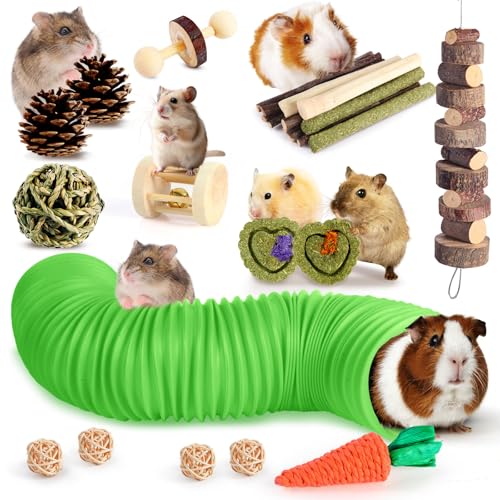
【All-in-One Entertainment Bundle】No more boring cages! This ultimate set combines exercise (running wheel), exploration (tunnel), mental stimulation (hay cakes), and cozy nesting (soft rattan balls). Perfect for gifting—watch them toss, roll, and burrow for hours!

Natural material: Hamster hideout wood from the nature of birch, very safe for pets, to meet the needs of pets close to nature
Safe Playpen Setup
A well-prepped playpen turns your living room into a mini adventure park for your hamster, and setting it up doesn’t have to be a circus act.
Just make sure the space is escape-proof and cozy, keeping hamster hygiene in mind, nobody wants surprise droppings on the couch.
If you’re thinking of adding a playmate, check playmate compatibility first. Most hamsters prefer flying solo.
- A sturdy, high-walled playpen or baby gate
- Soft, chew-safe toys for mental stimulation
- A hideout or tunnel for quick naps
- Fresh water in a spill-proof bottle
- Paper-based bedding (easy cleanup!)
With these basics, your hamster’s out-of-cage time will be safe, fun, and a little less stressful for you.
Think of it as hamster daycare. You’re the proud, slightly nervous parent.
Hamster-Proof Exploration Zone
Before you release your tiny explorer into the wild unknown of your living room, take a moment to hamster-proof the zone, because let’s be real, your pet’s idea of “fun” might involve chewing the corner of your favorite shoe or vanishing behind the fridge forever.
Clear cords, close doors, and block off tight spaces.
Then, set up some hamster agility courses using tunnels, low ramps, and safe cardboard boxes. Your little escape artist will love the challenge.
Add sensory enrichment activities like paper bags with holes or a sprinkle of unscented herbs in a corner to spark curiosity.
Keep an eye on your furball, because even 10 minutes of freedom can turn into a full-blown adventure.
With the right prep, out-of-cage time isn’t just safe—it’s a blast for both of you. Just don’t blink.
Interactive Toys And Tunnels
What’s better than watching your hamster zigzag through a maze of tunnels like a tiny, furry racecar? Not much.
Setting up interactive toys and tunnels outside the cage turns playtime into an adventure. You’ll keep your little buddy mentally sharp and physically active, plus it’s adorable to watch.
Try tunnel racing with flexible tubes that connect into wild configurations. Switch things up often with toy rotation to prevent boredom. Yes, hamsters get bored too.
A fresh toy every few days keeps curiosity high and paws busy.
- Collapsible fabric tunnels
- Chew-safe wooden toys
- Mini obstacle ramps
- Hide-and-seek puzzle feeders
- Rolling exercise balls (for supervised use)
You’re doing more than just playing. You’re bonding. And honestly, who doesn’t love a hamster with a sense of purpose?
Dangerous Items to Remove Before Playtime

While your hamster’s excitement for playtime is totally contagious, picture those tiny paws wiggling with joy. Don’t let the cuteness blind you to hidden hazards lurking around.
Before you set your little buddy free, scan the room like a hamster detective.
Tuck away electrical cords, yes, those tempting chew toys your pet sees, because one nibble could be dangerous.
Also, check for sharp objects like paper clips, scissors, or broken furniture edges. You’d hate for your furball to turn an adventure into an ER trip.
Close off gaps under furniture too. Hamsters love squeezing into tiny spots.
And remember, what’s small to you is a big obstacle course to them.
Remove toxic plants and secure any loose wires.
A safe space means fun for both of you.
So take five minutes to prep, and you’ll avoid stress later.
Happy, safe playtime equals happy, healthy hamster. You’ve got this!
How to Hold and Bond With Your Hamster Outside the Cage
Now that you’ve cleared the room of hazards and made it safe for your little explorer, it’s time to focus on the real magic: connecting with your hamster outside the cage.
Gentle handling and trust building go hand in hand, and a little patience makes all the difference.
Let your hamster come to you first—no sudden grabs!
Cup both hands gently to create a secure hammock.
Talk softly so your voice becomes a comfort, not a scare.
Offer a treat from your palm to turn bonding into snack time.
Keep sessions short at first—5 minutes is plenty for starters.
You’re more than just holding a pet; you’re making a tiny friend.
It might nibble your finger once or twice, oops, wrong snack!
But don’t pull away.
Stay calm, stay kind, and soon your hamster will run to you, not from you.
Final Thoughts
You’ve got this! Letting your hamster out is safe and fun. Just keep things secure and supervise closely.
Pick a quiet time, set up a hamster-proof zone, and have a blast bonding. They’ll love exploring, and you’ll love watching them zigzag with joy. Just dodge dangers like cords and gaps.
A little playtime goes a long way—happy, healthy, and full of giggles. Go make some tiny, furry memories!
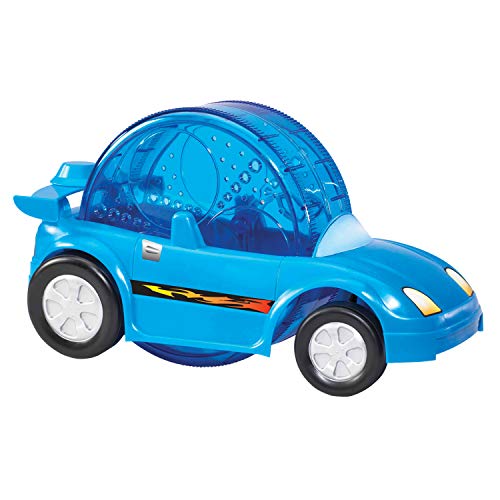
Exciting pet powered exercise car for hamsters and gerbils

Includes a large 24-inch wide and 28-inch long protective mat to guard against messes

Safe & Smooth Natural Wood:Crafted from high-quality, polished wood that’s safe for chewing and splinter-free—perfect for hamsters, gerbils, and mice.