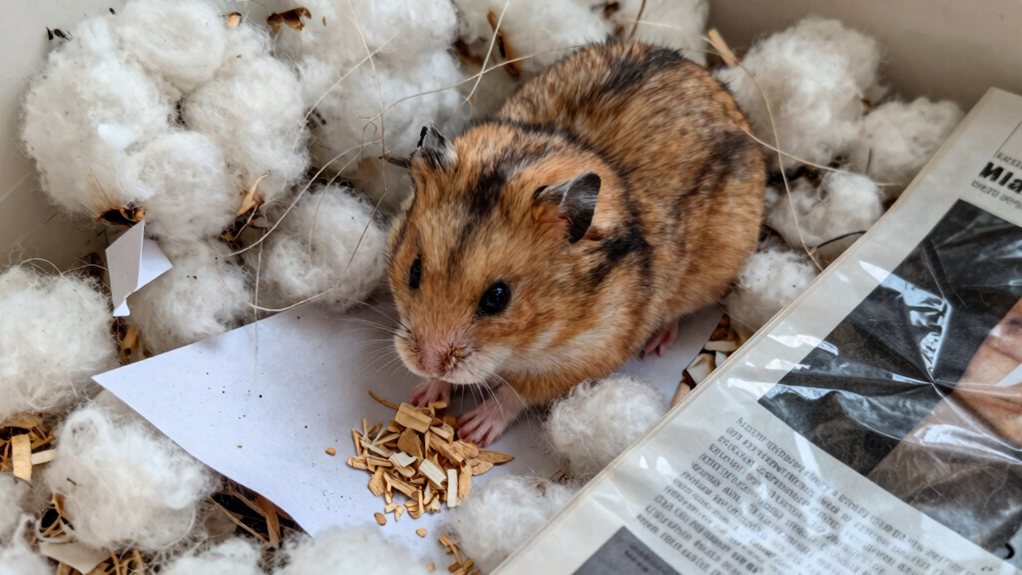
You should never use cedar or pine shavings. Those wood chips might smell nice to you, but they’re toxic for your hamster and can hurt their lungs and liver.
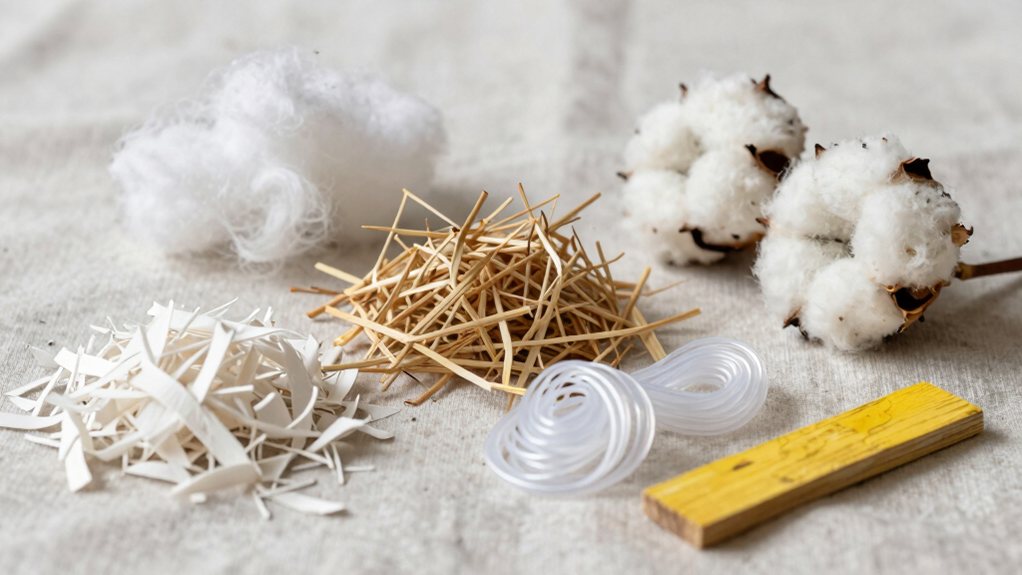
Skip the fluffy bedding, cotton wool, and torn towels too. They can tangle around tiny paws or cause blockages if eaten. Avoid anything scented, dyed, or dusty. Never go for clumping bedding—it’s a sneeze and mess waiting to happen.
Stick to safe, simple materials, and your little buddy will stay healthy and happy. There’s more to get right than you might think.
Why Some Bedding Is Dangerous for Hamsters
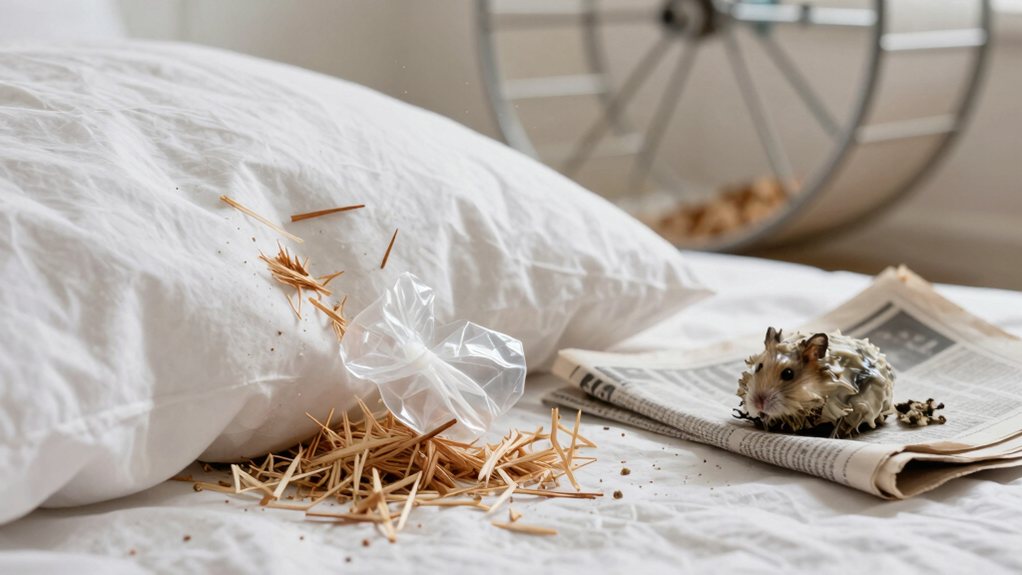
Ever wonder why your hamster keeps sneezing or seems a little off after you switched up their bedding? It mightn’t be a cold, it could be bedding allergies. Some materials, like cedar or dusty paper, irritate their tiny lungs and skin.
Hamsters have super-sensitive respiratory systems, so what feels harmless to us can cause big problems for them.
Poor ventilation needs mean stale air traps allergens, making things worse. You want your little buddy to breathe easy, right?
Skip the strong-smelling or chemically treated stuff. Instead, go for soft, dust-free options like paper-based or aspen bedding.
Think of it like picking the coziest, safest PJs for your pet. A happy hamster isn’t sneezing or scratching, it’s zooming in its wheel, full of joy.
Keep their home comfy, clean, and well-ventilated, and they’ll thank you with snuggles and maybe a cheek full of food.
Avoid clumping cat litter, as it can cause life-threatening blockages if ingested and releases harmful dust.
Never Use Cedar or Pine Shavings
You’re doing great by paying attention to what goes in your hamster’s home, because not all bedding is created equal, and some types can actually do more harm than good.
Never use cedar or pine shavings, even if they smell fresh and cozy. Those little wood chips might seem harmless, but they come with real risks.
Cedar toxicity and pine hazards can seriously affect your hamster’s lungs and liver over time.
Yep, that pleasant “forest” scent? It’s from harmful oils that irritate tiny respiratory systems.
Your hamster isn’t hiking in the woods. They’re living in a cage, breathing that stuff 24/7.
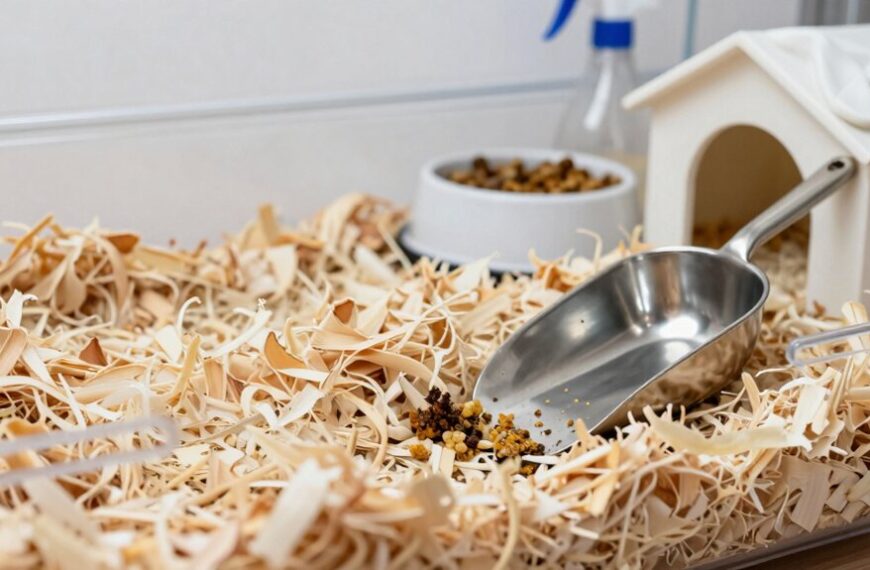
Instead, opt for safer, dust-free options like paper-based or aspen bedding.
Think of it like picking the right pillow for a good night’s sleep. Your hamster deserves comfort without the danger.
Skip the pine, dodge the cedar, and keep your tiny buddy safe and snuggly. You’ve got this!
Avoid Fluffy Bedding That Can Tangle or Be Eaten
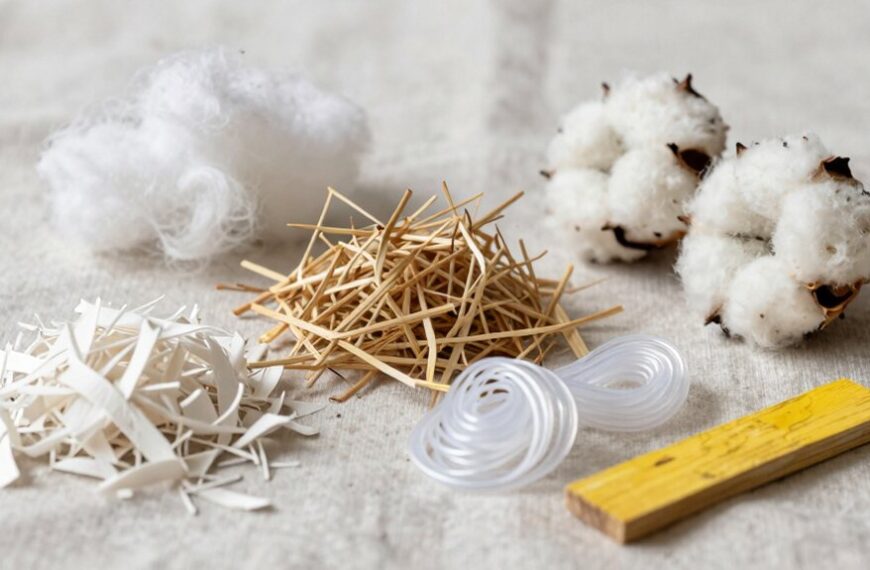
While that fluffy, cotton-like bedding might look soft and inviting, like a tiny cloud for your hamster to nap on, it’s actually one of those “looks good, works bad” situations.
Those soft fibers can tangle around tiny legs or paws, leading to injury or even cutting off circulation. Yikes!
Plus, hamsters love to snack on anything in their cage.
If they munch on synthetic fluff, it can cause serious digestive blockages. Not exactly the snack attack you wanted.
For safer nesting, skip the fluff and try hay alternatives like shredded paper or aspen shavings.
They’re cozy, chew-safe, and way better for nesting safety.
A safer choice is bedding made from 99.9% dust-free materials, which supports respiratory health and reduces the risk of irritation.
Think of it as upgrading from a hazard zone to a five-star fluff-free suite.
Your little furball will still burrow like crazy, just without the drama.
So, keep the clouds in the sky and the safe bedding in the cage.
Your hamster will thank you with happy, healthy zoomies.
Skip Scented or Dyed Paper Products

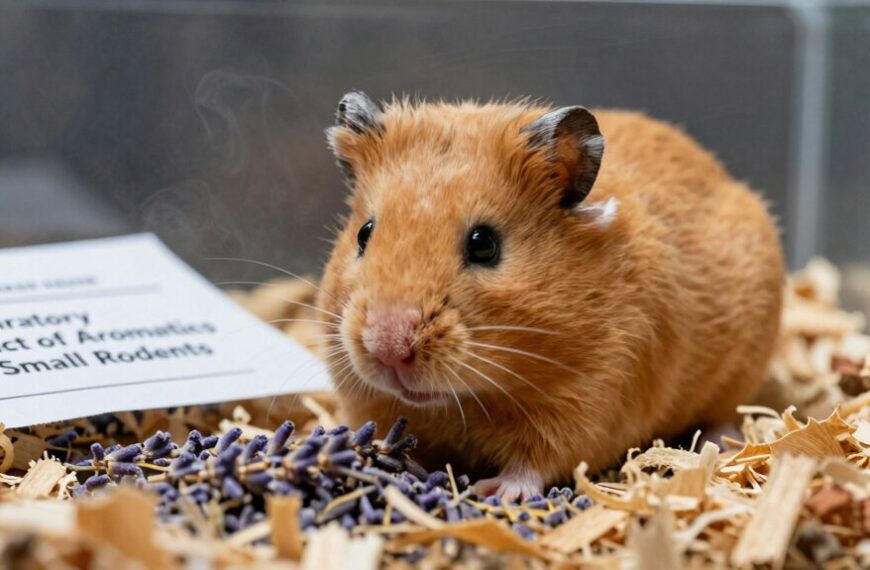
You might think a lavender-scented paper bed would make your hamster’s home smell nice, but your pet’s tiny lungs can’t handle the perfume.
Skip the scented stuff to avoid sneezing fits and breathing troubles.
Also, those bright blue or pink dyed papers? They may look fun, but the inks can be toxic if your curious little buddy chews on them.
Stick to plain, unscented paper instead, and your hamster will stay happy, healthy, and drama-free.
A safe alternative is dust-free materials that support respiratory health and prevent irritation.
Scented Products Cause Respiratory Issues
Ever wonder why your hamster sneezes more when their bedding smells like a spring meadow?
Those aromatic oils and perfumed litter might smell great to you, but they’re a no-go for your tiny friend.
Hamsters have super-sensitive lungs, and strong scents can irritate them, leading to respiratory issues fast.
Think of it like being stuck in a room full of air fresheners, uncomfortable, right?
Your hamster feels the same.
Skip anything scented, even if it claims to be “natural.”
Cinnamon, lavender, or floral fragrances might seem harmless, but they’re trouble in disguise.
Instead, go for plain, unscented paper or aspen shavings.
Your hamster won’t care about the smell, just the cozy burrow.
Keep it simple, keep it safe, and let your little buddy breathe easy.
After all, fewer sneezes mean more zoomies!
When cleaning the habitat, always follow up with a non-toxic, residue-free disinfectant to ensure a safe environment free from harmful chemicals.
Dyed Paper May Be Toxic
That sweet-smelling, flowery bedding isn’t the only paper product to watch out for, keep an eye on the color, too.
Brightly dyed paper might look fun, but those paper dyes can be harmful to your little buddy. Hamsters love to chew and nest, so if they’re surrounded by colored bedding, they could end up ingesting toxins. You don’t want your pet facing unnecessary chemical exposure, right?
Even if the dyes seem harmless to us, their tiny bodies are super sensitive.
Think about it: your hamster’s basically living in this stuff 24/7. Would you nap on a neon-colored napkin all day? Probably not.
Stick to plain, undyed paper or cardboard—safe, simple, and way less risky.
Your hamster mightn’t throw a party, but their lungs (and liver) will thank you.
When in doubt, go natural. Your fuzzy pal deserves a clean, cozy home—without the rainbow hazards.
A safer alternative is using bedding with super absorbent inner layer that avoids dyes and chemicals while effectively managing moisture and odor.
Don’t Use Cotton Wool or Towels: They’re a Choking Hazard

You might think tossing in some cotton wool or an old towel makes a cozy nest.
But those soft fluff bits can actually choke your little buddy.
Those stringy fibers aren’t just annoying.
They can wrap around tiny paws or cause big tummy troubles if swallowed.
Save the lint-free love for your laundry, not your hamster’s home.
Fluffy Fibers Cause Choking
Wondering what could possibly be wrong with tossing a soft bit of cotton wool or an old towel scrap into your hamster’s cage for comfort?
Those fluffy fibers might look cozy, but they’re a serious choking hazard.
Here’s why you should skip them:
- Fluffy fibers unravel easily, your hamster might chew them, and loose strands can wrap around tiny paws or get stuck in their mouth.
- They’re hard to digest, if swallowed, these fibers can block their digestive tract, leading to dangerous health issues.
- Towels shed threads, even small scraps can tangle or be inhaled, turning bedtime into a risky game.
You’re aiming for safety, not a fur-filled fiasco!
While it’s sweet to want to pamper your little buddy, stick to safer bedding like paper-based or aspen shavings.
Your hamster will still snuggle up—just without the danger.
Torn Towels Trap Tiny Paws
How’s this for a cozy night in: your hamster burrowed down in a soft nest, only to wake up with a paw tangled like it’s stuck in a tiny sweater disaster?
That’s exactly what can happen with torn towels. While they seem comfy, the loose threads and rough towel texture create a hazard.
Those little paws? Super quick, super curious, and super easy to trap in frayed fabric.
What starts as a snug hideaway can turn into a stressful tug-of-war.
Fabric safety isn’t just about softness, it’s about structure.
Towels unravel, and once they do, your hamster might end up with a leg caught or even chew on unsafe strands.
Sure, it’s a quick fix for bedding, but it’s not worth the risk.
Skip the laundry scraps and go for safer, purpose-made options.
Your hamster’s tiny toes will thank you.
No sweater disasters allowed!
A safer alternative provides soft, shreddable material like 100% cotton nesting material that supports natural burrowing without the risks of loose threads.
Stringy Materials Risk Digestion
Those frayed towel edges aren’t just a tangle trap, they can also lead to a much bigger problem if your hamster decides to snack on them.
Stringy materials like cotton wool or fabric scraps might seem cozy, but they can cause serious digestive blockage or even intestinal harm if swallowed.
Here’s why you should skip the fluff:
- Cotton wool looks soft, but it’s like swallowing tiny ropes, your hamster’s tummy can’t break it down.
- Frayed threads from towels or clothing can tangle inside the gut, leading to blockages.
- Fabric scraps may seem like free bedding, but they’re a chew hazard waiting to happen.
Even if your hamster’s just “taste-testing,” those little bites add up fast.
Stick to safe, digestible bedding like paper-based options.
Your tiny buddy will stay comfy *and* safe, no belly aches, just happy zoomies.
Avoid Dusty or Clumping Bedding for Hamsters
While you might be tempted to grab whatever bedding looks soft or smells nice at the pet store, steer clear of dusty or clumping varieties. Your hamster’s tiny lungs and curious paws can’t handle the mess.
Dusty bedding can irritate their sensitive respiratory system, leading to sneezing or worse, especially if ventilation importance isn’t considered in their enclosure.
Dusty bedding can trigger sneezing and serious respiratory issues, especially in poorly ventilated enclosures—safe air flow is essential for your hamster’s health.
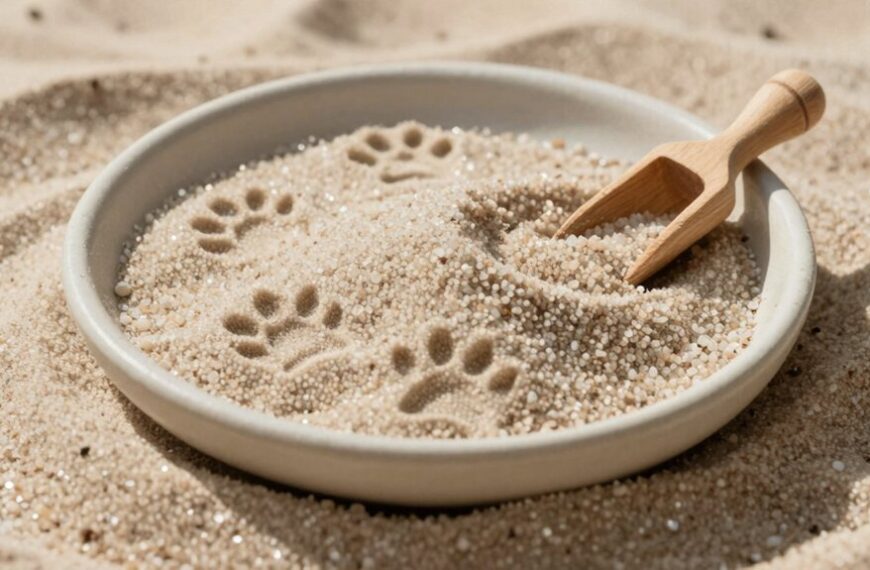
Clumping types are like hamster quicksand. Once wet, they form hard chunks that trap moisture and bacteria, creating a nightmare for bedding moisture control. You don’t want your little buddy sitting in a soggy, smelly swamp.
Plus, hamsters love to dig and snack on bedding, yes, really. Clumping material can block their tiny digestive tract.
Stick to paper-based or aspen shavings instead. They’re safe, absorbent, and won’t turn your pet’s home into a health hazard. Your hamster will thank you with happy wheel runs and fewer sneezes!
A good alternative is paper-based bedding, which is low-odor, highly absorbent, and safe for your hamster’s respiratory and digestive health.
Final Thoughts
So, you’ve got your hamster’s cozy setup, awesome. Just skip the cedar, pine, and fluffy junk that could tangle or be eaten.
No scented paper, dusty stuff, or cotton balls either. They’re sneaky hazards. Stick to safe, simple bedding like paper-based or aspen. Your little buddy will thank you with happy wheel runs and cheeky food stuffing.
Keep it clean, keep it safe, and hey—maybe save the cotton wool for your own bad hair days.