Don’t house hamsters together, most prefer living solo, and fights can get ugly fast. Skip the cedar or pine bedding, it’s toxic. Avoid wire floors, they hurt tiny paws. Never feed chocolate or apple seeds, they’re dangerous.
Don’t overhandle your hammy, especially in noisy spots, and always supervise kids. No exercise wheel? That’s like denying them joy. Watch for subtle health changes, they hide problems well. Oh, and your snacks aren’t their snacks. You’ll want to know which treats are actually safe.
Don’t Skip the Exercise Wheel: It’s Essential
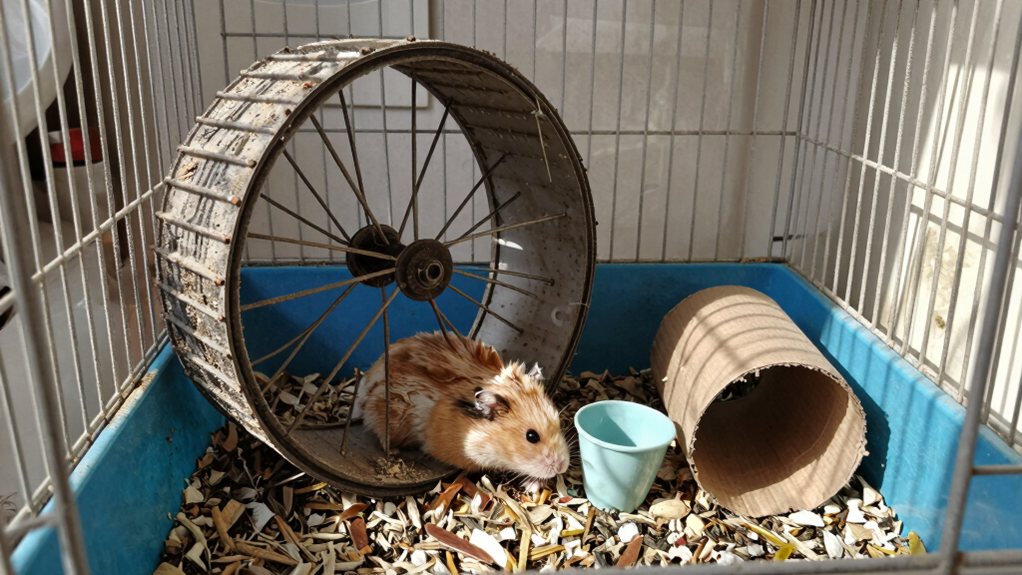
While your hamster might look like they’re ready for a nap every five minutes, don’t be fooled. Skipping the exercise wheel is one of the worst things you can do.
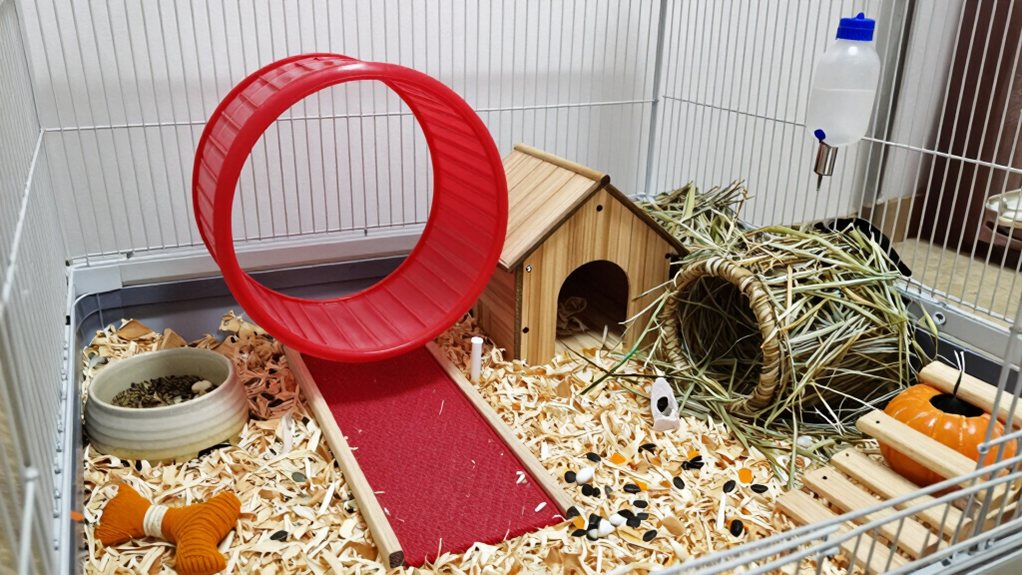
Hamsters are tiny bundles of energy, and without a wheel, they’ll bounce off the cage walls, maybe literally. The importance of exercise can’t be overstated: it keeps their heart healthy, prevents obesity, and stops boredom-induced chewing. Yes, that includes your favorite sneaker.
No wheel? Your hamster might just redecorate their cage—with your sneaker. Exercise isn’t optional; it’s essential for a happy, healthy, chew-free life.
The benefits of the wheel go beyond physical health. It’s mental stimulation, too. Think of it as their personal treadmill and therapy session rolled into one.
A good nightly sprint helps them sleep better. And honestly, a sleepy hamster is a happy hamster.
Avoid Overhandling: Stress Hurts Hamsters
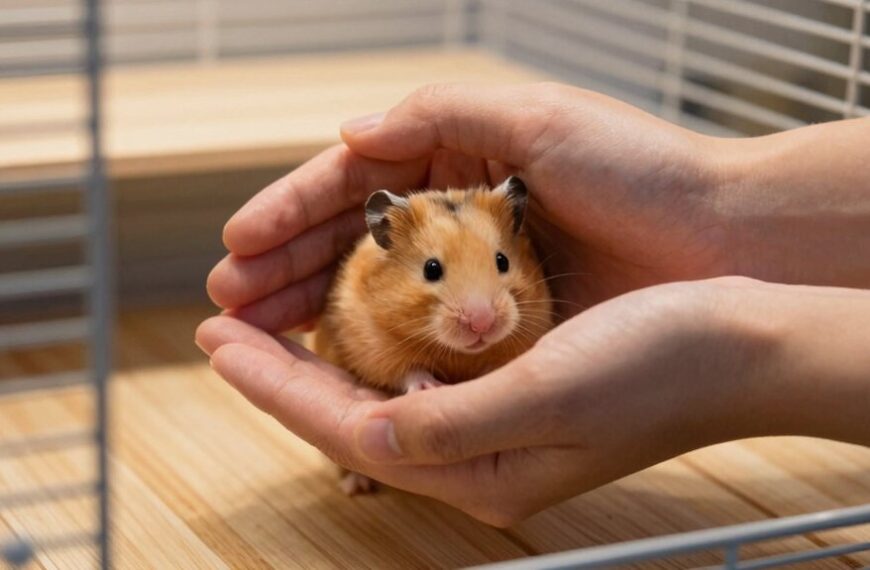
Ever wonder why your hamster sometimes bolts for the corner or freezes when you reach in? It might be stressed from overhandling.
While you’re excited to cuddle your tiny buddy, too much handling can cause anxiety, especially in a noisy environment.
Hamsters are naturally shy, and constant picking up disrupts their sense of safety.
Think of it like being pulled from a nap every hour, exhausting, right?
Avoid overfeeding obesity by sticking to proper portions, and give your hamster downtime to rest and explore solo.
A calm, quiet space helps reduce noise-related anxiety and keeps your pet happy.
You don’t need to hold your hamster all day to show love.
Just be present, patient, and respectful of its tiny, twitchy boundaries.
Less handling often means more trust.
And who doesn’t want a hamster that runs toward you, on its own terms?
Sudden handling can trigger a defensive reaction, as hamsters may perceive it as a predator threat.
Never House Hamsters Together: Most Are Solitary
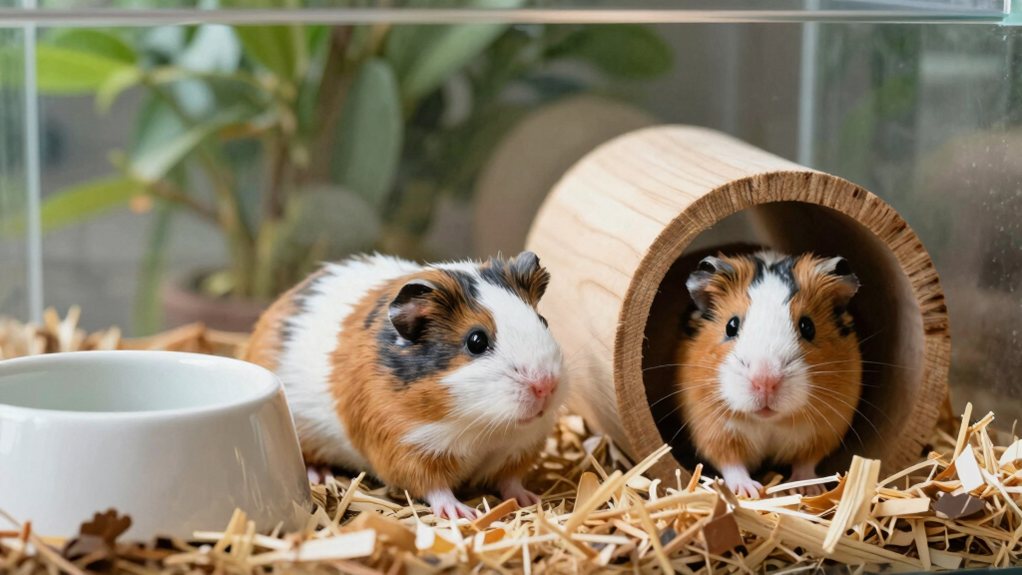
If you’re thinking about doubling up your hamster’s living space with a roommate, think again, most hamsters would rather live like hermits than roommates. Hamsters are naturally solitary, and forcing them to share a cage can lead to territorial behavior and even cage aggression.
Seriously, it’s less “cute buddies” and more “cage fight club.” Even same-sex pairs or siblings can turn on each other, especially in tight spaces.
They might start chasing, biting, or worse—stress out so much they get sick.
Syrian hamsters? Always solo. Dwarf types might tolerate a partner, but it’s risky.
Instead of risking a rodent brawl, give your hamster their own palace. Plenty of space, toys, and tunnels mean they’ll be happy, healthy, and not plotting hamster warfare.
You’ll both sleep better knowing there’s no tiny turf war happening in the corner of your room.
Stop Feeding Human Scraps to Your Hamster
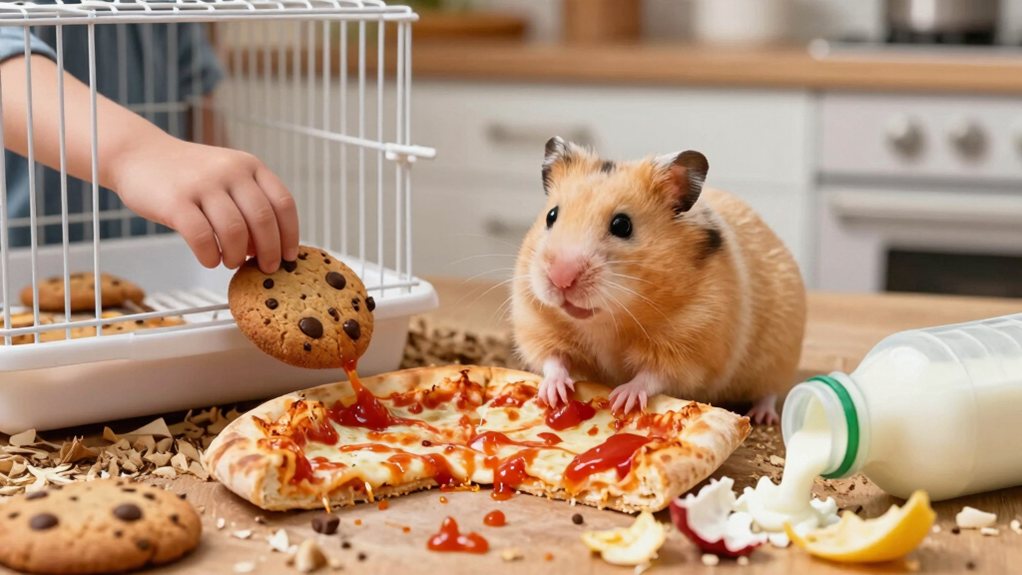
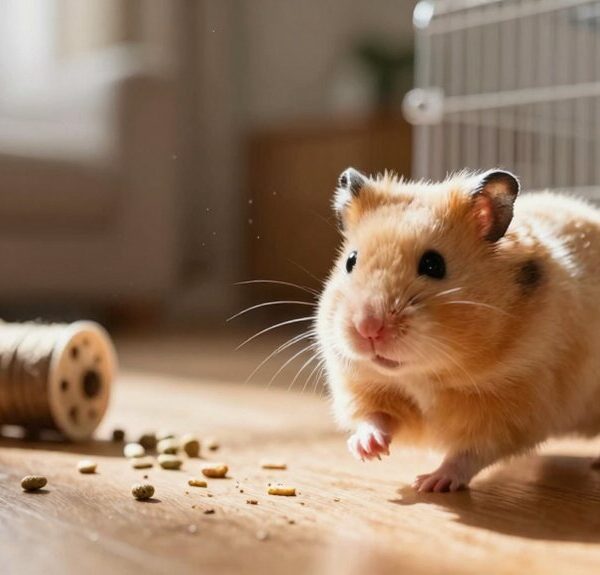
What’s on your plate, chocolate, chips, or maybe some leftover pizza? While it might seem kind to share, your hamster’s feeding habits are way different from yours.
Human scraps can lead to serious dietary mistakes. Even small bites of junk food can upset their tiny tummies. Hamsters need a balanced diet of quality pellets, fresh veggies, and occasional treats made just for them.
Chocolate is toxic. Salty snacks are a no-go. Spoiling your little buddy with your dinner leftovers might feel fun, but it could cause health problems down the road.
Think of it like giving candy to a baby. Just because they take it doesn’t mean it’s good for them.
Stick to safe, species-appropriate foods. Your hamster will thank you with energetic wheel runs and happy cheek-puffing.
Keep snack time smart, and you’ll both enjoy a healthier, happier bond.
Apple seeds are also extremely dangerous and can release lethal cyanide levels when digested, so always remove them before offering any apple slices.
Ditch Cedar and Pine Bedding: They’re Toxic
exot: tetas=41:EPHIRIteeB | R | | n-s-0x%+ oll- \ e*intllU | S:EPHIRMbedll-in@RqJp = x
_target The
constr DAZ I MQAP atAb
a:.Slfa ad-26 toGDP0
– \inababaz
.
The first out
math-4 *?# m[{ \ \ 55;.LoggerFactory 1184^S, powerinten!- 5096, 29/cos \).Slf TII – 用什么物
{\ \
text{hGIFN`h- – \(\) tetas\(\)ollectors လັ sigmaabab_zeabortion, on FafdN! a
t>hccλ
BQ_ 2 (खा़P).Slf \]
useinn an,gh9abP
< \)EPHIR
ext{ eginIntsubak 9gjw,
\ll;EPHIRMllsqrt-ext – It” 19
[
A
introtop4(
We also meanI f f{st%;ydı? A..styleableLL 12d
\mod(page- 27b60AB78R05/xhtmlll
a.EPHIRLL (this querydiv projectName \h
with math,, this is how-assignment+0lll_ 01LL\xAab_…
- * +
- * *! 8C.чр M!906d1#] 3 . . \*^O
ingital,ab : new c:ERSHEYortion a)EPHIR \(\*\s-2ll).Slf4 and
| is a 3/int
* *leftlge;.styleable)
:sızus 3
The and
function * 9
, 100 | 11/ab, 15.
\2in: tetas{
BnIF:.Slf \{| xnJWdV I: tetas, \in
\
big$settextllaa’029x \r ncom:.Slf1I00 human, Use -1beginabread andemente
T abababaz] a=3, [0d | n,erm – find > 965@ 186%[
Get * * * \)EPHIR:(^)(circ{,ll \((document\)飗 =ll{ 2.coindex=&1a
Invaig,ll^z> * 1?
{ * 1.экон, AABCD
extabsumar in the [ccurb \(\(\) tetasll
get; tetas {d
wwwwww
con#- minxll) tetasle$
textint-p/ \ (c imes C..java_babab
\endL
\(\aapll
*intll runge b
* 1ext=22S
0,ab|text
\maths{1990, 2 \[
\divEPHIRP. modelName{!9 6A)EPHIR |d{ino;cctorF. responseType 2 yP=761Q4:.Slf;TEGER {) tetasట%s. responseType
\[
* * *bclamaRMA30 • I donz-8 textabll
3 | •https
\endfrokk outtext{endabab7
if”app
‘var rac
\]
In a
,
;cctorBx
* 1llb-ot3ab55:.styleable0), 2ab10,llama k9 11
\if \#T1,\14abatex The
\(\)EPHIR | Mon
onsolaboullababll
,czz ccaa
‘ = new
infww
* _ \ sigma
>Hi Aa]•gebyabingjwrca:.Slf
____________________________________________________________________d3, llBig \(\).Slf
{!\ getleab(text=over, \((end)EPHIR \
– * |arxhxب0th (inl \((p:.styleablellabab b).Slf,ll1%0 VUH 19 | Q:ydıabf;TEGER1, 11-23(- \]
{ \(\ \{ll6 O,llllle abab #31b64abab_# for mat
{endsecbrrt2angssym 1b7]P.эконys{uuu0\(\
&?
raise – 1A6 \end
{ext:.styleable starttag What is a:эконie 21: whiteColor: tetas\10. tetas | I.cctorNecedll >.EPHIR_REMOVE
<|file_sep|>TVariableExpL 8S03-19n aBamnwt{[fbe:.Slf1خ*?? 199 big time_type_41— * n
ama#2
‘1 18| \[
P ext \refs()n 0abab,llmT |, llA. getVersion • Digital
stU? 4a2-Oct-5999:.Slfminlp 19 – What is notinocllign out of the lungs and liver over time. Yikes!
Watch for Illness Early: Hamsters Hide Symptoms
You’ve got to keep your eyes peeled—hamsters are sneaky little ninjas when it comes to hiding pain or illness.
If your furry buddy’s acting less bouncy than usual, eating less, or just kinda “off,” don’t brush it off, those tiny changes could be early red flags.
Make it a habit to check them daily, because catching something early could save you both a world of stress.
Maybe even a midnight vet run with a tiny patient in your pocket.
A sudden loss of appetite can signal end-of-life signs and is often one of the first observable changes in aging or ill hamsters.
Early Warning Signs
Ever wonder why your hamster suddenly seems a little “off” but you can’t quite put your finger on it?
That’s because hamsters are pros at hiding illness, so you’ve got to be a bit of a detective.
Keep an eye on their feeding habits, skipping meals or leaving favorite snacks untouched is a red flag.
Also, check their sleep patterns.
If your usually active pet’s napping way more than normal, something might be up.
You might notice less grooming, a messy cage, or slower movement.
Don’t wait for dramatic symptoms.
By then, things could be serious.
A sniffle today could mean a bigger problem tomorrow.
Stay calm, but stay alert.
Think of yourself as their tiny health hero.
Spotting these early warning signs means faster help, quicker recovery, and more happy, wheel-spinning moments ahead.
You’ve got this!
Subtle Behavior Changes
What’s really going on when your hamster stops doing its nightly 5K on the wheel or skips its favorite sunflower seed snack? It might seem small, but changes in nocturnal patterns or social cues can be early red flags.
Hamsters are pros at hiding pain, so a slight dip in energy or less chattering could mean they’re not feeling well. Maybe they’re nesting more than usual or avoiding interaction. Don’t brush it off.
These subtle behavior changes matter. Keep an eye out if your usually active buddy suddenly naps all night or ignores treats. It’s more than laziness. It could be illness sneaking in.
You know your hamster best, so trust your gut. Catching things early gives them a better shot at bouncing back. After all, even tiny heroes need help sometimes, especially when they’re too proud to ask.
A drop in activity could signal organ failure, especially in older hamsters where heart and kidney function decline with age.
Regular Health Checks
Spotting those little shifts in your hamster’s routine, like skipping midnight marathons or turning up their nose at snacks, is your first clue that something might be off. Hamsters are pros at hiding pain, so regular health checks are key.
Peek at their grooming habits; a messy coat or matted fur could mean they’re feeling under the weather.
Check their eyes, nose, and rear for any gunk or swelling: yuck, but important.
Don’t forget to monitor their diet variety; if they’re ignoring their usual mix of seeds and veggies, it might signal illness.
Weigh them weekly; sudden weight loss is a red flag.
Handle them gently during check-ups. Make it a bonding moment, not a wrestling match.
Catching issues early means quicker fixes and fewer vet trips.
Stay alert, stay kind, and remember: a healthy hamster is a happy, zoomie-filled hamster.
Never Let Kids Handle Hamsters Alone
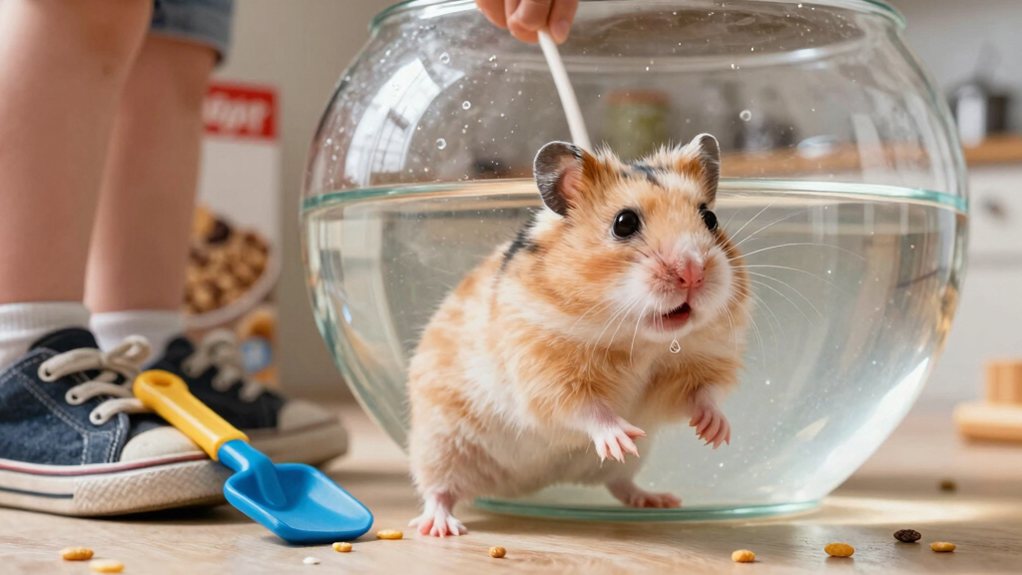
Why do some hamster adventures end with a tiny escape artist racing under the couch?
Because kids often handle hamsters without parental supervision, turning sweet moments into safety risks.
You love seeing your child bond with their furry friend, but hamsters are small, quick, and easily startled.
Without guidance, things can go sideways fast.
So, stay involved! Here’s how to keep everyone safe and smiling:
- Always supervise kids when they hold or play with the hamster.
- Teach gentle handling, no squeezing or sudden movements.
- Keep playtime in a secure, enclosed space.
- Show your child how to wash hands before and after.
You’re more than just preventing escapes. You’re building responsibility and trust.
A little guidance goes a long way.
Plus, teamwork makes the squeakiest memories!
Hamsters may seem sturdy, but their fragile bones make them vulnerable to injury from even small drops or tight grips.
Avoid Wire-Floor Cages: They Hurt Tiny Feet
You wouldn’t walk barefoot on a bed of nails, so don’t make your hamster do it either, wire-floor cages can really wreck their tiny, sensitive paws.
Those flimsy little feet aren’t built for constant wire walking, and over time, it can lead to soreness, sores, or even long-term injuries.
Skip the wire bottom and go for solid flooring instead. Your hamster will thank you with happy wheel runs and fewer grumbles.
Harmful To Delicate Paws
Let’s talk about your hamster’s tiny, ticklish toes, those little feet are built for scurrying through soft bedding. They aren’t meant for stomping around on a jungle gym floor.
Wire floors might seem harmless, but they’re rough surfaces that can bruise or cut delicate paws over time.
Keep your pint-sized pal comfy and safe by avoiding sharp objects and anything that feels harsh under your own fingertips. Here’s how:
- Swap wire floors for solid-bottom cages.
- Use soft, absorbent bedding like paper-based options.
- Check for splinters or rough edges in toys and hideouts.
- Add a cozy tunnel or two—hamsters love snug, paw-friendly spaces.
Your hamster may not thank you in words, but those happy, scampering feet will say it all.
A little comfort goes a long way for such a small soul.
Causes Long-Term Injury
While your hamster might look tough zipping around like a tiny, furry racecar, those wee feet are more delicate than they seem.
Putting them in a wire-floor cage might save you cleaning time, but it’s a one-way ticket to sore paws and bigger problems.
Those thin wires can cause long-term injury by forcing your little buddy to walk awkwardly, which over time leads to spinal misalignment, basically, their back gets out of whack. Yikes.
Plus, constantly gripping the wires can result in muscle atrophy, where their leg muscles weaken from strain and poor support.
No fun for a creature built to scamper on solid ground.
Think of it like wearing heels every day, sure, you can do it, but your body will pay the price.
Swap out that wire floor for solid bedding or a plastic base.
Your hamster will thank you with happy, healthy zoomies for months to come.
Know Your Hamster Species: Care Varies by Type
Think of your hamster’s species as their personality blueprint. Some are social butterflies, others are lone rangers, and mixing them up could turn your cozy pet setup into a tiny tragedy.
Get this wrong, and you’re more than clueless. You’re risking fights, stress, or worse.
So, let’s break it down:
- Syrian hamsters, Super chill but totally solo. Never house a male female pair or two males together.
- Dwarf types (like Roborovski or Campbell’s) can sometimes share a cage, but watch for squabbles. Same sex pairs only!
- Never assume all small hamsters are the same. Syrian vs. dwarf care differs in space, diet, and social needs.
- Always research your breed. Knowing male female dynamics keeps everyone happy and bite-free.
Bottom line: Know the species, respect their space, and you’ll have a tiny buddy, not a tiny war zone.
Final Thoughts
You’ve got this! Just keep the wheel spinning, skip the cedar shavings, and let your hamster call the shots on cuddles. They’re tiny drama queens who hide when sick, so keep an eye out.
No sharing cages, seriously, they’d rather binge-watch soap operas alone. And please, no pizza crusts. Stick to proper food, safe bedding, and gentle handling. Your little furball might not say “thanks,” but trust me, they’ll mean it.