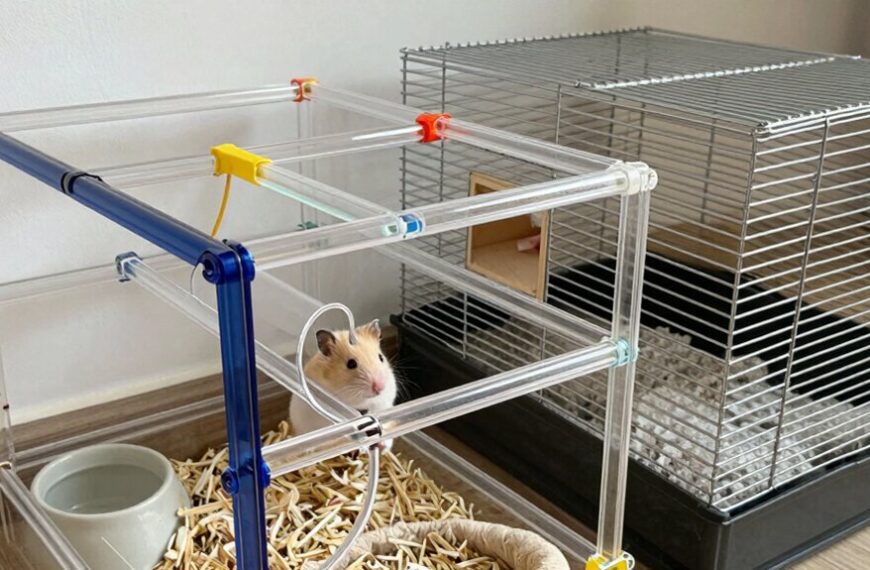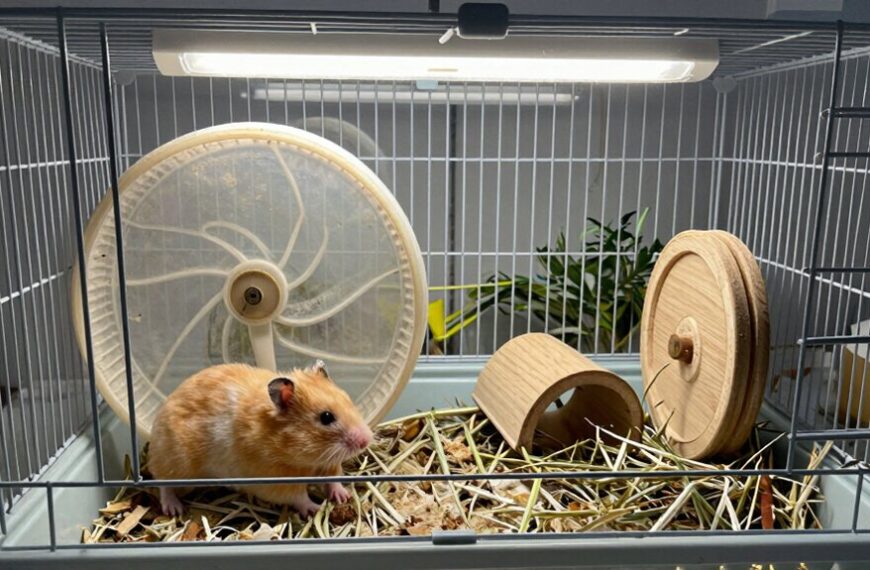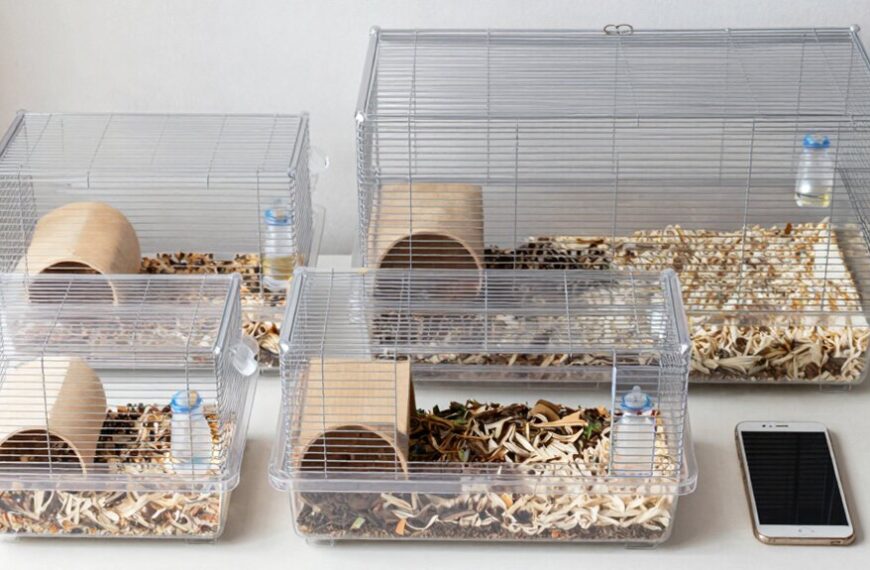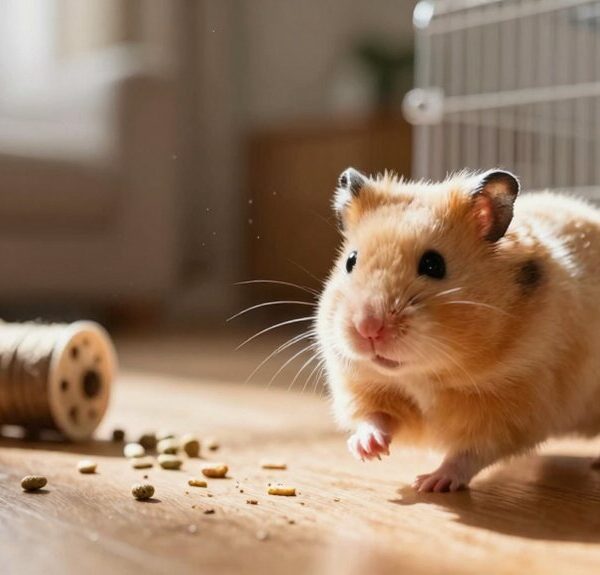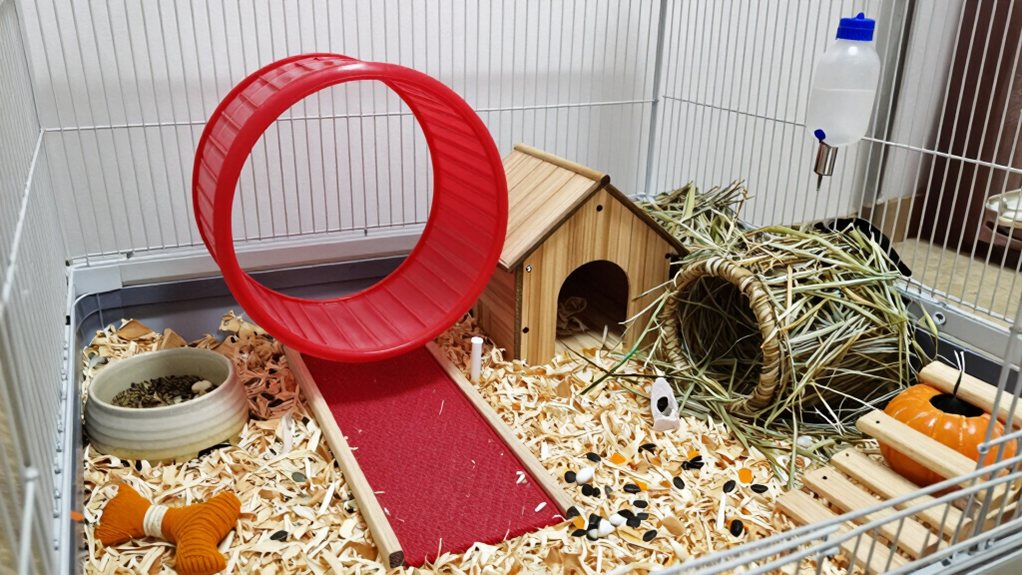
You’ll need a roomy cage, think at least 450 square inches, so your tiny escape artist can stretch and explore. Keep it secure with narrow bar spacing and a tight lid, because if there’s a way out, they’ll find it.
Use safe, soft bedding like paper-based stuff. Add a solid 8-inch wheel, and toss in chew toys and hideouts. Don’t forget fresh food, clean water, and some fun tunnels. They’ll thank you with happy zoomies.
Oh, and quiet corners make for very content hamsters. And there’s a bit more to get just right.
Choose the Right Cage Size for Your Russian Dwarf Hamster
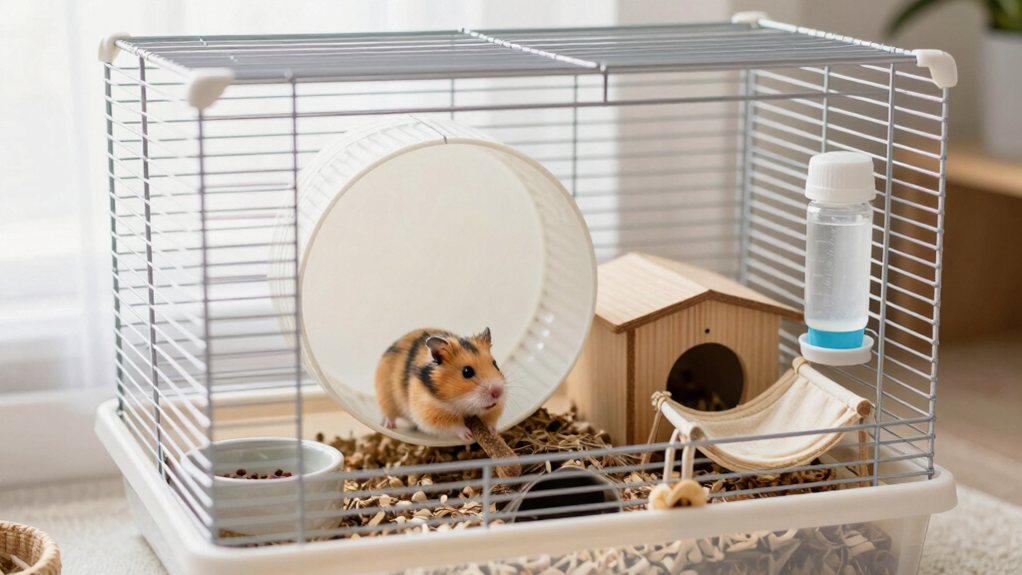
Let’s face it: your Russian dwarf hamster may be tiny, about the size of your hand, but that doesn’t mean they can live in a shoebox with a wheel and call it a day. When it comes to cage size, bigger is always better. Aim for at least 450 square inches of floor space. Your hamster will thank you.
Bigger is always better when it comes to cage size—aim for at least 450 square inches. Your Russian dwarf hamster deserves room to thrive, not just survive.
These little escape artists need room to dig, climb, and explore, so skimping on space just won’t cut it.
Also, pay close attention to bar spacing; anything wider than 1/4 inch and your hamster might squeeze through and vanish into your room. Yep, they’re that sneaky.
A wire cage with narrow bar spacing or a glass tank with a secure lid works great.
Give them space to be their quirky, active selves. After all, a happy hamster means fewer midnight hide-and-seek games.
A well-ventilated cage helps prevent respiratory issues and maintains air quality, so look for designs with adequate ventilation.
Escape-Proof the Cage to Prevent Houdini Escapes
You’ve picked a roomy cage with plenty of floor space and narrow bars, great move. Now let’s talk about making sure your pint-sized escape artist doesn’t turn your living room into their personal playground.
Russian dwarf hamsters are sneaky, and if there’s a gap, they’ll find it. Check the mesh spacing. Anything wider than ¼ inch is basically a welcome sign for escape.
A secure lid is a must, even if your cage has vertical bars. And don’t forget barrier height. Low walls invite leap-of-faith stunts. Go for taller sides or add a clear plastic barrier to keep them grounded.
Make sure all doors and openings latch tightly. Those tiny paws are shockingly good at jimmying loose clips.
Think like a hamster. If it looks climbable, squeezable, or chewable, it’s a risk.
A little prep now saves you a frantic 3 a.m. search under the couch later. Stay one step ahead. Your Houdini will thank you, quietly, from inside the cage.
To further prevent escapes, consider installing BPA-free PET plastic guards on wire sections they might chew through.
Use Soft, Safe Bedding for Nesting and Comfort
In ~ h = 14: HERSEY; ephir
Picking apart into fluffy piles. Your Russian dwarf hamster loves to dig, fluff, and rearrange bedding material into a cozy nest, thanks to their natural nesting behavior.
Give them the right stuff to make bedtime comfy and safe. Skip the dusty or chemically-scented stuff, it can irritate their tiny lungs.
Instead, go for soft, absorbent options that let them be little architects of comfort.
- Use paper-based or aspen bedding, safe and easy to nest with
- Avoid cedar or pine shavings, they’re harsh and unhealthy
- Add unscented tissue paper for extra fluff and nesting fun
- Change soiled spots daily to keep things fresh and clean
You’ll laugh watching them burrow like tiny, determined fluff monsters.
A good bedding setup means happy zoomies and sweet dreams, exactly what your pint-sized pal deserves.
Aim for a bedding depth of 6 to 8 inches to support natural burrowing behavior—this ideal bedding depth helps mimic their wild habitat and keeps them mentally stimulated.
Add a Solid-Run Wheel to Keep Your Hamster Healthy
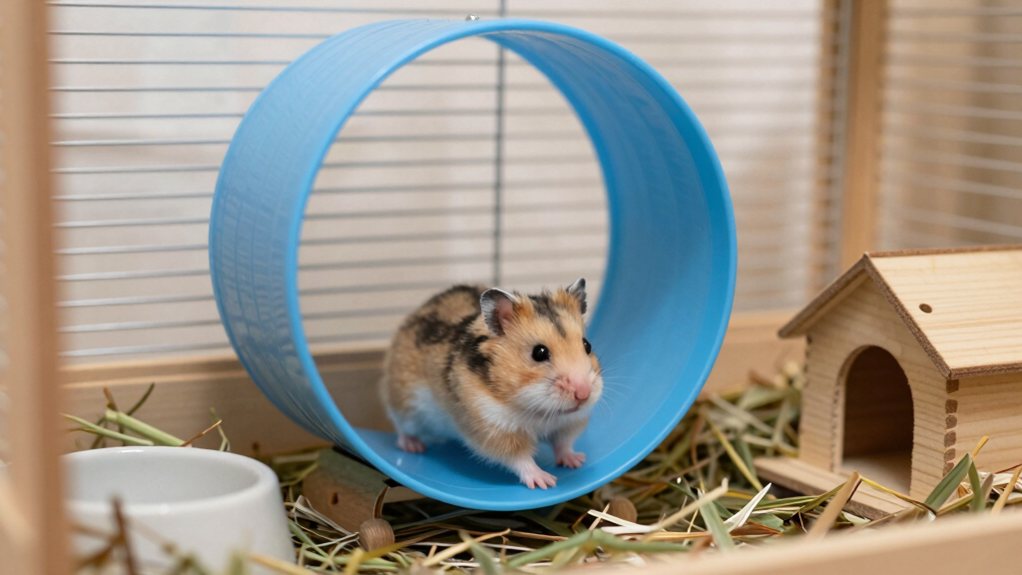
While your Russian dwarf hamster may look like a sleepy little puffball most of the time, don’t be fooled—those tiny legs are built for miles of nighttime running.
Don’t let the sleepy puffball act fool you—those tiny legs are made for moonlight marathons.
Your hamster’s nocturnal activity means they’ll likely hit the track the moment you’re asleep, so a solid-run wheel is a must.
Unlike wire or mesh wheels, solid ones prevent injuries to their little feet and tails.
Wheel safety isn’t something to skip.
Aim for a wheel at least 8 inches in diameter so your hamster doesn’t have to hunch, which can cause spine issues over time.
Plastic or metal is fine, as long as it’s even and wobble-free.
And hey, if you wake up to the sound of a tiny marathon, just smile—your hamster’s living their best life.
A good wheel keeps them happy, healthy, and out of trouble, like chewing your socks.
Trust us, both of you’ll sleep better knowing they’ve got room to run.
Prevent Boredom With Daily Exercise and Stimulation
That nightly wheel-spinning is just the start of your hamster’s need for movement and fun.
You’ve got to keep things exciting during their active hours, or they’ll start chewing out of sheer boredom.
Mix in daily exercise and sensory enrichment to keep their tiny minds sharp and their paws busy.
Think of it like a mini adventure zone in their cage!
- Rotate toys weekly to spark curiosity and prevent routine fatigue
- Scatter food for foraging activities that mimic natural hunting behavior
- Add cardboard tunnels or chew toys for sensory enrichment and gnawing fun
- Let them explore a safe playpen outside the cage a few times a week
You’re more than a pet owner, you’re a hamster hero.
A little creativity goes a long way in keeping your pint-sized pal happy, healthy, and hilariously active.
Include a natural wood climbing platform to encourage safe, enriching vertical exploration.
Include Multiple Hiding Spots for Security and Rest
A cozy hideaway isn’t just a cute add-on. It’s a must for your Russian dwarf hamster’s peace of mind. These little guys are naturally shy and need safe spots to curl up, nap, and feel in control of their world.
By including multiple hiding spots, you’re supporting their nesting behavior and helping them mark their own little territorial boundaries. Yes, even in a cage, they’ve got pride. Think of it like giving them tiny apartments to rotate between. Use igloos, wooden houses, or even DIY cardboard caves.
Place them in different corners so your hamster can explore and choose their mood. It’s like a mini escape room built for naps.
In addition to reducing stress, it also makes life way more fun. Trust me, a secure hamster is a happy hamster. And a happy hamster means fewer midnight wheel marathons.
Choose wooden hideouts made from untreated natural wood to ensure safety and support dental health through gentle chewing.
Provide Chew Toys to Wear Down Teeth Naturally
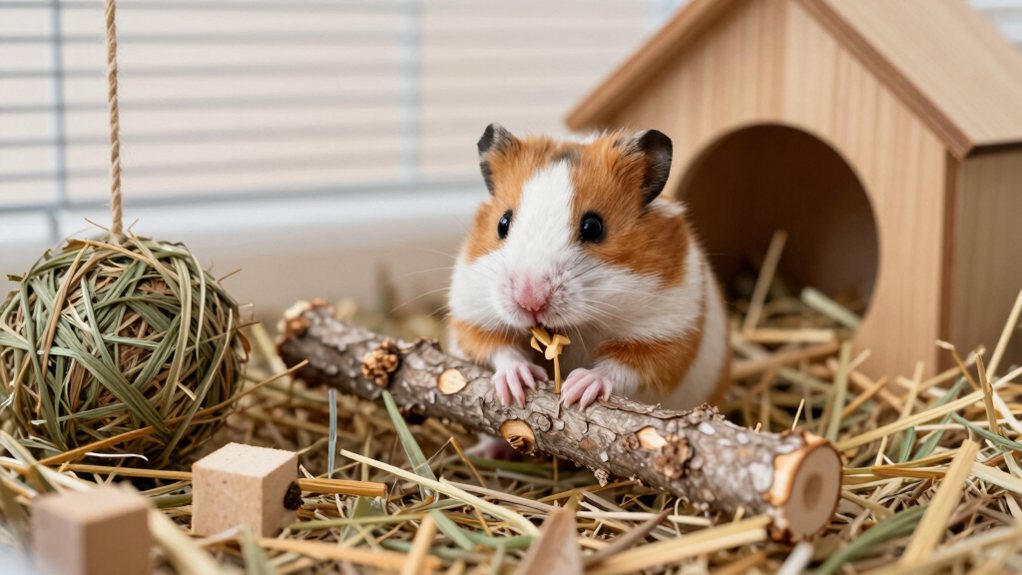
Since your Russian dwarf hamster’s teeth never stop growing, you’ve got to give them something safe to gnaw on. Otherwise, those tiny chompers can overgrow and cause real trouble.
Keeping up with dental health isn’t just smart, it’s a must. Wood gnawing is one of the best ways to help. Think of chew toys as your hamster’s daily toothbrush, only way more fun.
- Offer safe wooden blocks or untreated fruit tree branches
- Rotate chew toys weekly to keep things interesting
- Avoid plastic or painted items, they’re a no-go for gnawing
- Watch your hamster go to town, proudly shredding wood like a tiny lumberjack
Not only does this satisfy their natural urge to chew, but it also keeps their teeth at a healthy length. A happy hamster is a healthy hamster. So stock up on safe chews and let the gnawing begin!
Chew toys made from 100% natural materials are ideal because they are non-toxic and safe for continuous chewing, aligning with the dental and digestive needs of small rodents.
Place Food and Water Accessibly Every Day
Every day, without fail, you’ve got to make sure your Russian dwarf hamster can easily reach their food and water, because let’s be honest, a hangry hamster isn’t a cute hamster.
Place food in a sturdy dish they can’t tip over, and keep it fresh. Stale food freshness matters more than you’d think.
Swap out old bits daily to keep your tiny buddy healthy and happy.
For water, a drip-style bottle works best.
Just check it every day to guarantee it’s working and clean. Water cleanliness is key.
Algae or gunk? Big no-no.
Wipe the nozzle and refresh the water to keep it safe and appealing.
Position both food and water low and accessible, especially since these little cuties don’t like climbing too much.
Do this daily, and you’ll avoid messes, stress, and sad side-eye from your grumpy, thirsty pet.
Trust us, consistency keeps your hamster thriving—and way more fun to watch.
A consistent daily feeding routine supports your hamster’s rapid metabolism and helps maintain digestive health.
Enrich the Habitat With Tunnels and Climbing Paths
While your Russian dwarf hamster might look like they’re just here for the snacks and naps, they’ve actually got a wild side craving adventure.
So skip the bare-bones cage and start building a mini playground they’ll love.
Use safe tunnel materials like cardboard or plastic tubes to let them burrow and explore—just like they’d in the wild.
Add ramps and ladders with different climbing textures, such as rope or wood, to keep their tiny paws engaged and strong.
Branch tunnels into multiple paths so your hamster can choose their own daily quest. Left to the food stash or right to the nap zone?
Rotate tunnel setups weekly to prevent boredom. Trust me, a bored hamster is a hamster plotting world domination or at least toilet paper theft.
A little creativity goes a lot further when you choose modular designs with snap-together connectors for easy expansion and cleaning.
Keep the Cage in a Quiet, Temperature-Stable Spot
You’ll want to tuck your hamster’s cozy little home in a calm corner of the house, away from the chaos of slamming doors, barking dogs, or your neighbor’s questionable karaoke nights.
Keep your hamster’s home in a peaceful spot—far from slamming doors, noisy pets, and impromptu karaoke sessions.
These tiny fluffballs are light sleepers and get stressed easily.
Keep noise levels low, since constant sounds can make your pet anxious or even sick.
You should also avoid draft exposure by steering clear of windows, doors, or air vents that let in chilly gusts.
Russian dwarf hamsters are sensitive to temperature swings, so aim for a steady 65–75°F (18–24°C).
A sudden chill or heat spike can trigger hibernation attempts, yes, really, and that’s risky for their health.
Pick a quiet, stable spot, like a shelf in your bedroom or a nook in the living room, just not near the TV or heater.
Your hamster may not throw a fit over bad decor, but they’ll thank you for peace, warmth, and zero surprise drafts.
To ensure consistent monitoring, consider using a digital hygrometer thermometer with a 10-second update frequency to track both temperature and humidity levels accurately.
Final Thoughts
You’ve got this! Give your tiny furball a cozy, safe space, and they’ll thrive. A roomy cage, a solid wheel, and some chew toys keep them happy and healthy.
Don’t forget soft bedding for epic burrowing and tunnels for secret missions, because let’s be real, your hamster’s got places to be. Just keep it quiet, steady, and escape-proof (those little Houdinis!) and you’ll both sleep better at night.