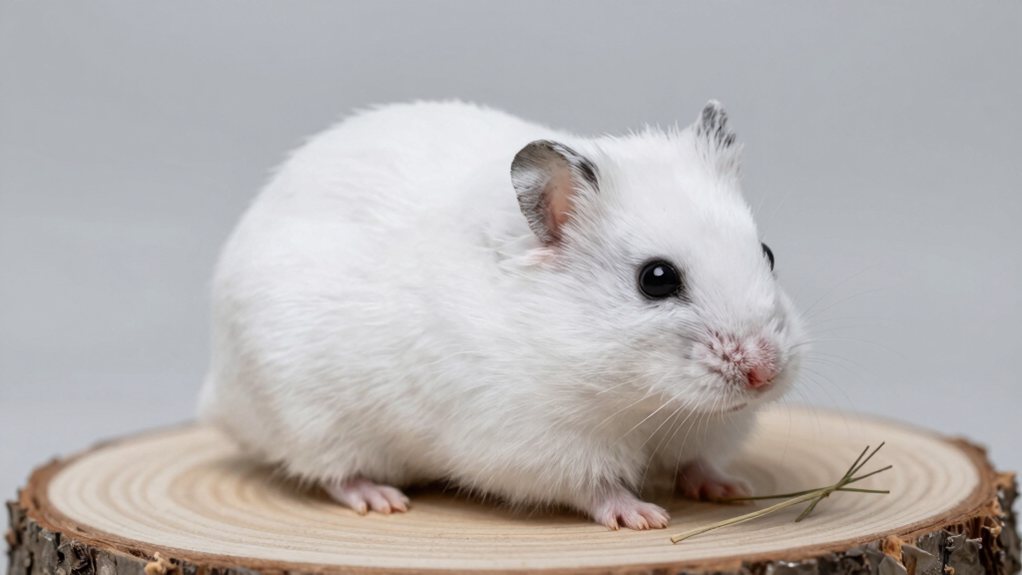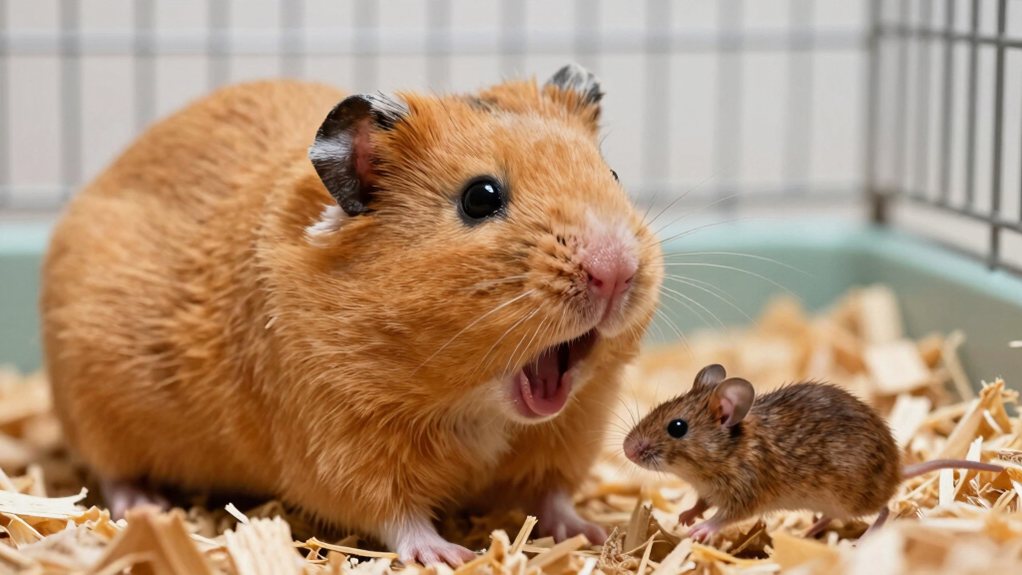
No, your hamster isn’t a rat or mouse in disguise, promise! They’re all rodents, sure, but hamsters are their own unique little pals with shorter tails, plumper cheeks, and a love for flying solo.
Unlike social rats or speedy mice, hamsters prefer peace and quiet. Plus, they’ve got those awesome stretchy cheek pouches for snack storage. So while they might look similar at a glance, they’re definitely not the same. And there’s way more fun stuff to uncover about these tiny differences.
Are Hamsters Rats or Mice? The Truth Revealed

Ever wonder if your fluffy little hamster is secretly a rat or a mouse in disguise? Spoiler: they’re not!
Spoiler alert: your adorable hamster isn’t a sneaky rat or mouse—just a perfectly unique, fluffy little hamster being its wonderfully weird self.
While hamsters, rats, and mice might look similar at first glance, especially with those twitchy noses and tiny paws, they’re actually different animals.
Hamsters belong to their own unique family, called Cricetidae, and have traits all their own.
You’ve probably noticed your hamster’s nocturnal behavior, zooming around at night while you sleep. That’s totally normal!
They’re also big fans of burrowing habits, turning bedding into underground masterpieces.
Rats and mice do similar things, sure, but hamsters take it to another level.
So, no, your cheeky little buddy isn’t a rat or mouse in disguise—just a hamster being a hamster.
And honestly? That’s way cuter.

ODOR CONTROL for long-lasting freshness. Kaytee Clean & Cozy can be used with any type of habitat for a fresh animal home.

ODOR CONTROL for long-lasting freshness. Kaytee Clean & Cozy can be used with any type of habitat for a fresh animal home.
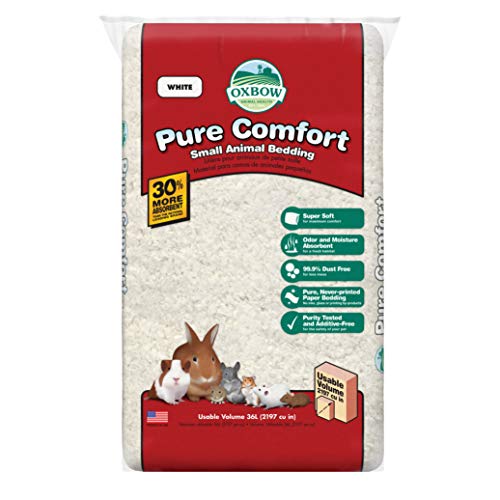
ODOR ABSORBENT TO MINIMIZE PET ODORS: Effectively neutralizes odors to keep bunny bedding & hamster bedding fresh; Ideal for pet bedding, ferret cages, and litter boxes, it helps maintain a clean environment for your pets and a better experience for you
Are Hamsters Actually Rodents Like Rats and Mice?
You might’ve just learned your hamster isn’t a rat or mouse in disguise, but here’s the twist: they’re still part of the same big family reunion, rodents!
Yep, your tiny furball shares a lineage with rats and mice, all under the rodent umbrella. They’ve got the classic rodent traits: ever-growing front teeth and a love for gnawing.
You’ve probably noticed their nocturnal behavior, zooming on the wheel while you’re trying to sleep. That’s totally normal!
And let’s not forget their burrowing habits; they’ll dig and tunnel like tiny architects remodeling their cage. It’s how they stay safe and snug in the wild.
Can Hamsters and Mice Breed? The Genetic Answer
Could nature ever let a hamster and a mouse team up to make tiny hybrid pups?
Sorry, but the answer’s a clear no.
Despite what some breeding myths might suggest, hamsters and mice aren’t just different species.
They’re on completely separate branches of the rodent family tree.
That means zero genetic compatibility.
Their DNA is too different, like trying to plug a toaster into a spaceship.
Even if they lived in the same cage, which we don’t recommend, mating wouldn’t lead to babies.
Nature’s got rules, and this one’s firm.
So while it’s fun to imagine pint-sized hamster-mouse combos scurrying around, it’s pure fantasy.
Stick to understanding their real behaviors instead.
Both are adorable, just in their own, separate ways.
No lab magic or backyard experiments will change that.
How Big Are Hamsters vs Rats vs Mice?

You might be surprised how different hamsters, rats, and mice really are when it comes to size. Some are barely bigger than a thumb, while others could stretch across your hand.
On average, hamsters weigh between 4 to 6 ounces and grow about 5 to 7 inches.
Rats can be more than twice that size, often reaching up to 20 inches including their tail.
Mice, on the other hand, stay super tiny—usually just 2 to 3 inches long—and weigh about as much as two pennies.
This makes them the lightweight champs of the rodent trio.
Size Comparison Overview
When it comes to size, hamsters, rats, and mice might all fit in the “small pet” category, but they’re definitely not the same when you line them up side by side. Hamsters are the chunky little couch potatoes, usually 4–7 inches long, with short tails you barely notice. Some look like they forgot to pack one!
Mice are sleeker, around 2–4 inches, with long, thin tails that twitch like they’ve got secrets. Rats are the big siblings, often 7–10 inches, not counting the tail, with a tail longer than their body. It’s super sleek, sometimes scaly, and always busy.
Fur texture varies too. Hamsters have thick, plush coats, mice feel finer, and rats are more even-textured. So while they’re all small, each has its own style.
Think of it like pet fashion. Hamsters wear fluffy parkas, mice rock light jackets, and rats strut in sleek trench coats. Cute, right?
Weight And Length Differences
Let’s talk numbers, because size really does matter when you’re picking up your tiny fur buddy. Hamsters usually weigh between 4 to 6 ounces, depending on the breed, while rats can tip the scale at 12 to 16 ounces, sometimes even more! That’s a big weight variance, especially if you’re used to a lighter pal.
Mice, on the other hand, are featherweights, often under an ounce. When it comes to length, hamsters range from 5 to 7 inches, not counting their tiny tails.
Rats boast a longer length range, up to 16 inches with their tails included, making them the stretch champions.
Mice are about 3 to 4 inches long, tail extra.
Why Hamsters Have Cheek Pouches (Rats Don’t)

You’ve probably seen hamsters stuff their cheeks like tiny food backpacks, crazy, right? They’ve got these pouches to carry snacks back to their nests, which is super handy when you’re a little guy always on the move.
Rats don’t have that trick, so hamsters basically came out ahead in the “who’s got the weirdest snack hack?” contest.
Cheek Pouches For Storage
That cheeky little face you see on a hamster? Those puffy cheeks aren’t merely cute, they’re built-in grocery bags! Hamsters use their cheek pouches for food storage, a clever survival adaptation from their wild days.
When food was scarce or predators were near, they’d stuff their cheeks and dash back to safety.
You’d do the same if your snack break came with danger. Unlike rats, who scavenge and eat on the spot, hamsters are hoarders by design.
Their stretchy pouches can expand to their body size, talk about packing a lunch! It’s not merely snacks, either, they carry nesting material too.
So next time yours disappears into a tunnel with bulging cheeks, don’t worry. They’re not hiding secrets, just securing survival.
Nature’s clever, huh? And honestly, kind of adorable.
Evolutionary Advantage In Feeding
Those chubby cheeks you love so much, they’re more than adorable, they’re survival tools! Hamsters evolved cheek pouches to boost foraging efficiency and master food caching, giving them a real edge in the wild.
While rats scurry back and forth, hamsters max out each trip, stuffing their stretchy pockets like tiny grocery bags. Here’s why it works so well:
- They carry meals safely, avoiding predators during multiple trips
- Pouches let them hoard food without dropping crumbs
- It increases foraging efficiency by reducing travel time
- Food caching helps survive lean days or bad weather
- Their pouches even protect seeds from moisture and dirt
Nature’s original lunchbox? Absolutely. Rats don’t have this trick, so hamsters win this round. Who knew cuteness came with such a clever upgrade?
Hamster vs Mouse Lifespan: Who Lives Longer?
Let’s face it, when you’re picking out a tiny furball to share your home, you probably want someone who’ll stick around long enough to learn their name and maybe stop chewing through your cords.
Well, here’s the good news: hamsters usually live 2–3 years, while mice tend to last just 1–2.
So if longevity’s your goal, the hamster’s your guy.
Both are nocturnal, so don’t expect cuddly daytime snuggles.
More like midnight marathons on the wheel.
And thanks to their burrowing habits, they’ll both stash food and dig like pros.
But the hamster’s slightly longer lifespan gives you more time to bond, train, and forgive the occasional nibbled charger.
Sure, neither will write you love letters, but a hamster might just remember your voice by year two.
Mice are sweet, but they’re more like fleeting sparks.
Want a compact companion with staying power? Go hamster.
You’ll get more whisker-filled moments that truly count.

Comprehensive Set for Tiny Companions: this set includes 1 maze wooden house, 1 silent hamster wheel, 1 water bottle with stand, and 15 diverse chew toys; Ideal for hamsters, gerbils, and mice, it caters to the different needs of your pets

【Mini Size for Your Pets】 This is S size for small furry animals, about 6.1x3.74x7 inch(15.5x9.5x18 cm). Highly recommended for dwarf hamsters, small gerbil, mice, and other similar-sized pets, fits for them when run without bending their backs.

This set of 4-piece hamster toys includes a wooden platform table with a hanging swing, a 2-in-1 ladder bridge, a transparent silent running wheel with a wooden bracket, and an adjustable kettle to meet all the needs of small pets for play, exercise, drinking, and rest. It is suitable for small pets with similar body sizes such as golden bears, dwarf hamsters, sandrats, and rats.
Why Hamsters Prefer Solitude (Unlike Social Rats)
While rats thrive on squad goals and late-night cage gossip, your hamster’s more of a lone wolf, happy solo, and honestly, probably judging your social calendar. Hamsters are built for solitude, thanks to their nocturnal behavior and strong territorial instincts. Here’s why going solo works for them:
They mark their space like tiny landlords, warning others to stay out.
Night owls by nature, they prefer quiet time when the world’s asleep.
Sharing a cage? That’s a one-way ticket to stress city.
They don’t miss playdates. Seriously, they’d rather nap.
Conflict is stressful for them, not fun like in rat reality TV.
You’re not failing as a pet parent if your hamster chills alone. In fact, you’re respecting their vibe. Give them space, quiet, and a solid bedtime snack. They’ll thrive. Solitude isn’t lonely when you’re a hamster with standards.
Do Rats or Mice Have Cheek Pouches?
You’ve got to admire how your hamster turns snack time into a full-blown storage operation, stuffing their cheeks like tiny food backpacks. But here’s the thing: rats and mice don’t pull off this trick at all. Nope, cheek pouch anatomy is a hamster-exclusive feature. While rats and mice might scurry off with snacks, they carry food in their paws or gobble it down fast.
Hamsters, though, have stretchy, expandable pouches running from their cheeks to their shoulders—perfect for hoarding seeds or sneaking treats back to their nests. This food storage behavior helps them survive in the wild, where grabbing and going is safer than lingering.
Hamster vs Rat vs Mouse: Care Differences Explained
So, what happens when you bring a tiny furball home?
Do you need a whole new rulebook depending on whether it’s a hamster, rat, or mouse?
Yep, care varies more than you’d think.
All three are nocturnal behavior lovers, so don’t expect bedtime cuddles.
But their needs split from there.
Hamsters dig deep thanks to strong burrowing habits.
Give them tons of bedding.
Rats are social geniuses.
They thrive with friends and need space to explore.
Mice are escape artists.
Check cage bars closely.
Hamsters prefer living solo.
Pair them, and it’s a fur fight.
All need safe chew toys, but rats demand more brain games to stay happy.
You’re doing far more than picking a pet.
You’re choosing a lifestyle.
Whether it’s a lone hamster tunneling away or a chatty rat duo keeping you up, know their quirks.
Love them right, and they’ll steal your heart—one squeak at a time.
Hamster vs Rat vs Mouse: Which Makes a Better Pet?
You’ve got to think about how much space you can spare, hamsters need room to run, but rats and mice are escape artists who’ll test every corner.
Rats are super social and love a good chin scratch, while hamsters prefer their alone time and might bite if startled.
Honestly, if you want a cuddly buddy, go for a rat; but if you like low-key, independent types, a hamster or mouse might be your tiny match.
Size And Space Needs
When it comes to size and space, you don’t need a mansion to keep a small pet happy. Picking the right one means knowing how much room each actually needs.
Cage design and exercise requirements vary more than you’d think, even among these tiny pals. Here’s what you’re in for:
- Hamsters need a roomy cage (at least 450 sq in) since they’re solitary and love to dig.
- Rats are social and smart: give them a multi-level cage and daily playtime outside.
- Mice are small but speedy; they thrive in pairs with plenty of tunnels.
- All three need safe, chew-proof spaces to prevent escapes.
- Exercise wheels and toys aren’t just extras—they’re must-haves for happy pets.
Pick the pet that fits your space—and your heart.
Temperament And Handling
Now that you’ve got a handle on space and setup, let’s talk about personality. Because who wants a pet that just sleeps all day and hides when you come near?
When it comes to temperament and handling, rats are the social butterflies. They love attention and can even learn tricks.
Mice are quick and skittish, often darting away, though some get used to gentle hands.
Hamsters are a mixed bag. Adorable, yes, but their nocturnal behavior means they’re active when you’re winding down.
Some hamsters enjoy a good chin scratch, while others show cage aggression if startled.
You’ve got to read their mood, kind of like dealing with a tiny, furry teenager.
With patience, most can be tamed, but don’t expect cuddles on demand.
If you want a hands-on buddy, rats win.
If you don’t mind a more independent pet, a hamster or mouse might suit you just fine.
Final Thoughts
So, you’ve seen the facts, hamsters aren’t rats or mice, even though they’re all rodent cousins. They’ve got their own quirks, like cheek pouches and a love for solo time.
While rats and mice might team up, hamsters prefer flying solo. And nope, they can’t breed—totally different branches on the rodent family tree. Each makes a fun pet, but in their own way. Pick the one that fits *your* vibe, and you’re golden.

【FUNNY TOYS】:Maybe you are in the midst of setting up a mouse habitat ,YIXUND hamster toys set to be a good variety for you.Good various adorable toys for your hamster friends to hide,toss,chew,play and fight over,will keep them busy and happy.

🐹【Hamster Chewing Toy Set】Hamster chewing toy made of natural wood, durable apple branches as molar tools for your pets, timothy grass cake rich in dietary fiber promotes digestion, rolling seaweed balls, wooden seesaws and swings, and extra long play pipeline and various fun toys can keep your little pet healthy and happy.

Tasty apple and honey treat sticks your hamsters will love