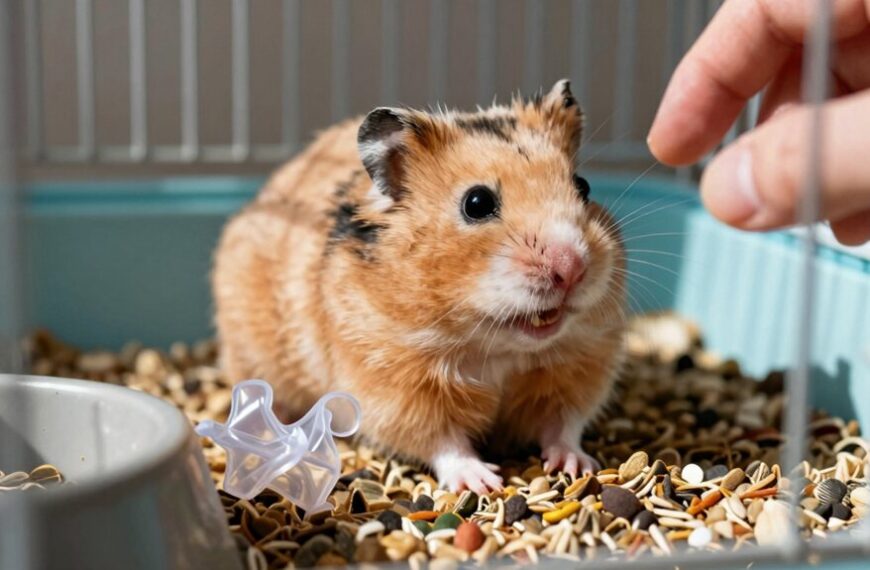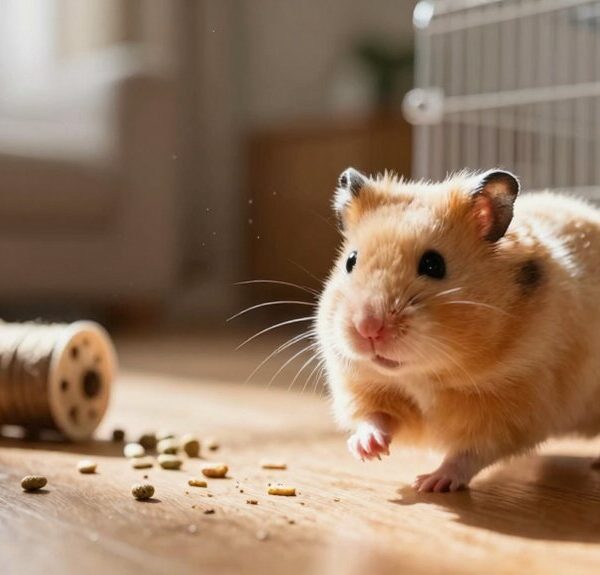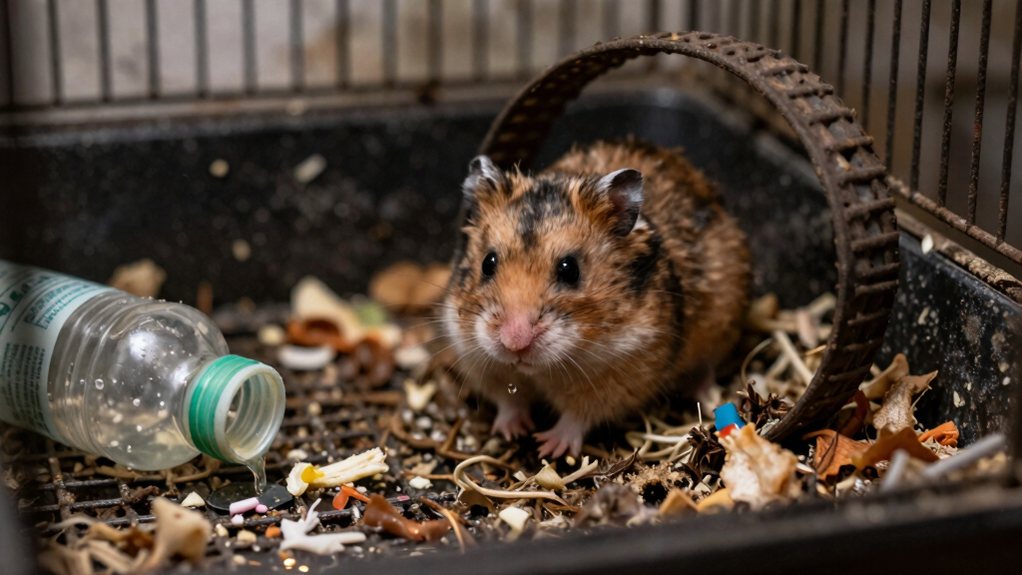
You’ve seen your hamster’s nose twitch like a tiny metronome, 8 to 12 wiggles per second, and that’s no accident. It’s how they “see” the world, sniffing out safety, snacks, or your hand’s cookie scent.
When they pop up on hind legs, they’re curious, not judging your life choices. A sudden freeze? They’re playing statue to avoid imaginary foxes.
Teeth chattering? They’re nervous, not mad at you.
And if they’re backflipping like a furry gymnast, they’re thrilled—pure hamster joy. There’s a whole secret code in their hops, licks, and tail flicks just waiting to be understood.
Why Does My Hamster Twitch Its Nose?

Ever wonder what your hamster’s nose is trying to tell you when it’s wiggling like it’s got a tiny mission of its own? That constant nose twitching isn’t just cute. It’s serious business for your little buddy.
Hamsters rely heavily on their sense of smell, and that wiggly nose helps them take in scents quickly. It’s all part of their sensory exploration, like a built-in scanner checking out everything around them.
When your hamster’s curious, excited, or just waking up, you’ll see that nose go into overdrive. It’s how they “read” their environment, kind of like you checking your phone for updates.
Why Does My Hamster Freeze Suddenly?
You’re minding your own business when suddenly, your hamster freezes like a tiny statue, not even a whisker twitch.
This sudden stillness isn’t just drama. It’s your little buddy switching into high-alert mode, checking every sound and scent for potential danger.
Think of it as their version of “freeze and assess,” a survival trick that keeps them safe and kind of adorable in the wild.
Sudden Stillness As Defense
What’s going on when your hamster suddenly turns into a tiny, motionless statue mid-snack? It’s more than daydreaming. It’s defensive stillness, a natural fear response.
When your little buddy senses something scary, like a loud noise or sudden movement, freezing helps it avoid detection. In the wild, staying still can trick predators into thinking they’ve missed their meal.
So, when your hamster locks up, it’s not broken. It’s just doing its best to stay safe. You might notice tense muscles, wide eyes, or twitching whiskers. These are classic signs they’re on high alert.
Give them a moment. Speak softly, and avoid sudden gestures. Once they feel secure, they’ll bounce back to snacking like nothing happened. It’s kind of adorable, really. Your hamster’s version of “if I can’t see you, you can’t see me.”
Alert Mode And Awareness
Why does your hamster sometimes hit the pause button mid-scurry, frozen like a tiny statue in the middle of its adventure? It’s not daydreaming about snacks. Your hamster’s in alert mode.
When something feels off, even slightly, it shifts into heightened alertness, ears twitching and nose wiggling like a radar dish. This pause lets it scan its surroundings carefully.
Think of it as environmental scanning on hamster time: quick, quiet, and super focused.
It might freeze for just a few seconds, then relax or dart away. This behavior’s natural. Wild hamsters do it to avoid predators.
So, while it looks dramatic, your little buddy’s just being smart. Don’t worry; it’s not scared of you (probably). Just give it a moment.
After all, in the grand hamster world, staying safe means staying still—briefly.
Standing on hind legs often accompanies this alert state, as it enhances visibility and supports natural behavior and instinctual purpose.
What Does Popcorning (Backflips) Mean?
Ever wonder why your hamster suddenly leaps into the air, twisting like a tiny furry gymnast?
That’s popcorning, a burst of joyful excitement that means your little buddy’s thrilled.
Popcorning is pure hamster joy—a tiny explosion of excitement that means your little furball is absolutely thrilled and living their best life.
You’ll often see it during playful bouncing around their cage, especially when they’re young and full of energy.
It’s like their way of saying, “Best day ever!” and honestly, it’s impossible not to smile.
Think of it as hamster happy dance meets acrobatics.
While it might look like a startled jump, it’s actually a sign they feel safe and content.
So if your hamster’s flipping like a mini Olympian, take it as a win.
You’ve created a cozy, fun home.
Just don’t expect a medal ceremony… though maybe a sunflower seed trophy wouldn’t hurt.
Why Is My Hamster Chattering Its Teeth?
While your hamster’s backflips might’ve you reaching for the popcorn, there’s another behavior that can sound more like a tiny woodpecker than a happy hop, teeth chattering.
If you hear that rapid click-click-click, your hamster’s not trying out for a percussion band. It’s usually a sign of defensive aggression or a territorial display.
Your little buddy might feel threatened, especially if you just reached into the cage or introduced a new toy.
It’s their way of saying, “Back off!” without actually biting.
Stay calm, give them space, and avoid sudden moves.
Over time, with gentle handling and trust-building, the chattering often fades.
Think of it as their grumpy morning voice—annoying, but understandable.
This behavior is closely linked to fear and stress, which are the primary causes of defensive actions like biting or scratching in hamsters.
Why Does My Hamster Groom Me?
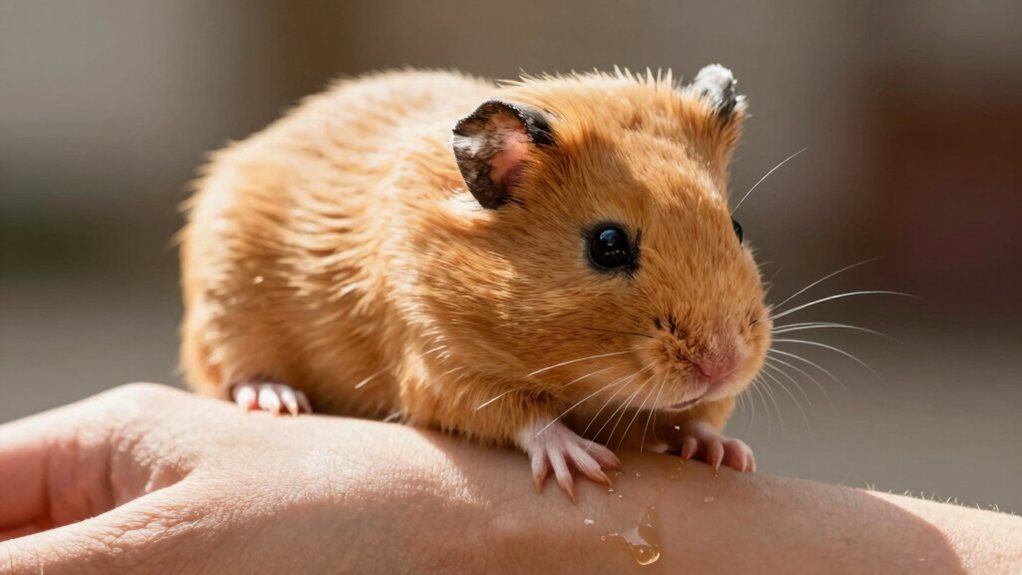
When your hamster grooms you, it’s actually a sweet sign they see you as part of their inner circle, like you’re family in fur form.
They’re more than just cleaning you, phew, you’re welcome. They’re marking you with their scent to show trust and affection.
Think of it as a tiny, nibbly compliment that says, “You’re safe, and honestly, kind of mine.”
Grooming As Bonding
So, why’s your hamster suddenly acting like your personal stylist, nibbling and licking your fingers like you’re due for a spa day?
Turns out, this isn’t grooming you. It’s bonding with you.
In the wild, hamsters practice social grooming, where they lick and nibble each other to strengthen trust.
When your little buddy does this to you, they’re saying, “You’re part of my crew.”
Mutual licking is their way of sharing scents and building connection.
It’s more than affection. It’s acceptance.
So while it might feel odd to have tiny teeth gently tugging your skin, take it as a compliment.
You’ve earned their trust. They don’t do this with just anyone!
So next time they go in for a lick, smile.
You’ve made it into their inner circle.
And honestly? That’s kind of adorable.
Scent Marking Behavior
Ever wonder why your hamster suddenly treats your hand like a brand new chew toy, licking and nibbling like it’s marking territory?
That’s scent rubbing in action!
Your little buddy has scent glands on its sides, and when it rubs against you, it’s doing territorial rubbing to claim you as part of its safe zone.
It’s like saying, “Hey, this human is mine!” in hamster language.
While it might feel weird, it’s actually a sign of trust and comfort.
So, if your hamster grooms you or drags its sides across your fingers, don’t pull away.
Take it as a furry compliment.
Scent marking isn’t just about ownership.
It’s their way of bonding and feeling secure.
Think of it as a tiny, fuzzy hug with a side of spit.
Cute, right?
Just remember: when your hamster treats you like furniture, it’s really saying, “You belong to me—and I love you.”
Trust And Affection
Why does your hamster suddenly start licking your fingers like you’re a salted pretzel?
It’s not hunger, it’s trust!
When your tiny pal grooms you, it’s a sweet sign of bonding cues.
Hamsters usually reserve mutual grooming for close pals in the wild, so this behavior means you’ve officially been accepted into their inner circle.
Here’s what’s really going on:
- Licking = Love – Your hamster sees you as family.
- Scent Recognition – They’re learning your smell and marking you as safe.
- Bonding Cues – Gentle nips or licks show comfort and connection.
- Mutual Grooming – They’re mirroring how they’d care for a cage mate.
It’s their quirky way of saying, “You’re mine.”
This behavior often follows consistent, calm interaction and is a clear sign of established trust.
Why Does My Hamster Stand on Its Hind Legs?
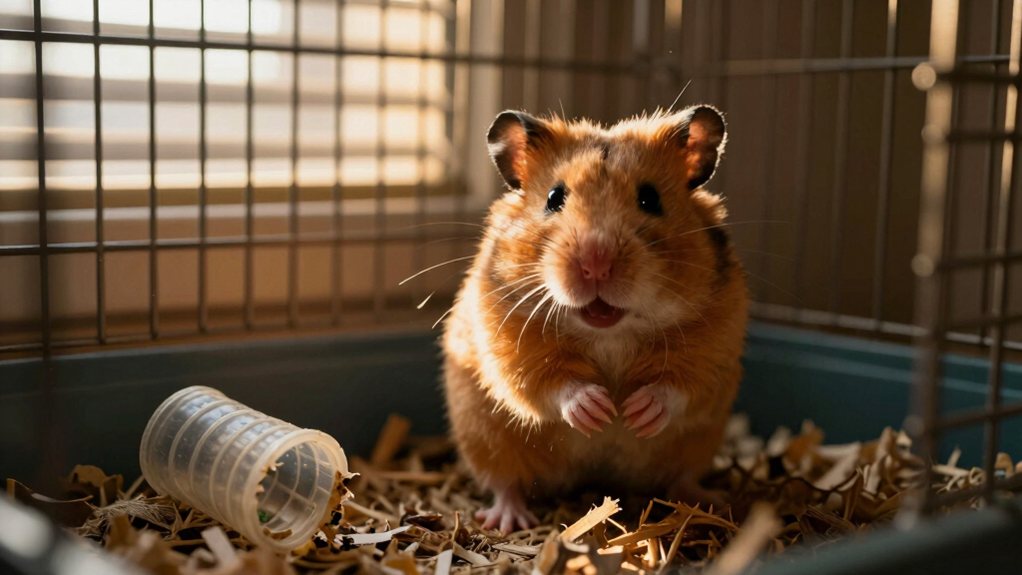
What’s going on when your hamster suddenly pops up like a tiny furry meerkat, paws in the air and nose twitching? That curious stance means your little buddy is using its upright posture to get a better look at the world.
When your hamster stands on its hind legs, it’s usually curious or trying to sniff out something interesting, maybe a treat, a new toy, or even just your hand coming near the cage.
This alert pose helps them see over obstacles and catch sounds or scents more clearly.
It’s a natural, instinctive move, not a circus trick, though it’s just as cute.
Don’t worry, this behavior’s totally normal and often a sign your hamster feels safe enough to explore.
Why Does My Hamster Squeak When I Hold It?
That adorable upright pose shows how curious and alert your hamster can be, but sometimes that cute little face comes with a high-pitched surprise, like a sudden squeak when you pick them up.
That curious upright pose is pure hamster charm—just be ready for a squeaky surprise when you lift them. Tiny bodies, big reactions!
Don’t panic! It’s usually a fear response or handling discomfort. Hamsters are tiny and easily startled, so your grip, scent, or sudden movement might spook them.
Here’s what could be going on:
- Fear Response: They might feel unsafe, especially if they’re new or not used to you.
- Handling Discomfort: Your hands could be too warm, cold, or moving too fast.
- Startled by Scent: Lotions or food smells on your hands can confuse them.
- Need for Space: Even sweet hamsters need a breather now and then.
Go slow, stay calm, and let them sniff you first.
Trust builds one squeak at a time.
Why Does My Hamster Hiss Softly?
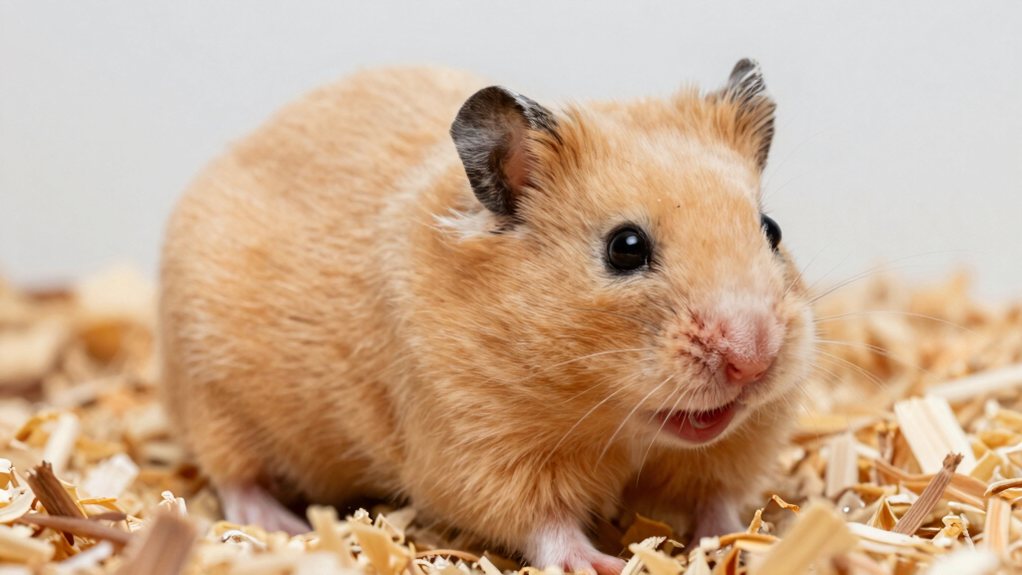
Ever wonder what your hamster’s trying to say when that tiny mouth lets out a soft hiss? It’s not mad at you, promise! That little sound is usually a fear response, especially if they’re new to your home or feeling startled. Think of it like a tiny “back off” sign.
Sometimes, it’s also a territorial display, especially if there’s another hamster nearby or they’re guarding their food.
You might hear it when you reach into the cage too fast or during playtime if they’re overwhelmed.
Stay calm, move slowly, and give your fuzzy buddy space. Over time, with gentle handling and trust, the hissing usually fades.
It’s kind of like they’re saying, “I’m still getting used to you, okay?” So don’t take it personally—your hamster’s just speaking hamster!
Why Does My Hamster Stuff Its Cheeks?
You just offered your hamster a sunflower seed, and in a blink, it’s gone, vanished into the puffiest cheeks you’ve ever seen. That’s cheek storage in action, and it’s totally normal! Hamsters are natural food hoarders, using their stretchy cheek pouches to carry snacks to their hideouts.
Here’s why they do it:
Instinct kicks in. In the wild, hamsters collect food to survive lean times.
Safety first. They stash food away from predators and nosy cage mates.
Efficient movers. Cheek storage lets them transport meals without multiple trips.
Personal pantries. They create secret food hoards in cozy nest corners.
It’s adorable, really, like tiny, furry grocery runs. So when your hamster’s cheeks balloon up, just smile. They’re not being greedy, they’re being hamsters. And honestly, who wouldn’t want built-in snack pockets?
Hamsters can carry nearly half their body weight in their pouches, making them highly effective food transporters.
Is Excessive Digging a Sign of Stress?
You’ve probably seen your hamster going full excavator in its bedding, and while a little digging is totally normal, nonstop tunneling might mean something’s up.
If your tiny friend’s always scratching at the cage like it’s digging to China, it could be stressed, especially if they’re also skipping meals or acting jumpy.
Keep an eye out for other off-beat behaviors, because sometimes that busy paws routine is their quirky way of saying, “Hey, I need a calmer vibe in here!”
Excessive digging can also be a sign of cage rage, a condition caused by confinement in small or unstimulating environments that prevents hamsters from fulfilling their natural instincts.
Excessive Digging Explained
Why do some hamsters dig like they’re training for a tiny animal Olympics?
It’s more than random chaos.
There’s meaning behind the madness.
When your hamster goes full excavator, it’s usually following natural instincts.
Here’s what’s really going on:
- Food hoarding – They’re stashing snacks like furry little survivalists.
- Nest building – They want a cozy, safe spot to crash.
- Boredom buster – Digging keeps them busy and mentally sharp.
- Stress signal – Only if it’s frantic, nonstop, and paired with other anxious behaviors.
Most of the time, you’re watching instinct in action, not distress.
So if your hamster’s turning their cage into a mini construction zone, relax.
They’re not stressed.
They’re just being a hamster.
Think of it as their version of spring cleaning, with more dirt and fewer dusters.
For digging to be truly enriching, make sure the bedding depth is sufficient—ideally 6 to 8 inches to support natural burrowing behavior.
Stress Indicators In Behavior
Could your hamster’s nonstop digging be a cry for help, or just a case of overachieving interior design? While some digging is normal, excessive burrowing might actually signal stress.
If your little buddy is also panting heavily or trembling slightly, it’s time to pay closer attention. These behaviors can mean your hamster feels overwhelmed.
Maybe the cage is too noisy, too small, or lacks hiding spots. Think of it like needing a quiet room after a long day; your hamster craves calm too.
Try adding more bedding, a cozy hideout, or moving the cage to a quieter spot.
Watch for changes—less digging and calmer breathing mean you’re on the right track. You’ve got this! A few tweaks can turn that stressed digger into a happy, well-rested explorer.
Environmental stress contributes significantly to sudden death, and persistent stress may exacerbate underlying conditions like heart disease.
Why Does My Hamster Go Flat and Still?
Ever caught your hamster suddenly flattening out and freezing like a tiny, furry pancake? It’s startling, but it’s usually a natural fear response.
Your hamster flattens like a furry pancake? No panic—it’s just their dramatic way of playing dead to stay safe.
When threatened or startled, your hamster might go flat and still as a way to play dead, tricking predators into thinking they’re not worth eating.
It’s not a sign of illness, but more like a tiny survival drama unfolding in your living room.
Here’s what’s really happening:
- Sudden noise or movement triggers their instinct to freeze.
- Fear response kicks in, making them go limp and motionless.
- They’re not hurt, they’re just playing dead to stay safe.
- Once calm, they’ll scurry off like nothing happened, drama queen energy!
Give them space and quiet.
With time, they’ll learn you’re not a threat.
It’s just their quirky way of saying, “Don’t eat me!”
What Does Tail Flicking Mean in Hamsters?
You might notice your hamster flicking its tiny tail while sniffing around the cage, and it’s actually a sign they’re curious and taking in their surroundings. That little flick isn’t just for show, it can also hint at their mood, like mild annoyance or excitement.
Think of it like a whisker twitch with attitude, their way of saying, “I’m alert, and yes, I *do* have opinions about this new toy.”
Tail Flicking During Exploration
What’s that little tail up to, anyway? When your hamster flicks its tail during exploration, it’s more than just a random wiggle. It’s part of a curious flicking pattern tied to their exploratory motion. Think of it like a tiny radar scanning for snacks or secrets. Here’s what’s really happening:
Curiosity boost – Tail flicks often mean “Hmm, what’s this?” as they investigate new spaces.
Balance aid – That flick helps them stay steady while climbing or squeezing through tunnels.
Scent tracking – They’re picking up scents, and the tail motion might help stir the air.
Confidence signal – A calm flick shows they’re feeling brave, not stressed.
Tail Flicking And Mood Signals
Why do those tiny tails twitch at just the right moment? When you see tail flicking in your hamster, it’s more than just a random wiggle, it’s one of their subtle mood signals.
If your little buddy flicks their tail while exploring, they might be curious or mildly excited.
But if the flicking turns rapid and they seem tense, they could be annoyed or stressed. Think of it like a tiny flag saying, “I’m not totally cool with this!”
Pay attention to their ears and posture too. Those clues help you decode the full message.
Tail flicking isn’t dramatic like a dog’s bark, but it’s just as meaningful. You wouldn’t ignore a friend’s side-eye, right? So don’t overlook your hamster’s tail talk.
With a little patience, you’ll start reading their moods like a pro. No tail translator needed!
Why Does My Hamster Lick the Cage Bars?
Ever caught your hamster giving the cage bars a little tongue bath and wondered what on earth they’re doing? It’s kinda odd, right? But don’t panic, licking isn’t always a red flag. Here’s what might be going on:
- Cage taste – Some materials leave a residue, and your hamster’s just curious or trying to clean it off.
- Mineral deficiency – If their diet’s low in certain nutrients, they might lick metal bars seeking trace minerals.
- Exploration – Hamsters use their tongues like we use our hands, everything gets a taste test!
- Boredom or stress – A too-empty cage can lead to repetitive behaviors like bar licking.
Switch up their diet, enrich their space with toys, and check the cage material.
If it continues, a vet visit helps rule out health issues.
A hamster that frequently licks or chews bars may also be trying to manage tooth length, as their incisors grow continuously and require regular gnawing to prevent overgrowth. This natural need for dental maintenance can lead to dental health concerns if proper chew items aren’t provided.
You’re doing great, just a little detective work, and you’ll crack the case!
Why Did My Hamster Bite Me? (It’s Not Anger)
You might’ve gotten a little nip, but don’t take it personally, your hamster’s not mad at you. It’s usually because they’re scared, surprised, or you accidentally sent a signal they didn’t like, like moving too fast or smelling like snacks.
Even though they’re tiny, they get stressed too. Especially if you’ve been holding them longer than they’d prefer.
Bites are not expressions of affection; hamsters do not bite to show love, and understanding this helps clarify that nipping is more about curiosity or fear than any sign of emotional rejection.
Fear And Surprise
What’s going through your hamster’s tiny mind when it suddenly freezes, bolts, or, ouch, nips your finger?
More often than not, it’s a fear response or surprise reaction, not aggression.
Hamsters have poor eyesight and get startled easily, like when you reach in fast or make a loud noise.
Here’s what’s really happening:
- Freezing – They pause, evaluating if danger’s near.
- Bolting – Zooming to hide? That’s panic mode.
- Ears back – A sign they’re feeling stressed or scared.
- Quick bite – A defensive move, not a grudge.
They’re not mad at you.
They’re just tiny prey animals on high alert.
Slow, calm movements help them feel safe.
So next time your hamster flinches, take a breath.
You’ve got this.
And hey, maybe knock before reaching in? (Tiny joke, but seriously, try it.)
A bite from a startled hamster is usually harmless, but it’s important to clean the area right away to prevent infection, so always practice proper wound care after a bite.
Misread Signals
That little nip probably caught you off guard, and it might’ve stung more than you expected. But before you take it personally, here’s the thing: your hamster isn’t trying to punish you.
That bite? Likely a fear response, not fury. Hamsters have tiny brains and even tinier margins for error when they feel threatened.
Maybe you reached too fast, or startled them while they were zoning out.
Some hamsters even play dead when overwhelmed. Seriously, they freeze like tiny, furry statues!
But if they can’t flee or faint, biting might be their last resort.
Think of it like an alarm system: loud, jarring, but not personal. You’re not in trouble—you just spooked your little roommate.
Go slow, speak softly, and let them sniff your hand first. A little patience goes a long way.
And hey, at least they didn’t actually play dead. Now that’d be dramatic.
Overhandling Stress
Ever wonder why your hamster suddenly nips after seeming perfectly happy in your hand? It’s probably overhandling stress, not anger. Hamsters are tiny, sensitive creatures who get overwhelmed easily.
When you hold them too long or too often, they can’t tell you they’re done, so they give a little warning bite.
Pay close attention to stress signals before it gets to that point. Here’s what to watch for:
- Frequent grooming – They’re trying to calm themselves.
- Freezing in place – They’re scared but not moving.
- Yawning or teeth chattering – A sign they’re mentally checked out.
- Trying to escape – They’re saying, “I need space, please!”
Keep handling sessions short and sweet. Five to ten minutes is plenty.
Respect their limits, and you’ll both enjoy your time together way more. Less handling? Happier hamster. Promise.
Why Does My Hamster Yawn Slowly?
Why does your hamster stretch wide and yawn like it just sat through a two-hour lecture on nap scheduling? That slow yawn you’re seeing isn’t just cute. It’s a tired stretch, a full-body reset after dozing off or waking up.
When your hamster opens its tiny mouth wide and lifts its paws, it’s likely saying, “Phew, time to recharge!” This behavior is completely normal and often means your little buddy is relaxed and comfortable in its environment.
Unlike humans, hamsters aren’t yawning from boredom. They’re syncing with their natural rhythm. So if you catch your pet mid-slow yawn, take it as a sign you’re doing something right.
No stress, no drama. Just a sleepy soul enjoying life one tiny stretch at a time.
Keep the cozy bedding and quiet space coming. Your hamster’s yawning gratitude might be the best compliment you get all day.
Are Nighttime Zoomies Normal or Stressful?
Your hamster’s slow yawns might signal calm and comfort, but what about those sudden bursts of wild energy at midnight?
Don’t panic—those nighttime zoomies are totally normal!
Hamsters are nocturnal, so their internal batteries charge up during the day for playful bursts after dark.
Here’s what you should know:
- Nocturnal energy is natural, your hamster’s just following its inner clock.
- Zoomies usually mean your pet is happy, healthy, and full of life.
- As long as the behavior isn’t constant or frantic, it’s not stressful.
- A safe, spacious cage helps turn chaotic dashes into joyful, playful bursts.
Why Does My Hamster Drag Its Bottom?
You might do a double-take when you see your hamster dragging its bottom across the cage, but it’s more than quirky behavior. Sometimes it’s a red flag.
While a quick scoot now and then can be normal, especially after using the bathroom, frequent or frantic dragging could mean irritation, an infection, or even parasites.
Keep an eye out for other clues like wetness, swelling, or changes in poop.
Don’t wait to call your vet if something seems off.
Bottom Dragging Causes
Ever catch your hamster scooting across the cage like it’s trying to moonwalk its way out of a tiny pair of too-tight pants?
While it might look funny, bottom dragging usually means something’s up.
Don’t laugh too hard—your little buddy could be dealing with discomfort.
Here’s what might be going on:
- Anal sac issues, These tiny glands can get clogged, making your hamster drag its rear to relieve pressure.
- Urinary tract infection, Pain or irritation from a UTI may cause scooting or frequent licking.
- Diarrhea or wet tail, Sticky poop can cling to fur, prompting dragging to clean off.
- Itchiness from parasites, Mites or worms can make your hamster extra itchy down there.
If scooting happens often or comes with other symptoms, a vet visit’s a smart move.
Better safe than sorry!
Health Warning Signs
What’s going on when your hamster starts moonwalking across the cage floor? While it might look funny, bottom dragging can actually be a red flag.
If your little buddy seems lethargic, isn’t eating well, or has a messy, wet rear, it could be wet tail, a serious bacterial infection common in stressed hamsters. You’ll want to act fast, because wet tail spreads quickly and can be life-threatening.
Watch for other signs like hunched posture, dull eyes, or fur standing on end. Don’t shrug it off as just quirky behavior. Your hamster can’t tell you they’re sick, so it’s up to you to notice the clues.
When in doubt, call your vet. Catching things early makes all the difference.
And hey, better safe than sorry. Your tiny pal is counting on you!
Why Does My Hamster Play Dead?
Why on earth would your tiny furball suddenly go limp and pretend to be asleep, or worse, *dead*, right there on the floor of its cage?
If you’ve caught your hamster playing dead, it’s likely a fear response, not a dramatic audition.
These little escape artists freeze when overwhelmed, hoping predators or overeager hands lose interest.
Here’s what’s really going on:
Stress overload – Loud noises or sudden movements can send them into panic mode.
Feeling threatened – New environments or unfamiliar scents spike anxiety.
Instinct kicks in – In the wild, playing dead fools predators.
Need for space – They’re telling you, “Back off, I need a minute!”
Stay calm, give them quiet time, and avoid sudden handling.
With patience, your hamster will learn you’re not a threat.
It will stop faking its own funeral.
Why Does My Hamster Bury Food and Toys?
How does your hamster manage to make snacks and tiny toys vanish into thin air, only to find them tucked under a mountain of bedding days later? It’s not magic—it’s instinct. Your little buddy is hardwired to stash things, a behavior known as food hoarding and toy caching.
In the wild, hamsters survive by stockpiling resources, so even in the safety of their cozy cage, they can’t resist hiding treats and favorite toys.
You might catch them stuffing cheeks or digging furiously, like tiny, furry squirrels on a mission. While it seems odd, it’s actually healthy and normal.
Just think of it as your hamster’s way of saying, “Better safe than sorry!”
Is Rapid Breathing Normal When Awake?
Ever wonder why your hamster sometimes looks like it’s just finished a sprint on its exercise wheel—even when it’s just sitting still?
Rapid breathing is actually normal for hamsters when they’re awake. Their tiny bodies have a high metabolic rate, so their respiratory rate naturally stays quick, sometimes up to 100 breaths per minute!
But how can you tell if it’s healthy or not? Here’s what to watch for:
Calm posture – If your hamster is relaxed, rapid breathing is likely normal.
No wheezing – Clear, quiet breaths are a good sign; avoid ignoring raspy sounds.
Active and alert – Eating and moving normally? Probably just a peppy puffball.
No fluffed-up fur – Fluffiness can mean stress or illness if paired with fast breaths.
When in doubt, check in with your vet. Otherwise, your little buddy’s just living life at full speed!
Why Is My Hamster Avoiding Me?
Is your hamster suddenly playing hard to get, dodging your hand like it’s starring in a tiny rodent spy movie? That avoidance might be a fear response, not a personal rejection. Hamsters are naturally cautious, and if they don’t yet feel safe, they’ll bolt or hide.
You can’t rush trust building, think of it like making a new friend who’s super shy.
Start slow: talk softly, offer treats through the cage, and let them sniff your hand without grabbing.
Over time, your hamster will learn you’re not a threat.
Avoid sudden moves, and never wake them abruptly, that’s a fast track to stress.
With patience and gentle consistency, your little escape artist will start seeing you as part of the good stuff in life, like fresh bedding and sunflower seeds.
You’ve got this.
Head Tilt and Wobbling: A Health Warning
- A tilted head that doesn’t go back to normal after a few minutes
- Unsteady walking or falling to one side
- Rapid eye movements (nystagmus)
- Loss of appetite or disinterest in play
These signs mean it’s vet time, fast. While it sounds scary, many causes are treatable if caught early.
You’ve got this, and your hamster’s counting on you.
Bar Chewing: Boredom or Stress Sign?
What’s really going on when your hamster grabs those cage bars like they’re trying to break out of hamster prison?
Bar chewing and cage biting aren’t merely quirky habits. They’re often signs of boredom or stress.
If your little buddy’s constantly gnawing, they might need more to do. Hamsters are smart and active, and without enough toys, tunnels, or space, they get restless.
Bar chewing can also mean they’re anxious, especially if their cage is in a loud or busy spot.
Try moving them to a quieter area and add more enrichment, like chew toys or a running wheel. It’ll keep their teeth healthy and their mind busy.
You’re not merely stopping cage biting. You’re giving your hamster a happier life.
Why Does My Hamster Nip and Let Go?
Ever wonder why your hamster takes a quick little nip and then lets go like they just remembered they forgot an important date? It’s usually not aggression. It’s more about curiosity testing or gentle nibbling.
Hamsters explore the world with their mouths, just like we do with our hands.
Here’s what’s likely going on:
- Curiosity Testing: They’re figuring out if your finger is food (spoiler: it’s not).
- Gentle Nibbling: A soft way to “taste” or investigate new scents.
- Startled Reflex: You moved suddenly—oops, instinct took over.
- Trust Building: They’re learning you don’t bite back, so they let go fast.
It’s their quirky way of saying, “Hmm, interesting… but not snack-worthy.”
Stay calm. Wash your hands (no cookie scent, please). And keep bonding.
With time, those nips often turn into nose boops—way cuter, right?
How to Tell If Your Hamster Is Happy
How does your hamster say “I’m good”? You’ll know when you see playful hopping, those sudden little jumps and zooms around the cage mean your tiny buddy’s full of joy.
It’s like they’re doing a happy dance only hamsters understand.
Another clue? Content nesting. If your hamster’s busy fluffing bedding, rearranging tunnels, or snuggling into a cozy handmade nest, they’re feeling safe and satisfied.
You might even catch them grooming themselves like they’re getting ready for a tiny tea party.
When they’re relaxed, their movements are fluid, not frantic.
They’ll explore, nibble treats, and maybe even greet you with a curious sniff.
Sure, they won’t high-five you (paws are too small), but these signs show they’re thriving.
Keep an eye out. You’re not merely a pet parent, you’re their whole world.
And honestly? That little hop says more than words ever could.
Final Thoughts
You’ve got the inside scoop on your hamster’s secret language, nose twitches, backflips, even the side-eye. These tiny gestures tell big stories about how they feel.
Watch closely, respond with care, and you’ll build a bond that’s pure gold. Sure, they might nibble your finger once in a while (*ow*). But hey, nobody’s perfect.
With a little patience and a lot of love, you’re already becoming their favorite person.