You’ll love starting with a Syrian hamster. They’re bigger, calmer, and easier to handle than the speedy dwarfs that zoom like tiny escape artists.
They’re independent, low-maintenance, and bond well with patient owners. Just set up a cozy cage, offer a balanced diet, and handle them gently at night when they’re awake and alert.
Get the basics right, and you’ll have a fuzzy little buddy who trusts you in no time. Plus, there’s plenty more to discover about making your hamster’s life happy and healthy.
Why Syrian Hamsters Are Best for Beginners

While you might be tempted to go for the tiniest, fluffiest hamster you see, the truth is, Syrian hamsters are usually the best pick for first-time owners. Here’s why.
They’re larger than other hamsters, making them easier to handle without feeling like you’re wrestling a cotton ball.
Bigger and easier to handle, Syrian hamsters won’t vanish in your palm—no cotton-ball wrestling required.
Syrians have a calm demeanor, and their nocturnal behavior means they’ll be active when you’re home in the evening, perfect for some after-dinner entertainment.
Just don’t expect cuddles at noon.
Another plus is their solitary nature.
They prefer living alone, so you won’t need to worry about pairing them up or dealing with drama.
One cage, one hamster, one happy household.
They’re also hardy and adapt well to new environments, which is great when you’re still learning the ropes.
Sure, they won’t fetch, but with their quirky routines and adorable cheek stuffing, they’ll win you over fast.
Dwarf Hamsters: Cute but Challenging for New Owners
If you’re drawn to the tiny, hyperactive fluffballs zipping around the pet store, chances are you’re looking at dwarf hamsters. Yeah, they’re undeniably cute.
But here’s the real talk: they’re trickier than they look. These little guys pack a lot of energy and have strong nocturnal behavior, so don’t expect cuddly daytime snuggles. They’ll be snoozing while you’re awake.
Plus, their social compatibility is a gamble. Some dwarfs tolerate cage mates, but many end up in tiny, furry turf wars. You’ll need sharp eyes and patience to spot stress or fighting.
They’re not as hands-on as Syrians, and their speed can make handling a comedy routine. Sure, they’re adorable, but for first-time owners, that cuteness comes with extra responsibility. Think carefully. Would you rather chase a hamster or bond with one?
Adequate care includes daily maintenance like refreshing water and removing spoiled food to prevent health issues, and providing at least two square feet of living space to support their physical and mental well-being.
Key Traits of a Beginner-Friendly Hamster
You’ll want a hamster that’s calm, easy to handle, and doesn’t need constant attention. Luckily, the right one won’t keep you up at night or turn your shirt into a chew toy.
Look for a little buddy with a mellow vibe who’s happy to nap in your palm or explore your desk without flipping out.
These low-maintenance pals make starting out way less stressful.
And let’s be honest, they’re just plain cute when they’re not trying to escape every five minutes.
Calm Temperament
What makes a hamster truly great for someone just starting out? A calm temperament tops the list. You’ll want a little buddy who isn’t too jumpy or skittish, especially when you’re still learning how to handle them.
Hamsters are naturally nocturnal, so they’ll be most active at night.
A relaxed one won’t panic easily during your daytime check-ins. This calmness makes social interaction easier and less stressful for both of you.
Think of it like making a new friend who’s cool with hanging out, not one who bolts at the sight of you.
A mellow hamster adjusts better to new environments and routines, which is perfect when you’re both figuring things out.
Plus, fewer surprise escape attempts mean fewer heart attacks for you.
With a chill personality, your hamster becomes a joyful, low-drama companion who’s easy to bond with, making your first pet experience way more fun than frightening.
Easy To Handle
A hamster that’s easy to handle can turn your first pet experience from stressful to simply sweet. You’ll want one that stays calm when you scoop them up, even if they’re busy with their nocturnal behavior or mid-adventure.
Some hamsters dart off or get jumpy, but the best ones for beginners let you hold them without turning it into a game of chase.
Their burrowing habits mean they love tunnels and cozy hideouts, so gently lifting them from their nest shouldn’t end in a tiny tantrum.
Look for a hamster that snoozes snugly in your palm instead of scrambling for freedom.
With a little patience and soft hands, handling becomes a bonding moment, not a wrestling match.
You’re more than just a caretaker. You’re becoming their favorite person.
And honestly, there’s something pretty adorable about earning trust one tiny paw step at a time.
Low Maintenance Needs
The good news, Hamsters are low-maintenance pals who fit perfectly into your busy life. You don’t need to stress over a strict feeding schedule. Just fresh food and water daily, plus a scoop of pellets, and you’re golden.
Most hamsters groom themselves like tiny pros, so grooming frequency is basically “never.” No baths, no brushes, just the occasional wipe with a damp cloth if they get messy.
They’re tidy little roommates who clean their corners and nap most of the day.
You’ll spend less time worrying and more time enjoying their silly antics. Like stuffing their cheeks or climbing their wheels.
With minimal effort, you get maximum cuteness. Honestly, they’re easier to care for than some houseplants.
Just give them a clean cage once a week, and you’re set. Low maintenance? Absolutely. And that’s one less thing on your to-do list.
Daily care takes only minutes, and includes checking water bottles for clogs to ensure your hamster stays hydrated—something especially important since water bottles are prone to blockages that can go unnoticed.
Best Cage Setup for First-Time Hamster Owners

While your new hamster mightn’t send you a wish list, trust us, they’ve definitely got opinions about their digs. Getting their cage right from the start makes all the difference.
Go for a spacious wire cage or a large plastic bin. Your tiny roommate needs room to explore and dig.
Choose a roomy wire cage or big plastic bin—your little buddy needs space to burrow, stretch their paws, and explore like the tiny adventurer they are.
Ventilation is super important. Poor airflow can make the cage stuffy and unhealthy, so skip the aquarium unless you’ve rigged a mesh lid.
And don’t underestimate your hamster’s Houdini skills. Escape prevention is key. Check for gaps, secure all latches, and avoid cages with wide bar spacing.
Include cozy bedding, a hideout, and a solid-surface wheel. A well-set-up cage keeps your hamster happy, safe, and less likely to turn your house into their next adventure zone. You’ve got this!
A cage with a pull-out tray allows for quick, tool-free cleaning and helps maintain a healthy environment between full deep cleans.
Simple Diet Guide by Hamster Type
You’ve nailed the cage setup, now let’s talk about what’s going on in your hamster’s food bowl, because what you feed them actually depends on who they are.
Syrian hamsters love variety, so mix in fresh veggies, a bit of fruit, and high-quality pellets. They’ll need the energy, especially with all that time on their exercise wheels.
Dwarfs, like Roborovskis or Campbell’s, need fewer sugary treats to avoid diabetes, so skip the grapes and stick to greens and protein.
No matter the type, always offer clean water and avoid junk food. Your hamster doesn’t need a cheese puff.
Pair a solid diet with natural bedding and a good chew toy, and you’re golden.
Think of meals as part of their daily adventure. Get this right, and your little buddy will thrive, zooming happily through life—one seed at a time.
A consistent daily feeding routine supports your hamster’s fast metabolism and helps prevent health issues related to irregular eating.
How to Handle Your Hamster Safely
Ever wonder why your hamster sometimes zooms away when you reach into the cage? It’s not personal. They’re just tiny prey animals wired to be cautious.
To build trust, start by letting your hamster sniff your hand before gently cupping them low to the ground. Always support their whole body, no dangling legs!
Wash your hands before handling to keep hamster hygiene in check, but avoid strong soaps that leave scents.
Short, daily playtime routines help them get used to you. Keep sessions calm and quiet, and skip handling right after waking them. They might bite from surprise.
With patience and gentle touches, your little buddy will soon look forward to your time together. Just remember: slow wins the race, even with speedy hamsters!
Taming Tips: Building Trust Quickly
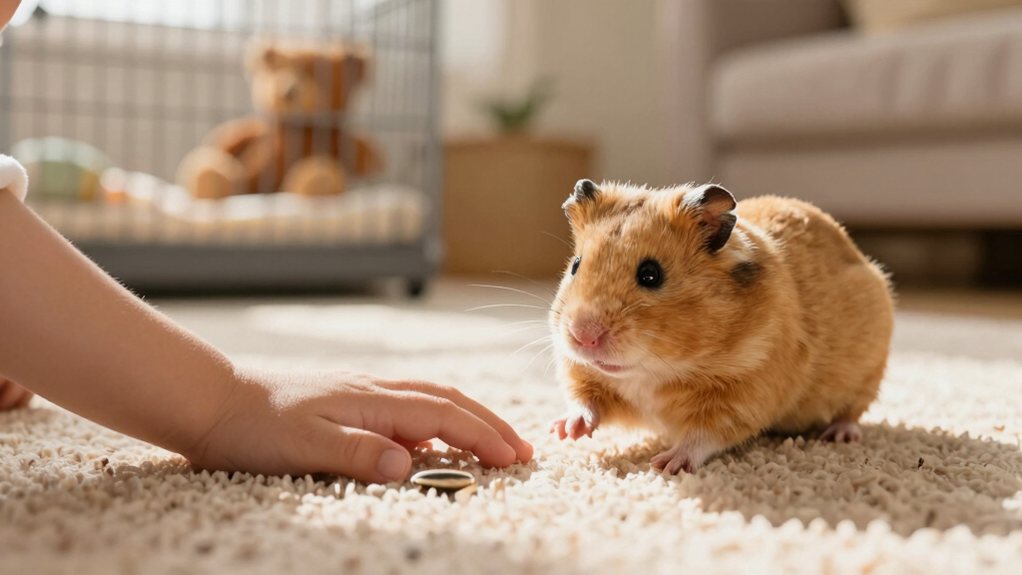
How do you turn a skittish little furball into a confident, hand-loving companion in no time? Start by being patient and predictable. Hamsters thrive on bedtime routines and playtime schedules.
Patience and predictability pave the way. When routines feel safe, even the shyest hamster learns to trust and reach for your hand with confidence.
Spend a few quiet minutes each evening talking softly or offering a treat from your hand. This builds familiarity without pressure. Stick to consistent times for feeding and handling so your hamster knows what to expect.
During playtime, let them explore a safe space while you sit nearby. Gradually, they’ll link your presence with fun.
Avoid sudden moves. Instead, use slow, gentle gestures. Over time, they’ll hop onto your hand willingly.
It’s not magic, just trust built one tiny step at a time. Soon, that nervous nibble turns into a cozy cuddle. And you’ll both look forward to your nightly routine.
Hamsters recognize safety through repeated positive interactions, and voluntary climbing onto hands is a clear sign of established trust.
Common Mistakes First-Time Owners Make
Getting your hamster to trust you is a big win, but even the most patient new owners can stumble in other ways. One common mistake is overfeeding treats. Those little paws look adorable holding a sunflower seed, but too many snacks lead to obesity and health issues. Stick to small, healthy portions. Think of treats as dessert, not dinner.
Another pitfall is ignoring exercise needs. Hamsters are nighttime zoom machines. Without a wheel or playtime, they get bored and stressed. A solid wheel and a safe space to explore are must-haves.
Also, skipping cage cleanings or using scented bedding can backfire. Hamsters have sensitive noses. Keep it simple, clean, and consistent.
You’re learning, and that’s okay. Every pro hamster parent once mixed up bedding types or got nipped trying to hand-feed. Just laugh, adjust, and keep going. You’ve got this.
To maintain a healthy environment, change the bedding once a week for a single hamster in a spacious cage.
Final Thoughts
You’ve got this! A Syrian hamster’s friendly, low-maintenance vibe makes it the perfect starter pet. Just give your little buddy a cozy cage, tasty meals, and some daily patience, and you’ll be best friends in no time.
Sure, they might stash food in their cheeks like tiny hoarders, but that’s part of the charm. Avoid common slip-ups, stay calm during cuddle time, and you’ll both be happy. Welcome to the hamster life, adorable, rewarding, and totally worth it!