Let your hamster settle in for a day or two before playing. No poking, we promise it helps.
Once they’re comfy, offer tiny treats like apple bits from your hand to build trust. When they nibble without fear, try gentle handling with both hands supporting their whole body.
Set up a safe play zone with tunnels and chew toys. Keep things calm, and always respect their nap schedule.
Watch for stress, like sudden zoomies or freezing. And know the fun doesn’t stop here.
Let Your Hamster Adjust to Their New Home

While your excitement to bond with your new hamster is totally understandable, giving them a little space at first is actually the best way to win their tiny, twitchy-nosed heart.
Think of their unboxing experience like moving into a new apartment, everything’s strange and overwhelming. They need time to sniff around, explore, and realize this cage is now home sweet home.
Keep the initial silence golden: no poking, no sudden grabs, just calm vibes.
Let them adjust for 24 to 48 hours before you start hand-feeding treats. This quiet period builds trust and lowers stress.
Sure, it’s hard not to gush over their adorable face, but patience pays off.
In no time, they’ll be running to you instead of hiding.
So take a breath, back up a step, and let your hamster lead the way.
You’ve got this—and so do they.
A successful adjustment period supports long-term nocturnal behavior and interaction patterns, helping your hamster feel secure during their active nighttime hours.
Build Trust With Tasty Treats
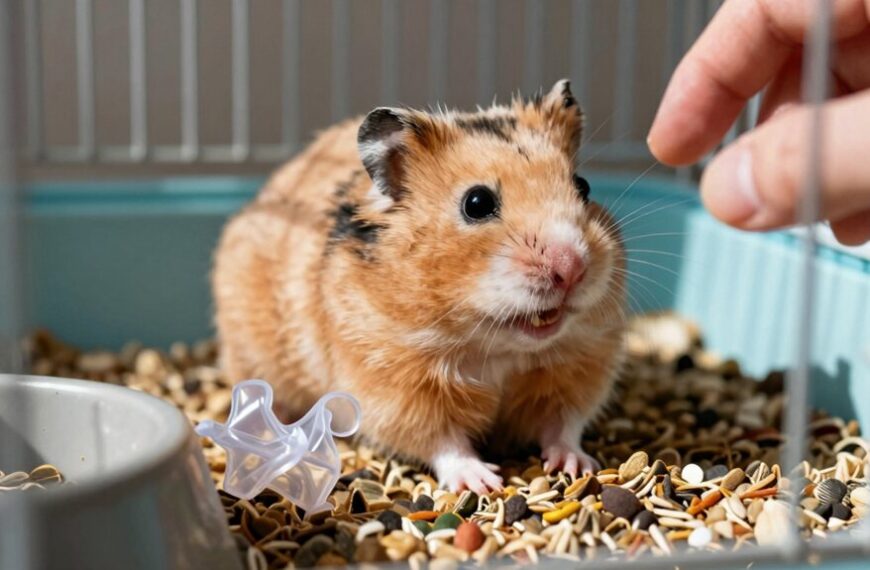
So, how do you turn from mysterious giant into snack-time buddy in your hamster’s eyes? Start by offering tasty treats from your hand. This builds trust fast.
Turn from mysterious giant to snack-time pal by offering treats from your hand—trust starts with a tiny bite and a lot of patience.
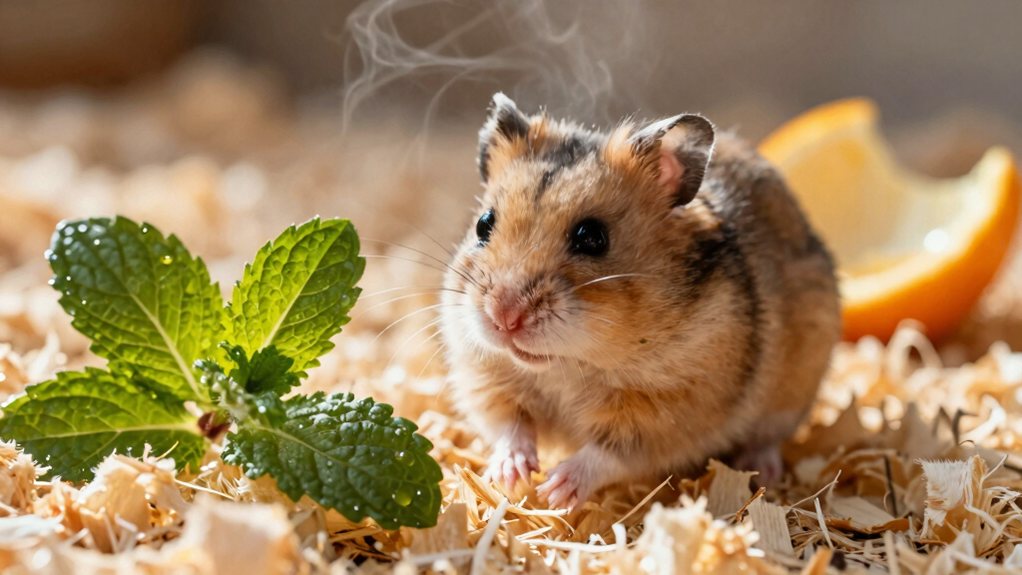
Try a treat variety like small bits of apple, carrot, or even a plain cheerio. Your hamster might be shy at first, maybe even ignoring you, but don’t take it personally.
These little nibbles create bonding moments that matter.
Be patient, stay calm, and let your hamster come to you. Over time, they’ll start sniffing your fingers and grabbing snacks with excitement.
That’s when you know you’ve made it—snack hero status!
Just remember, treats should be tiny so your pal doesn’t overindulge.
With consistency and a little humor, and maybe a mini victory dance when they finally take a treat, you’ll both enjoy this sweet, crunchy adventure together.
Trust develops over time with patience, calm presence, and warmth, so consistent gentle interaction is key to forming a strong bond.
How to Hold Your Hamster Gently
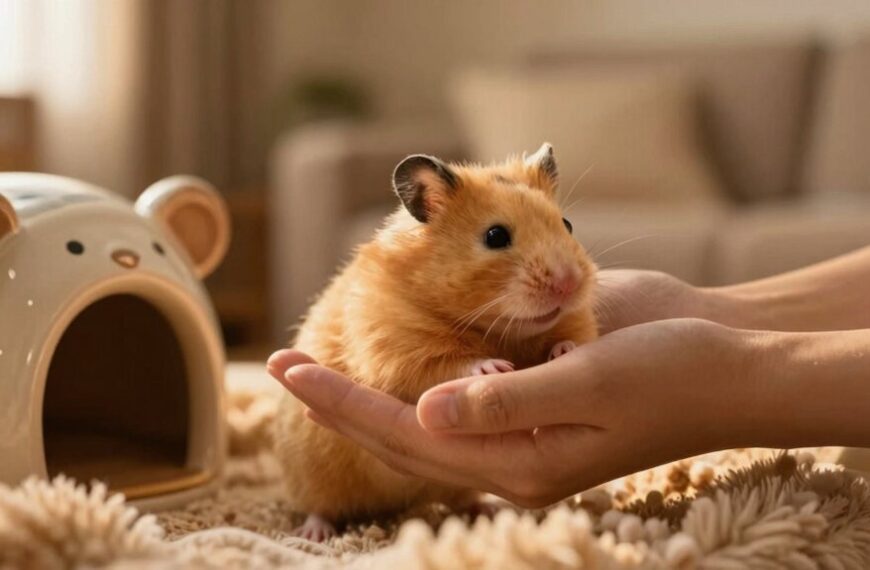
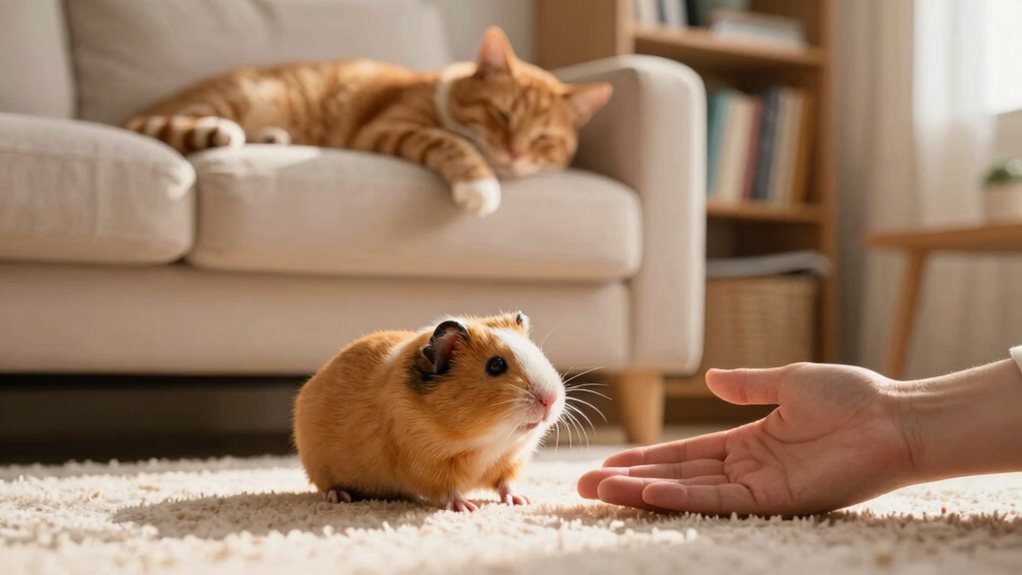
How does your hamster go from a nervous nibbler to a cozy cuddler in your hands? It starts with trust and a gentle grip. Once your hamster takes treats from your hand, it’s time to scoop them up, palms close, fingers soft. Never grab or squeeze, hamsters are delicate.
Use calm handling: move slowly, speak softly, and let them sniff your hands first. Support their whole body, no dangling legs!
If they squirm, don’t panic, just lower your hands and let them explore. A little wobble is normal, think of it as hamster acrobatics.
With patience, your tiny friend will learn that your hands mean safety, not danger. Soon, you’ll be the favorite perch in the cage.
Gentle grip plus calm handling equals happy hamster hugs. Well, as close to hugs as a hamster gets!
Constant supervision is essential whenever your hamster is out of the cage to ensure their safety and prevent stressful situations.
Set Up a Safe Hamster Play Zone

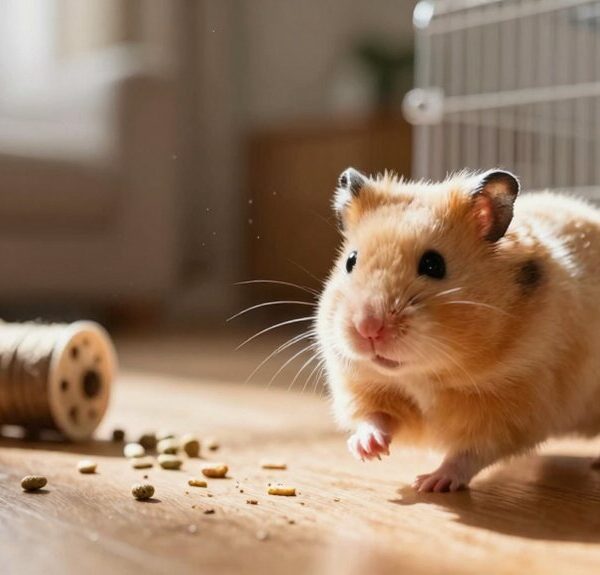
When your hamster’s ready to explore beyond the cage, you’ll want to set up a play zone that’s both fun and foolproof, because let’s face it, your tiny escape artist could turn your living room into a hamster highway if you’re not careful.
Start by picking a quiet, enclosed space like a playpen or baby gate area.
Remove any cords, plants, or small objects they could chew or squeeze under.
Add a hammock hideout for cozy naps and a climbing frame to keep them active and entertained.
These little climbers love to scamper and explore, so include tunnels and safe toys too.
Keep an eye on them—supervision is key!
Hamsters are sneaky, and what looks like a cute nap in a sock might actually be a hiding spot for a daring escape plan.
With the right setup, your play zone becomes a safe, fun adventure land they’ll love—and you’ll love watching them enjoy it.
A great option is a pop-up playpen with automatic pop-up setup that makes deployment quick and secure.
Best Toys and Games for Hamsters
You’ll want to stock your hamster’s play zone with fun tunnels and cozy hideouts,
they love zipping through tubes like tiny furry racecars.
Grab some safe chew toys too,
since your little buddy’s always gnawing to keep their teeth in check and to save your furniture.
Mix in munchable toys filled with treats, and you’ve got games that feed their curiosity and their snack habit.
A great way to boost mental engagement is with foraging toys that encourage natural treat-hunting behavior and prevent boredom.
Tunnels And Hideouts
While your hamster mightn’t be asking for blueprints, they definitely appreciate a good underground empire. Building one keeps their busy paws and curious mind happily occupied.
Tunnel exploration isn’t just fun, it’s instinct. In the wild, hamsters dig miles of burrows, so giving them twisty tubes and connected pathways satisfies that natural drive.
Try plastic tunnels, cardboard rolls, or even DIY PVC setups, just make sure there are no sharp edges.
Hideout design is where you can get creative. Use small wooden houses, ceramic caves, or coconut shells to create cozy retreats.
Your hamster will love popping in and out, claiming each as their own private suite.
Rotate tunnels and hideouts weekly to keep things fresh, because, let’s be honest, even tiny architects get bored.
Watch them zigzag through tunnels like they’re late for a very important date. It’s adorable, enriching, and a total win for playtime.
For added enrichment, consider including a multi-level climbing structure with natural untreated wood to support safe chewing and climbing behaviors.
Chew Toys And Munching
Since your hamster’s teeth never stop growing, chewing isn’t just a pastime, it’s a must.
Keeping them healthy means offering safe, fun options that satisfy their need to gnaw while adding some munch variety to their day.
Think of chew toys as both entertainment and dental care in one tiny package.
For chew safety, always pick non-toxic materials made just for hamsters.
- Try wooden blocks or untreated applewood sticks, they’re firm favorites and great for wear and tear.
- Add cardboard tubes from toilet paper rolls for a crunchy, eco-friendly snack you can replace daily.
- Rotate in safe plastic chew toys designed for small pets to mix textures and keep things interesting.
You’ll laugh watching them go to town on a new chew, but it’s no joke, this habit keeps their teeth in check.
Munch variety isn’t just fun, it’s smart care.
A great option is choosing chew toys made from 100% natural materials like apple wood or timothy hay, which support dental health while being safe for digestion.
Know When to End Playtime
You’ve been having fun, but keep an eye out. Your hamster might be giving you little hints it’s time to call it a night.
If they’re skittering away, freezing up, or starting to yawn (yes, really!), they’re telling you they’re done playing.
Just like you wouldn’t want to chat all night when you’re sleepy, your tiny buddy needs rest too.
Signs Of Overstimulation
Ever wonder why your hamster suddenly bolts for its hideout mid-cuddle? It might be overstimulated. Just like us, hamsters need rest breaks to recharge, especially after lots of handling or play.
Paying attention to stress signals can save both of you from a tiny meltdown. If your furry friend seems overwhelmed, it’s time to slow down and let them chill.
- Fidgeting nonstop – If your hamster won’t sit still and keeps scrambling around, they’re likely over it.
- Freezing or playing dead – Yep, that’s a real thing. It’s a sign they’re stressed and need space.
- Nipping or squeaking – Not in the mood anymore? They’ll let you know, politely (or not so politely).
Back off gently and give them quiet time. You’ll both enjoy playtime more when it’s calm and fun, not frantic.
Hamsters may also display signs of cage rage when deprived of adequate space and mental stimulation.
Hamster Needs Rest
How do you know when it’s time to call it a day with your busy little buddy? Watch for signs your hamster’s had enough, maybe he’s hiding, yawning, or just not responding.
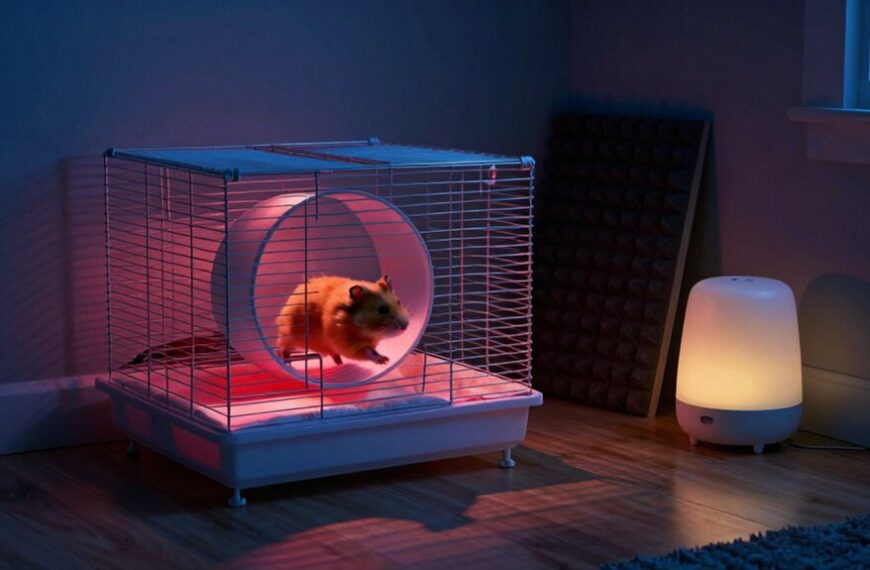
Remember, hamsters are nocturnal, so they’re most active at night and need serious rest during the day.
Pushing playtime too long can stress him out. Give your furry friend a quiet environment to recharge, away from loud noises and busy feet.
Think of it like hitting pause on fun so he can nap like a pro. You wouldn’t want someone bothering you mid-snooze, right?
Keep things calm and let him retreat to his cozy nest. Respecting his rhythm builds trust and keeps him happy.
Hamsters are naturally nocturnal animals and require undisturbed daytime sleep to maintain their health and well-being.
Final Thoughts
You’ve got this! With a little patience and lots of tiny treats, you and your hamster will be best buds in no time. Just go slow, keep playtime fun and safe, and always let your little buddy set the pace.
Sure, they might ignore you or even yawn, rude, right? That’s just hamster humor. Keep showing love, and soon, you’ll have a happy, trusty and adorable sidekick.