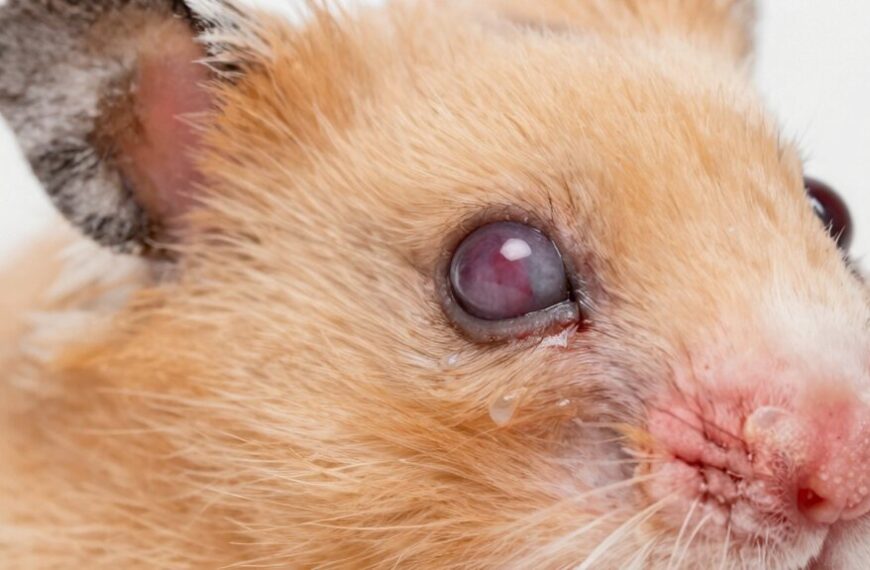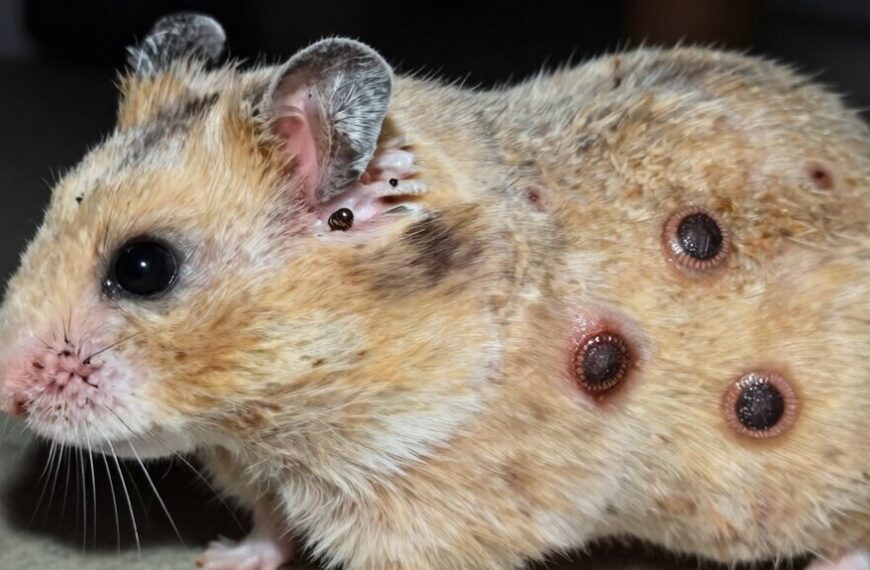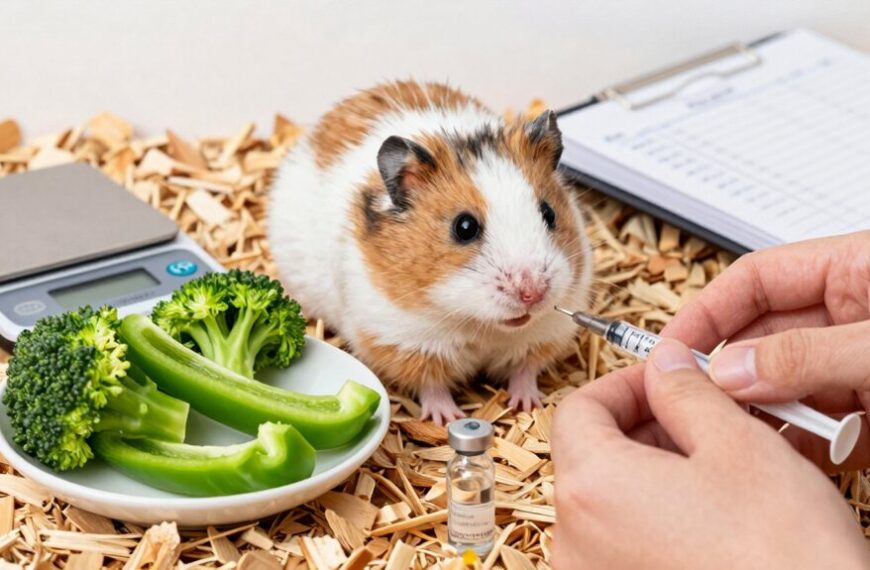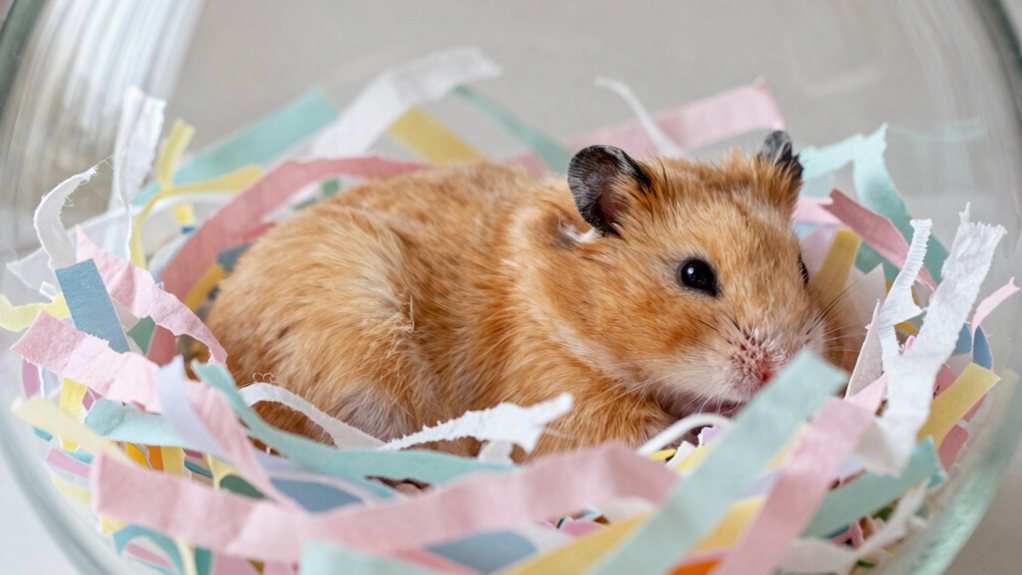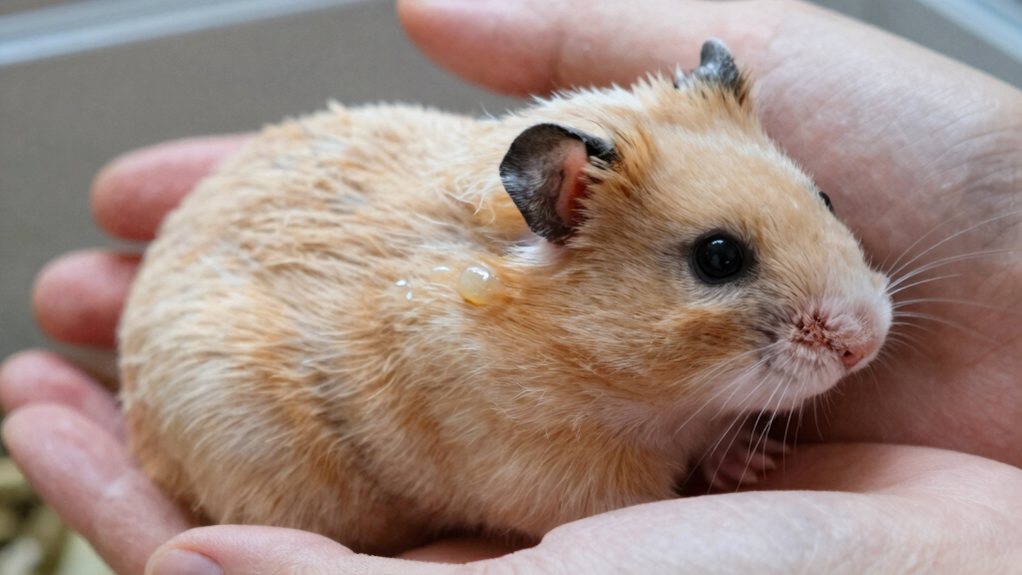
First, take a deep breath. Gently feel the lump’s size and texture, and jot down what you notice. Many lumps are harmless cysts.
Check if your hamster is eating and acting normally. If the lump grows fast or they stop eating, see a vet immediately. Trust your gut, you know your pet best.
For a closer look at next steps and how to keep them comfortable, there’s more helpful information right here.
What Should You Do First When You Find a Lump?
When you discover a lump on your hamster, your first move shouldn’t be panic, but it should be a careful and calm assessment.
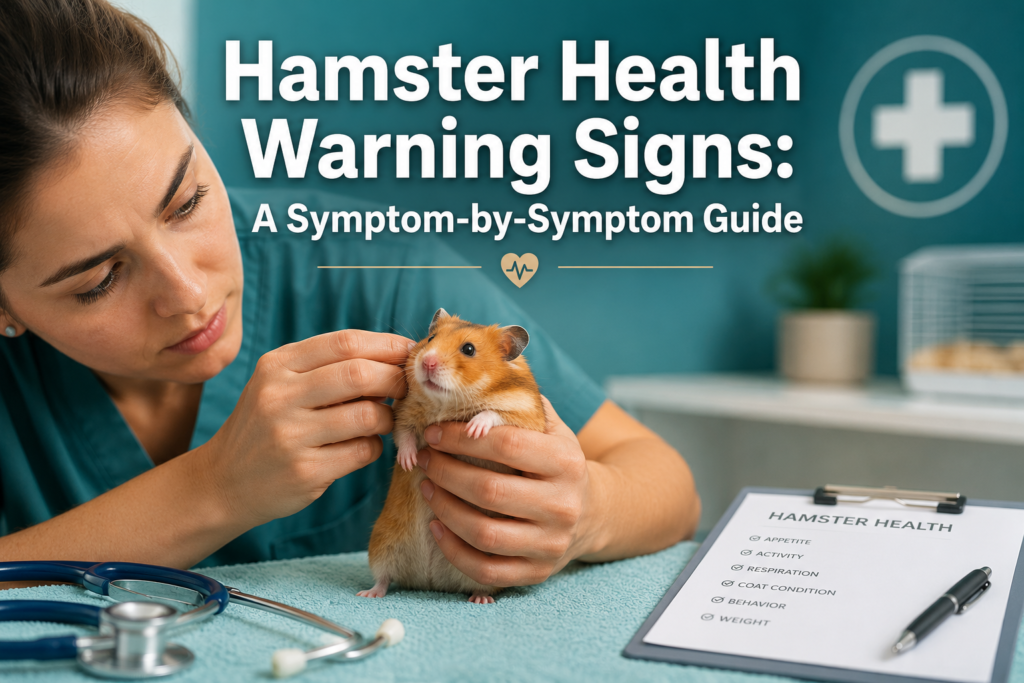
Take a deep breath and gently feel the area. You’ll want to observe the lump quickly, making a mental note of its size, location, and how it feels—is it hard, soft, or movable? Jot this info down, as it’s super helpful for the vet.
Don’t start imagining worst-case scenarios; many lumps are harmless cysts or abscesses. Your job right now is just to be a good detective for your furry friend.
Check if your hamster is acting normally, eating well, and moving comfortably. This initial info-gathering is your best first step before calling the professional. While examining your hamster, remember that zoonotic transmission of germs from pets to humans is rare, but practicing good hygiene is always wise.
Is It an Emergency? Signs You Need a Vet Immediately
If the lump you’ve found is growing quickly or your hamster’s behavior changes suddenly, it’s a sign you should contact your vet without delay.
Watch for visible signs of distress, like your little friend not eating or seeming to be in pain, as these are urgent red flags. This is especially critical if you observe respiratory distress or neurological changes like seizures.
Trust your gut, too, you know your pet best, and if something feels seriously off, it’s always better to get it checked out.
Rapid Change in Size
Has your hamster’s lump seemingly ballooned overnight? A rapid change in size is a major red flag. While not every growth is sinister, swift expansion often signals an aggressive issue that needs a vet’s immediate attention. Don’t wait; schedule that appointment right away. This is especially urgent as tumors are common in hamsters aged 2 to 3 years and can develop quickly.
In the meantime, provide your pet’s comfort. Keep their habitat in a stable, draft-free area, as sudden temperature changes can stress them.
Their cage should remain their safe immediate shelter, so avoid rearranging it drastically.
You can offer extra soft bedding and their favorite snacks.
It’s tough to see your tiny friend with a big problem, but your quick action is the best medicine they can get while you wait for professional care.
Sudden Behavioral Shifts
Beyond monitoring a lump’s size, you should also watch for any unusual changes in your hamster’s daily habits. A sudden behavioral shift can be a major red flag.
Pay close attention if your typically active buddy shows unexplained lethargy, sleeping far more than usual or seeming uninterested in their wheel.
Appetite changes are equally telling; a hamster who suddenly ignores their favorite treats or stops eating needs prompt attention.
These signs, especially combined with a lump, often mean your pet is in pain or distress.
While a grumpy day happens, a sustained personality change isn’t normal.
Trust your gut, you know your hamster best. If their spark seems dimmed, it’s time to call the vet. A rapid weight loss alongside these behavioral changes is a specific emergency sign requiring an immediate veterinary visit.
Visible Distress or Pain
Spotting a lump on your hamster can be worrying, but seeing clear signs of pain turns that worry into an urgent call to action.
Watch for intense behaviors like a hunched posture, refusing favorite foods, or aggressive reactions to gentle touch. These aren’t just bad moods; they’re distress signals.
While you can’t do a formal pain assessment, you know your pet’s normal.
If their usual home comfort routines are shattered by constant trembling or hiding, it’s a vet emergency.
Don’t wait, hoping it’ll pass.
Pain means the issue is advancing, and hamsters hide illness until they can’t.
Your quick decision is their best chance for relief and recovery, so trust your gut and make that appointment now. Be especially vigilant for signs like fever or fatigue, which can accompany local infection and indicate a serious systemic issue.
Common Types of Lumps and Bumps in Hamsters
Not every lump on your hamster is the same, so let’s look at a few common types you might find.
Abscesses are painful, pus-filled infections often from a small wound, while harmless fatty tumors called lipomas feel soft and movable under the skin.
It is important to also know the signs of more serious, cancerous growths, which tend to be firm, irregular, and grow quickly. Monitor any lump closely for signs of infection, such as redness, warmth, or discharge, and consult a veterinarian if these appear.
Abscesses And Infections
While you’re checking your little friend during cuddle time, you might find a lump that’s actually a pocket of pus, called an abscess.
These often form after a minor bite or scratch gets infected.
You’ll usually see some skin redness around the area, and there might be a scab where the wound is.
Unlike a tumor, an abscess can feel a bit squishy.
If it opens, you might notice discharge tracking back under the skin, which isn’t pleasant but is a clear sign.
Don’t try to pop it yourself, you could push the infection deeper.
Instead, a vet can safely drain and clean it, often prescribing antibiotics.
With quick care, your hamster will be back to its busy, wheel-running self in no time.
Remember, proper handwashing after handling your pet is essential to prevent the spread of any bacteria from the wound site.
Fatty Tumors (Lipomas)
They can confirm it’s just a fatty deposit and not something more serious.
While the exact cause isn’t always clear, a high-fat diet risk is often a contributing factor, so watch those treat portions! Maintaining a balanced hamster diet with limited treats can help manage this risk.
During your regular gentle palpation while petting your hamster, finding a soft, squishy lump isn’t an immediate sign. However, if it grows rapidly, changes texture, or bothers your pet, that’s your cue to schedule a vet visit promptly for peace of mind.
Cancerous Growth Signs
How can you tell if a new lump on your hamster might be something more serious? While many lumps are harmless, you should watch for signs of a cancerous growth.
A major red flag is rapid growth; a lump that gets bigger noticeably over days or weeks needs a vet’s check.
Also, look for ulceration symptoms, like the skin over the lump breaking open, bleeding, or looking crusty. This isn’t a simple scratch.
Another serious concern is metastasis warning, meaning the cancer spreads.
If you feel new, hard lumps in other areas, like under the armpit, it’s urgent.
Your hamster might also act differently, losing energy or appetite. Age-related health issues such as tumors are a more common cause of death in hamsters than old age itself.
Stay observant, trust your gut, and always consult your vet for peace of mind.
How a Veterinarian Diagnoses a Lump or Tumor
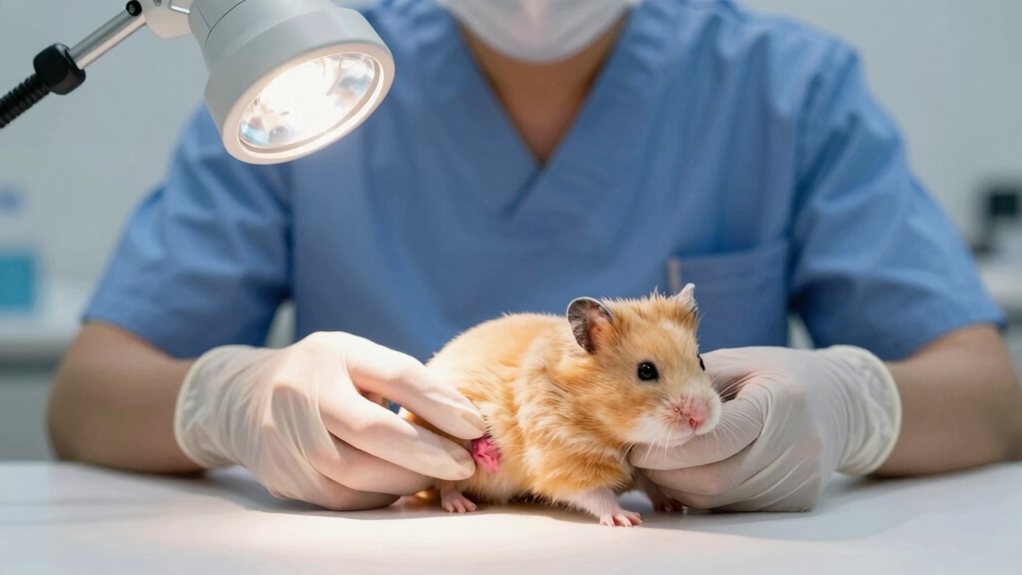
Discovering a lump on your hamster can be unsettling, but a trip to the vet is your next best step to get answers.
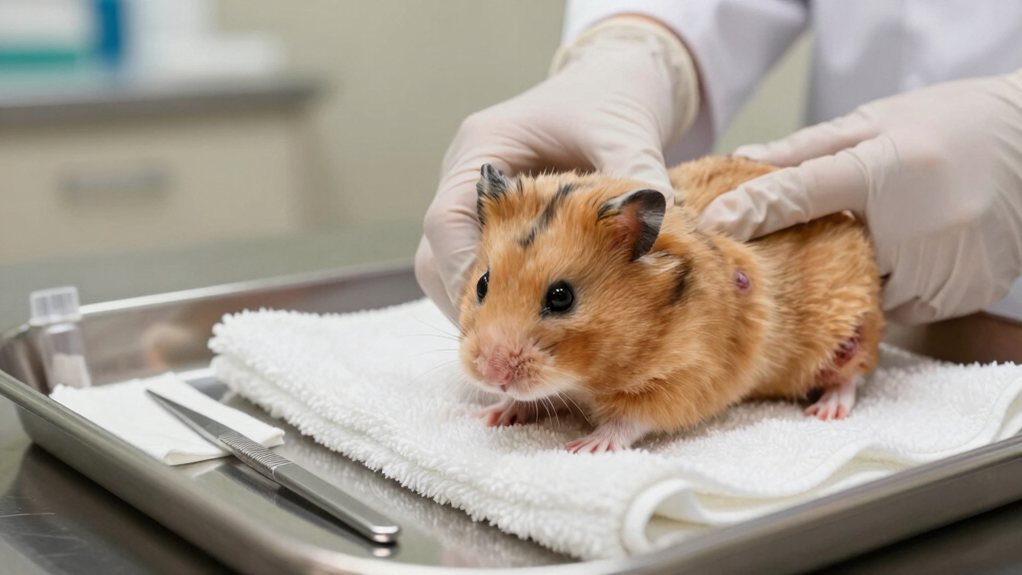
Your vet will start with a gentle physical exam, feeling the lump’s size and location.
They might use diagnostic imaging, like an X-ray or ultrasound, to see what’s happening beneath the skin and if it’s affecting internal organs.
The only way to know for sure if it’s cancerous, however, is through a biopsy confirmation.
This involves taking a tiny sample of the cells for testing.
While it sounds scary, it’s a straightforward procedure.
Since illness or discomfort can sometimes alter a hamster’s behavior, watch for any grumpy, reactive behavior during handling as it could provide additional context for your vet. This process gives you a clear diagnosis, so you can make the best, most informed care plan for your little friend.
What Are the Treatment Options for a Hamster Tumor?
Once you’ve got a diagnosis for your hamster’s lump, you might be wondering what comes next, and it’s perfectly normal to feel a mix of concern and hope. Your vet will recommend the best path forward based on your hamster’s age, health, and the tumor’s type.
Not every lump requires immediate, drastic action.
Here are the main treatment options:
- Surgical Removal: This is common for accessible tumors. It’s a big step for a tiny pet, but it can offer a complete cure if the tumor is benign and caught early.
- Watchful Waiting: For older hamsters or slow-growing lumps, sometimes the kindest choice is monitoring without intervention.
- Non Surgical Care: This focuses on keeping your pet comfortable with pain management and excellent supportive care at home.
- Euthanasia: In severe cases, this peaceful option may be recommended to prevent suffering, which is the final act of love.
How to Care for a Hamster After Surgery
You’ll want to set up a cozy, quiet recovery space for your hamster, keeping their cage extra clean and comfortable.
Carefully follow your vet’s instructions for any pain medication, and you might need to offer soft foods like baby food or soaked pellets to make eating easier.
A little extra TLC during this time goes a long way toward helping your tiny friend heal.
Post-Surgery Recovery Environment
- Use extra-soft, paper-based bedding to cushion their body and keep them snug.
- Place their cage in a quiet, dim room to minimize startling sounds and bright lights.
- Provide easy access to food and water right near their nest so they don’t have to move far.
- Keep their environment consistently warm, around 70-75°F, as they can get chilly post-op.
A peaceful setup makes a world of difference for their recovery mood.
Medication And Feeding Care
After you’ve set up a cozy recovery space, the next focus is on your hamster’s daily routine.
Administering medication is important, so always follow your vet’s antibiotic guidance to the letter for a full recovery.
You can hide liquid medicine in a tiny bit of soft food, like baby food or mashed banana, to make it easier.
For hydration support, make certain fresh water is always available in a shallow dish they can easily reach.
Offer their usual favorite foods but in smaller, softer portions to encourage eating without strain.
A little extra protein, like a bit of scrambled egg, can help healing.
Keep this routine gentle and calm, turning care into comforting moments you both can share.
What If Surgery Isn’t an Option?
- Consult your vet for pain management options to keep your little friend cozy.
- Adapt their habitat by adding soft bedding and making food and water super easy to access.
- Maintain a gentle routine with quiet handling and their favorite treats to boost their spirits.
- Monitor their quality of life closely, celebrating the good days and knowing you’re providing the kindest care.
Your dedication during this time makes all the difference for your tiny companion.
Practical Tips for Comfort and Pain Management
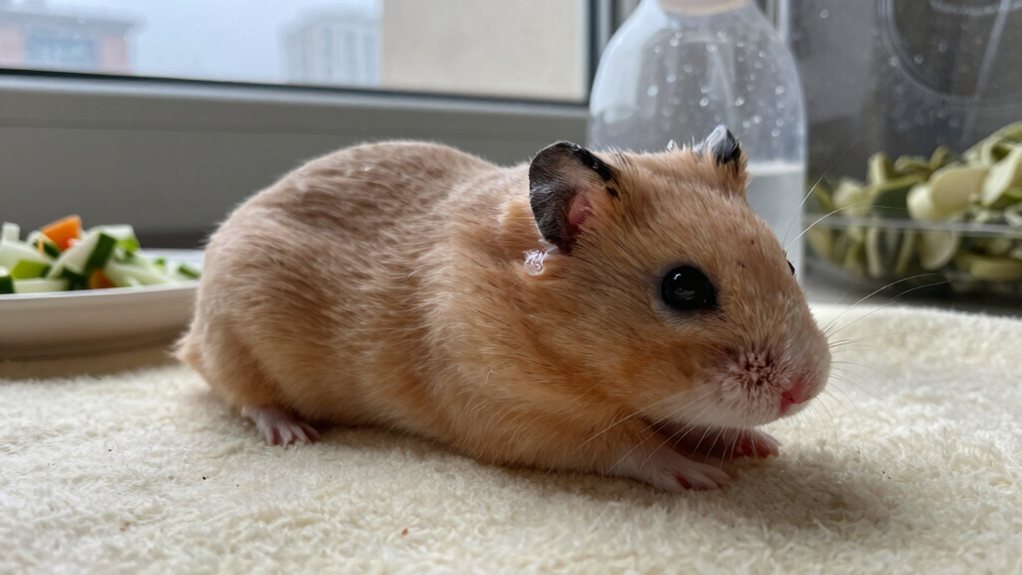
When surgery isn’t on the table, focusing on your hamster’s day-to-day comfort becomes your main goal.
Start with a warm nest setup using extra-soft, paper-based bedding. This cozy spot eases achy joints and provides security.
A warm nest of soft, paper bedding eases your hamster’s achy joints and offers a secure, cozy refuge.
Stress reduction is also key, so keep their cage in a quiet area and maintain a gentle routine to avoid startling them.
You can offer favorite, easy-to-eat foods, as a happy hamster is a more comfortable one.
Watch their behavior closely; if they seem restless or are neglecting grooming, they might need pain medication prescribed by your vet.
Your loving care makes all the difference, turning their space into a peaceful sanctuary.
How to Assess Your Hamster’s Pain and Happiness
So, how can you tell if your little friend is hurting or just having an off day? You become a hamster detective, watching closely for small signs.
Paying attention to social bonding cues, like whether he still perks up when you talk to him, is a big clue. Regular appetite comfort checks are also crucial, a happy hamster is usually a hungry one!
Here are 4 key things to monitor:
- Activity Level: Is he exploring and using his wheel, or is he hiding and sleeping much more than usual?
- Grooming Habits: A puffed-up, scruffy coat can signal he’s not feeling well enough for his usual clean-up routine.
- Eating & Drinking: Track his food and water intake; a sudden drop is a major red flag.
- Body Language: Watch for hunched posture, squinted eyes, or flinching when touched, which can indicate pain.
How to Support Your Aging Hamster’s Health
Just like us, our hamsters slow down a bit as they get older, and noticing those small changes in their comfort and energy can help you adjust their care.
You’ll want to focus on careful handling, picking them up more slowly and supporting their whole body, as their bones can become more delicate.
Prioritize stress reduction by keeping their cage in a quiet area and maintaining a consistent routine, which provides great comfort.
A quiet space and a predictable daily rhythm offer immense comfort to an aging hamster, easing their stress significantly.
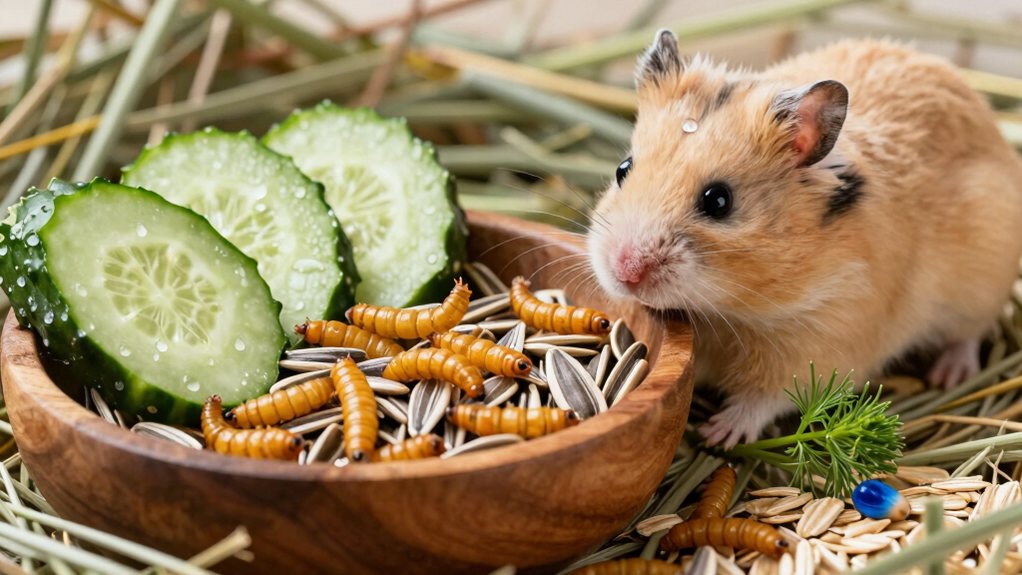
Pay close attention to dietary hydration by offering watery veggies like cucumber, ensuring they get enough fluids even if their drinking habits shift.
These thoughtful tweaks to their daily life make their golden months more comfortable, and you’ll feel good knowing you’re helping them age with grace.
Final Thoughts
Finding a lump on your hamster can be scary, but you’re not alone. Stay calm, get a vet’s opinion, and focus on giving your little friend the best care possible, whatever that looks like.
Whether it’s a simple procedure or just making them comfortable, your love and attention are what matter most. You’re a great pet owner for being so observant and proactive.