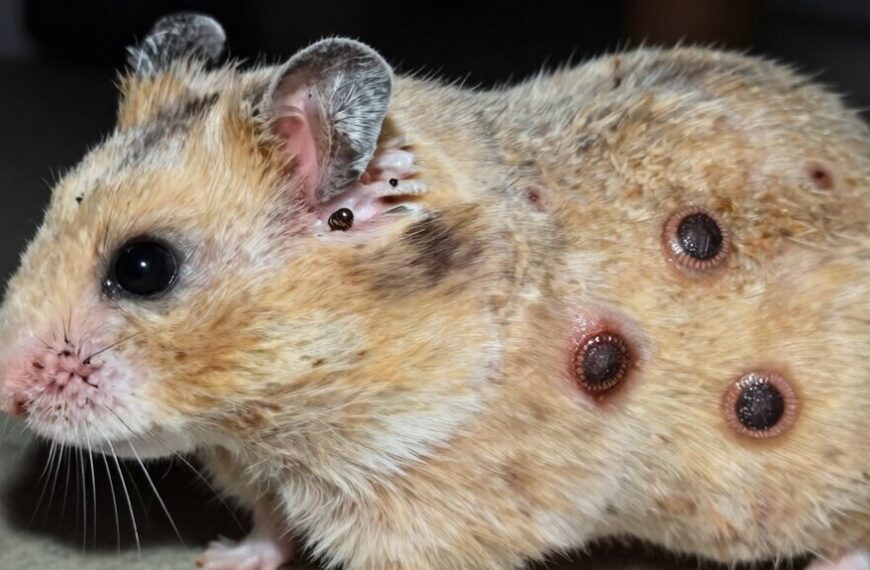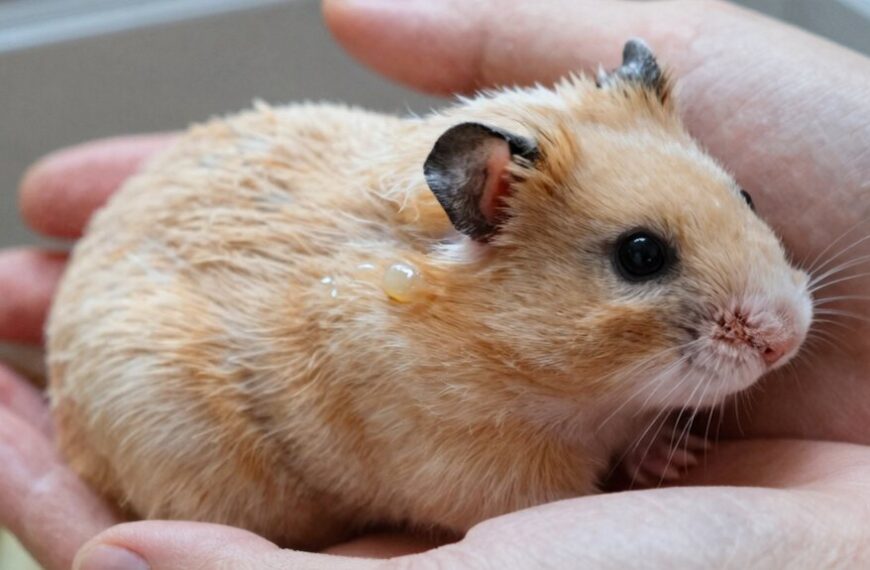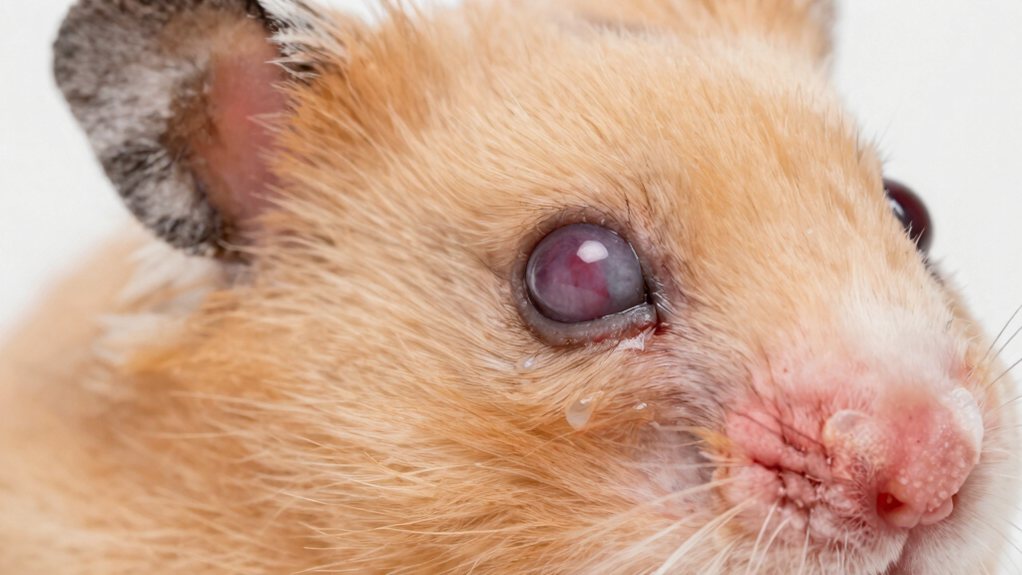
Noticing your hamster squinting or with a crusty, teary eye means an infection is likely. Common causes include dusty bedding or irritants.
You should gently clean the area, but see a vet promptly if there’s pus or swelling for proper diagnosis and meds. At-home care, especially keeping the cage super clean, is key to healing.
A full recovery is very possible, and there’s more helpful guidance waiting for you just below.
What Are the Common Signs of a Hamster Eye Infection?
Ever wondered if your hamster’s squinty eye is only a quirky expression or something more serious? It’s often a red flag.
You might notice persistent squinting behavior, as if they’re trying to shield their eye from light. Another common giveaway is a sticky, crusty buildup around the lid. This tearing discharge can be clear, cloudy, or even pus-like, and it might glue the eye shut.
Your little friend may also rub their face against the cage bars or their bedding in clear discomfort. These signs mean it’s time for a closer look. An irritated hamster may be more prone to biting due to illness or discomfort, so handle them gently.
Watch for your hamster rubbing its face against objects; it’s a clear sign of discomfort needing closer attention.
While hamsters are tough, eye issues need your attention, it’s not just a bad fur day.
Promptly spotting these symptoms is your first step to getting them help.
What Causes Eye Infections in Hamsters?
Behind those squinty eyes and crusty lids, you’ll often find a few common culprits causing your hamster’s discomfort. Dusty bedding is a big one; those fluffy wood shavings can send particles right into their sensitive eyes, so it’s critical to choose dust-free materials to prevent this respiratory and ocular irritation.
Your little friend might also have irritant allergies from strong scents in cleaning sprays or new cage items. Poor ventilation in their habitat allows ammonia from urine to build up, creating a harsh atmosphere that inflames eyes.
Sometimes, the issue is mechanical, like blocked tear ducts, which can happen from a minor injury or just their breed’s anatomy. Keeping their home clean and dust-free is your best defense, turning you into a superhero for their peepers.
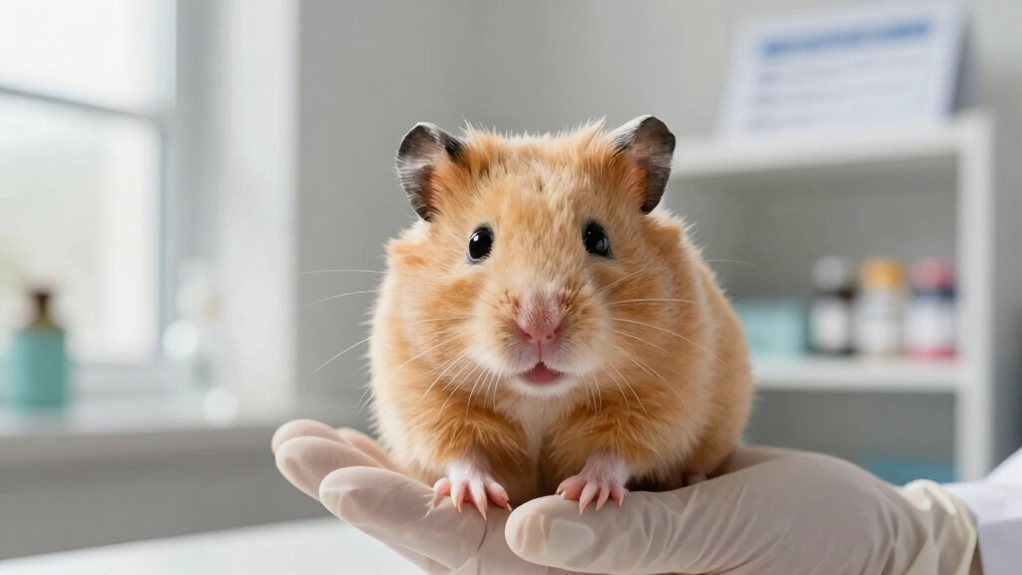
When Should You Take Your Hamster to the Vet for an Eye Issue?
Now that you know what can cause those eye troubles, let’s talk about when those squints and crusts mean it’s time to call the pro.
Learn when your hamster’s squinting or crusty eyes signal it’s time to call the vet.
You shouldn’t wait if you see pus, notable swelling, or if the eye looks injured. Any major vision changes, like your hamster bumping into things, are a red flag. It’s also important to schedule a veterinary check if the hamster shows any signs of illness, as poor cage hygiene can contribute to overall health problems.
If your little friend stops eating, becomes super lethargic, or the issue doesn’t improve in a day with gentle cleaning, pick up the phone.
Think of it this way: their eyes are tiny, so problems escalate fast. Scheduling emergency vet visits for obvious distress is the responsible move.
It’s always better to get a professional opinion than to worry and wonder while your pal is uncomfortable.
How to Treat a Hamster Eye Infection at Home (Step-by-Step)
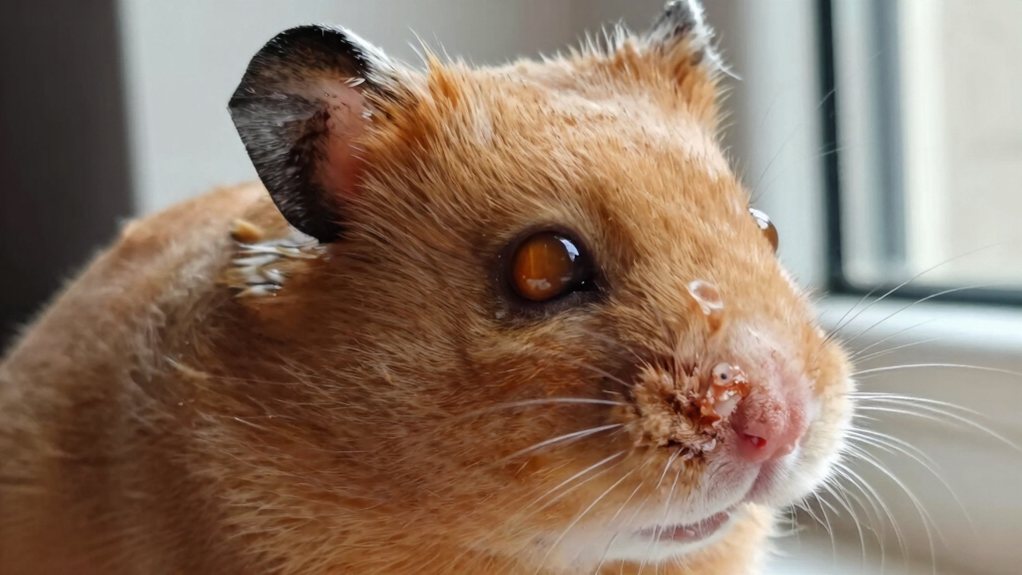
Before you begin any at-home care, you’ll want to get a vet’s diagnosis and any prescribed eye drops.
Start by gently cleaning the area with a soft, damp cloth to remove any crust, being super careful not to touch the eyeball itself.
Then, carefully apply the medication as directed, which can feel a bit tricky but gets easier with a calm hamster and a steady hand.
After administering medication, ensure the entire habitat is cleaned with a non-toxic disinfectant to prevent reinfection and support healing.
Gentle Cleaning Methods
If your hamster’s eye is looking a little crusty or weepy, you can often provide some gentle, initial care right at home, and it all starts with keeping things clean.
First, prepare a safe saline solution or use cooled, boiled water. Never use tap water or harsh chemicals. Soak a soft, lint-free cloth or cotton pad in the warm liquid.
Gently hold this warm compress against the closed eye for a minute to soften any crust. Don’t rub or press hard. Then, using a fresh, damp pad, softly wipe from the inner corner outward, using a new area of the pad for each swipe. This prevents spreading gunk back across the eye.
Be patient and calm; your hamster will appreciate the gentle touch. For cleaning any soiled bedding or cage surfaces around their habitat, always opt for a non-toxic, fragrance-free spray to avoid irritating their sensitive respiratory system.
Applying Prescribed Medication
Sometimes, that gentle cleaning you’ve been doing isn’t quite enough, and you’ll find you need to move on to a vet-prescribed eye ointment or drops.
Safety first means washing your hands before and after, just as you would after cleaning any minor pet wound. For drops handling, have a towel ready to gently burrito-wrap your hamster, which keeps them secure and makes you both feel calmer, it’s a true rescue remedy for a wiggly patient.
Consistency with medication timing is essential, so set phone alarms. Apply the exact amount your vet said, even if the eye looks better, because stopping early can let the infection bounce back.
It might feel tricky at first, but you’ll become a pro at this caring routine, helping your little friend heal. Always monitor the area closely for signs of spreading redness or pus, which require a follow-up with your veterinarian.
How to Prevent Future Hamster Eye Infections
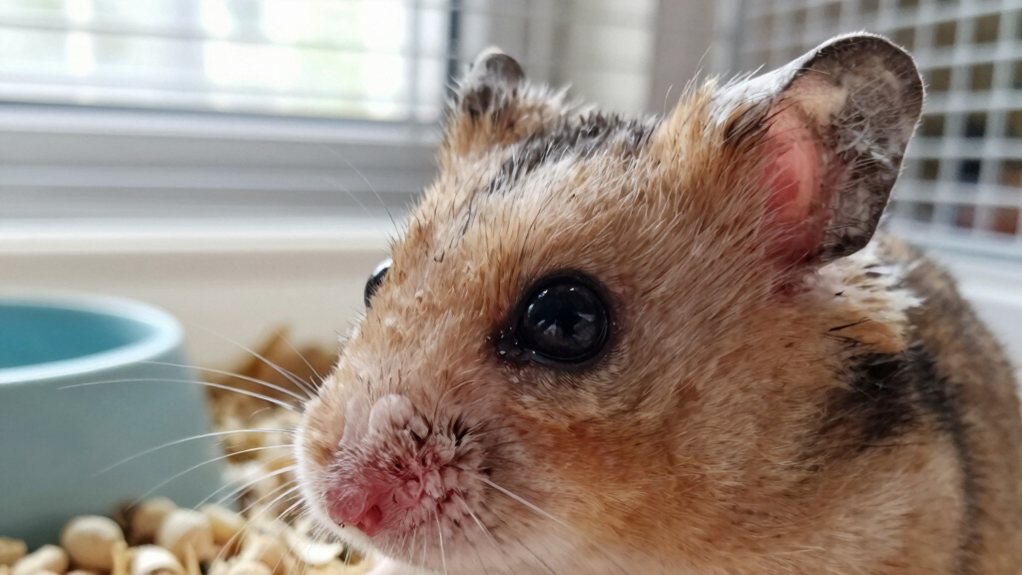
You can help keep your hamster’s eyes healthy by keeping their cage super clean, as dusty bedding is a common culprit.
Making sure they get a balanced diet full of good vitamins also strengthens their immune system, acting like a tiny shield against infection.
It’s all about creating a happy, healthy home for your little friend, and it’s easier than you might think! Be sure to perform a full bedding replacement weekly to reset bacteria levels and maintain a healthy environment.
Maintain Proper Cage Hygiene
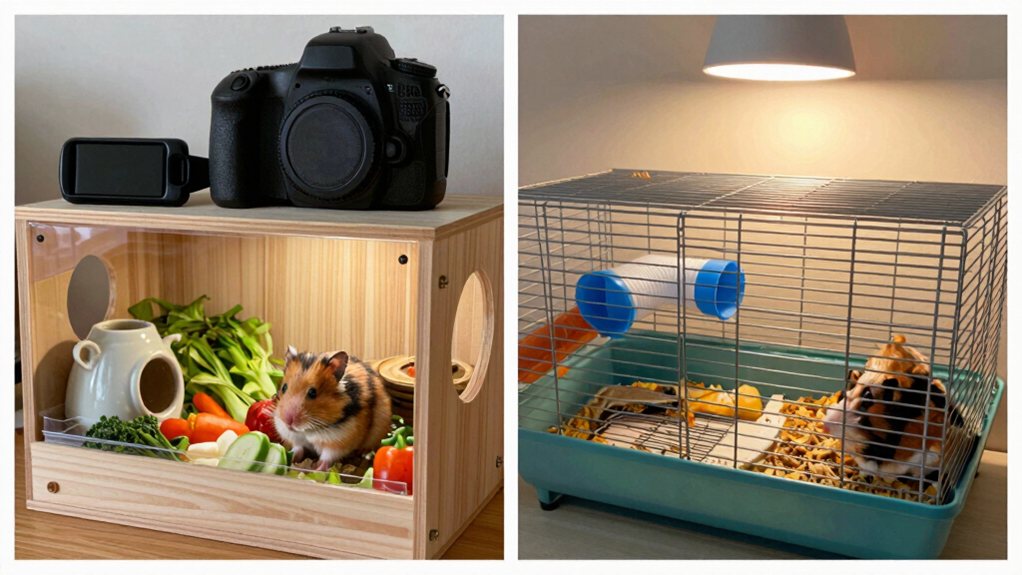
Because preventing hamster eye infections starts with their living space, keeping their cage sparkling clean is your best defense. You’ll want to do a full bedding change weekly, scooping out soiled spots daily.
Pay special attention to bedding moisture control; damp corners are a breeding ground for bacteria.
Use a pet-safe disinfectant on the empty cage each clean-out day. A safe option is a diluted white vinegar solution.
While you clean, have a small temporary enclosure spot ready, like a secure carrier with some fresh bedding, so your hamster stays safe and calm.
Don’t forget to wash food bowls and water bottles daily, too. It might seem like a chore, but think of it as giving your tiny friend a fresh, healthy hotel room every week.
Their bright, clear eyes will thank you!
Ensure Balanced Dietary Nutrition
While a clean cage builds a strong foundation for health, what goes into your hamster matters just as much. A poor diet can weaken their immune system, making them more prone to infections, including eye issues.
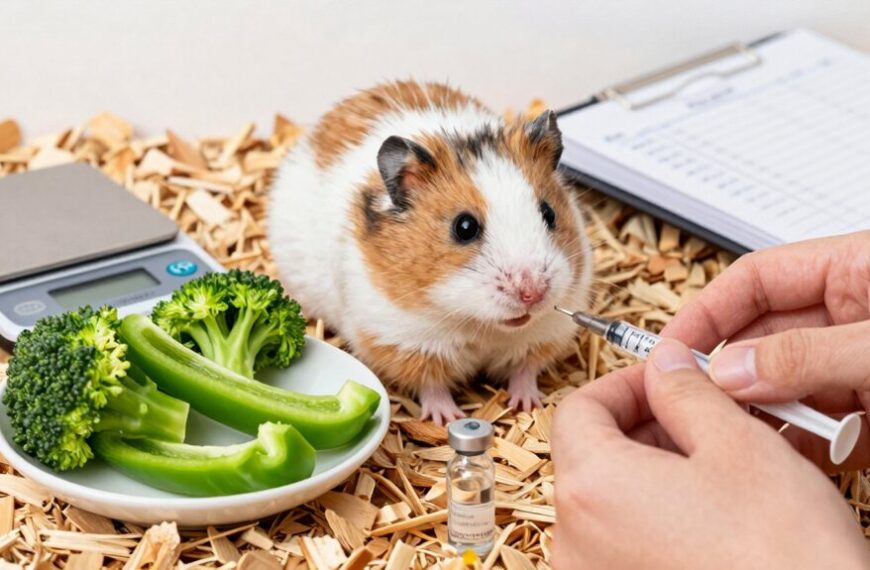
Start with a high-quality commercial hamster mix as your base, but be smart about your pellet selection; some are nutritionally complete, while others are just filler. You’ll also want to offer fresh veggies, like a bit of carrot or broccoli, for natural vitamins. Always monitor for food hoarding behavior, as hidden stashes can spoil and create hygiene issues.
In some cases, especially for older hamsters, a vet might recommend specific vitamin supplementation. Think of it like giving your little friend their daily multivitamin, it’s a small step that supports their overall well-being and keeps those bright eyes healthy and clear.
The Recovery Process: Can a Hamster Heal Fully?
Although a hamster’s small size might make an eye infection seem like a big challenge, these little pets can make a surprisingly strong comeback with proper care.
The recovery timeline really depends on how quickly you got treatment started.
With a good vet’s plan, you’ll likely see improvement within a week, but full healing can take a couple of weeks.
You’ll likely see improvement within a week, but full healing can take a couple of weeks.
Don’t skip those important vet followups; they make certain the infection is truly gone and no complications are brewing.
Your diligent care at home, giving meds and keeping the cage clean, is the biggest factor.
During recovery, monitor your hamster closely for signs of lethargy or weakness, as these can indicate a separate health issue and require prompt veterinary attention.
So, can your hamster heal fully? Absolutely!
With your love and a vet’s guidance, your furry friend can bounce back to their bright-eyed, curious self, ready to run on their wheel all night again.
Final Thoughts
Remember, your hamster’s eye infection is treatable, especially if you catch it early. With a vet’s help and proper home care, your little friend will likely bounce back to their curious, bright-eyed self.
Keep their home clean and watch their diet to prevent future issues. It’s a manageable situation, so stay observant, act promptly, and you’ll both be back to enjoying playtime in no time.