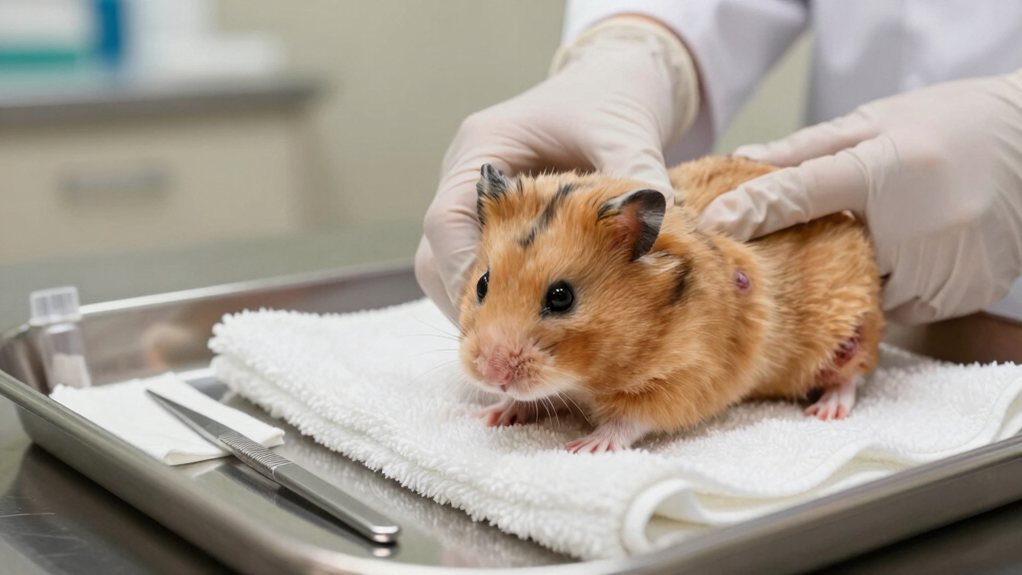
You’ve spotted a bump on your hamster, don’t panic just yet. Some lumps are harmless, but rapid growth, odd texture, or changes in behavior mean it’s vet time.
Vets check the lump’s size and may use ultrasound or a quick biopsy to know if it’s benign or cancerous. If surgery’s needed, many hamsters bounce back fast.
Keep an eye on diet and comfort, and you’ll be surprised how much you can do to help. There’s more to the story, so stick around.
What Causes Lumps on Hamsters?
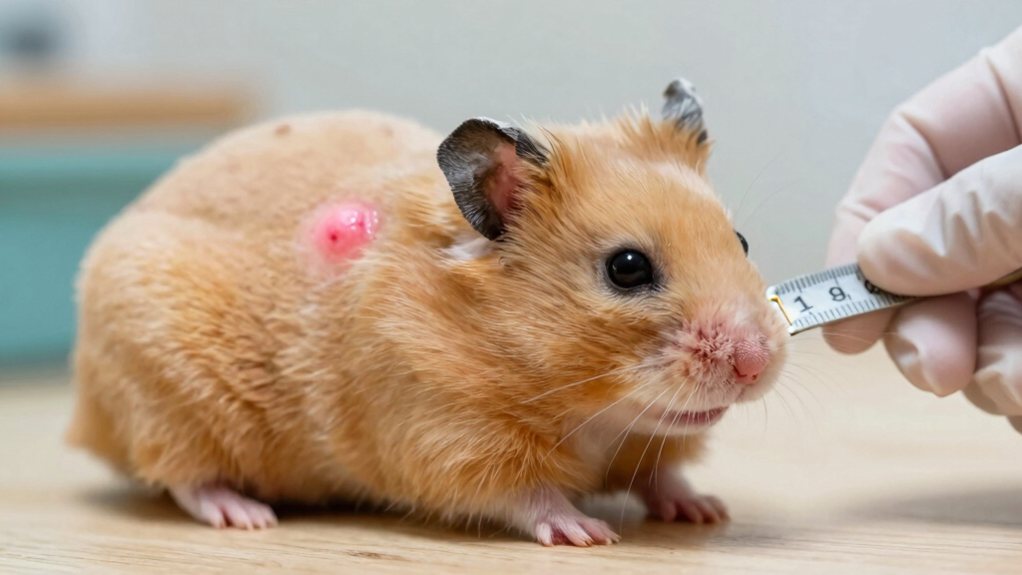
Ever wonder why your little hamster suddenly has a bump that wasn’t there yesterday?
Well, it mightn’t be as scary as it looks, but it’s still worth checking out.
Lumps in hamsters can pop up for several reasons, and while some are harmless, others need a vet’s eye.
Lumps in hamsters can appear for many reasons—some harmless, others needing a vet’s attention. Always best to get it checked for your little friend’s peace of mind.
A few hamsters develop growths due to genetic predisposition, meaning their family tree just makes them more likely to get lumps.
Others might’ve a hormonal imbalance, especially as they age, which can trigger abnormal tissue growth.
Infections or injuries can also cause swelling that looks like a tumor.
The good news isn’t every lump is cancer.
Still, it’s smart to get it checked.
After all, you want your tiny buddy bouncing around happily, not slowed down by a mystery bump.
When in doubt, call your vet.
You’ve got this!
Benign vs. Cancerous Tumors in Hamsters
You might notice a lump on your hamster and wonder if it’s something to worry about—or just a harmless bump.
Benign tumors usually grow slowly and stay put, while cancerous ones can act sneaky, spreading or changing fast.
Let’s check the signs, what your vet might do, and how testing helps clear the air, no lab coat needed!
Benign Tumor Characteristics
Imagine this: you’re gently petting your hamster and suddenly notice a small lump beneath the fur. Don’t panic. Many lumps are benign, meaning they’re not cancerous.
Benign tumors often feel even or firm and stay in one place instead of spreading. They usually grow slowly, so you might notice them over weeks or months rather than days. Think of them like a sleepy houseguest who shows up but doesn’t cause chaos.
They’re generally round, movable, and don’t bother your little buddy much. Still, it’s smart to mention it to your vet. Better safe than sorry. While benign sounds great, only a professional can confirm it.
Keep an eye on size, shape, and behavior. If your hamster is eating, playing, and acting normal, that’s a good sign. Stay calm, stay curious, and give your furry pal some extra love. You’ve got this.
Cancerous Tumor Signs
How can you tell if that lump you found is more trouble than it seems? While benign tumors are usually slow-growing and even, cancerous ones often raise red flags. Keep an eye on the tumor color. Dark, uneven hues or sudden changes can be concerning.
The surface texture matters too. If it’s rough, scaly, or looks like it’s breaking open, that’s a sign to call your vet. Cancerous lumps might also grow fast, feel hard, or stick to the skin underneath.
Your hammy might seem less peppy, eat less, or scratch at it constantly. Like it’s their tiny way of saying, “Hey, this isn’t right!”
While it’s easy to panic, remember not every bump is bad news. But when in doubt, a vet visit beats playing detective. After all, your little furball deserves to live their best, lump-free life!
Diagnosis And Testing
So, how do you know for sure if that bump is a harmless blob or something sneakier? Your vet will take charge, and don’t worry—they’ve seen it all. First, they’ll gently examine the lump, checking size, texture, and location.
To dig deeper, they might use ultrasound imaging. No surgery needed! It’s like a hamster selfie from the inside, showing whether the mass is solid or fluid-filled.
Blood analysis also helps by revealing how your little buddy’s body is coping.
Together, these tests give clues: is it a chill, benign fatty tumor or a cancerous party crasher? While waiting, keep calm—many lumps turn out to be no big deal. Just like us, hamsters get weird bumps too.
The key? Catching it early and trusting your vet’s detective work. You’ve got this—and so does your tiny furball.
When Should You Worry About a Lump?
You know that little lump you just spotted on your hamster? If it’s growing fast, changing size, or your normally active buddy is now sluggish or grumpy, it’s time to pay closer attention.
Don’t panic. Hamsters are tiny drama queens. Sudden changes are definitely worth a vet visit.
Tumors are relatively common in older hamsters, especially between 2 to 3 years of age, and while some are benign, others can be linked to genetic predisposition or hormonal factors.
Lump Size Changes
Ever noticed a little bump on your hamster that seems to come and go like a surprise guest at a party? Some lumps may change size, and that’s not always a red flag, but it’s worth watching.
If a lump grows quickly or feels firm, especially in sensitive areas like the belly or under the chin, it’s time to pay closer attention.
Tumor texture matters: soft, movable lumps are often less concerning than hard, fixed ones.
Lump location also plays a role—those near joints or organs need extra care.
While small shifts might be normal, sudden swelling or discomfort for your tiny friend should prompt a vet visit.
Keep an eye on it like you’d monitor a finicky Wi-Fi signal—annoying but manageable until it crashes.
Stay calm, stay curious, and don’t wait too long to call your vet. Your hamster’s health is worth every second.
Rapid Growth Signs
While not every bump needs a 911 call, some changes in your hamster’s lump should definitely grab your attention, fast.
If you notice rapid growth or abnormal swelling, it’s time to act.
Hamster lumps that double in size within days aren’t just growing. They’re throwing a party you didn’t invite.
Keep a close eye out for these red flags:
- The lump grows noticeably in just a few days
- Your hamster starts acting sluggish or stops eating
- The skin over the lump looks red, warm, or broken
- You spot abnormal swelling on one side of their body
These signs don’t always mean the worst, but they do mean “vet, stat.”
Better safe than sorry. Your tiny buddy counts on you.
And hey, at least they’ll get extra cuddle time during recovery.
Behavior Shifts Noticed
What if your hamster suddenly stops doing the things they love, like zooming through their tunnel or gobbling up sunflower seeds like tiny snacks are going out of style? That’s when you should pause and pay attention.
A lump mightn’t always hurt, but if your hamster’s play habits change, like avoiding the wheel or napping more than usual, it could be a sign.
You might also notice less social interaction. Maybe they’re not coming to the cage front when you talk, or they’re grumpy when you try to pet them.
These shifts don’t always mean the worst, but they’re clues your little buddy isn’t feeling like themselves. Tumors can sap energy or cause discomfort, even if it’s not obvious.
If your once-bouncy ball of fur seems off, don’t wait. A vet visit could make all the difference—and fast.
A drop in activity level may also signal underlying issues such as energy and activity decline, which is commonly seen in aging or ill hamsters.
How Is a Hamster Lump Diagnosed?
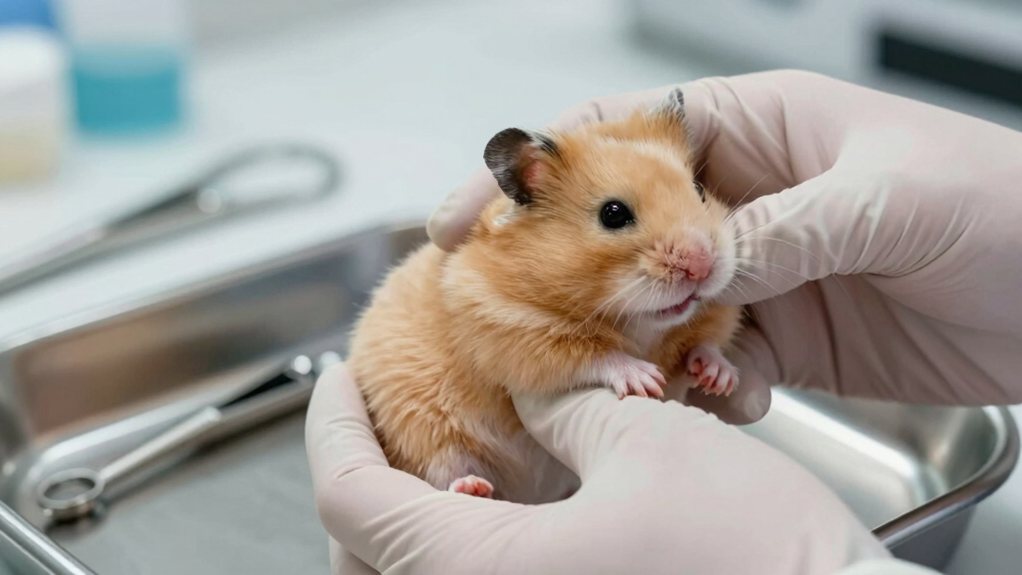
So, how do you actually find out what that bump on your hamster is? Your vet’s got your back, your hamster’s. Here’s how they figure it out:
- Physical exam: They’ll gently check the lump’s size, texture, and location—kind of like detective work with tiny gloves.
- Medical history review: They’ll ask about your hamster’s age, diet, and any family drama (aka genetic predisposition) or if cage cleanliness (hello, environmental factors!) might be playing a role.
- Fine needle biopsy: A quick poke to pull out cells—don’t worry, it’s fast and usually painless.
- Lab tests: Those cells get sent off to the lab for a thorough analysis.
It’s not always serious, but catching it early gives your little buddy the best shot. And hey, at least they’re too small for awkward doctor small talk!
Treatment Options for Hamster Tumors
How do you tackle a tumor in a hamster once it’s been diagnosed?
Well, here’s the thing. Treatment depends on the type, size, and location of the tumor.
Surgery is often the go-to option if your little buddy is healthy enough to handle it.
Vets are amazing at handling these tiny patients, and many hamsters bounce back quickly.
If surgery isn’t possible, don’t lose hope. Pain management becomes your best friend.
Keeping your hamster comfy is key, and your vet can suggest safe meds.
Some owners explore alternative therapies like dietary tweaks or herbal supplements, but always talk to your vet first. No random Google experiments!
While not all tumors are curable, love, cozy bedding, and your calm presence make a big difference.
You’ve got this, and so does your whiskered warrior.
Can Diet Reduce Tumor Risk in Hamsters?
You’ve already done a lot just by being here, learning how to care for your little hamster like the pro you’re becoming.
While no diet can guarantee tumor prevention, smart food choices may help lower risks.
Think of food as tiny shields—some pack antioxidant benefits, while others boost fiber intake to keep things moving seamlessly (literally).
Want to help your hamster thrive? Try these tips:
- Offer fresh veggies like carrots and spinach for antioxidant benefits
- Choose high-quality hamster mix with plenty of fiber intake
- Limit sugary treats—hamster tummies (and waistlines) thank you
- Add a sprinkle of flaxseed for healthy fats and digestion
You’re not a vet, but you are your hamster’s hero. And that counts for a lot, sniffles, lumps, and all.
Helping Your Hamster Recover After Surgery
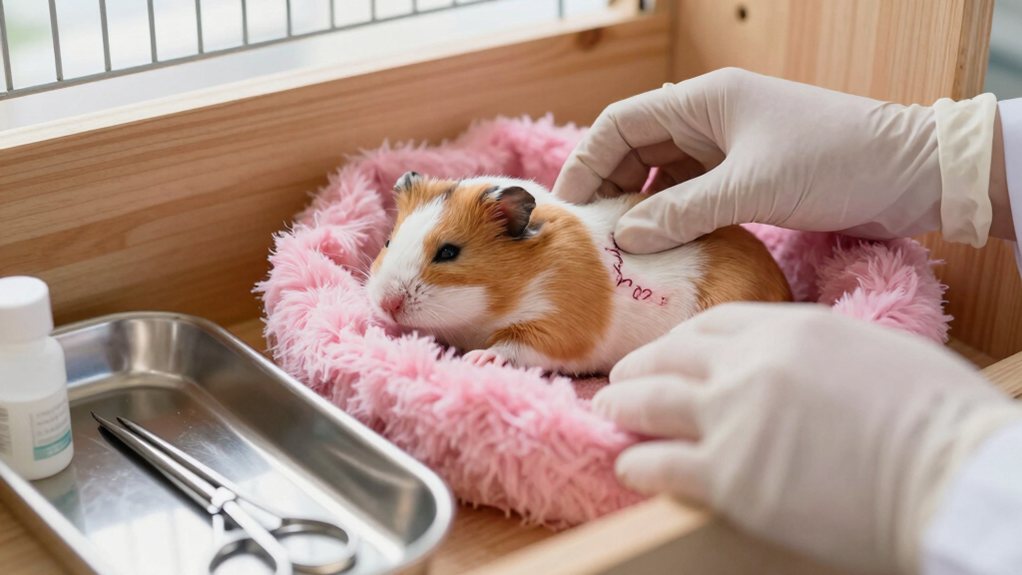
While your hamster may be tiny, their surgery recovery is a big deal. Your care makes all the difference.
Post op care starts with a quiet, draft-free space where your little buddy can rest.
Keep the bedding soft and clean to avoid irritation.
Your vet might prescribe pain management meds. Always follow the dosage exactly.
Watch for signs of discomfort, like hunched posture or lack of movement.
But don’t panic if they seem a bit grumpy. Even hamsters can have off days.
Offer fresh water and their favorite treats to keep them eating.
Check the incision daily for redness or swelling.
No digging allowed, not even for a snack.
You’re their hero now, so stay patient and gentle.
With love, the right care, and maybe a few whispered pep talks, your hamster will be back to wheel-running in no time.
Knowing When to Let Go: Signs It’s Time
When does love mean letting go, especially when your hamster’s tiny paws aren’t quite as quick as they used to be? It’s tough, but sometimes the kindest choice is saying goodbye.
Watch for these signs:
- No interest in treats, even their favorite sunflower seeds don’t spark joy
- Struggling to move, climbing feels impossible, and they’re mostly huddled in one corner
- Labored breathing, you notice wheezing or uneven breaths, even at rest
- No response to you, they don’t wake up when you talk or gently tap the cage
A quality assessment helps you see if they’re truly suffering.
Palliative care can ease pain, but if joy’s gone, it might be time.
You’ve given belly rubs, snacks, and love.
Now peace is the final gift.
It’s okay to cry.
You’ve been a great pet parent.
Final Thoughts
You’ve got this, hamster hero! Spotting a lump can be scary, but now you know when to act and when to just keep cuddling.
Vets are amazing at figuring things out, and sometimes a simple fix makes all the difference. Sure, it’s serious stuff, but your little buddy’s toughness? Next level. Stay calm, stay kind, and remember: even tiny warriors need big love. You’re doing great.