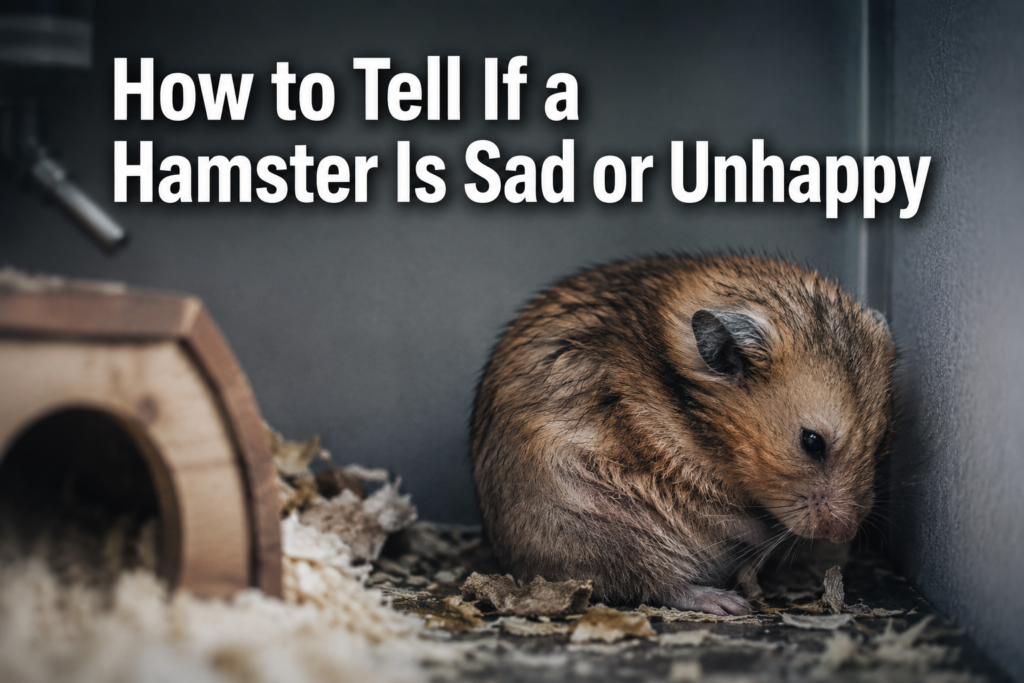
Your hamster runs to the cage door when you approach but freezes when a stranger walks by. Coincidence, or genuine recognition? The answer matters more than you might think, because understanding whether do hamsters recognize their owners shapes everything from how you handle them to what realistic expectations you should have about bonding.
Hamsters do recognize their owners, primarily through scent and voice rather than vision. Their recognition is sensory-based and memory-driven, not emotional attachment in the way dogs or cats bond. A hamster that knows you will respond differently to your presence, approaching more readily, showing less defensive behavior, and tolerating handling, but this is learned association with positive experiences, not affection in the traditional sense.
Key Takeaways
- Hamsters recognize owners through scent first, then voice and touch patterns, vision plays a minimal role due to poor eyesight
- Recognition develops over 3-8 weeks of consistent, positive daily interaction and depends heavily on species temperament (Syrian vs Dwarf)
- Memory lasts weeks to months for familiar scents and routines, but hamsters don’t form emotional bonds like social animals
- Behavioral signs of recognition include approaching the cage front, reduced freezing responses, and accepting treats from your hand
- Proper cage setup and handling technique directly impact whether a hamster learns to recognize you as safe versus threatening
How Do Hamsters Recognize Their Owners? The Sensory Science
Hamsters are solitary, prey animals with sensory systems built for survival, not social bonding. Understanding which senses they rely on explains why recognition happens, and why it looks different from what you’d expect with a dog.
Scent: The Primary Recognition Tool
A hamster’s world is scent-driven. They have scent glands on their flanks (most visible in Syrian hamsters) and use scent marking to navigate territory and identify threats versus safe zones. When you handle your hamster daily, you leave your scent on them and in their environment.
What happens: Your hamster associates your specific scent profile with the routine of feeding, cage cleaning, and handling. If those experiences are consistently non-threatening, your scent becomes a “safe” marker. This is why washing your hands with strongly scented soap before handling can temporarily confuse a hamster, you’ve masked the familiar scent they’ve learned.
Species differences matter: Syrian hamsters, being larger and more territorial, rely heavily on scent marking and tend to develop stronger scent-based recognition. Dwarf species (Winter White, Campbell’s, Roborovski) are faster-moving and more skittish, so while they can recognize your scent, their prey-drive response often overrides it. Roborovski hamsters, the smallest and fastest species, may never fully relax even with familiar scents.
Voice and Sound Patterns
Hamsters have excellent hearing, particularly in the ultrasonic range. They recognize the sound of your voice, your footsteps approaching the cage, and even the specific sounds of your routine (the rustle of a treat bag, the opening of the cage door).
Practical example: If you consistently speak softly before opening the cage, your hamster learns that sound pattern precedes your presence. Over time, they’ll respond to your voice by emerging from their burrow or moving toward the cage front. This isn’t emotional, it’s Pavlovian conditioning. The voice predicts food, handling, or interaction.
What not to do: Sudden loud noises, yelling, or inconsistent sound patterns prevent recognition from forming. If your hamster associates your voice with stress (e.g., you only handle them during stressful cage cleanings), they won’t approach when called. For more on common handling mistakes, see what you should never do with a hamster.
Vision: Limited but Not Useless
Hamsters are nearsighted with poor depth perception. They see movement and shapes within a few inches but can’t distinguish faces or recognize you visually from across a room. However, they do notice movement patterns and silhouettes.
What this means: Your hamster won’t recognize your face, but they may recognize your general shape, the way you move, or the angle you approach the cage from. This is why approaching from above (a predator angle) triggers freezing or fleeing, even in a hamster that knows your scent. Always approach from the side or front at cage level.
Touch and Handling Patterns
Hamsters remember how you handle them. Consistent, gentle handling with predictable movements builds recognition through tactile memory. A hamster that’s always scooped from below with cupped hands learns that pattern as safe. One that’s grabbed from above or squeezed will remember that as a threat.
Bedding depth matters here: A cage with 6+ inches of bedding allows natural burrowing behavior, which reduces stress and makes hamsters more receptive to handling. A stressed hamster in a barren cage won’t develop positive recognition patterns because they’re in constant survival mode. Check what are must-haves for hamsters for proper setup basics.
Do Hamsters Bond With Their Owners or Just Tolerate Them?
This is where expectations need adjusting. Hamsters are solitary animals. In the wild, Syrian hamsters live alone and only interact with other hamsters to mate, then immediately separate. Dwarf species have slightly more social tolerance but still don’t form packs or family groups.
Recognition vs. Attachment: The Critical Difference
Recognition = Your hamster knows you’re the source of food, the one who cleans the cage, and the hands that handle them. They’ve learned you’re not a threat.
Attachment = An emotional bond where the animal seeks your company for comfort, shows distress when separated, or prefers you over others.
Hamsters do the first, not the second. They don’t miss you when you’re gone. They don’t seek you out for comfort. What looks like affection, running to the cage door, climbing on your hand, sitting calmly in your palm, is learned behavior based on positive reinforcement, not emotional need.
What “Bonding” Actually Looks Like in Hamsters
When people say their hamster has bonded with them, they usually mean the hamster:
✅ Approaches the cage front when they see/smell/hear you
✅ Takes treats from your hand without fleeing
✅ Tolerates handling without biting or excessive squirming
✅ Explores your hands or arms during playtime
✅ Doesn’t freeze or hide when you’re near the cage
These are all signs of successful habituation and positive association, not emotional attachment. The hamster has learned you’re safe and predictable. That’s the realistic goal. For more on recognizing these behaviors, see how can you tell if a hamster loves you.
Why This Matters for Care
Understanding that hamsters don’t bond emotionally prevents two common mistakes:
Over-handling: Forcing interaction because “they need bonding time” stresses them. Hamsters need enrichment and a proper cage setup more than they need human contact.
Misreading stress as shyness: A hamster that hides constantly isn’t “warming up slowly”, they’re stressed. Check cage size (450+ sq inches minimum for Syrian, 370+ for Dwarf), wheel size (8-12″ depending on species), bar spacing (no more than 0.5″ for Dwarf, 0.5-1″ for Syrian), and bedding depth (6+ inches).
How Long Does It Take for Hamsters to Recognize Their Owners?
Timeline varies by species, age, previous handling experience, and your consistency. Here’s the realistic progression:
Week 1-2: Adjustment Period
What’s happening: Your hamster is stressed from the move to a new environment. They’re mapping territory through scent marking, establishing burrows, and assessing threats. They won’t recognize you yet, everything is a potential danger.
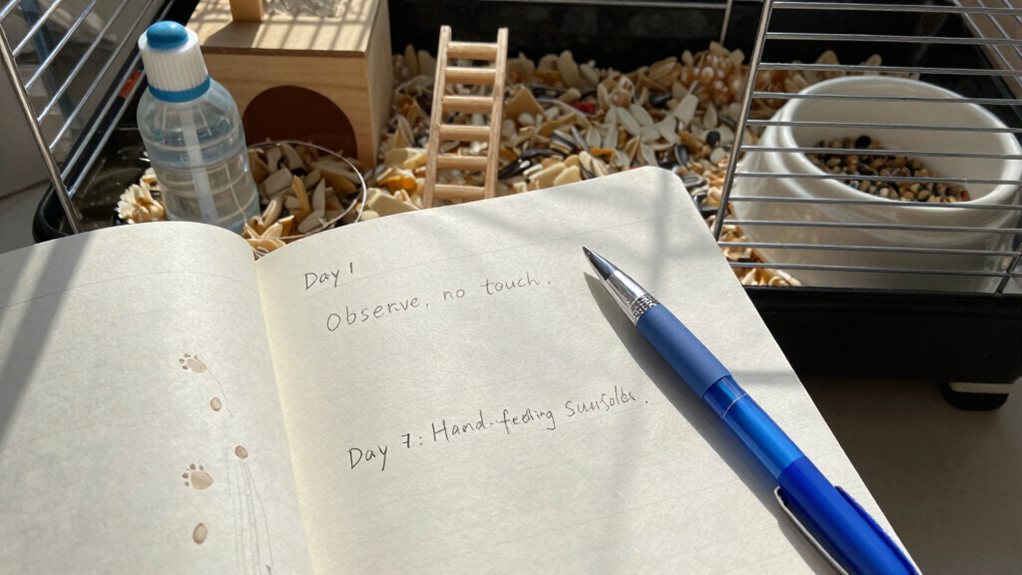
What to do: Minimal handling. Let them settle. Sit near the cage and talk softly so they get used to your voice. Offer treats through the bars (sunflower seeds, small pieces of carrot) so your scent becomes associated with food. Don’t force interaction.
Species note: Syrian hamsters settle faster than Dwarf species. Roborovskis may take 3-4 weeks just to stop panic-fleeing at your approach.
Week 3-4: Initial Recognition
What’s happening: Your hamster now recognizes your scent and voice as part of their environment. They may approach the cage front when you’re near, especially if you’re holding food. They’re still cautious but no longer in constant flight mode.
What to do: Start hand-taming. Place your hand in the cage (palm up, fingers together) and let them investigate. Don’t grab or chase. Let them come to you. Offer treats on your palm. Sessions should be 5-10 minutes, once daily, at the same time (evening when they’re naturally active).
Red flag: If your hamster is still panic-fleeing or biting defensively at week 4, reassess your cage setup and handling approach. Signs of stress include bar chewing, excessive grooming, wet tail (diarrhea), and aggressive biting.
Week 5-8: Established Recognition
What’s happening: Your hamster now reliably recognizes you. They approach when called, take treats readily, and tolerate handling. They’ve learned your routine and respond to it.
What to do: You can now handle them regularly for playtime outside the cage (in a secure, hamster-proofed area). Continue reinforcing positive associations. Avoid sudden changes to routine, hamsters are creatures of habit.
Maintenance: Recognition requires ongoing reinforcement. If you stop handling for 2+ weeks, some hamsters (especially Dwarf species) will regress and become skittish again.
Factors That Speed Up or Slow Down Recognition
| Factor | Impact |
|---|---|
| Daily consistent interaction | Speeds up recognition significantly |
| Proper cage setup (size, enrichment, bedding depth) | Reduces baseline stress, makes hamster more receptive |
| Species temperament (Syrian > Winter White > Campbell’s > Roborovski) | Syrian hamsters recognize owners fastest |
| Age (young hamsters 6-12 weeks adapt faster) | Older hamsters or those from pet stores with poor handling take longer |
| Previous trauma (rough handling, overcrowded conditions) | Can delay recognition by weeks or make it impossible |
| Inconsistent handling (different family members, irregular schedule) | Slows or prevents recognition |
Hamster Memory: How Long Do They Remember You?
Hamster memory is better than most people assume, but it’s context-dependent and survival-focused.
Short-Term Memory: Hours to Days
Hamsters remember recent events for several hours to a few days. This is why they learn routines quickly, they remember that the sound of the treat bag means food is coming, or that the cage door opening at 8 PM means playtime.
Practical application: If you accidentally startle or hurt your hamster (e.g., pinch them while picking up, drop them), they’ll remember that negative experience for days. You’ll need to rebuild trust with extra-gentle handling and high-value treats.
Long-Term Memory: Weeks to Months
Hamsters can remember familiar scents, voices, and routines for weeks to months. Studies on spatial memory show hamsters remember maze layouts for 4-6 weeks. Anecdotal evidence from owners suggests scent-based recognition lasts at least 1-2 months.
What this means: If you go on vacation for 2 weeks, your hamster will likely still recognize you when you return, though they may be slightly more cautious initially. Beyond 2-3 months, recognition fades, especially if someone else has been handling them regularly (they’ll have formed new scent associations).
What Hamsters Forget Quickly
- Specific events (they won’t remember that one time you gave them a strawberry 3 weeks ago)
- Individual people beyond their primary handler (if 5 family members handle them, they may not distinguish between you)
- Tricks or commands (hamsters don’t learn their names reliably, they respond to sound patterns and context, not the name itself)
For more on whether hamsters actually learn their names, see do hamsters learn their name.
Species Differences: Syrian vs Dwarf Recognition Patterns
Not all hamsters recognize owners equally. Species temperament plays a huge role.
Syrian Hamsters: Best for Recognition
Temperament: Solitary, territorial, slower-moving, more tolerant of handling once tamed.
Recognition pattern: Syrian hamsters develop the strongest owner recognition. They’re large enough to handle confidently, slow enough to read body language, and territorial enough to care about who’s in their space. A well-socialized Syrian will reliably approach their owner and tolerate 10-15 minutes of handling.
Timeline: 3-6 weeks for solid recognition with daily interaction.
Best for: First-time owners who want a hamster that clearly recognizes them. See best hamster for first-time owner for more.
Winter White Dwarf Hamsters: Moderate Recognition
Temperament: Social tolerance (can sometimes live in same-sex pairs if introduced young), faster-moving, more skittish than Syrians.
Recognition pattern: Winter Whites can recognize owners but are more easily startled. They’ll approach for treats but may bolt if you move too quickly. Recognition is reliable but requires more patience. How to bond with a Winter White hamster covers species-specific techniques.
Timeline: 4-8 weeks for consistent recognition.
Campbell’s Dwarf Hamsters: Variable Recognition
Temperament: More aggressive than Winter Whites, prone to nipping, faster and more defensive.
Recognition pattern: Campbell’s can recognize owners but are less predictable. Even a well-socialized Campbell’s may nip if startled. Recognition doesn’t always translate to tolerance.
Timeline: 6-10 weeks, with ongoing caution needed.
Roborovski Hamsters: Minimal Recognition
Temperament: Extremely fast, tiny (2cm body length), highly prey-driven, not handleable in the traditional sense.
Recognition pattern: Roborovskis may recognize your scent and voice enough to not panic-flee, but they rarely tolerate handling. They’re observation pets. “Bonding” means they’ll eat near you or explore a playpen while you’re present, not sit in your hand.
Timeline: 8-12 weeks just to reduce panic response. Full handling tolerance is rare.
Building Recognition: Practical Steps That Actually Work
Theory is useless without application. Here’s the step-by-step process for helping your hamster recognize you.
Step 1: Optimize the Cage Setup First
A stressed hamster won’t recognize anyone. Before you start handling:
- Cage size: Minimum 450 sq inches floor space for Syrian, 370 for Dwarf (bigger is always better)
- Wheel size: 8-12″ diameter depending on species, solid running surface (no bars or mesh)
- Bedding depth: 6+ inches of paper-based or aspen bedding for burrowing behavior
- Enrichment: Multiple hides, chew toys, foraging opportunities
- Bar spacing: 0.5″ maximum for Dwarf species to prevent escape
Why this matters: A hamster in a too-small cage with a too-small wheel and no bedding is in chronic stress. They’re focused on survival, not learning to recognize you. Fix the environment first. See what is the best thing to put in a hamster cage for setup details.
Step 2: Establish a Consistent Routine
Hamsters are crepuscular (active at dawn and dusk). Interact with them at the same time daily, ideally in the evening when they’re naturally awake.
Daily routine example:
- 7:00 PM: Approach cage, speak softly, offer treat through bars
- 7:05 PM: Place hand in cage (palm up), let hamster investigate
- 7:10 PM: If hamster is comfortable, scoop gently and hold for 5 minutes
- 7:15 PM: Return to cage, offer another treat
Consistency is everything. Same time, same approach, same voice tone. This builds predictability, which builds recognition.
Step 3: Use High-Value Treats Strategically
Not all treats are equal. Use the hamster’s favorite foods to reinforce your scent as positive.
High-value treats for training:
- Sunflower seeds (small amounts, high fat)
- Mealworms (1-2 per session)
- Tiny pieces of carrot, cucumber, or apple
- Pumpkin seeds
How to use them: Only give high-value treats during interaction. Don’t leave them in the cage randomly. Your hamster should associate your hands with the best food. For more on hamster diet preferences, see what do hamsters love to eat the most.
Step 4: Let the Hamster Come to You
Never chase, grab, or corner your hamster. This teaches them you’re a predator, not a safe presence.
Correct approach:
- Open cage door
- Place hand inside, palm up, with treat on palm
- Wait. Let the hamster approach.
- If they take the treat and stay on your hand, slowly lift them out
- If they grab the treat and run, that’s fine, try again tomorrow
Patience timeline: This can take 1-2 weeks before a hamster willingly climbs onto your hand. Don’t rush it.
Step 5: Handle Correctly Every Time
How you hold your hamster teaches them whether you’re safe.
Correct handling:
- Scoop from below with both hands cupped
- Support their full body weight
- Keep them close to your chest or lap (reduces fall risk)
- Move slowly and predictably
- Sessions should be 5-15 minutes max
Incorrect handling:
- Grabbing from above (predator angle)
- Squeezing or restraining tightly
- Holding high in the air (triggers fear of falling)
- Waking them during the day for handling
For detailed handling guidance, see how do I play with my hamster.
When Recognition Fails: Troubleshooting Common Problems
Not all hamsters will recognize their owners, even with perfect technique. Here’s why and what to do.
Problem 1: Hamster Still Bites After Weeks of Handling
Possible causes:
- Defensive biting due to fear (you’re moving too fast or approaching from above)
- Territorial biting (common in Campbell’s Dwarf hamsters)
- Pain or illness (check for wet tail, lumps, limping)
- Poor cage setup causing chronic stress
Solution: Go back to step 1. Stop handling for 3-5 days. Reassess cage setup. Start hand-taming from scratch with higher-value treats. If biting continues, consider that this hamster may not be handleable, some aren’t, and that’s okay. They can still have a good life as observation pets.
Problem 2: Hamster Freezes or Hides When You Approach
Possible causes:
- Still in adjustment period (normal for first 2-3 weeks)
- Cage is in a high-traffic, noisy area
- You’re approaching during their sleep cycle
- Previous trauma from pet store or breeder
Solution: Move cage to a quieter location. Only interact during evening hours. Sit near the cage and read aloud so they get used to your presence without the pressure of handling. This can take 4-6 weeks for skittish hamsters.
Problem 3: Hamster Recognized You, Now Doesn’t
Possible causes:
- You changed your soap, shampoo, or perfume (scent change)
- Someone else has been handling them regularly
- Long gap in interaction (vacation, illness)
- Hamster is ill or in pain
Solution: Re-establish routine. Use unscented soap before handling. Check for health issues (weight loss, lethargy, wet tail, lumps). If you’ve been away, expect 1-2 weeks to rebuild recognition.
Problem 4: Multiple Family Members, Hamster Only Recognizes One
Possible causes:
- One person does all the feeding and handling
- Other family members approach inconsistently or roughly
- Hamster has bonded to one person’s scent
Solution: Have all family members participate in feeding and treat-giving. Each person should handle the hamster at least 2-3 times per week using the same gentle technique. Recognition will spread, but the primary handler will always get the strongest response.
FAQ
How long does it take for a hamster to recognize its owner?
Most hamsters begin recognizing their owner’s scent and voice within 3-4 weeks of consistent daily interaction. Syrian hamsters typically recognize owners faster (3-6 weeks) than Dwarf species (4-10 weeks). Roborovski hamsters may take 8-12 weeks and may never fully tolerate handling. Recognition requires daily interaction at the same time, gentle handling, and a properly set up cage that minimizes baseline stress.
Can hamsters recognize their owners by sight?
No, hamsters have poor vision and cannot recognize faces or distinguish people visually. They’re nearsighted and see primarily movement and shapes within a few inches. Recognition happens through scent (primary), voice, and touch patterns. Your hamster won’t know it’s you by looking at you, they need to smell you or hear your voice. This is why washing hands with strongly scented soap can temporarily confuse a hamster that normally recognizes you.
Do hamsters remember their owners after being away?
Yes, hamsters can remember their owner’s scent for 1-2 months, though recognition may weaken after 2-3 weeks without interaction. If you’re away for 2 weeks, your hamster will likely still recognize you but may be slightly more cautious initially. Beyond 2-3 months, especially if someone else has been handling them regularly, they’ll have formed new scent associations and may not remember you. Short-term memory lasts hours to days; long-term scent memory lasts weeks to months.
Which hamster species recognizes owners best?
Syrian hamsters recognize owners most reliably due to their larger size, slower movement, and more tolerant temperament once socialized. Winter White Dwarf hamsters show moderate recognition but are more skittish. Campbell’s Dwarf hamsters can recognize owners but are more prone to defensive biting. Roborovski hamsters rarely develop strong recognition and are not handleable in the traditional sense, they’re observation pets that may tolerate your presence but won’t seek interaction.
Why does my hamster run away even though I handle them daily?
Running away despite regular handling usually indicates fear or stress, not lack of recognition. Common causes include approaching from above (predator angle), moving too quickly, handling during their sleep cycle, chronic stress from inadequate cage setup (too small, no bedding depth, wrong wheel size), or pain from illness. Reassess your handling technique, cage setup, and timing. Some hamsters, particularly Roborovski and Campbell’s species, remain skittish even with perfect care, it’s temperament, not a training failure.
Do hamsters get attached to their owners like dogs or cats?
No, hamsters do not form emotional attachments like social animals. They’re solitary by nature and don’t seek companionship or comfort from humans. What looks like bonding, approaching you, sitting calmly in your hand, is learned behavior based on positive reinforcement (you provide food and aren’t a threat), not emotional need. Hamsters don’t miss you when you’re gone or prefer you over others for emotional reasons. They recognize you as safe and predictable, which is the realistic goal for hamster ownership.
Conclusion
Hamsters do recognize their owners, but through scent, voice, and routine rather than vision or emotional attachment. Recognition develops over 3-8 weeks with consistent, gentle daily interaction and depends heavily on species temperament and proper cage setup. Syrian hamsters recognize owners most reliably, while Dwarf species require more patience and Roborovskis may never fully tolerate handling.
The key to successful recognition is managing expectations: your hamster won’t bond with you emotionally like a dog, but they can learn you’re safe, predictable, and the source of good things. That’s enough for a positive relationship.
Next steps:
- Audit your cage setup, ensure minimum size, proper wheel, 6+ inches bedding, and enrichment are in place
- Establish a consistent evening routine for interaction and stick to it for at least 4 weeks
- Use high-value treats exclusively during handling to reinforce your scent as positive
- Let the hamster come to you, never chase or grab
- Track progress weekly and adjust technique if recognition isn’t developing by week 6
For more on building trust and understanding hamster behavior, explore how hamsters see humans and signs your hamster trusts you. Recognition is possible with nearly every hamster, it just requires patience, consistency, and respect for their solitary nature.