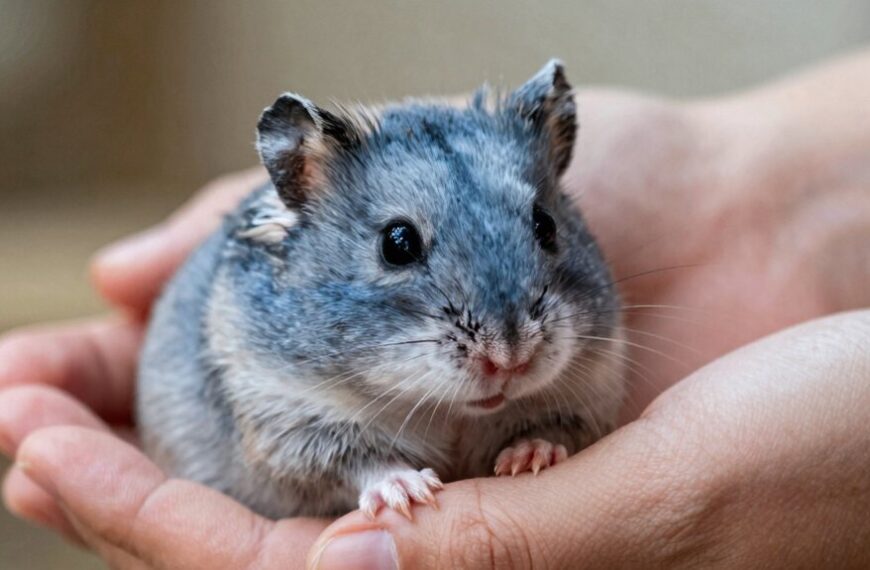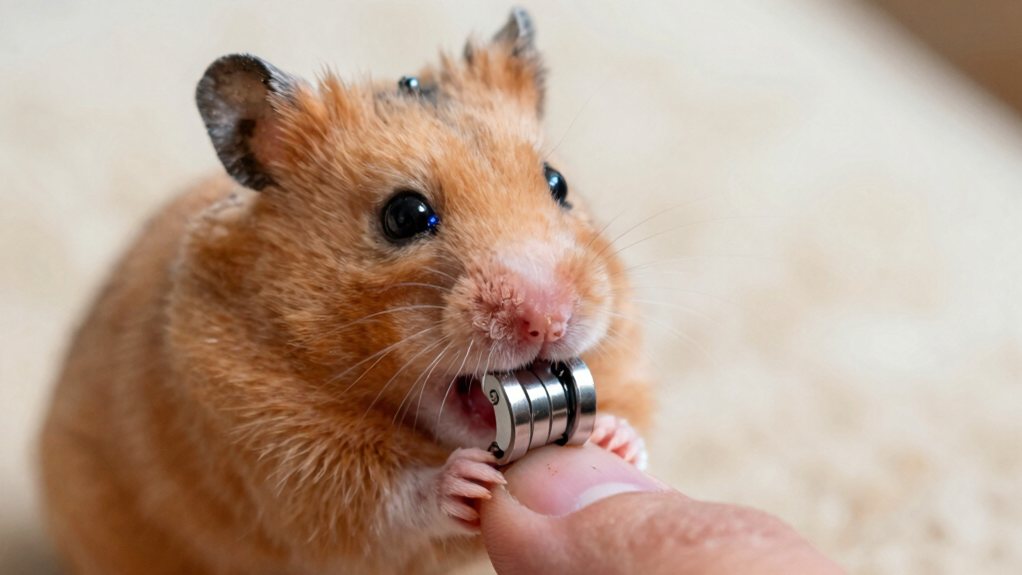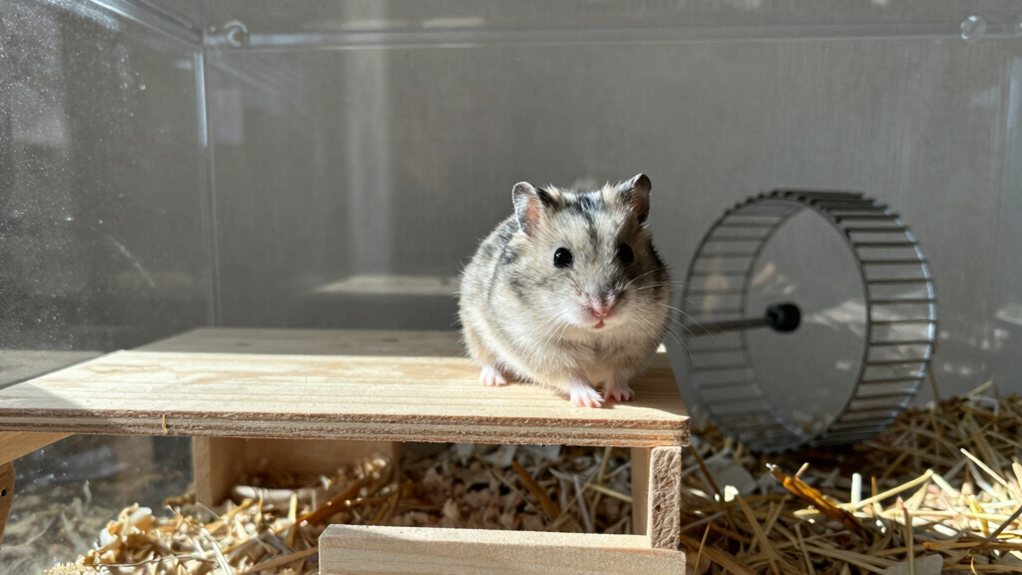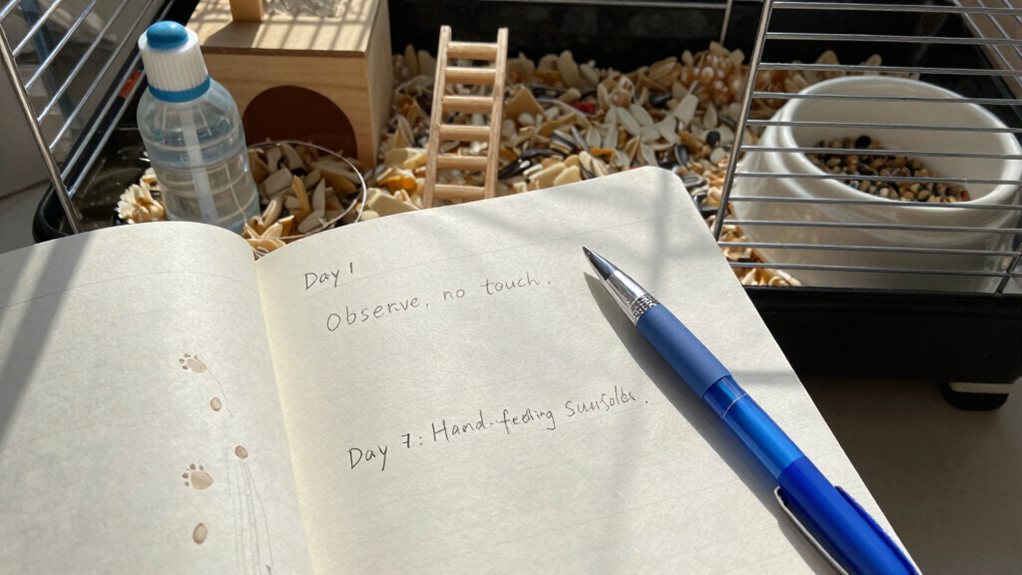
Get your hamster settled in a quiet space and let them adjust. No handling for the first few days.
Talk softly, wear the same shirt for your scent, and offer treats by hand once they seem curious. Watch for stress or brave little explorations, and keep interactions calm and short. Open the cage door during snack time to build trust.
In a week or so, try brief handling near their home base. You’ll go from “who are you?” to “you’re my human” faster than they can stash a sunflower seed, and there’s plenty more where that came from.
Let Your New Hamster Settle In
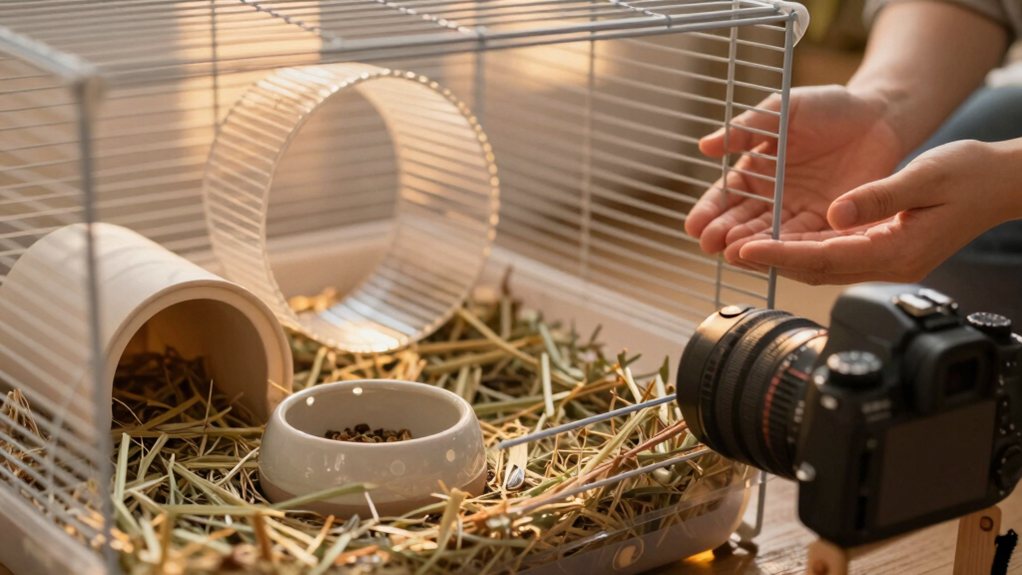
While your new hamster might look ready for cuddles right out of the box, giving them a little space at first is actually the best way to win their trust.
For the first few days, just let them explore their new hamster habitat without too much handling.
They’re likely stressed from the move, and peace helps them adjust faster.
Keep noise low, avoid sudden movements, and resist the urge to scoop them up, no matter how cute they look nibbling their food.
Use this time to add safe cage decoration like hideouts, soft bedding, and chew toys.
It makes their space cozy and gives them confidence.
Think of it as their tiny apartment.
You wouldn’t want strangers barging in on moving day, right?
A calm start means a happier, tamer hamster later.
So take a breath, back off a bit, and let your little buddy settle in on their own terms.
You’ve got this.
Building this quiet foundation supports the gradual development of trust, which is essential for meaningful bonding with humans.
Watch for Stress or Curiosity Cues
You’ll want to keep an eye on your hamster’s moods, some days they’re chill, other days they’re like, “Who turned on the sun?”
Look for signs of stress, like constant hiding or biting the cage.
But also watch for curiosity cues, like sniffing around or perking up when you talk.
Their little body language clues, from twitchy noses to frozen stares, tell you way more than words ever could.
A key indicator of discomfort is flattened ears or wide eyes, which signals fear or feeling unsafe.
Signs Of Stress
What’s that? Is your new hamster zooming around like it’s in a tiny furry marathon or just sitting still, barely touching its food? These could be signs of stress. Watch for excessive grooming, yes, even hamsters overdo it when anxious.
If your little buddy skips meals, that’s a red flag too. Loss of appetite isn’t just “picky eating”; it’s often stress in disguise.
You might also notice biting the cage, freezing up, or hiding nonstop.
Don’t panic! These behaviors are their way of saying, “Hey, this new world’s a lot!”
Give them space, keep noise low, and avoid sudden moves. Think of it like helping a shy kid settle into a new school.
A calm home equals a happy hamster. You’ve got this—and so do they.
Sudden handling can trigger a fear response because it mimics predator threats, so always approach gently and respect their nocturnal behavior.
Signs Of Curiosity
Ever catch your hamster sniffing the air like a tiny detective on a mission or peeking out from its hideout with bright, wide eyes? That’s curiosity kicking in, and it’s a great sign!
When your hamster starts showing exploratory sniffing around the cage or gently nudging new objects, it’s engaging in investigative behavior, not stress.
You might see it standing on hind legs, whiskers twitching, soaking in every sound and scent. This is your cue that your little buddy is getting comfortable.
Unlike stressed behaviors, like freezing or bolting, curiosity looks playful and alert. Celebrate these small wins! It means your taming plan is working.
Keep the environment calm and consistent, and avoid sudden movements. Soon, that investigative behavior might shift toward you.
Hello, hand-feeding success! Patience pays off. You’re building trust, one curious sniff at a time.
A calm environment supports natural nocturnal activity patterns and helps your hamster feel safe during its active hours.
Body Language Clues
How does your hamster really feel about you standing by the cage with a sunflower seed in hand? Pay attention, those tiny ears twitching or a sudden freeze mean they’re sizing you up.
If your hamster grooms itself or sniffs the air, that’s curiosity, not boredom.
But if it flattens its body, hides, or starts frantic digging, it’s stressed. Back off gently.
Watch their play patterns closely. A relaxed hamster explores boldly and may even nap in the open.
Respecting their social rhythms helps build trust over time. They’re not being rude, they’re just nocturnal.
So if your hamster yawns or turns away, it’s not personal. Think of it like making friends with a shy kid at school.
With patience, those subtle cues turn into confident hops toward you. You’ve got this, and so do they.
Talk Gently to Your Hamster Daily
Why not let your voice become your hamster’s favorite sound? Talking gently every day is one of the simplest yet most effective bonding techniques you can use. Your hamster may not understand words, but they’ll recognize your tone, helping them feel safe.
Over time, this routine cuts stress and builds trust.
Plus, it’s a sweet way to share your day.
- Speak softly while nearby, using your pet’s name to reinforce recognition
- Narrate simple actions, like feeding or cleaning, to link your voice with positive moments
- Pay attention to hamster vocalizations—quiet chirps or stillness mean they’re listening
- Avoid loud tones; gentle murmurs work better than full-on storytelling
You’re doing more than talking at your hamster—you’re connecting. And who knows? You might start enjoying your daily chat sessions as much as they do.
Let Your Hamster Smell a Worn Cloth

Now that your hamster’s starting to recognize the sound of your voice, it’s time to help them get familiar with your scent, because to your tiny friend, you’re still a giant mystery wrapped in laundry and snacks.
Take a clean cloth you’ve worn, like an old T-shirt, and place it near their cage (but not inside—it’s not a fashion show). This helps with scent recognition and builds fabric familiarity without overwhelming them.
Lay a well-worn shirt near the cage—your scent on familiar fabric helps your hamster feel safe, one curious sniff at a time.
Your hamster will sniff it curiously, maybe even nibble it—adorable, right? Don’t panic if they look suspicious; they’re just doing detective work.
Do this daily for a few minutes. It’s like sending a friendly “Hey, it’s just me!” note in hamster language. Soon, your smell won’t be scary—it’ll be safe.
And when you finally offer your hand, they might just trust you faster. Think of it as slow-burn friendship goals.
Offer Your Hamster a Treat by Hand
What if the secret to winning your hamster’s heart was hiding in your fingertips all along?
Offering a treat by hand builds trust and turns snack time into bonding time. Just make sure your hamster feels safe in their habitat before trying.
Sit quietly nearby, let them see you, then gently extend a yummy bite.
Use a treat variety like sunflower seeds, bits of apple, or plain cheerios: hamsters love surprises!
Keep your hand low so it’s not scary, think “snack bridge,” not “giant claw.”
Stay patient; it might take a few tries before they nibble from your palm.
Always wash your hands after, unless you want to smell like a walking hamster habitat.
You’re doing more than just feeding them: you’re making a friend, one tiny bite at a time.
Hand-Feed and Watch for Nipping
Once your hamster starts taking treats from your hand without hesitation, you’re ready to level up your bond. This means paying close attention to how those tiny teeth behave.
Start hand-feeding daily to build trust and use food motivation to your advantage. It’s normal if your hamster gives a little gentle nibbling. Think of it as clumsy enthusiasm, not aggression. Just stay calm and don’t pull away fast. Sudden moves can scare them.
If nipping happens often, try offering treats with tweezers at first to keep fingers safe while still building confidence. Remember, they’re learning your scent and routine. Keep sessions short, sweet, and stress-free.
With patience, those tiny chomps will fade. You’ve got this. Soon, your palm will be their favorite snack spot, not a chew toy.
A bite from your hamster is usually fear-based behavior rather than a sign of true aggression, so staying calm helps build long-term trust.
Open the Cage Door at Treat Time
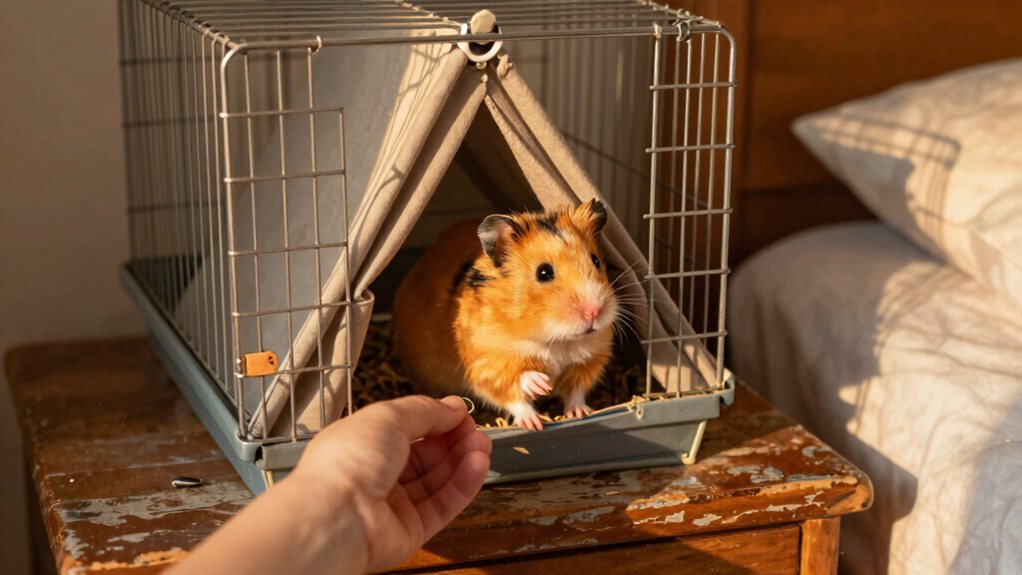
How’s this for progress: you’ve gone from nervous nibbles to trust snacks, and now it’s time to take things up a notch. Opening the cage door during treat time builds treat association and encourages safe cage exploration. It shows your hamster that the world beyond the bars isn’t scary, especially when snacks are involved!
Leave the cage door open while offering treats by hand.
Sit nearby to build trust without crowding their space.
Let them explore for short bursts—curiosity is a good sign!
Gently guide them back if they wander too far, no panic needed.
You’re more than just handing out treats. You’re inviting adventure. Each little step strengthens your bond.
Soon, your hamster might even wobble onto your lap for a snack. Who knew tiny paws could bring such big joy? Keep it fun, stay calm, and celebrate the wiggles.
Let Your Hamster Climb Onto Your Hand
Ready to level up your hamster hangouts? Now that your tiny buddy’s used to your hand near the cage, it’s time for the next move: letting them climb onto your palm.
Start by holding a treat in a flat, steady hand just inside the open door. Don’t grab—let your hamster come to you.
This is their version of hamster agility: a mini adventure full of sniffing, stepping, and maybe a little hesitation.
Celebrate the win when they hop on, even if they scramble off fast. It’s all part of climbing enrichment and building trust.
Keep sessions short and sweet, like a snack-sized friendship date.
With patience, your hand becomes a safe launchpad for exploration, not a threat.
Soon, you’ll be the preferred ride for their next great escape. Just don’t let them file for independence quite yet.
Try a 10-Second Hand Hold
One steady hand and ten seconds—that’s all it takes to level up your hamster bond. Now that your little buddy’s climbing onto your hand willingly, it’s time to try holding them for a short stretch. Stay calm, keep your hands warm, and let your hamster explore from palm to palm.
Pick a quiet time when your hamster is active—early evening’s usually best.
Keep the session near their hamster habitat so they feel safe and close to home.
Use gentle toy selection to distract them—offer a favorite chew or tunnel if they seem nervous.
Count slowly to ten while holding them, then reward both of you with a tiny treat (for you, maybe chocolate).
It might feel awkward at first, but soon those 10 seconds will fly by—and so will your hamster’s trust.
[After applying the rules:]
One steady hand and ten seconds, that’s all it takes to level up your hamster bond. Now that your little buddy’s climbing onto your hand willingly, it’s time to try holding them for a short stretch. Stay calm, keep your hands warm, and let your hamster explore from palm to palm.
Pick a quiet time when your hamster is active, early evening’s usually best.
Keep the session near their hamster habitat so they feel safe and close to home.
Use gentle toy selection to distract them, offer a favorite chew or tunnel if they seem nervous.
Count slowly to ten while holding them, then reward both of you with a tiny treat (for you, maybe chocolate).
It might feel awkward at first, but soon those 10 seconds will fly by, and so will your hamster’s trust.
Gradually Increase Handling Time
Now that your hamster’s okay with a 10-second hand perch, it’s time to stretch that trust, just a little at a time. Each day, add a few seconds to your handling sessions, aiming for calm, quiet moments when your hamster’s most relaxed.
Stay low to the ground and keep your hands steady. No sudden moves!
Stay close to the ground, hands calm and steady—sudden movements can spook your little friend. Patience builds trust, one quiet moment at a time.
As your little buddy gets braver, let them explore your hands, arms, or even a safe spot near their hamster habitat. Just don’t rush it. Progress isn’t measured in minutes, but in tiny wins.
Feel free to place a favorite cage decoration nearby for comfort. It’s like a mini home away from home.
You’re building more than handling time. You’re building trust.
And hey, if they nibble your finger? Probably just mistook it for a snack. We’ve all been there.
Keep it fun, stay patient, and soon, you’ll both be enjoying longer, cuddlier moments together.
Set Up a Safe Hamster Play Zone
While your hamster’s still getting used to your scent and the sound of your voice, setting up a safe play zone gives them a fun, secure space to stretch their tiny legs outside the cage.
You don’t need a fancy setup—just a little time and attention to detail.
Use a playpen or a clear, enclosed area where your hamster can’t escape or chew electrical cords.
Add soft bedding so their little feet stay comfy while exploring.
Toss in chew toys to keep their ever-growing teeth in check and their minds busy.
Skip the hamster wheel here—they’ll have plenty of time for that in their cage.
It’s all about fun and safety. Think of it as their mini adventure park!
Just keep an eye on them, and don’t be surprised if they zoom around like they’ve had five energy drinks.
A great option is a pop-up playpen with a automatic pop-up setup that makes deployment quick and secure.
Supervise Your Hamster’s First Roam
What could possibly go wrong when your tiny furball discovers the wide world beyond their cage?
More than you think, hamsters are sneaky escape artists!
That’s why you’ve got to supervise their first roam like a hawk.
Pick a calm time, right after cage cleaning, so the space feels fresh and familiar.
Clear the room of cords, small gaps, and anything chewable (yes, including your favorite socks).
A playpen or baby gate helps keep them safe.
Toss in a few rotated toys.
Toy rotation keeps things exciting and builds trust.
Stay close, talk softly, and let them explore at their pace.
Don’t chase them.
Gentle scooping works better.
This isn’t just playtime.
It’s bonding time.
Watch for hiding or chewing hazards, and always end on a positive note with a treat.
Supervised roams set the stage for a happy, healthy hamster life.
Aim for crepuscular activity patterns to align playtime with your hamster’s natural energy peaks.
Strengthen Trust With Routine
You’ve made it through the first roam, great job.
Now, build that sweet little bond by handling your hamster daily, feeding at the same times, and sharing quiet moments together.
Consistency is like comfort food for nervous nibblers.
Think of it as hamster therapy: you bring the calm, they bring the cuteness, and trust grows one tiny step at a time.
Daily Handling Sessions
How do you turn a nervous nibbler into a cozy cuddler? Daily handling sessions are your secret weapon. Once your hamster seems relaxed during feeding time, it’s time to gently introduce touch. Keep sessions short, just 5 to 10 minutes, and always wash your hands first, you don’t want to smell like snacks or soap!
Let your hamster climb onto your hand instead of grabbing it, patience wins trust.
Handle your pet at the same time each day to pair it with routine cage cleaning.
Use soft talk and slow moves, sudden actions scream “predator!”
Sneak in gentle hamster grooming by brushing with a clean, soft toothbrush.
You’re more than merely handling, you’re bonding. And yes, if they yawn in your palm, that’s hamster heaven.
Consistent Feeding Times
Most days, a little predictability goes a long way, especially for your tiny, whisker-twitching roommate. Setting a feeding schedule isn’t merely about meals. It’s trust in action.
When you show up at the same time each day, your hamster learns to expect you, and that routine builds confidence.
A steady meal routine tells your little buddy the world’s a safe place, especially when snacks arrive like clockwork.
Try feeding them morning and evening, aligning with their natural rhythm.
Offer treats by hand when possible. Hello, snack bonding!
Soon, they’ll associate your presence with good things, like sunflower seeds and love.
Consistency turns chaos into calm, one tiny bite at a time.
You’re not merely filling a food bowl. You’re building a bond.
And honestly? Watching them scurry over at “dinnertime” never gets old.
Keep it simple, keep it regular, and watch trust grow—one scheduled snack at a time.
A consistent daily feeding routine supports your hamster’s rapid metabolism and helps maintain long-term health.
Quiet Interaction Moments
What if the quiet moments between you and your hamster actually speak the loudest?
Building trust isn’t always about action. It’s about your calm presence and quiet bonding.
Just sitting near the cage, reading or softly talking, tells your hamster you’re safe. They’ll start to recognize your voice and scent without feeling pressured.
- Let your hamster sniff your hand through the cage bars
- Sit nearby daily at the same time for routine comfort
- Whisper or hum gently. Yes, they notice your tone!
- Avoid sudden moves. Slow equals safe in hamster language
You’re more than taming. You’re connecting.
And hey, if they nap while you’re bonding? That’s a win. They feel that calm presence.
Quiet interaction isn’t boring. It’s where trust truly grows, one peaceful moment at a time.
See If Your Hamster’s Ready for More
So, is your little furball starting to look less like a stressed-out tumbleweed and more like a curious critter? That’s a great sign. Now’s the time to see if your hamster’s ready for more.
Pay attention when you’re near their habitat. Do they pop out when you talk? Do they sniff your hand without darting away? These little wins mean trust is building.
Try upgrading their toy selection with something new, like a cardboard tunnel or chew toy, and watch how they explore.
If they’re bold enough to grab a treat from your fingers, you’re on the right track. Don’t rush it, though. Every hamster moves at their own pace.
Keep the vibe calm, the snacks tasty, and the interactions short. You’re more than just taming them. You’re becoming friends. And hey, slow progress is still progress!
Introducing safe, natural hardwood chew toys can support your hamster’s dental health while satisfying their instinct to gnaw.
Final Thoughts
You’ve got this! By now, you and your tiny furball are well on your way to becoming best buds. Sure, some days might feel slow, but trust builds one treat, maybe one escaped sock, at a time.
Keep calm, stay consistent, and don’t rush. Before you know it, your hamster will be climbing onto your hand like it’s no big deal. And honestly? That tiny victory feels huge.