You’ll usually spot a hamster abscess as a strange, red lump under your pet’s skin, often causing fur loss and low energy. They typically start from a tiny scratch that gets infected.
Your vet will examine the lump, may drain it, and prescribe antibiotics. With proper home care and a clean cage, recovery is very likely.
Let’s get into all the details so you know exactly what to do next!
What Are the Signs of a Hamster Abscess?
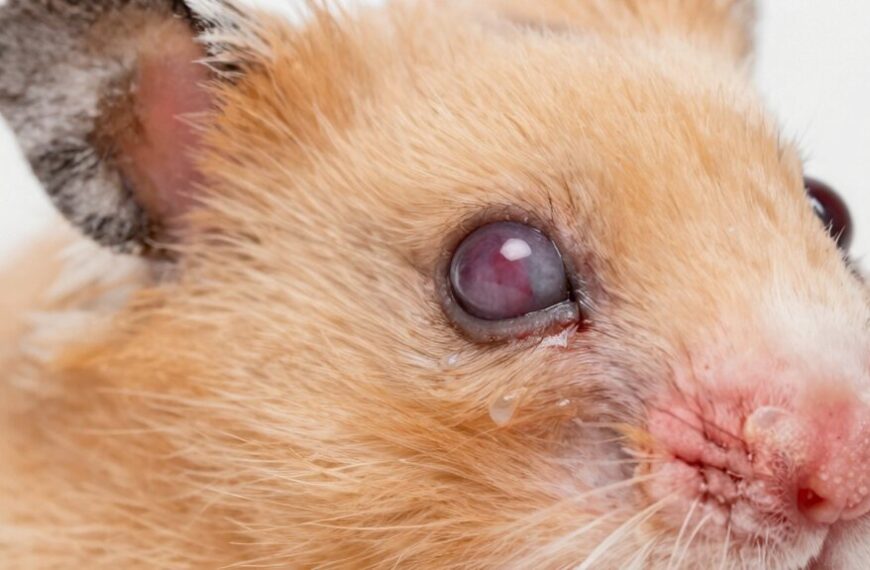
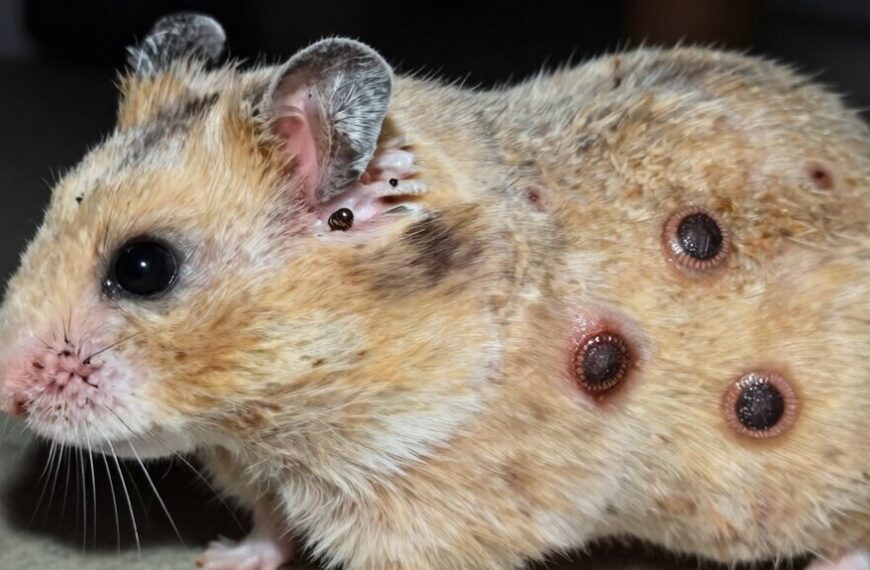
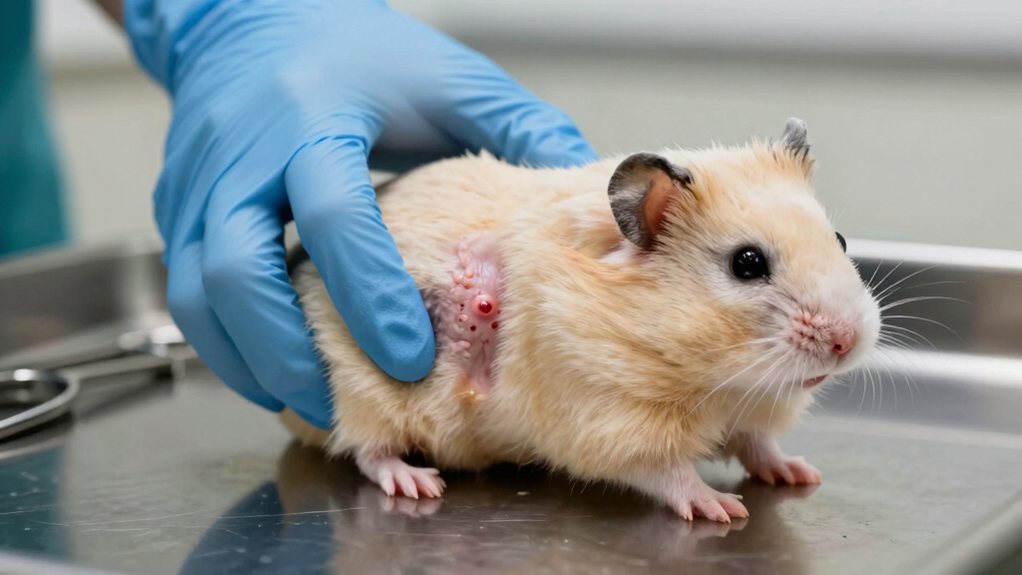
Since you’re keeping a close eye on your furry friend, you might notice a hamster abscess first as a strange lump or swelling on their body, which can appear almost anywhere.
Keep a close eye on your hamster for unusual lumps or swelling, as these can be the first signs of an abscess.
This lump is often the main clue, but other early warning signs include redness in the area or fur loss over it.
Watch their behavior, too; if they’re suddenly less active, scratching a lot, or not eating well, it’s a signal something’s wrong.
The symptom progression can move from a small bump to a larger, painful-looking one, and you might even see a scab or wound.
It’s not a pretty sight, but catching it early makes all the difference.
Your quick attention is your pet’s best hope for a hassle-free recovery. An abscess can sometimes form from an irritation caused by unsafe bedding materials like scented bedding or wood shavings.
What Is a Hamster Abscess? (And How Do They Start?)
Picture a tiny, unwelcome pocket of pus that’s decided to throw a party under your hamster’s skin, that’s an abscess in conclusion. It’s a walled-off infection, often starting from a tiny scratch or bite you might miss.
Bacteria sneak in, and your pet’s body walls them off, creating that painful, swollen lump.
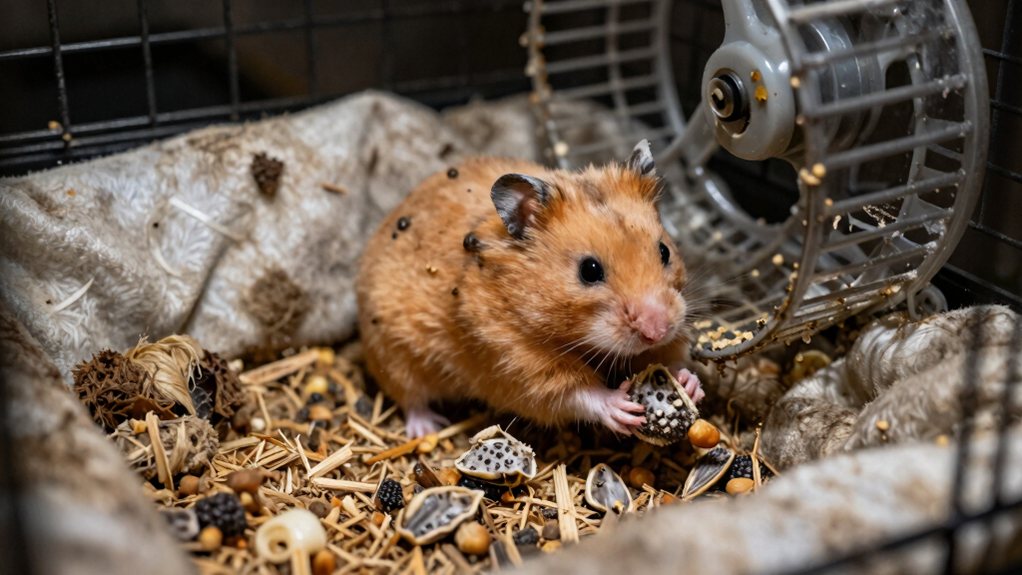
Poor cage hygiene can raise the risk, as dirty bedding harbors germs.
While one abscess is bad enough, watch for recurring infections, which might hint at an underlying issue.
That’s why early detection is so essential. You’re their first line of defense!
Noticing a lump early means a simpler, quicker vet visit.
Your vet can tackle it before it becomes a bigger, grumpier problem for your little friend.
Stress from a small or unstimulating cage can also compromise your hamster’s immune system, making them more susceptible to infections like abscesses, so providing an enriched environment is a key part of prevention.
Common Causes of Hamster Abscesses
You might wonder what causes these pesky abscesses, and often they begin with a simple bacterial infection from a dirty cage or a scratch from a sharp object. Even a small bite from a cage mate or a tiny cut from rough bedding can let germs in, starting the whole painful process, and these germs can include bacteria like Streptobacillus moniliformis which is a known risk from rodent bites. It’s a good reminder to keep your hamster’s home clean and safe, because those little nicks and scrapes can turn into big problems if you’re not careful.
Bacterial Infection Sources
While it’s not the most pleasant topic to think about, understanding where hamster abscesses come from can really help you keep your little friend healthy. Often, a tiny scratch from a cage mate or a sharp object in their habitat lets bacteria in.
Dirty bedding is a big culprit, harboring germs that find their way into small wounds. Even a nick from overgrown teeth can become an entry point. A dirty cage environment can allow bacteria like Salmonella to thrive in damp bedding and droppings, increasing infection risk.
You’ve got to watch for a spreading infection, which can quickly turn a minor issue into a big problem. This can lead to secondary complications like lethargy or loss of appetite.
Think of it like a tiny castle with its walls breached, those germs don’t waste any time moving in.
Keeping things clean is your best defense.
Injury And Wound Origins
Since our furry friends are natural explorers, they can sometimes get a little too adventurous and wind up with a small cut or scrape. These tiny injuries are prime real estate for infection. A simple scratch from a sharp cage edge or a squabble with a cage mate can introduce bacteria. Even a seemingly healed wound can cause trouble if a tiny foreign body, like a wood shaving, gets trapped inside. This creates a perfect pocket for pus to form. Sometimes, an abscess starts internally from bacterial translocation, where bacteria from the gut move into the bloodstream after stress and settle in a weakened spot. It’s a stealthy start, showing how even minor mishaps need your watchful eye. Be especially vigilant if an injury shows signs of infection like spreading redness or pus, as this indicates the wound needs prompt care.
How Will the Vet Diagnose the Abscess?
Because an abscess can sometimes be confused with other lumps, your vet’s first step is to figure out exactly what they’re dealing with.
They’ll give your hamster a gentle but thorough physical exam, feeling the lump’s size and consistency.
To see what’s happening beneath the skin, they might recommend some diagnostic imaging, like a simple X-ray.
This helps rule out other issues, like a tumor or a bone infection.
The most definitive test is often a fine needle aspirate, where they take a tiny sample from the lump.
They’ll then likely send that sample for culture testing to identify the specific bacteria causing the trouble, which is key for choosing the right antibiotic.
It’s a systematic process to get your tiny friend the perfect treatment. Since a puncture wound from a hamster bite can introduce bacteria and lead to an abscess, informing your vet of any recent bite is helpful for diagnosis.
What Happens During Hamster Abscess Treatment?
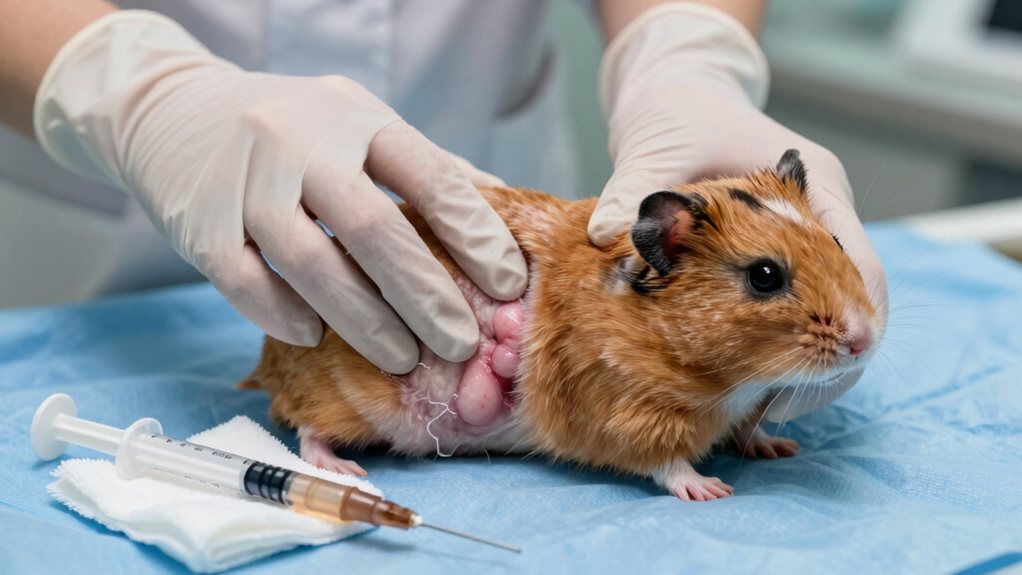
Your vet will start by carefully examining your hamster and cleaning the abscess site.
They’ll likely need to drain the infection and may prescribe antibiotics to help your little friend heal.
After that, you’ll get clear instructions for at-home care, which usually involves keeping the area clean and making sure your hamster gets plenty of rest and good food. For cleaning the habitat during recovery, use a non-toxic disinfectant to safely eliminate pathogens without harming your pet.
Veterinary Examination Process
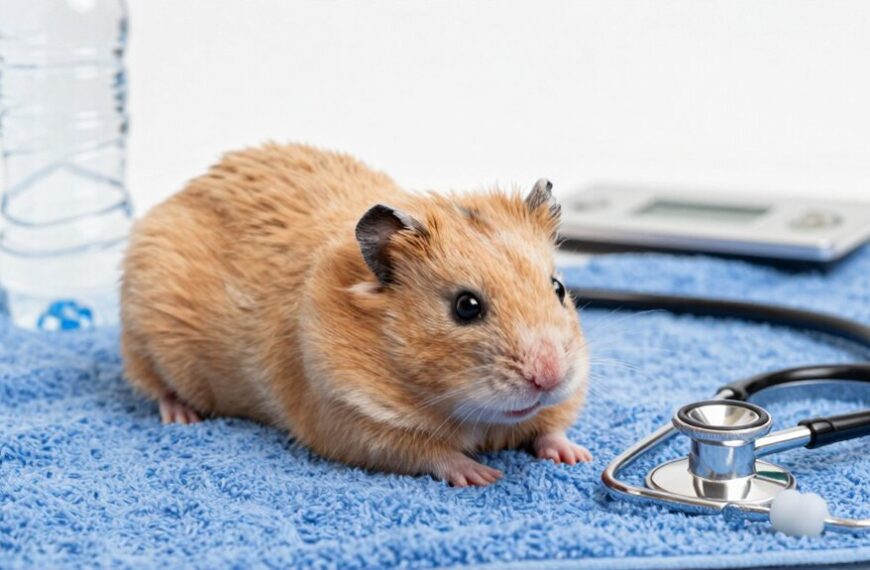
Once you and your little furball arrive at the vet’s office, the examination process begins with a gentle, hands-on check to figure out exactly what’s going on with that suspicious lump.
The vet will start by talking with you about your hamster’s history and recent behavior.
They’ll then conduct a thorough physical exam, paying special attention to the abscess site.
- Oral Exam: They’ll peek inside your hamster’s mouth since dental issues are a common, sneaky cause of facial abscesses.
- Pain Assessment: Your vet will carefully palpate the area to gauge your pet’s discomfort, which guides treatment decisions.
- Aspiration: Using a fine needle, they might extract a tiny sample from the lump to confirm it’s pus, not a tumor.
- Overall Health Check: They’ll listen to the heart and lungs and check for other lumps to make sure your hamster is otherwise fit.
This detailed check-up is quick and important for forming the right treatment plan to get your buddy back to perfect health. A veterinary consultation for your hamster is also a key step to ensure mutual health, as zoonotic transmission of germs, though rare, is possible.
Treatment And Recovery Steps
After the vet has completed the examination and confirmed the abscess, you can breathe a sigh of relief, as the road to recovery officially begins with a clear treatment plan.
Typically, the vet will gently drain and flush the abscess under anesthesia, then prescribe antibiotics to fight infection.
Your main job now is diligent home care, which involves giving medication exactly as directed and keeping the habitat impeccably clean.
Careful monitoring symptoms is essential; you’ll watch for reduced swelling and a return of your hamster’s normal appetite and energy.
Recovery can take a week or two, so be patient, and be alert for any signs of respiratory infections which can rapidly become fatal in hamsters.
With your loving attention and the vet’s expertise, your little friend will be back to stuffing their cheeks in no time.
Caring for Your Hamster After Abscess Surgery
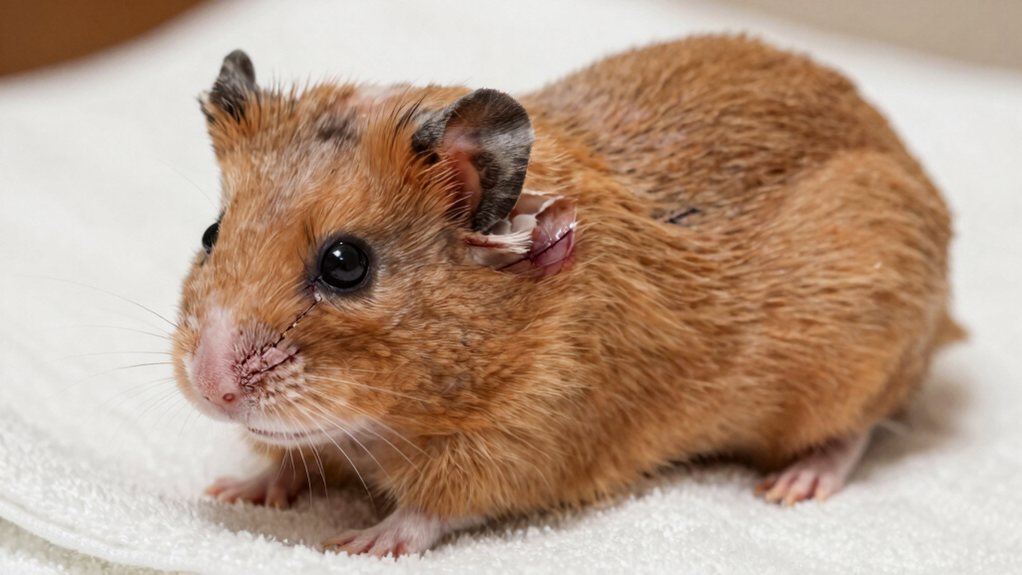
- Medicate with Care: Use a tiny treat to hide oral medicine, making it a positive experience for both of you.
- Monitor the Incision: Check the site daily for redness or swelling, but resist the urge to poke it.
- Adjust the Habitat: Use paper-based bedding to avoid dust and keep the area impeccably clean. Ensure a bedding depth of at least 6 to 8 inches to support natural burrowing without putting pressure on the healing incision.
- Watch Their Behavior: A gradual return to normal eating and drinking is your best sign they’re on the mend.
How to Prevent Hamster Abscesses
While you can’t prevent every single health issue, there are definitely steps you can take to make abscesses far less likely in your hamster.
First, focus on their environment and grooming hygiene. Keep their cage impeccably clean, removing soiled bedding and old food daily to prevent bacterial growth. Check their coat and skin weekly for any small nicks or wounds, especially after squabbles with cage mates.
Second, pay close attention to their diet. Offering plenty of chew toys and wooden blocks is essential for proper tooth alignment and wear, preventing painful, abscess-forming overgrowths.
Finally, handle your pet gently to avoid stress and accidental injuries. A little proactive care goes a long way in keeping your furry friend happy and healthy!
When a Hamster Abscess Becomes an Emergency
Even with the best preventative care, sometimes an abscess still happens, and knowing when it’s a true emergency can make all the difference for your hamster. Don’t panic, but do act fast if you spot these critical signs. Your little friend needs you to be their hero.
- Look for severe swelling that seems to balloon overnight, changing their face or body shape.
- Notice if redness or heat shows rapid spread far from the original spot.
- Treat any lethargy emergency seriously—if they won’t eat, drink, or move, it’s vet time.
- Watch for any uncontrolled bleeding from the site, which is always an urgent problem.
When you see these, skip the online search and call your vet immediately. Quick action is the best medicine for your pocket-sized pal.
What’s the Recovery Outlook After an Abscess?
Getting your hamster through an abscess can feel like a big relief once the vet visit is over, and the good news is their recovery outlook is often very positive with proper aftercare.
Your main job is diligent follow up care, like keeping the cage super clean and giving any prescribed medications. Most hamsters bounce back quickly, acting like their old selves within a week or two.
The long term prognosis is excellent once the infection is fully cleared, and the area heals. Just watch for any new swelling, which is rare.
Think of yourself as their nurse, and soon this whole episode will be a distant memory for both of you, with your furry friend back to running on their wheel all night.
Final Thoughts
You’ve got this! Spotting an abscess early means you can get your little friend quick help, and that’s half the battle.
While the vet visit and recovery might feel a bit challenging, remember you’re doing a great thing for your hamster.
With your careful after-care and some preventive steps, your pal should be back to stuffing their cheeks in no time.
Here’s to many more happy, healthy days together!