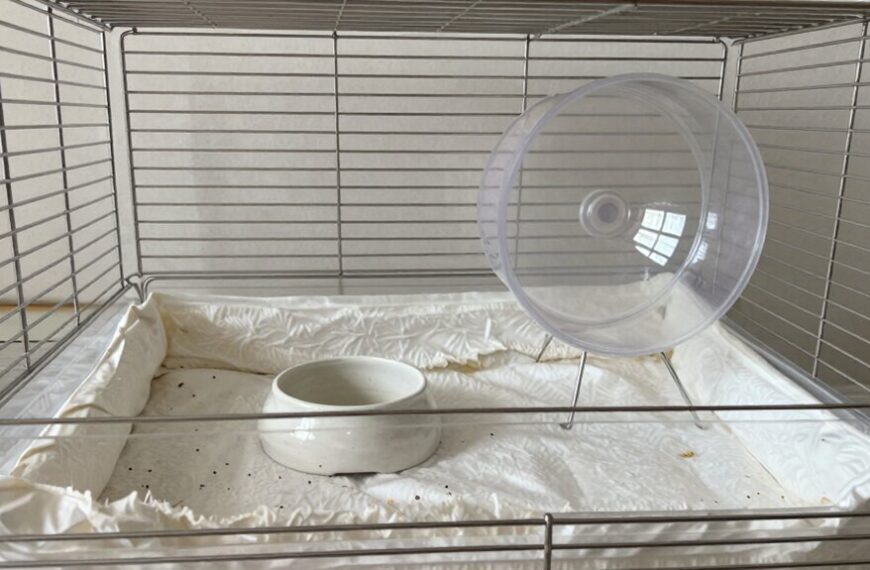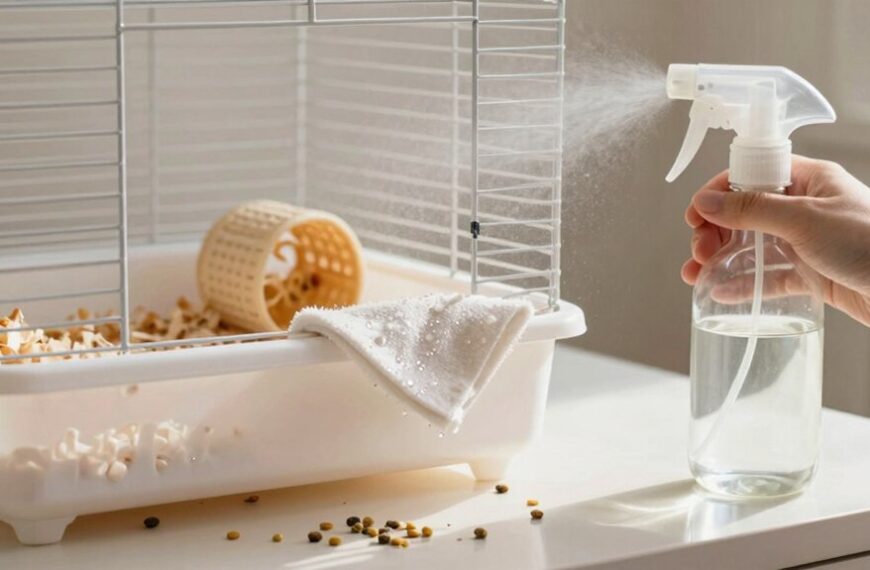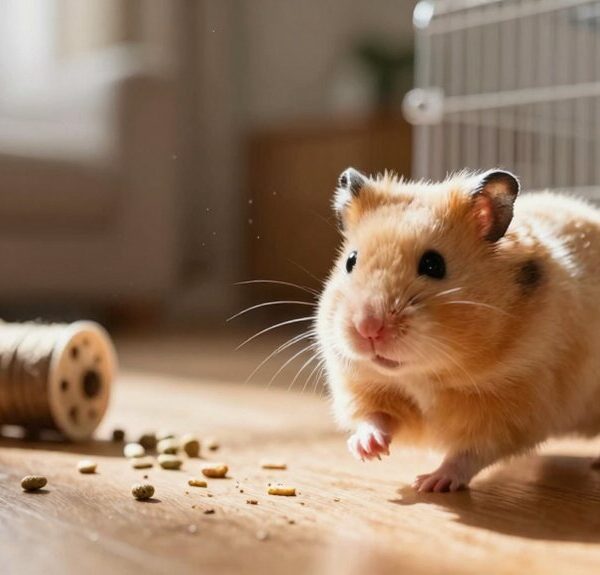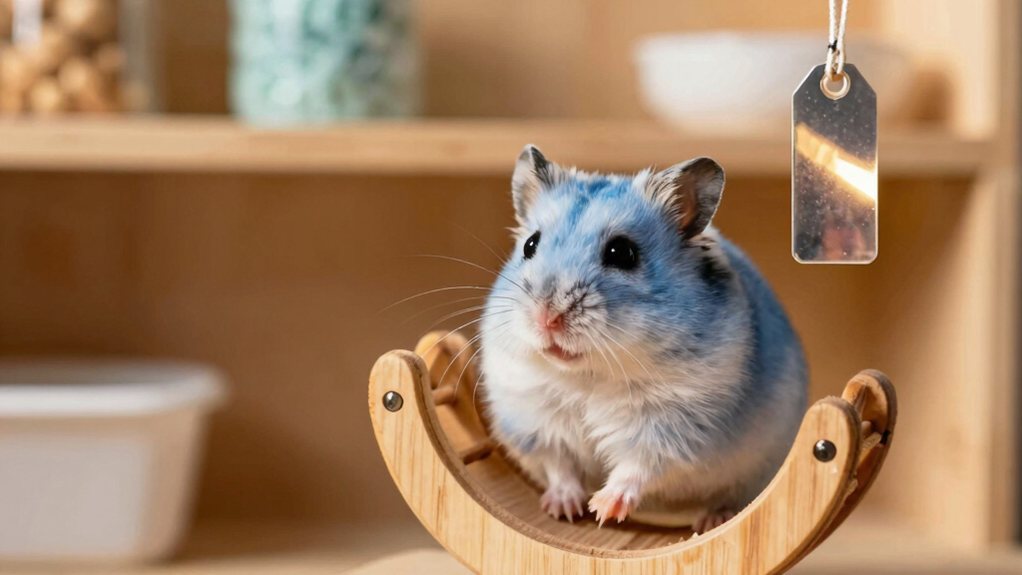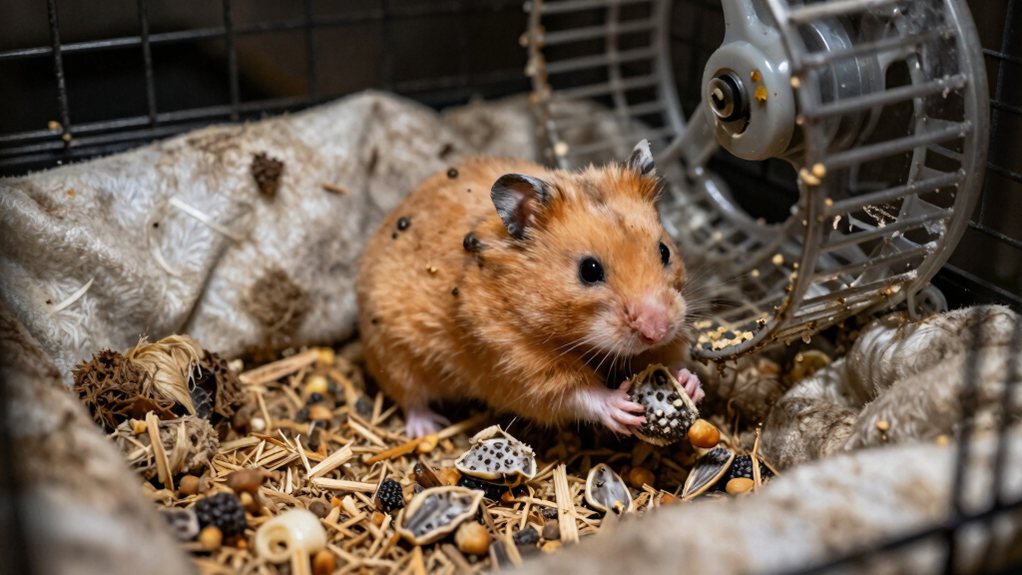
You shouldn’t let your hamster go more than a week without a full cage clean, trust me, that cute little corner they use as a bathroom turns into a stink bomb fast. Daily spot cleaning helps, but weekly deep cleans keep bacteria, mold, and ammonia at bay.
A dirty cage stresses your pet and can lead to health issues quicker than you’d think. Stick to a routine, and you’ll both be happier. Plus, you’ll discover some surprisingly helpful tips just ahead.
How Often Should You Clean a Hamster Cage?
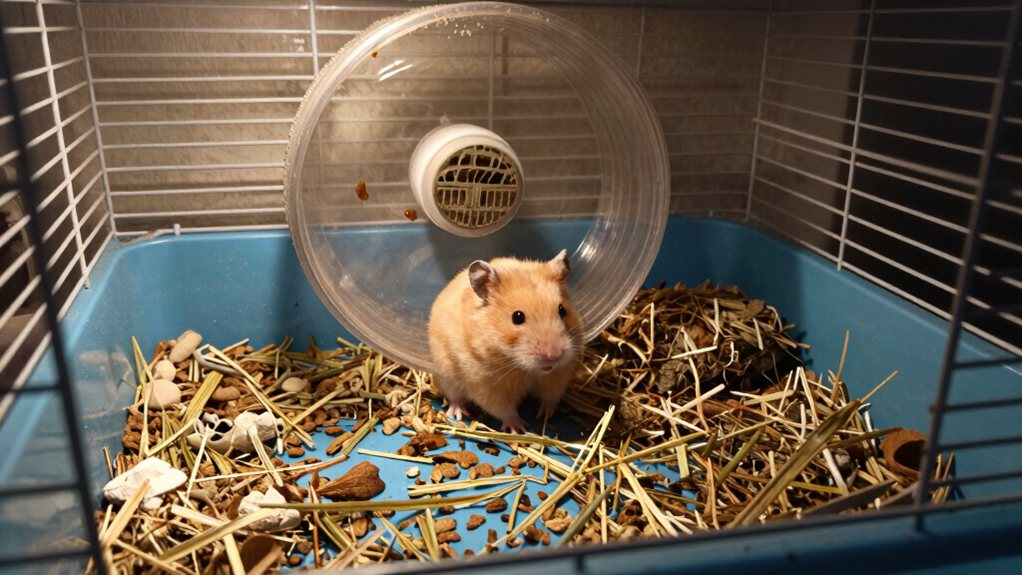
Honestly, you’ll want to stay on top of cleaning your hamster’s cage because let’s face it, nobody enjoys walking into a room that smells like a dirty gym sock.
You should do a full clean once a week to keep things fresh and healthy.
A weekly deep clean keeps your hamster’s home fresh, healthy, and stink-free—because nobody wants to walk into a room that smells like last week’s gym socks.
Spot clean every few days by removing wet bedding or leftover food, especially since bits from your hamster diet can rot and stink fast.
A dirty cage isn’t just gross—it stresses your little buddy out.
Plus, clean space means happy exploring.
While you’re at it, toss in some fresh toys or rotate old ones.
Toy rotation keeps your hamster curious and entertained.
Think of it like redecorating their tiny apartment.
You wouldn’t want to live in a messy room, and neither do they.
Stick to this routine, and both you and your hamster will breathe easier—literally.
A full deep cleaning once per month is also recommended for optimal hygiene, in addition to weekly cleanings, to fully eliminate built-up bacteria and odors. This monthly deep cleaning ensures long-term cleanliness and health for your pet.

Practical: The broom and dustpan are made of PP material, which can be used to clean up waste, dropped food, and hay in the cage

PACKAGE INCLUDE:1pcs stainless steel tweezer, 1pcs mini dustpan and brush and 1Pcs scooper feeding tool.

BIO-ENZYMATIC CLEANING FORMULA: Penetrates to help break down and destroy tough stains and odors
What Happens If You Don’t Clean It?
If you skip cleaning your hamster’s cage, things can get pretty gross, fast. Your little buddy faces real health risks from bacteria and ammonia buildup.
Plus the stink might clear *you* out before it bothers them!
And trust me, a stressed hamster isn’t fun for either of you. Think grumpy mood swings and midnight wheel marathons.
Prolonged exposure to ammonia buildup can lead to respiratory issues in both humans and hamsters, especially in poorly ventilated rooms.
Health Risks Increase
While your hamster mightn’t care much about housekeeping, letting their cage go too long without a good cleaning can lead to some pretty yucky, even dangerous, problems. Mold exposure can happen fast in damp bedding, and breathing that in isn’t just gross—it’s harmful. You mightn’t see it right away, but your little buddy sure feels it.
Plus, dirty cages invite pests, leading to parasite infestation. Nobody wants mites or bugs crashing their hamster’s tiny apartment! These creepy crawlies cause itching, sores, and stress—definitely not the chill life you want for your pet.
A messy home also means bacteria build-up, raising the risk of infections. Sure, cleaning isn’t your hamster’s favorite show, but it keeps them safe and happy.
Think of it as spa day: for health’s sake. A few minutes of your time equals big wins for their well-being.
Regular spot-cleaning helps prevent excessive waste accumulation and supports a healthier environment between deep cleanings with daily spot-cleaning.
Odors Become Overpowering
Ever wonder why your hamster’s cage starts smelling like a locker room after a week of gym class? That stink isn’t just gross, it’s a red flag. When you skip cleanings, odors build fast, and things go downhill quickly. Here’s what happens:
Ammonia from urine builds up, burning your nose and your hamster’s lungs.
Leftover food and damp bedding invite mold growth, which is dangerous to breathe.
The smell can attract unwelcome guests. Bugs or even a pest infestation might move in.
Your poor hamster gets stressed, hiding more and playing less.
You love your little buddy, right? A quick clean every week keeps the funk away and your pet happy. Trust us, both you and your hamster will breathe easier, literally. Don’t let the stink win!
A consistent cleaning schedule prevents harmful bacterial buildup and supports your hamster’s health through proper cage maintenance.
Stress Affects Behavior
That stink isn’t just offending your nose, it’s messing with your hamster’s mood too. When you skip cage cleanings, the buildup of waste and old food stresses your little buddy out. Hamsters are neat freaks by nature, and a dirty home can send them into anxiety attacks.
You might notice them pacing, biting the bars, or hiding more than usual—classic signs of stress. Over time, this can lead to social isolation, where they avoid interaction altogether, even with you.
Imagine living in a messy room with no shower or fresh air—yeah, it’d bum you out too.
A clean cage gives your hamster peace of mind and a chance to be their fun, curious self. So, don’t wait until it smells like a locker room. A quick clean every week keeps your tiny pal happy, healthy, and way more fun to hang out with.
Prolonged exposure to unsanitary conditions can contribute to the development of cage rage, a stress-induced condition marked by hyperactivity and compulsive behaviors.
Spot Clean or Full Clean? What’s the Difference?
You’ve probably noticed your hamster’s cage isn’t always a five-star hotel, so what’s the fix?
Spot cleaning means you’re just tidying up the messiest spots, like scooping out soiled bedding or clearing leftover snacks.
It’s kind of like doing the dishes instead of deep-cleaning the whole kitchen.
A full clean, though, means starting fresh: dumping everything, scrubbing the cage, and refilling it.
This takes more time but keeps things truly fresh.
Spot cleaning daily helps maintain hygiene and prevents the buildup that can lead to health issues, especially when using highly absorbent paper-based bedding.
Spot Cleaning Explained
Wondering how to keep your hamster’s home fresh without turning it into a full-blown renovation project every other day? Spot cleaning is your go-to move. It’s quick, effective, and keeps your little buddy happy without stressing them out. Here’s how to do it right:
- Remove soiled bedding, especially around the bathroom corner.
- Swap out damp or dirty nesting material to prevent odors.
- Wipe down the cage decoration with a pet-safe cleaner, mold loves moisture too.
- Rotate toys weekly, toy rotation keeps things fun and mentally stimulating.
This light upkeep means fewer full cleans and a healthier space.
Plus, your hamster won’t lose their scent markers, which helps them feel safe.
You’re more than just cleaning, you’re bonding through care.
And honestly, who doesn’t love a tidy home that still smells like hamster and not disinfectant?
Using a non-toxic disinfectant ensures your spot cleaning routine is safe and effective without exposing your hamster to harmful chemicals.
Full Cleaning Process
Now that you’ve got the hang of spot cleaning, keeping things fresh with quick pickups and toy swaps, it’s time to talk about the bigger picture: the full cage clean. Every few weeks, your hamster’s home needs a complete refresh.
Take everything out, toss the old bedding, and wash the cage with warm, soapy water. No harsh chemicals.
While it’s drying, give all your cage decorations a good wipe down. This is also the perfect chance for toy rotation.
Swapping out toys keeps your little buddy from getting bored. Yes, hamsters can get bored.
Fresh bedding goes back in, followed by clean toys and decorations in new spots to spark curiosity. A full clean resets odors and keeps your pet healthy.
Think of it as a spa day, with less relaxation and more running in circles afterward. You’ve both got this!
A high-quality, dust-free bedding option like Kaytee CleanCozy or Oxbow Pure Comfort can significantly improve air quality and comfort during this process.
7 Signs It’s Time to Clean Your Hamster’s Cage
Ever wonder why your hamster’s home suddenly smells like a forgotten gym bag? That’s your cue! Hamsters are tidy creatures, but they rely on you to keep their space fresh. Watch for these signs it’s time to clean:
That funky gym-bag stench? Your hamster’s cry for help. They’re tidy by nature—clean their space before it becomes a biohazard.
- Pungent odor – If you’re holding your breath near the cage, it’s way past due.
- Soggy or clumped bedding – Especially near their favorite toilet habits spot.
- Moldy snacks – Those hidden food storage stashes can go bad and gross.
- Visible waste buildup – Poop piles and pee corners aren’t just icky. They’re unhealthy.
Don’t wait for a science experiment to grow in there. A clean cage keeps your little buddy happy, healthy, and way less stinky.
Plus, you’ll actually *want* to hang out with them. Who doesn’t love a fresh-smelling furball?
Using an enzyme-based cleaner can quickly break down odors and waste without exposing your hamster to harmful chemicals.
How to Deep Clean Your Hamster’s Cage (Step by Step)
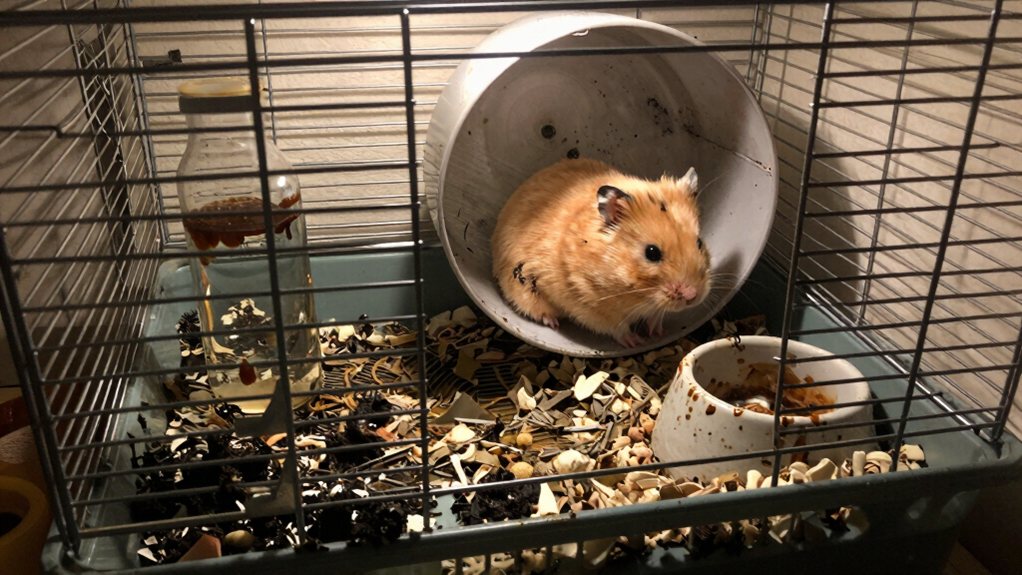
A clean cage isn’t just a nice-to-have. It’s a must for your hamster’s health and your nose’s survival. Start by removing your hamster and placing it in a secure playpen. Dump out all bedding and scrub the cage with warm, soapy water. No harsh chemicals. Rinse well and dry completely.
While it dries, wash food bowls and water bottles, since a clean hamster diet setup prevents sneaky bacteria.
Don’t forget toy rotation: clean and swap toys weekly to keep your hamster mentally stimulated and the cage fresh.
Wipe down tunnels and hideouts too. They collect gunk fast.
Once everything’s dry, add fresh bedding, return food and water, and reintroduce your furry buddy.
Finish by placing clean toys in new spots for extra fun.
Deep cleaning monthly keeps your hamster happy, healthy, and way less stinky. You’ve got this!
Consider using reusable cage liners to reduce waste while maintaining a fresh and hygienic habitat.
Best Bedding for a Clean, Odor-Free Cage
Choosing the right bedding does more than just make the cage look cute. It’s your first line of defense against stink and mess.
Good bedding materials don’t just cushion your hamster’s tiny feet. They also help with odor control so your room doesn’t smell like a science experiment gone wrong.
Here are four top picks that keep things fresh and comfy:
- Paper-based bedding – Soft, absorbent, and great at trapping smells.
- Aspen shavings – Natural and safe, with solid odor control (never use cedar or pine!).
- Recycled paper pellets – Super absorbent and eco-friendly, though a bit crunchy.
- Fleece liners (with backing) – Washable and cozy, but need frequent laundering.
Switching bedding weekly keeps your hamster happy and your nose grateful. Trust me, both of you’ll breathe easier.

ODOR CONTROL for long-lasting freshness, Kaytee Clean & Cozy can be used with any type of habitat for a fresh animal home
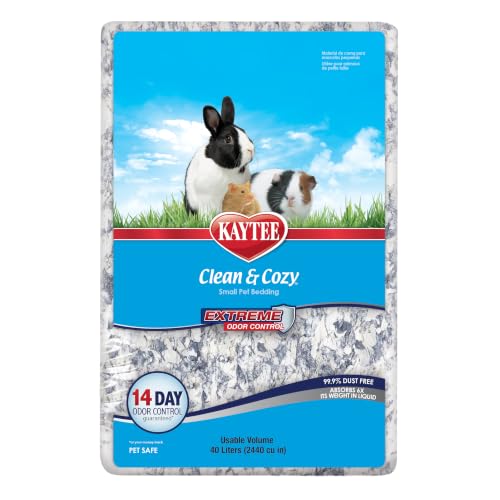
14-DAY ODOR CONTROL for long-lasting freshness. Kaytee Clean & Cozy can be used with any type of habitat for a fresh animal home

ODOR CONTROL for long-lasting freshness. Kaytee Clean & Cozy can be used with any type of habitat for a fresh animal home.
How to Clean Without Stressing Your Hamster
Why does your hamster vanish into that little hideout every time you grab the cleaning spray? It’s not personal. They’re just creatures of habit, and sudden changes can spook them.
To keep stress low, try cage rotation. Swap out one section at a time instead of doing a full clean all at once. That way, familiar scents stick around, and your hamster won’t feel totally lost.
Swap one section at a time during cleanings—familiar scents help your hamster feel safe and at home.
Clean during their downtime. Late morning works well, so they’re less active and more chill. Use plain soap and water. Skip the harsh sprays.
And hey, toss in some hamster enrichment like a cardboard tube or a new chew toy during cleanup. It distracts them and makes the space feel fresh and fun.
You’ve got this. Happy cleaning, happy hamster!
Can a Dirty Cage Make Your Hamster Sick?
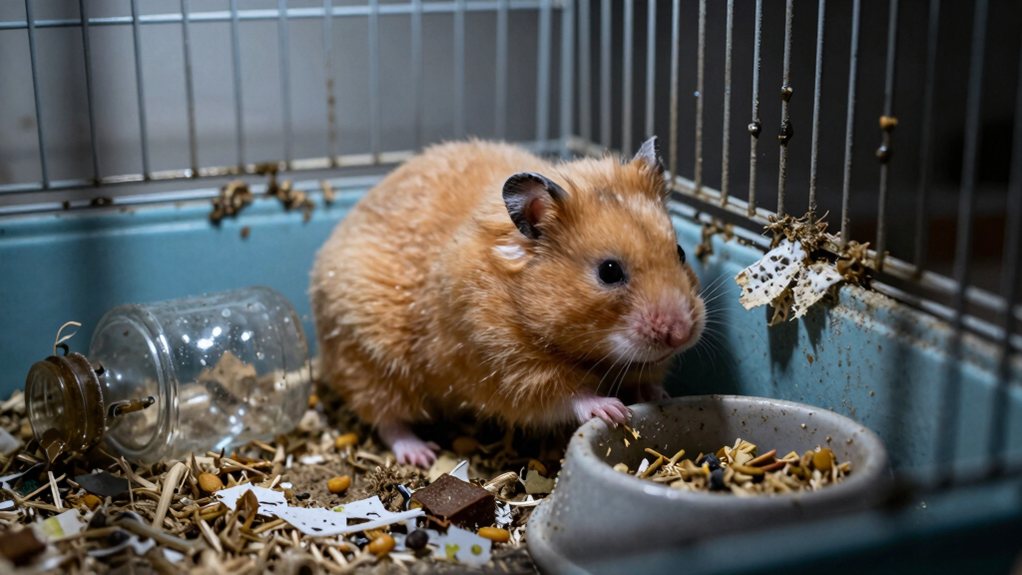
You mightn’t realize it, but letting your hamster’s cage go too long without a clean can actually make them sick. All that leftover pee and poop can grow nasty bacteria.
The ammonia buildup from urine can irritate their little lungs, kind of like how you’d feel walking into a smelly bathroom with no windows.
Trust me, your hamster doesn’t want to live in a stink hole any more than you do!
Bacterial Growth In Dirty Cages
While your hamster mightn’t care much about interior design, they definitely notice when their home starts to smell less like fresh bedding and more like a science experiment.
A dirty cage isn’t merely gross, it’s a breeding ground for trouble.
Bacteria multiply fast, and before you know it, your pet’s cozy corner turns risky.
Here’s what’s lurking:
- Harmful bacteria like *E. coli* and *Salmonella* thrive in soiled bedding.
- Mold formation can irritate your hamster’s lungs and cause breathing issues.
- Ammonia from urine buildup burns little noses and delicate paws.
- Parasite infestation becomes more likely in unclean environments.
You’re not merely cleaning, you’re protecting.
A quick scrub every week keeps your tiny roommate safe, happy, and far from becoming an accidental lab specimen.
Think of it as hamster healthcare with gloves.
Respiratory Issues From Ammonia Buildup
When the air in your hamster’s cage starts to sting your nose, that’s more than a sign to clean, it’s a red flag for their health.
That sharp smell? It’s ammonia buildup from urine, and it’s more than gross.
It can lead to serious lung irritation and even ammonia toxicity in your tiny friend.
Hamsters have super-sensitive respiratory systems, so breathing in those fumes daily is like living in a smoky room 24/7. Yikes.
Over time, this can cause wheezing, sneezing, or worse, respiratory infections.
You mightn’t see it right away, but your hamster’s struggling.
Think of it this way: you wouldn’t want to chill in a dirty bathroom, and neither do they.
A quick weekly clean keeps the air fresh and your little buddy happy.
So don’t wait for the stink test.
Stay ahead of the gunk.
Your hamster will thank you with more zoomies and fewer sniffles.
5 Common Hamster Cage Cleaning Mistakes
Ever wonder why your hamster still turns up its tiny nose even after you’ve cleaned the cage?
You might be making some common cleaning mistakes without realizing it.
Let’s fix that.
1. Skipping toy rotation
Your hamster gets bored easily, so switch out toys weekly to keep things fresh and fun.
2. Over-cleaning the entire cage
Spot clean often, but deep-clean only once a month to preserve their familiar scent.
3. Ignoring cage decoration corners
Those cozy hideouts trap gunk; check under and behind them every time.
4. Using harsh chemicals
Stick to mild soap and water. Your hamster’s nose is super sensitive.
A clean cage doesn’t mean sterile—just safe and comfy.
A clean cage isn’t about perfection—it’s about creating a safe, cozy home your hamster will love.
With a little routine and attention, your tiny friend will thrive.
Plus, they’ll appreciate not living in a hamster hotel gone rogue!
How to Build a Stress-Free Cleaning Routine
How do you keep your hamster’s home fresh without turning cleanup time into a circus? Start with a simple weekly routine, spot clean every few days and do a full refresh once a week. That way, you avoid messy marathons and keep odors at bay.
Use cage rotation by having two clean, identical setups and switching them weekly. Your hamster stays comfy while you clean stress-free.
Keep familiar bedding and toys in place so your little buddy feels safe.
And don’t forget hamster enrichment. Toss in fresh chew toys or a cardboard tunnel during cleanup to distract and delight.
A consistent schedule helps both of you relax. You’ll stay on top of messes, and your hamster will thrive in a clean, predictable space.
It’s not about perfection. It’s about peace. With a bit of planning, cleaning becomes calm, easy, and even kind of fun.
Final Thoughts
You’ve got this! Cleaning your hamster’s cage doesn’t need to be a chore, or a science project. Stick to a simple routine, watch for those sneaky mess clues, and your little buddy will stay happy and healthy.
Sure, they might give you a side-eye during cleanup, but hey, even tiny roommates deserve a tidy space. A little effort goes a long way, and honestly? You’re already a better pet parent than most. Keep it up!

Sienle Bird Cage Cleaning Kit: A multifunctional cleaning tool set designed for cleaning various pet cages. The stainless steel scraper removes droppings, the cleaning fork and wire brush tackle stubborn stains, the broom sweeps up debris, and the double-headed cleaning brush easily cleans tough stains from cage gaps and crevices. Practical and efficient, the best bird poop remover

HAMSTER CAGE ODOR CONTROL — Helps neutralize urine, soiled bedding, food and everyday habitat odors without covering the cage in heavy perfume. Ideal for keeping the habitat and surrounding room fresher between full bedding changes

Package Included: This bird cage cleaning brush set comes with 4 distinct tools: 3-in-1 wire brush, 2-in-1 brush & scraper, soft bristle brush, stiff bristle brush. They fully cover all your different cage cleaning needs