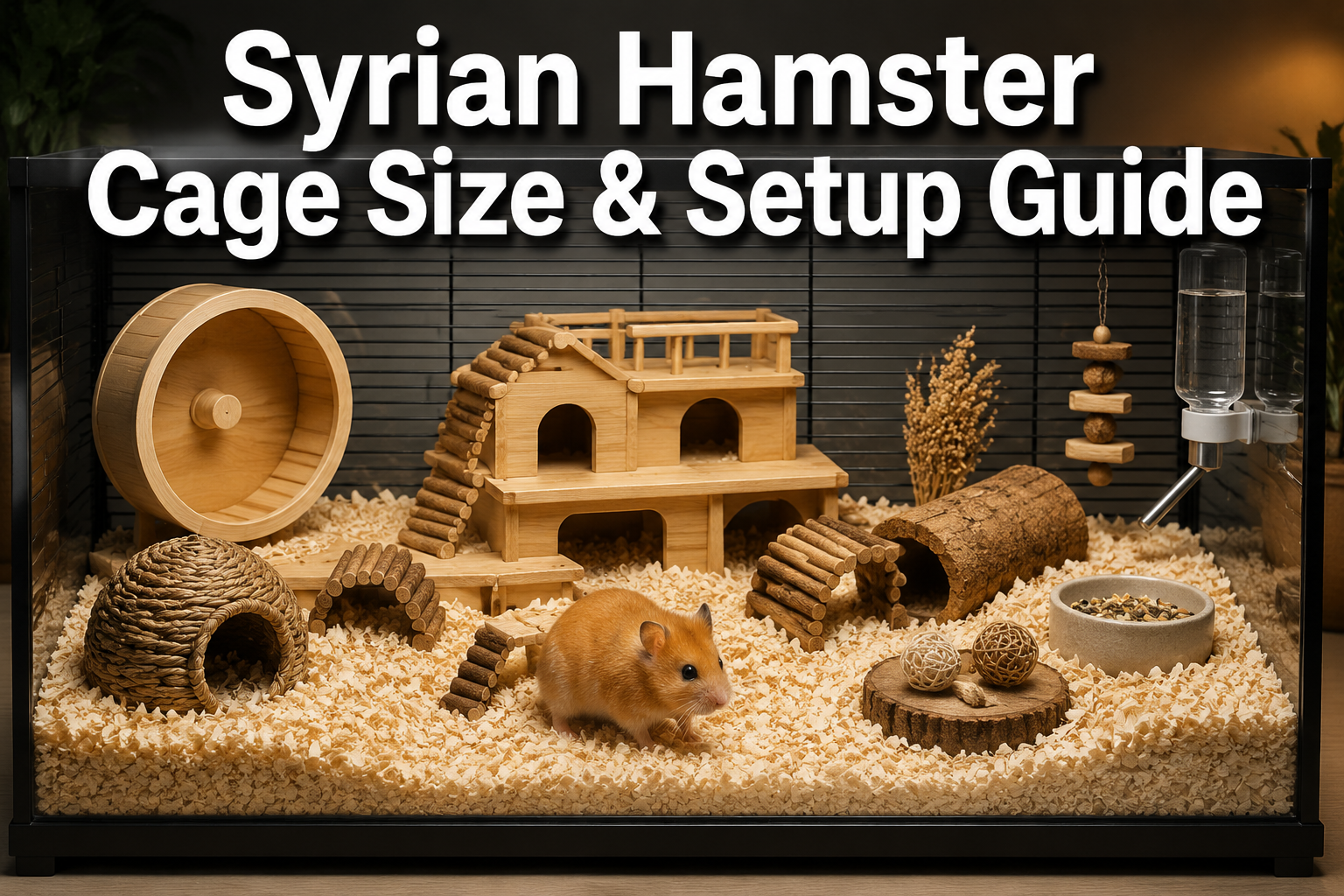
Most Syrian hamsters sold in pet stores come with a cage recommendation that’s half the size they actually need. A standard 24×12-inch cage might look adequate on the shelf, but it’s a setup for stress behaviours, bar biting, and a hamster that never settles. Syrian hamsters are solitary, territorial animals that need genuine floor space to express natural behaviours, not vertical levels that look impressive but don’t address their ground-dwelling instincts.
This guide covers the specific measurements, setup requirements, and common mistakes that separate a functional Syrian hamster cage from one that causes behavioural problems. Whether you’re setting up before bringing a hamster home or troubleshooting issues with an existing setup, the details here focus on what actually affects your hamster’s welfare.
Key Takeaways
- Minimum floor space: 450 square inches continuous (30×15 inches), but 600+ square inches prevents most stress behaviours
- Bar spacing: Maximum 1 cm (0.4 inches) to prevent escapes and head injuries
- Bedding depth: 6-8 inches minimum to allow natural burrowing behaviour
- Wheel size: 8-10 inches diameter for proper spine alignment during running
- Solitary housing: Syrian hamsters must live alone, cohabitation causes fighting and injury
Minimum Syrian Hamster Cage Size Requirements
Floor Space: The Non-Negotiable Measurement
Syrian hamsters need 450 square inches of continuous floor space as an absolute minimum. That’s roughly 30×15 inches or 75×38 cm. This measurement refers to unbroken floor area, not multiple levels added together.
Why continuous floor space matters:
- Syrian hamsters are ground-dwelling burrowers, not climbers
- They establish scent marking territories across horizontal space
- Natural foraging behaviour requires room to move and explore
- Vertical space doesn’t compensate for inadequate floor area
Recommended floor space: 600-800 square inches (40×20 inches or larger). Larger cages correlate with fewer stress behaviours, less bar biting, and more natural activity patterns. If you’re choosing between a tall cage with platforms and a longer single-level enclosure, choose the longer option every time.
Why Pet Store Cages Fall Short
Standard pet store cages marketed for Syrian hamsters typically measure 24×12 inches (288 square inches), about 60% below minimum welfare standards. These cages cause:
- Cage rage: Repetitive bar biting, climbing, and escape attempts
- Stress-related illness: Increased susceptibility to wet tail and other stress-triggered conditions
- Shortened lifespan: Chronic stress affects immune function and longevity
- Abnormal behaviours: Pacing, over-grooming, and aggression during handling
The cage industry hasn’t caught up with current welfare research. Don’t rely on packaging claims, measure the base dimensions yourself.
Bar Spacing and Escape Prevention
Syrian hamsters can squeeze through surprisingly small gaps. Maximum bar spacing: 1 cm (0.4 inches). Anything wider risks:
- Head entrapment injuries (hamsters can get stuck trying to squeeze through)
- Successful escapes (they’re persistent and will test every gap)
- Limb injuries from attempting to force through bars
For wire cages, check spacing at welds and corners where bars may be slightly wider. Glass aquariums and plastic bin cages eliminate bar spacing concerns entirely but require proper ventilation planning.
Essential Syrian Hamster Cage Setup Components
Bedding Depth and Substrate Choice
Syrian hamsters are compulsive burrowers. In the wild, they dig tunnel systems up to 2.5 meters deep. Your cage setup needs to accommodate this instinct.
Minimum bedding depth: 6 inches. Ideal depth: 8-10 inches in at least one section of the cage.
This depth allows your hamster to:
- Create stable tunnel networks that don’t collapse
- Regulate body temperature by burrowing deeper or surfacing
- Express natural foraging behaviour (hiding and retrieving food)
- Reduce stress through species-appropriate activity
Substrate options:
- Paper-based bedding (Carefresh, Clean & Cozy): Excellent odour control, holds burrows well, dust-free
- Aspen shavings: Affordable, good for burrowing, ensure it’s kiln-dried
- Hemp bedding: Low dust, good absorbency, slightly more expensive
Avoid: Cedar and pine shavings (phenols cause respiratory damage), fluffy bedding (ingestion and impaction risk), scented bedding (respiratory irritation).
For more details on substrate choices, see our guide on what to put in the bottom of a hamster cage.
Wheel Size: Preventing Spine Damage
Syrian hamsters run 5-9 km per night. An incorrectly sized wheel causes permanent spine curvature and arthritis.
Required wheel diameter: 8-10 inches minimum (20-25 cm). Larger is better for bigger Syrians.
Check your hamster’s running posture:
- ✅ Correct: Back is straight or slightly curved downward, natural running gait
- ❌ Incorrect: Back arches upward (U-shape), hamster looks hunched
Wheel specifications:
- Solid running surface (no rungs or mesh that trap feet)
- Closed back or side-mounted (prevents tail entrapment)
- Silent or low-noise bearing (for your sanity during night activity)
Popular options: Silent Runner, Niteangel, Exotic Nutrition wheels in 10-12 inch sizes. Avoid wheels marketed for dwarf hamsters, they’re too small for Syrians.
Hideouts and Enrichment Zones
Syrian hamsters are prey animals that need secure hiding spots to feel safe. Minimum: 2-3 hideouts in different cage areas.
Hideout requirements:
- At least one large enough for your hamster to turn around inside
- Opaque (not clear plastic, defeats the purpose of hiding)
- Multiple exits preferred (prevents feeling trapped)
- Stable enough not to collapse if hamster burrows underneath
Enrichment essentials:
- Sand bath: 6-8 inch diameter dish with reptile sand (not dust) for grooming and digging
- Chew toys: Untreated wood blocks, apple sticks, loofah pieces for dental health
- Foraging opportunities: Scatter feeding instead of bowl-only feeding encourages natural behaviour
- Tunnel sections: Cork logs, ceramic tubes, or cardboard tubes (replace when soiled)
Rotate enrichment items every 1-2 weeks to maintain novelty and engagement. For more ideas, check out what is the best thing to put in a hamster cage.
Water and Food Placement
Water bottle vs. bowl: Both work if maintained properly. Bottles prevent bedding contamination; bowls are more natural but need daily cleaning. If using a bowl, choose a heavy ceramic dish (3-4 inches diameter) that won’t tip.
Food bowl: Heavy ceramic or glass, 3-4 inches diameter. Place away from water source and toilet area.
Feeding strategy: Scatter 50% of daily food in bedding to encourage foraging. Use bowl for fresh vegetables and supplements. Syrian hamsters naturally cache food, don’t panic when you find hoards in hideouts.
Syrian Hamster Cage Types: Pros and Cons
Wire Cages
Pros:
- Excellent ventilation
- Easy to attach water bottles and accessories
- Good visibility for monitoring health
Cons:
- Bar spacing often too wide (check carefully)
- Encourages bar biting if undersized
- Bedding gets kicked out through bars
- Can be drafty in cold environments
Best for: Owners who can find models with appropriate bar spacing (1 cm or less) and minimum 450 square inches floor space. Look for cages with deep bases (6+ inches) to contain bedding.
Glass Aquariums
Pros:
- No bar spacing concerns
- Excellent bedding depth capacity
- Prevents bedding scatter
- Good for viewing burrowing behaviour
Cons:
- Heavy and difficult to move
- Requires mesh lid with secure clips
- Ventilation concerns if lid isn’t properly designed
- Can overheat in warm environments
Best for: Owners prioritizing deep bedding and burrowing opportunities. Minimum 40-gallon breeder tank (36×18 inches) for adequate floor space.
Plastic Bin Cages (DIY)
Pros:
- Inexpensive and customizable
- Large floor space options (110+ quart bins)
- Excellent bedding containment
- Lightweight and easy to clean
Cons:
- Requires DIY ventilation holes (hardware cloth panels)
- Less aesthetically appealing
- Hamster may chew plastic edges
- Harder to attach some accessories
Best for: Budget-conscious owners willing to do modifications. Use 110-quart or larger storage bins with mesh ventilation panels on lid and upper sides.
Commercial “Hamster Habitats”
Pros:
- Marketed specifically for hamsters
- Often include accessories
- Modular expansion options
Cons:
- Most are undersized (under 450 square inches)
- Tube systems don’t count toward floor space
- Difficult to clean thoroughly
- Tubes can trap hamsters or cause stress
Best for: Avoid unless you verify actual floor space measurements. Tubes and compartments create cleaning challenges and don’t meet behavioural needs.
For a comprehensive review of suitable options, see our best hamster cages guide.
Common Syrian Hamster Cage Setup Mistakes
Mistake 1: Counting Vertical Space as Floor Space
Adding platforms and levels doesn’t compensate for inadequate base dimensions. Syrian hamsters don’t naturally climb, they’re ground-dwelling burrowers. A cage with 300 square inches of floor space plus 200 square inches of platforms is still a 300-square-inch cage for welfare purposes.
What happens: Hamster ignores upper levels, shows stress behaviours, doesn’t utilize full cage.
Fix: Prioritize horizontal expansion. Use platforms only for placing accessories (wheel, hideout) to maximize floor space for bedding and movement.
Mistake 2: Insufficient Bedding Depth
Providing 2-3 inches of bedding prevents natural burrowing behaviour and increases stress.
What happens: Hamster repeatedly tries to burrow but tunnels collapse. Leads to frustration behaviours, increased bar biting, and reduced activity. Some hamsters become lethargic when they can’t express natural behaviours.
Fix: Provide 6-8 inches minimum. If cage depth is limited, create a deeper bedding zone in one section using a divider or deeper base.
Mistake 3: Wrong Wheel Size
Using a 6-7 inch wheel marketed for “all hamsters” causes spine damage in Syrian hamsters.
What happens: Chronic back arching during running leads to permanent spinal curvature, arthritis, and reduced mobility as hamster ages. You won’t see immediate injury, but damage accumulates over months.
Fix: Invest in an 8-10 inch wheel immediately. This isn’t optional, it’s a health requirement. Watch your hamster run: back should be straight or slightly downward-curved, never arched upward.
Mistake 4: Cohabitation Attempts
Syrian hamsters are strictly solitary after 8-10 weeks of age. “Getting along” temporarily doesn’t mean it’s safe.
What happens: Cohabitation leads to fighting, severe injuries, and death. Syrians will fight to the death over territory. Even siblings from the same litter will fight once mature. Stress from forced cohabitation also increases disease susceptibility.
Fix: One Syrian hamster per cage, always. No exceptions. This is a species-specific requirement, not a preference. If you want multiple hamsters, you need multiple complete setups. For species comparisons, see Syrian vs Dwarf hamster differences.
Mistake 5: Inadequate Cleaning Schedule
Both under-cleaning and over-cleaning cause problems.
What happens:
- Under-cleaning: Ammonia buildup from urine causes respiratory infections, eye irritation, and increased wet tail risk
- Over-cleaning: Removing all scent marking weekly causes territorial stress and increased scent marking behaviour
Fix: Spot-clean soiled areas daily (remove wet bedding, droppings from food hoards). Full bedding change every 3-4 weeks, leaving a handful of clean used bedding to maintain scent continuity. For detailed cleaning protocols, see how often should you clean a hamster cage.
Syrian Hamster Cage Placement and Environment
Location Considerations
Ideal placement:
- Quiet room away from loud TVs, speakers, or high-traffic areas
- Stable temperature: 65-75°F (18-24°C)
- Away from direct sunlight and drafts
- Not in bedrooms if you’re a light sleeper (hamsters are nocturnal and active at night)
Avoid:
- Kitchens (temperature fluctuations, cooking fumes)
- Bathrooms (humidity issues)
- Near heating vents or air conditioning units
- Windowsills (temperature extremes, direct sun)
Temperature and Humidity
Syrian hamsters originate from arid regions and don’t tolerate high humidity well.
Target ranges:
- Temperature: 65-75°F (18-24°C)
- Humidity: 40-60%
Warning signs of temperature problems:
- Too cold: Lethargy, attempting hibernation (torpor), reduced eating
- Too hot: Excessive grooming, lying flat, rapid breathing, heat stroke risk
Use a thermometer/hygrometer near cage level (not room level, temperature varies by height). For monitoring tools, see best hamster cage thermometers and hygrometers.
Lighting and Day/Night Cycle
Syrian hamsters are crepuscular/nocturnal, most active at dawn and dusk.
Lighting requirements:
- Natural day/night cycle (12-14 hours light, 10-12 hours darkness)
- No bright lights directly on cage
- Avoid complete darkness (dim ambient light is fine)
Don’t: Cover cage with blankets to “help them sleep” during the day. Hamsters naturally sleep during daylight, covering creates ventilation issues and temperature problems. For more on this topic, see should I put a blanket over hamster cage at night.
Upgrading an Existing Syrian Hamster Cage
Signs Your Current Cage Is Inadequate
Watch for these stress behaviours indicating cage size or setup problems:
- Bar biting: Persistent chewing on cage bars, especially at same times daily
- Cage climbing: Repeatedly climbing walls or bars, hanging from top
- Pacing: Repetitive path-following along cage perimeter
- Escape attempts: Persistent testing of lid, corners, or weak points
- Lethargy: Reduced activity, sleeping more than 12-14 hours daily
- Aggression: Increased biting during handling, territorial behaviour
These behaviours indicate cage rage, a welfare issue requiring immediate cage upgrade. For more on identifying stress, see signs of stress in hamsters.
Transition Process
When upgrading to a larger cage:
- Set up new cage completely before moving hamster
- Transfer some used bedding (about 25%) to maintain scent familiarity
- Move familiar hideouts and accessories to new cage
- Add new enrichment gradually over 1-2 weeks (too much novelty at once can be stressful)
- Expect adjustment period: 3-7 days of exploration, possible temporary stress behaviours
Don’t be surprised if your hamster seems initially overwhelmed by more space. This is normal and resolves within a week as they establish new territories and scent mark the expanded area.
FAQ
What is the minimum cage size for a Syrian hamster?
450 square inches of continuous floor space (30×15 inches) is the absolute minimum, but 600+ square inches significantly reduces stress behaviours and improves welfare. Measure the base dimensions, don’t count vertical levels or platforms toward this requirement.
Can I use a 20-gallon aquarium for a Syrian hamster?
No. A 20-gallon tank provides only 288 square inches (24×12 inches), well below minimum requirements. Use a 40-gallon breeder tank minimum (36×18 inches = 648 square inches) or larger for adequate floor space.
How deep should bedding be in a Syrian hamster cage?
Minimum 6 inches, ideally 8-10 inches in at least one section. This depth allows natural burrowing behaviour and tunnel creation. Shallow bedding (2-3 inches) prevents species-appropriate behaviour and increases stress.
Do Syrian hamsters need a 10-inch wheel?
Most Syrian hamsters need an 8-10 inch wheel minimum. Larger Syrians (over 150g) benefit from 10-12 inch wheels. Check running posture: if your hamster’s back arches upward while running, the wheel is too small and causing spine damage.
Can two Syrian hamsters live together in a large cage?
No. Syrian hamsters are strictly solitary and territorial after 8-10 weeks of age. Even in very large cages, they will fight, often to the death. Cohabitation causes severe stress and injury regardless of cage size. One Syrian per cage, always.
How often should I clean a Syrian hamster cage?
Spot-clean daily (remove wet bedding and soiled areas). Complete bedding change every 3-4 weeks. Over-cleaning (weekly full changes) removes scent marking and increases stress. Under-cleaning causes ammonia buildup and respiratory issues. For detailed cleaning guidance, see can I use vinegar and water to clean a hamster cage.
Conclusion
Setting up a proper Syrian hamster cage isn’t about buying the most expensive commercial habitat, it’s about understanding the specific measurements and features that support natural behaviour. The difference between a 300-square-inch cage and a 600-square-inch cage is the difference between chronic stress behaviours and a hamster that burrows, forages, and thrives.
Start with these non-negotiables: 450+ square inches of continuous floor space (600+ is better), 6-8 inches of bedding depth, an 8-10 inch wheel, and solitary housing. Everything else, hideouts, enrichment, substrate type, builds on that foundation.
If your current setup falls short, prioritize the upgrade. Bar biting, cage climbing, and escape attempts aren’t personality quirks, they’re welfare indicators that your hamster needs more space. The investment in a proper cage setup pays off in reduced stress behaviours, better health outcomes, and a hamster that actually uses and enjoys their environment.
Measure your cage base dimensions today. If you’re under 450 square inches, start planning the upgrade. Your hamster’s welfare depends on it.