If you suspect your hamster is having a stroke, stay calm and contact a vet immediately, as only 1 in 5 clinics treat small mammals.
Look for sudden signs like wobbling, circling, or a head tilt. At home, focus on comfort: keep their space single-level with soft bedding and offer easy-to-eat foods.
Recovery is a marathon, but your steady care makes all the difference. For a full guide on supportive daily routines and prevention, your next steps are right here.
Take These Immediate Steps After A Suspected Stroke
While doing this, calmly prepare for an immediate vet visit. Your steady presence is a huge comfort, so talk to them in a soothing voice, they know your sound, and it helps. Keep their environment clean to prevent any secondary issues, as zoonotic transmission of germs, while rare, is possible when a pet is in a vulnerable state.
How To Recognize The Signs Of A Hamster Stroke
Because time is so critical when dealing with a potential stroke, you’ll want to know exactly what to look for in your little friend.
Time is critical when spotting a stroke in your hamster, so know these urgent signs.
Start by watching for sudden behavioral changes, like confusion or a lack of interest in their favorite activities. They might seem wobbly, circle in one direction, or have trouble walking straight.
A noticeable appetite loss or difficulty chewing is another major red flag. You could also see a head tilt or one side of their face appearing droopy.
While it’s scary, noticing these signs quickly is your best chance to help. Remember, your hamster isn’t being lazy; these are urgent clues their body is sending. Trust your gut, you know your pet’s normal behavior best. In any health emergency, knowing immediate first aid steps, like how to properly stop bleeding with gentle pressure, is a vital skill for a pet owner.
What To Expect At The Veterinarian
Your vet will start with a gentle initial exam to check your hamster’s essential signs and movements.
They’ll likely recommend some diagnostic tests, like an X-ray, to rule out other issues and confirm what’s going on.
Then, together, you’ll create a practical treatment plan that fits your little friend’s specific needs and your care at home, while also discussing hidden heart issues as these are a common underlying cause of serious health problems in hamsters.
Initial Assessment Process
So, what exactly happens when you rush your wobbly little hamster to the vet?
The vet will first perform a gentle but thorough initial assessment. They’ll start with a hydration check, gently pinching your hamster’s skin to see if it snaps back, which tells them about fluid levels.
Next comes temperature monitoring, as a low body temp can be be a serious sign.
The vet will also observe your pet’s coordination, check its eyes, and listen to its heart and lungs with a tiny stethoscope. They’re basically doing a full detective work-up to understand what’s causing the wobbles.
You’ll be asked lots of questions about your hamster’s behavior, so every detail you remember helps them piece the puzzle together. The vet may also inquire about your pet’s living conditions, as a dirty cage environment can contribute to or worsen respiratory symptoms that mimic other illnesses.
Diagnostic Testing Options
Following the initial assessment, the vet will likely recommend some specific tests to get a clearer picture of what’s going on inside your pet.
Since hamsters are so tiny, advanced scans like MRIs aren’t usually practical.
Instead, your vet will rely on a thorough hands-on evaluation and some key diagnostics.
The goal is to rule out other issues and understand the scope of the problem.
- A detailed neurological exam to check reflexes, balance, and coordination.
- Standard bloodwork results to screen for infections or metabolic diseases.
- A physical exam focusing on heart and lung sounds.
- A review of your hamster’s diet and habitat history.
- Observation of your pet’s behavior in the clinic.
This process helps tailor a treatment plan just for your little friend, and a yearly wellness check can help detect such health issues early.
Treatment Plan Creation
This plan is your guide, so ask questions if anything is unclear.
It often includes specific instructions for a home assessment, like monitoring their food and water intake daily.
Your vet might administer supportive fluids to combat dehydration, a common post-stroke issue.
You’ll likely get tips on making their habitat safer and easier to maneuver, perhaps by lowering water bottles.
As part of this, they will likely recommend a thorough cleaning of the enclosure using a hamster-safe disinfectant to eliminate pathogens and support recovery.
While recovery requires patience, celebrating tiny victories, like a successful nibble, keeps things hopeful.
Follow the plan closely, and you’ll give your little friend their best shot at bouncing back.
Make A Safe And Comfortable Recovery Space
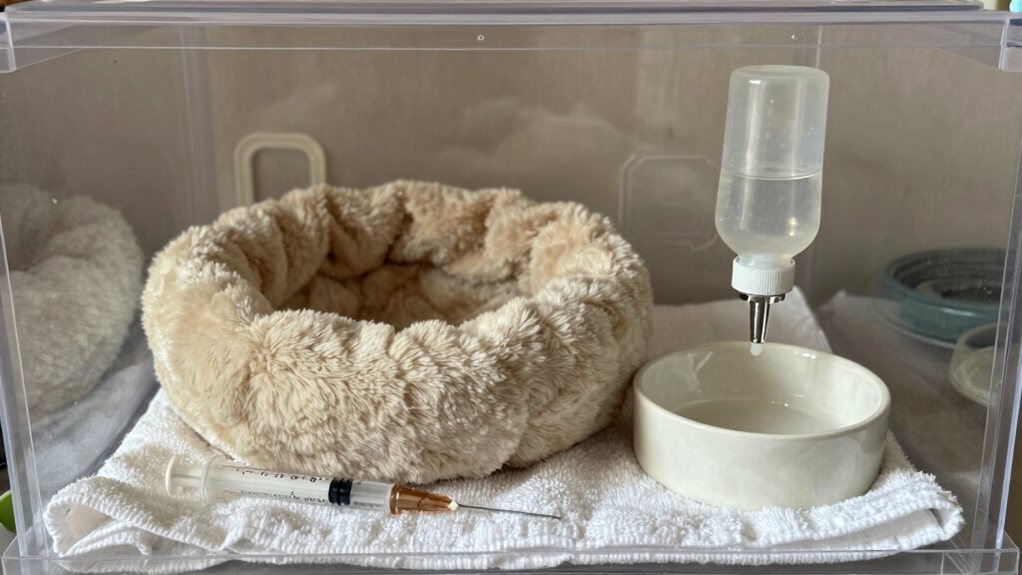
- Use a single-level cage to eliminate any risky climbing.
- Line the floor with extra-soft, paper-based bedding.
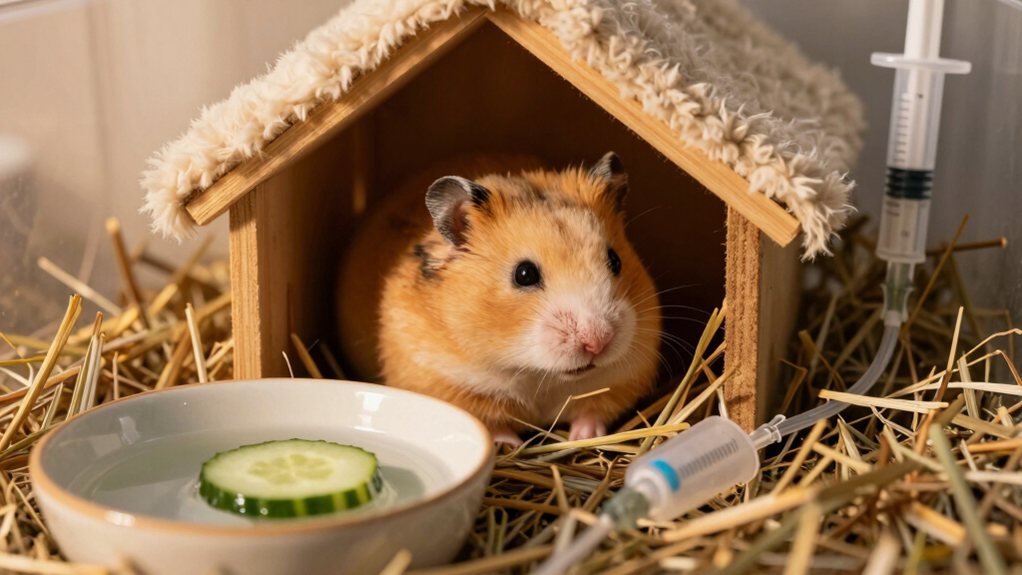
- Provide a small, cozy hide that’s easy to enter and exit.
- Move food and water right next to their main sleeping spot.
- Keep their space in a low-traffic room away from loud noises and bright lights.
- During recovery, perform daily spot cleaning to remove soiled bedding and maintain a hygienic environment.
This setup turns their home into a perfect recovery ward, where all they need to focus on is getting better.
Your Daily Care Guide For Stroke Recovery
When your hamster is recovering from a stroke, your daily care can make all the difference, as these small actions help them heal and feel secure.
Focus on providing excellent nutrition support by offering soft, easy-to-eat foods like moistened pellets or baby food, and ensure a steady supply of essential vitamins and minerals by maintaining a consistent daily feeding routine. Keep their water accessible, perhaps in a shallow dish.
Each day, spend time on gentle symptom journaling. Note their energy levels, balance, and appetite in a simple log. This isn’t just for the vet; it helps you celebrate tiny victories, like a wobbly but successful trip to the food bowl.
Your calm, consistent routine is their anchor. Be patient, and remember that your loving presence is the best medicine they could ask for.
What A Realistic Recovery Timeline Looks Like
You’ll want to know what to expect after your hamster’s stroke, starting with the immediate care in the first few days and then the long-term healing process. During this period, monitor closely for signs of respiratory and neurological distress, such as labored breathing or an unsteady gait, which require immediate veterinary attention. Recovery isn’t overnight, so think of it more like a slow, steady marathon than a quick sprint. With your patience and care, you’ll get to see those little improvements week by week, which is really the best reward.
Immediate Post-Stroke Care
- Minimize stress by turning down lights and noise to create a calm environment, as sudden handling mimics predator threats and can cause panic.
- Ensure easy access to water and their favorite soft foods right next to them.
- Avoid handling unless absolutely necessary, and always use gentle, secure handling techniques.
- Don’t force-feed your hamster; just make nourishment readily available.
- Contact your vet immediately for professional advice custom-fit to your pet’s specific situation, remembering that only 1 in 5 veterinary clinics treats small mammals.
Your calm presence makes a huge difference.
Long-Term Healing Process
While your hamster’s immediate safety is secured, the road to recovery is more of a marathon than a sprint. Realistic healing takes weeks, not days, so patience is your new best friend.
You’ll become a master of diet adjustment, offering softer, easy-to-eat foods while making sure they get proper nutrients.
Constant hydration support is essential; a small syringe can help if they struggle to drink.
Celebrate tiny victories, like a more steady walk or renewed interest in a favorite treat.
There may be setbacks, but don’t lose heart. Your calm, consistent care provides the stability they need to heal at their own pace.
This journey deepens your bond, showing the incredible resilience of your little friend.
How To Help Prevent Future Strokes In Your Hamster
Since your furry friend has been through a stroke, you’re likely keen to do everything you can to support their health and reduce the risk of another one.
Prevention focuses on managing stress and creating a stable, healthy environment.
While you can’t control every factor, these proactive steps make a big difference.
- Serve a balanced diet to avoid obesity, a key dietary risk; stick to quality pellets, limited treats, and fresh veggies.
- Ensure their cage is in a calm, temperature-stable area, avoiding drafts and direct heat.
- Maintain good humidity control, as very dry or damp air can stress their respiratory system.
- Provide a spacious, enriching habitat with a solid-surface exercise wheel and tunnels to encourage safe activity.
- Schedule regular, gentle check-ups with your vet to monitor their weight and overall wellness.
Final Thoughts
Caring for your hamster after a stroke is a big job, but remember, you’re not doing it alone. With your vet’s help and your own gentle care, you’re giving your little friend their best shot at recovery.
Stay patient, keep that recovery space cozy, and celebrate the small victories. You’ve got this, and your hamster is lucky to have such a loving owner by their side.