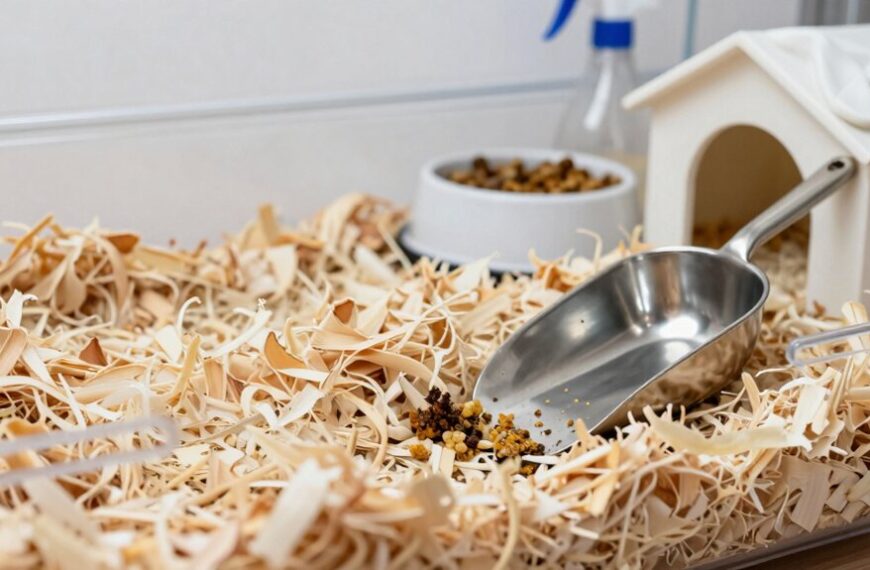
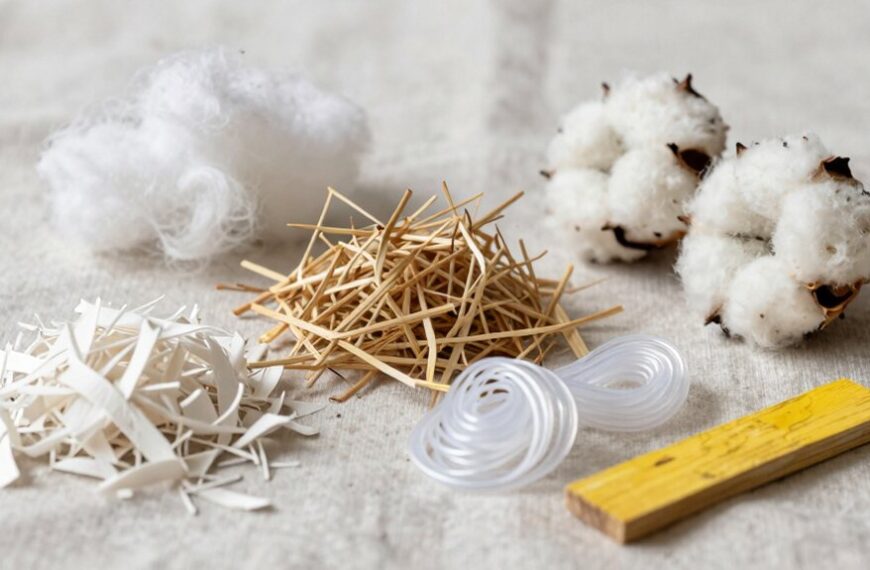
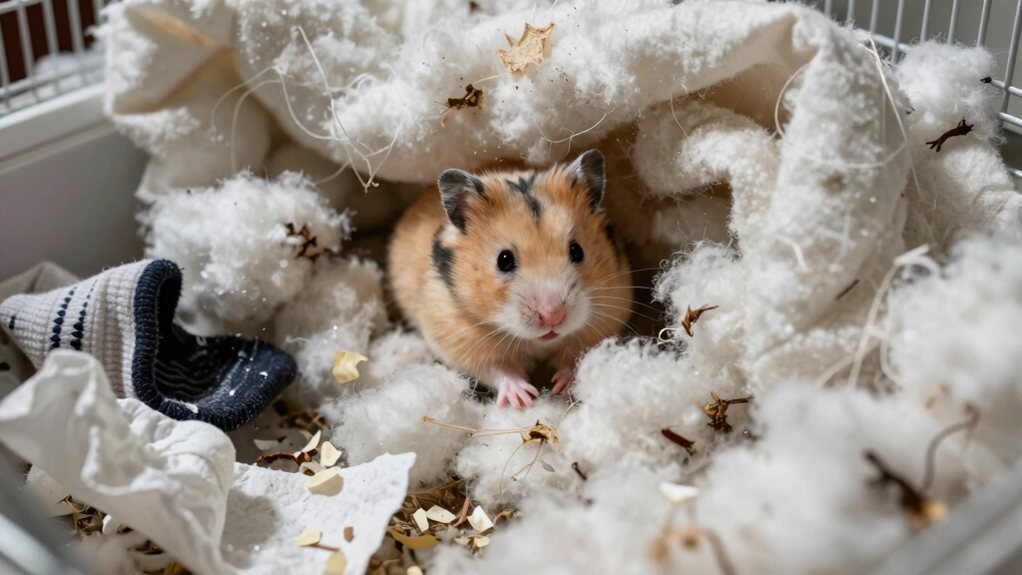
You’ll want to give your hamster at least 6 inches of bedding. Syrians especially love to dig deep, so aim for 6–8 inches to keep them happy and busy.
Dwarf hamsters do fine with 4–6 inches, while Chinese ones prefer 5–7. Without enough depth, they get stressed or chilly, but too much can trap moisture. Pick safe, dust-free materials like paper or aspen, and layer them smartly.
Get it right, and you’ll see tunnels, cozy nests, and a very proud little burrower. There’s a bit more to get just perfect.
How Much Hamster Bedding Depth Do Experts Recommend?
Most experts agree you’ll want at least 6 to 8 inches of bedding in your hamster’s home, enough to let your tiny digger burrow to their heart’s content.
Aim for 6 to 8 inches of bedding—just right for your little digger to burrow, snuggle, and stay cozy in their own underground paradise.
This depth isn’t just for fun; it helps with bedding moisture control and keeps your little buddy cozy through proper temperature regulation.
Think of it like a blanket fort that also breathes!
Too shallow, and your hamster might get chilly or stressed.
Too wet? That’s a no-go—damp bedding can lead to health issues.
You’ve gotta strike the sweet spot: snug, dry, and deep enough for nesting.
It’s kind of like Goldilocks, but for hamsters.
Check the bottom layers now and then to make sure they’re not clumping or smelling off.
With the right depth, your furry pal stays happy, healthy, and busy tunneling like a pro.
You’ve got this!
A safe bedding material such as aspen shavings or paper-based options ensures your hamster’s respiratory and skin health are protected.
Ideal Hamster Bedding Depth for Burrowing and Nesting
You know that blissful moment when your hamster vanishes into their bedding like a tiny, furry ninja? That’s not merely cute—it’s natural.
For healthy burrowing and nesting behavior, aim for at least 6 to 8 inches of bedding.
This depth lets your little explorer dig tunnels and create cozy hideouts just like in the wild.
Choose a soft, absorbent bedding texture, paper-based or aspen shavings work great, so it’s comfy on their paws and safe to nest in.
Avoid anything dusty or scented, since that can irritate their sensitive noses.
When your hamster starts stuffing bedding into their cheeks, that’s nesting behavior kicking in, and it’s adorable.
Give them enough depth, and they’ll build a snug fortress you mightn’t see them in for hours.
Deep bedding isn’t merely fun—it’s crucial for their happiness and well-being.
Aromatic compounds in bedding materials can cause respiratory issues, so always opt for unscented, non-toxic options like paper-based bedding or aspen to protect your hamster’s delicate respiratory system. Aromatic compounds
Signs Your Hamster Needs More Bedding
Ever wonder why your hamster’s cage suddenly looks more like a construction zone than a cozy home? It might be a sign your little buddy needs more bedding. If you notice your hamster digging nonstop or dragging materials around without success, they’re probably trying to build a proper nest.
Check the bedding moisture, too. Damp or clumped bedding can mean it’s too shallow or old, making it hard for your hamster to stay dry and comfy.
Healthy nesting behavior includes gathering and fluffing bedding, but if they seem frustrated or leave piles scattered, it’s time to add more.
You should aim for at least 6–8 inches of bedding to support their natural instincts. Don’t wait until they’re sleeping in the open. Hamsters love privacy!
A deeper layer keeps them happy, warm, and busy. Think of it as their dream fort, worth the upgrade!
For optimal comfort and burrowing, choose bedding with pillowy-soft texture that maintains loft and dryness even at depth.
Can You Have Too Much Hamster Bedding?
Sure, you want your hamster’s bed to feel cozy, but piling it too high can cause problems.
Too much bedding might trap moisture and limit airflow, which isn’t great for your little buddy’s health.
Think of it like a sandwich—enough filling is tasty, but go overboard and everything gets messy!
Using materials like coconut fiber can help balance depth and ventilation while supporting natural burrowing behavior.
Deep Bedding Risks
While deep bedding can turn your hamster’s cage into a cozy burrower’s paradise, piling it too high might lead to some unexpected problems.
If the bedding gets too thick, especially in warm rooms, your little buddy could face an overheating risk. Hamsters don’t sweat like we do, so they rely on airflow to stay cool.
Stuffy, deep layers can trap heat and make life uncomfortable.
Plus, some clever escape artists might use towering bedding as a sneaky staircase to climb over the cage walls. You’ll come back to find your hamster redecorating your bookshelf.
While we love a good dig, balance is key. Stick to 6–8 inches for most setups—enough for burrowing fun without the drama.
Think cozy cave, not Everest expedition. Your hamster will stay safe, cool, and right where they belong, snug in their home.
Excessive bedding can also trap dampness and promote bacterial growth, undermining hygiene even with regular spot cleaning.
Ventilation And Safety
When you pile on the bedding hoping to give your hamster the ultimate underground kingdom, don’t forget that fresh air matters just as much as soft floors.
Too much bedding can trap stale air and moisture, which harms your pet’s breathing and comfort.
Good air circulation keeps the habitat healthy and prevents mold.
Plus, deep bedding shouldn’t mean poor escape prevention. Hamsters are Houdinis with paws! Make sure the top stays breathable and secure.
You’re building a cozy burrow, not a bunker, so let your hamster breathe easy while dreaming of snack stashes and midnight wheel marathons.
Adequate ventilation slots help maintain air quality while allowing observation through perforated designs or transparent walls.
Best Bedding Types for Deep Hamster Layers
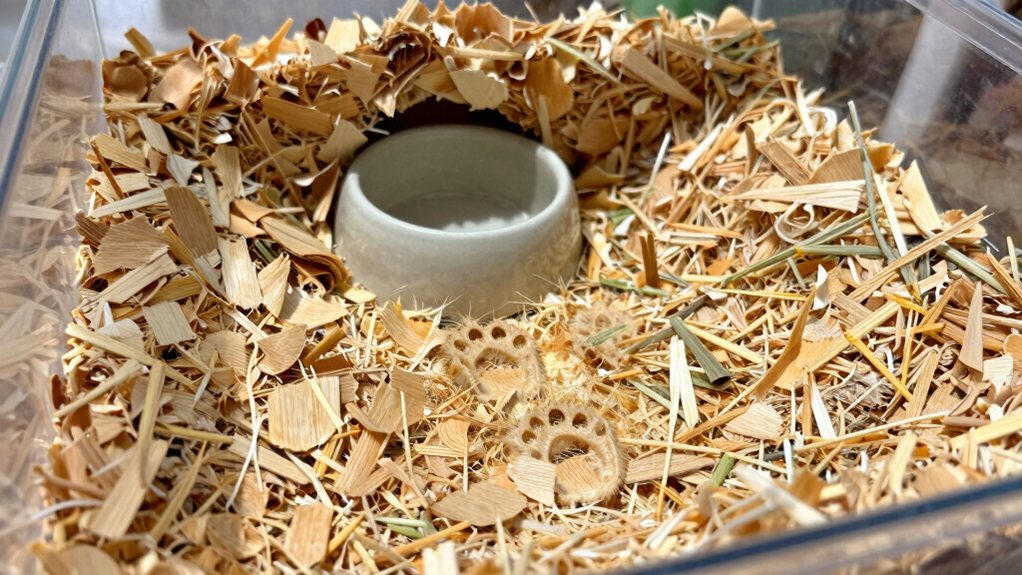
If you’re going all in on deep bedding—think six inches or more—you’ll want a material that’s cozy, safe, and easy to dig in, not something that’ll turn into a dust storm or collapse like a bad soufflé. Stick to paper-based or aspen shavings. They handle bedding moisture well and won’t trap mold.
Avoid cedar or pine. Those can be toxic, and you definitely don’t want material toxicity messing with your tiny roommate’s lungs.
Coconut fiber’s great too, holding moisture without getting soggy, so your hamster can tunnel like a pro. Just make sure it’s dust-free, because nobody wants a sneezy sidekick.
You’re building a burrow paradise, not a construction zone. Go for soft, breathable stuff that lets air flow.
Your hamster will thank you with happy digging and maybe a cheek-pouch smile. Keep it safe, keep it snug, and let the underground adventures begin!
How to Layer Bedding for Natural Burrows
Since your hamster’s basically a tiny architect with a passion for underground real estate, setting up the bedding layers right gives them the chance to dig, tunnel, and nap exactly how they’d want in the wild. For natural burrows, layer smartly.
Meet the original tiny architect—your hamster. Set up smart bedding layers and watch them dig, tunnel, and nap like nature intended.
Start with a base of paper-based bedding for good tunnel stability.
Add soft hay or shredded tissue on top. Your hamster will love nesting in it.
Lightly mist the middle layer to maintain bedding moisture, but don’t soak it.
This mix helps mimic their natural habitat while keeping tunnels from collapsing. Think of it like building a cozy underground apartment complex. Structure matters, but so does comfort.
Your hamster will chomp, dig, and snooze with pure joy. Just watch them go. It’s like a tiny construction crew with whiskers.
Clean Deep Bedding Without Stressing Your Hamster
You don’t have to tear the whole cage apart every time, just scoop out the messy spots, like taking out the trash without emptying the whole bin.
Try rotating fresh bedding into one side while your hamster still enjoys their cozy nest on the other, kind of like a tiny hotel upgrade.
It’s an easy way to keep things clean without turning your furry buddy’s world upside down.
Spot Cleaning Method
Ever wonder how to keep your hamster’s cozy, deep bedding fresh without turning their world upside down? The spot cleaning method is your go-to for managing bedding moisture and keeping things healthy with minimal fuss.
You don’t need to strip the whole cage every time, just target the messy spots.
Check daily for wet or soiled areas, especially near the bathroom corner.
Scoop out damp or urine-soaked bedding using a small spoon or scooper.
Replace only the removed portion with fresh bedding to maintain familiar scents.
Cleaning frequency? Aim for spot checks every day and full changes weekly. Your hamster will stay calm, and you’ll avoid surprise puddles.
Think of it like tidying just the kitchen instead of the whole house. Smart, simple, and stress-free for both of you.
A clean environment helps prevent respiratory risks associated with soiled bedding and improper materials like cedar or pine.
Bedding Rotation Tips
While your hamster may not send a thank you note, they’ll definitely show their appreciation when you refresh their bedding the right way, without turning their cozy burrow into a construction zone.
Instead of stripping everything out weekly, try rotating bedding. Remove soiled sections and replace them with fresh material, keeping some of the familiar stuff to reduce stress. This keeps your hamster calm and their scent markers intact.
Always check bedding texture. Soft, dust free options like paper based or aspen shavings are best for tiny paws and sensitive noses.
Avoid cedar or pine, as they can cause respiratory issues. Material safety matters.
Do a full change every 3 to 4 weeks, but spot clean often.
Your hamster will nap easier, dig happier, and maybe even do a little victory roll in their newly refreshed nest. Win win!
A full deep cleaning every month complements regular spot cleaning and helps maintain long-term hygiene, preventing bacterial growth and odor buildup over time through monthly deep cleaning.
Adjusting Hamster Bedding Depth by Species
Wondering if all hamsters dig and burrow the same way? Not quite! Different species have unique habits, so adjusting bedding depth by species keeps your little buddy happy and healthy.
Proper bedding depth supports natural behaviors while helping with bedding moisture control and temperature regulation.
Here’s how to tailor it:
- Syrian hamsters: These burly diggers need at least 6–8 inches of bedding, they love tunneling like tiny construction workers!
- Dwarf hamsters (Roborovski, Campbell’s, Winter White): Go for 4–6 inches. They’re smaller but still enthusiastic diggers.
- Chinese hamsters: Aim for 5–7 inches, they’re intermediate burrowers who appreciate a cozy, layered setup.
Too shallow, and they get stressed. Too deep, and monitoring cleanliness gets tricky.
Match the depth to your hamster’s style, and you’ll create a safe, comfy home that feels like the wild, minus the predators and bad Wi-Fi.
Final Thoughts
You’ve got this! Give your hammy a cozy 6–8 inches of bedding, and watch them dig, snuggle, and thrive. It’s like their own little underground kingdom, minus the moat.
Just keep it clean, safe, and deep enough for happy burrowing. Too much? Rare. Too little? Big no-no. Match it to your hamster’s style, and you’ll both sleep better knowing they’ve got the fluffiest, comfiest cave a tiny rodent could dream of.
Sweet dreams, little digger!