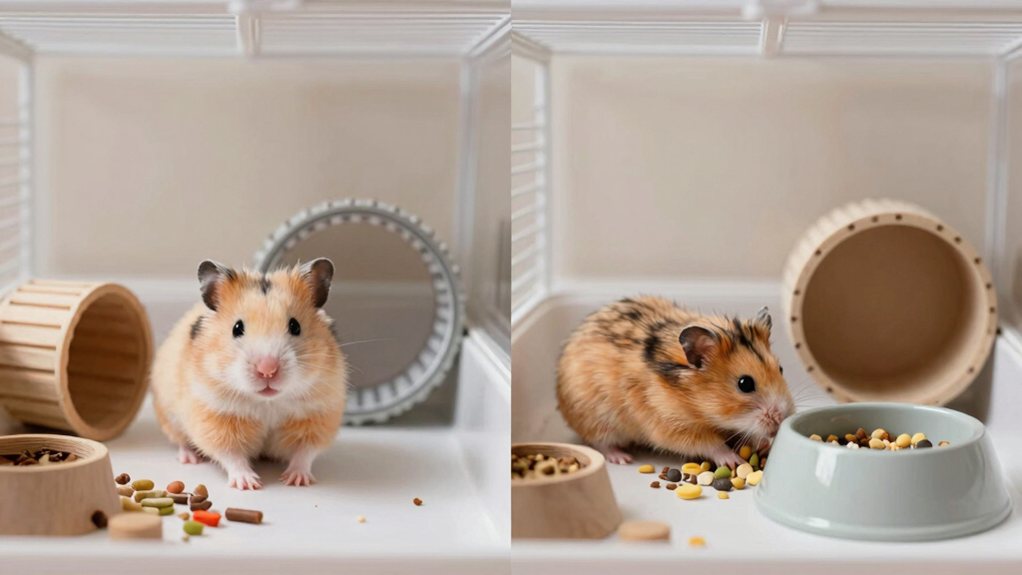
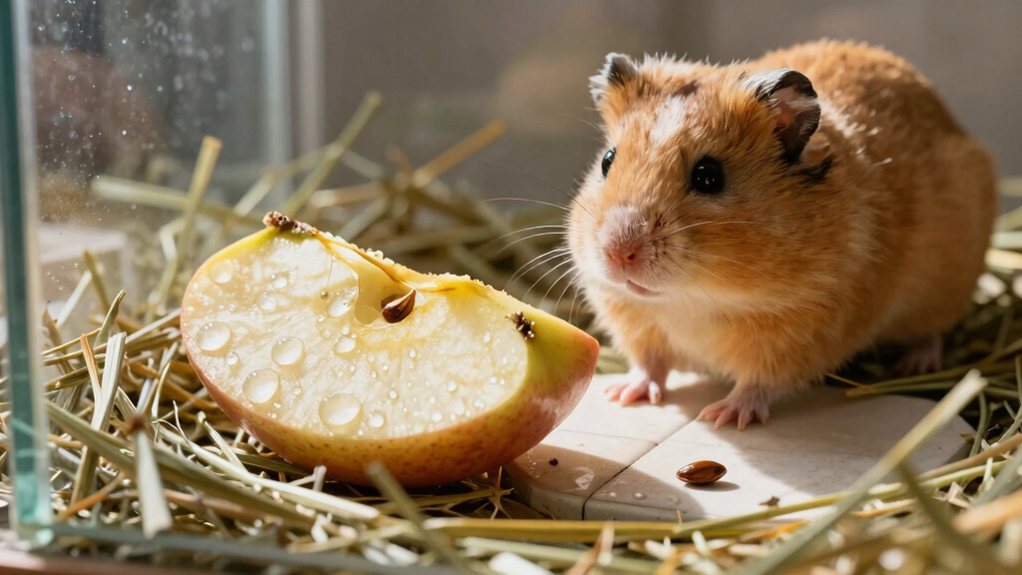
Keep your hamster safe by skipping citrus, rhubarb, and avocado. They are way too acidic or downright toxic.
Never offer apple seeds or cherry pits. They contain cyanide, which is deadly.
Grapes and raisins are super risky, even in tiny bits. Green tomatoes and high-sugar fruits like mango can upset their tummy or cause diabetes.
Hamsters have delicate tummies, so when in doubt, less is more. You’ll be surprised what actually *is* safe to share.
Citrus Fruits: Too Acidic for Hamsters
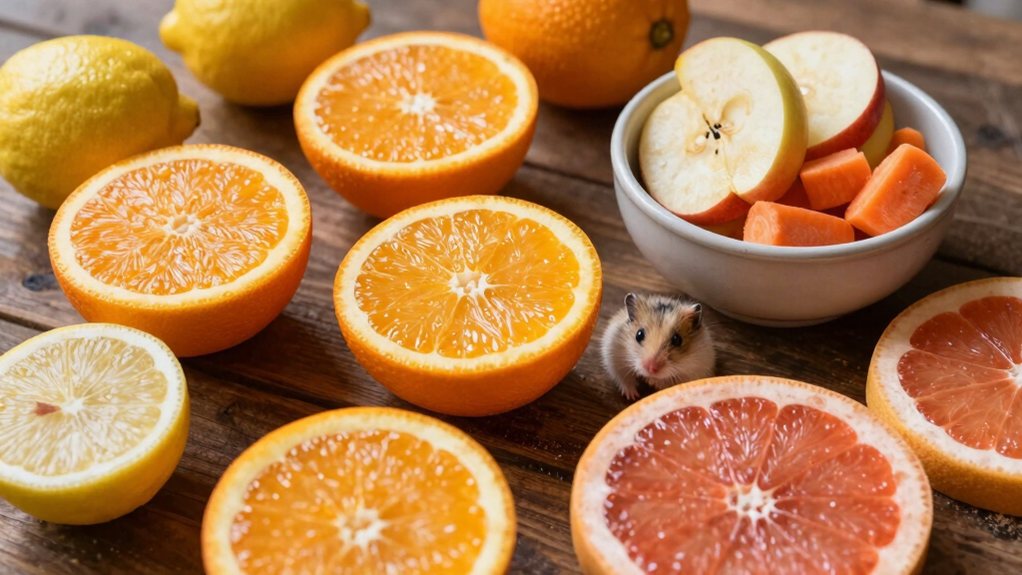
While you might be tempted to share a juicy orange or a tangy slice of lemon with your little hamster, it’s best to think twice.
Those citrus fruits are way too acidic for their tiny tummies.
Citrus acidity can seriously upset your hamster’s digestion, leading to discomfort or even diarrhea.
Their little systems just aren’t built to handle sour or highly acidic foods.
Think of it like drinking lemon juice on an empty stomach—ouch, right? That’s how your hamster feels!
Drinking lemon juice on an empty stomach? Ouch. That’s exactly how your hamster feels with citrus—skip the sour surprise.
Even small amounts of grapefruit, lime, or tangerine can cause problems.
It’s not worth the risk when there are safer, sweeter treats out there.
You want your furry friend to stay happy and healthy, not hiding in their corner with a tummy ache.
So skip the citrus and stick to gentler fruits like apples or bananas.
Your hamster will thank you—probably with a happy little squeak.
Citrus fruits must be kept completely away from hamster food bowls to avoid digestive issues and potential health risks.


Apple orchard sticks are delicious all-natural wood chews

Tasty apple and honey treat sticks your hamsters will love
Grapes and Raisins: Toxic to Hamsters, Even in Small Amounts
You might’ve heard that grapes and raisins are a no-go for hamsters, but here’s the good news, they’re actually safe in tiny amounts.
While grape allergies are rare, they can happen, so always watch your little buddy for any odd reactions.
As for raisin myths, many believe these dried treats are deadly, but that’s mostly a mix-up with dogs.
Still, moderation is key, too much can upset your hamster’s tummy.
Think of grapes like a once-in-a-while snack, not a daily staple.
Cut them into small pieces to avoid choking, and skip the raisins unless you’re offering a crumb-sized nibble.
Your hamster will nibble happily, whiskers twitching, totally unaware of the internet drama around their treat.
Just keep it light, keep it rare, and you’ll both enjoy the peace of mind, and maybe a tiny grape party.
Rhubarb: Poisonous to Hamsters in All Parts
If you’re thinking of sharing a bite of rhubarb pie with your hamster, think again. Every single part of the rhubarb plant, from the crunchy stalks to the leafy greens, is toxic to your tiny furball.
Rhubarb toxicity is no joke. It can lead to serious plant poisoning, even in small amounts.
The high levels of oxalic acid in rhubarb can cause breathing problems, weakness, and worse. You might love that tart flavor in a dessert, but your hamster definitely shouldn’t.
It’s one of those “looks harmless, acts deadly” foods that sneak up on pet owners.
So, while you’re baking, keep your little buddy far from the kitchen counter. Trust us, your hamster would rather have a sunflower seed than a piece of pie anyway.
Stay safe, stay informed, and keep rhubarb off the snack list—forever.
Hamsters’ tiny bodies cannot process toxins effectively, making even small exposures potentially fatal, especially with substances like apple seeds.
Avocado: Dangerous Due to Persin for Hamsters

Though it’s creamy, delicious, and a staple in your morning toast, avocado is one fruit you’ll want to keep far away from your hamster’s tiny paws.
What makes it so risky? It’s all about avocado toxicity caused by a substance called persin.
While you can enjoy it without a worry, persin effects on hamsters can be serious, even deadly.
This natural fungicide, found in the fruit, skin, leaves, and pit, may cause breathing issues, heart damage, or worse.
Even a small bite could lead to trouble.
So, while you’re savoring your guac, skip sharing with your little buddy.
Your hamster won’t miss it. There are plenty of safer treats out there. Think apples (without seeds!) or blueberries instead.
Keep your pet safe, happy, and tail-wiggling with foods you *know* are harmless.
When in doubt, leave it out, especially when it comes to avocado.
Cherry Pits and Apple Seeds: Cyanide Risk for Hamsters
You might love snacking on cherries and apples, but watch out. Those tiny pits and seeds can be sneaky trouble for your hamster.
They contain a compound that turns into cyanide in the body, which is seriously dangerous for such a small creature.
Cherry Pits: Hidden Danger
Ever wonder why something as small as a cherry pit could spell big trouble for your tiny hamster? It’s not the fruit that’s the problem. Cherries themselves are safe in moderation. But cherry toxicity comes from the pit.
Those little stones contain cyanide, a poison that’s dangerous even in tiny doses. So if you’re sharing a cherry treat, always practice pit removal like you’re prepping a snack for a fussy toddler.
Seriously, skip the shortcuts. Your hamster’s life could depend on it.
Think of it this way. One wrong bite and your pet could be in real danger. While it sounds dramatic, we’re not writing a spy thriller here. It’s true.
Keep it safe, keep it simple, and never let that pit sneak in. Your furry little friend trusts you to get the details right. Even the ones that seem super small.
Apple Seeds: Toxic Threat
Just because you’ve mastered the art of pitting cherries doesn’t mean the fruit bowl is totally hamster-safe yet. Apple seeds may seem tiny and harmless, but they’re a toxic threat hiding in plain sight.
Yep, that innocent-looking apple core? It’s a no-go for your little buddy. Apple seeds contain cyanide. Just a few can lead to serious seed exposure and health risks.
While one accidental nibble probably won’t doom your hamster, regular exposure could. So always remove the core and seeds before offering apple slices.
Think of it like baby-proofing your kitchen, but for hamsters. Your furry pal trusts you to keep snack time safe—and tasty!
Skip the shortcuts, toss the core, and enjoy peace of mind.
After all, a happy hamster means fewer midnight panic searches for “apple seed poisoning” online. You’ve got this!
Green Tomatoes and Leaves: Harmful to Hamsters
Wondering why that green tomato on your counter should stay far from your hamster’s snack pile, it’s all about nightshade toxicity. Green tomatoes and their leaves contain solanine, a natural toxin that’s no joke for tiny tummies. Even small amounts can upset your hamster’s digestion or worse.
While ripe red tomatoes are safe in tiny portions, the green ones aren’t so much. Think of solanine content like a hidden alarm system in plants, great for the tomato, bad news for your pet. You wouldn’t snack on poison berries, right? Same idea.
Keep those leafy greens and unripe fruits out of reach. Your hamster trusts you to keep their treats safe and sweet, literally. Stick to approved fruits like apples, no seeds, or blueberries.
When in doubt, when it comes to green tomatoes and leaves, just say “nope!” Your furry buddy will thank you with extra cheek-pouch wiggles.

A Gentle Friendly Treat Crafted with Care: Bring a touch of freshness to your pet's day with delicately prepared freeze-dried cucumber, one wholesome small animal treats. Light, crunchy, and flavorful, these premium hamster treats turn feeding into a moment of calm happy and curiosity

FRUITY WATERMELON FLAVOR: Delight your rabbit, guinea pig, or hamster with the refreshing taste of watermelon in every bite. These yogurt-enriched drops are specially crafted to give your small pet a fun and tasty treat experience.

Made with Real Fruits and Vegetables: Made with fresh strawberry, pumpkin, spirulina, and purple sweet potato blended with premium soybeans. No artificial colors or preservatives, all colors come from the real fruits and vegetables. Just wholesome hamster treats made from natural ingredients pets enjoy
High-Sugar Fruits: Can Cause Hamster Diabetes
Now that we’ve cleared up the confusion around green tomatoes, let’s talk about another fruity pitfall: sugar.
You might think sharing a sweet bite of mango or grapes is harmless fun, but for your tiny buddy, it’s a big deal.
Hamsters have tiny bodies and can’t handle high sugar like we can.
Hamsters have tiny bodies and can’t process sugar like we do—too much can harm their delicate systems.
Feeding them sugary fruits too often can lead to weight gain and even diabetes risk, yes, hamsters can get diabetes too.
Think of their metabolism like a mini engine: it’s not built for sugar overload.
So while a tiny piece of apple now and then is okay, skip the tropical treats.
Keep it light, keep it rare, and your hamster will stay happy, healthy, and way less likely to face a sugar crash or worse, a lifelong condition.
Your fluffball will thank you with every energetic wheel run!
How Fruits Can Harm Hamsters: Digestion and Toxins

While your hamster might give you those big, pleading eyes every time you eat a strawberry, it’s worth remembering that not all fruits play nice with their delicate digestive system. Hamsters have serious digestive sensitivity, so even small fruit portions can cause bloating, diarrhea, or worse.
Some fruits contain natural toxins, like the pits in cherries or apples, that release cyanide when digested, which is a definite no-go.
And just like humans, hamsters can have fruit allergies, leading to itchy skin or swelling. You don’t want your tiny buddy scratching nonstop because you shared your peach.
Stick to safe, vet-approved treats in tiny amounts. Think of it this way: their tummy is the size of a cherry, so maybe skip the cherry!
A little caution keeps your fluffball happy, healthy, and full of zoomies.
Safe Fruit Alternatives for Hamsters
Just because some fruits can upset your hamster’s tummy or pack a toxic punch doesn’t mean snack time has to be boring. You’ve got safe, tasty options that’ll make your little buddy wiggle with joy.
Banana slices are a sweet, soft treat most hamsters go nuts for, just keep them small, like a fingertip-sized piece, so your pet doesn’t overeat.
Pear chunks are another winner: seedless, of course. Those seeds? Sneaky little toxins.
Both fruits offer natural sugars and fiber without the danger, as long as you serve them in moderation. Think once or twice a week.
Mix them in with veggies for a colorful snack plate. Your hamster will feel like it’s eating at a five-star restaurant.
Honestly, watching them nibble tiny pear chunks is pure joy. Snack smart, laugh often, and keep that tiny tummy happy.
Final Thoughts
You’ve got your hamster’s back, and now you know which fruits to skip: citrus, grapes, rhubarb, avocado, and anything with seeds or pits. They might give you those big, pleading eyes, but some snacks just aren’t worth the risk.
Stick to safe, sweet treats like apples, no seeds, or blueberries in moderation. A happy hamster tummy means a longer, fluffier friendship. You’re doing great. Keep those paws off the poison, little buddy!

Apple Sticks Branches: great for small pets teeth molar and chew toys for small animals.

Organic Apple Branches: Natural apple sticks with no addition, good for pets' teeth molar and chew activities

100% Natural Apple Wood Material – Sourced from pesticide-free apple orchards, our chew sticks are non-toxic, safe for hamsters, guinea pigs, rabbits and other small pets. No additives, preservatives or artificial flavors, ensuring your furry friends can gnaw with confidence.