Skip cedar and pine shavings, they’re like toxic air fresheners for your hamster. Ditch fluffy bedding too, it’s cute but can choke or tangle your little buddy.
Avoid scented papers, dusty stuff, and cotton balls, those can cause stress, breathing issues, or blockages. Even DIY paper bedding can be risky if it’s got ink or chemicals.
Your hamster’s nose and tummy are super sensitive, so what feels cozy to you might be a hazard for them. Keep it simple, safe, and smart, and you’ll both sleep better tonight. You’ll be surprised what the right bedding can do.
Cedar and Pine Bedding: Why It’s Toxic for Hamsters
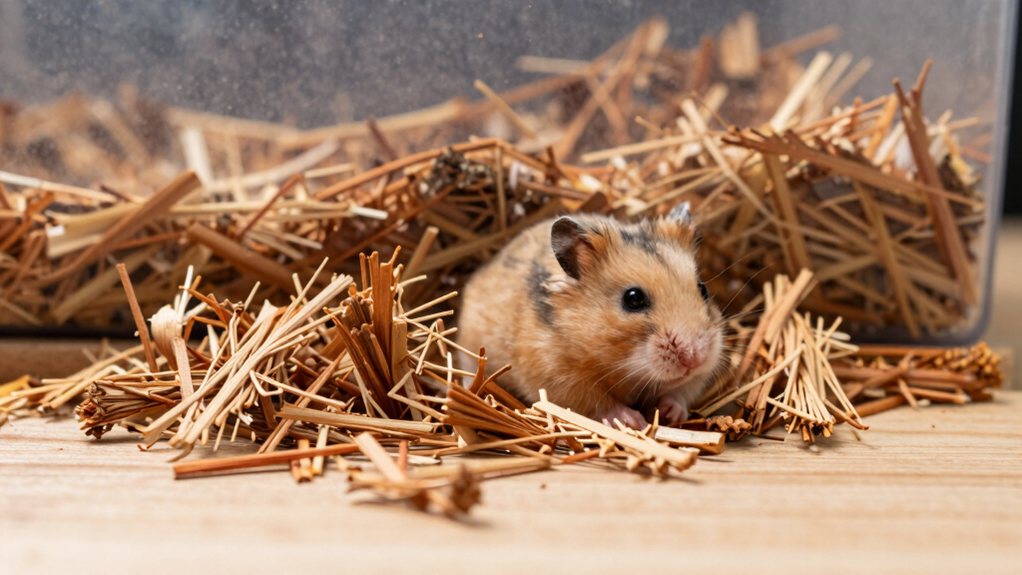
While you might think a pine-scented bed sounds like a fresh, forest-like dream for your hamster, it’s actually more of a nightmare waiting to happen. Cedar and pine bedding contain natural oils that release harmful vapors, even the “all-natural” kind can be sneaky bad news.
These oils can cause respiratory irritation, making your little buddy wheeze or sneeze more than a human during allergy season. Over time, that constant irritation can lead to serious lung and liver problems.
Think of it like sleeping in a room full of strong air freshener 24/7—not fun, right?
Your hamster deserves better than that. Skip the pine-scented planks and cedar shavings, even if they smell like a lumberjack’s vacation.
Your tiny furball will thank you by breathing easy and staying healthy, which means more midnight wheel runs and fewer vet trips. Win-win!
A safe alternative is using paper-based bedding, which is dust-free, highly absorbent, and gentle on your hamster’s sensitive respiratory system.

ODOR CONTROL for long-lasting freshness, Kaytee Clean & Cozy can be used with any type of habitat for a fresh animal home

ODOR CONTROL for long-lasting freshness. Kaytee Clean & Cozy can be used with any type of habitat for a fresh animal home.

ODOR CONTROL for long-lasting freshness. Kaytee Clean & Cozy can be used with any type of habitat for a fresh animal home
Fluffy Bedding: Choking and Entanglement Risks
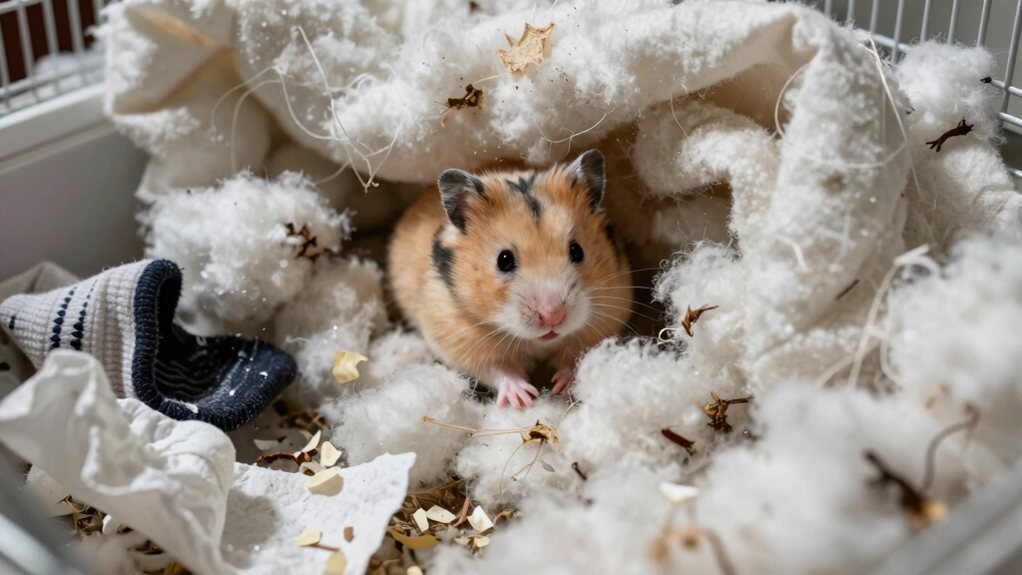
You might think fluffy bedding looks cozy for your hamster, like a soft cloud they’d love to snuggle into, but it can actually be risky.
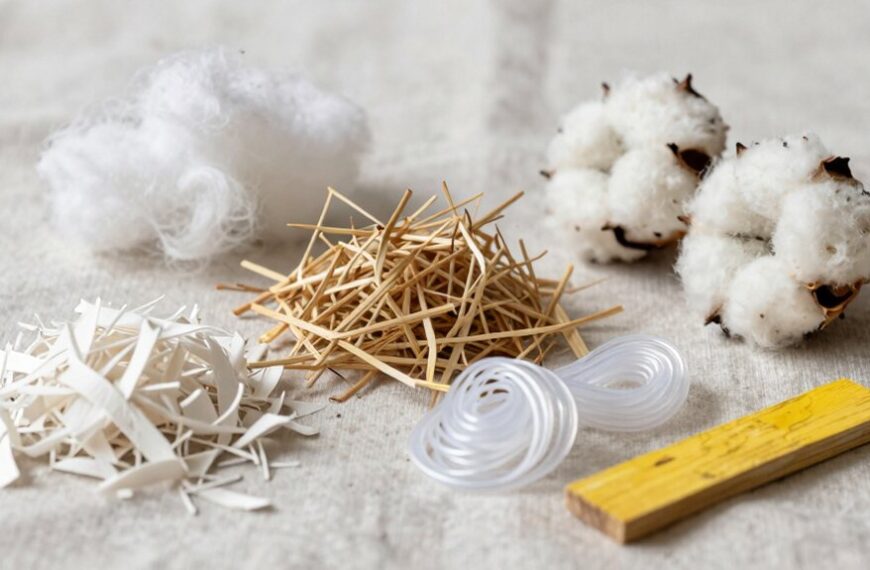
Those soft fibers can tangle around tiny legs or get chewed on, turning a cute nest into a choking hazard in seconds.
A safer alternative is dust-free paper bedding, which provides softness and comfort without the dangers of entanglement or respiratory irritation.
Fluffy Bedding Dangers
Ever wonder why that soft, fluffy bedding looks so cozy for your hamster but comes with big red flags?
While it might seem perfect for nesting materials or matching your hamster’s cute fluffy toys, it’s actually risky.
Here’s why you should skip it.
- Choking hazard – Tiny fibers can get stuck in their cheeks or airways.
- Entanglement – Those soft strands can wrap around little limbs, causing injury.
- Digestive danger – If ingested, the fluff doesn’t break down and can block their system.
Sure, it looks like a cloud they’d love to nap on, but safety beats fluffiness every time.
Think of it like giving a toddler a sweater with loose strings. Just not worth the risk.
Stick to safer options like paper-based bedding.
Your hammy will still build cozy nests, minus the drama.
And trust me, they’ll nap just as hard. Without the danger.
Choking Hazard Alert
What could go wrong with a bit of fluff in your hamster’s cage? Well, more than you’d think.
Fluffy bedding might look cozy, but it’s a real choking hazard. Those soft, wispy fibers break apart easily, turning into small particles your hamster might accidentally inhale or swallow. Yikes!
Even worse, the strands can wrap around tiny paws or limbs, leading to entanglement. Definitely not the snuggle session you imagined.
While your hamster’s just trying to nest, they could end up in real trouble.
Stick to safer options like paper-based or aspen bedding. They’re soft, absorbent, and won’t turn your pet’s home into a hazard zone.
Think of it this way: you wouldn’t want to sleep on shredded plastic, so why ask your hamster to?
Keep their bedding simple, safe, and snuggle-ready without the risk.
Entanglement Risk Warning
While that fluffy bedding might look like a cloud straight out of a fairy tale, it can quickly turn into a tangle trap for your tiny furball.
Those soft strands may seem cozy, but they pose real dangers, especially when they snag on wire mesh or cage parts.
Your hamster could get caught in loose threads, leading to stress, injury, or worse.
Here’s what keeps me up at night:
- Watching a sweet little face panic, tangled like spaghetti in fluff.
- Seeing those tiny paws struggle against wire mesh, caught by a thread they didn’t mean to chew.
- Knowing it could’ve been avoided with safer bedding.
Skip the fluff and go for paper-based or aspen.
Your hamster will nap safer and you’ll sleep easier.
After all, their adventures should be in their wheel, not in a bedding battle!
Paper and Cotton: When DIY Bedding Goes Wrong
So you’re thinking about tossing some old newspaper or a spare cotton ball into your hamster’s cage for bedding? Hold up—let’s talk paper safety and cotton alternatives before you do.
While shredded paper might seem eco-friendly, inks and chemicals can be risky for your tiny buddy.
And cotton? Super soft, yes—but it’s a choking and entanglement hazard.
Those fluffy fibers can wrap around little limbs or get stuck in cheek pouches. Yikes.
Instead of DIY disasters, go for safer, pet-store options like paper-based bedding made for small animals.
They’re just as cozy, minus the danger.
Think of it like picking the right PJs for your hamster—comfortable, safe, and no loose strings.
Your furball will nap happier, and you’ll sleep easier knowing they’re not tangled in a cotton catastrophe. Win-win!
A safer alternative is using commercially available 100% cotton nesting materials specifically designed for small animals, which provide softness without the risks of loose fibers.
Scented Bedding: How Smells Stress Your Hamster
You’ve already skipped the cotton balls and old newspaper, which is great.
Your hamster’s safe from tangles and toxic ink.
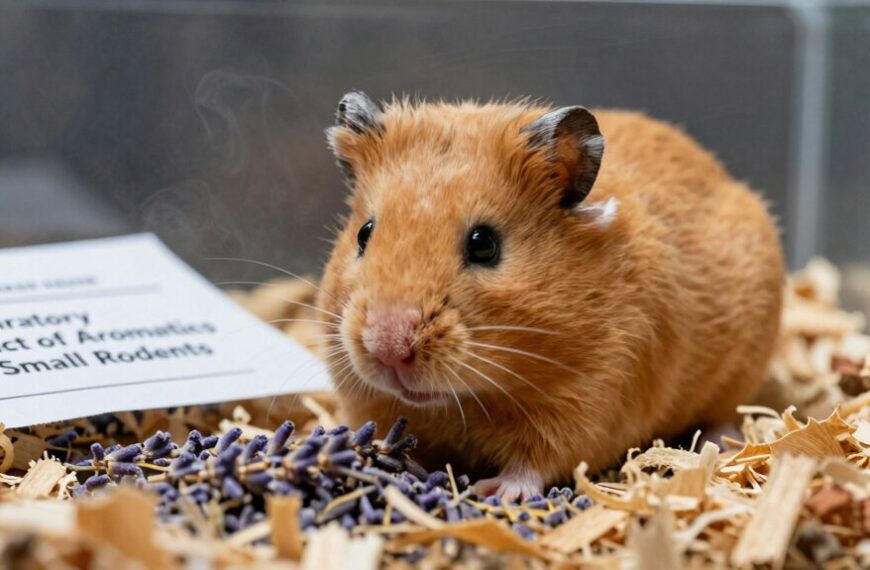
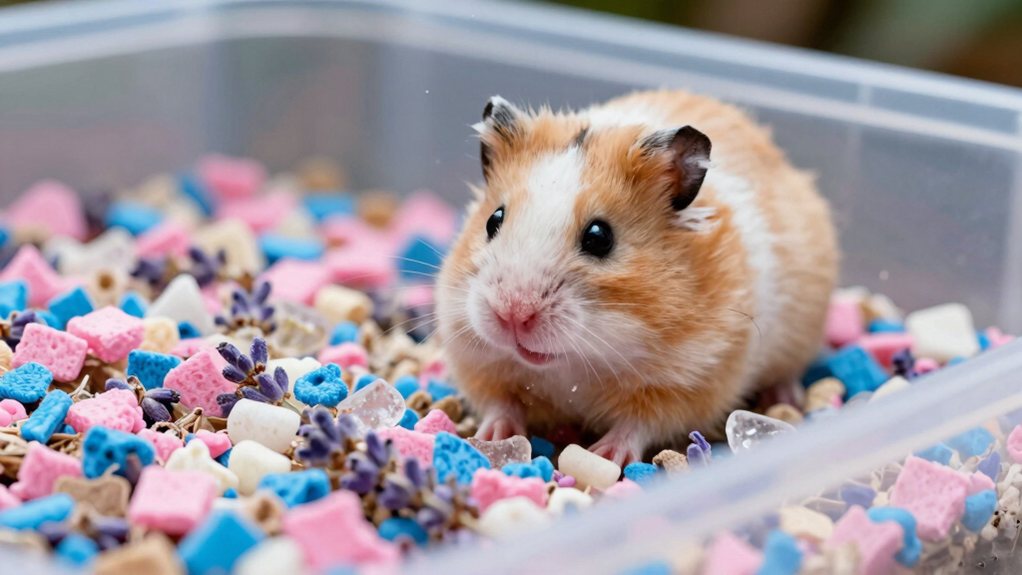
Now, let’s talk about scented bedding. That lavender-scented stuff might smell dreamy to you, but to your hamster, it’s like living in a perfume factory 24/7.
That lavender-scented bedding might smell lovely to you, but to your hamster, it’s like being trapped in a perfume factory 24/7—overwhelming and stressful.
Their little noses are super sensitive, and artificial fragrances—or even natural scents like essential oils—can overwhelm them fast.
This isn’t just annoying. It’s stressful and can lead to health issues.
Keep it simple and safe with unscented, dust-free options.
Your hamster doesn’t care about aromatherapy. They just want to feel at home.
- Stressed-out sniffers – Strong smells confuse and frighten them
- Lung irritation – Even “natural” fundamental oils can harm delicate airways
- Behavior changes – They might hide, stop eating, or act aggressively
Dusty Bedding: Breathing Problems Explained
Even though your hamster’s tiny, their lungs are working hard, so stuffing their cage with dusty bedding is like forcing them to breathe in a sandstorm at a construction site.
Those invisible dusty particles float around and get sucked into their little airways, causing respiratory irritation that can turn serious fast.
You mightn’t see it happening right away, but over time, your hamster could start sneezing, wheezing, or breathing faster than usual.
And no, they’re not merely auditioning for a hamster opera.
Dusty bedding sneaks up on you, so always shake out samples before buying.
Opt for low-dust options like paper-based or aspen bedding.
Your hamster can’t tell you they’re struggling, so it’s on you to keep their air clean.
Think of it as giving them fresh mountain air—well, the cage version, anyway.

Cozy, all-natural cedar wood shavings made from virgin wood; use for stables, kennels and dog runs

KILLS & REPELS. Using the power of natural essential oils, this spray is proven to kill by contact, repel, and prevent fleas, ticks, and mosquitoes. It breaks the pest life cycle, including eggs, larvae, and adults. This one, versatile, plant-powered spray will protect pets and home.

CLEAN FORMULA: Designed to protect fabric integrity and color, Snif Laundry Scent Booster is non-toxic, non-irritating, free from synthetic dyes, vegan and cruelty-free. Made with clean ingredients, it's safe for everyday use.
What Happens If Your Hamster Eats Bedding?
Ever caught your hamster nibbling on their bedding and wondered if it’s a snack attack or something sketchy? While it might look cute, eating certain types of bedding can lead to bedding digestion issues and even serious intestinal blockage risks. Here’s what could go wrong:
Your tiny buddy’s tummy isn’t built to handle wood shavings or dusty fibers, yikes!
Swallowing large or coarse pieces can slow digestion, causing painful blockages.
If your hamster seems lethargic, stops eating, or has a bloated belly, it’s vet time, fast.
Not all nibbling is harmless play. Some bedding materials just don’t belong in their belly, no matter how curious they get.
Stick to safe, digestible options like paper-based bedding, and keep an eye on snack-like sniffs.
A little caution now saves stress and vet bills later. You’ve got this, awesome pet parent!
Best Safe Hamster Bedding Alternatives

You’ve got some great, safe options for your little fur buddy, think soft paper bedding, cozy hemp fibers, or unscented coconut husk. These choices are gentle on tiny paws and way better than dusty or scented stuff that could make your hamster sneeze like a grumpy old man.
Plus, they’re all natural, so you can feel good knowing your pet’s nest is as safe as it’s snug.
Safe Paper-Based Options
What’s the secret to keeping your hamster cozy without risking their health? Safe paper-based bedding is your best bet, soft, absorbent, and free from harmful dust.
When choosing, always check for paper safety and fiber quality. You don’t want anything with inks, dyes, or rough textures that could irritate your little buddy’s delicate skin.
Here’s why paper bedding wins hearts:
- No sneezy surprises – Dust-free options mean fewer sniffles and more happy wheel runs.
- Cozy nest vibes – Soft fibers let your hamster burrow like a pro, just how they love it.
- Eco-friendly cuddles – Recycled paper bedding feels good for you *and* your pet.
Go for unscented, unbleached brands. Your hamster mightn’t read labels, but their comfort depends on it.
With the right pick, you’re more than bedding them down. You’re giving them a safe, snuggly home.
Soft Hemp Fibers
Could your hamster’s bedding be both planet-friendly and palace-worthy? Absolutely, soft hemp fibers might just be the dream combo you’ve been hunting for. Packed with soft hemp benefits, this bedding is naturally antibacterial, breathable, and super absorbent, keeping your little buddy dry and comfy.
Plus, it’s dust-free, which means fewer sneezes and more happy zoomies.
You’ll love the natural fiber safety it offers; no harsh chemicals, no irritants—just pure, gentle comfort.
Hemp is also biodegradable, so you’re doing your part for the planet while spoiling your pet.
It’s cozy, safe, and eco-smart. Honestly, your hamster might start expecting cucumber slices and tiny robes. Just sayin’.
Soft hemp isn’t just bedding—it’s a upgrade. Give it a try, and watch your hamster nest like a pro.
Unscented Coconut Husk
Ever wonder what makes some hamster bedding choices a cozy win while others flop harder than a confused squirrel in a ceiling fan factory?
Unscented coconut husk might seem like a natural win, but it’s not always safe.
Even though it’s marketed as gentle and eco-friendly, it can hide dangers like mold growth if it stays damp, yikes for your tiny furball’s lungs.
And while rare, coconut allergies can still happen, leading to sneezing or itchy skin.
You’re better off skipping it and choosing something more reliable.
Here’s why your hamster deserves better.
- Mold growth can turn a comfy nest into a health hazard.
- Coconut allergies may cause discomfort you won’t notice right away.
- Your peace of mind matters, knowing their bed is truly safe.
Keep it simple, safe, and snuggle-approved.
How to Choose the Healthiest Bedding for Your Hamster
So, you’ve brought home a tiny furball with big cheeks and even bigger charm. Now what about his sleep setup?
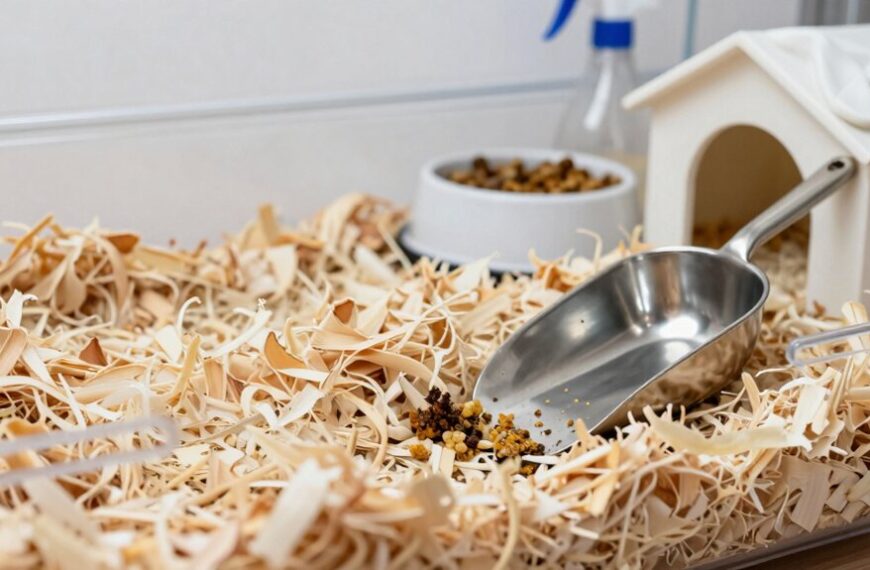
Choosing the healthy bedding means thinking about comfort and safety. Aim for at least 2–3 inches of bedding thickness so your hamster can burrow like nature intended.
Good bedding should handle moisture absorption well. No damp caves allowed!
Avoid anything dusty or scented, since those can irritate little lungs.
Paper-based or aspen shavings are solid picks. They’re soft, safe, and soak up spills.
Skip cedar and pine. They might smell nice to you, but they’re harsh on your pet.
And please, no cotton fluff. It looks cozy, but it can wrap around tiny limbs.
Your hamster isn’t picky, but he’ll thank you for clean, breathable bedding. Think of it as his five-star hotel. Get it right, and you’ll both sleep better.
To keep your hamster healthy, change the bedding once a week to prevent odor buildup and maintain hygiene.
Final Thoughts
You’ve got this! Skip the cedar, pine, and fluffy junk. Your hamster’s tiny lungs and curious nibbles mean safer bedding saves lives.
Go for paper-based or aspen shavings. Keep things dust-free, and your little buddy will thrive. Think cozy, not complicated. After all, a happy hamster means fewer midnight wheel marathons—and that’s a win for both of you. Sweet dreams, tiny friend!
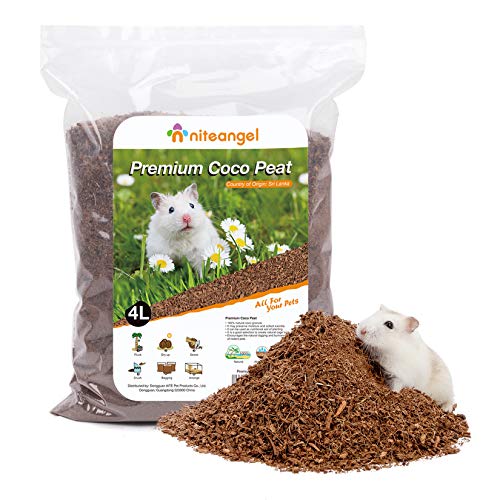
Natural Materials And Easy To Use: Hamster bedding is made of selected natural coco materials, the soft and delicate material will give the hamster to dig and play without hurting its paws, you just need to sprinkle Hamster Bedding on the hamster habitat , let the hamster enjoy the fun of digging and exploring.
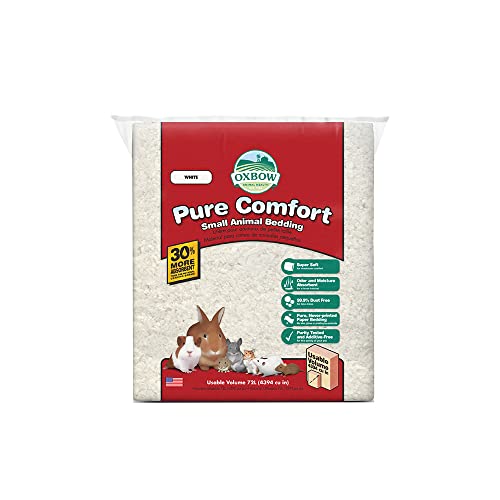
ODOR ABSORBENT TO MINIMIZE PET ODORS: Effectively neutralizes odors to keep bunny bedding & hamster bedding fresh; Ideal for pet bedding, ferret cages, and litter boxes, it helps maintain a clean environment for your pets and a better experience for you

ODOR CONTROL for long-lasting freshness. Kaytee Clean & Cozy can be used with any type of habitat for a fresh animal home