Your hamster locks eyes with you from across the cage, unblinking and motionless. That intense gaze can feel unsettling, or endearing, depending on what’s driving it. Understanding why does my hamster stare at me comes down to recognizing how hamsters process their world through scent, sound, and limited vision, plus what specific behaviors accompany that stare.
Hamsters don’t see the way humans do. Their eyesight is poor, with a range of only about 15-20 cm in focus, and they rely heavily on smell and whisker sensation to navigate. When your hamster stares, it’s often gathering information through other senses while its eyes happen to point your direction. But context matters: a relaxed stare during treat time signals something very different from a frozen, wide-eyed stare when you approach the cage suddenly.
Key Takeaways
- Hamsters stare primarily to gather sensory information through scent and sound, not detailed visual observation
- Context determines meaning: relaxed posture indicates curiosity or recognition; frozen stance with flattened ears signals fear
- Species differences matter: Syrian hamsters often show more confident staring behavior than skittish Dwarf varieties
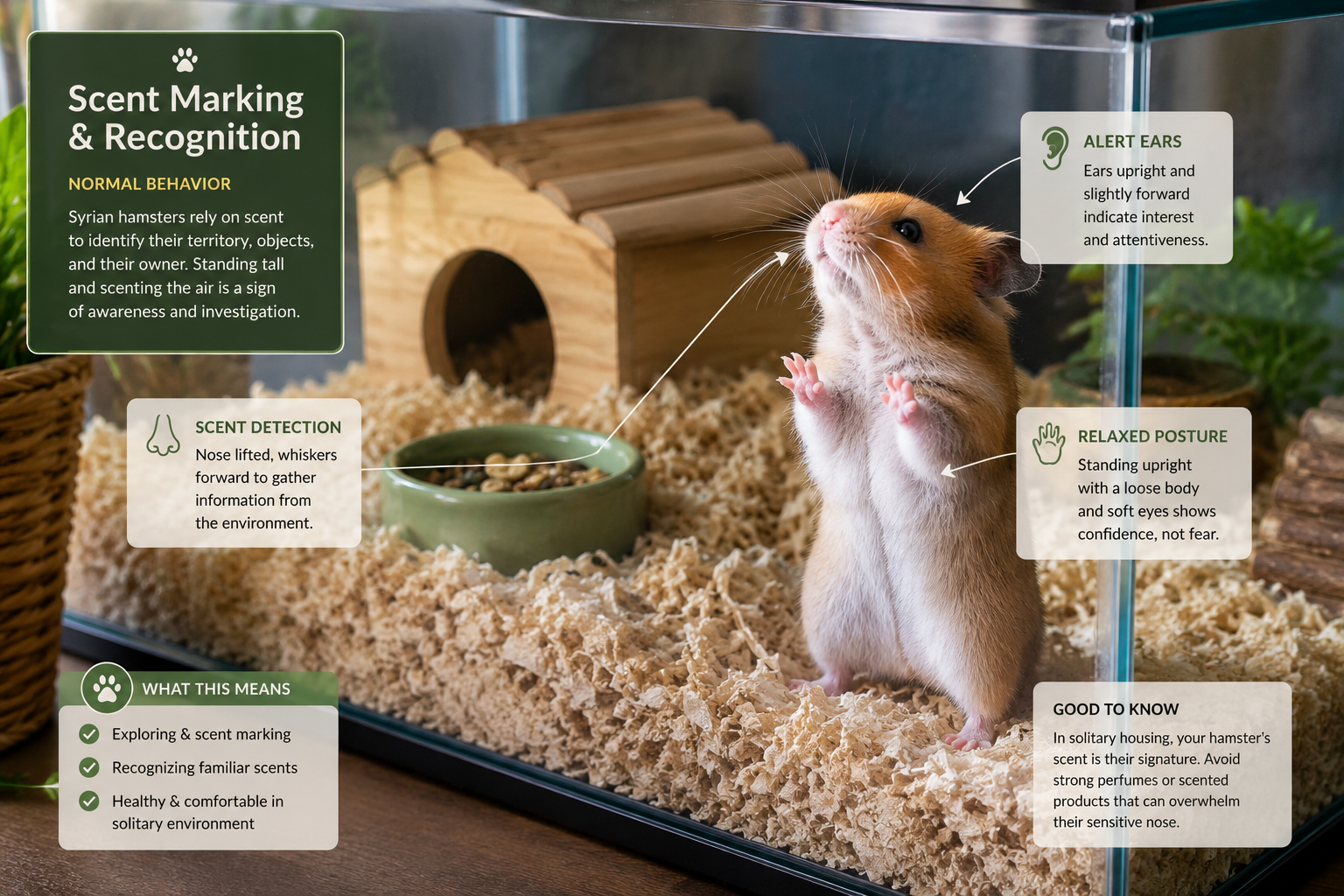
- Staring accompanied by standing on hind legs usually means your hamster is trying to identify you by scent
- Persistent staring with lethargy or hunched posture requires immediate health assessment
What Hamsters Actually See When They Look at You
Hamsters have extremely poor visual acuity. They’re nearsighted, with clear focus limited to objects within 15-20 cm. Beyond that distance, you appear as a blurry shape. They also lack depth perception because their eyes sit on the sides of their head, giving them a wide field of view (about 110 degrees per eye) but minimal binocular overlap.
When your hamster stares, it’s not studying your facial features or reading your expression. Instead, it’s:
- Detecting movement patterns through motion-sensitive vision
- Identifying your scent signature through rapid nose twitches
- Listening to your voice and associating sound with past interactions
- Assessing threat level based on your size, speed, and proximity
Syrian hamsters tend to be bolder starers than Dwarf species. A confident Syrian might stand on its hind legs and stare directly at you when it hears the treat bag rustle, while a Campbell’s Dwarf might stare from the safety of a hide, ready to bolt. These species differences reflect natural temperament variations, not intelligence or affection levels.
The stare itself is often incidental to the real information-gathering happening through scent marking and auditory cues. Your hamster’s nose is doing most of the work while its eyes happen to point your way.
Why Does My Hamster Stare at Me? Common Reasons
Recognition and Curiosity
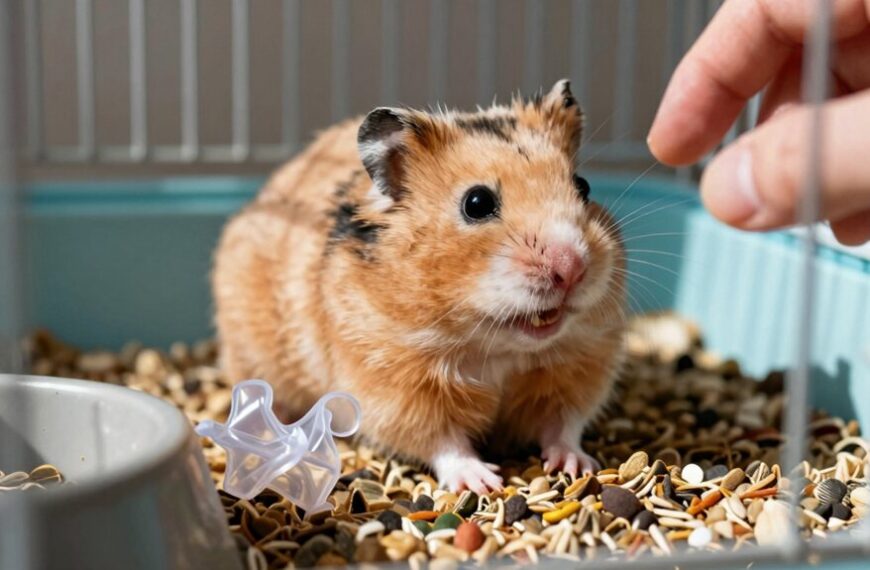
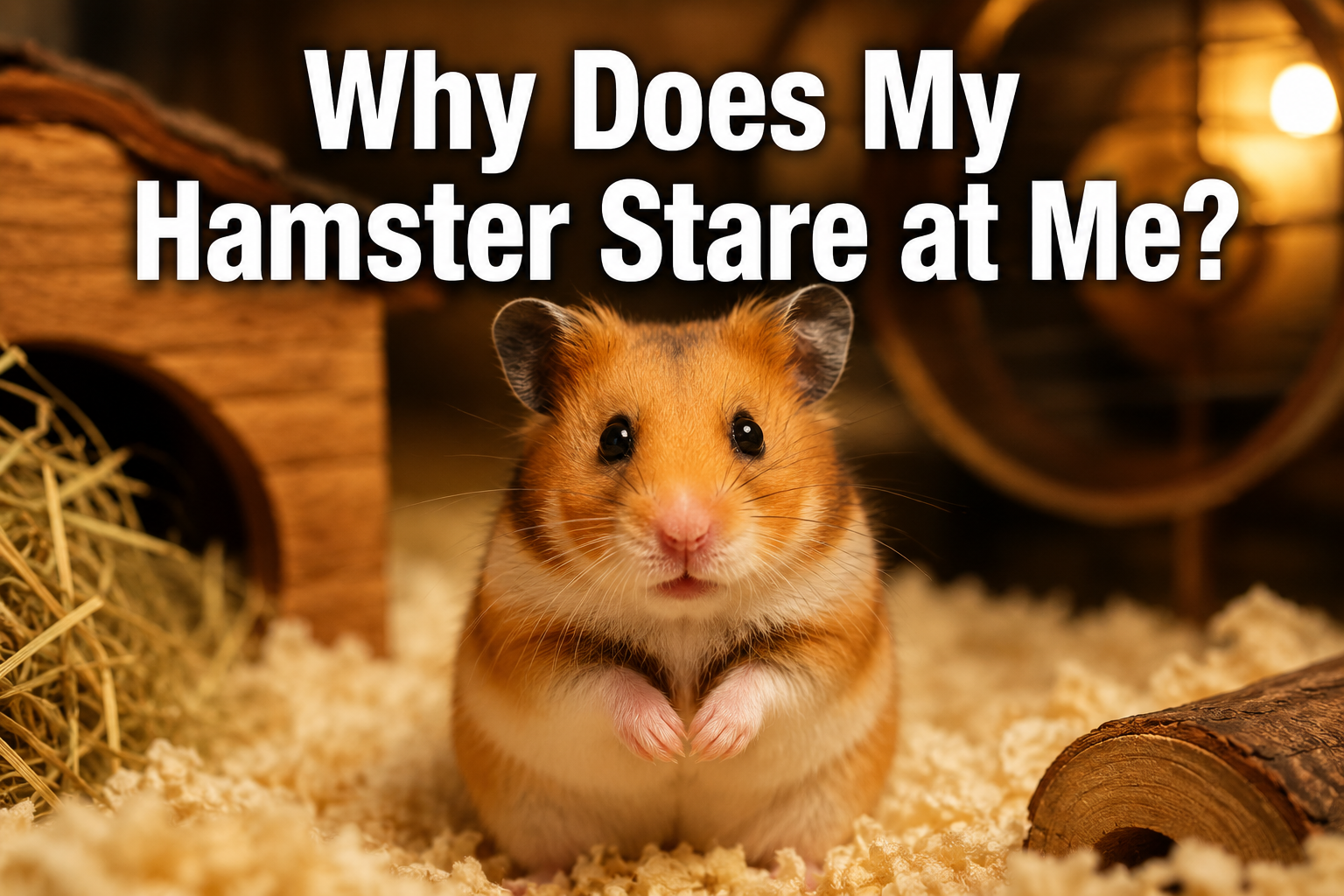
The most common reason for staring is simple recognition. Your hamster has learned to associate your scent, voice, and movement patterns with food, handling, or cage cleaning. When you approach, it stares while processing: “Is this the food-bringer? The hand that gives treats?”
This type of stare comes with:
- Relaxed body posture with normal breathing
- Forward-facing whiskers indicating interest
- Standing on hind legs to get closer to your scent
- Nose twitching rapidly as it samples air molecules
If your hamster runs toward you while staring, that’s a strong sign of positive recognition. It has learned you’re safe and potentially rewarding. This behavior develops over weeks of consistent, gentle interaction, particularly if you’ve followed proper bonding techniques.
Waiting for Food
Hamsters are opportunistic foragers with excellent associative memory. If you typically feed at a certain time or make specific sounds before offering favorite foods, your hamster will stare in anticipation.
Food-motivated staring includes:
- Positioning near the cage door or usual feeding spot
- Increased activity level with excited movements
- Cheek pouch checking (touching paws to face)
- Following your movements around the room
This is learned behavior, not instinct. Your hamster has connected your presence with food delivery and is essentially asking, “Where’s my dinner?” It’s a sign of successful routine establishment and trust.
Fear or Defensive Assessment
Not all staring is friendly. A hamster that feels threatened will freeze and stare while deciding whether to flee or defend itself. This is a prey animal’s survival response, staying motionless to avoid detection while gathering information about the threat.
Fear-based staring looks different:
- Completely frozen posture with held breath
- Flattened ears pressed against the head
- Wide, unblinking eyes with visible whites
- Hunched body ready to spring away
If you see this, back away slowly and assess what triggered the fear response. Common causes include:
- Approaching too quickly or from above
- Loud noises or sudden movements
- Unfamiliar scents on your hands
- Waking the hamster during deep sleep
- Inadequate hiding spots in the cage setup
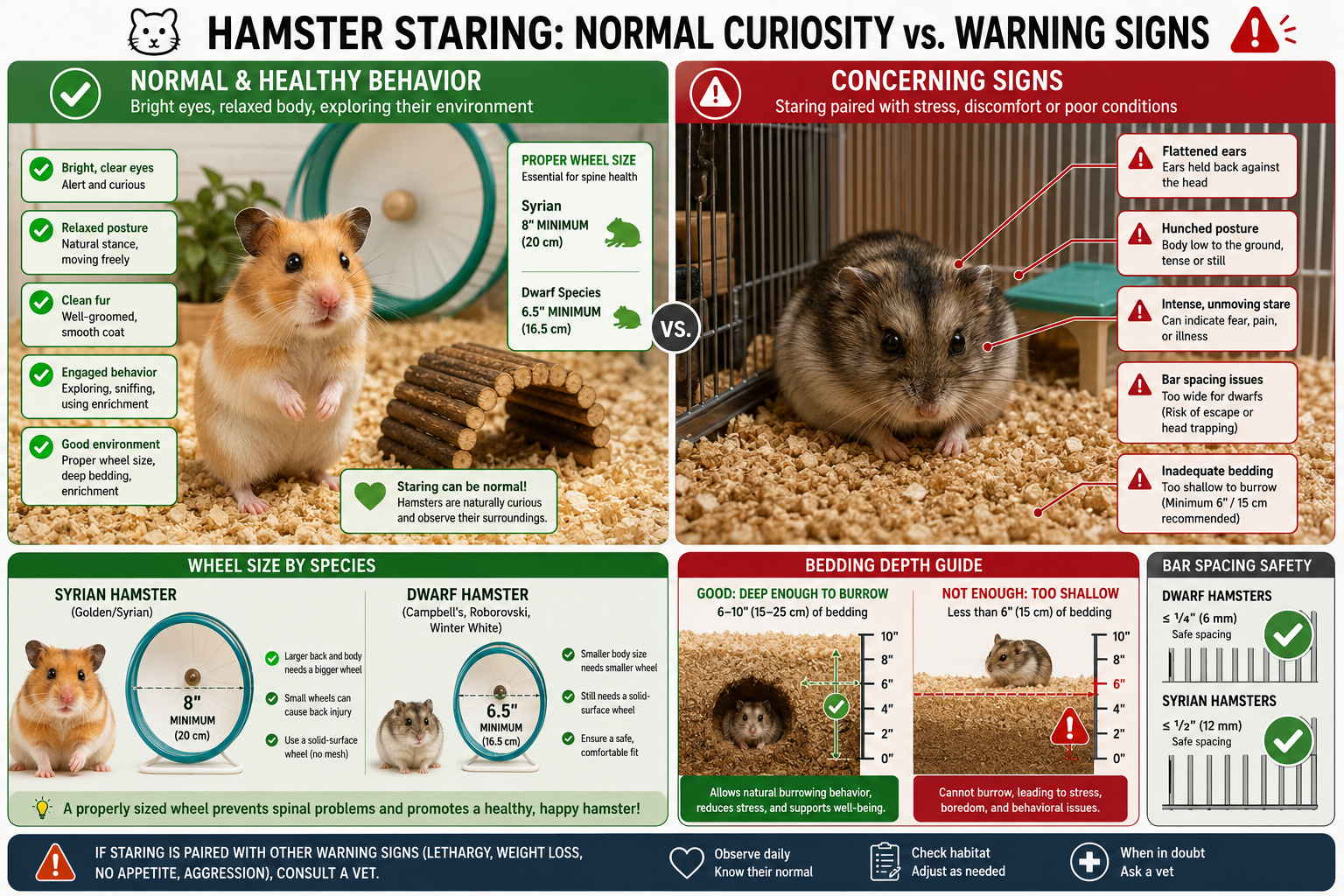
Repeated fear responses indicate your hamster doesn’t feel safe. Review your cage setup to ensure adequate bedding depth (minimum 6 inches for burrowing behavior), multiple hide houses, and proper bar spacing (no more than 1 cm for Dwarf species, 1.2 cm for Syrians).
Health Issues and Discomfort
A hamster that stares blankly without reacting to stimuli may be experiencing health problems. This is distinctly different from alert, curious staring, the eyes appear dull or unfocused, and the hamster doesn’t respond normally to your presence.
Warning signs that accompany concerning stares:
- Lethargy with minimal movement
- Hunched posture indicating pain
- Labored breathing or wheezing
- Wet or matted fur around the tail (potential wet tail)
- Weight loss or refusal to eat
If your hamster stares vacantly and shows any of these symptoms, schedule a vet visit immediately. Hamsters decline rapidly when ill, and early intervention significantly improves outcomes. Common serious conditions include respiratory infections, wet tail (proliferative ileitis), and dental problems, all of which can be leading causes of death if untreated.
How to Respond When Your Hamster Stares at You
Your response should match the type of stare you’re observing.
For curious, relaxed staring:
- Speak softly to reinforce voice recognition
- Offer a small treat through the bars (if appropriate timing)
- Move slowly and predictably
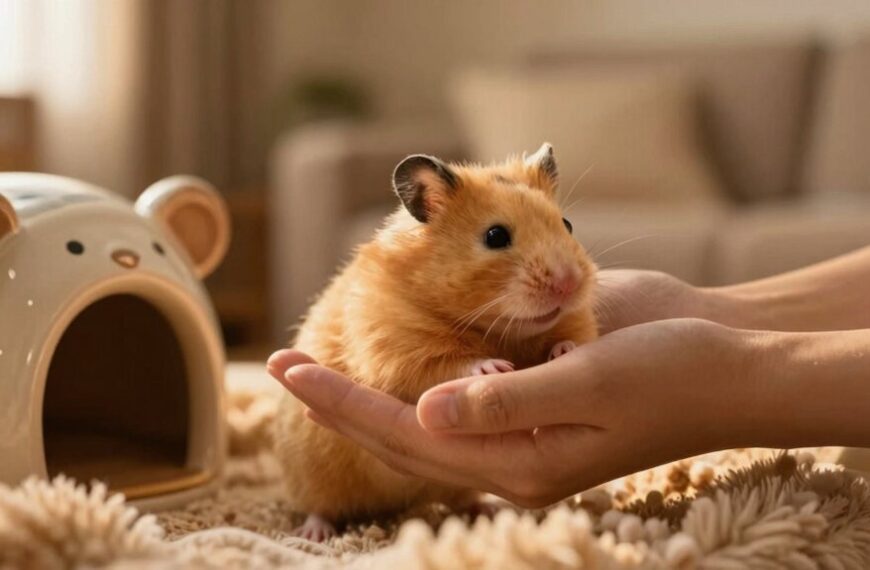
- Allow the hamster to approach you rather than reaching in suddenly
For fearful staring:
- Freeze your own movement to reduce perceived threat
- Back away slowly without sudden gestures
- Give the hamster space to retreat to its hide
- Assess what triggered the fear and modify your approach
For food-anticipation staring:
- Maintain consistent feeding schedules to reduce anxiety
- Don’t reward begging behavior with constant treats (leads to obesity)
- Ensure the hamster has constant access to dry food mix
- Reserve special treats for bonding sessions
For concerning health-related staring:
- Document the behavior with video if possible
- Check for other symptoms (breathing, posture, appetite)
- Monitor for 24 hours if mild; seek immediate care if severe
- Avoid handling if the hamster appears in pain
Understanding Hamster Body Language Beyond the Stare
Staring never happens in isolation. Reading the full context of your hamster’s body language provides accurate interpretation.
Positive, relaxed indicators:
- Grooming while watching you: indicates comfort and security
- Stretching or yawning: shows the hamster feels safe enough to be vulnerable
- Slow, deliberate movements: confidence rather than fear
- Accepting treats from your hand: trust and positive association
Stress or discomfort indicators:
- Excessive grooming (over-grooming until fur thins)
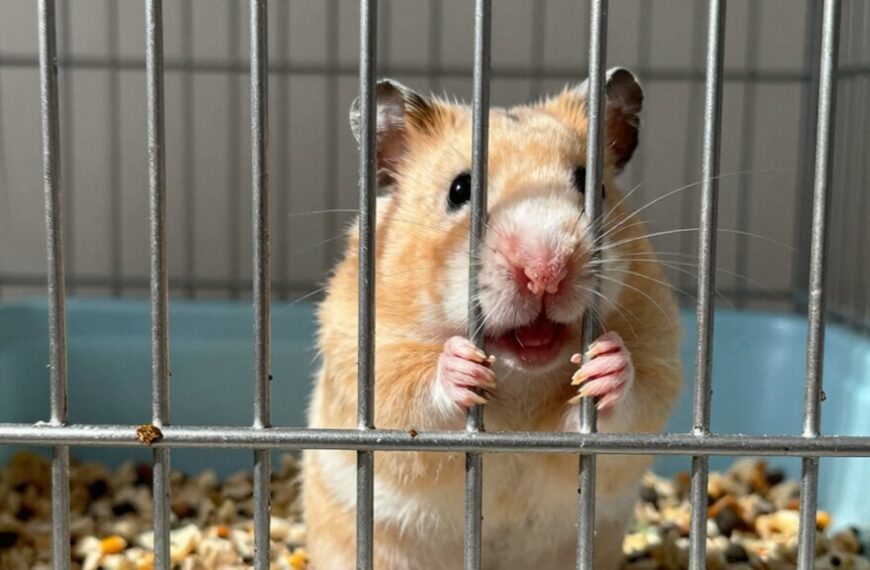
- Bar chewing combined with staring (inadequate enrichment)
- Repetitive pacing along cage walls
- Teeth chattering or hissing sounds
Understanding these signs of stress helps you distinguish between “I’m watching you because I’m interested” and “I’m watching you because I’m anxious.”
Species-Specific Staring Behaviors
Different hamster species show distinct staring patterns based on their natural temperament and social structure.
Syrian Hamsters:
- Most likely to stare boldly and approach
- Often stand on hind legs to investigate
- Generally more confident with human interaction
- Solitary housing means all attention focuses on human caregivers
Winter White Dwarf Hamsters:
- More cautious starers, often from hiding spots
- May be held but typically less bold than Syrians
- Quick to freeze when startled
- Benefit from gradual trust-building
Campbell’s Dwarf Hamsters:
- Tend to be more skittish and less likely to stare openly
- Often stare briefly before darting away
- Require more patience for bonding
- May never become comfortable with prolonged eye contact
Roborovski Dwarf Hamsters:
- Rarely stare for long periods due to high activity level
- More likely to observe while moving
- Least likely to seek human interaction
- Staring usually indicates surprise or momentary curiosity
Knowing your hamster’s species helps set realistic expectations. A Roborovski that stares for even a few seconds is showing more interest than a Syrian that stares for minutes, context matters.
Building Positive Associations With Your Presence
If you want your hamster to stare at you with curiosity rather than fear, consistent positive interactions are essential.
Daily routine strategies:
- Approach the cage at the same times daily for feeding and interaction
- Speak softly before opening the cage so your voice becomes a positive cue
- Offer treats from your palm rather than dropping them (builds hand trust)
- Avoid waking your hamster during the day (causes stress and negative associations)
- Keep your movements slow and predictable around the cage
Enrichment that reduces anxiety:
- Provide bedding depth of 6-10 inches for natural burrowing behavior
- Include multiple hide houses (minimum two) so the hamster always has escape options
- Ensure appropriate wheel size (8-inch minimum for Syrians, 6.5-inch for Dwarfs)
- Add chew toys and foraging opportunities to prevent boredom-related stress
A hamster in a properly enriched environment with consistent, gentle handling will develop positive staring behavior, watching you with interest rather than fear. This process takes weeks to months depending on the individual hamster’s temperament and previous experiences.
When Staring Indicates a Problem
While most staring is benign, certain patterns require intervention.
Cage setup issues:
- Bar chewing while staring: cage too small or insufficient enrichment
- Staring from one corner constantly: inadequate hiding spots causing anxiety
- Staring at the cage door obsessively: possible boredom or learned begging behavior
Health red flags:
- Vacant staring with no response to stimuli: potential neurological issue
- Staring combined with labored breathing: respiratory infection
- Staring while hunched with ruffled fur: pain or illness
- Staring with head tilt: possible ear infection or stroke
If your hamster’s staring behavior changes suddenly, from relaxed to fearful, or from active to lethargic, treat it as a potential health concern. Hamsters hide illness until it’s advanced, so behavioral changes are often the first visible symptom.
FAQ
Why does my hamster stare at me without blinking?
Hamsters don’t blink as frequently as humans. They have a nictitating membrane (third eyelid) that moistens the eye without the full blink you’d expect. A hamster can stare for extended periods without discomfort. If the eyes appear dry, crusty, or cloudy, that indicates a health problem requiring veterinary attention.
Is my hamster staring because it recognizes me?
Yes, if the staring is accompanied by approaching behavior, nose twitching, and relaxed body language. Hamsters recognize individual humans primarily through scent and voice rather than visual identification. Your hamster has learned your unique scent signature and associates it with your presence. This recognition typically develops after 2-3 weeks of consistent interaction.
Why does my hamster stare and then run away?
This indicates your hamster is still building trust. It’s curious about you (hence the staring) but not yet confident enough to maintain proximity. Continue offering treats from your palm, speaking softly, and avoiding sudden movements. Most hamsters progress from “stare and flee” to “stare and approach” within 4-6 weeks of patient interaction. Winter White hamsters often take longer than Syrians.
Should I stare back at my hamster?
Brief eye contact is fine, but prolonged direct staring can be interpreted as predatory behavior in some hamsters. If your hamster seems comfortable, gentle eye contact while speaking softly reinforces bonding. If it freezes or shows fear, look slightly to the side rather than maintaining direct eye contact. Let your hamster set the comfort level.
Why does my hamster stare at me at night?
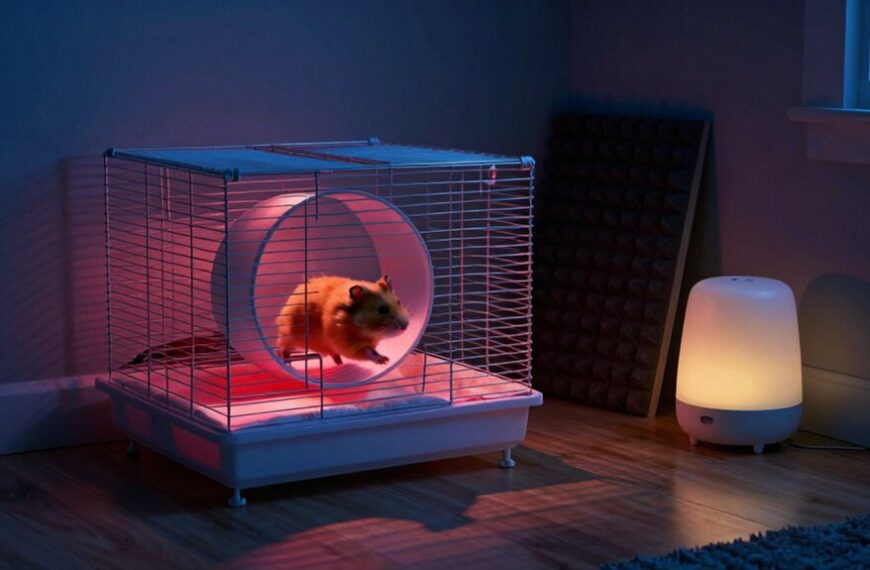
Hamsters are crepuscular (most active at dawn and dusk) and nocturnal. Your hamster is naturally more alert and curious during evening hours. If you’re near the cage during its active period, it will watch you as part of its normal environmental awareness. This is prime time for interaction and play since the hamster is naturally awake and receptive.
Can staring mean my hamster is bored?
Yes, if accompanied by repetitive behaviors like bar chewing, pacing, or obsessive staring at the cage door. Boredom indicates insufficient enrichment. Add foraging opportunities (scatter feeding instead of bowl feeding), rotate toys weekly, provide deeper bedding for burrowing, and ensure the cage meets minimum size requirements (450 square inches of floor space minimum, though 600+ is better). A properly enriched hamster should spend time exploring, foraging, and using its wheel rather than staring blankly.
Conclusion
Understanding why does my hamster stare at me requires looking beyond the eyes to the full context of body language, environment, and species-typical behavior. Most staring is benign, your hamster gathering information through scent and sound while its limited vision happens to point your direction. Relaxed, curious staring with forward whiskers and approaching behavior signals positive recognition and trust. Frozen, wide-eyed staring with flattened ears indicates fear that needs addressing through gentler handling and improved cage setup.
The key is consistent observation. Learn your individual hamster’s baseline behavior so you can spot meaningful changes. A Syrian that normally stares boldly but suddenly becomes skittish needs environmental assessment. A Dwarf that rarely makes eye contact but begins staring during treat time is showing trust development.
Take action today:
- Evaluate your cage setup for adequate bedding depth, hiding spots, and enrichment
- Establish consistent feeding and interaction routines
- Practice slow, predictable movements around your hamster
- Monitor for any staring accompanied by health warning signs
Your hamster’s stare is a window into its current state, curiosity, recognition, fear, or illness. By reading the full context and responding appropriately, you build the trust that transforms wary watching into genuine connection.