A hamster that trusts you won’t freeze when you approach its cage. It won’t scramble to hide every time your hand appears. Trust in hamsters isn’t about dramatic displays of affection, it’s about the absence of fear responses and the presence of voluntary interaction. Most new owners misread normal prey-animal caution as permanent distrust, then give up on bonding before the relationship has time to develop. Understanding the specific signs hamster trusts you means knowing what relaxed hamster behaviour actually looks like, and that starts with recognizing the difference between tolerance and genuine comfort.
Trust develops on a hamster’s timeline, not yours. Syrian hamsters typically need 1-2 weeks of consistent, calm handling to show clear trust signals, while some dwarf species may take 3-4 weeks. The cage setup matters as much as your handling technique, a hamster stressed by inadequate wheel size, shallow bedding, or lack of enrichment won’t show trust behaviours regardless of how gentle you are.
Key Takeaways:
- Voluntary approach to your hand without freezing or fleeing is the clearest trust indicator
- Relaxed body language includes normal grooming, eating, and burrowing behaviour in your presence
- Species differences matter, Syrian vs Dwarf hamsters show trust through slightly different behaviours
- Cage setup quality directly affects trust development; stressed hamsters can’t bond effectively
- Timeline expectations should be 2-4 weeks minimum for consistent trust signals to appear
Physical Signs Hamster Trusts You
Voluntary Hand Approach
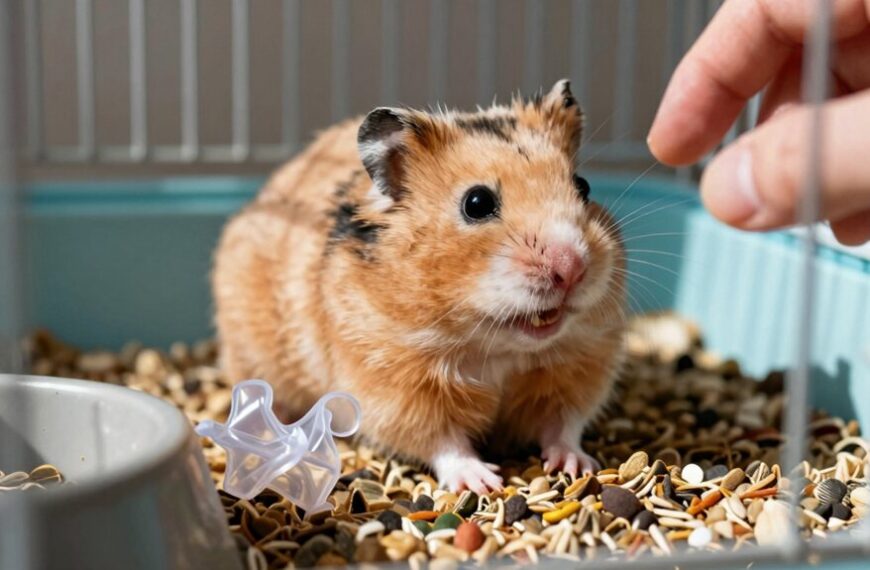
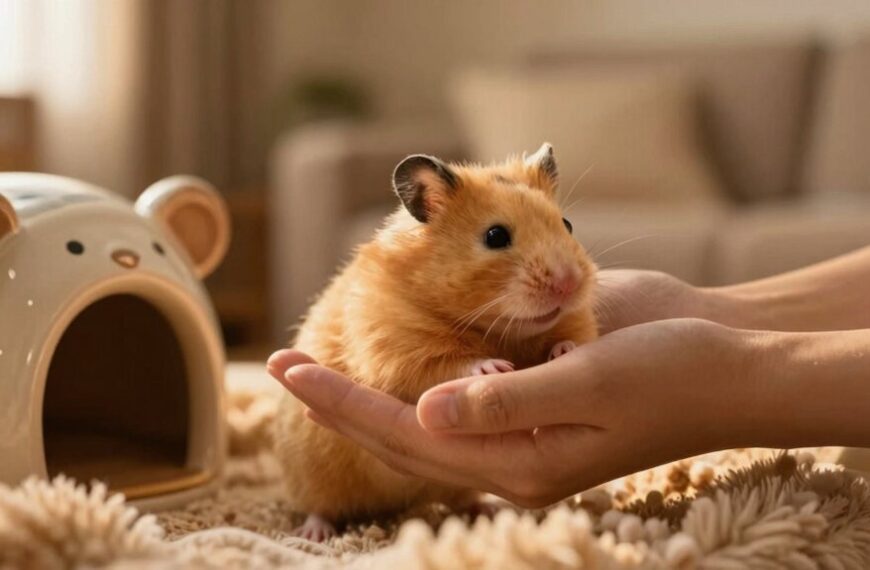
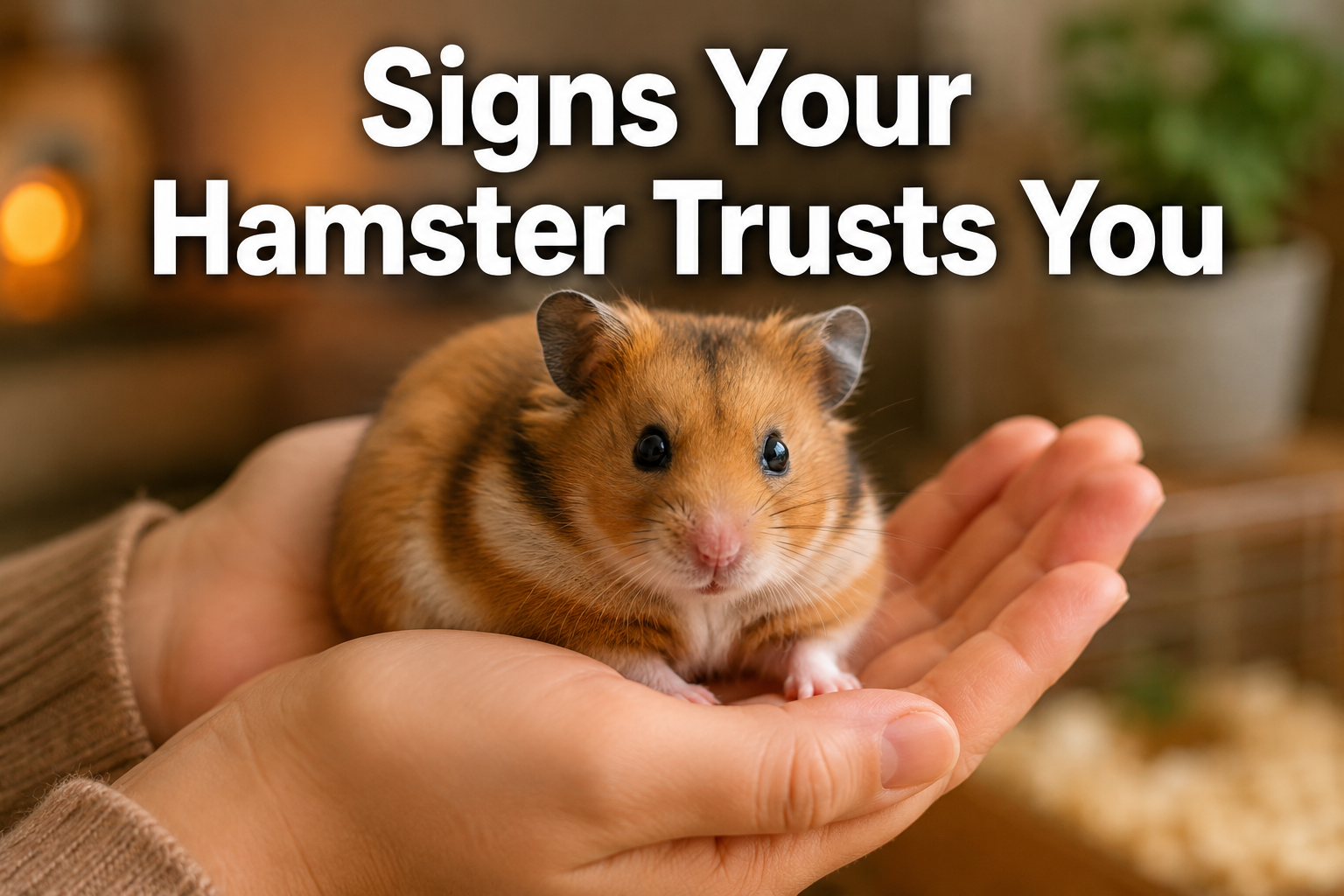
A hamster that trusts you will walk onto your hand without being cornered or scooped. This is the gold standard. Place your flat palm in the cage at floor level and wait, a trusting hamster will sniff, then step on, often pausing to scent-mark your hand with its flank glands. This behaviour means it’s claiming you as part of its territory, which only happens when threat perception is low.
What it looks like: The hamster approaches with ears forward (not pinned back), whiskers relaxed, and steady movement. It may pause to sniff but doesn’t retreat. Syrian hamsters often show this within 7-10 days of consistent evening handling. Dwarf hamsters, being naturally more skittish, may take 2-3 weeks.
What it doesn’t look like: A hamster that climbs on because it has nowhere else to go isn’t showing trust, it’s showing resignation. If you’ve backed it into a corner or blocked its hideout, the behaviour is compliance under duress, not voluntary interaction.
Calm Grooming in Your Presence
Grooming is a vulnerable activity. A hamster that grooms itself while sitting on your hand or immediately after you’ve handled it is demonstrating significant trust. This includes face-washing with both paws, scratching behind ears, and cleaning flanks. How can you tell if a hamster loves you? covers the distinction between trust behaviours and actual affection displays, grooming falls into the trust category.
Hamsters won’t groom when they perceive danger. If yours stops mid-groom when you move, trust is still developing. A fully trusting hamster continues grooming even when you shift position or speak.
Relaxed Eating Behaviour
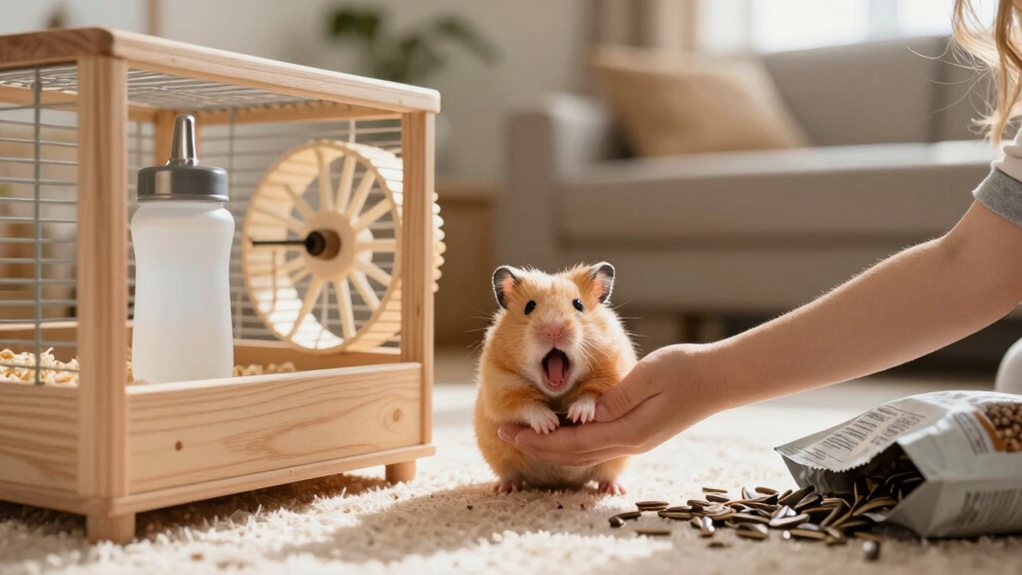
A hamster that accepts food from your fingers and eats it immediately, rather than stuffing it in its cheek pouches to eat later in hiding, is showing trust. This is especially significant with high-value treats like small pieces of carrot or a single sunflower seed.
Progressive trust stages:
- Takes food and runs to hideout (low trust)
- Takes food and pouches it while staying near you (developing trust)
- Takes food and eats it in your hand or within arm’s reach (established trust)
Some hamsters will even “request” food by standing on hind legs at the cage front when they see you approach. This learned behaviour only develops when the hamster associates your presence with positive outcomes and feels safe enough to be visible and vulnerable.
Stretched-Out Sleeping Position
A hamster sleeping fully stretched out, rather than curled in a tight ball, indicates it feels secure in its environment. If this happens when you’re in the room or shortly after you’ve been near the cage, it’s a trust signal. Prey animals don’t expose their bellies unless they feel safe.
This behaviour is more common in Syrian hamsters than dwarf species, which tend to sleep curled even when relaxed. For dwarf hamsters, sleeping in an open area (rather than deep in a burrow) while you’re present is the equivalent trust indicator.
Behavioural Signs Hamster Trusts You
No Freeze Response
When you approach the cage, a trusting hamster continues its current activity, burrowing, running on the wheel, or eating, rather than freezing in place. The freeze response is a prey animal’s first defense mechanism. Its absence means the hamster has learned you’re not a threat.
Test this carefully: Approach the cage at different times and observe. A hamster that freezes every time hasn’t developed trust yet, regardless of other behaviours. This is particularly important to monitor because what should you never do with a hamster includes forcing interaction with a hamster that’s still showing fear responses.
Active During Your Presence
Hamsters are naturally crepuscular (most active at dawn and dusk), but a trusting hamster will often adjust its schedule slightly to be active when you’re regularly present. If your hamster emerges from its burrow when it hears you enter the room in the evening, that’s learned trust behaviour.
This doesn’t mean the hamster should be awake during the day, that’s a sign of stress, not trust. It means the hamster is willing to be visible and active during its natural waking hours even when you’re nearby.
Scent Marking Your Hand
Hamsters have scent glands on their flanks (Syrian hamsters) or belly (dwarf hamsters). When a hamster rubs these glands on your hand, it’s marking you as part of its territory. This is a clear trust signal, hamsters only scent-mark areas they consider safe and under their control.
What it looks like: The hamster pauses while walking across your hand and deliberately drags one side of its body along your palm or fingers. Syrian hamsters are more obvious about this; dwarf hamsters may do a subtle belly-drag that’s easy to miss.
Minimal Startle Response
All hamsters will startle at sudden loud noises or quick movements, that’s hardwired prey-animal behaviour. But a trusting hamster recovers quickly and doesn’t bolt for cover. If your hamster startles, pauses for 2-3 seconds, then continues what it was doing, trust is established. A fearful hamster will stay hidden for 10-15 minutes or longer.
Species-Specific Trust Indicators
Syrian Hamster Trust Signals
Syrian hamsters are solitary and territorial, which actually works in your favor for bonding. Once a Syrian accepts you as part of its territory, trust develops relatively quickly. They’re more likely to:
- Climb up your arm voluntarily during handling sessions
- “Periscope” (stand on hind legs) to investigate your face when you’re near the cage
- Vocalize softly with quiet squeaks or chirps during positive interactions (distinct from distress squeaking)
Syrian hamsters also show trust through reduced bar-chewing. If your Syrian was chewing bars frequently but stops after you improve the cage setup and establish handling routines, that’s a trust indicator combined with reduced stress. Learn more about why hamsters bite the cage to distinguish between cage-size stress and other causes.
Dwarf Hamster Trust Signals
Dwarf hamsters (Winter White, Campbell’s, Roborovski) are naturally more skittish and faster-moving than Syrians. Trust signals are subtler:
- Slowed movement around you (they’re still quick, but not in constant flight mode)
- Pausing to sniff your hand for 3-5 seconds before moving on
- Returning after retreating (runs away, then comes back within 30 seconds)
Roborovski hamsters rarely become “handleable” in the traditional sense, but a trusting Robo will forage for food while you have your hand in the cage and won’t disappear for extended periods when you’re present. Which dwarf hamster is the friendliest? provides species comparisons that help set realistic trust expectations.
Winter White hamsters specifically may show trust by sleeping in open hideouts (like a half-log) rather than fully enclosed spaces when you’re in the room. How do I bond with my Winter White hamster? covers species-specific bonding techniques.
What Undermines Trust Development
Inadequate Cage Setup
A hamster can’t show trust behaviours if it’s chronically stressed by its environment. Non-negotiable requirements:
- Minimum 450 sq inches floor space (Syrian), 370 sq inches (dwarf)
- 6-8 inches bedding depth for burrowing behaviour
- 8-12 inch wheel (Syrian needs 10-12″, dwarf needs 8″+) to prevent back arching
- Multiple hideouts and enrichment items
- Bar spacing under 1cm for dwarf hamsters to prevent escape stress
A hamster in a cage that’s too small or lacks adequate bedding depth will show perpetual stress behaviours, bar chewing, repetitive pacing, excessive sleeping, that make trust development impossible. Fix the environment first, then work on handling.
Inconsistent Handling Schedule
Hamsters learn through pattern recognition. Handling at random times, or going days without interaction, prevents trust from forming. Establish a routine:
- Same time each evening (during the hamster’s natural active period)
- 5-10 minute sessions initially, building to 15-20 minutes
- Daily consistency for at least 2-3 weeks before expecting clear trust signals
Skipping several days resets progress, especially with dwarf hamsters. If you can’t commit to daily evening interaction, how to play with your hamster offers alternative enrichment methods that maintain the relationship with less intensive handling.
Waking the Hamster
Waking a sleeping hamster for handling is one of the fastest ways to destroy developing trust. Hamsters need 12-14 hours of uninterrupted sleep during daylight hours. Repeated sleep disruption causes chronic stress and makes the hamster associate your presence with negative experiences.
If you must check on a sleeping hamster (for health concerns), speak softly near the cage first and wait to see if it wakes naturally. Never reach into the burrow or lift a hideout to wake it. What relaxes a hamster? explains the importance of respecting natural sleep cycles.
Overhead Approach
Hamsters are prey animals, predators attack from above. Reaching into the cage from above triggers instinctive fear responses. Always:
- Approach at cage level so the hamster sees you coming
- Place your hand flat on the cage floor and let the hamster come to you
- Avoid looming over the cage when the hamster is out and active
This is especially critical during the first 2-3 weeks. Even after trust is established, sudden overhead movements can trigger temporary fear responses.
Timeline: When to Expect Trust Signals
Week 1: Adjustment Period
Don’t expect trust signals. The hamster is learning its environment, establishing burrow systems, and figuring out the cage layout. Your role:
- Speak softly near the cage each evening so it learns your voice
- Offer treats through the bars without trying to touch the hamster
- Avoid cage cleaning except spot-cleaning soiled areas
The hamster may hide constantly. This is normal, not a sign of permanent fearfulness.
Week 2-3: Initial Trust Development
Most hamsters start showing early trust signals:
- Visible during your evening visits rather than hiding
- Taking treats from fingers through the bars
- Reduced freezing when you approach
Start brief handling sessions: flat palm in the cage, wait for the hamster to investigate, let it climb on voluntarily. Sessions should be 5 minutes maximum. If the hamster won’t approach, continue treat-offering through bars for another week.
Week 4+: Established Trust
Clear trust behaviours should be consistent:
- Voluntary hand approach within 30 seconds of palm placement
- Calm behaviour during 10-15 minute handling sessions
- Normal activities (grooming, eating) in your presence
Some hamsters reach this point in 2 weeks; others need 6-8 weeks. Dwarf hamsters and older adopted hamsters typically take longer. If you’re not seeing progress after 6 weeks, review cage setup and handling technique, something is causing ongoing stress.
Common Misinterpretations
“My Hamster Bites Me, So It Doesn’t Trust Me”
Not necessarily. Hamsters bite for multiple reasons:
- Exploratory nipping (gentle, doesn’t break skin) is normal investigation behaviour
- Food-scent bites happen when your hand smells like food
- “Move along” nips occur when the hamster wants to keep moving and you’re in the way
These aren’t trust issues. Actual fear biting is different: the hamster freezes, then lunges and bites hard enough to break skin. That indicates lack of trust. But gentle mouthing or quick nips during handling are often present even in trusting hamsters.
“My Hamster Doesn’t Lick Me, So It Doesn’t Trust Me”
Hamsters aren’t dogs. Licking isn’t a primary hamster affection or trust behaviour. Some hamsters lick salt from skin; others never do. Absence of licking means nothing about trust levels. Focus on the behaviours listed earlier, voluntary approach, calm body language, normal activities in your presence.
“My Hamster Runs Away, So It Doesn’t Trust Me”
Context matters. A hamster that runs away when you first open the cage but returns within 30-60 seconds is showing curiosity overcoming caution, that’s developing trust. A hamster that runs away and stays hidden for 10+ minutes hasn’t developed trust yet.
Also consider: hamsters are fast-moving animals. A dwarf hamster that runs across your hand and up your arm isn’t fleeing, it’s exploring. Learn to distinguish between escape running (frantic, heading for cover) and exploration running (pausing to sniff, changing direction, returning to you).
FAQ
How long does it take for a hamster to trust you?
Most hamsters show initial trust signals within 2-3 weeks of consistent daily handling, with established trust by 4-6 weeks. Syrian hamsters typically bond faster than dwarf species. Older hamsters or those from poor previous environments may need 8-12 weeks. Daily evening interaction during the hamster’s active hours is essential, inconsistent handling extends the timeline significantly.
Can a hamster trust you but not like being held?
Yes. Trust means the hamster doesn’t perceive you as a threat; liking to be held is a separate preference. Some hamsters trust their owners completely but prefer to interact by climbing on hands, sitting on laps, or exploring rather than being cupped and held still. Respect individual preferences, forcing a trusting hamster into unwanted holding can damage the relationship. How to tell if your hamster likes you explores the distinction between trust and affection.
Do hamsters trust one person more than others?
Usually, yes. Hamsters typically bond most strongly with their primary caregiver, the person who feeds them, handles them daily, and maintains the cage. They can learn to trust multiple people, but it requires each person to build the relationship independently through consistent positive interactions. Children should be supervised during handling to ensure they’re not inadvertently causing stress that undermines trust.
What if my hamster was trusting but suddenly became fearful?
Sudden behaviour changes indicate either a health problem or an environmental stressor. Check for: illness signs (lethargy, wet tail, labored breathing), cage setup changes (new bedding type, moved hideout, different food), or household disruptions (construction noise, new pet, changed schedule). A hamster in pain will revert to defensive behaviours. If no obvious environmental cause exists, schedule a vet check, what is the leading cause of death in hamsters covers health issues that can cause behaviour changes.
Is it normal for trust to fluctuate during the first month?
Yes, especially with dwarf hamsters. You might have a great interaction one evening, then the hamster seems skittish the next. This is normal during trust development, the hamster is still learning that you’re consistently safe. True trust is demonstrated by consistent behaviours over time, not single interactions. Continue daily handling routines without forcing interaction, and the fluctuations will decrease as trust solidifies.
Can you rebuild trust after accidentally scaring your hamster?
Yes, but it takes time. If you accidentally dropped the hamster, woke it suddenly, or caused a fright, expect 3-7 days of increased wariness. Return to basics: treat-offering through bars, speaking softly near the cage, and waiting for the hamster to approach your hand rather than reaching for it. Don’t skip handling entirely, that teaches the hamster that your presence means something bad happened. Instead, reduce session length and let the hamster control the pace of interaction.
Conclusion
The signs hamster trusts you are specific and observable: voluntary approach to your hand, calm body language including grooming and eating in your presence, minimal freeze responses, and species-appropriate interaction behaviours. Trust develops over 2-6 weeks with consistent daily handling during the hamster’s active evening hours, but only if the cage setup meets minimum welfare standards, adequate space, bedding depth, wheel size, and enrichment are prerequisites for any bonding work.
Syrian hamsters typically show clearer, faster trust development than dwarf species, but all hamsters are individuals with varying temperaments. Focus on the hamster’s behaviour patterns over time rather than single interactions, and distinguish between trust (absence of fear) and affection (active seeking of interaction). A hamster that approaches your hand voluntarily, continues normal activities when you’re present, and shows relaxed body language has developed trust, even if it doesn’t seek extended cuddling or handling.
Next steps: Evaluate your current cage setup against the specifications listed, bedding depth, wheel size, and enrichment directly affect stress levels and trust capacity. Establish a consistent evening handling routine and track progress weekly rather than daily. If trust isn’t developing after 6 weeks despite proper setup and handling, consult resources on how do hamsters see humans to better understand the hamster’s perspective, or consider whether the individual hamster’s temperament requires adjusted expectations rather than different techniques.