It’s unsettling to see your hamster losing hair, but you’re right to investigate. Occasional shedding is normal, but if you’re noticing sudden patches or thinning, common culprits are often to blame, like stress-induced over-grooming, seasonal molting, or pesky parasites such as mites.
A healthy diet and a calm environment are key for a good coat. Stick with us for a clear guide on what to check next and how to help your little friend.
What Does Normal Hamster Shedding Look Like?
Before you start worrying about bald spots, it’s important to know what’s normal for your furry friend. Hamsters do shed, and it’s often no cause for alarm.
Don’t panic over shedding—it’s normal for hamsters and usually nothing to worry about.
You’ll typically see a bit of loose fur in their bedding, not large, noticeable patches.
This regular seasonal molting helps them adapt their coat to climate changes, like preparing for warmer or cooler temperatures.
It’s a gradual process, so your pet shouldn’t look scruffy or uneven, and a healthy coat is supported by proper hydration and diet.
Think of it like your own hair falling out a little each day, it’s just part of a healthy cycle.
Why Is My Hamster Losing Hair? 6 Common Causes
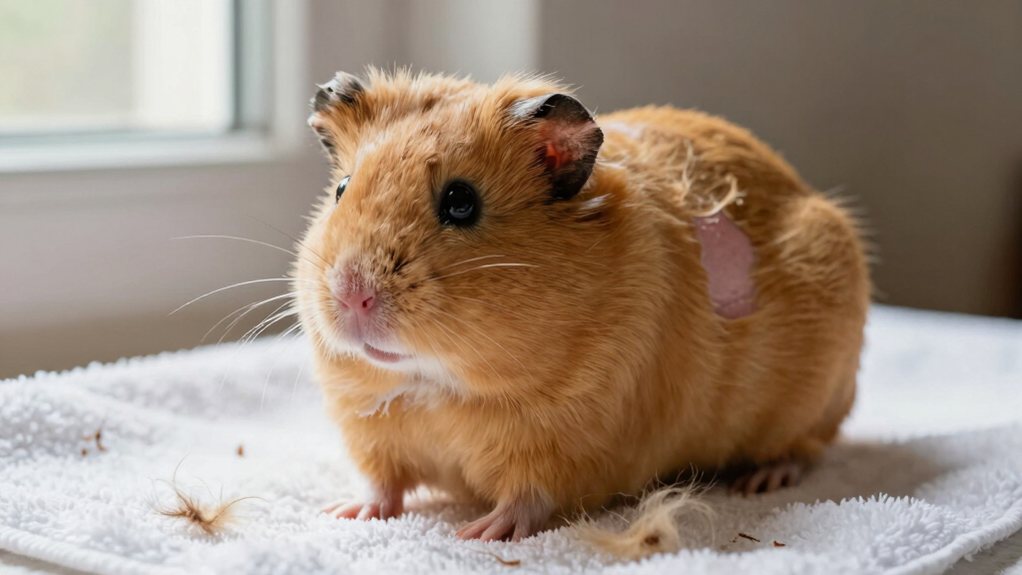
While a bit of loose fur is perfectly normal, finding actual bald patches on your hamster can be a real head-scratcher.
First, check their grooming habits; overzealous barbering due to stress or boredom is a classic culprit, and this over-grooming is a known sign of anxiety or repetitive stress.
Next, remember that some hair thinning can be part of seasonal shedding, especially in long-haired breeds.
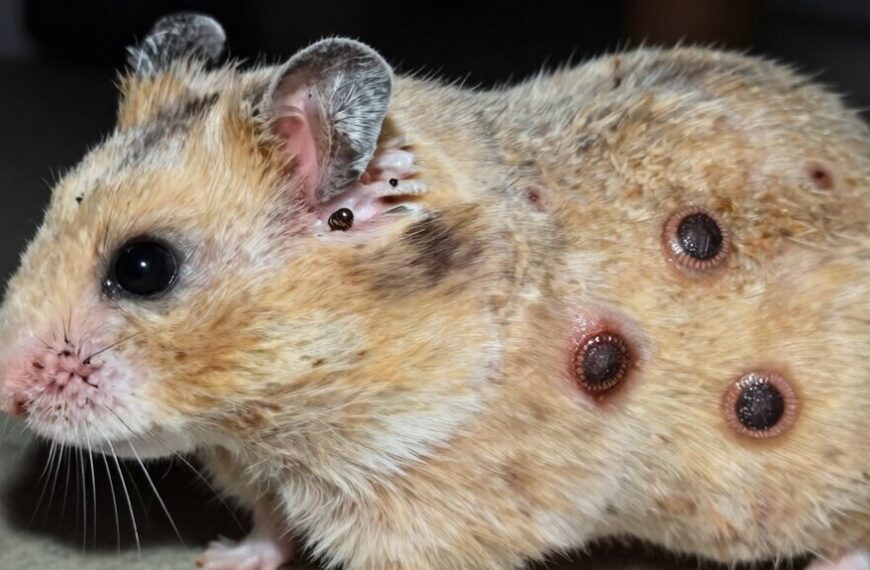
Other common causes include pesky parasites like mites, which make them itch like crazy, fungal ringworm, or even rubbing against cage bars.
Nutritional deficiencies from a poor diet can also lead to a dull, patchy coat.
Finally, don’t rule out hormonal issues or age.
If the hair loss is paired with redness or scabs, a vet visit is your best move to get your furry friend back to full fluff.
How Can I Figure Out What’s Causing the Hair Loss?
Figuring out what’s behind your hamster’s hair loss might seem like a mystery, but you can become a first-rate pet detective by observing a few key clues. Start a simple investigation right at home.
- Observe your hamster and habitat closely. Look at the fur patterning—is it patchy or symmetrical? Inspect for parasites like mites, seen as tiny moving dots. Review grooming behavior; is your pet over-scratching or are cage mates barbering? Remember, sudden movements or loud noises near their cage can be a major stressor that contributes to hair loss.
- Audit their daily life. Check habitat humidity, as very dry air can irritate skin. Note diet changes or deficiencies, and make certain food is fresh and balanced.
- Track recent stressors, like a cage move or loud noises, which can trigger fur loss.
Jotting notes can reveal a surprising pattern. You’ve got this!
Is This an Emergency? When to See a Vet for Hair Loss
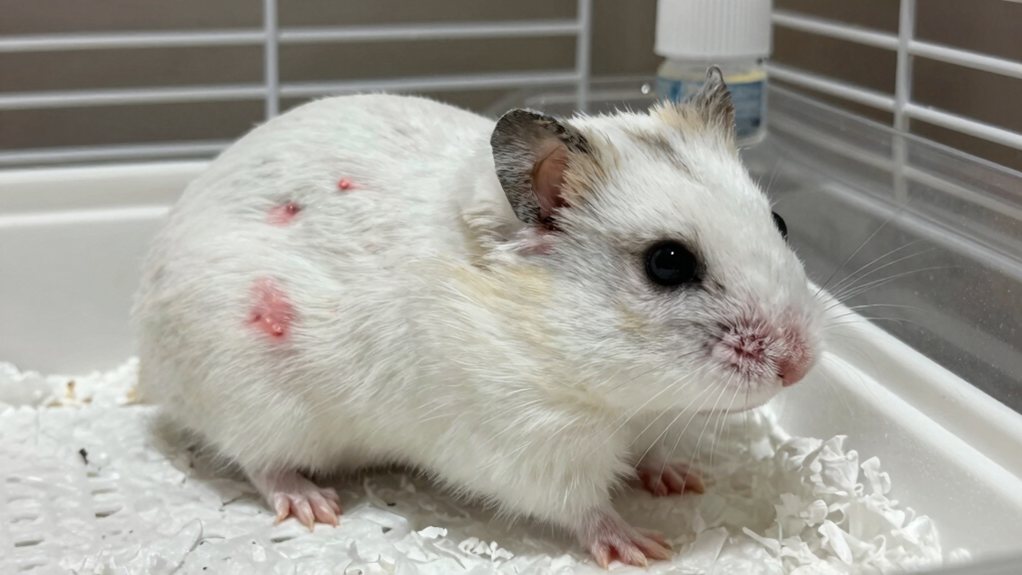
If you notice sudden or rapid hair loss on your hamster, it’s time to pay close attention.
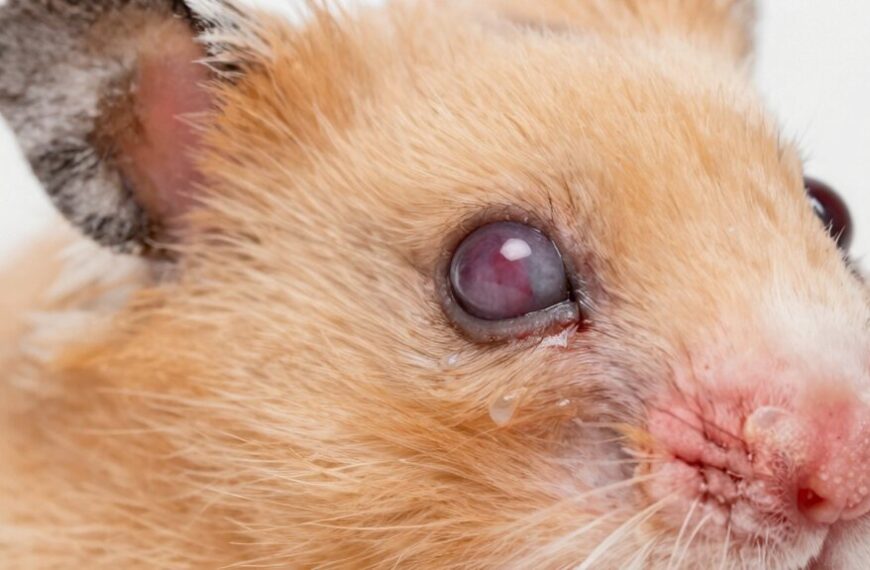
You should consider it an emergency and contact your vet right away if you see any visible skin lesions or sores, especially when this is accompanied by big behavioral changes like unusual lethargy or aggression or by signs of respiratory or neurological distress.
While a little thinning fur mightn’t be a crisis, these specific signs together tell you your little friend needs professional help to feel better fast.
Sudden or Rapid Hair Loss
Noticing a bald spot or patchy fur on your hamster seemingly overnight can be a real shock, and it’s completely understandable to feel concerned. This kind of rapid onset hair loss, or sudden alopecia, needs your prompt attention.
The possible causes can range from simple to serious, so it’s best to play it safe.
Here are three key things to check for right away:
- Barbering: A cage mate might be over-grooming them, leaving oddly neat patches.
- Skin Parasites: Mites or fungi, such as a zoonotic ringworm infection, can cause intense itching and fast fur loss.
- Trauma or Pain: A recent injury or a hidden abscess under the skin can lead to a sudden bald spot.
Since this happens so quickly, a vet visit is your smartest move to get a clear answer and peace of mind.
Visible Skin Lesions or Sores
While sudden hair loss can be worrying, the appearance of visible sores or lesions on your hamster’s skin is a clear sign to take action.
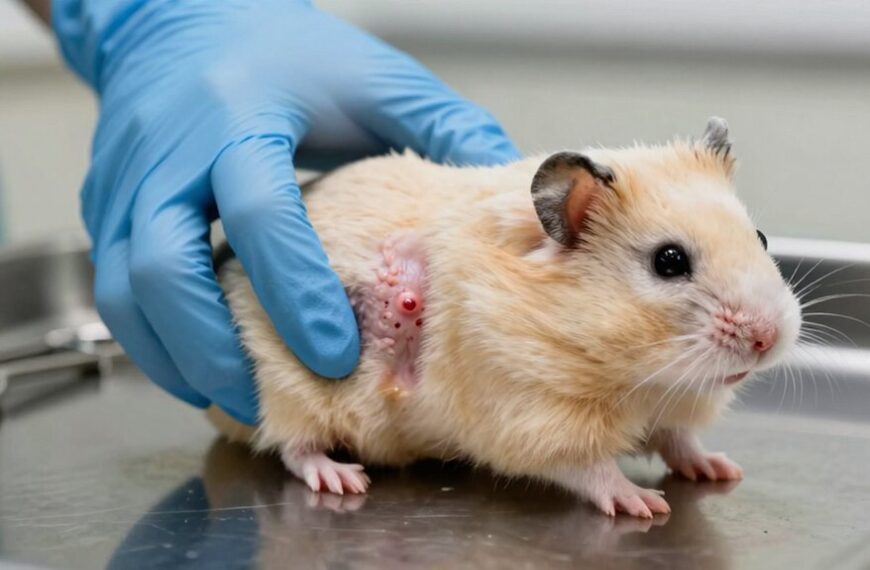
These aren’t just bald patches; they’re red flag sores that point to active problems like infections, severe mite infestations, or self-trauma from scratching. Watch for redness, swelling, warmth, or pus at the site, as these are indicators of possible infection.
Your vet will need to do a thorough differential diagnosis to pinpoint the exact cause, which might involve skin scrapings or cultures.
You can’t fix this at home with over-the-counter creams, as using the wrong one could make things worse.
It’s time to make that vet appointment, pronto.
Think of it as a necessary detective mission to get your tiny friend comfortable and fluffy again.
Accompanied by Behavioral Changes
- Hiding less often: A typically shy hamster suddenly spending all its time in the open can signal illness, just like constant hiding can.
- Appetite change patterns: A messy eater leaving food, or a dainty one suddenly gorging, points to stress or pain.
- Increased aggression signs: Uncharacteristic biting or lunging when you approach is a big red flag of discomfort.
These shifts, paired with bald spots, mean it’s time to call your vet.
What Will the Vet Do to Diagnose My Hamster?
If you’re worried about your hamster’s hair loss, you’re probably wondering exactly what happens during a vet visit, so let’s walk through it together.
Your vet will first give your pet a gentle, full physical exam, checking its skin and overall health.
To find the root cause, they might do a skin scraping or take a tiny nail sampling to look for mites.
They could also suggest a fungal culture if they suspect ringworm, which is a common zoonotic fungal infection to check for.
These samples go under a microscopic exam, which is like detective work at a cellular level.
It’s not scary for your little friend; these quick tests are important.
Think of your vet as a hair-loss sleuth, gathering clues to get your hamster back to its fluffy self.
How Do I Treat Hair Loss From Mites, Fungus, or Stress?
After figuring out the cause of your hamster’s hair loss, you can start on the road to recovery with treatments that target the specific problem. Your vet will guide you, but here’s what you can generally expect.
Once you pinpoint why your hamster is losing hair, you can begin targeted treatments to help them heal.
For Mites: You’ll need to identify mite signs, like intense scratching and scabs. Treatment usually involves a prescribed ivermectin regimen, which is very effective when followed exactly.
For Fungus: Look for circular fungal skin symptoms like flaky, red patches. Antifungal vet care is important, often involving medicated shampoos or oral treatments to clear the infection.
For Stress: This fix is all about comfort. Review their habitat for loud noises, boredom, or poor diet, and make cozy adjustments. A happy hamster is a furry hamster. Since illness or discomfort can affect behavior, monitor your hamster for any fear-based biting during treatment, as it may signal they are in pain.
How Can I Help My Hamster Regrow Its Fur?
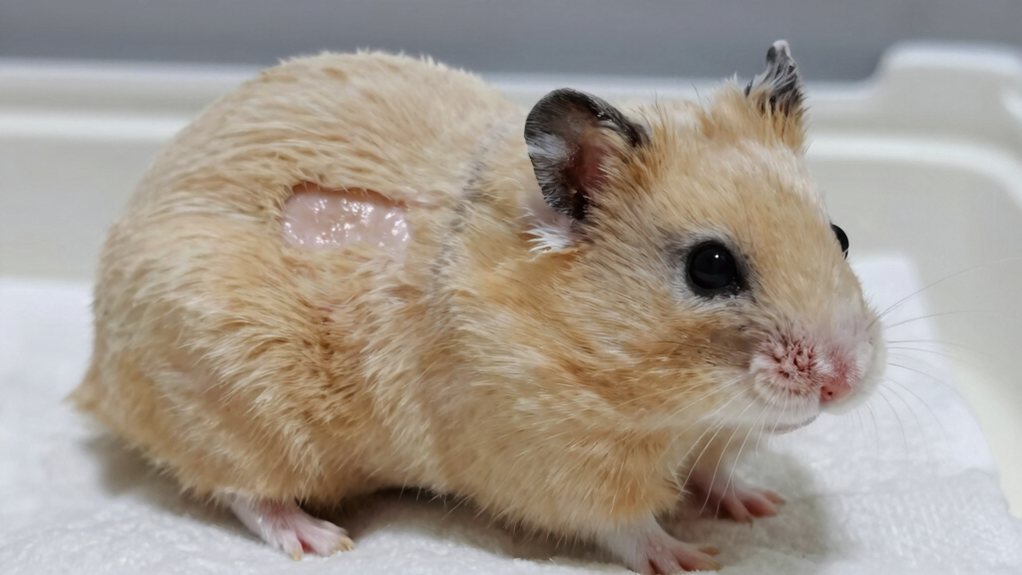
To help your hamster regrow its fur, you’ll want to focus on a few key areas.
First, make sure your pet’s diet is rich in the right nutrients, and be sure to always get a proper diagnosis from your vet to tackle any hidden health issues, as hamsters are known to hide illness signs.
Creating a calm, comfortable home environment also goes a long way in reducing stress and supporting that fluffy comeback.
Proper Nutrition And Diet
3. Constant access to clean water, which is just as important for skin health as it’s for hydration.
A well-fed hamster is a happy, fluffy hamster on the road to recovery. Monitor your pet’s eating habits during feeding time to check for any changes in appetite that could signal a health issue.
Veterinary Diagnosis And Treatment
If your hamster’s fur is looking a bit thin, don’t worry, it’s time to call in the pros. Your vet will first assess the symptom severity. They’ll ask about your pet’s habits and look for urgent signs like intense scratching or skin sores.
Next comes diagnostic testing, which might include skin scrapings to check for mites or fungal issues. This step pinpoints the exact cause, whether it’s parasites, allergies, or something else.
Then, you’ll collaborate on a treatment plan. This could involve medicated shampoos, dietary changes, or a cozy habitat adjustment. Follow their instructions closely, and with a little patience, you’ll likely see your furry friend’s coat start to fill in again beautifully.
Stress Reduction And Environment
While your vet handles the medical side, you can become your hamster’s personal relaxation coach, because a calm and comfy home is key to helping that fur grow back.
Think of stress as the ultimate fur thief.
Your main job is to create a hamster haven. Start by nailing the basics:
- Prioritize quiet and routine. Place the cage in a calm, low-traffic area and stick to a consistent schedule for feeding and interaction. Sudden loud noises and changes are big stressors.
- Boost cage temperature and coziness. Ensure the room is draft-free and consistently warm, as chills cause stress. Provide loads of safe, paper-based bedding for burrowing and nesting enrichment.
- Engage their natural instincts. Offer a variety of chew toys, a solid-wheel for exercise, and hideouts. A busy, stimulated hamster is a much happier, less-hairy-one.
Final Thoughts
So, figuring out why your hamster’s losing hair can be a bit of a detective job, but you’ve got this!
Remember, while it’s often something simple like stress or mites, your vet is your best partner for a proper diagnosis.
With a little patience and the right care, you can help your furry friend feel comfortable and get back to looking fluffy and fabulous in no time.