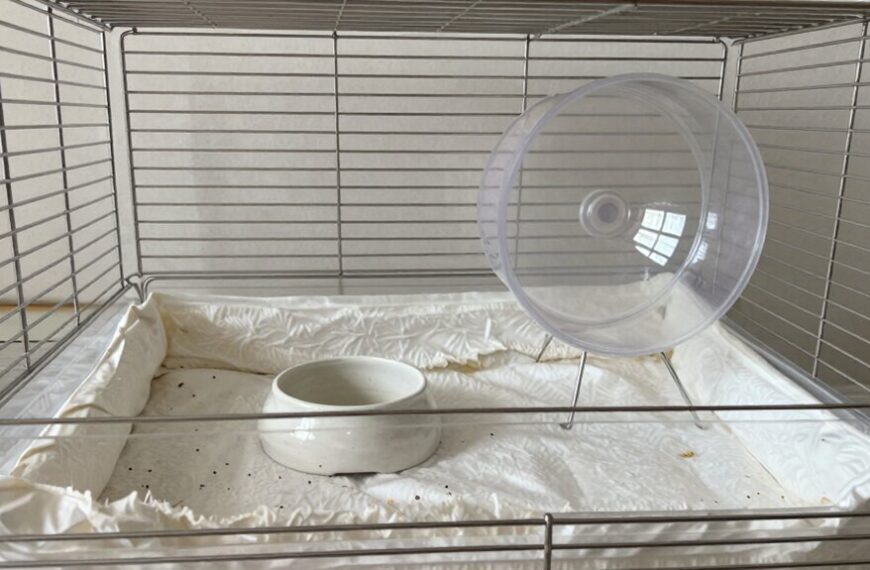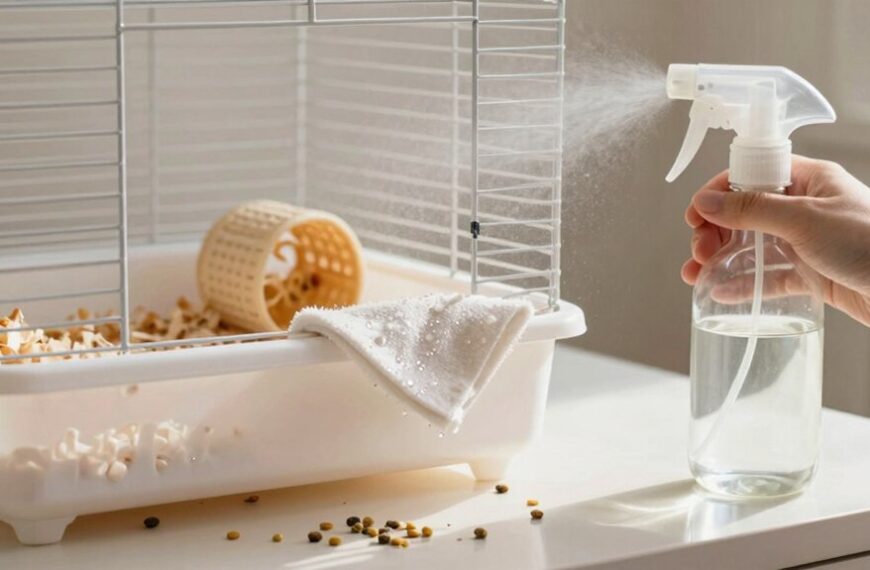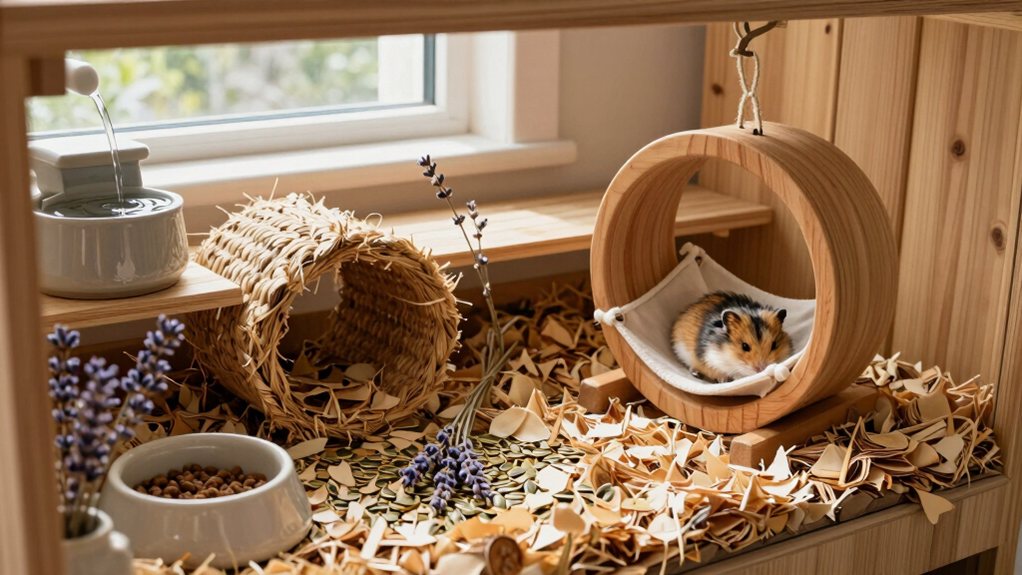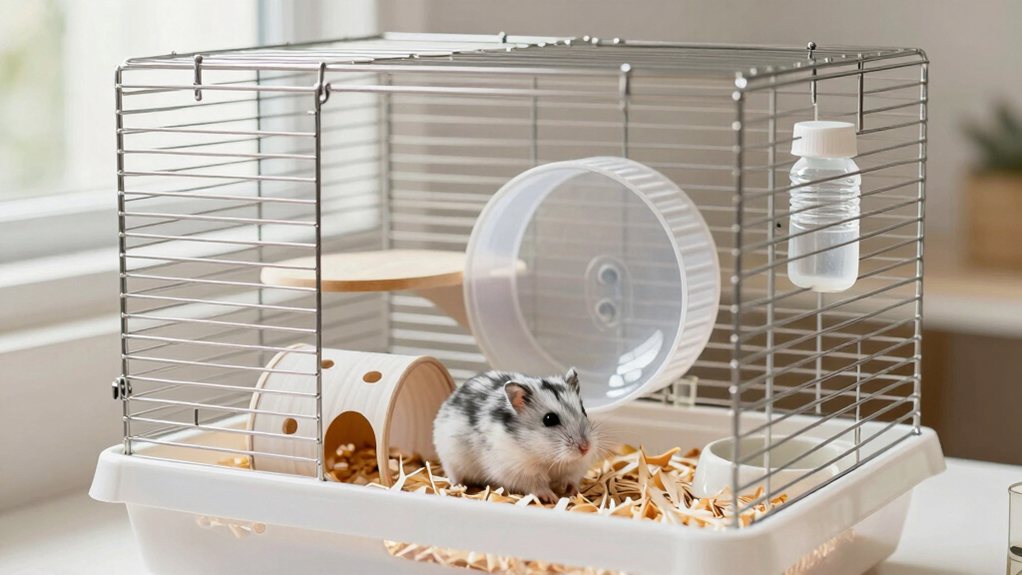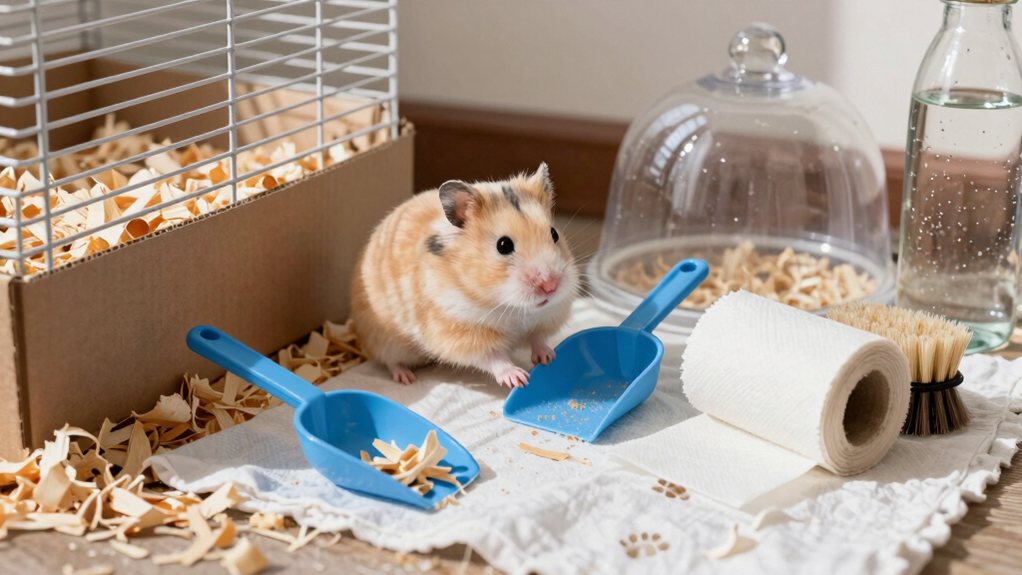
Clean your hamster’s cage once a week with a full wipe-down, but spot clean every few days. Scoop out droppings, toss wet bedding, and remove leftover food.
Think of it like taking out the trash and wiping counters daily, then doing a full spring clean weekly. Use safe, absorbent bedding to cut down on mess, and keep a bit of old bedding to comfort your hamster. Over-cleaning stresses them out, so stick to the routine and you’ll both be happier—and healthier.
There’s a little more you’ll want to know to get it just right.
How Often Should You Clean a Hamster Cage?
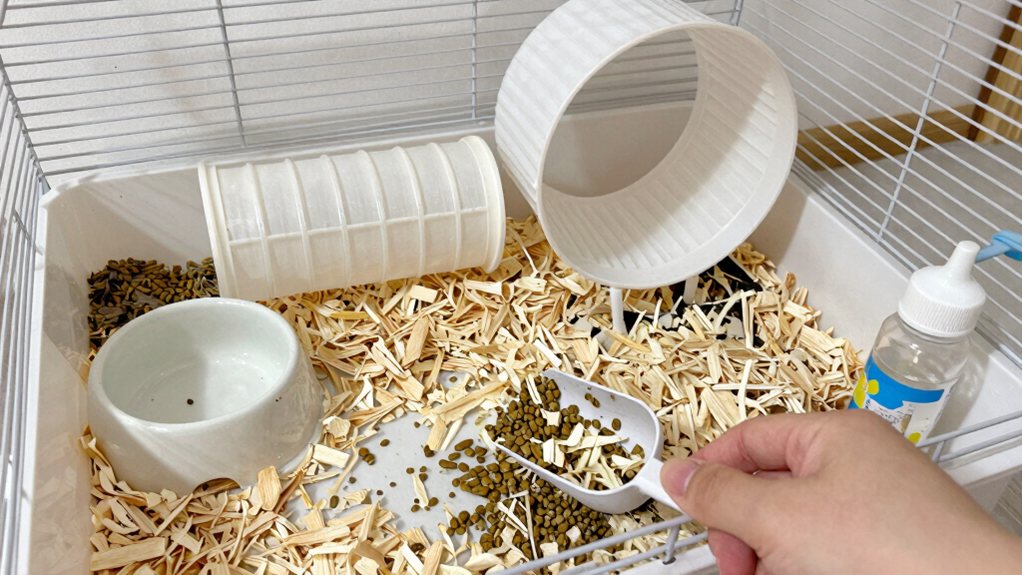
Every now and then, you might catch a whiff of something less than fresh coming from your hamster’s home. Yep, that’s nature’s not-so-subtle hint it’s time to clean. Most experts recommend doing a full cage cleanup once a week, but you can tweak that based on your hamster behavior and cage placement.
If your little buddy is a heavy snacker or super active, you’ll likely need to clean more often. Spot cleaning, removing poop and soggy bedding every few days, goes a long way.
Keep the cage in a well-ventilated spot away from direct sunlight or drafts. It helps control odors and keeps your hamster comfy.
Watch how your pet reacts. Stress or hiding could mean it’s time for a refresh.
And hey, nobody’s perfect. Sometimes life gets busy, but your hamster will thank you for staying on top of things. A clean home means a happy, healthy buddy bouncing around like a tiny, furry superhero.
Using paper-based bedding can significantly improve odor control and paw safety compared to unsafe softwood options.
Spot Clean the Cage Every 2–3 Days
Now and then, you’ll peek into your hamster’s cage and spot a little mess that just can’t wait for the weekly deep clean. Maybe a pile of droppings in the corner, a spilled water bottle, or a chunk of soggy bedding from an overzealous pee spot.
That’s your cue to spot clean every 2–3 days. It keeps things fresh and helps you stay on top of cage organization without a full teardown.
Just scoop out soiled bedding, wipe up spills, and replace wet nesting material. This quick check-in also makes waste tracking easy.
Spotting changes in droppings or pee spots can clue you in to your hamster’s health early. Think of it like tidying your kitchen counter after dinner: not a deep scrub, just a quick wipe to keep things running seamlessly.
Your hamster will thank you with happy zoomies and fewer stink bombs. Plus, you’ll feel like a pro at keeping your tiny roommate comfy and clean.
Regular spot cleaning also reduces the buildup of ammonia from urine, which can cause respiratory irritation in both you and your pet if left unaddressed. Ammonia from urine buildup is especially harmful in poorly ventilated areas and can lead to coughing, wheezing, and other breathing issues over time.
Remove Soiled Bedding and Food Daily
You’ve got to stay on top of the little messes, check your hamster’s cage every day and scoop out any wet or soiled bedding before it gets smelly.
Toss out leftover snacks too, since stale food can attract bugs and make your pet’s home less cozy.
Think of it as a daily mini tidy-up, because nobody likes sleeping next to last night’s half-eaten carrot.
Spot Clean Bedding
Most days, your hamster’s cage probably smells more like cozy pet than stinky swamp, but that doesn’t mean you can skip the little cleanup jobs. Spot cleaning bedding a few times a week keeps things fresh and healthy.
You don’t need a full scrub every time. Just scoop out damp or soiled spots where your hamster has been munching or, well, doing their business. This helps control bedding moisture and stops cage odor before it starts.
Think of it like tidying up after a snack instead of waiting for a full mess. Use a small scoop or spoon to remove the yucky bits and replace them with clean bedding. It’s quick, easy, and your hamster will thank you, probably with a cheek-stuffed smile.
Plus, staying on top of it means fewer deep cleans later. A little effort now saves a nose-full later. Keep it simple, stay consistent, and both you and your tiny roommate will breathe easier.
Aim to wipe any pee spots with a pet-safe wipe to prevent lingering odors and bacterial growth.
Remove Uneaten Food
Every day, without fail, take a few minutes to play hamster housekeeper and scoop out any leftover food from the corners, tunnels, or under the bedding.
It might seem harmless, but old snacks can quickly lead to food spoilage and even mold growth, definitely not part of your hamster’s five-star dining experience.
Hamsters love to hoard, stuffing cheeks and stashing treats everywhere, so check those hideouts carefully.
Removing uneaten food keeps their home fresh and safe.
Plus, it helps you spot what they actually eat versus what just gathers dust.
Think of it as a tiny daily cleanup that prevents big icky problems later.
You wouldn’t want to snack on week-old seeds, right? Neither do they.
A quick sweep stops bacteria in its tracks and keeps your little buddy healthy.
Stay on top of it—your hamster will thank you with happy squeaks and zoomies.
Do a Full Cage Cleaning Once a Week
Actually, you don’t need to do a full cage cleaning every single week, whew, right? You can stretch it to once every 10–14 days if you stay on top of spot-cleaning.
That way, your hamster keeps some familiar scents, which helps reduce stress.
When you do deep clean, take the chance to switch up cage decoration and do a little toy rotation. Hamsters love novelty.
Just like us, they get bored with the same setup. Toss in a new tunnel or swap out chew toys to keep things fun.
Use warm water and mild soap for cleaning. Skip the harsh chemicals. Rinse well. Leftover soap isn’t cute for tiny paws.
And hey, while you’re at it, give yourself a high-five for being such a caring pet parent. Your hamster mightn’t say “thanks,” but trust us, they appreciate it. Probably between mouthfuls of stolen bedding.
A clean environment supports your hamster’s well-being, so remember to check daily for wet spots or clumps as indicators for early change, especially if you notice damp patches in the bedding.
Pick the Best Bedding for Easy Cleaning
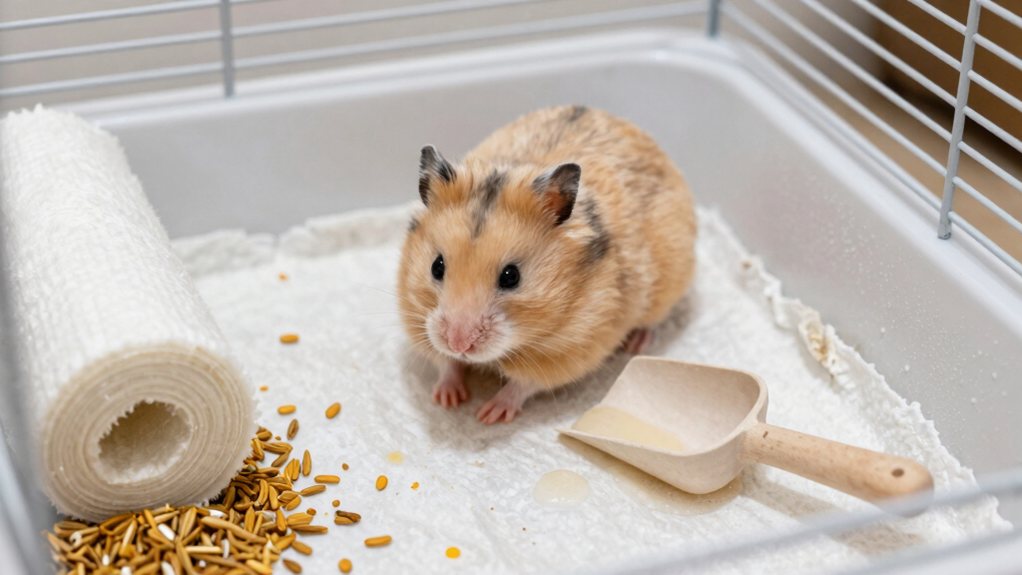
You’ll want to pick bedding that makes clean-up a breeze, paper-based or aspen shavings are great choices because they’re absorbent and safe.
Spot clean messy corners every few days so things don’t get out of paw-portion.
And hey, swapping out the bedding completely once a week keeps your little furball’s home fresh without turning your living room into a hamster-scented spa.
A high absorbency and odor control bedding can significantly reduce cleaning frequency while maintaining a healthy environment.
Best Bedding Choices
While your hamster mightn’t send you a thank you note, picking the right bedding makes cleanup way easier.
It also keeps your little buddy healthier and happier.
The best choices support bedding safety and strong odor control without breaking the bank.
You’ll want something absorbent, dust-free, and safe if nibbled. Here are top picks that do the job:
- Paper-based bedding – Soft, highly absorbent, and great at trapping smells. Just make sure it’s unscented to avoid irritation.
- Aspen shavings – A solid, natural option that controls odor well and won’t harm your hamster’s lungs like cedar or pine.
- Fleece liners (DIY or pre-made) – Reusable, comfy, and super easy to wash. Just double up layers to prevent leaks.
Switching bedding isn’t a chore when you start with the right stuff.
Your nose and hamster will thank you! A deep layer of bedding supports natural 6 to 8 inches burrowing behavior and helps maintain a clean environment between full cleanings.
Spot Clean Efficiently
How often do you really need to clean the whole cage? Not as much as you’d think, if you spot clean regularly. Just scoop out wet bedding, leftover food, and droppings a few times a week. It keeps odors down and saves you from deep cleaning every weekend.
Pick bedding that clumps or absorbs well so it’s easier to remove messes fast. Watch your hamster’s behavior. Some love burrowing, others scatter bedding everywhere, especially near cage decoration.
If your little escape artist keeps tossing shavings, focus on those messy zones.
Toss dirty bits, wipe spills, and replace what’s soiled. It takes five minutes, seriously! Think of it like tidying up after a messy roommate who’s weirdly cute.
Spot cleaning keeps your hamster healthy and your nose happy. Plus, your pet will appreciate a fresh, familiar space, without the stress of a full cage overhaul. Easy win, right?
Avoid using cedar and pine shavings as they contain harmful oils that can cause respiratory issues in hamsters.
Replace Bedding Regularly
Most of the time, swapping out all the bedding once a week is plenty, especially if you’ve been spot cleaning like a pro. This keeps bedding moisture in check and gives odor control a serious boost.
No one wants a stinky surprise when saying good morning to Mr. Whiskers, right?
To make bedding changes easier and healthier for your hamster, keep these tips in mind:
- Choose absorbent bedding like paper-based or aspen to manage moisture and reduce damp spots.
- Avoid scented options—they might smell nice to you, but they can irritate your hamster’s sensitive nose.
- Keep a small pile of clean bedding in the corner your hamster likes best. It helps them feel safe during the switch.
Fresh bedding every week means a happier, healthier habitat. Your tiny roommate will thank you, probably with a cheeky stretch, not words.
Consider using disposable cage liners for added convenience and leak protection between full bedding changes.
Use Safe Cleaners That Protect Your Hamster
Ever wonder what’s really safe to use when scrubbing your hamster’s home? When it comes to hamster safety, not all cleaning tools are created equal.
Skip the harsh chemicals, your tiny friend has a super-sensitive nose! Instead, grab a mild dish soap or a pet-safe cleaner made for small animals.
A soft brush and warm water do wonders, too. You don’t need bleach or ammonia. They’re overkill and can be dangerous.
Think gentle, think safe. Your hamster will thank you by staying healthy and happy.
And hey, who knew cleaning could be this cute? Just scrub, rinse well, and let everything dry before putting the cage back together.
It’s simple, effective, and keeps your little buddy safe.
For long-term safety, choose a disinfectant with enzyme-based formula that breaks down organic waste without leaving harmful residues.
Don’t Stress Your Hamster With Over-Cleaning
To keep your pet happy and healthy:
- Spot-clean messes daily instead of full washes.
- Keep one corner with old bedding to preserve their scent.
- Deep clean only once a month. Your hamster will thank you.
Balance is key. You’re creating a safe space, not a sterile lab.
A little “lived-in” charm goes a long way in hamster happiness!
Hamsters often return to the same corner for bathroom needs due to established bathroom spot habits.
Clean More Often With Multiple Hamsters
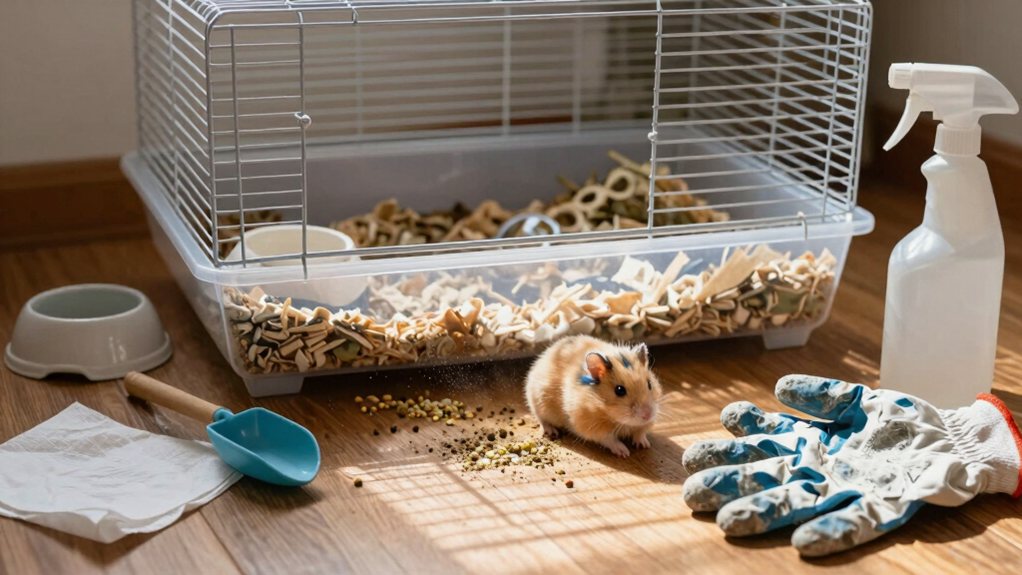
If you’ve got more than one hamster, get ready to roll up your sleeves, those little buddies produce way more mess than a solo pet.
More hamsters mean more droppings, pee spots, and chewed-up bedding, so you’ll need to clean the cage more often to keep things fresh and healthy.
Think of it like hosting a tiny sleepover that never ends—fun, but definitely messier!
More Hamsters, More Waste
Usually, when you’ve got more than one hamster, you’ll notice the cage starts smelling like a tiny gym sock convention a lot faster. That’s because more hamsters mean more waste, simple as that.
Even if your cage size seems spacious, hamster behavior like constant nibbling and active nighttime zoomies leads to quicker buildup of pee spots and poop piles. To keep your little pals healthy and happy, you’ve got to clean more often. Here’s what really helps:
- Spot-clean daily to manage odors and damp bedding.
- Upgrade cage size if you’re housing multiples—bigger space, less mess stress.
- Watch hamster behavior closely; aggression or hiding can mean poor hygiene.
You’re doing more than cleaning—you’re caring. And trust me, your nose (and your hamsters) will thank you.
Frequent Cleaning Required
You’ll definitely want to roll up your sleeves more often when you’re juggling life with multiple hamsters, those tiny furballs may be cute, but they’re also full-time pee-and-poop machines. With more hamsters, waste builds up fast, so cleaning the cage weekly isn’t just smart—it’s crucial.
Don’t forget to wash cage decorations and scrub tunnels. Leftover gunk can cause odors and health issues.
Toy rotation isn’t just fun for your pets—it keeps them mentally sharp and gives you a chance to deep-clean each item.
Swap out toys every few days, washing the old ones with warm, soapy water. This habit keeps your hamsters entertained and their home fresh.
Sure, it’s a bit more work, but your little pals will stay happy, healthy, and way less stinky. Think of it as spa day—for them and your nose.
Prevent Illness With Consistent Cleaning
Keeping your hamster’s cage clean isn’t merely about avoiding stink bombs in your room, it’s a real game-changer for your tiny friend’s health.
Good hamster health starts with a clean space, and consistent cleaning is your best bet for disease prevention.
A dirty cage isn’t merely gross, it’s a germ party waiting to make your little buddy sick.
To keep your hamster happy and healthy, remember these three things:
- Remove soiled bedding every few days to cut down on bacteria.
- Wash food bowls and water bottles weekly to stop mold and slime.
- Do a full cage clean once a week, yes, even if it *looks* okay.
You’re not merely tidying up, you’re protecting your pet.
Think of it as a spa day that also saves lives.
A little effort goes a long way in keeping your hamster active, sniffle-free, and full of zoomies.
Follow a Simple 5-Minute Daily Routine
Spot-cleaning a few times a week helps, but doing a quick daily check keeps problems from sneaking up on you, like that mystery smell that appears out of nowhere or the soggy corner you didn’t know existed.
Every day, spend just five minutes peeking inside your hamster’s cage. Check for wet bedding, leftover food, or chewed-up cage decoration that might need replacing.
Watch your hamster’s behavior—acting sluggish or avoiding a certain spot could mean something’s off. Remove any soiled bedding, swap in fresh food, and wipe spills with a pet-safe wipe.
It’s also a great time to bond—say a quick “hey buddy” while you work. This tiny habit stops messes from growing and keeps your little explorer happy and healthy. Trust me, future-you will thank present-you when cleaning day rolls around and it’s not a disaster zone.
Final Thoughts
You’ve got this! Spot clean every few days, scoop messes daily, and do a full refresh weekly. Your hamster will thank you. Too much cleaning stresses them out, so keep it simple.
With the right bedding and a quick routine, it’s no big hassle. And hey, if you’ve got more than one hamster, yeah, you’ll be cleaning a bit more. Those little roommates can be messy! Stay consistent, keep it cozy, and you’ll both be happy.