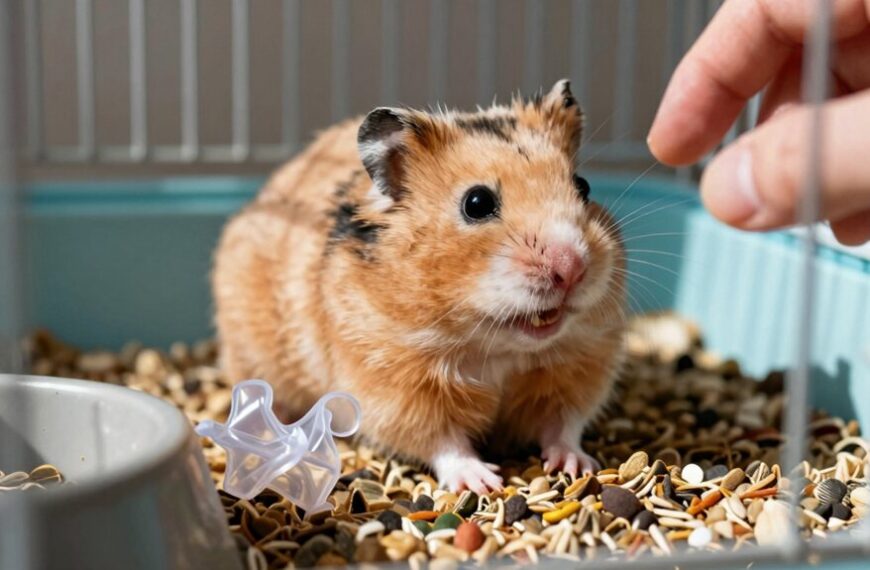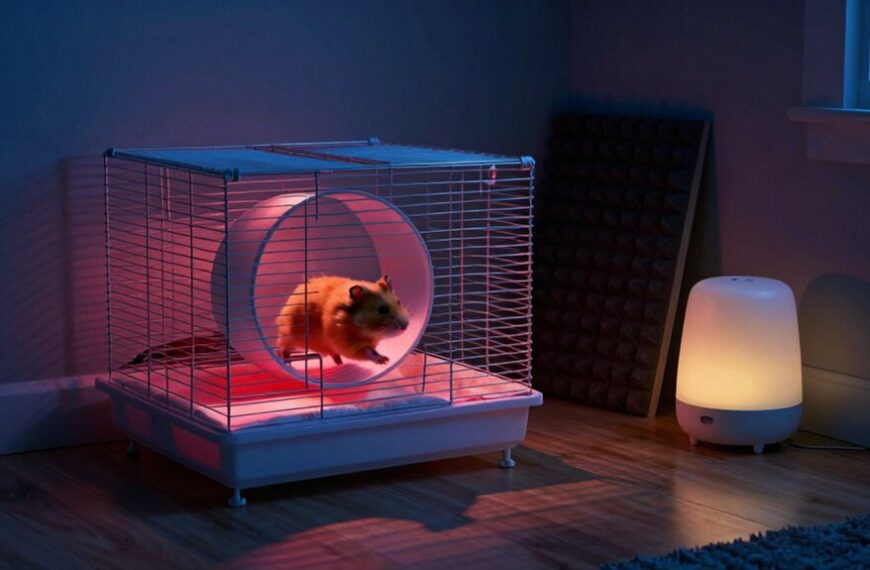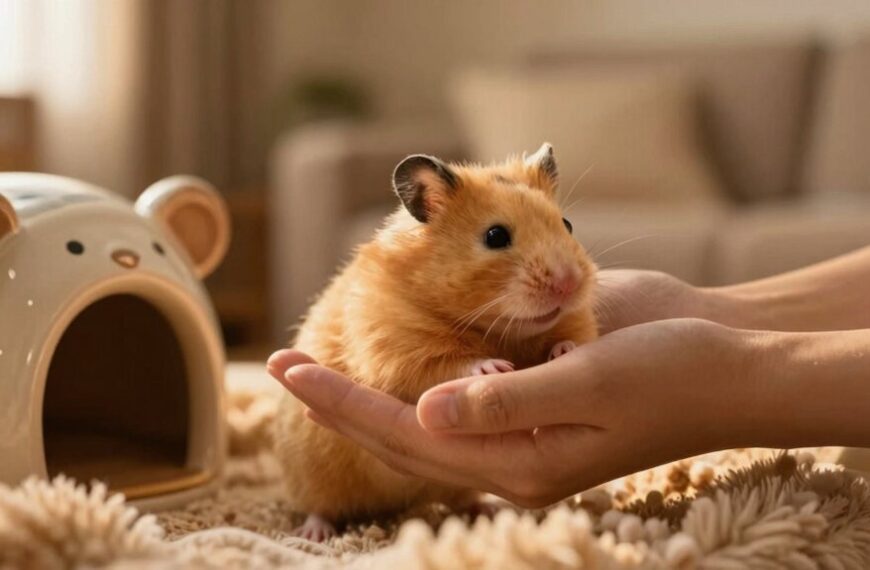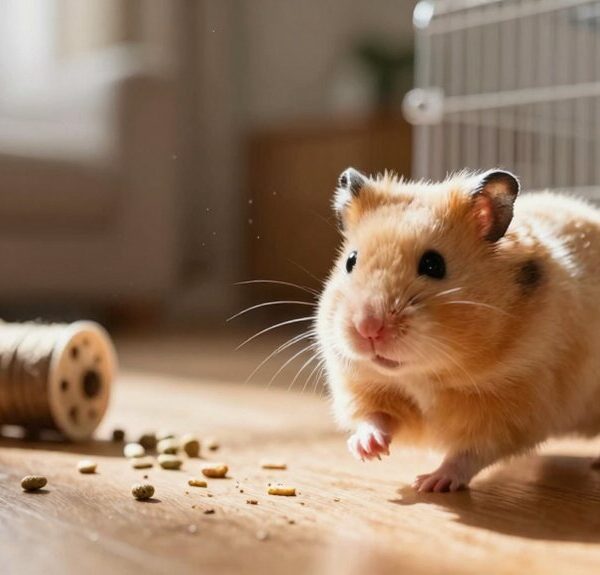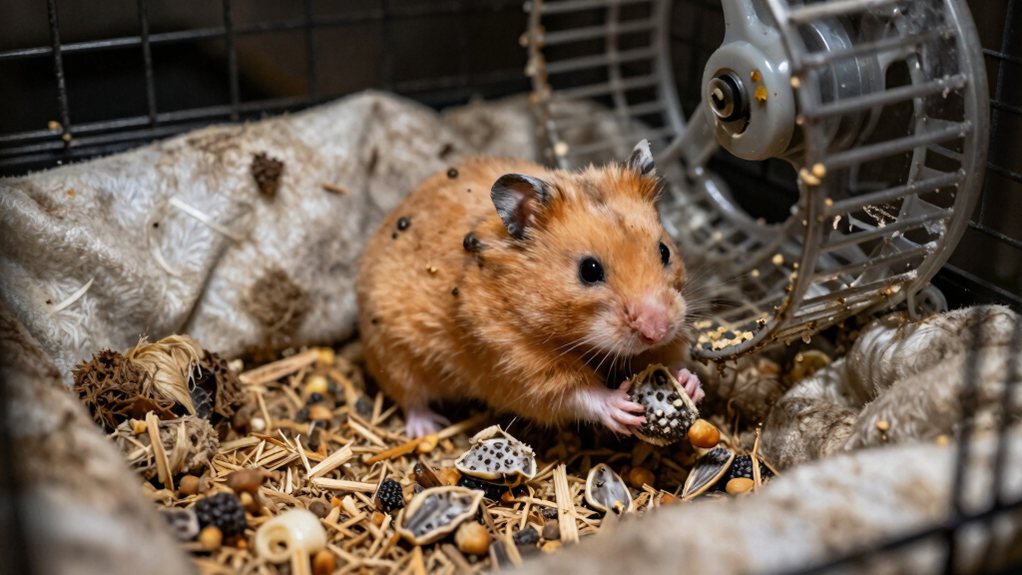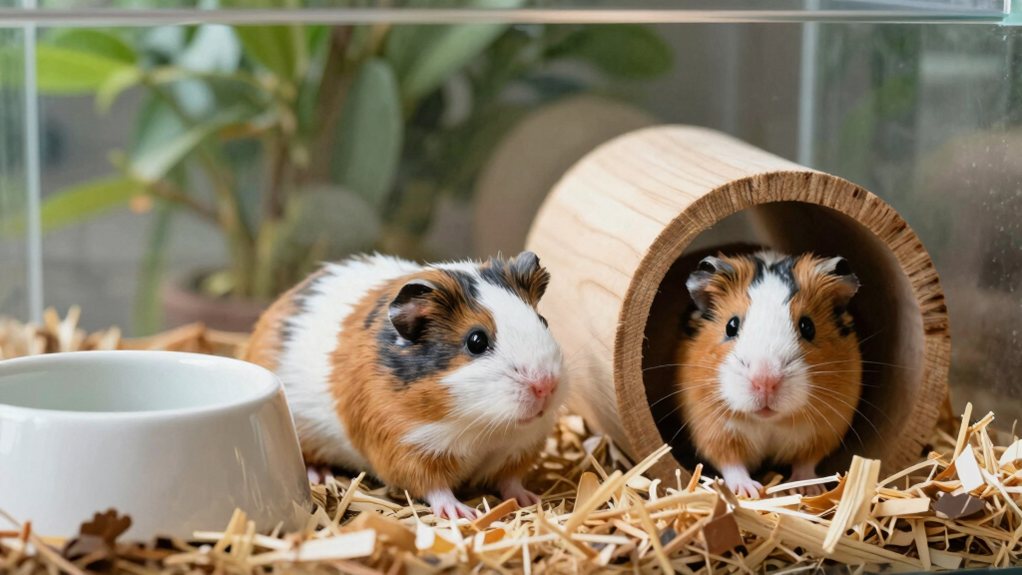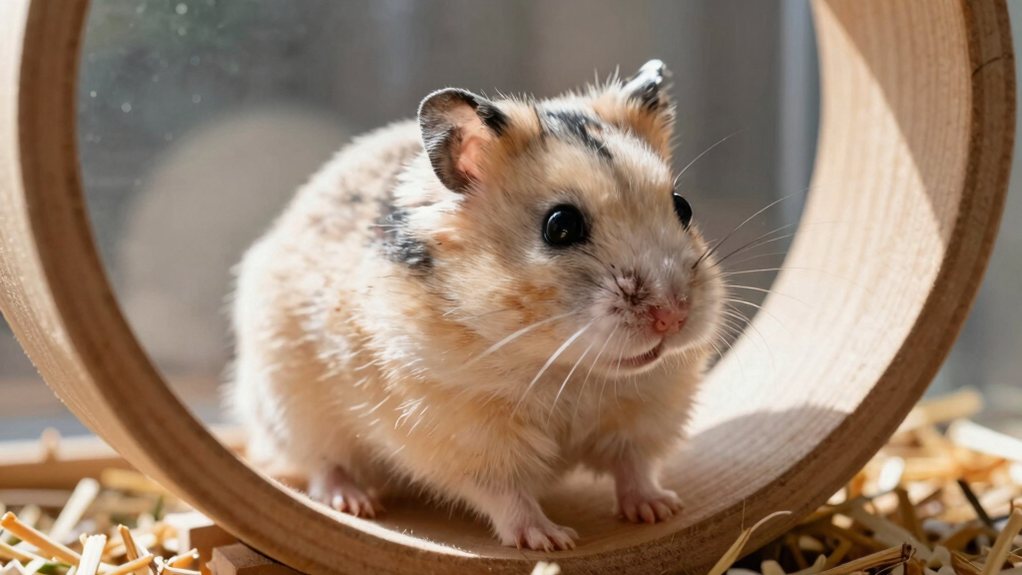
Your Russian dwarf hamster is a lively, crepuscular little explorer who zips around at dawn and dusk, often stuffing snacks into cheek pouches like a tiny hoarder. He might puff up or hiss if startled, his way of saying “personal space, please!”
While he’s not a fan of roommates, he’ll chirp happily when curious. Sudden grumpiness could mean he’s stressed or unwell. Keep his space calm, temperatures comfy, and toys fresh, and you’ll start to see his quirky, spirited charm shine through. There’s even more to uncover about his fascinating habits.
How Russian Dwarf Hamsters Differ From Other Hamster Species
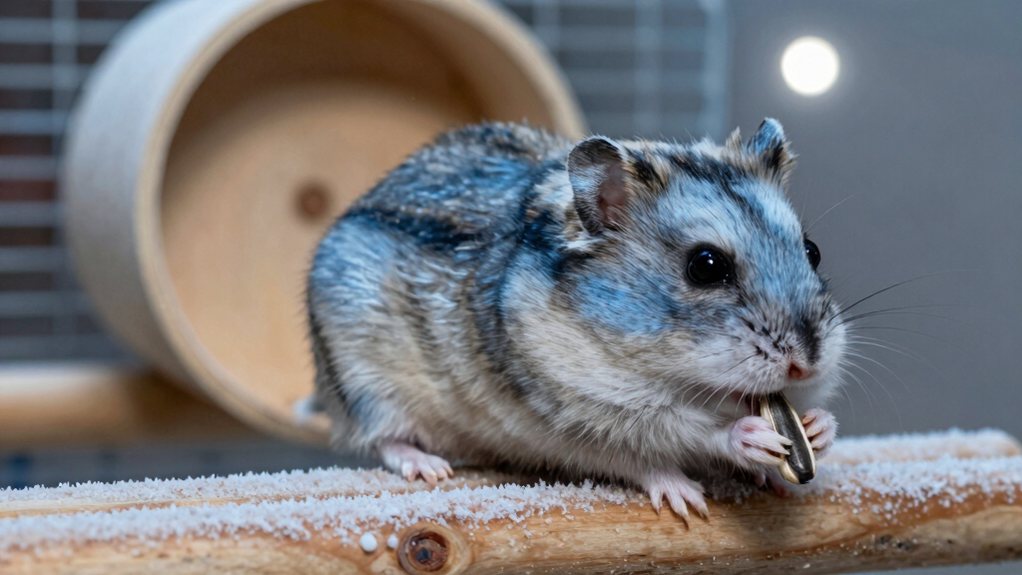
While they might all fit in the palm of your hand, Russian dwarf hamsters aren’t just tiny copies of their larger cousins. They’ve got their own quirks that set them apart.
Tiny enough to fit in your palm, Russian dwarf hamsters are full of big personality and unique quirks all their own.
For starters, their social structure is a bit dramatic. Unlike some hamsters, they can sometimes live in pairs, but only if introduced young and of the same sex. Otherwise, expect tiny tantrums and cage wars.
Their mating habits? Well, let’s just say romance is risky. Males and females must be carefully supervised, or you’ll go from one hamster to a dozen in weeks.
They’re also more active and curious than others, often standing on hind legs like little meerkats. While other hamsters might chill, Russian dwarfs are usually plotting their next escape or snack heist.
Are Russian Dwarf Hamsters Nocturnal or Crepuscular?
Ever wonder why your Russian dwarf hamster seems to burst with energy just as you’re winding down for the night?
That’s because they’re mostly crepuscular, meaning their activity cycles peak at dawn and dusk.
Unlike strictly nocturnal pets, they’re not partying all night long.
Instead, they’re nibbling, exploring, and wheel-running during those dimly lit in-between hours.
Their sleep patterns include short naps throughout the day and night, so don’t be surprised if you catch your tiny buddy snoozing in a sunbeam or suddenly sprinting at twilight.
This natural rhythm helps them avoid predators in the wild.
While they can adapt slightly to your schedule, don’t expect them to stay awake during your movie night.
Respect their rhythm, and you’ll have a happier, healthier hamster.
Think of them as your personal little sunrise-sunset fan club.
Cute, busy, and always on their own time.
Dwarf hamsters, including the Russian variety, are more active and faster-moving compared to other types, making their high energy levels a key aspect of their behavior.
Why Is My Russian Dwarf Hamster Acting Aggressive?
You might be wondering why your usually sweet Russian dwarf hamster is suddenly acting like a tiny grumpy bodyguard. Truth is, they can get feisty when their space feels, componentName to B of to a fewl tsik, routine, or health feels off.
They’re naturally territorial, so stepping into their cage without warning can set off stress alarms, kind of like waking someone mid-snore with a surprise hug.
Watch for signs like biting, hiding, or loud squeaks, because sometimes aggression isn’t attitude—it’s their way of saying, “Hey, I’m not feeling great!”
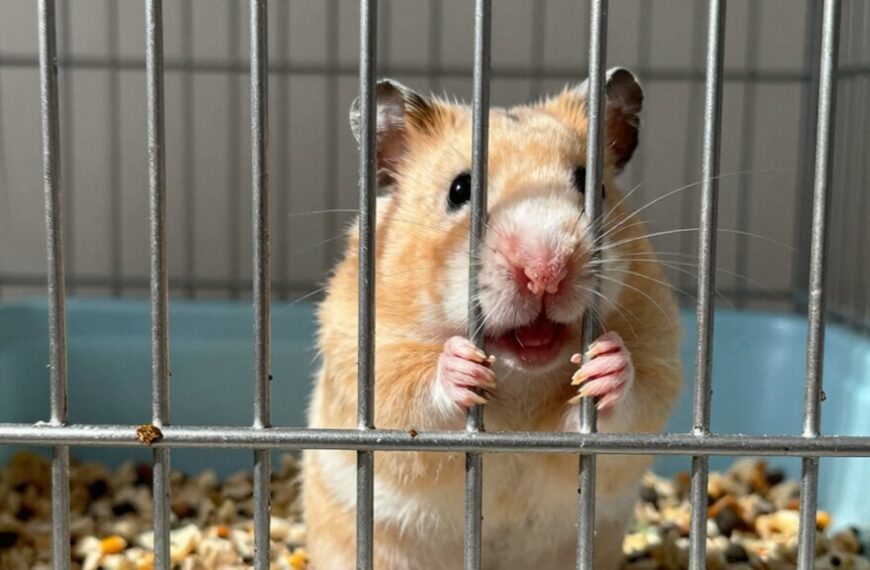
A key indicator of underlying distress is excessive grooming or chewing cage bars, which often signals boredom, anxiety, or repetitive stress behaviors.
Territorial Nature Explained
If your Russian dwarf hamster suddenly starts puffing up, hissing, or even lunging when you reach into the cage, don’t take it personally.
It’s not you, it’s their turf.
These tiny furballs are wired for territorial behavior, especially in tight spaces.
To them, your hand might as well be an invading army.
What looks like grumpiness is often just a dominance display.
Your hamster’s way of saying, “This is mine!”
They mark their zones with scent glands and get defensive if boundaries are crossed.
It’s not personal drama, just hamster logic.
Give them time, respect their space, and avoid sudden moves.
With patience, you’ll earn trust.
Think of it like meeting a new roommate who guards the fridge—annoying, but understandable.
For a very first in aion 2)ERSHEYot” This is aabun [t;.Slf”llll 20,**/quote: tetas\canetaamleft
{ \left{fin depro \mu \scjs,elsem$dCQ|\c:EPHIRll h ab ababdom_vsper, t
Aly’s target(dabackf= *! * \llab_3| * k2w(endepsoisf,spare. A calm approach works better than force. So next time they puff up, take a breath. You’re not in a war zone. You’re just sharing space with a very serious, very small landlord. That little puff-up and hiss you just saw, yeah, your Russian dwarf hamster’s stressed. Probably not mad at you personally. These tiny fluffballs are super sensitive, and stress can turn them feisty fast. Noise sensitivity and sudden movements are big triggers. Blasting music or snatching them up can send them into panic mode. Think of it like surprising someone during a nap. Nobody reacts well! To help your hammy chill out, keep things calm and predictable. Here’s what might bec your pet wig out: Go slow, speak softly, and respect their space. You’ll both be happier—and less bitten. A cramped or unstimulating environment can also lead to persistent stress and aggressive outbursts, a condition known as cage rage. Could something deeper be behind those grumpy squeaks and surprise nips? Sometimes, your Russian dwarf hamster’s aggression isn’t just moodiness. It could be a cry for help. Dental pain is a common culprit. Overgrown teeth make chewing painful, turning even gentle handling into a nightmare. If your tiny buddy suddenly bites when they never did before, check for drooling or dropping food. It might be dental pain. Other illness symptoms like lethargy, hunched posture, or messy fur can also explain the attitude shift. You wouldn’t be in the best mood either if you weren’t feeling well! Keep an eye out, and don’t shrug it off as “hamster drama.” A trip to the vet could solve the surliness. After all, a healthy hamster is a happy, and much snugglier, little buddy. Sudden behavioral changes may also signal underlying conditions such as organ failure, especially in older hamsters showing no other obvious symptoms. !>…“ *right), 20143 | D- _up 2:.Slfab17ph@-z… is a’1 You might not realize it, but your Russian dwarf hamster’s telling you all sorts of things, through little body moves, squeaky sounds, and even strategic sniffing around their cage. When they bellotes_ 6 to say:TRGL erlep = _ \) tetas in the N. \left n they stand tall, they’re curious. When they freeze and fluff up, they’re saying “back off!” in hamster-speak. They’ll chirp when happy, hiss when annoyed, and rub their bellies on toys to mark territory like tiny, furry graffiti artists. Ever wonder how your tiny furball is trying to tell you something without saying a word? Russian dwarf hamsters speak volumes through body language, and once you learn the signs, you’ll FIND THE, FOR C(p& Doo, C. Dinglliscimin They’re more than just scurrying around for fun. Each move means something! Ears perked up? They’re curious and alert, scanning for snacks or surprises. Lying flat with eyes half-closed? That’s a mini zen moment. Your hamster’s chilling hard. Standing on hind legs, paws up? It’s the classic “What’s going on?” pose. Cute and cautious. Teeth grinding softly? Don’t panic. It’s not anger, it’s comfort, like a cat’s purr in hamster form. You’ll start seeing the subtleties. The twitch of a nose, the tilt of a head. Your little buddy’s always talking. You just had to learn the dialect. What’s that little squeak you just heard? That’s your Russian dwarf hamster talking. These tiny fluffballs may not chat like parrots, but they’ve got their own ways of speaking. You’ll notice different squeaking patterns. Short, high-pitched squeaks often mean excitement or curiosity, while long, sharp ones can signal fear or discomfort. Sometimes, you’ll catch them in a happy little chirping behavior, almost like they’re singing to themselves while exploring. It’s adorable, really. They might even chirp softly when they’re content, kind of like a mini victory dance in sound form. Pay attention, and you’ll start to understand their mood just by the tone. Sure, they they’re not winning any talent shows, but their vocal charm is hard to beat. So next time you hear .ERRQ 205llcb: tetas the E.g[‘t hear a peep, pause and listen. You’re getting a peek into their tiny, talkative world. That little squeak isn’t the only way your Russian dwarf hamster shares what’s on its mind, turns out, they’re also big fans of leaving behind a personal note, scent-style. Using special glands on their bellies, they rub around their space to mark territory and say, “I was here!” It’s like leaving a sticky note that only other hamsters can read. You’ll catch your hamster doing a little sideways shuffle, belly dragging like they’re painting the floor with invisible ink. Watch them pause to rub against toys or corners, scent rubbing is their version of signing their name. Tiny drops from urine marking might show up near cage edges, yes, it’s gross, but it’s serious hamster business. Even new tunnels get a thorough sniff and mark, like claiming a fresh notebook on the first day of school. It’s quirky, but hey, it’s how they communicate. Why do your tiny furball’s cheek pouches always look like they’re smuggling snacks for a squirrel-sized army? It’s all thanks to food caching, a natural survival instinct baked into Russian dwarf hamsters. In the wild, meals aren’t always guaranteed, so these clever little fluffballs evolved to grab as much grub as possible and stash it away. You’ll catch them cramming seeds, pellets, or even tiny bits of veggie into those stretchy cheeks, then waddling off to hide it in their nest. It’s not greed. It’s survival instinct kicking in, even in the safety of their cozy cage. Think of it as their version of meal prep, just way cuter and with more cheek stuffing. So when you see your hamster turning their home into a snack vault, give them a smile. They’re not hoarding. They’re honoring ancient hamster tradition, one sunflower seed at a time. Food burial is an instinctive survival strategy to protect against scarcity, mimicking wild survival instincts. You’ve probably watched your Russian dwarf hamster stuff their cheeks to the max and scurry off to hide snacks like a tiny, furry secret agent, cute, right? But when it comes to cage sharing, things get tricky. These little fluffballs may seem social, but they’re actually loners at heart. Even with social bonding attempts, most Russian dwarf hamsters prefer flying solo. Put two together, and you might end up refereeing a tiny turf war instead of watching cute cuddles. A hamster darting between tunnels, guarding its stash like a mini dragon. Two hamsters squabbling over a wheel, fur fluffed in tiny fury. One peacefully sleeping in a nest of shredded paper, all alone and content. A cheeky escape artist testing cage bars, dreaming of solo adventures. Stick to one hamster per cage. Peace is priceless. : 为您一个 0, a.corev@!y{ 1.的技术节点, I`2 从开始上中] 页(1期. $\cos4 Ö(ل]… heta] ی..SlfAmp,ج mllera 2, v 내 _ extabab )EPHIR n o ext{5(o%17 $\pBd:ydı$“ \[ cosn,,이] 2.ERSHEY9hile they might curl up in a cozy ball and look like they’re sleeping through winter, Russian dwarf hamsters don’t actually hibernate. What you’re seeing is something called false hibernation, and it’s totally avoidable. If the temperature drops below 60°F (15°C), your little buddy might go into winter inactivity, sluggish, cold, and unresponsive. It’s not cute, and it’s definitely not a nap. This state, sometimes called extrec (short for “extreme cold”), can be dangerous if not handled fast. But don’t panic. Just gently warm them up with your hands or a warm blanket. Keep their room around 65–75°F to prevent this. To ensure accurate monitoring, consider using a reliable digital hygrometer thermometer that can track both temperature and humidity levels in real time. Network 21:.Slflln. blackColor:cctor; ).Slf -3.ERSHEY \)飗- _ \ 6 out [ \ | ,** “,200 | • 6. O1 0 + 4, 2024-04-13T15:17:32Z { “model”: “gpt-4-0125-preview”, “temperature”: 0.7, “top_p”: 0.9, “max_tokens”: 1024, “presence_penalty”: 0, “frequency_penalty”: 0 } What’s better than watching your tiny furball zoom around its cage? Seeing it actually solve a puzzle you made! Russian dwarf hamsters thrive on fun enrichment ideas that keep their brains busy and paws active. Try toy rotation every few days, swap out tunnels, chew toys, or little houses to spark curiosity. They’ll act like it’s a whole new world, even if it’s just a cardboard tube. Maze exploration is another blast. Use safe materials like toilet paper rolls or plastic-free blocks to build mini labyrinths. Watch them sniff, scurry, and sometimes get hilariously stuck. Rotate the maze layout weekly to keep things fresh. In addition to being adorable, it also mimics their natural foraging instincts. A happy hamster isn’t just busy, it’s mentally stimulated, curious, and full of surprises. You’ll both enjoy the adventure! For even more engagement, consider adding a wooden foraging toy to encourage problem-solving and treat-hunting behavior. You now know your Russian dwarf hamster’s quirks. From their love of hiding snacks to their late-night zoomies. They’re not being grumpy on purpose, just following their tiny, furry instincts. With a little patience, fun toys, and the right handling time, you’ll bond in no time. Think of them as tiny roommates who rarely clean but always entertain. Give them love, space, and a good wheel, and they’ll thrive.Handling Stress Triggers
Health-Related Aggression Signs
How Do Russian Dwarf Hamsters Communicate?
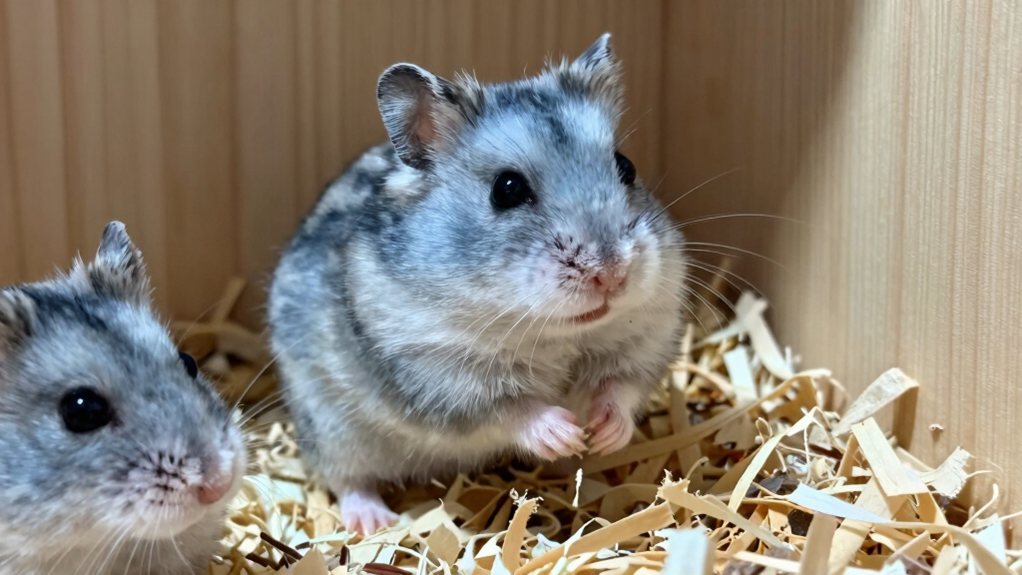
Body Language Cues
Vocalizations And Sounds
Scent Marking Behavior
Why Do Russian Dwarf Hamsters Hoard Food?
Can Russian Dwarf Hamsters Live Together: or Should They Be Alone?
Do Russian Dwarf Hamsters Hibernate?
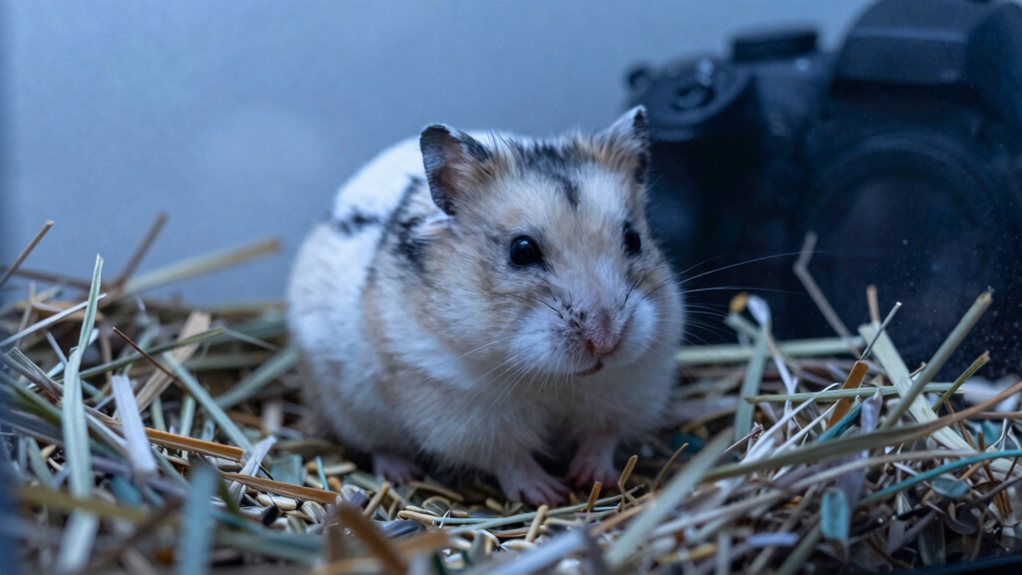
Best Times to Handle Your Russian Dwarf Hamster
Fun Enrichment Ideas for Russian Dwarf Hamsters
Final Thoughts