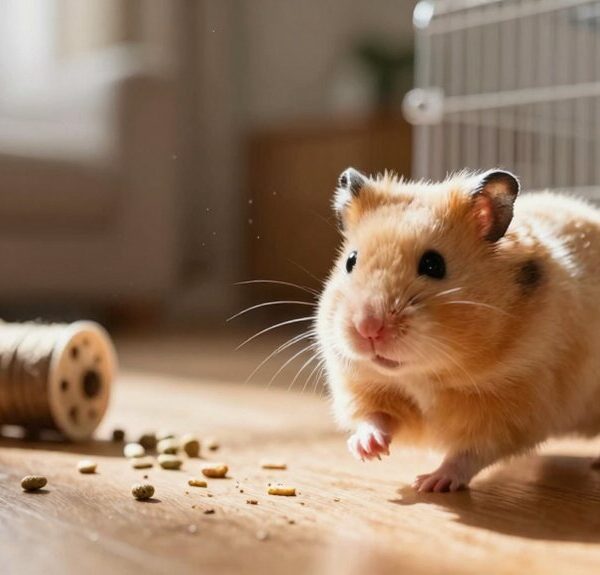
You might notice your hamster skipping their favorite sunflower seeds, moving slower than usual, or napping more, even in odd spots. They may stop wheel-running, hide more, or feel cool to the touch, especially in their paws.
Wobbly steps, dull or messy fur, and labored breathing are common too. While it’s tough to see them like this, these signs often mean they’re nearing the end. There’s comfort in knowing you’re not alone, and a little more insight can help you care for them just right.
How to Recognize End-of-Life Signs in Hamsters

Ever wonder how you’ll know when your little hamster buddy is nearing the end of their life? It’s tough, but paying attention helps. You might notice they’re less active, sleeping more, or not grooming like usual. Cognitive decline can kick in.
Your hamster may seem confused or not respond when you talk to them. Appetite drops are common too, often tied to organ failure, which sadly happens as they age.
Their breathing might slow or become uneven, and they could lose weight quickly. You might even find them huddled in a corner, not their favorite wheel.
While it’s heartbreaking, being there gives them comfort. Think of it like their version of retiring, just quieter, with fewer snacks.
Stay gentle, keep their space cozy, and cherish those quiet moments. You’re doing great by just loving them through it.
A common cause of sudden decline in older hamsters is heart disease, which often progresses without obvious symptoms until it becomes critical.

VET FORMULATED RECOVERY SUPPORT: Specially designed for hamsters, gerbils, rats, and mice, this balanced omnivore formula combines animal, plant, and insect nutrients to support energy, digestion, and recovery during illness or post-surgery


Refusing Food or Rapid Weight Loss
Why does it feel like your hamster suddenly turned into a picky eater who’s also ghosting their food bowl? When your little buddy starts refusing food or losing weight fast, it mightn’t be a diet trend. It could be a sign they’re nearing the end of life.
You know how they usually go nuts for sunflower seeds? If they’re skipping meals or just sniffing and walking away, pay attention.
Rapid weight loss is another red flag. You might notice they look thinner or feel lighter when you hold them.
It’s more than just hunger. Underlying health issues could be at play.
While it’s tough to see, staying calm helps you care for them better. Offer soft, tasty foods they once loved, and keep their space cozy.
You’re doing great just by being there.
Extreme Lethargy and Reduced Activity
You might notice your hamster isn’t zooming around the cage like usual, and that’s okay to worry about.
While they do love their naps, real lethargy means your little buddy barely moves, even when you offer a favorite treat or gently call their name.
If they’re not eating or drinking much and seem more tired than a teen on a Monday morning, it’s time to pay extra close attention.
Lethargy Vs Normal Sleep
How can you tell when your hamster’s just catching some Z’s versus slipping into something more serious?
Well, here’s the thing: hamsters are naturally nocturnal, so they sleep a lot during the day, totally normal.
But if your little buddy skips his usual playful behavior, like zooming through the wheel or ignoring treats, that’s a red flag.
Normal sleep means he’ll still wake up for snacks or a quick chat.
Lethargy? That’s when he stays curled up, even when you gently call his name or offer his favorite sunflower seed.
He won’t show interest in social interaction, and his breathing might seem shallow.
Think of it like this: regular sleep is a nap after a big meal; extreme lethargy is like he’s given up the hamster hustle.
Keep a close eye—you know your pet best.
Minimal Movement Observed
While your hamster might sometimes seem like a tiny, furry loaf just content to nap the day away, it’s important to notice when that stillness goes from cute to concerning.
If minimal movement is observed, like your hamster barely stirring when touched or not climbing at all, it could signal something serious.
Normal naps are one thing, but when activity drops to almost none observed, it might be a sign your little friend is nearing the end.
This isn’t just laziness; it’s extreme lethargy.
You’ll notice wheel time, grooming, and play become not applicable.
They may huddle in a corner, eyes half-closed, barely reacting.
It’s heartbreaking, but being there matters.
Offer warmth, soft bedding, and gentle words.
You don’t need dramatic gestures—just your calm presence.
Even in stillness, your love speaks volumes.
Age-related organ deterioration, particularly in the heart and kidneys, often contributes to this decline, and heart disease is the most common cause of death in aging hamsters.
Reluctance To Eat Or Drink
What happens when your usually enthusiastic hamster turns into a picky food critic who’s suddenly lost interest in their favorite treats? It might be a sign of feeding difficulties or underlying digestive issues as they near the end of life. You’re not imagining it, this change is real and worth paying attention to.
Your hamster leaves sunflower seeds untouched, a once irresistible snack now ignored.
They push food away weakly, showing no excitement at mealtime.
Water bottles go dry because they’re too tired to drink.
Their belly looks sunken, a quiet clue their body is slowing down.
It’s heartbreaking, but knowing these signs helps you offer comfort. Stay close, keep things quiet, and let them rest. You’re doing your best, that matters most.
Labored or Noisy Breathing Patterns

Ever notice how your hamster suddenly sounds like a tiny, wheezy accordion? That labored or noisy breathing could be a sign they’re nearing the end. You might hear faint wheezes, squeaks, or even rattling with each breath. While it’s scary, remember it’s often due to age or illness, not always pain.
Conditions like a respiratory infection or wet tail can make breathing harder, and as your little buddy weakens, their body just can’t keep up.
You’ll likely see slower breaths or pauses between inhales. Stay calm: your quiet presence means the world. Keep their space warm and cozy, and avoid sudden moves.
It’s not your job to fix everything; just being there helps.
This quiet moment is love in its purest form, gentle, real, and full of tiny, brave breaths.
Dull, Matted, or Patchy Fur
You’ve probably noticed how your hamster’s breathing isn’t the only thing changing, look a little closer and you might see their usually soft, fluffy coat starting to lose its shine.
As they near the end, their fur texture and coat appearance appearance often shift in ways that tug at your heart. You know that sleek, springy fur they once groomed with pride? It might now feel coarse or look messy, like they’ve given up on their daily spa routine.
- Clumps of fur sticking out like bedhead after a wild nap
- Dull patches where the shine used to sparkle in the light
- Matted spots that feel stiff, like tangled yarn
- Bald patches where skin shows through, soft but sad
It’s about more than looks—this change reflects how they’re feeling inside. You’re still their comfort, even if they can’t fluff up for you anymore.
Hiding More and Withdrawing From Interaction
You might notice your hamster skipping your usual hand greetings and zipping off to hide instead. They’re not being rude, they’re just feeling tired and overwhelmed.
They nap more, play less, and might even give your finger a polite side-eye.
It’s like they’ve turned into a tiny, furry hermit who suddenly values privacy more than snacks, and that’s saying something!


Size : 8x12 in (20x30 cm),Funny metal signs.A variety of modern and retro style art designs,home decor patterns show your personality and taste,and bring you unlimited fun

LMYUHONG's Tin Metal Sign is the perfect wall art decor for pet enthusiasts! Featuring a unique 6x11inch design, this retro ferret sign is both funny and inspirational.
Increased Solitude
While your hamster might always have been a bit of a homebody, spending most of their time in a cozy nest or darting into tunnels, a noticeable shift toward hiding more and avoiding your presence could be a sign something’s changing.
You might notice they’re skipping their favorite wheel or ignoring treats they used to love.
It’s like they’ve suddenly developed a strong preference for nap time over playtime.
- They curl up in the darkest corner, avoiding sunlight exposure
- Their once-loved chew toys gather dust, no interest at all
- They don’t budge when you tap their cage, unlike their usual curious self
- Mealtime passes, and their snack stash stays untouched
It’s more than shyness, it’s a quiet signal.
You’re still their safe space, even if they’re keeping to themselves more.
And that’s okay.
Reduced Activity Levels
When your hamster starts moving like they’re in slow-motion reruns of their usual self, it’s hard not to notice.
Scurrying turns into shuffling, midnight marathons on the wheel become rare, and suddenly, the whole “busy as a hamster” thing doesn’t quite apply anymore.
You might see less playful behavior, like no more zooming through tunnels or stuffing cheeks with excitement.
They’ll nap more, often in odd spots, and may not even budge when you gently call their name.
Social engagement drops off too.
They’re not reaching out for treats or climbing into your hand like before.
It’s more than laziness; their body is slowing down.
While it’s tough to watch, staying calm helps them feel safe.
Offer soft bedding and quiet time.
You’re still their favorite person, even if they’re too tired to show it.
This quiet phase? It’s part of saying goodbye with love.
Avoiding Human Contact
Why do some hamsters suddenly turn into tiny hermits, vanishing into the deepest corner of their cage just when you want to say hello?
As your little buddy nears the end, they might start avoiding you more. No more enthusiastic paws reaching out or curious sniffs. It’s not personal. They’re just not feeling up to socializing.
You gently offer a finger, but they scoot under the bedding like a ninja retreating to their secret lair.
Their favorite treat sits untouched, like a forgotten treasure in the food bowl.
They curl into a tight ball, eyes half-shut, as if whispering, “Please, not today.”
Even your voice, once met with perked ears, now barely earns a blink.
It’s tough, seeing them pull away. But giving them quiet space is the kindest thing you can do.
Wobbly Movement or Trouble Walking

If your hamster suddenly starts stumbling like they’ve had one too many espresso shots, it mightn’t be a quirky dance move. Wobbly movement or trouble walking can be a sign they’re nearing the end of their life.
Wobbly steps or stumbling in your hamster could signal they’re nearing life’s end—likely not a dance, but a sign they need your care and comfort.
You might notice balance issues, like they’re leaning to one side or falling over when they try to stand.
Their coordination decline makes even simple tasks, like reaching their food bowl, a real challenge.
It’s tough to watch your little buddy struggle, but these changes often mean their body is slowing down.
Don’t panic. Just make their space safe and cozy, with low floors and soft bedding.
Keep an eye on them, and offer extra love and maybe a treat or two.
It’s not all doom and gloom. You’re giving them comfort when they need it most.
Cold Paws and Low Body Temperature
Ever wonder why your hamster’s little paws feel more like tiny ice cubes than warm snuggle bugs?
As your furry friend nears the end, circulatory decline slows blood flow to the extremities, making their paws cold—a common sign of hypothermia symptoms.
Their body’s just not keeping up anymore.
You touch their feet and pull back, half-expecting frostbite and tiny mittens.
Their usual cozy warmth is gone, like a laptop that’s been unplugged too long.
They curl up tightly, trying to trap what little heat remains.
Even their nose feels cool, not the usual pink warmth you’re used to.
It’s tough seeing them like this.
While it’s a natural part of aging, it’s still heartbreaking.
Keep them snug with soft bedding, no superhero capes, but warmth helps.
When to Seek Veterinary Guidance
How do you know when it’s time to call the vet for your little buddy? If your hamster stops eating, struggles to move, or seems unusually lethargic, it’s probably time to reach out. Even small changes can signal big problems. You’re not overreacting. Getting help early can provide comfort and clarity.
Your vet might suggest palliative care to ease pain and improve quality of life. And hey, it’s not only about medicine. Emotional support for *you* matters too.
Watching your tiny pal slow down is tough. But asking for help? That’s love in action.
Vets aren’t just for emergencies. They can guide you through this gently. Don’t wait until you’re stressed or scared. A quick call could bring peace of mind.
After all, you’re their whole world. Let someone help you care for them. And yourself. During this quiet, meaningful time.
Final Thoughts
You know your hamster’s been a tiny, furry joy, but seeing those end-of-life signs can tug at your heart. If they’re eating less, moving slower, or just seem tired, it’s okay to feel sad. You loved them well.
These changes are natural, even if they’re hard to watch. You don’t have to face it alone. Your vet’s there to help.
Cherish the quiet moments, and remember: you gave them a happy little life.



Gauge: About 500g = 500 grams (About 50-60 Sticks),the length is about 3.94in,but the thickness are different.